
Translated material
I was the world champion, but received disability
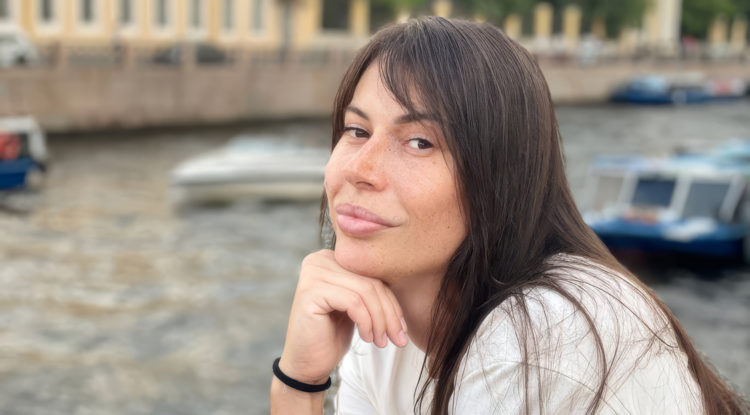
I hoped for the Paralympics, but did not get there because of politics. Now I am leading a blog about motherhood without embellishment
Natalia Mamlina is 33 years old, at 16 she took gold at the youth world athletics championship and set herself a goal - to get to the Olympics. At the age of 19, she received disability, and after restoration she began to engage in swimming in order to perform at the Paralympics. But this goal could not be achieved due to the removal of all Russian athletes. Now Natalia has found a new vocation and leads a blog on Instagram, where she talks about the taboo problems of motherhood.
In order not to miss the main materials of the "cold", subscribe to our Instagram and telegram .
I was born in a family of athletes: dad is a volleyball player, mom is a mild athletics coach. After my birth, my mother almost immediately returned to work, so at the stadium I was since infancy. I admired her and constantly said that I want to be like her - an athlete and a coach. I trained from early childhood and, already at five to six years, won in children's impromptu competitions on running. In addition, I was lucky with physical data: I have a height of 190 centimeters, long arms and legs, I am talented.
It was as if I was born an athlete - and really wanted to become a champion.
I started to engage in light athletics at 10 years old - it was impossible before: it was a complex sport, so at first I went to gymnastics and swimming. I hated the latter: the only children's memory from the pool - I stand on the side and tremble from the cold.
In addition to athletics, I did not do anything. Nobody forced me to train - I myself was obsessed with this sport and loved him incredibly. Of course, I wanted to go to drawing, singing or dancing mugs, but all these classes seemed to be children's entertainment.
At all competitions, I had very good results, and already at the age of 14 I was invited to the school of the Olympic Reserve. All the time took place in preparation for the competition - whether it is the Russian Championship or international starts. This period was one of the brightest in my life: I trained, went to competitions with banquets, looked at the world and met different people. I cannot imagine a more interesting and rich youth for myself.
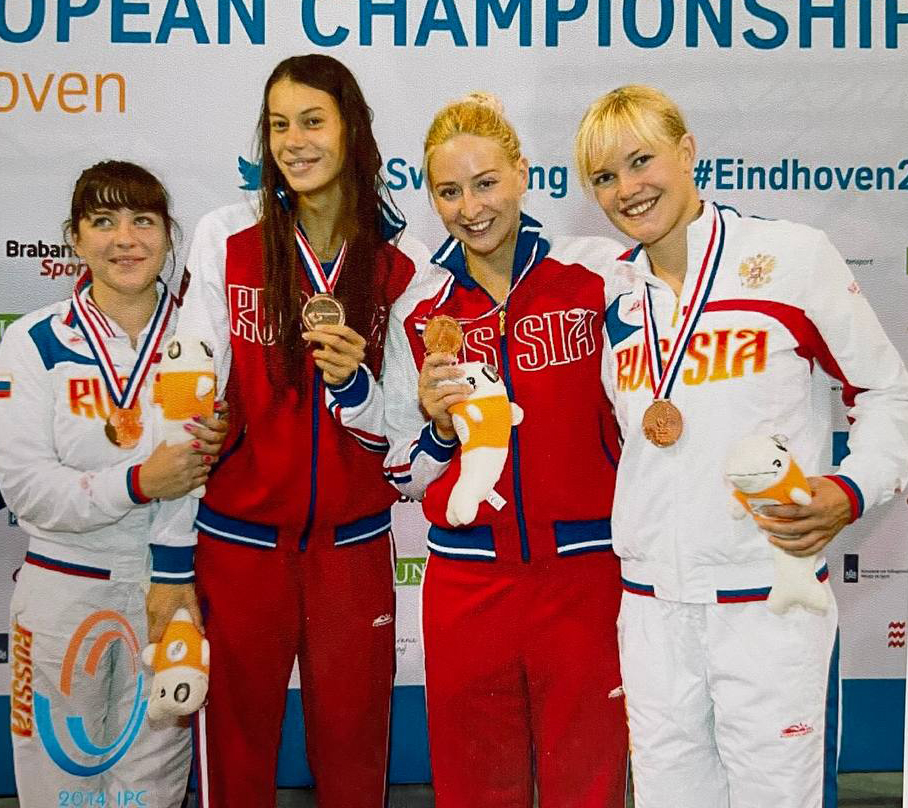
At 16, I got to the youth world championship, then Europe. I won everywhere and waited for the most important thing - the Olympics.
"At least in a dream, I was able to jump and run"
In 2010, I was preparing for the World Cup. In training, I did a standard exercise - climbing a nightstand with a bar on my shoulders. My leg turned up and I fell back. During the axial load, the weight of the bar is strongly pressed on the shoulders and spine, the coaches are obliged to insure at such moments, but in fact no one does this - probably, with insurance, everything would end differently.
The first thought after the fall was: "Well, turned up and turned it, for the first time, or what?" I was able to get up and go through the sports hall - everything was fine with my foot, but my back was a little accelerated. Suddenly my legs stopped succumbing to me, and I fell on the mats. They called an ambulance.
I was brought to the hospital - there was no MRI. We had to sign up for a picture in another clinic, and this was dragged on for a week. After the picture, the doctors for some reason put me droppers and made injections, and a sports rehabilitologist generally advised me to do exercises. So another week passed. As I was later told, the operation should have been carried out with my diagnosis on the very first day - then there would be practically no consequences. In fact, the operation was done in a private clinic only two weeks after the fall.
Before the operation, I was sure that I just needed to recover a little, and I could train further. She said to everyone: "I will soon come to the stadium, wait for me." When the doctors diagnosed me with a “spinal fracture” and said that I stopped feeling my legs because of the squeezed nerves in the channels, I put up with me that I would have to lie in the hospital for not two months.
After recovery from the operation, they began to put me on my feet: I relied on the bars with my hands, apparently, so that the brain sends the impulse to the nerve endings and they began to act at least somehow. In the rehabilitation center, I moved only in a stroller: when I went for a walk, we and other patients arranged stroller races. It was fun, I did not perceive the situation tragically.
In various rehabilitation centers, I spent five months. Then I was discharged, and from the stroller I switched to crutches for eight months. Then the thoughts of returning to sports have already faded into the background: “I would at least go start, then get rid of crutches, what kind of sport is there?” The brain just switched.
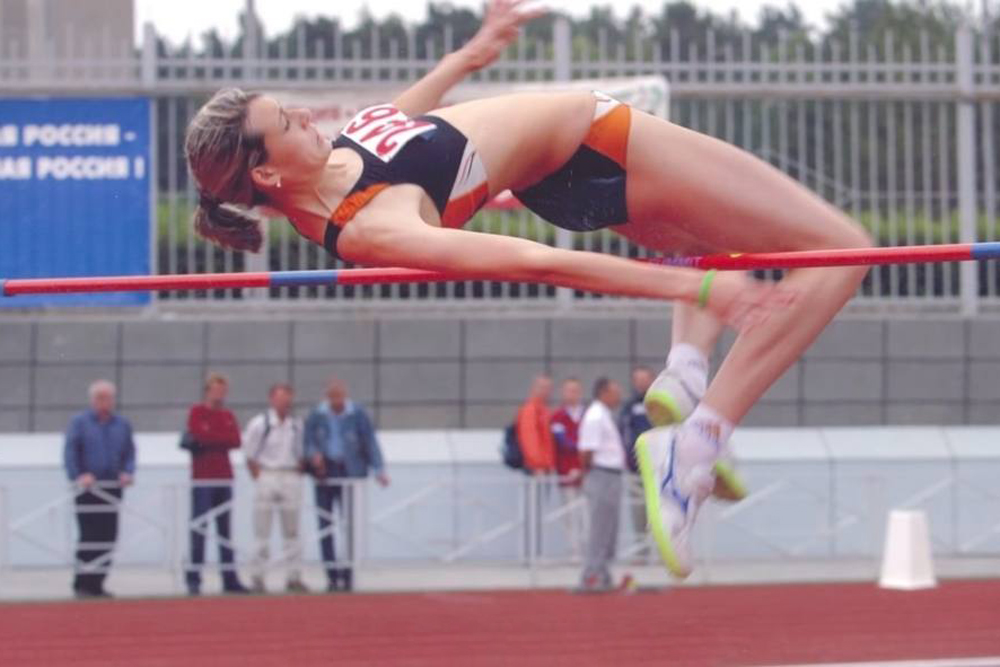
I often dreamed of how I run and perfectly jump over the barriers. When I woke up, I was even glad: "At least in a dream I jumped and ran." The whole period I remember quite badly: all the present was in the fog, and the future seemed terribly vague. I am an atheist, but a lot of questions appeared to God: why is I? What is it for me? Almost 15 years have passed, but humility has not come until now. The athlete will never be able to fully come to terms with the injury, it seems to me.
"Once I have not reached the Olympics, I will reach the Paralympics"
Two years have passed, I was still strongly limping due to atrophy of the muscles of one leg. I did not think about my future, but in 2012, the paralympic swimming coach invited me to deal with him. And I went to the pool again, so hated by me in childhood.
I came to the first training in a separate swimsuit in which I was engaged in athletics. I had no coat swimming swimsuit, no hat, no glasses. Then I was able to swim only half of the pool, but I was still invited to train professionally.
I agreed. Frankly, at first, it was difficult for me to perceive Paralympic swimming as a full -fledged sport. “What kind of sport is, there are disabled people - they cannot be athletes,” I thought. I completely changed my mind when I started going to fees and competitions: I realized how hard it was.
For paralympic swimming, I needed to officially issue disability. I remember I was sitting in the hospital and waiting for my certificate when nearby a woman said aloud: “Yes, I didn’t think that at the age of 50 I would become a disabled person.” I smiled at her and said: "I certainly did not think that at the age of 20 I would become disabled."
I perceived the new medical status as a bureaucratic formality I need to start playing sports again.
However, I could not call myself a disabled person and hid it, as well as the fact that I was engaged in paralympic sports. In addition, I was worried about thinness-with a height of 190 centimeters, I weighed about 45 kilograms, and one leg was worse than the other: I hid her and constantly wore pants and long skirts.
The future husband helped me to overcome the constraint. At first, he simply offered to hang a wheelchair on the car so that it was easier for me to park. I was indignant: “Why do I need some sign? So that everyone can see that I am a disabled person? No, I'm young, beautiful. What is the disabled person? "
When he introduced me to his friends, they asked what I was doing. I answered modestly and briefly: swimming. The future husband encouraged me: "Well, say how you are engaged in swimming." He constantly convinced me that it was cool and I needed not to be shy and hide it, but proudly tell. “At least you get a pension-passive income after all,” he said.
Gradually, I began to perceive Paralympic sport more calmly, and then I began to be proud of: "I am an athlete, I am a disabled person." After the competition alone, I was able to buy a car for myself, finally glued a wheelchair on it and joyful went to test it with her friends. When we stopped at a traffic light, a guy leaned out from the car nearby and said: "The disabled pension is now bad now." We all laughed.
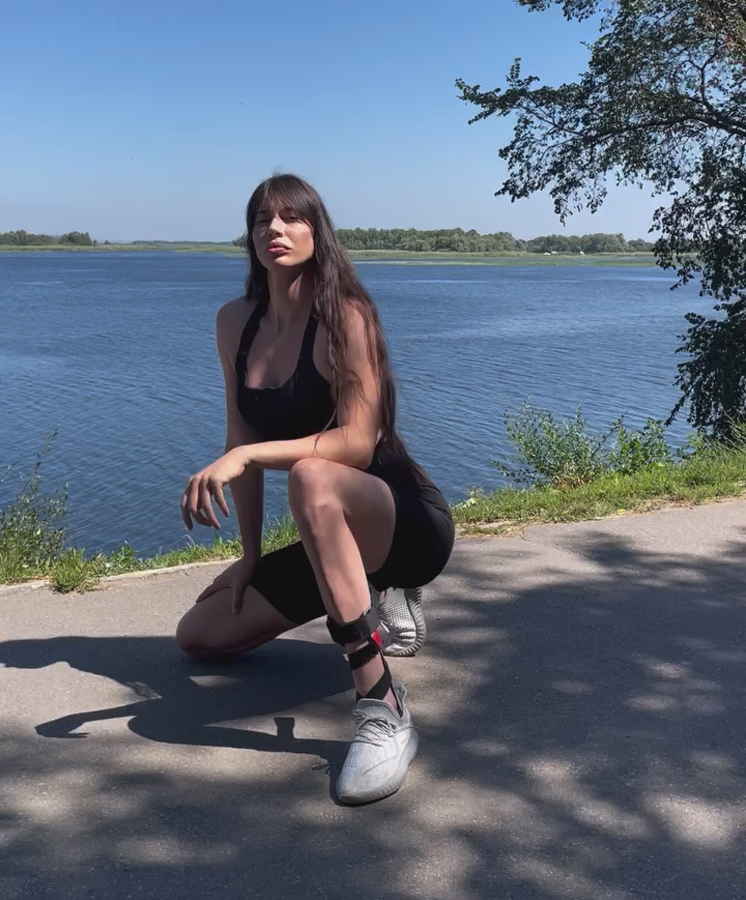
Now on the blog I say directly and honestly: "I am a disabled person." I am not embarrassed by this word, but many commentators write: "Well, why do you call yourself so, [be] softer, or something." And I do not want softer - for me it is just a definition in a medical card, nothing offensive.
In swimming at the athletes with the defeat of the musculoskeletal system of 10 grades: the first includes practically non-moving people, to the 10th-those who have frivolous problems with the spine, joints or, for example, the foot is deformed. I was put the eighth (later Natalia was transferred to the ninth grade. - Approx. "Cold") .
I immediately opened a list of participants in this class and found the champions. I need to win them, I thought.
I achieved good results in competitions, but for some reason they did not take me to the national team for the European Championship. Then my sports school in Saratov still helped me get there-the leadership financed the trip and even bought a suit for the performance. At the European Championship, I received three silver medals and thought: “You will know how not to take me to the national team.” A new goal appeared in life - the Paralympics. Once I have not reached the Olympics in athletics, I’ll reach the Paralympics in swimming.
I always perceived swimming as the work that I myself chose because I wanted to play sports. I did not like to train, but from the competition, adrenaline I enjoyed. Everything was different with athletics-I made it from great love and received pleasure from this sport.
I liked the variety of athletics: you are running, then lying, then stand, then pushing, then throwing, then jumping differently-through barriers, in height, through sand in length, in place, on the nightstand. In swimming, you are simply swimming: first, face in the bottom, then face the ceiling, then again in the bottom, and in the ceiling - and so on the new one. I never liked monotony.
In 2016, the Paralympics was held. We have been preparing for her for a very long time and already arrived in Rio de Janeiro. When rumors about the prevention of Russian athletes went, we reassured ourselves: “Everything is fine, everything will definitely be normal. We just train. " But in the end, we were told that we would not speak (the International Paralympic Committee removed the Russian team from the Paralympic Games in Rio after the report of the Chairman of the World Anti-Doping Agency (WADA) Richard McLaren, in which he argued that a system of manipulations of doping tests was created.-Approx. "Cold").
I did not believe in this - in my soul there was a complete denial of what was happening. Alternative competitions were held for Russian athletes, the results of which were compared with the points of those who performed at the Paralympics. When the results became known, my mother called me: "Natasha, you can imagine, you are the second!" But I understood: I'm not the second. In fact, nothing happened and I did not receive any silver. I was terribly offended. Many tried to cheer me up, said: "It's okay, they awarded you, they gave money." But we did not do this for the sake of money: I wanted medals and recognition.
I began to pursue a gloomy sense of incompleteness: I did not achieve what I wanted, for the second time. I always strove for the Olympics, and something constantly stood on my way: either a spinal injury, then politics. I could not abandon the sport, but I could not fully perform: Russian athletes continued not to let go to the competitions and it was not clear when they would allow (the Russians were able to take part in the World Paralympic Swimming Championship in 2019, but in 2022 they were again removed due to Russia's invasion of Ukraine.-approx. “Cold”) .
I wanted to go to some purpose-championships, fees. However, there was nothing to go. I no longer wanted to train, but I could not quit either - suddenly I would still speak. The next two years I came to training, then not and, in the end, finally left for swimming.
After that, I was in the pool several times. I no longer had a goal in my life - I was looking for myself: I studied on a stylist in my hair, makeup artist, an armored car and even worked a little by a coach. The injury still reminds of itself a little, although it doesn’t affect the household life in any way: the foot does not rise completely, my back hurts periodically, I quickly get tired, there is a little lameness and pain in the joints, and I can’t run, jump, ski and skates at all.
Recently, they gave me the number of the coach in paralympic athletics. Honestly, I did not even know what it was. I never called the number, although I really caught fire. Perhaps I would try if I could leave my two-year-old daughter with someone, but they refused to take her in the kindergarten for the full day.
"I was not a mother who lives only diapers"
When I became pregnant, I finally reconciled with the fact that in the next couple of years I could not return to the sport. My husband and I planned the child, but not at the very moment. Then I often thought about whether I want a child in principle-maybe I will return to the sport or take care of something else. When I found out about pregnancy, I decided that I was ready for children. However, when she gave birth, I realized that this is not entirely true.
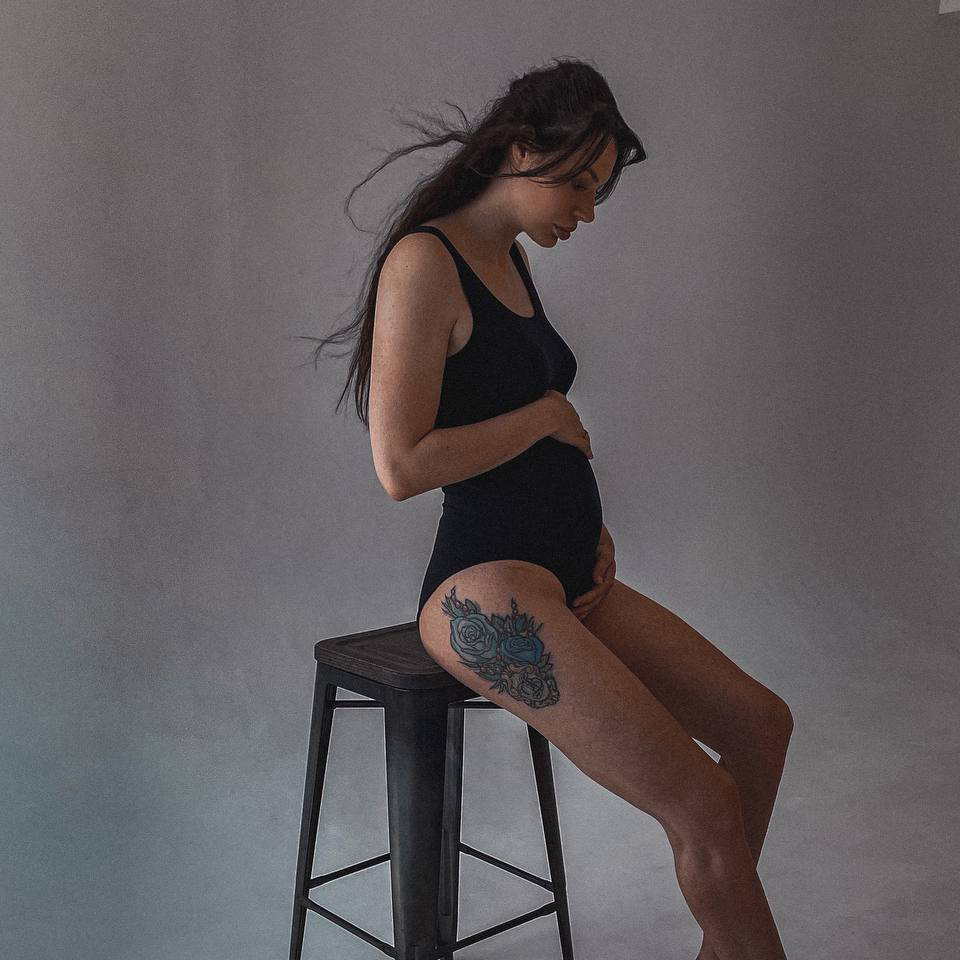
In maternity, blogging became interesting to me, and I decided to do it seriously - there was a desire to find a goal and a sense of significance again. This was the first thing since 2016, which I really liked.
At first I decided to lead a typical mother blog. I was subscribed to other accounts about motherhood, saw their content and decent coverage. In addition, I did not understand what else I could talk about except about the child: I don’t go anywhere and do nothing but caring for the baby. She began to talk about her motherhood, about diapers and mixtures.
Motherhood was hard for me. It was difficult to accept that there would be no previous life.
Before pregnancy, you are free, during pregnancy everyone helps you and rush with you, and after childbirth everything changes sharply: you have a life for which you need to take responsibility.
Now all your existence depends on what the child wants. My daughter is now two years old, but I still have not come to terms with the fact that I could not calmly go to the store, go to the toilet and the shower. In addition, my husband had to get used to paternity for a very long time, and I lacked his attention.
In addition, after giving birth, I was faced with the fact that my daughter is sleeping poorly. I did not know that the child could sleep so badly. At that time, I did not want anything except that my daughter calmly fell asleep. I quickly lost weight: due to lack of sleep, there was not even the opportunity to eat normally. If I had a free couple of hours, I spent them on sleep, and not on food. Then I learned to instantly fall asleep: to bend down, I still just need to put my head on the pillow. I had chronic fatigue, and I lived as if in prostration.
Mama blog gradually began to go to naught: I realized that I did not want to be fixed only on motherhood. Of course, a child is a majority of my life, but I did not want to be the same woman who lives only by diapers. It was important for me to understand that after childbirth my personality has not gone anywhere, I remained the same interesting person, and broadcast it on Instagram. I decided to talk about myself: I shared the stories of a sports career and injuries, began to raise the topic of disability.
It seems to me that for many women, raising a child becomes the meaning of existence, as a result, they lose themselves and their integrity.
For example, now I and the team teach other women to conduct Instagram, and many of them write, for example, “Mom of the novel” when choosing a nickname. I explain to them that it is impossible to be only the mother of the novel all their lives, but they persistently try to leave such a nickname and are limited to the only definition of themselves - “mother”. They seem to lose their personality, name and surname and become simply the “mother of the novel”.
I continued to talk on the blog and about motherhood, but I began to do it more sincerely. I decided not to drive myself into the framework, but to be honest - including writing about problems in the upbringing of my daughter. I began to talk about the fact that I could get tired of the child, that I give her to the kindergarten early, that sometimes I leave my mother or I can leave to rest without her. In the comments, people write that I am a bad mother, that you can’t get tired of the child, complain, ask for help, and in general, "Why gave birth?" This does not hurt me: sometimes I answer seriously that a person wakes up a conscience, sometimes just joke.
Many mothers are trying to seem perfect. Perhaps that is why, when they see my videos, they have resistance and hatred. I’m just trying to facilitate the upbringing of a child, and in their understanding if you gave birth, I have to get high. But not everyone has it.
"The child’s home, everything will pass"
In Instagram, there are mothers who talk about problems - for example, about colic. But even they constantly try to brighten up the situation and say something sweet: “We have colic, but I am still madly happy!”
The broadcast of the ideal picture is poorly affected by other parents: they can begin to think that their motherhood is somehow wrong.
I think we need to talk about the problems so that other people do not feel their “irregularities”, do not begin to delve pointlessly in themselves. They often write to me comments in the spirit: “Thank you for talking about it. Now I realized that not only I have such a problem. ”
Табуированность проблем материнства идет еще из советских времен, когда нельзя было ничем делиться, ведь надо «не выносить сор из избы» и «счастье любит тишину». Молчите, держите в себе и тихо плачьте в подушку. Сейчас наконец начинает освещаться и другая сторона материнства — например, стали больше говорить о послеродовой депрессии. И даже про это многие люди говорят: «Это просто неадекватная мамаша, которая сходит с ума со скуки и напридумывала себе что-то». Они не понимают, что послеродовая депрессия — это следствие того, что проблему не заметили вовремя, женщине не помогли и не поддержали.
Большую роль играет навязывание семейных ценностей. Большая семья — это классно, но мне кажется, что она должна создаваться от души, а дети появляться — по желанию родителей. Например, я очень хочу вторую дочь — но не для того, чтобы просто родить побольше. Я знаю, насколько классно иметь сестру, и для своей дочери хочу того же. Люди не должны чувствовать необходимости просто плодиться.
К тому же общество воспринимает рождение ребенка как панацею от всего: если проблемы в семье, разногласия с мужем — «роди ребенка, все пройдет». Если тебе тяжело с одним ребенком, ты страдаешь и мучаешься — «роди второго, все точно пройдет».
Многие женщины рожают, чтобы залатать свои душевные раны, они думают, что благодаря этому у них не будет времени думать о проблемах. Логично, что в какой-то момент они озлобляются на весь мир. Если ты не умеешь ничего, кроме как рожать, понятно, что ребенок для тебя станет центром вселенной. Они живут только ребенком и их злят те, кто так не делает, — например, я.
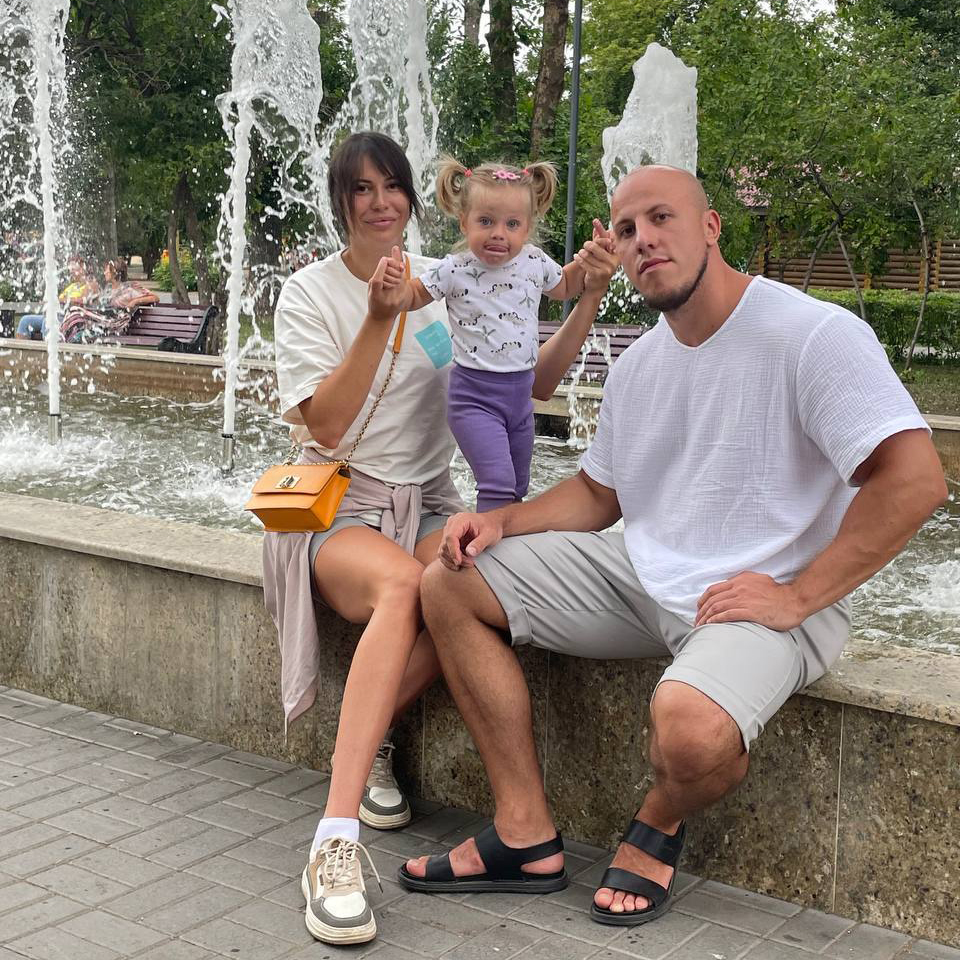
Жить только ребенком неинтересно: мир большой, и он не должен крутиться вокруг одного человека. В мире происходит много интересных вещей. Мне кажется, ребенок — это компаньон в изучении мира. Например, недавно в своем родном городе я гуляла по парку с дочкой, а потом мы пошли кататься на детском паровозике. Помню, я в позднем детстве мечтала на нем прокатиться, но не могла — уже была слишком большой. И вот моя мечта сбылась.
Ты показываешь мир маленькому человеку, познаешь мир заново, переживаешь новые — иногда забытые старые — эмоции, учишь его, делишься с ним. Это и есть воспитание. Например, моя дочка недавно увидела огромный трактор, и я предложила подойти поближе и рассмотреть его. Она была безумно рада ему, как чуду какому-то. Мне трактор казался таким обычным и непримечательным, но с ребенком я стала смотреть на мир ее глазами — по-новому и с восхищением.
Кроме того, интересно наблюдать, как человек растет, развивается, начинает мыслить и проявлять интерес к миру. Как бы ни было тяжело, все трудности перекрываются невероятной любовью к ребенку и его любовью к тебе.