
Translated material
A step away from the cross
The Verkhovna Rada adopted the law on the ban on the Russian Orthodox Church. The Ukrainian model of confessional freedom in Moscow was accepted for "persecution of church"
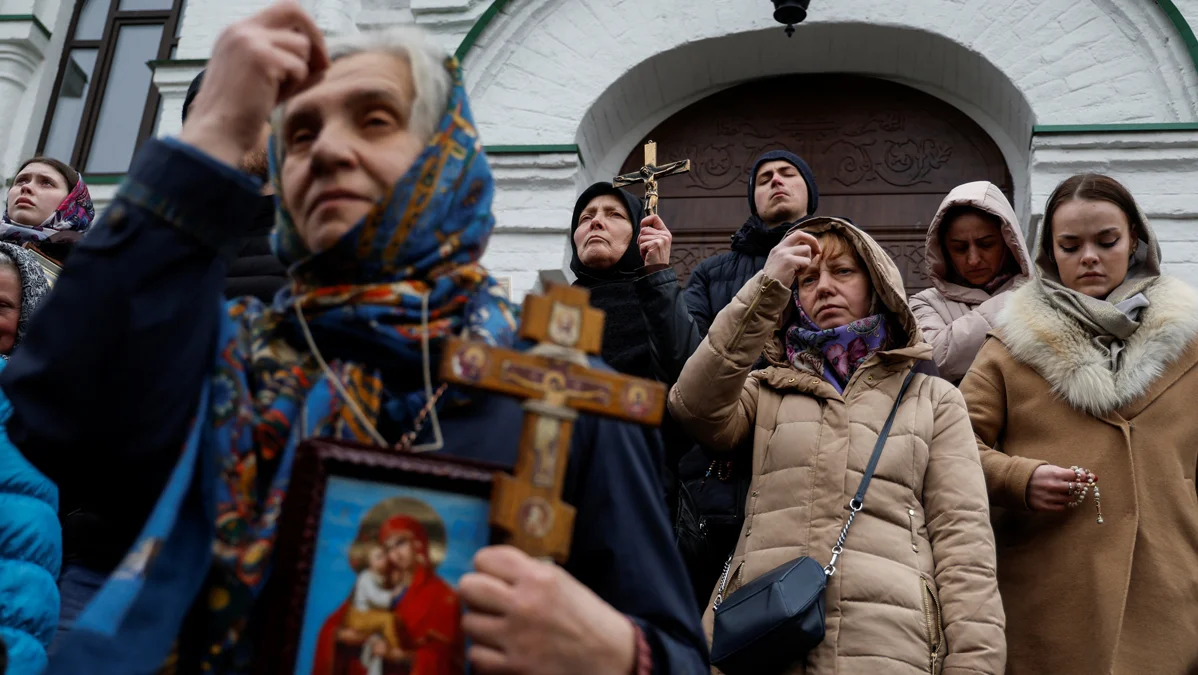
Believers of the Ukrainian Orthodox Church pray, blocking the entrance to the temple on the territory of the Kiev-Pechersk Lavra in Kyiv, Ukraine, March 31, 2023. Photo: Valentin Ogirenko / Reuters / Scanpix / Leta
After a year and a half of rather tense discussions, both inside Ukraine and abroad, the Verkhovna Rada on August 20, finally adopted Law No. 8371 “On the Protection of the Constitutional Organization in the Field of Activities of Religious Organizations”. Judging by the publications of Russian media and bloggers, in Russia this law caused much more interest and emotions than in Ukraine itself.
According to the law, within nine months after receiving the relevant prescriptions, Ukrainian religious organizations that have contacts with centers in the territory of the aggressor state must interrupt such a connection by making changes to their authorized documents. Thus, the main goal of the law is to cut off opportunities for the use of Ukrainian religious organizations in the propaganda of the “Russian world”, “trinity of the Russian people”, “restoration of the Orthodox Empire” and other narratives of the Kremlin.
Until 2014, the Ukrainian Orthodox Church of the Moscow Patriarchate (UOC MP) was the focus of this kind of ideology, a significant part of which later switched to pro -Ukrainian positions, and in May 2022 the Local Council of this Church even declared a complete breakdown of administrative ties with the Moscow Patriarchate, after which the Church was usually called the UOC.
In Moscow, they argue that the new law is aimed at its ban and “the complete elimination of canonical Orthodoxy in Ukraine” (although what is the “canonical”, if the “self-core” has emerged from the homophore of Patriarch Kirill?). In the UOC itself, the situation does not dramatize the situation, continuing negotiations with the autocephalous Orthodox Church of Ukraine (PCU), which has a reputation as a pro -European one, and claiming that they do not consider themselves the object of operation of the new law.
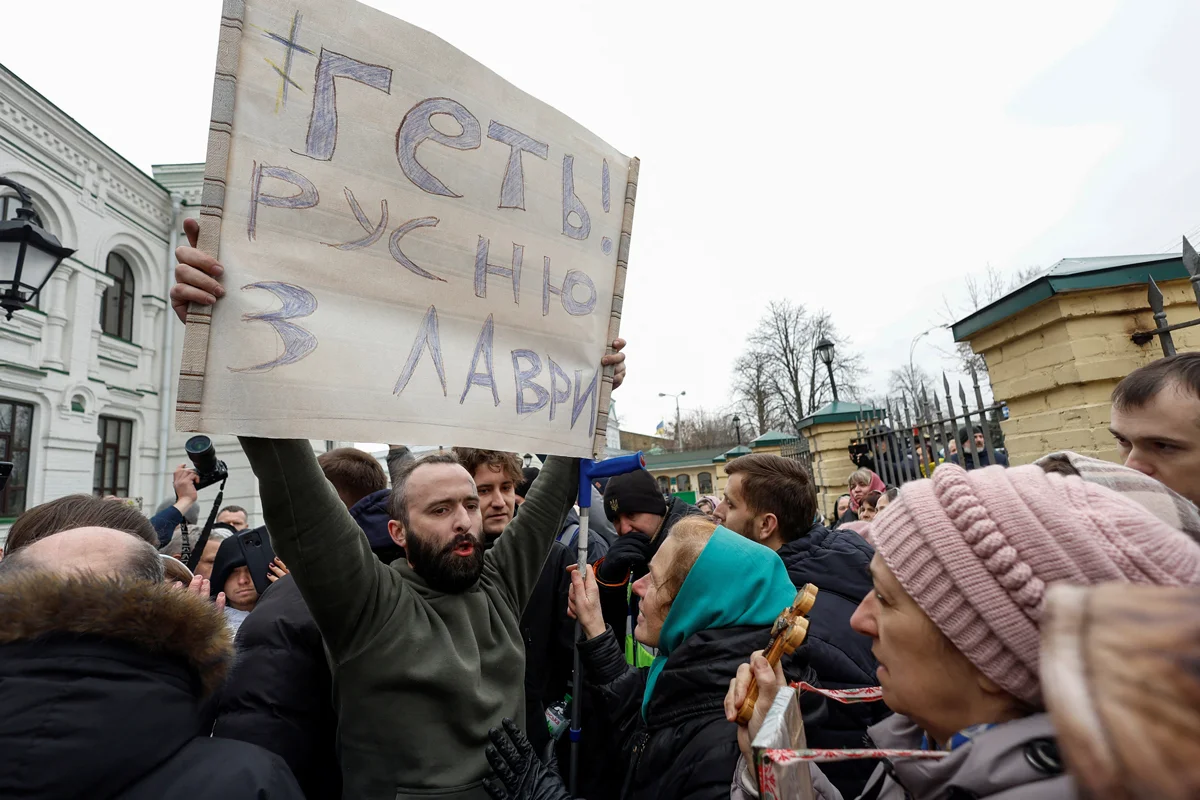
Feast of communal freedom
Even if you believe the Moscow narrative that the law is aimed at the “destruction” of the UOC, then panic is early. In the process of a 19-month discussion, a lot of amendments were made to the bill, several times the main legal administration of the Ukrainian parliament made its comments to it several times. The result is a text that guarantees judicial protection of human rights to freedom of conscience at different stages and introducing a rather complex procedure for terminating the activities of those religious organizations that will nevertheless refuse to leave the Moscow Patriarchate as an accomplice in aggression against Ukraine.
So, the law will enter into force only a month after the official publication. Then an independent expert body should be created, which will reveal religious organizations that are subject to the law. Then, the State Service of Ukraine for Ethno Policy and Freedom of Conscience will be able to send such organizations a requirement to eliminate violations within nine months. These requirements, as well as subsequent lawsuits of the civil service on the removal of certain organizations from state registration, can be appealed in court, including the international one. At the time of appeal, the actions to remove organizations from registration will be suspended. That is, even with the most dramatic script for the supporters of the Russian Orthodox Church, the path from the adoption of the law to the real “liquidation of the UOC” will take years.
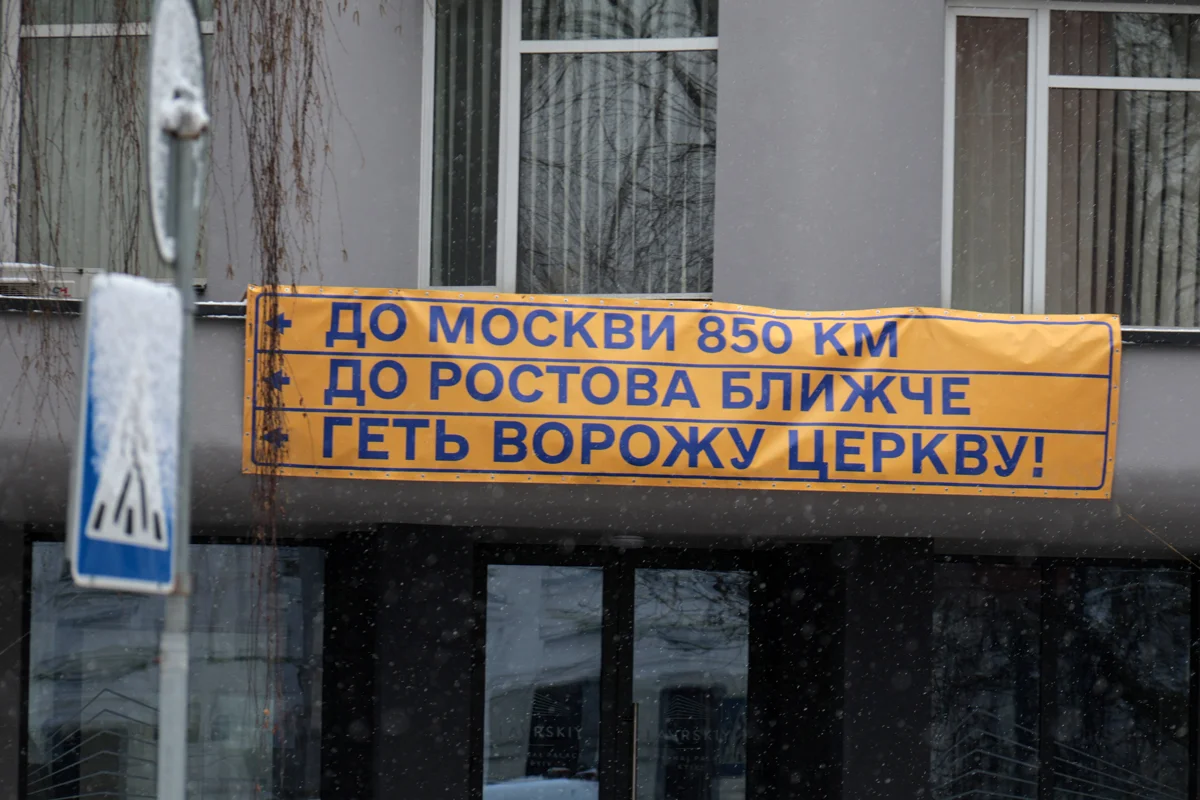
It is important to keep in mind that in Ukraine there is no division into “centralized” and “local” religious organizations: the state gives an ordinary rural parish, a diocese, and the Kyiv Metropolitan equal status. This means that in the event of relations with the Moscow Patriarchate, the requirements will be issued to each of the nine thousand UOC organizations separately, taking into account the individual characteristics of this organization, and each of these cases will be separately considered in the courts. Such a model, in general, makes it possible to turn the UOC into the very “confederation of independent parishes”, which church reformers in Russia dreamed of. The state does not have a finished model of the future UOC, so each specific community receives a chance (maybe for the first time in the pre -Soviet, Soviet and post -Soviet history!) To choose its own church path. The simplest solution is to join in an approved state and have never had connections with Moscow PCU. But you can still go to the exarchate (representative office) of the Patriarchate of Constantinople, opened in Ukraine in 2018, in the Romanian patriarchy, who created its vicarism in Ukraine, in one of the "alternative" Orthodox churches, go into absolutely autonomous canonical swimming, or even "into the catacombs" (they say, the 79-year-old Prime Minister of the UOC Metropolitan is inclined to the last option Onufry).
In any case, no “Holy Principle” can force the community to make a particular choice in these conditions. Here it is, real freedom at the lower church level!
The episcopate (a layer of the highest clergy that controls the dioceses) will still try to preserve the UOC as a monolith as a monolith to preserve the usual rent (“tithe”) from the parishes. For example, one of the Bishops of the UOC stated the Air Force on anonymity that its church is ready for a dialogue about unification with the PCU if it announces a moratorium on the adoption of the UOC's parishes. By the way, after the beginning of “Switch” to the PCU from the UOC, more than a thousand parishes in all regions of Ukraine have already passed.
ROC in confusion
From the side of the Russian Orthodox Church, which always willingly exposed the “Kiev regime” in “persecution of Orthodoxy”, until any official reaction to the new law was followed. The fact is that the leadership of the Moscow Patriarchate was here in a very confusing situation. Before the full -scale phase of the war, it itself emphasized the independence of the self -governing Ukrainian Church, hoping to strengthen the position of its subsidiary, which was supposed to work as the “soft power” of Moscow within Ukrainian society. After the beginning of “Swate”, in May - June 2022, Patriarch Kirill began to consider the UOC “split”, because, contrary to the canonical order established by the canonical order, bypassing the Patriarch and the Local Council of the Russian Orthodox Church, the UOC announced its complete independence, up to the right to cook the Holy Miro, which the Patriarch considers his exclusive privilege. However, by the fall of 2022, the Patriarch’s position softened, and he dismissed the commission created by the ROC synod to pass the canonical sentence of the UOC. Metropolitan Onufry, nominally being the first by the Patriarch by a permanent member of the Synod of the Russian Orthodox Church, ceased to participate in his work since February 2022. At the same time, all official statements and actions of the patriarch (for example, sending condolences) show that
He decided to “not notice” the official existence of the UOC, not to pray for the victims of aggression among her clergy and laity and not to comment on the destruction of her temples and monasteries as a result of missile bombing.
Including even those temples that the Patriarch himself sanctified - for example, the Preobrazhensky Cathedral in Odessa. The practice of connecting the Dioceses of the UOC to the Russian Orthodox Church, which ended up in the territories of Ukraine, newly annexed to the Russian Federation, also shows that Patriarch Kirill and his Synod do not consider the Primate of the UOC and his canonical size and do not respect the territorial integrity of the Ukrainian Church, nevertheless fixed in the charter of the Russian Orthodox Church. This situation looks absurd, but, as they say, it is a "fog of war."
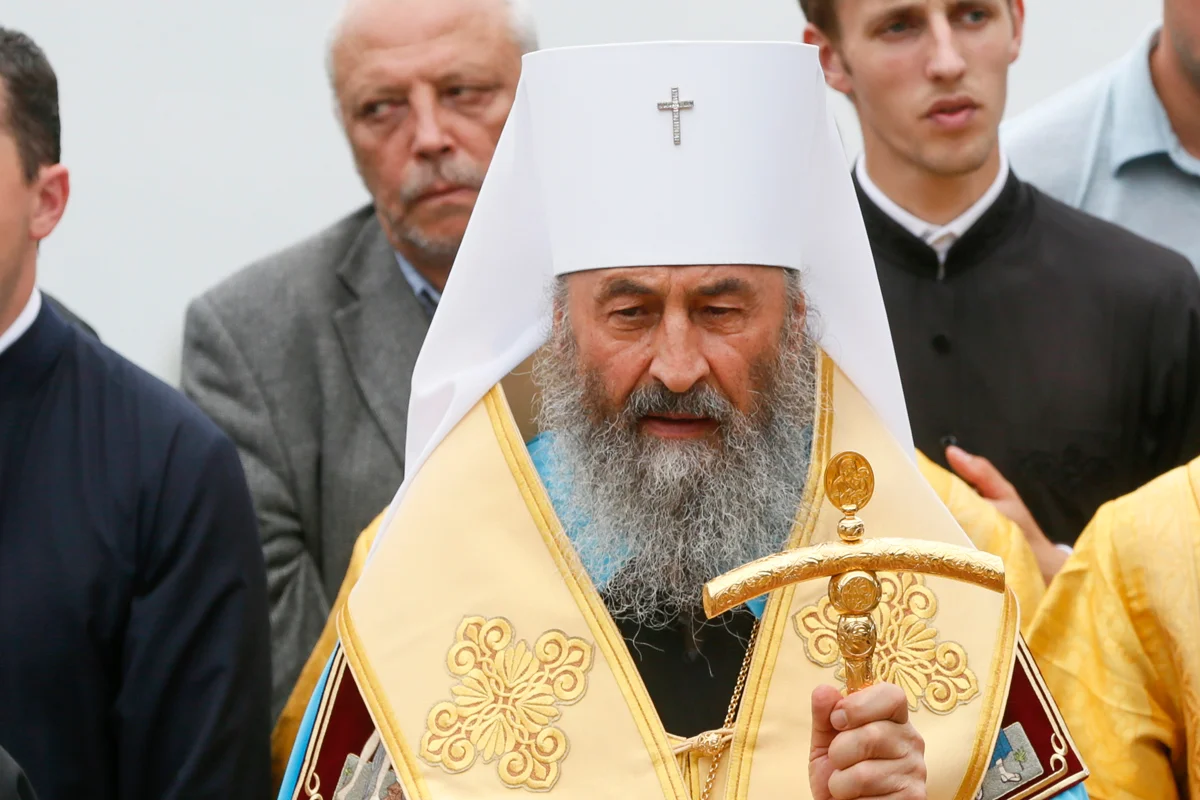
In general, the solidarization of Cyril and his employees with the “persecuted” UOC would mean recognition of its canonical dignity and, accordingly, recognition of its own canonical crimes in the form of annexation of its dioceses. If we consider the UOC -by -line “split” or at least a structure with a controversial canonical status, which illegally emerging from subordination to his patriarch, then sympathy is contrary to the traditions of the Russian Orthodox Church, which recognizes the existence of only “strictly canonical”, that is, recognizing the Moscow patriarchy of church structures. The Patriarch took time to think, and his speakers promise to formulate the attitude to the law and the UOC at the next meeting of the Synod. Most likely, it will be the reproduction of the cliches of the Kremlin propaganda about the “crimes of the Kyiv regime” and the “persecuted Orthodox”, and the analysis of the status of the UOC will be postponed for the post -war period. After all, according to its own charter,
The Russian Orthodox Church cannot even convenes bishop or local cathedrals, since the Ukrainian episcopate is obliged to participate in them. And without such cathedrals there is no one to judge the UOC.
In terms of the judicial procedure, as Deacon Andrei Kuraev proposes , while Moscow “in Out”, Kiev could take the initiative for himself. He suggests the Primate of the UOC to Metropolitan Onufry to initiate the convocation of Sinaxis - meetings of all the Primate of the official local Orthodox churches - for the trial of Patriarch Kirill, whose "theology of war" and the justification of war crimes is clearly incompatible with Orthodoxy or the Gospel commandments. Being a sober person, Kuraev understands that such a court will not take place (seriously at the inter -Orthodox level, they spoke about him only in the spring of 2022, when “everyone was in shock”). But the initiative of Onufry, as it were, the filing of a “lawsuit” to Cyril, would fully rehabilitate the UOC in the eyes of the Ukrainian authorities and the public, and in the eyes of the international Christian community. But, unfortunately, “sluggish vobla is not capable of this. All human emotions there <in the soul of a church functionary of this level with the Moscow past> dried, ”Kuraev states.
Contexts - American and European
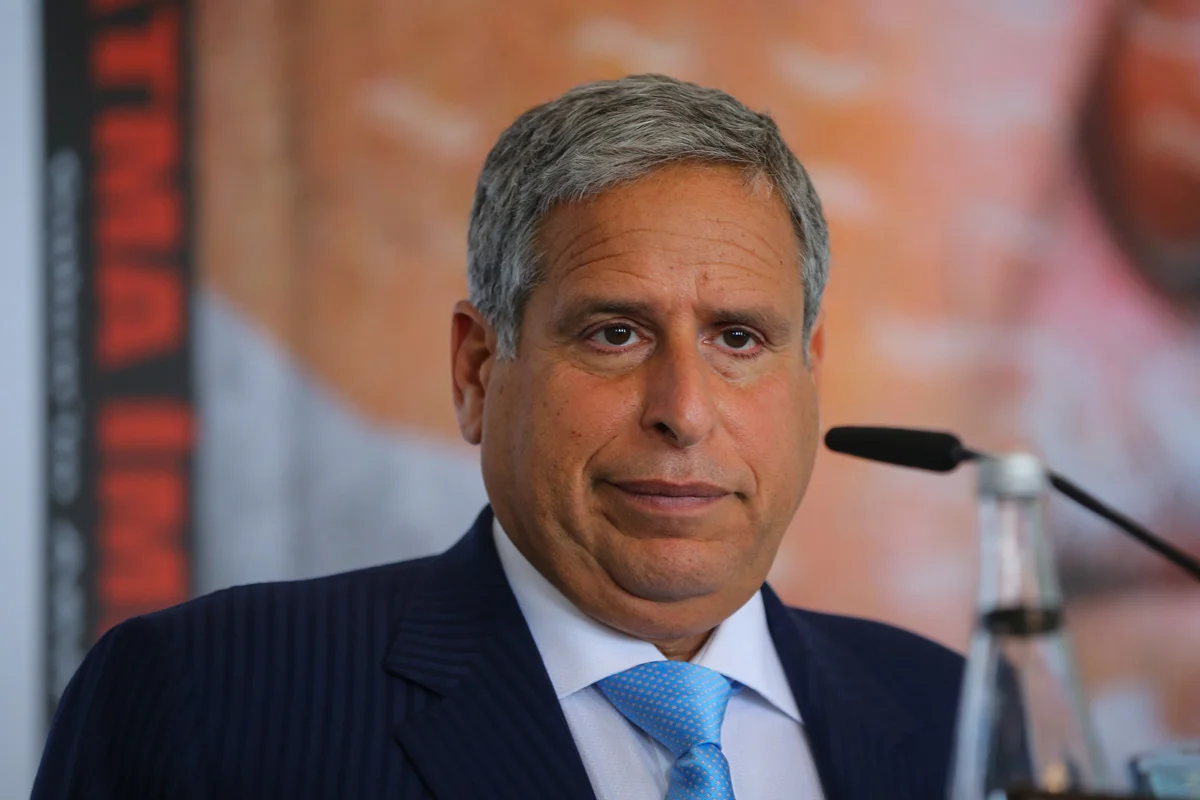
True, there is also a secular court-for example, the ECHR, where the interests of the UOC are represented by the world-famous American lobbist lawyer Robert Amsterdam. But this path is very confrontational and leads to an aggravation of the confrontation between the UOC with the Ukrainian authorities and, in general, with a majority of Ukrainian society. But Moscow really likes it.
On the eve of the adoption of the Law, Amsterdam wrote an extremely emotional, in places even a boorish message to Vladimir Zelensky, threatening him personally by the International Criminal Court and calling his efforts to tear the UOC from Moscow “crime against humanity”. Indeed, the reaction of the American establishment to the new law is ambiguous: even the presidential candidate Trump once reproached his Democrats opponents for allowing Zelensky to arrange a “persecution of the Church”. There is a version that various kinds of delay (one and nine months, judicial appeal) contained in the law are due to the fact that the Ukrainian authorities want to first wait for the outcome of the presidential elections in the United States and depending on it to decide how to apply the law: hard or gently.
But in the European context, the picture looks completely different. In the resolution adopted on April 17, PACE “Death of Alexei Navalny and the need to counteract the totalitarian regime of Vladimir Putin and his war with democracy” says : “The hierarchy of the Moscow Patriarchate of the Russian Orthodox Church, including Patriarch Kirill, defends the ideology of the“ Russian world ”, declaring a war against Ukraine and the“ Satanic ”West“ Satanic ”“ Satanic ”of the“ Satan ” Russians ”, urging the Orthodox believers to sacrifice themselves for their country.” Pase gave a recommendation to the Member States to officially recognize the transformation of the Russian Orthodox Church into a “instrument of Russian influence and propaganda by the Kremlin regime”, and the activities of the Russian Orthodox Church, which has “nothing to do with the freedom of religion and freedom of expression guaranteed by article 18 of the International Covenant on Civil and Political Rights”.
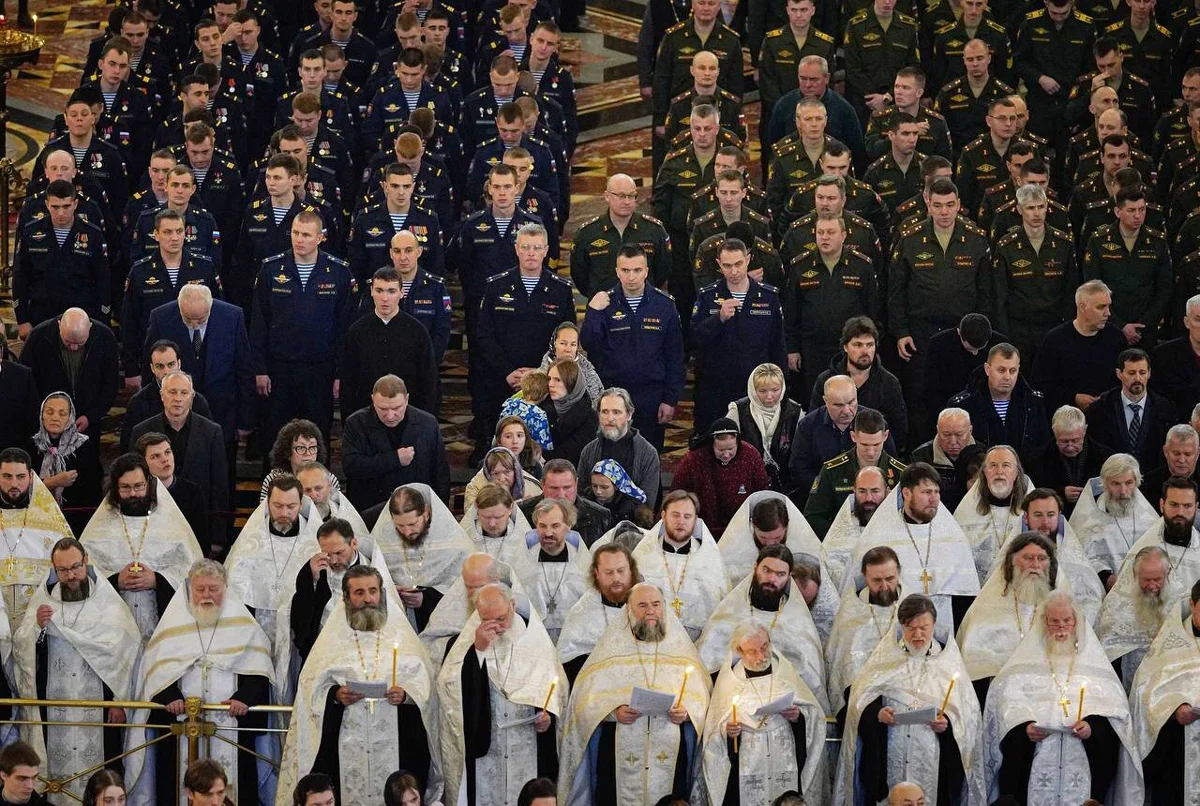
It is interesting that delegates voted for such a text from countries with the Orthodox majority of the population, for example, from Greece, Georgia, Ukraine, Moldova and Romania. Many European governments themselves came to the conclusion that the Russian Orthodox Church is incorrectly considered a religious organization from the point of view of international law. The other day, the Foreign Minister of the Czech Republic, Jan Lipavsky, said that the Moscow Patriarchate is not a church, and his so -called clergy are clergymen. Earlier, Estonian politicians called for the ROC to recognize the ROC with a terrorist organization that forms and plants the ideology of aggressive war. In this context, we can say that the new Ukrainian law is not at all related to religion as such: it is prohibiting certain information and manipulative technologies of warfare.
Professor of theology Archimandrite Kirill (Govorun), who once entered the near circle of Patriarch Kirill, studies the rhetoric of the modern Russian Orthodox Church from the theological point of view and refers it not to the Orthodox, but to the Manichaean (dualistic) tradition. According to about . Cyril, it is almost impossible to fulfill the new law and it is declarative in nature. He sees the true goal of the law in the pushing of the UOC to make long -term decisions to finally determine which of the parties to the war supports. At the end of the third year of the war, it is really time to do this.