Date
Author
Андрей Серафимов, Илья Волжский
Source

Preserved copy
Translated material
Without a threat newsletter
The Kursk authorities turned off the SMS provisions on the shelling of the region and the attacks of drones due to "technical reasons". Experts explained to Novo-Europe such a decision with economic damage
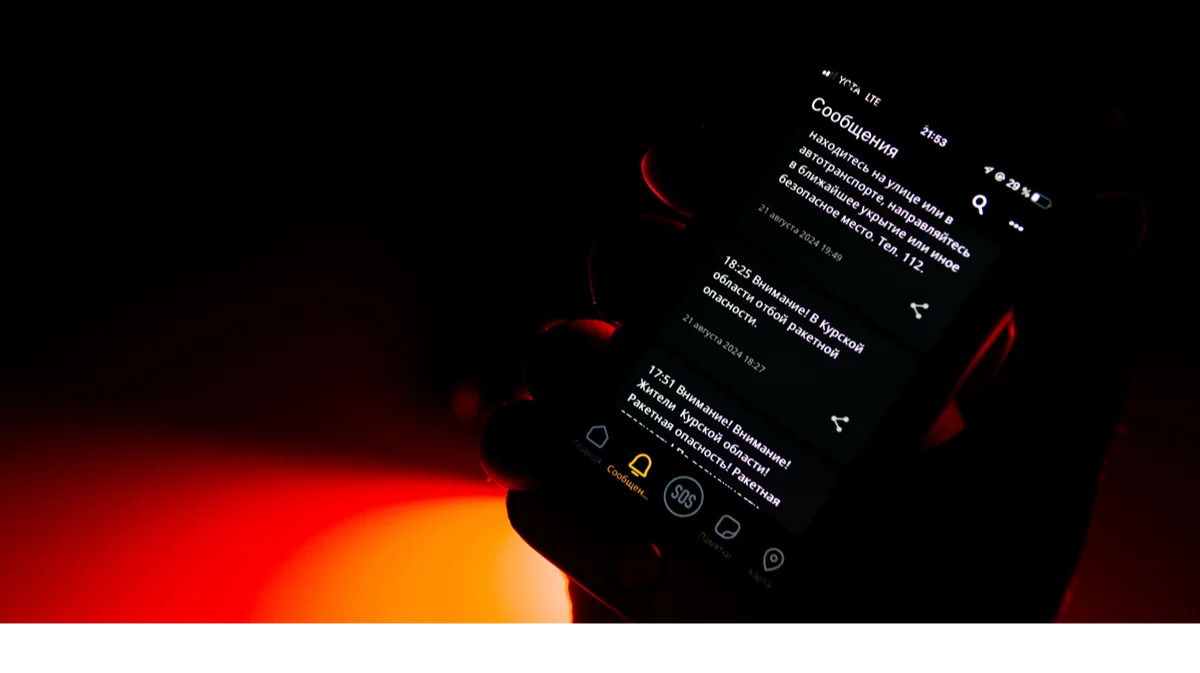
Alerts of missile shelling in the Kursk region. Photo: "New Gazeta Europe"
On August 20, the regional opera station of the Kursk region decided to turn off the SMS provisions of residents about the upcoming missile shelling, referring to technical problems and "untimely" distribution. Helens through SMS are used in all border regions: messages through mobile communications reach most often during military operations and jamming of communication. At the same time, the authorities of the Kursk region continued to warn residents about shelling in Telegram (in August, malfunctions of his work periodically occur).
As experts surveyed by New Evrop, the authorities refused to notify the population through SMS for economic reasons and to avoid panic. Read more-in the material of "New-Europe".
Economic damage
As two military analysts told Novy-Europe, the decision to stop the SMS manner is associated with political and economic reasons. The fact is that the authorities could not organize the operational work of sending messages:
- As I understand it, they [the authorities] could not [a notification of rocket danger] to organize normally and only create a panic more. And instead of sorting out and doing well [SMS newsletter], they decided to simply cancel it, ”says Jan Matveev, a military analyst in the FBK, in a conversation with the New Evrope.
Another military expert agrees with him - Kirill Mikhailov. He explains that such alerts “violate the normal economic life of the country”:
- Since [when the alarm is triggered], various important [for citizens] objects are closed, [for example] does not go public transport and the like, then, accordingly, this does not affect the economic situation as a whole.
[Also] probably there is an influence on, so to speak, the moral and psychological state of the population, ”Mikhailov argues. He is stipulated that sirens can still continue to work about air anxiety - it all depends on the probability of a blow.
“If we assume that the threat of shocks is not high enough, then, probably, the damage that the warnings on missile danger themselves can exceed potential damage from shelling as such,” Mikhailov summarizes in a conversation with Novy-Europe.
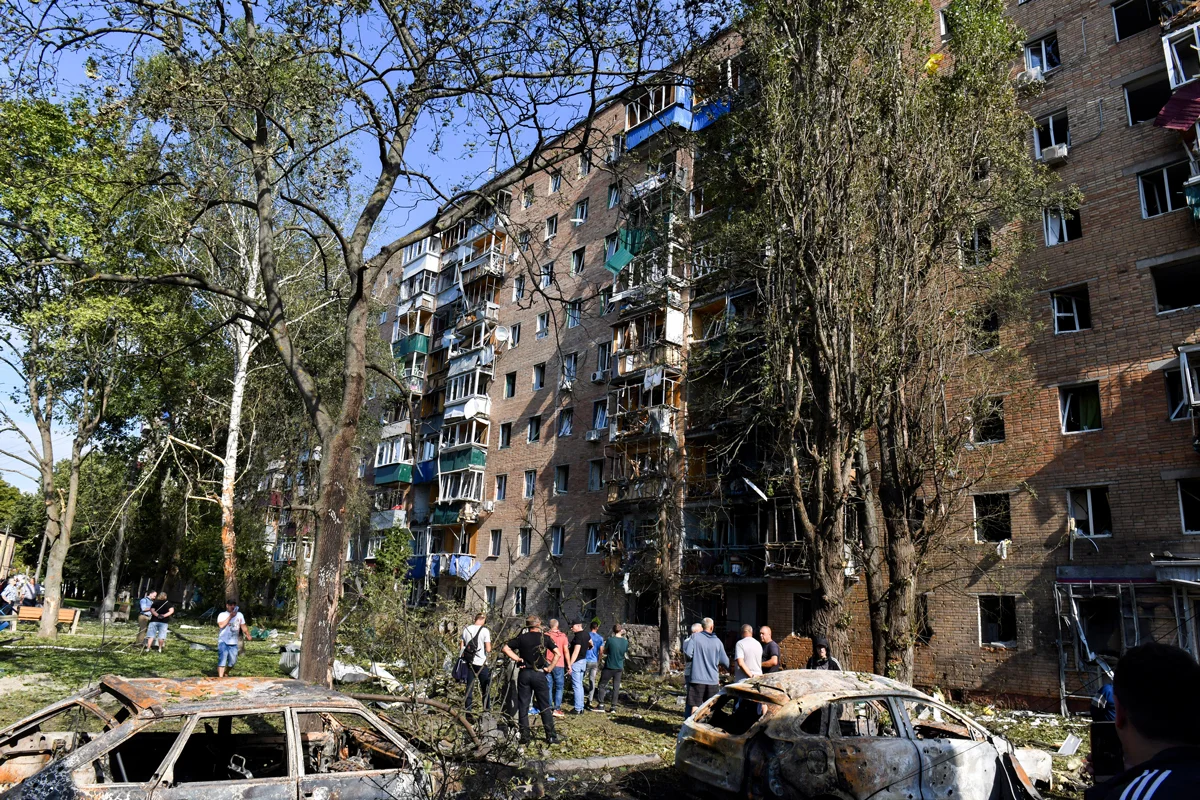
How the authorities receive information about shelling
Mikhailov calls the interaction between law enforcement agencies the most “difficult issue” in the warning of the population. The analyst notes that the “internal cuisine” in the work of structures remains unclear, and “there may be certain problems”.
- In addition, problems may be due to the fact that the flight speed of the same ballistic missiles [which are used for shelling on both sides] is very high, and it is very difficult to warn about rocket hazard, it is very difficult.
- says Mikhailov.
He explains that the attack of the UAV is more difficult to predict: the fact is that modern drones can sharply change the flight route, and it is more difficult to predict their trajectory. Therefore, it becomes more difficult to predict exactly where it will be struck. As such drones, a military analyst gives an example Russian “Shahda” and says that the Armed Forces of Ukraine also use maneuverable UAVs to attack Russian territory.
The analyst emphasizes that only a comprehensive informing system will help to warn the population in a timely manner. It should include not only the military data of intelligence and radars, but also information from the local population. Mikhailov gives an example to Ukraine - there, according to him, uses evidence of citizens who may affect the efficiency and timeliness of the notification.