A ticket to the summer children's camp is one of the benefits that since 2022 began to provide the families of those who fought in Ukraine in the regions of Russia. The resting conditions are different, but even in the camp near Moscow, where comfortable buildings are provided and the help of psychologists is provided, this helps little children who are bored with the fathers. At the same time, the program for these guys is organized with a patriotic bias, and the war itself is romanticized. The journalist of the “New tab” Lola Romanova talked with the counselors and parents who went to the camps on the preferential ticket, and found out how they spent time there.
** The names are changed at the request of the heroes.
"Father cannot be mentioned"
- Mom does not want to communicate with me. She does not pick up the phone. Mom said that I wouldn’t call her anymore, ”recalls the counselor Alina ** The words of the girl from the middle detachment in the Litvinovo camp in the Naro-Fominsky district of the Moscow region.
Children aged 11 to 14 years are distributed into the average detachment.
The father of the schoolgirl at that time was at the front, so she rarely succeeded in calling up with him - he returned home only closer to the middle of the camp shift. Every day, the girl quarreled with her mother, and when she handed over the phone with the counselor, because of family conflicts “She had hysteria,” recalls the counselor Maria **, Alina's partner.
According to the rules of the camp, phones were given to children twice a day - at lunch and before bedtime.
Vacationers in Litvinovo often told each other about their fathers, but sometimes the mention of dads was painful for them. Maria recalls that once she heard Arthur ** from her middle detachment, which was distinguished by bad behavior, "beats in hysteria and suffocates." When Maria was able to reassure him, he complained that the guys insulted his father.
- I talked with the guys [in the detachment], and they almost literally conveyed the conversation with Arthur. The guys approached him, sat down and asked: “Explain what is wrong with your behavior? Parents raised you, mother raised you, father taught the rules of behavior? " And that's it, the child buried. He said that his father cannot be mentioned.
According to the counselor, Arthur was very bored with dad. Maria recalls how, during the shift, they made out a “detachment corner” and the children painted their dream. Arthur depicted his father in military uniform and signed that he dreamed that he would come home. The girl says that about a quarter of the detachment participants made drawings on this subject.
In the "Litvin" children of "Svo" participants are accepted for the second year at the expense of the budget. According to the Ministry of Social Development of the Moscow Region, for the summer of 2024, the families of military personnel allocated about three thousand tickets in this camp. This corresponds to the number of places in six summer shifts (500 people rest in each there). The counselors confirmed that mostly in the detachments there were children of war participants.
It was not possible to find out the exact number of children from the military “new tab” who have rested in the “Litvinov”: the head of the camp Yevgeny Chernikov refused to communicate without coordination with the Ministry of Social Development. The department was not approved by a conversation with him because of the “lack of consent of the parents of children in the camp, on video selection and photography of children for the media.” Moreover, the shooting of children has to do with it, it is not clear: the “new tab” did not request it. However, in June 2024, the 360 channelpublished a video report from the camp.
The television channel of the Government of the Moscow Region.
In Litvinovo, children aged 7 to 15 years are resting. This camp is a branch of the integrated center of social services and rehabilitation, subordinate to the Ministry of Social Development of the Moscow Region. In June, the Governor of the Moscow Region Andrei Vorobyov came there, and in July the camp was visited by Deputy Minister of Defense, the cousin of the President of the Russian Federation Anna Tsivileva.
Some counselors jokingly call the road to Litvinovo “trip to the bunks”-because of the nearby station of the Nara train. However, in reality there are comfortable conditions for relaxation. The pioneer camp opened in 1955 began to reconstruct in the early 2000s, by 2024 several new buildings were built in it, halls for golf, bowling, rollerdrom, darts, billiards and two covered basins. In 2023, Litvinovo entered the ten best camps in the country.
“I don’t want to be like a dad” as a preferential admission to universities becomes a chance for the children of “Swing” for a new life - and deprives the capabilities of other graduates
Patriotism and list of prohibited
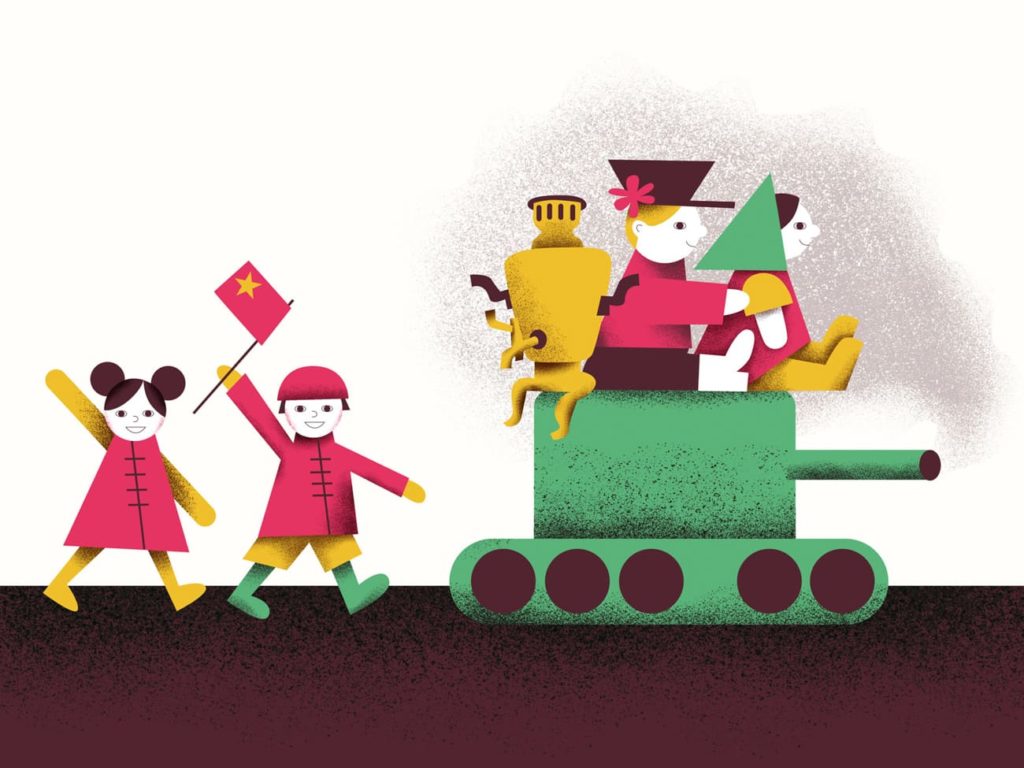
Every day in Litvinovo began with the rise of the state flag and listening to the anthem of Russia. Maria says that over six years of work in children's camps, counselors were first recommended not only to listen to the anthem, but also to sing it.
In the morning, the children went to mugs: they sculpted figures from clay, painted, made soap and studied the art of China.
“Since Russia has a very good relationship with China, they decided to lead a circle where they tell about the country, their traditions, national art, the children made crafts,” said the counselor of Litvinovo, Christina **.
In July, a fair of ancient Russian art worked in the camp, where the guys drove round dances with leading, dressed in folk costumes.
Among the other holidays, in the camp on July 12, the Apostles of Peter and Paul, or Kosovorotka Day, were celebrated. Against the backdrop of inflatable figures of samovar and nesting dolls, schoolchildren played a stream and tug around the rope. At a festive concert, they performed in dresses of Tricolor color, and artists from the Narod-Fominsky Central Palace of Culture performed “folk songs”, including the famous “mother” Tatyana Kurtukova.
In “Litvinovo” this summer, children from China also rested. They arrived with mothers, but lived in detachments with Russian children and attended events in the camp with them. At the end of the shift, the children wrote letters to each other to the future, and the mothers of visiting children read out a small speech in Chinese (there was a translator at the performance). According to Christina, she remembered one point out of this speech the most: “One woman said:“ The world needs peace, countries should be friends. Come to China, we are waiting for you. ”
For children from a tent camp organized in Litvinovo in early August, they conducted a tour in the Moscow Patriot Park, where they talked about the Great Patriotic War and introduced the modern military equipment of the RF Armed Forces.
A tank detergent worked in the camp itself-a track with sides, along which children rode on the mini-version of the T-34 tank and, according to Christina, "were delighted."
In August, one of the filmmakers at Litvinovo showed the Russian military blockbuster T-34 , and also came a soldier Rustam Saifullin, who in 2022 received the title of Hero of Russia for participation in the war with Ukraine. He shared the history of his life with children, and they told him about his brothers and fathers.
The topic of war was touched on in the camp and at other events, for example, at the contest of detachment songs. During the sixth, August shift, the children sang “walking a soldier around the city” and “blue handkerchief”.
The psychologist of the Without Prejudice project , Catherine ** says that “the brain of children is not able to accommodate that a loved one does incorrect things,” and if military-patriotic topics present them in the spirit of romance, this can affect how they perceive the war:
-This can be called as you like: that they [children] became victims of propaganda or in some other way. But many of them sincerely believe that their parents do a good work.
At the meeting, before the opening of the summer season in 2024, the counselor “Litvinovo” was explained what kind of music to choose for children: the songs of foreign performers and foreign agents cannot be included. In order for everyone to be guided by these requirements, the camp sound engineer, according to Maria, posted lists of prohibited performers into the chat of counselors. Most of the names in them are Russian and Ukrainian musicians, artists, poets, writers, actors who condemned the war. Many of them left Russia after February 24, 2022. For some reason, the Ukrainian pediatrician Yevgeny Komarovsky turned out to be among the “forbidden artists”.
Lists of prohibited performers in the Litvinov camp
The lists are given in that form (including headings and notes near the surnames), in which they were received by the counselors.
A full list of foreign artists in Russia
Ramazanova Zemfira. The singer received the status of a foreign agent on February 10, 2023.
Prusikin Ilya. Recognized as a foreign agent in January 2023. Little Big leader.
DRARMINA Ivan Timofeevich (Face)-Russian rap artist, singer and songwriter. April 8, 2022
The Ministry of Justice of Russia introduced a rapper in the register of media - "foreign agents"
Dmitry Lvovich Bykov (at the birth of Zilbertrud) - a Russian writer, poet and publicist. On July 29, 2022, the Ministry of Justice of Russia introduced Bykov in the register of the media - "foreign agents".
Mikhail Grigorievich Shats - Russian TV presenter, showman, humor, theater and film actor.
Makarevich Andrey Vadimovich-Soviet and Russian rock musician, singer, poet, bard, composer, artist, producer, TV presenter, actor; People's Artist of the Russian Federation (1999). The founder, leader and only permanent participant in the rock group “Time Machine”.
Galkin Maxim Aleksandrovich-Russian pop artist, parodist, comedian, showman, stand-up comic, actor, TV presenter. The spouse of the People's Artist of the USSR singer Alla Pugacheva since 2011.
A list of prohibited artists, compiled on the basis of the latest news
White Ruslan Viktorovich - Russian comedian, comedian. On September 1, 2023, the Ministry of Justice of the Russian Federation recognized him as a foreign agent.
Slepakov Semen Sergeevich. On April 4, 2023, he was included in the Ministry of Justice of Russia in the list of foreign agents.
Maksakova-Igenbergs Maria Petrovna-opera singer.
Pokrovsky Maxim Sergeyevich-leader of the rock band “The leg blown!”.
Maxim Leonidov is a former participant in the Bit Quartet "Secret".
Yuri Shevchuk is the leader of the DDT group.
The Bi-2 group. Its participants Yegor Bortnik (Leva) and Alexander Uman (Shura) have the citizenship of Israel and Australia.
Aquarium group. Her leader is Boris Grebenshchikov.
Noize MC-Russian rap artist.
The Casta group.
Group "Accident". Alexey Kortnev, her permanent soloist.
Dmitry "Sid" Spirin is the ex-leader of the punk group "Tarakans".
Valery Meladze - artist.
Konstantin Meladze and Vera Brezhnev. The couple left for Spain.
Little Big group.
ANACONDAZ group.
Anna Netrebko is an artist who has long been living in Austria.
List of prohibited foreign artists. They have been closed to the Russian Federation for 50 years
Nargiz Zakirova
Max Barsky (Nikolai Bortnik)
Mila Sivatskaya is an actress, the most famous for the Russian viewer in the role of Vasilisa in the Trilogy Trilogy.
Svetlana Loboda is a singer.
Elena Sinelnikova is a Ukrainian producer, author of the Oryol and Tails project.
Evgeny Milkovsky is a Ukrainian musician, leader of the Nerves group.
Nikolai Serga, Anton Ptushkin, Andrei Bednyakov, Vladimir Dantes, Marina Grankina - leading the Oryol and Tails project.
Nikita Alekseev is a vocalist.
Alan Badoev is the famous clipmaker from Ukraine.
Potap and Nastya Kamensky
Alina Pash is a Ukrainian singer.
Oleg Bondarchuk - producer of singer Nikita Alekseev.
Monatik (Dmitry Monatik) - Ukrainian vocalist and choreographer, songwriter and composer.
Svyatoslav Vakarchuk ("Elsa Ocean").
Evgeny Komarovsky is a famous television department, who taught millions of parents the rules for raising children.
Yanggo (Yan Gordienko). He was one of the heroes of the show "Eagle and Tails."
Dmitry Komarov is a TV presenter, traveler, author of the TV project "World inside out" on the TV channel "Friday".
Tina Karol (Tatyana Lieberman) - Ukrainian singer.
Irina Schweidak is a singer, a member of the group “One in Canoe”.
Yuri Kaplan (Valentin Strykalo).
Ustim Pokhmursky is a singer, a member of the group “One in Canoe”.
Alexei Zavgorod “Positive” is a singer, ex-participant of the “Time and Glass” group, a soloist of the “Brain” project.
Igor Dzikovsky is a member of the Ukrainian group “One in Canoe”.
Andrei Danilko (Verka Serdyuchka) is an artist, creator of the image of the conductor, pop artist, participant in Eurovision.
Nadia Dorofeeva is a singer, ex-member of the Time and Glass group.
Ivan Dorn is a popular musical performer. Jamala (Susana Dzhamaladinova).
A similar list is used not only in Litvinovo. In an open Telegram chat, where counselors from different camps share tips on organizing recreation, in May they laid out a memo. Under the heading “Artists recognized by foreign agents in Russia”, 30 music groups and artists are listed, including, for example, Yuri Shevchuk and Valery Meladze, who do not have such a status. This is the very list of musicians whose performances in Russia were considered "undesirable." Fontanka published it in July 2022.
Some Ukrainian performers were allowed to listen to discos in the camp. “[The soloist of the group“ Poster Molly ”] Kirill Pale , although the Ukrainian, but the accession of the LPR and the DPR supports, which means that it is possible,” Maria explains. The most “explosive” (that is, causing strong emotions), according to her, were two songs - “I am Russian” by the shaman and “mother” Tatyana Kurtukova. They were usually included at the end of the disco, and, singing, the children jumped and almost broke their voice.
Cyril Palen left Russia after February 2022 and took part in the concerts of the Save Ukraine charitable tour. In 2023, he called the Polish language “UEBANSKY” and invited Poland citizens “speak normal”, Russian, and return to the Russian empire. After a while, the musician apologized for the statements, called the video “A Parody of the Imperial Russian” and recalled that he was born in Ukraine.
True, the counselor Alina recalls, such a delight not covered all the children. Some from time to time were removed from the concert hall, because they had panic attacks: “They began to choke, they were shaking. We called psychologists, but sometimes they were busy, and we [the counselor] had to calm the children ourselves. Some said that they simply became scared from loud sounds, others - that such patriotic songs remind of their father, and they miss. ”
To involve the war in the war as Russian teenagers become militarians-volunteers-for the idea and for admission to universities
"At least my father is alive"
“There were several girls in my detachment from the military families,” says Alina. - One of them was very calm, quiet, and already at the end of the shift I found out that she was not entirely comfortable. She did not understand why many children [the military] tried to attract attention so much.
It was difficult to show care of all children, the counselor was admitted. Despite the fact that, according to Sanpin's requirements in the detachment, there can be no more than 30 children, there were about 50 of them in her middle detachment.
“Parents do not give me attention, and here I do not receive it either. Otherwise, I can’t achieve it with bad behavior, ”recalls Alina's recognition of the child, a military son, from his detachment, which he made in tears. According to her, the boy was a “uncontrollable hurricane”, and every day he had to be brought to the bed and talk with him before bedtime.
- They need more love than ordinary children. They have a more difficult situation at home than the rest, and they need to give affection, which they lost, ”recalls Christina’s instructions that the leaders of summer practice at the Moscow Pedagogical State University gave the counselors. The university collaborates with Litvinovo and sends students to the camp to practice.
Natalia Ryltseva, the mother of one of the girls who received a preferential ticket to Litvinovo as a military child, was satisfied with a rest organized in the camp. According to her, the daughter was especially impressed by the arrival of the head of the Moscow region Andrei Vorobyov: “They gave them T -shirts, treated with ice cream and strawberries. So pleased with this: “To me,” he says, “the governor came.”
The counselor Maria said that the children talked a lot with Vorobyov and told him about their experiences. One of the boys complained that his grandmother “lives in poverty”, and cried. Another child asked the governor to return his father home. Andrei Vorobyov replied that this was impossible, but encouragingly concluded: "We can see."
Not all children can dream of the return of the fathers: someone died in the war.
- I had a very closed boy in my detachment. After some time, he said that a year ago his father died [at the front]. When the family found out, his mother and sister were crying, and he went to another room and did not cry at all, ”says Maria. - In the camp, he had a “novel” with a girl, and she was very worried because she could not get any signs of attention. He simply did not talk to her, was very cold.
It happened that during a vacation in the camp, children learned about the injuries of the fathers. Christina tells how one of the boys reacted to such news: “He came without sadness and said that his dad was bombed, he fell into his head <...> to him [the boy] there was increased attention, of course, at that moment. Mom took him to meet his father, because he was in the hospital. Then he [the child] returned back. "
Psychological studies of children's behavior in the conditions of war or in a clash with its consequences show that the loss of one or both parents can cause the development of PTSD symptoms (post -traumatic stress disorder) in children.
Психолог Екатерина объясняет, что детей участников войны роднит чувство тревоги за близких и при грамотном психологическом подходе это может им помочь: «Если их объединить, чтобы показать, что они не одни, тогда это аналог групп поддержки».
Организовать поддержку в лагере попытались: в каждой смене работали девять психологов, по одному на два отряда. Они проводили тренинги для участников смен и получали от вожатых список «детей в группе риска»:
— Тех, кто в первые дни отказывается от еды, кто спустя неделю адаптации по-прежнему хочет домой и кто ведёт себя агрессивно, — объясняет Мария.
По словам вожатых, психологи помогали им в работе с детьми, но этих специалистов не хватало. А то, с чем детям военных нужно было помогать, порой становилось причиной для буллинга.
— У меня была девочка, у которой за месяц до смены погиб отец. И порой [дети] ей прямо напоминали о том, что с ней случилось, и говорили что-то в духе: «У меня хотя бы отец живой», — рассказывает Алина.
«Шакалы для нас — это страны Запада» Как в российских детях воспитывают воинствующий патриотизм с помощью спектаклей, рассказов, мультфильмов и игрушек
«Всем, кто тебя обижает, дай в жбан»
В середине июня в лагерь приехали дети на новую патриотическую смену «Помни!». Среди них была 12-летняя Лена** в «мешковатой одежде и кепке, из-под которой не было видно волос», вспоминает вожатая Мария.
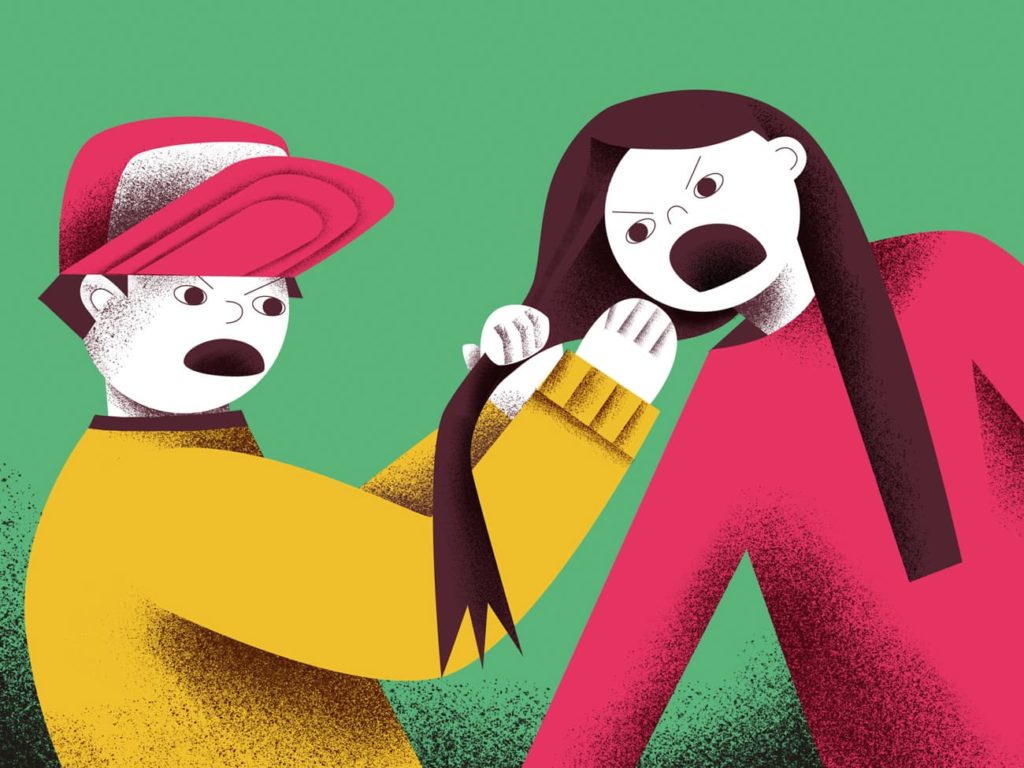
В отряде за Леной закрепились прозвища «гибрид» и «мужик». По словам Марии, вожатые сразу рассказали о буллинге администрации лагеря и попросили психологов поговорить с детьми, но это не помогло. Лена подралась с Наташей**, задирающей её девочкой из отряда (отцы обеих — участники войны). С девочками снова индивидуально стали работать психологи.
— Нас просили обращать внимание на то, о чём дети разговаривают с родителями по телефону, — вспоминает Мария. — Лена сначала позвонила отцу и рассказала, что её обижают. Так как звонок был на громкой связи, я услышала, что отец в агрессивном и повелительном тоне ей сказал: «Значит так, берёшь вещи и уходишь. Через забор или нет — берёшь и уходишь». Потом она позвонила маме, и та в таком же агрессивном тоне сказала что-то вроде: «Всем, кто тебя обижает, дай в жбан ».
Дать в жбан — ударить кого-то (жаргонная фраза).
Спустя несколько дней дети собрались на мероприятии в актовом зале лагеря. Как обычно, Лена пришла в кепке. Девочка положила её на кресло и встала, а кепка провалилась в отверстие между спинкой и сидением. Когда Лена обнаружила пропажу, то подумала, что её забрала Наташа, сидевшая сзади неё.
— Лена обернулась, заорала «Ах ты, сука!» и пошла между рядами к Наташе. Когда она добралась, то замахнулась на неё, а мне пришлось «блокировать удар», — рассказывает Мария. — Я уговорила Лену не устраивать драку, она выбежала из зала и направилась в сторону КПП. Я уже подумала, что она решила прислушаться к совету отца и сбежать, но она начала бить кусты, бросать кепку, орать.
Весь вечер с Леной разговаривал психолог. В лагере девочка пробыла недолго: через несколько дней она заболела и попала в лечебный корпус, откуда её забрали родители.
С отъездом Лены буллинг в отряде не прекратился: Наташа начала задирать другую девочку за то, что та была «маменькиной дочкой» и всегда звонила родителям, когда получала телефон.
Психолог Екатерина согласна, что буллинг был всегда, но говорит, что он может быть и реакцией на стрессовую ситуацию: «Дети, у которых есть зашкаливающая тревога за близких (независимо от того, осознают они её или нет), нуждаются в том, чтобы её куда-то выплеснуть. И это может происходить по-разному, в том числе через раздражительность и злость».
«Понаехали из Мухосранска и ещё что-то требуете». Что рассказывали родители об отдыхе в летних лагерях в регионах
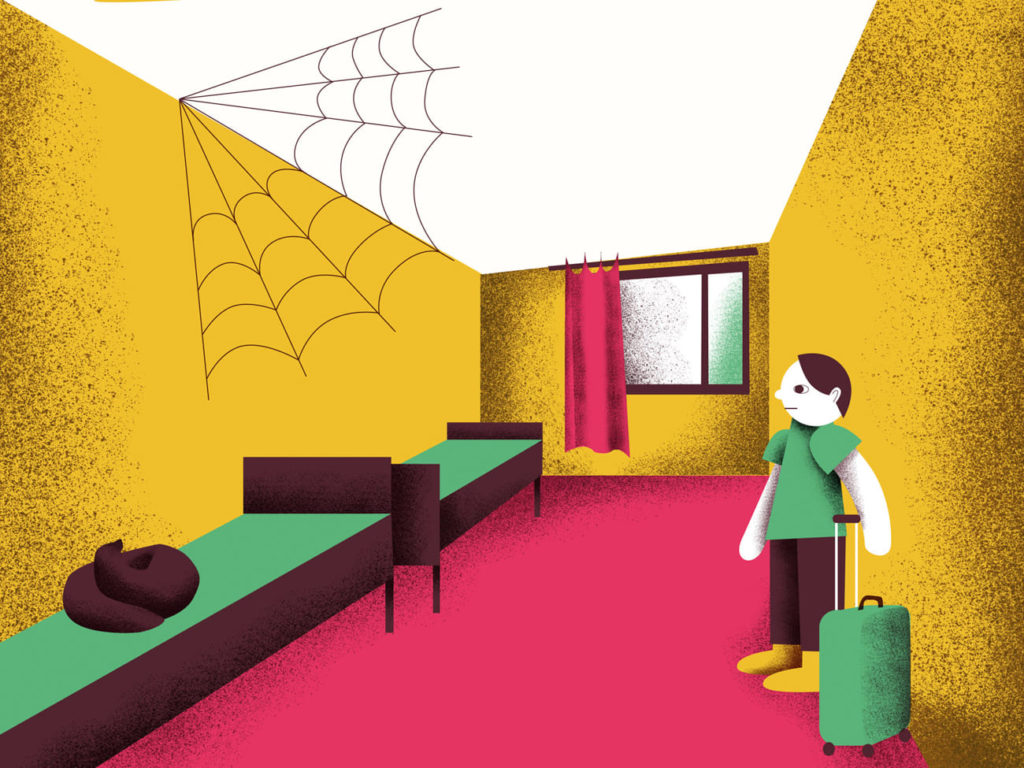
«Литвиново» — не единственный лагерь, куда в этом году отправляли детей участников войны в Украине. Родителям из Волгоградской области дали сертификаты в детский лагерь «Солнечный» в городе Камышине. Мать одной из отдыхавших там девочек, Татьяна Щепоткина, рассказала, что через неделю ребёнка пришлось оттуда забрать:
— Туалеты ужасные, хлоркой засыпано, аж глаза режет, дышать невозможно. Кровати с торчащими пружинами на тонких грязных матрасах. Гениталии на стенах нарисованы.
В ответ на жалобы родителей директор лагеря Ирина Мишанина сказала , что всё это делают сами дети. В 2017 году об антисанитарии в этом лагере говорили депутаты Камышинской городской думы, а в 2022 году дети и родители снова жаловались на «ужасные условия».
Не удался летний отдых и у 146 детей из семей участников войны в Украине из Якутии, получивших бесплатные путёвки в краснодарский лагерь «Зарница». На организацию этого отдыха из бюджета региона ушло почти 35 миллионов рублей. Детей привезли в «Зарницу» 15 июля, а спустя два дня переселили в другой лагерь — из-за коллективной жалобы родителей на клопов, тараканов и «матрасы с запахом мочи», на которых без постельного белья спали дети. В заключении комиссии по итогам проверки лагеря, в частности, говорится, что из-за жалоб на условия в лагере его сотрудники говорили детям: «Понаехали из Мухосранска и ещё что-то требуете!»
«Все люди на большой планете должны всегда дружить»
«Все люди на большой планете должны всегда дружить. Должны всегда смеяться дети и в мирном мире жить», — пели на концерте в честь открытия августовской смены в пансионате «Крымская весна» дети из Курской области.
150 человек — детей и жён участников «СВО» — 1 августа привезли в Судак по программе «Крымские каникулы». Её инициатором стала курская «Ассоциация многодетных, приёмных и замещающих семей», которая в 2024 году выиграла губернаторский грант на 1,5 миллиона рублей.
«Государство предоставляет путёвки в детские лагеря Курской области детям, но количество мест ограничено. А желающих отдохнуть гораздо больше. Женщины очень хотят поехать на море, но сделать это без мужчины в одиночестве многие опасаются», — сказано в описании проекта.
Правда, отправить на отдых все нуждающиеся семьи не удалось и в этот раз. В паблике фонда «Защитники Отечества» Курской области, при поддержке которого организовали отдых в Крыму, родственники участников войны в Украине пожаловались , что им не уделяют должного внимания, и заподозрили, что в поездках фонда участвуют одни и те же люди.
«Очень важно, чтобы каждый ребёнок сегодня здесь чуть отвлёкся от СВО, от того, что папа там. Мам мы тоже пытаемся отвлечь», — рассказывала Татьяна Данникова, руководительница курской ассоциации многодетных. В фонде «Защитники Отечества» Курской области «Новой вкладке» сообщили, что в Крым поехали дети пропавших без вести и погибших военнослужащих.
Для детей и их матерей провели экскурсионную программу, кружки по робототехнике и рисованию. Отдых в пансионате завершился 11 августа. А 6 августа в Курской области начались бои. О том, куда отвезли детей и родителей после окончания смены, в фонде «Защитники Отечества» журналистке «Новой вкладки» говорить отказались.
Summer in the Kosovarok • Novaia vkladka • RIMA — Russian Independent Media Archive