
Translated material
Belgrade battery
Serbia authorities allowed lithium production and received a wave of protests. But the opposition has little chances: in metal they are interested in both Brussels, and in Berlin and in Beijing

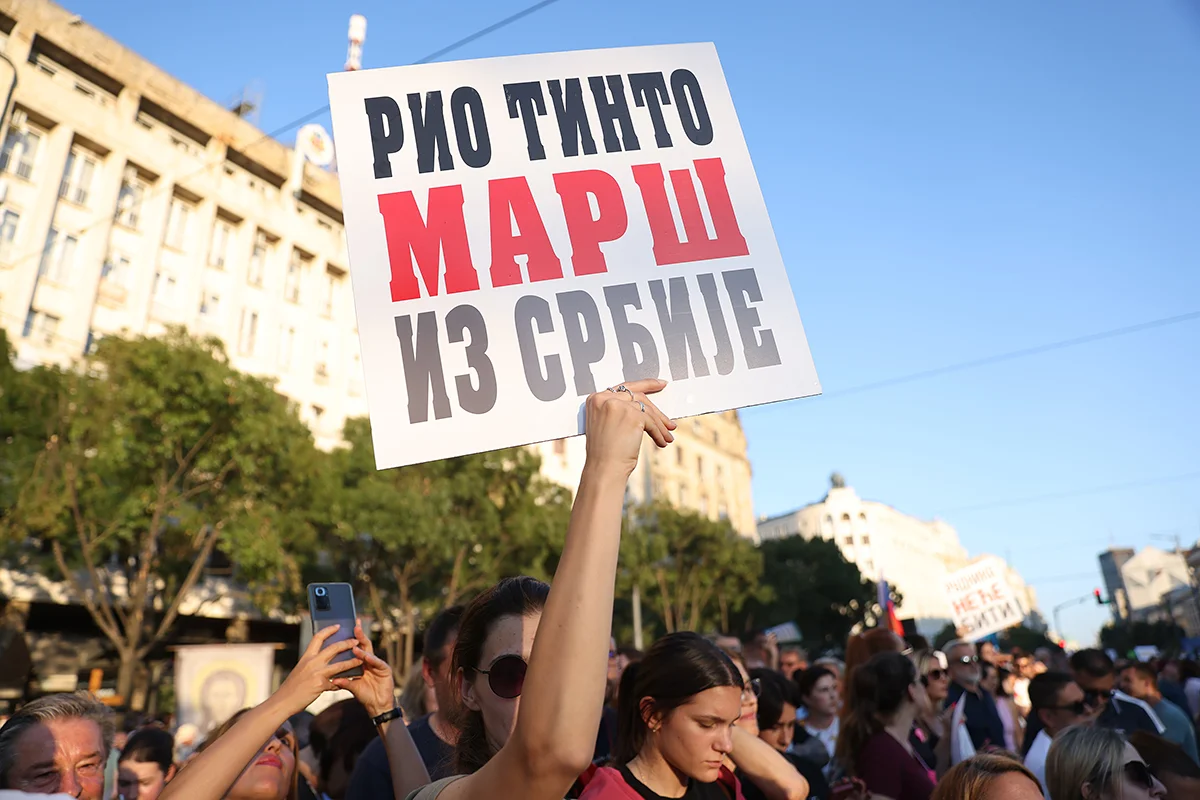
Protesters during a rally against plans to start the production of lithium in Serbia, in Belgrade, Serbia, on August 10, 2024. Photo: andrej cukic / epa-efe
Since mid -August, mass protests are again in Belgrade. Unlike the opposition rallies after the elections at the end of last year, these protests are devoted to the topic that is not quite familiar to Serbia - ecology. Demonstrators require the government and parliament to introduce a complete ban on lithium extraction throughout Serbia.
Earlier, on the eve of the parliamentary elections of 2022, the authorities have already suspended all exploration work on the search for lithium ores in Serbia and did this also under pressure from the street. At the head of the protest, both then and now, stood a young leader of the Ecological Movement of Kreni-Promen (literally-“Moving-Imine”) Sava Manoilovich. Largely due to the success of these protests, its list received second place in the municipal elections in Belgrade this spring.
But in July of this year, the Constitutional Court of Serbia canceled the decision previously adopted by the Government, which made it possible to resume the Yadar project, named so due to the location of the detected lithium deposit in the Valley of the same river in the west of the country, next to the border with Bosnia and Herzegovina.
If in 2022, the government, then Prime Minister Ana Brnabich , opposed the activities of Rio Tinto in Serbia, then this summer the same Brnabich, now holding the post of speaker of the parliament, said that it would be “abnormal” if Serbia abandoned the country's project, “observing high environmental standards”.
Serbia against
In 2021, the Serbian Academy of Sciences and Arts opposed the Yadar project, arguing primarily by its opacity. A clear project on how the production process will be arranged, and most importantly, the company’s waste disposal is not submitted. In 2022, a member of the Serbian Academy, Slobodan Vukosavich , wrote that the implementation of the Yadar project is able to lead to a “massive deviation of the territory, a change in the landscape, degradation of biodiversity and water resources, as well as the resettlement of the population and the constant risk of surrounding villages and the nearest city of Loznitsa.”
Polls in Serbia show that
Residents consider the environmental threat to quite real: more than half of the country opens against lithium extraction in the country, while they support the development of the field only a little more than a quarter of the population.
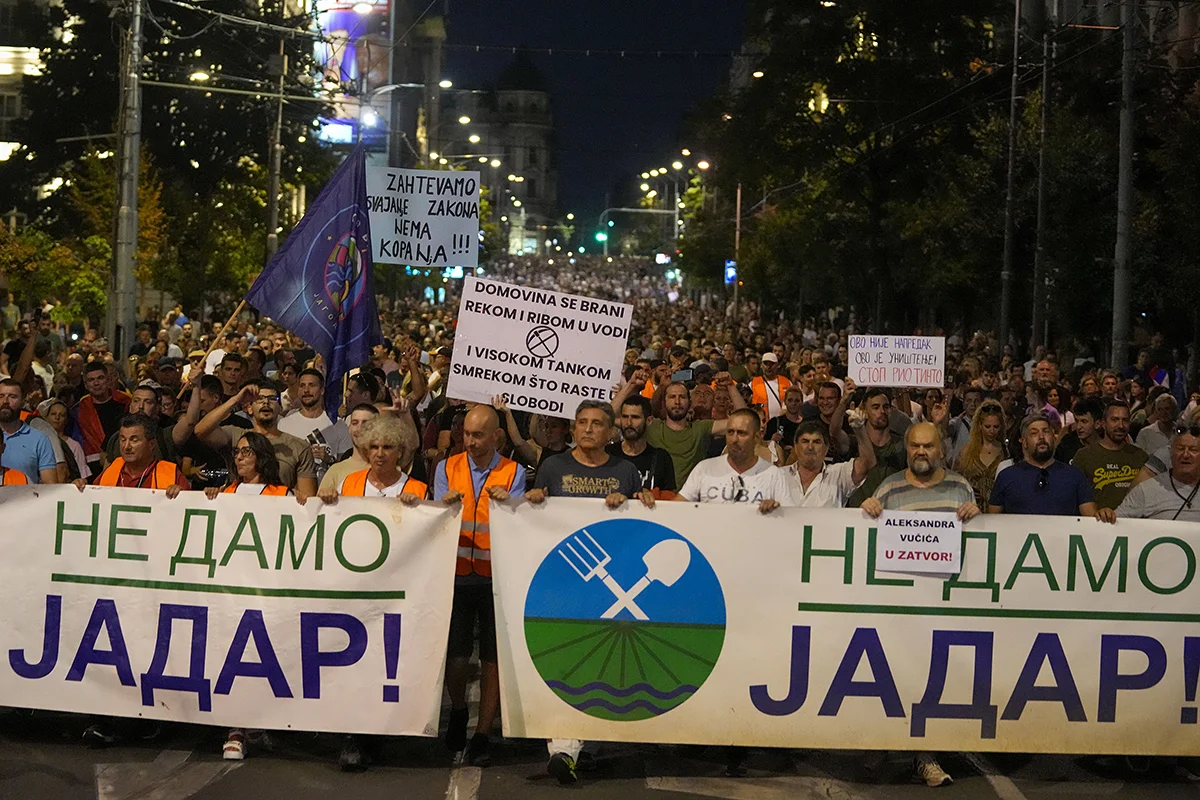
Such public moods explain such a sharp reaction to the abolition of the moratorium. On August 10, about 40 thousand Serbs gathered for a rally against Yadar. At the peak of the most successful protests for the opposition in May 2023 , caused by the first scullet in the history of Serbia, up to 60 thousand people in Belgrade. However, this time the geography of the protest is wider and covers not only the metropolitan region, but also several dozen other cities. The organizers position these demonstrations as general and non -party.
Between Beijing and Berlin
Rio Tinto is the second world's world's largest corporation for mineral production and metalworking, founded 150 years ago in Spain. The shares of the company are located simultaneously on the London and Australian exchanges. The largest investor is the Chinese Corporation of Aluminum Corporation of China Limited with 14.6% of the shares, followed by the British BlackRock investment fund with 6.1% as well as a number of American and European investors.
Despite the fact that the main owner of the Rio Tinto, as well as the main consumer of the corporation’s products, is China, he does not appear in the slogans of the protesters. On the contrary, Serbian ecological movements associate with Rio Tinto and actively criticize the authorities of Germany, Britain and the USA, accusing them of interfering of the internal affairs of Serbia.
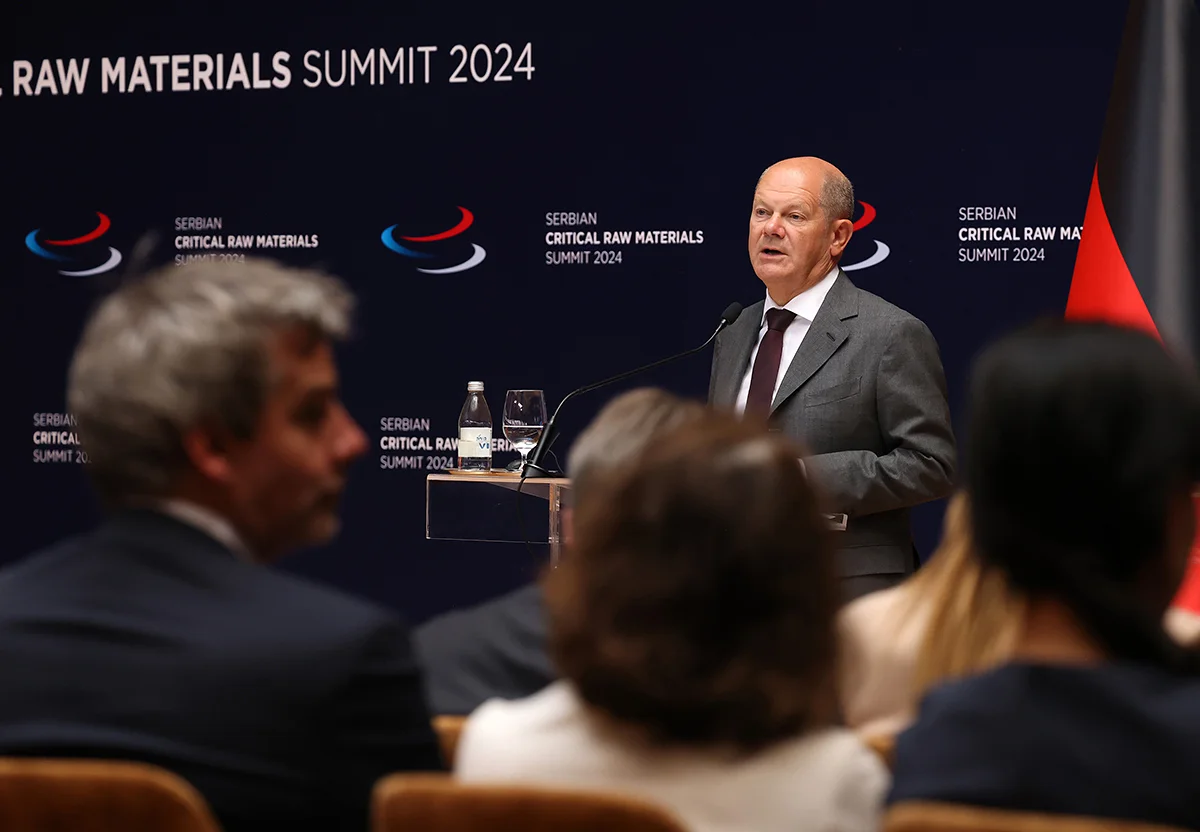
The dissatisfaction of protesters Berlin is explained by the recent visit of German Chancellor Olaf Sholts to Belgrade, this visit was actually an act of support for President Serbia Alexander Vuchich to launch lithium production in the country.
After a series of meetings, Sholts said that today Litius is “just as important for [the development of the transport industry] in the world, as far as oil has been important.” Earlier, the Ambassador of Germany to Belgrade Anke Conrad also spoke about “economic benefits” for Serbia from the project.
Official representatives of Great Britain and the United States also performed in support of Rio Tinto.
Such a reaction of the Western capitals, and especially Berlin, is explained by the interest of the European automobile industry in a stable source of lithium - the main resource necessary for the production of batteries for electric vehicles. In this May, the EU entered into force a new law on critically important minerals, the purpose of which is to reduce Europe's dependence on the supply of raw materials from China. Among other things, the lithium, which is now supplied to the EU market, also included, mainly from the Middle Kingdom.
Germany, as the largest manufacturer of electric cars in Europe, is experiencing an increasing need for lithium. In recent years, the EU has launched its own enterprises in its extraction - for example, in the Ustetsk Territory in the Czech Republic - but the demand is constantly growing, and it has not yet been possible to sharply reduce dependence on China. For the German economy, which largely depends on the automotive industry, the reliable source of lithium has “great and critical significance”, Fabian Biach from the German Institute of Technology in Karlsruhe explained . In addition, environmentally friendly requirements for the extraction of this raw materials in Serbia are really lower than the EU standards, which, in conjunction with cheaper labor in Serbia, will make it more competitive in the market.
According to the Yadar project, Rio Tinto plans to mines 58 thousand tons of lithium per year, which is enough for production more than 1.1, million electric cars, or 17% of the total volume of these products in the EU per year.
Paradoxically, in the end, in the launch of the project in Serbia, he was interested in both China, preparing to receive a significant part of the profit, being the chief investor of the Rio Tinto and the EU authorities, expecting to obtain the necessary raw materials for auto-concerts and maintain economic growth through them.
Lever for Vucich
The President of Serbia Aleksandar Vuchich is also interested in the Rio Tinto project. He assures citizens that lithium mining is the country's path to economic leadership in the Balkans.
In fact, the direct economic benefit for the Serbian state from the "Yadar" is not obvious. According to tax legislation, 5% of the annual income of the enterprise will enter the budget of Serbia. According to estimates of procologically -minded analysts, this will give Serbia about $ 16 million a year. A more optimistic estimate brings the amount to 190 million dollars. But this is still less than, for example, Serbia's annual income of $ 280 million from raspberry exports.
The construction of an enterprise in production will also create jobs in the Western of Serbia, which should positively affect the standard of living in this border with the Bosnia and Herzegovina region. However, we are talking about a little more than a thousand jobs with almost 3 million working people of Serbia.
Nevertheless, Vuchich himself “Yadar” is beneficial politically.
The RIO Tinto project can become for the Serbian leader a kind of “northern flows” for Vladimir Putin: the supply of lithium to Germany and the EU will give Vuchich an additional lever in negotiations with Berlin and Brussels.
Belgrade will be able to exchange the well -being of the enterprise important for the economy of Europe for assignments regarding the assessment of the state of Serbian democracy, the negotiation process with Kosovo and, finally, promotion on the issue of Serbia membership in the EU.
Some analysts, on the contrary, believe that the growth of the economic interdependence of Belgrade and the EU increases the chances of the victory of the pro -Western course in Serbia. Financial Times writes that “Yadar” is “another proof that although Vuchich continues to maintain political relations with China and Russia, it integrates its economy with Europe and the United States.”
"Yadar" will be built
Given the EU’s interest in the Rio Tinto project, demonstrators should not count on the great success of the current wave of protests.
In addition, the Serbian opposition is currently seriously split. Several parties boycotted repeated municipal elections in Belgrade, appointed after large -scale demonstrations and doubts about the honesty of votes in the capital in December last year. This camp includes traditional liberal forces with the dominant role of the Freedom and Justice Party of the former mayor of Belgrade Dragan Dzhilas.
The second group in the opposition is represented by new social democratic movements, united in the "Green Levy Front". These forces did not support the boycott of the elections in Belgrade, but they did not perform them very successfully. The third camp is currently rapidly growing, mainly due to the already mentioned movement of Kreni-Promena, led by Savoy Manoilovich-one of the most active participants in current and past protests due to the development of lithium deposits.
All three groups of oppositions have not yet expressed desires to formally unite and opposed a united front against the party of Vuchich and the Yadar project. Nevertheless, the next major environmental rally is scheduled for August 31, and so far it is not possible to bring down a wave of demonstrations from the Serbian government.