
Translated material
Pelevin and Harry Potter were removed, methods of protection from a nuclear explosion were added: what changes were made to the school curriculum in the new school year
Students will also be taught how to assemble UAVs and talk about male and female roles in the family.
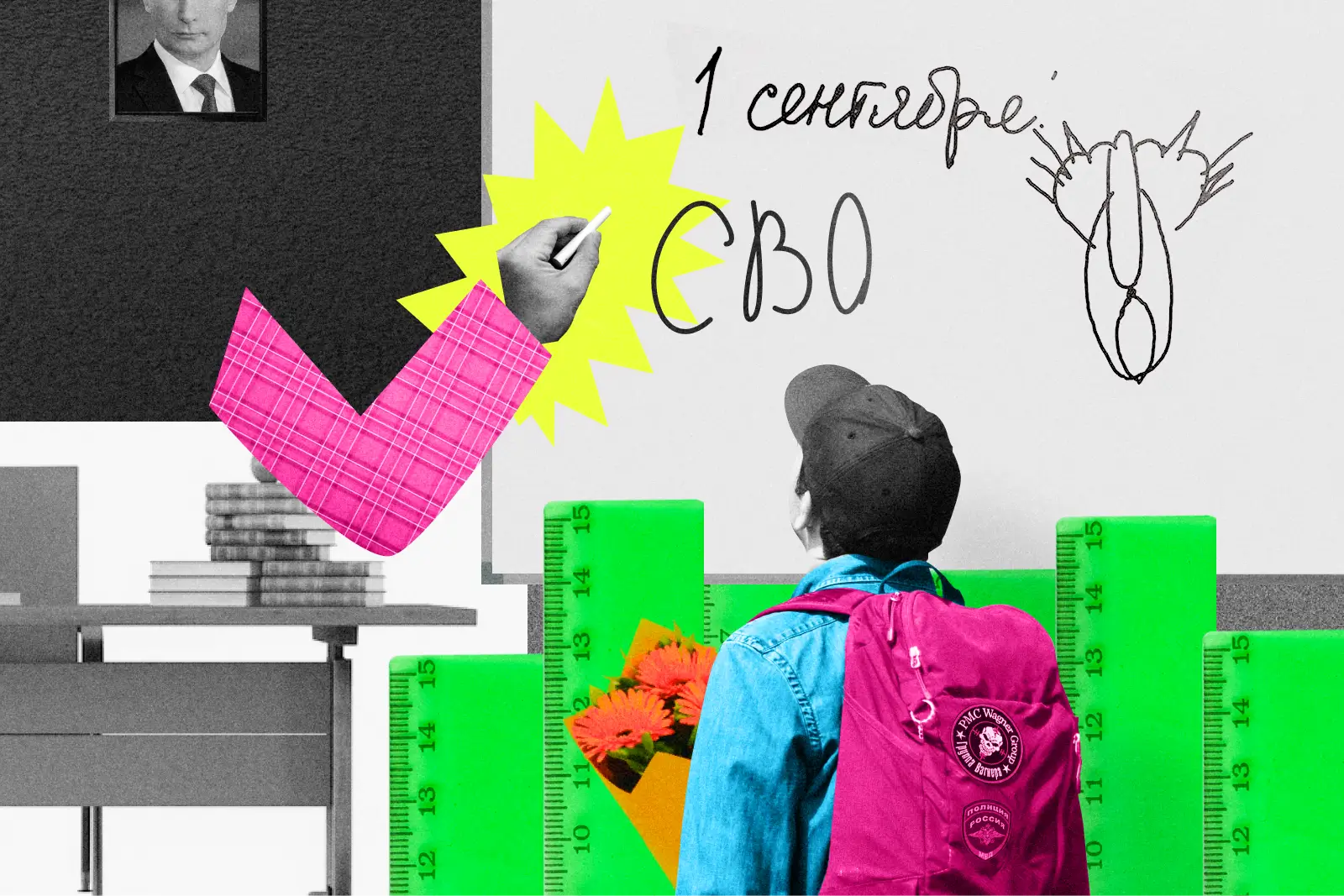
Methods of protection against weapons of mass destruction, a lesson in Family Studies, Motorola and Daria Dugina as role models, a lecture on the 120th anniversary of TASS, control of drones and no mobile phones. “Vorstka” found out what Russian schoolchildren and their parents should expect from the new school year.
In order not to miss new texts from “Layout”, subscribe to our telegram channel
Extracurricular activities
Russian schoolchildren will traditionally begin the new school year with the lesson “ Talking about Important Things ,” which will take place on September 2 after the anthem and flag raising. The first lesson will be dedicated to the Day of Knowledge, and a week later, on September 9, the second one will be held, dedicated to the 120th anniversary of TASS. It will tell schoolchildren that the state information agency is a source of “reliable information about Russia for the whole world.” “You must be able to analyze and evaluate information, recognize fakes and not spread them,” says the lesson description. In total, in the 2024/2025 academic year, Russian schools will host 35 “Conversations about Important Things” lessons.
According to a recent survey by the All-Russian Center for the Study of Public Opinion (VTsIOM), Russians consider “Conversations about Important Things,” as well as “Fundamentals of Religious Cultures” and military training, to be among the most useless school subjects. Less than 5% of respondents stated their importance.
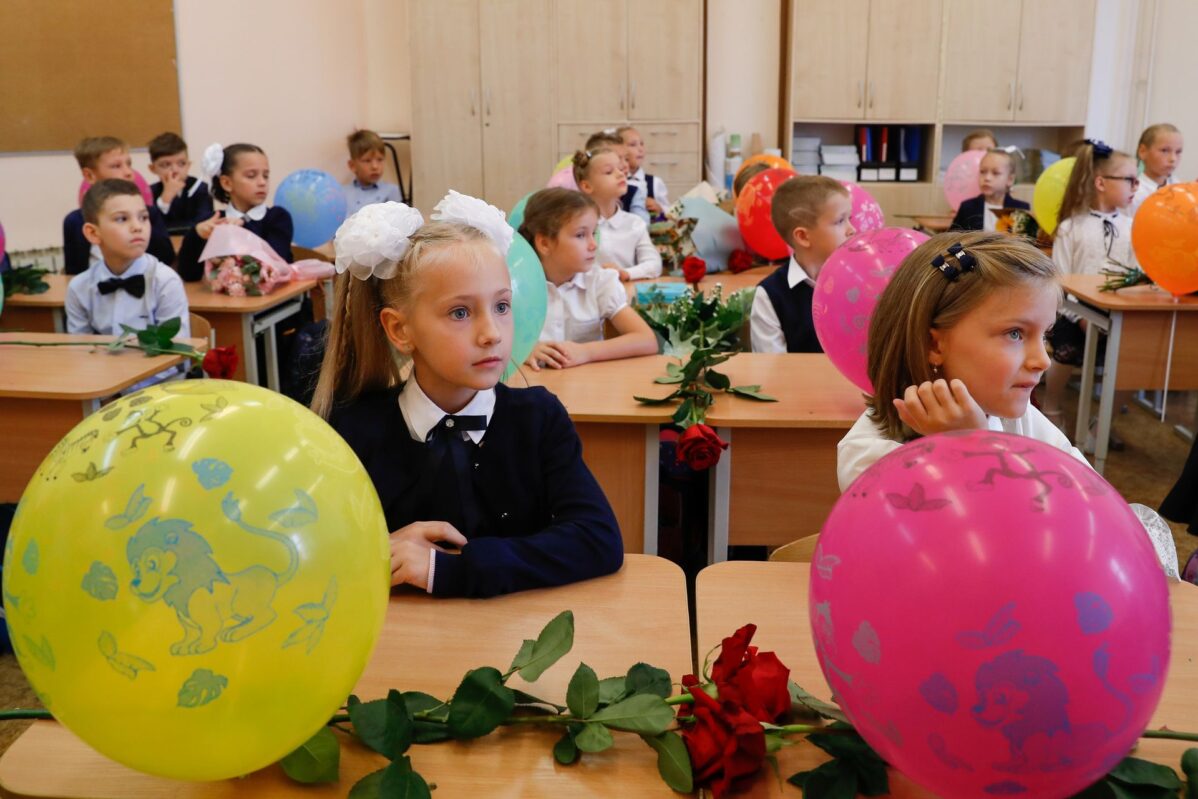
Also in the school curriculum this academic year there will be a new extracurricular subject - “ Family Studies ”. It was proposed to be introduced by the head of the State Duma Family Committee, Nina Ostanina, who this summer stated that the law on domestic violence cannot be adopted in the Year of the Family. The subject program was compiled by the Institute for Educational Development Strategy. The authors of “Family Studies” believe that the subject should introduce students in grades 5–9 into the “traditional system of family values for our Fatherland” and form in them “pro-family value-semantic attitudes,” such as “marriage, large families and chastity.”
The importance of “Family Studies” is explained in the work program by the fact that now the value of the family is “devalued under the influence of the negative influence of elements of destructive ideology.”
At “Family Studies,” schoolchildren will be told about the procedure for registering a marriage, family budget planning, male and female roles in the family, “the pros and cons of a young family living together with children with their parents,” children’s pocket money, loans and deposits for families, maternity capital and mortgages, etc. At the last lesson, students will analyze the website of the Commissioner under the President of Russia for rights of the child.
In addition to promoting “traditional values,” extracurricular activities will include propaganda of militarism. Starting from the new academic year, educational programs on the development, production and operation of unmanned aircraft systems (UAS) will be launched in 523 schools and 30 practical training centers of Russian colleges. Such courses will appear , including in schools in the Belgorod, Voronezh, Moscow, and Chelyabinsk regions - in 30 regions in total. All institutions participating in the project will have training drones and training flight sites. They promised to train more than 2.5 thousand teachers to teach the new subject.
“The UAV operator will be able to find work in military structures, private companies and commercial organizations involved in industry, trade, and research. Cameramen can work for themselves, filming weddings, concerts, collaborating with film studios, advertising agencies and other companies that need high-quality photographs and videos,” said Larisa Tutova, a member of the State Duma Committee on Education.
What will be added to the school curriculum for the 2024/2025 school year
This school year, a new subject will appear in the school curriculum - “Fundamentals of Security and Defense of the Motherland” (Fundamentals of Security and Defense of the Motherland) (Fundamentals of Life Safety) (Fundamentals of Life Safety). This change was announced last year, when it was reported that employees of the Ministry of Defense and the Ministry of Emergency Situations are helping to draw up the curriculum. OZR will be studied from grades 5 to 11.
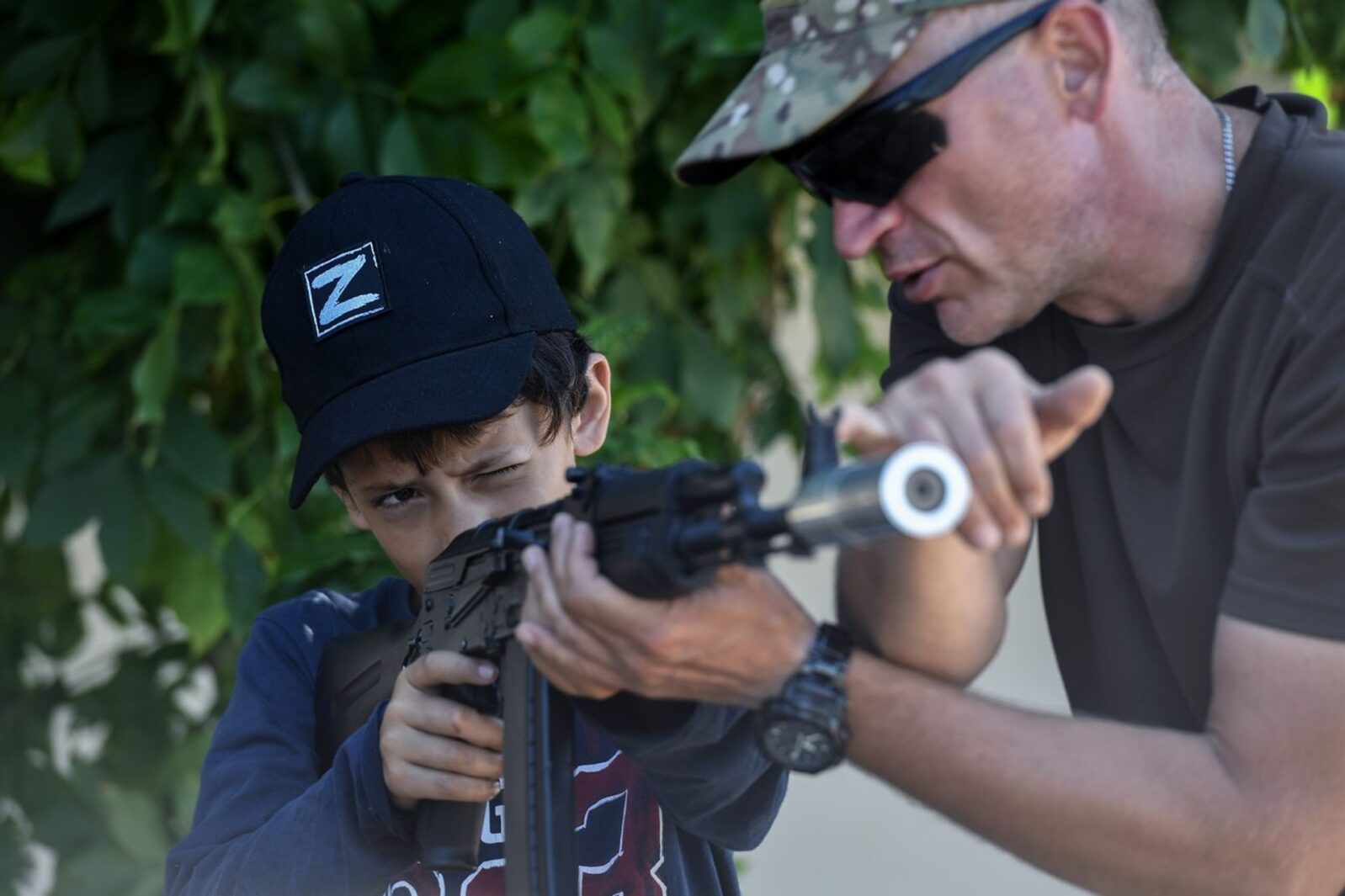
In November 2023, a version of the OZR educational standards document was published , which stated that the subject program for grades 10–11 should reflect “the level of knowledge about the elements of initial military training i ; acquiring knowledge of safety requirements when handling small arms.” The document also noted that the new standards imply “the formation of ideas about modern combined arms combat; understanding of the possibilities of using modern achievements of scientific and technological progress in modern combat conditions, including methods of combat use of unmanned aerial vehicles.”
However, in February 2024, it became known that the Ministry of Education decided to abandon the requirement for schoolchildren to master “ideas of combined arms combat.” Instead, within the framework of the subject, high school students should form “ideas about the combat properties and damaging effects of weapons of mass destruction, as well as methods of protection against them.” The clause on the use of UAVs remains.
In addition to weapons, at the OZR schoolchildren will learn how to counter “extremist and terrorist activities” and develop “intolerance for violence in social interaction.”
In addition to life safety, technology will be replaced by a new - or rather, old - item. Instead, Russian schools will again teach labor lessons. It will include mandatory and optional modules. Mandatory courses include “Production and Technology”, “Material and Food Processing Technologies”, “Computer Graphics. Drawing", "Robotics", "3D modeling, prototyping, prototyping". Optional modules include “Automated Systems”, “Animal Husbandry” and “Crop Production”. The Ministry of Education added that “depending on the socio-economic needs of the region,” additional variable modules can be developed, for example, “Aircraft modeling,” “Media technologies,” “City farming” or “Resource-saving technologies.” The ministry did not specify how one teacher would be able to teach all these modules.
“The system itself does not understand what it wants from technology. The authorities don’t delve into what she is like now,” noted a teacher at one of the St. Petersburg schools in a conversation with Vorstka. — The developed theory of the subject has absolutely no correlation with practice. If it had been developed efficiently, it seems to me that a sufficient number of teachers would have switched classes even in the absence of any technical capabilities. But in the end everything is dumped on themselves, and, of course, teachers will resist. And as a result, students won’t get what they should because teachers are overworked.”
The Prosveshchenie publishing house, which publishes textbooks for Russian schools, explained the need to return labor as follows: “The division of ‘boys have stools, girls have aprons and salads’ limits children’s knowledge of the vast world of technology. Modern information technologies, technologies for obtaining and converting energy, robotics, and agriculture remain “overboard.”
What changes in the academic year 2024/2025 in existing subjects
In the 2024–2025 academic year, the study of the literature program in grades 5–11 will change . As the Parliamentary Gazette wrote , the Ministry of Education proposed to “update” it in connection with “the changed geopolitical situation.” Thus, the series of books about “Harry Potter”, the work of the British writer Diana Johnson “A House with Character” and the works of domestic and foreign prose writers of the second half of the 20th - beginning of the 21st century on the topic “Man in a situation of moral choice” (Jerome Salinger, Katherine Paterson, Bel Kaufman) will be excluded from the list of works being studied. In 7th grade, the topic of intergenerational relationships, human development and choice of life path will be excluded from the curriculum.
The works of some domestic authors will also be removed: Bulat Okudzhava, Vladimir Vysotsky, Evgeny Yevtushenko, Yunna Moritz, Alexander Herzen, Alexander Kushner, Victor Pelevin and others. Zakhar Prilepin, who was included in the school curriculum at the same time as Pelevin, remains.
Prilepin himself tried to expand the school curriculum through books published by his Tradition foundation together with the Defenders of the Fatherland foundation. Among them are “No One Will Survive This Life” by German Sadulayev, “To the Music of Wagner” by Alexander Pelevin, “Beyond the Currant River” by Anna Dolgareva. The catalog also presents collections of stories by participants in the invasion of Ukraine, published by Defenders of the Fatherland: “Life for one’s own” and “There is no bond holier than comradeship.” But so far his proposal has remained unanswered.
Also, patriotic innovations, as in the previous two years, will affect the history lesson. Recently, the Russian Institute for Educational Development Strategy (ISRO) published a methodological letter on the features of teaching history in the 2024–2025 academic year. According to the document, history teachers must educate “students in the spirit of patriotism, respect for their Fatherland - the multinational Russian state, in accordance with the ideas of mutual understanding, harmony and peace between people and nations, in the spirit of the democratic values of modern society.”
The authors of the document invite teachers and students to “pay special attention” to the list “Our Heroes”, published on the portal “Unified Content of General Education”. It includes statesmen, scientists and military personnel, including participants in the war against Ukraine. The list includes the names of war criminal and participant in the war in Donbass Arsen “Motorola” Pavlov, the commander of the DPR artillery unit Olga Kachura, who died under shelling in Gorlovka in July 2022, the head of the “People’s Council of the DPR” Vladimir Zhoga, the actively supporting Kremlin conductor Valery Gergiev, the murdered daughter of a philosopher and ideologist of the “Russian world” Alexander Dugin Daria and others.
Last year, grades 10–11 switched to a new unified textbook, and, as the Ministry of Education promised, the same should have happened with grades 5–9. In August 2023, the authorities said that a single textbook would be ready by the beginning of the next academic year; at the beginning of August 2024, the deadline was changed to the 2025-2026 academic year, in mid-August - to the end of 2024. Ultimately, they promised to present unified textbooks in early September. But it is unknown when schoolchildren will start studying them.
“Layout” talked to a history teacher at one of the schools in St. Petersburg. She believes that a single textbook for primary school is a good idea, however, as in the case of a textbook for high school students, it will somehow contain propaganda: “In my opinion, this is a very good thing, because when studying history from different textbooks, children are faced with a huge number of inconsistencies. This idea has been talked about for quite some time. Another thing, I think, is that ideology will penetrate into this textbook. Of course, this will harm the construction of children’s picture of the world.”
Another subject that is expected to change is a foreign language. In October 2023, the head of Rosobrnadzor, Anzor Muzaev, announced that all-Russian testing in foreign languages would not be carried out in Russian schools from the next academic year. “We will definitely no longer conduct educational training in foreign languages. This decision was made in a consolidated manner,” he said.
Russian authorities have long been trying to relegate the teaching of foreign languages in schools to the background. “The question is, what languages do we need now in the current situation? Maybe birdhouses are even more necessary than tongues,” said State Duma Deputy Chairman Pyotr Tolstoy this summer.
What changes are planned in the Unified State Exam 2025
In August, the Federal Institute of Pedagogical Measurements, which compiles exam models, published trial versions for the Unified State Exam 2025, as well as materials for it. From the samples it follows that the Russian language exam has undergone the biggest changes. Firstly, the authors of the exam plan to expand the assessment criterion of “compliance with ethical standards”, for which purpose in the block “speech formatting of an essay” they have prescribed specific violations, due to which the student may lose points.
“The work provides examples of extremist and/or other materials prohibited for the production and distribution among minors / socially unacceptable behavior of people / there are statements that violate the legislation of the Russian Federation (propaganda of fascism, anti-state ideas, non-traditional values, the use of obscene language, foreign words that have commonly used analogues in the Russian language and are not contained in standard dictionaries, etc.),” the document says.
They also want to remove from the essay the part about finding a problem in the text, since the task itself now contains its formulation. Now the students must give their comments on the problem. Finally, essays can no longer include examples from comics, anime, manga, fan fiction, graphic novels, and computer games.
Significant changes have also occurred in the Unified State Examination in literature. To pass the exam, schoolchildren no longer need to read the works of domestic dissident writers - Varlam Shalamov, Vasily Aksenov and Georgy Vladimov. Evgeny Grishkovets, Ksenia Dragunskaya, Vladimir Makanin and Viktor Pelevin were removed from the list of must-read modern authors, as well as poets who criticized the Russian authorities at different times - Dmitry Prigov, Timur Kibirov and Olga Sedakova. George Orwell, Franz Kafka and Aldous Huxley were removed from the list of foreign literature of the 20th century. They also added to the list of required literature a book by Metropolitan Tikhon (Shevkunov), close to Putin, “The Death of an Empire. Russian lesson."
In the demo version of the Unified State Exam in History for 2025, questions about the war in Ukraine again appeared. For example, in task No. 14, where graduates are asked to correlate geographical objects with historical events and dates among cities, Kherson appeared - an eleventh grader must answer that the city became part of the Russian Federation in the 2020s. In question No. 5, in which it is necessary to correlate historical events with their participants, Vladimir Zhoga, commander of the Sparta battalion in the “DPR”, who died in the war in March 2022, appears on the list along with Zoya Kosmodemyanskaya, Peter I, Peter III, Catherine II and Ivan Kozhedub. The graduate must associate his last name with “Special Military Operation.”
In the new school year, schoolchildren will be prohibited from using mobile phones even for educational purposes.
From September 1, schoolchildren will no longer be able to use mobile phones in class, even for educational purposes. “To do this, the teacher can use an interactive whiteboard, computer, tablet, or candy bar. If you need to show children some video materials or conduct a test,” said the first deputy chairman of the State Duma Committee on Education, Yana Lantratova. According to her, students can use personal phones only in emergency cases when there is a threat to the life and health of students or teachers.
“Phones interfere with studying. The ability to quickly search for information on the Internet devalues it for schoolchildren: the children do not understand why they need to learn something if they can Google it. There were also complaints from teachers that students were filming them on their phones and bullying them,” Lantratova said.
How will the new academic year be organized in the Kursk region?
Finally, the most striking difference between this school year and previous ones is that the war directly affected Russian schoolchildren. Due to the offensive of the Armed Forces of Ukraine, more than 100 schools in border regions will begin the school year in a distance learning format. We are talking about Belovsky, Bolshesoldatsky, Glushkovsky, Korenevsky, Lgovsky, Rylsky, Sudzhansky and Khomutovsky districts, where the evacuation of residents has been announced, as well as Kursk and Kurchatov, where the Kursk Nuclear Power Plant is located. A mixed learning format is being introduced in schools in Dmitrievsky, Konyshevsky, Kurchatovsky, Medvensky, Oboyansky and Oktyabrsky districts. Full-time education is planned only in 17 municipalities of the Kursk region.
The governor of the Belgorod region, Vyacheslav Gladkov, said that distance learning will also operate in 113 schools located 20 km from the border, “since the situation in these areas remains tense.”
Judging by the comments on the page of the Ministry of Education and Science of the Kursk Region, parents are not given specific instructions on how to transfer their children to distance learning:
“Textbooks are, of course, wonderful, but what about everything else: notebooks, manuals, office supplies? All this was purchased in advance and it is not possible to buy it all again now,” “Please tell me how parents of elementary school children (especially parents of first-graders) can ensure distance learning for their children at home? Многим родителям для этого придётся увольняться с работы. Will there be some kind of order for employers obliging them to provide parents with paid vacations, some days off with continued pay, etc. during children’s distance learning?”, “How will the school (or operational headquarters) ensure the safety of children who are left at home alone? What rules of conduct will be regulated when a missile threat is declared?”
In response to their questions, parents either do not receive any answers, or only prepared replies: “For additional information, please check with the Committee on Labor and Employment,” “The school is responsible for the students during their stay at the educational institution.”
Cover: Dmitry Osinnikov
You can support “Layout” from any country in the world - it is still safe and very important. We really need your support now. How to help us →