
Translated material
The Kremlin decided to talk less about the Armed Forces of Ukraine in the Kursk region
Governors are recommended to prepare places in temporary temporary detention centers, and federal politicians are advised not to talk about conscripts
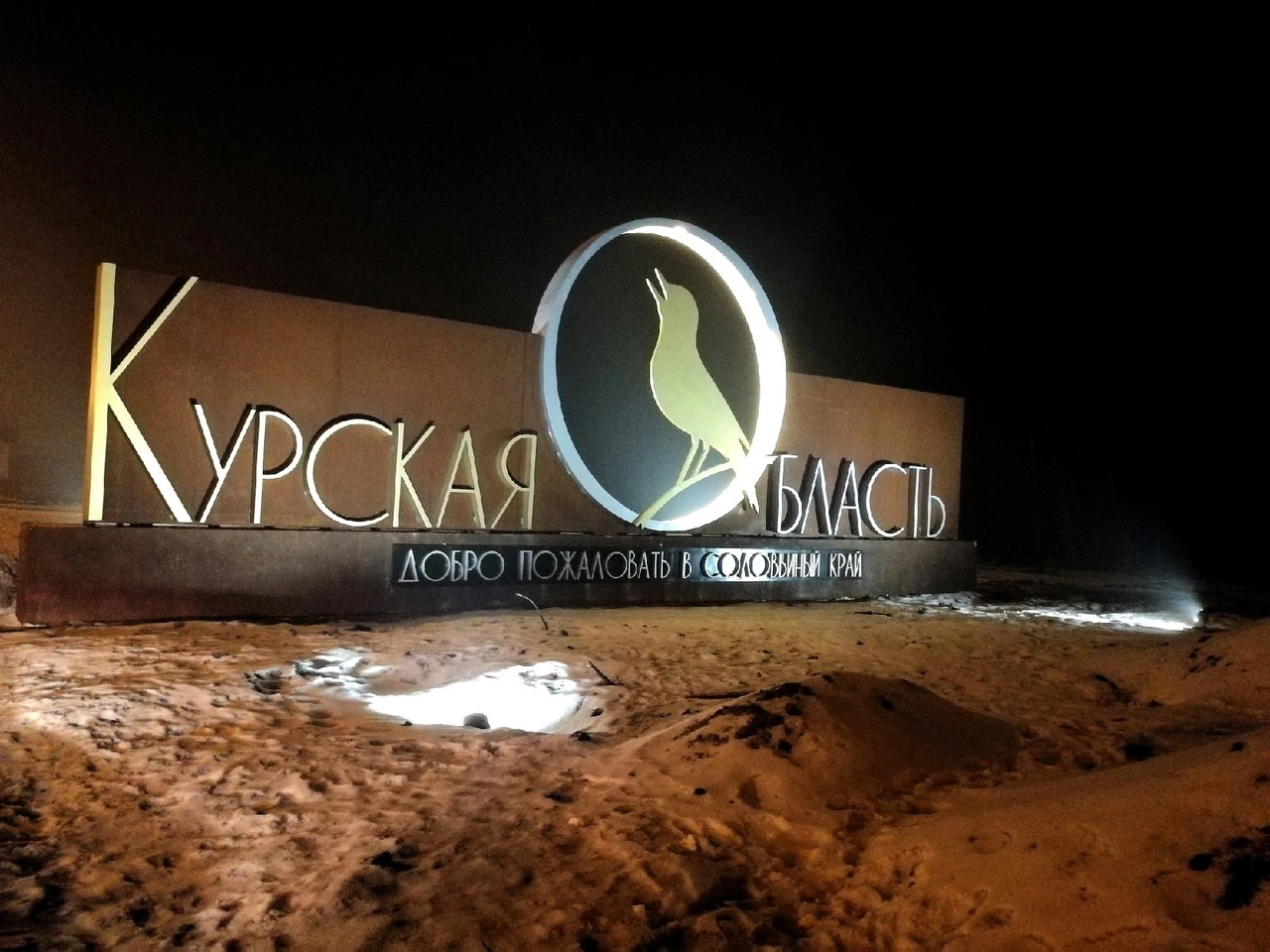
More than three weeks after the Armed Forces of Ukraine gained a foothold in the Kursk region, the Kremlin decided not to use this topic for the next “patriotic upsurge” of the population. Vorstka’s interlocutors close to the presidential administration speak about this. It follows from the manuals and recommendations for federal officials and governors that it is more important to maintain the feeling that the situation is under control. Sociologists summarize that Russian society as a whole reacted to the Ukrainian invasion rather inertly.
In order not to miss new texts from “Layout”, subscribe to our telegram channel
Public politicians are advised to refrain from assessing and analyzing the invasion of the Kursk region, as follows from the United Russia manual for party members. The press services of the governors were recommended to be “prompt and regular” in issuing information on the situation, says another manual sent to the regions from the Kremlin, but their data must be coordinated with the law enforcement agencies (“Vorstka” has read the contents of both documents). “It is recommended to give reserved comments. С 6 августа принципиально ситуация не изменилась. Both governors and deputies are recommended to support humanitarian initiatives aimed at helping residents of the Kursk region,” added the source close to the presidential administration.
United Russia is recommended to focus on collecting humanitarian aid for the Kursk region
The list of recommendations for United Russia members also talks about statements on social networks. Party members are asked to report on the collection of humanitarian aid, emphasizing that “the whole country is helping the Kursk region.” There is also advice to take a photo at the “humanitarian aid” collection site. Following the guidelines, party branches and its leaders post reports on how many tons of cargo they collected and how many trucks they sent to help the victims. Other representatives of other parties are following a similar strategy. Speaking out about the fighting is essentially “fraught,” a political strategist working in the region explained to Vorstka, without specifying whether there was a corresponding instruction from the federal authorities. All candidates for governor of the Kursk region - acting head Alexey Smirnov (United Russia), Alexey Bobovnikov (Communist Party of the Russian Federation), Alexey Tomanov (LDPR) and Gennady Baev (A Just Russia) - also speak out about collecting humanitarian aid and supporting the victims.
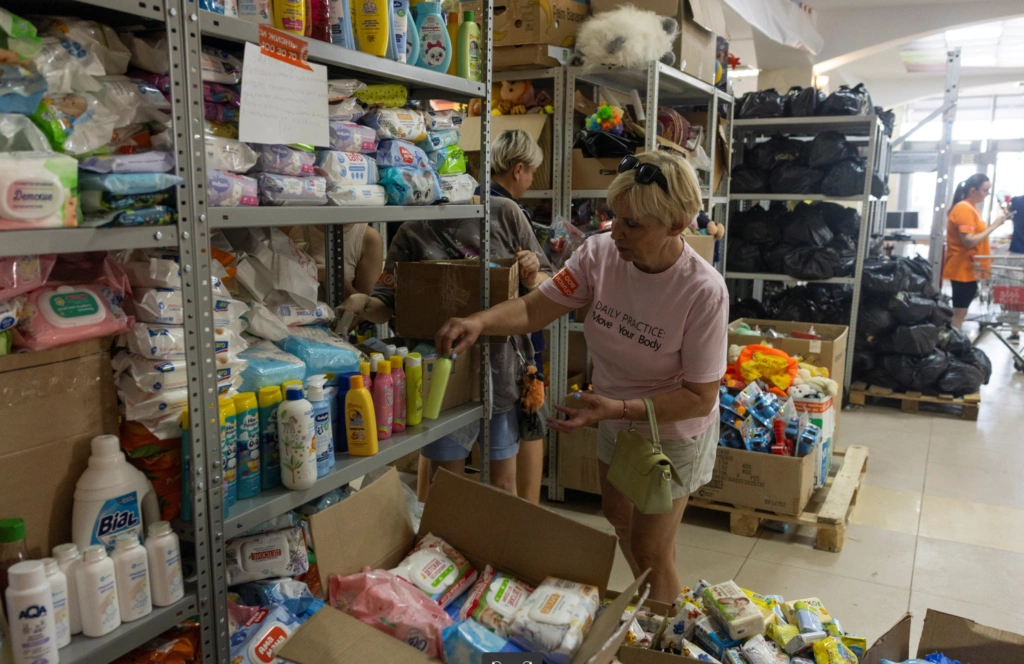
The Kremlin recommends that the authorities of the constituent entities - even those located far from the Kursk region - prepare temporary accommodation centers and reserve beds for possible temporary temporary accommodation.
Призывов «вставать стране огромной» не будет
The Kremlin did not dare to use the topic of the Ukrainian Armed Forces’ breakthrough into Russian territory for a “patriotic upsurge” and attracting new forces to the army. This was told to Vorstka by a source close to the AP and confirmed by two interlocutors working with the domestic political media agenda. “Although the “hawks” [supporters of a more aggressive war – “Vestka”] insisted that this was a very convenient reason to sound the alarm: there are objectively not enough people at the front. But it was decided that the risks were too great,” says a Kremlin source. Measurements of public sentiment showed that society reacted to the invasion generally calmly, he explained, and transferring the country to “a war footing is a long campaign”; it cannot be carried out “short-term.”
ALT: The FOM survey on August 23 showed a slight increase in anxiety compared to the beginning of the month - from 39 to 46%. A similar surge was observed after the terrorist attack in Crocus City Hall (44%), it faded away within a month. A survey by the Levada Center from August 22 to 29 showed a similar result: in August there was a slight decrease in positive assessments of cases in the country, Denis Volkov, director of the center, told VERSTKA. The proportion of respondents experiencing tension, irritation, and fear has increased, but positive sentiments still prevail, he added. Thus, 67% of respondents began to say that things were going in the right direction (versus 72% in July), and 20% (instead of 17%) began to say that things were going in the wrong direction. “Nothing has changed significantly,” Volkov answered when asked about the impact of the invasion on Russians’ perception of the war. “Anxiety has increased, but not too much.”
As a Levada Center study on the topic of invasion showed (the survey was conducted on August 22–28), almost all respondents (91%) are concerned about an attack by the Ukrainian armed forces on the Kursk region. The primary reasons for concern are “civilian casualties” (41%), “attack on Russian territory” (25%), and “weakness and unpreparedness of the authorities” (11%).
In order not to miss new texts from “Layout”, subscribe to our telegram channel
The majority of Russians surveyed (60%) do not see the need to begin a second wave of mobilization in the coming months. At the same time, 46% of respondents are afraid of the announcement of general mobilization in Russia against the background of military operations in Ukraine, almost the same number are not afraid of it (48%).
Social psychologist Alexey Roshchin also agreed that the reaction of the country’s residents to the invasion was “rather indifferent.” According to him, only people who are personally affected by the situation - residents of the Kursk region, close to conscripts - react sharply to him. Other Russians may feel a desire to help and take part in charity. According to Roshchin, the invasion of the Russian region as a whole is perceived as a cataclysm: “It’s like some kind of natural disaster happened. Как будто в полях Курщины проснулся некий вулкан и стал извергать лаву. Давайте сплотимся и поможем людям, они пострадали». “They prefer not to talk about the fact that this is the first invasion of the country’s territory in many years, because God forbid people might somehow be offended: we fight, we fight, but this is the result. Someone may see this as the commander-in-chief’s fault,” the expert believes.
According to Roshchin, the government itself does not want the population to be inspired by the attack. “If you react to what is happening as an invasion, and not as a temporary nuisance, then you will have to rouse the people, even to the point of “get up, huge country.” Они опасаются любой несанкционированной военизированной активности. People will rise up, terrorist defense: this is not necessary. The authorities prefer that people react as passively as possible. If such impulses happen, they are unlocked back: don’t interfere, it’s none of your business,” he sums up. “In reality, the authorities have little idea what to do with this armed segment of the population. Поэтому: считайте это недоразумением, которое скоро закончится».
Dispute about conscripts
One of the most painful topics of the Kursk offensive was the participation of conscripts in the defense and the large number of soldiers who were captured . Federal politicians are advised not to mention the topic of conscripts at all. Their return from captivity is not commented on, according to the political strategist, so as not to once again mention “conscripts in the Northern Military District”, and because of the “ambiguous attitude towards prisoners”: “So that they don’t think that this is the norm, whole units surrender.” If voters ask politicians questions about conscripts, they are advised to refer to the message of Human Rights Commissioner Tatyana Moskalkova on this topic. The emphasis should be on the fact that the Russian authorities have already promptly replaced “a lot of people.” The last time the prisoner exchange took place according to the 115*115 scheme, while, according to the commander-in-chief of the Armed Forces of Ukraine Alexander Syrsky, 594 Russian soldiers remained in Ukrainian captivity. Media reports that at least 250 of them are conscripts.
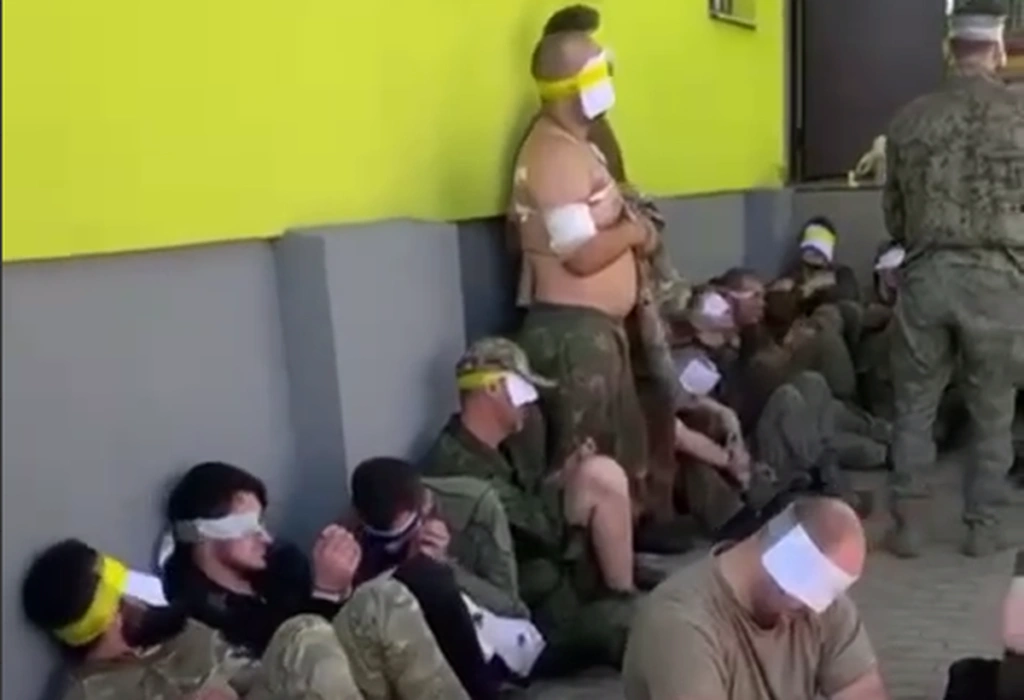
Presidential press secretary Dmitry Peskov, meanwhile, said that reports of sending conscripts to the Kursk region “are an absolute distortion of reality.” The discussion of this topic actively began after the commander of the Akhmata special forces and deputy head of the military-political department of the Ministry of Defense Apti Alaudinova declared the admissibility of using conscripts in combat operations: “There is no need to make children out of eighteen-year-old male conscripts.” Реакция в обществе на это была «крайне плохая», говорит источник в АП. Some bloggers then began to massively spread information that Apti’s words were taken out of context.
The topic of mass conscription and the legal use of conscripts in war is actively discussed only by Z-bloggers. “The guys who are in a warring country on military SERVICE, who took the oath, who are actually military personnel <...> for some reason, are evacuated from dangerous areas along with women and children,” writes , for example, journalist Anastasia Kashevarova. “What, do our conscripts have some kind of different blood, of better quality than that of other military personnel? Давайте их звать не солдатами, а детьми. Conscripts fought in both Chechen companies, and they, in the end, defeated the bandit formations. How do nineteen-year-old conscripts differ from the twenty-year-old contract soldiers who came to replace and help them?” - asks Alexander Sladkov, who calls himself a military correspondent.
According to a technologist working with the Kremlin, “military correspondents” and the z-community “are still allowed to speak more than officials,” but at the same time these statements are “clearly limited.” “When they write on their telegram channel and are read by an audience that can go to the military registration and enlistment office, that’s ok. Broadcasting this idea further in media comments, for example, is not okay,” explains the political strategist. The main thing, he said, is to speak “in general” so as not to “offend wives and mothers” – “this is taboo.”
Where to get refills from?
The decision that an aggressive recruitment campaign should begin instead of a second wave of mobilization was made by the Kremlin in early spring 2023. So far there has been no “political decision to cancel it,” says Vorstka’s interlocutor in the presidential administration.
However, the fact that there are still not enough people at the front is indirectly indicated by the increase in payments to contract soldiers. During the spring-summer, the regions systematically increased them, and Moscow became the record holder for payments for concluding a contract with the Ministry of Defense (1.9 million rubles in a one-time payment). As Vorstka wrote, this was done against the backdrop of a shortage of people in the army and a decline in interest in concluding contracts for volunteers . “A certain percentage of people one way or another went to the military registration and enlistment offices after Kursk [the invasion of the Ukrainian Armed Forces into the Kursk region],” admits Vorstka’s interlocutor in the Kremlin. — Военные говорят, что этого мало. But not so small as to start a large-scale campaign [to attract people to the contract]. Это будет считываться как вторая мобилизация».
“Verstka” previously wrote that in Moscow after August 6 – the beginning of the invasion of the Kursk region – the flow of those wishing to enroll in the army through the Unified Selection Point for contract service approximately doubled. However, in absolute numbers this is not much: in the week preceding the attack of the Ukrainian Armed Forces (July 29 - August 4), an average of 97 people per day signed a contract. На следующей неделе (5 — 11 августа) их число выросло уже до 126 человек день. In the next two weeks, this growth also continued: from August 12 to 18, an average of 180 people per day signed a contract, and from August 19 to 25 - 213 people per day. Many also continue to sign up for contracts through Moscow in order to qualify for larger payments.
Young men “who are on the agenda” and “reading channels” [we are talking about telegram channels with news about the situation in the Kursk region], the source continues, “went to the military registration and enlistment offices themselves.” This is evidenced by the double increase in the number of people wishing to sign a contract after the invasion of the Kursk region, recorded by “Verstka” (some of them directly indicate that their decision to go to war is connected with the attacks of the Ukrainian Armed Forces in this region).
Активный набор контрактников идет и в других регионах. They are attracted through outdoor advertising listing benefits and payments for the military, and active campaigning among employees of budgetary institutions, a source at the military registration and enlistment office of one of the Siberian regions told Vorstka. “Those who, say, are not entirely indispensable at work can go and serve their homeland now,” he says. Immediately two interlocutors of “Verstka” in regional administrations confirmed the existence of a “plan for contract soldiers.” «Нам прямым текстом говорят: «иначе мобилизация», — говорит один из них.
Фото: Сайт губернатора Курской области
You can support “Layout” from any country in the world - it is still safe and very important. We really need your support now. How to help us →