
Translated material
Mempento - show
The canons of state historical memory were specified in Russia: Soviet repressions were not “massive”, and the amnesties of the political zones gave freedom to “Bandera”
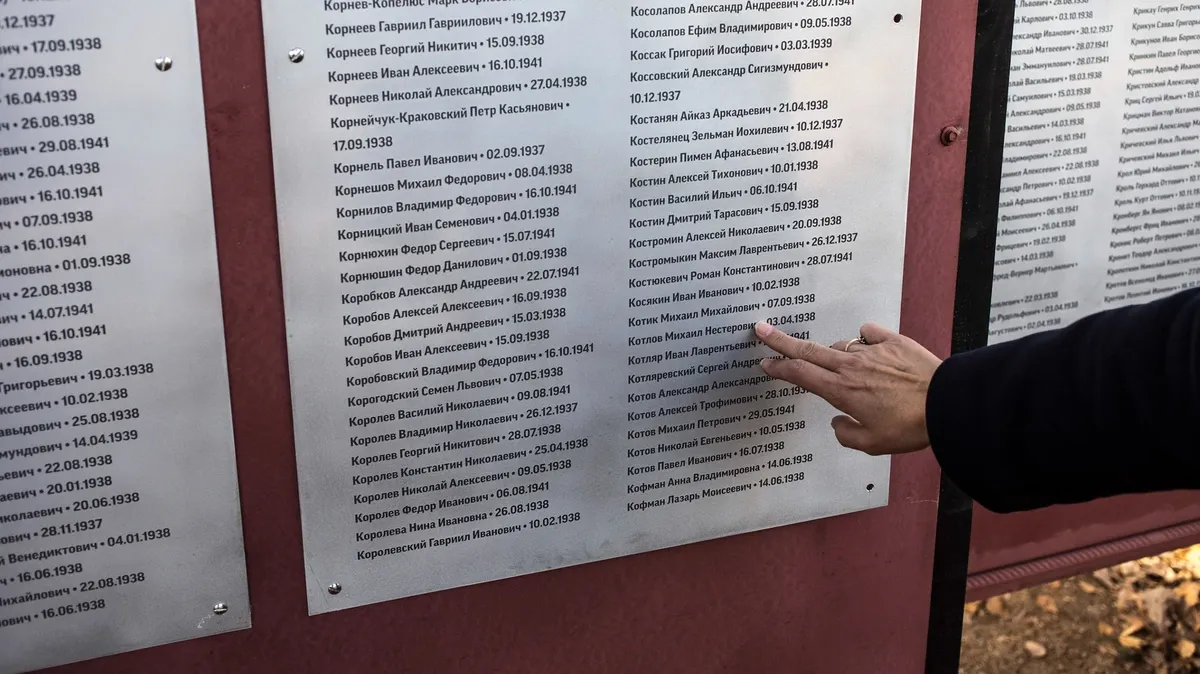
Memorial complex "Kommunarka". Photo: Vlad Dokshin / "New Gazeta"
18+. This material (information) was produced, distributed and (or) sent by foreign agent Vishnevsky Boris Lazarevich or concerns the activities of the foreign agent Vishnevsky Boris Lazarevich.
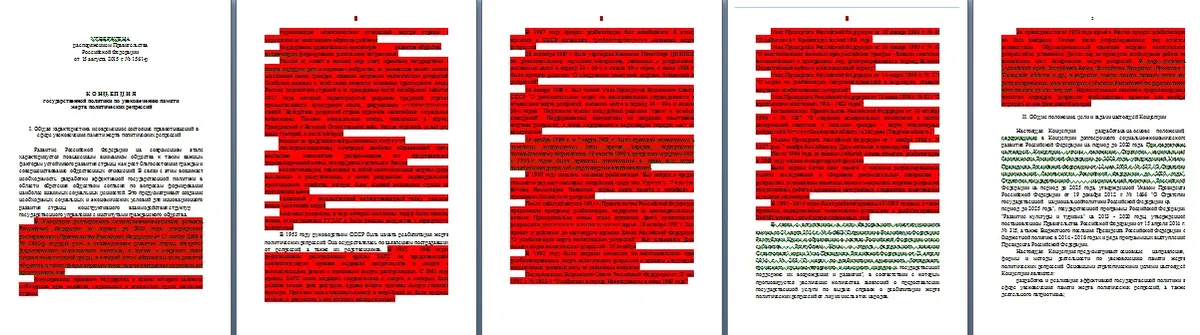
On June 20, by order of the Government of the Russian Federation No. 1564-r, changes were made to the concept of state policy to perpetuate the memory of victims of political repression.
The Russian government approved the first edition of the concept on August 15, 2015-the relevant order No. 1561-r signed by Prime Minister Dmitry Medvedev.
An analysis of the changes approved by Prime Minister Mikhail Mishustin shows a very characteristic picture.
In the current edition, the formulations are so streamlined that it remains unknown, who exactly carried out repressions, who is responsible for them, what exactly they were, who and in what quantity they affected and who and in what quantity was rehabilitated.
But there was a place for discussions about “national interests”, “strengthening traditional spiritual and moral values” and protecting society from “destructive information and psychological impact”.
And, of course, about the Baltic and Ukrainian Nazis, traitors of the Motherland and participants in underground nationalist formations.
In general, all according to Alexander Galich - from a famous appeal to the congress of historians:
*The truth is replaced, as in the snow thaw,
And let's say that the trouble is over:
“Some Khazars, some Oleg,
For some reason, for some reason! ”
And this Marxist approach to antiquity
It has long been used in our country ...*
***
The main changes were affected by the preamble of the document, rewritten almost completely.
It was “left” not only the key statement that “Russia cannot fully become a legal state and take a leading role in the world community, not perpetuating the memory of many millions of its citizens who have become victims of political repressions.” Almost all the specifics have gone.
Not a word is now said about the repressions of representatives of religious faiths and representatives of the pre -revolutionary elite in the country, of violent collectivization and hunger associated with it, about mass repressions, during which "millions of people were devoid of life, became prisoners of the Gulag, were deprived of property and deported."
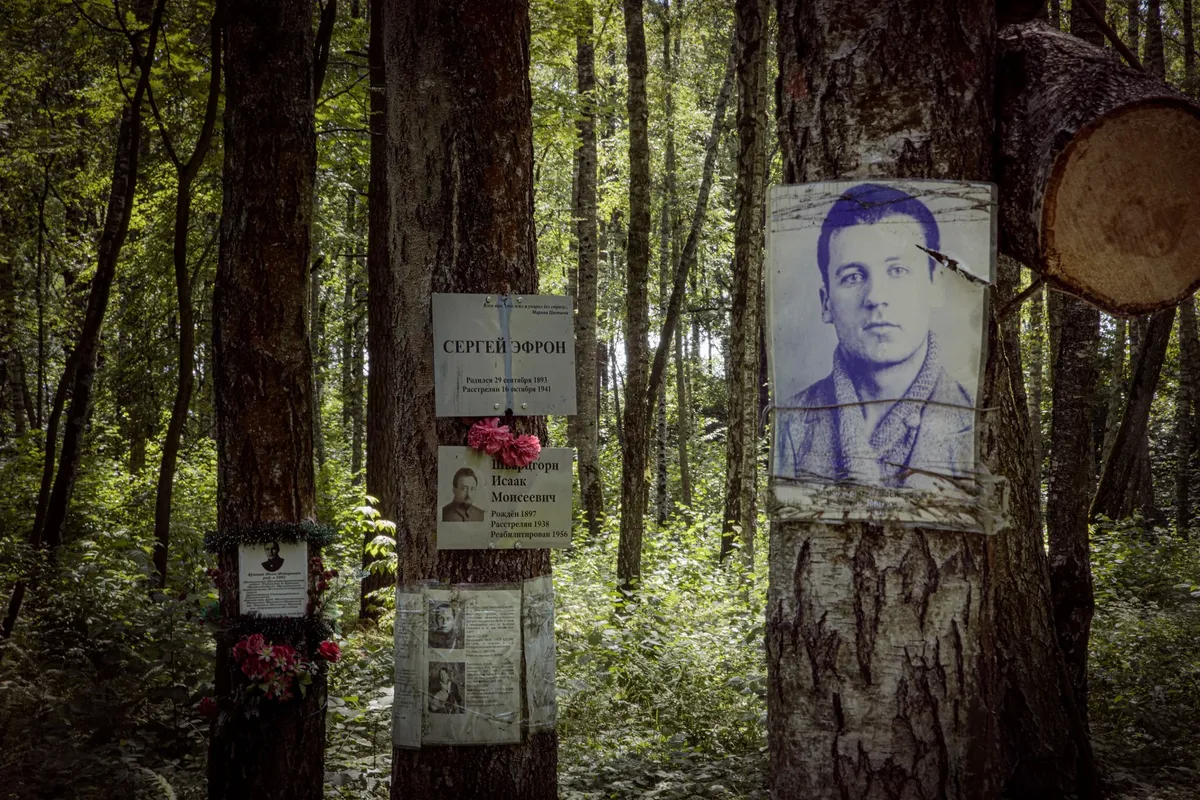
There is no reminder of how in the 50s and 60s relatives of the executed issued death certificates with fictional dates and causes of death of the executed, and then they began to issue documents where the exact date of execution was indicated, but instead of the cause of death, a dash was put. At the same time, the places of mass executions and burials were not made public, and the documents about them remained classified.
The section was completely removed, describing the rehabilitation process, which resumed during the years of perestroika (by that time, millions of victims of repression remained not rehabilitated in the USSR). On the creation of the Commission of the Politburo of the Central Committee of the CPSU for an additional study of materials related to repression. On the abolition by decree of the Presidium of the Supreme Soviet of the USSR, all the extrajudicial decisions of the Troek and Special Measures. On the abolition of all repressive acts on the deportation of various peoples of Russia. And, finally, about the decisions with which the repressions of the 1920-1950s were recognized as illegal, and the rights of all victims of political repression-subject to restoration. And also - on the recognition of the fact of political repression in the Upolinskoye and post -Stalin time.
When Russia became an independent state, a number of decrees of the Supreme Council, laws, presidential decrees and government decrees on the assessment of various facts of repression and rehabilitation of their victims were adopted in it.
On the events in Novocherkassk in 1962, on the restoration of the rights of former prisoners of war and repatriated civilians during the Great Patriotic War, the rehabilitation of repressed clergy and believers, on the rehabilitation of the participants of the peasant uprisings of 1918-1922, on the creation of memorial complexes in the places of burial of Soviet and Polish citizens - victims - victims - victims - victims - victims - victims - victims - victims - victims - victims repressions in Katyn (Smolensk region) and copper (Tver region).
None of this is more in the concept - as if all this was not.
There are no numbers that were in it before: that in 1991-2014 3,510,818 people were rehabilitated, and 264,085 people (repressed children) were recognized as undergoing political repression.
Finally, the statement of the fact that "the time in Russia in Russia was not completed, was not completed from the concept, was removed from the concept."
That "the exact number of repressed persons remains unknown, the national monument to the victims of political repression has not been established, the necessary work has not yet been carried out to identify the burial places of the victims of repression."
And it is no longer said in the concept, as before, that "the continuing attempts to justify repression by the features of the time or to deny them as a fact of our history are unacceptable.
***
But what was included in the preamble instead?
The listing of the "national interests of the Russian Federation", taking into account "long -term trends in the development of the situation in the Russian Federation and in the world."
Among these interests, a lot is indicated-starting with the “savings of the people of Russia” and “protecting the constitutional system, sovereignty, independence, state and territorial integrity of the Russian Federation” and ending with the “development of safe information space”, “protecting Russian society from destructive information and psychological impact” and “strengthening of traditional Russian spiritual and moral values”.
What does this have to do with perpetuating the memory of victims of political repression? Question mark. But both the condemnation of previous political repressions and the prevention of new political repressions among the “national interests of the Russian Federation” are not mentioned at all.
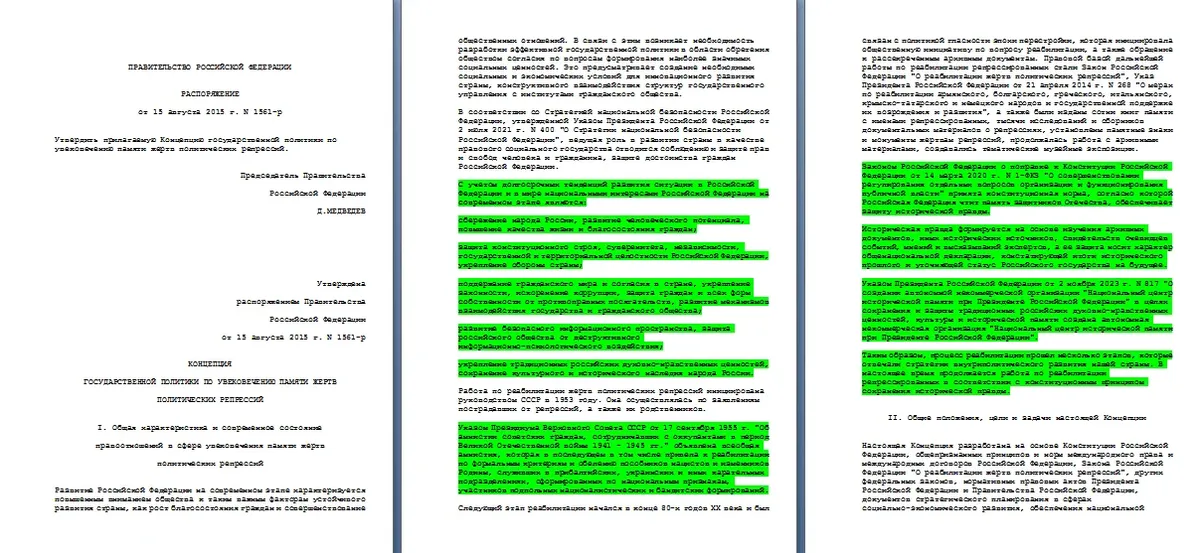
And in the preamble - in accordance with the current ideological attitudes - it is now said that by decree of the Presidium of the Supreme Soviet of the USSR of September 17, 1955 “On the amnesty of Soviet citizens who collaborated with the invaders during the Great Patriotic War of 1941–1945.” A universal amnesty has been announced, which “in the future, including led to rehabilitation according to formal criteria and the imposition of accomplices of the Nazis and traitors of the Motherland, who served in the Baltic, Ukrainian and other punitive divisions, formed according to national characteristics, participants in underground nationalist and gangster formations.”
This probably sounds convincing for the audience of state propaganda channels, which every day hear discussions about the “Nazis” and “Bandera”. But not for those who are familiar with the mentioned decree.
Meanwhile, it is said that “guided by the principle of humanity, the Presidium of the Supreme Soviet of the USSR considers it possible to apply amnesty in relation to those Soviet citizens who during the Great Patriotic War of 1941-1945. For cowardice or unconsciousness, they were involved in cooperation with the invaders. ”
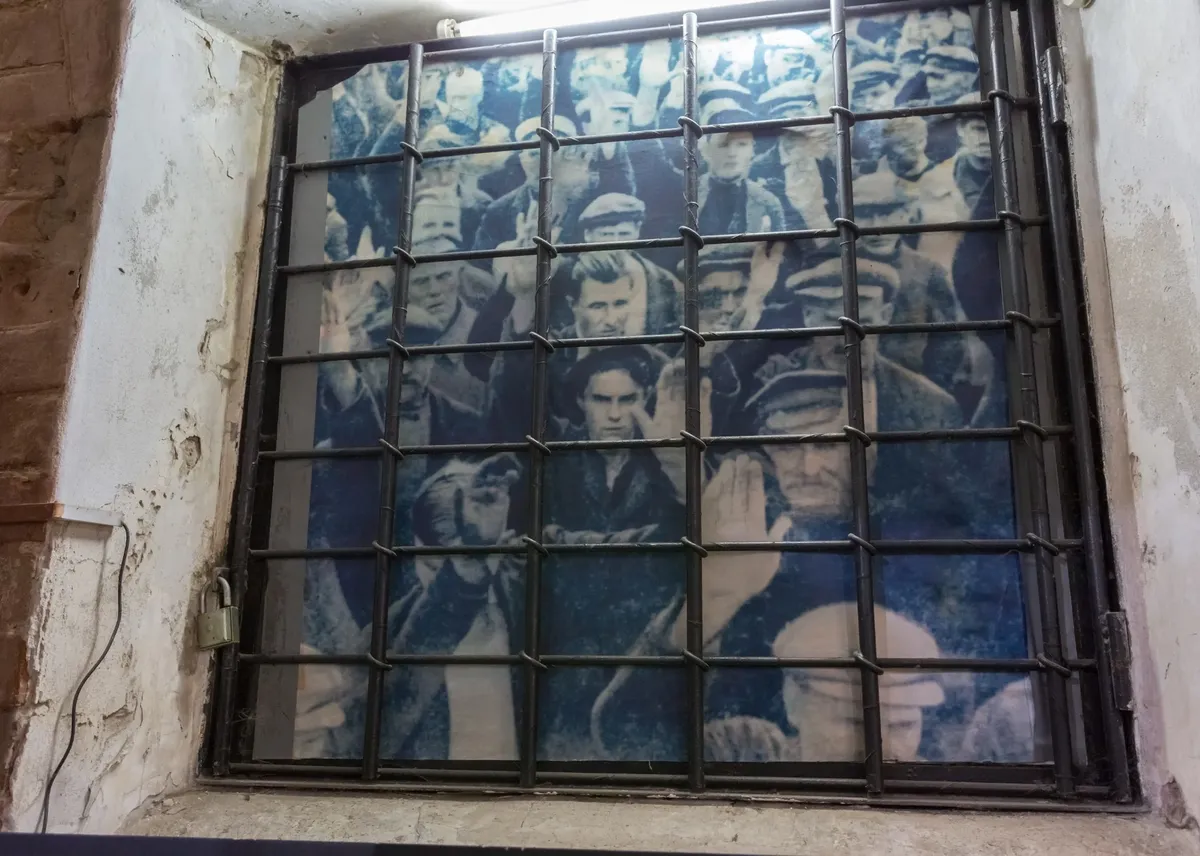
By decree, those who were convicted under the relevant articles for up to 10 years in prison inclusive were released from the places of imprisonment. Those who were convicted of more than 10 years were halved. And it was specifically emphasized that amnesty does not apply to "punishers convicted of the murder and torture of Soviet citizens."
Those who were abroad were exempted from punishment, but during the war served in the German army or police, in the gendarmerie or propaganda organs, and even held leading positions in them if they "redeemed their guilt of the subsequent patriotic activity in favor of their homeland or appeared with obedient."
Both with those who were subject to release, and with those who have already served the punishment for the relevant crimes, the criminal record and defeat in rights were removed.
At the same time, what is important - it was about an amnesty. Act of humanism and forgiveness. Not about the "imposition". And not about “rehabilitation” - an amnesty does not grant such a right to them.
Those who were rehabilitated as victims of political repression are citizens whose sentences or other punishment measures were subsequently canceled as unlawful. That is why the state, who admitted that they were in vile, were enthusiastic about them, secured the right to rehabilitation.
Those who fell under the decree of September 17, 1955 were neither “covered” or “rehabilitated”, but only forgiven ...
And even in the new edition of the preamble, an amendment to the Constitution is mentioned, which in 2020 established that “the Russian Federation provides protection of historical truth”, and it is said that it is in accordance with this principle that the work on the rehabilitation of the repressed is currently ongoing.
***
The changes affected the sections of the concept - although not very large, but notable.
So, in the thesis about the need for “objective analysis of both the achievements of the Soviet period and its tragic pages, including mass political repressions”, instead of the “Soviet period”, the “Russian state” appeared, and the word “masses” completely disappeared. In general, it is now anywhere in the concept in relation to political repression.
Firstly, what is the attitude of the “Russian state” previous time to the assessment of the political repressions of the Soviet era?
And secondly, the exclusion of the assessment of repression as “mass” (and, as mentioned above, the exclusion of information about the number of repressed and rehabilitated) is a conscious departure from indicating the scale of political repression, which they clearly strive to not mention.
In the same vein - and the exclusion from the concepts planned by the concept such as “memorialization, that is, the formation and development of victims of political repressions of commemorative places perpetuating the memory of victims of political repression in places of mass burials”.
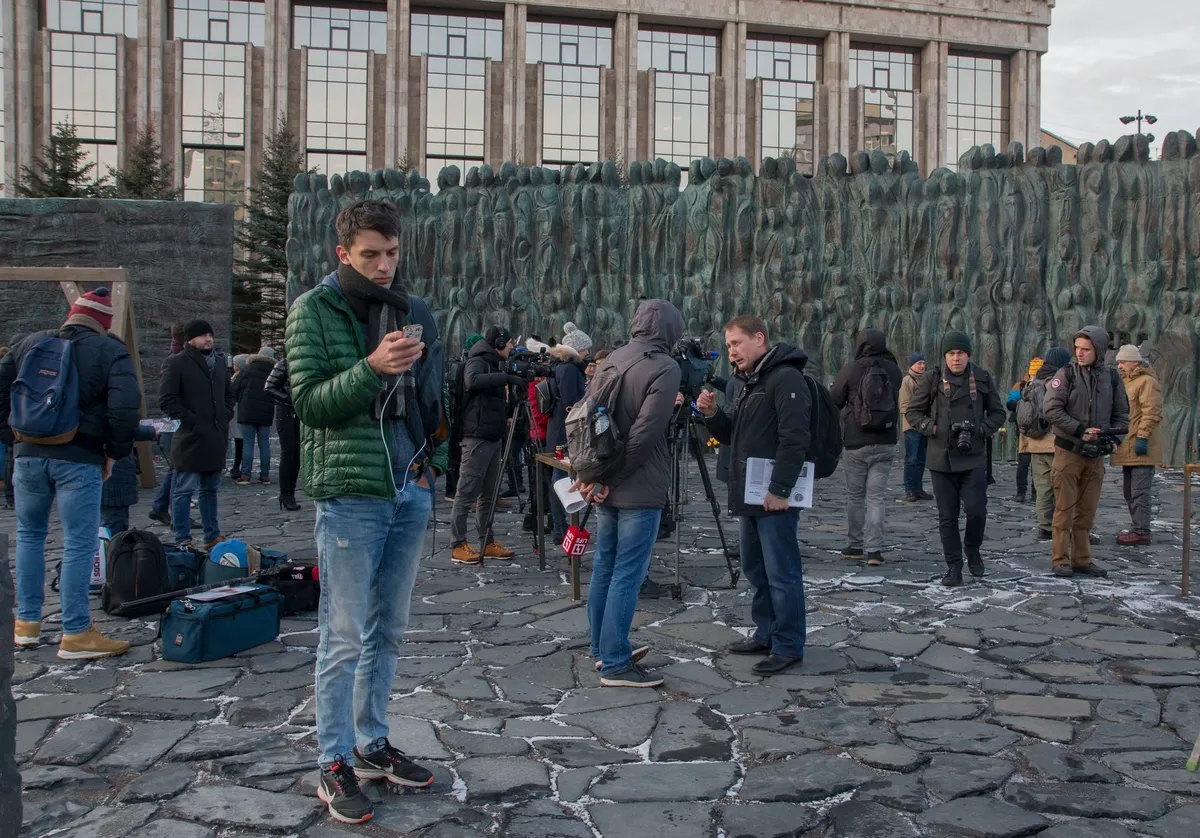
But the current direction was added as “verification of the validity of the decisions of the judicial and non -judicial bodies, as well as the abolition of decisions on rehabilitation in relation to the persons specified in Article 4 of the Law of the Russian Federation“ On the rehabilitation of victims of political repressions ”.
The this article says that it is not subject to rehabilitation of a person “whose affairs have sufficient evidence” on charges of committing a number of serious crimes: treason in the form of espionage, issuing military or state secrets, transferring to the side of the enemy; espionage, terrorist act, sabotage; War crimes, crimes against the world, against humanity and against justice, and a number of others.
The fact that the defendants in such crimes are not subject to rehabilitation is obviously, and precisely because in 1991 it was enshrined in the law.
Such persons have not been recognized as the right to rehabilitation before - so what they want to do now, designating the intention to conduct a “verification of validity” and “cancellation of decisions on rehabilitation” (there were precedents of such a cancellation before, although not to say numerous)?
What will the announced “check” lead to? To the fact that the current prosecutors and investigators will begin to re -evaluate the circumstances and facts of the very long time by the past days (and relating to persons, who almost certainly have not been in the world for a long time)?
If there was confidence in their objectivity and impartiality, there would be nothing to fear. But, based on the practice of recent years, there is no such confidence.
But there are many reasons to believe that the motives of a possible revision will be political. And the abolition of decisions on rehabilitation can mostly affect not so much those who were really rehabilitated unlawfully, how many who should be re -declared guilty,
Based on today's conjuncture. Including persons with Ukrainian, Baltic and other "hostile" now surnames ...
Finally, in the concept - in the section on its implementation - no longer appears to be formulated intention to "form a single memorial network to perpetuate the memory of victims of political repression."
And they will no longer evaluate the effectiveness of achieving the goals of the concept, based on an increase in the “number of memorial objects (constant expositions, works of monumental art, etc.) in the field of perpetuating the memory of victims of political repressions, the number of expositions created on the perpetuction of the memory of the victims of political repressions.”
Thus, a clear signal is given: new memorials victims of political repressions are not needed at all.
***
The focus of all quoted changes is obvious and lies in line with the history textbooks changed in recent years - where the past is described in such a way as to justify and justify the present in every possible way.
To do this, it is necessary to say a tongue twister (and not calling them mass) about the political repressions of the past, setting out one of the greatest tragedies in the life of our country in the spirit of the “historical truth” formulated by the state.
Talk not so much about the crimes of the Soviet totalitarian regime as about “Nazis”, “punishers”, “traitors” and “accomplices”, about “national interests”, “spiritual and moral values”, “protection against destructive impact”, “safety of information space”, and so on and the like.
It is not difficult to see that the newly changed concept has long been implemented.
This can be seen from the non-stopping (and sometimes successful) attempts to establish monuments to Stalin-the chief organizer and inspirer of political repressions of the 20-50s of the twentieth century.
This is evident by the attack on the monuments to the victims of repression - although in the current edition of the concept of one of its main strategic goals it is called "the formation of infrastructure associated with perpetuating the memory of the victims of political repression."
But this does not interfere with destroying or damaging memorials - as, for example, in the Perm Territory and in Yakutsk, in Solovki and in Vladimir, in the Tomsk and Irkutsk regions, in Buryatia and the Sverdlovsk region, in St. Petersburg and the Komi Republic. Most often, the object of attack in recent years has become monuments of the repressed Soviet citizens of Polish, Lithuanian or Finnish nationality - whose countries are declared “unfriendly”.
This is evident by constant provocations on the memorial complex in Sandarmokh in Karelia against those who come to honor the memory of the repressed.
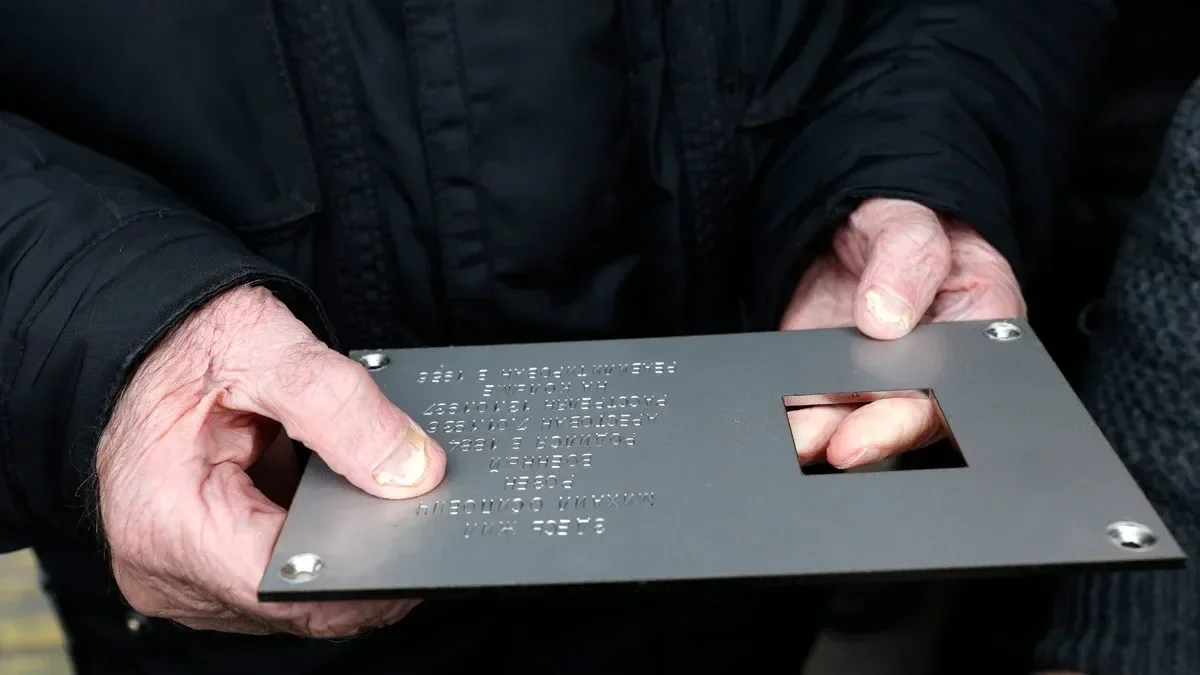
This can be seen from the "war of mankurts" against the tables of the project "Last address". On the one hand, unknown vandals tear them, on the one hand, and on the other, they are dismantled on the basis of denunciations of those who sees this allegedly some kind of violations. Although the signs do not interfere with anyone, the view of the facades does not spoil, and are installed only by agreement with the Board of the HOA or the Council of the House.
For reference:
Over the years in St. Petersburg, 441 were installed the “Last Address” plate, and 101 signs were removed during this time. And the city administration has been promoting the “legal framework” to install the “last address” in St. Petersburg for six years - but now there.
The administration does not want to support the proposal to include these signs in the list of external information objects to the Rules for the improvement of St. Petersburg, and the working group created in the city for “coordination of activities aimed at implementing the concept of state policy to perpetuate the memory of political repressions”, in whose competence this question is, judging by the vice-governor of Boris Piotrovsky, in 2020–2021, was not gathering because of the Covid epidemic, and in 2022–2023-“due to the lack of new proposals and issues for consideration” ...
***
Last.
It is generally impossible to understand from the text of the “modified” concept what kind of repressions we are talking about.
It is not indicated who conducted them and when.
It is not indicated who was subjected to repression.
It is not indicated what these repressions were.
It is not indicated who is responsible for conducting repression.
It is not indicated how many people became victims of repressions and how many were later rehabilitated.
There is no indication of the inadmissibility of the justification of repressions with the “features of the time” or their denial.
Yes, there were some repressions, but it’s okay, because work is underway to rehabilitate the repressed-in accordance with the principle of “historical truth”. Which, however, in our country very often changed with a change in power or a change in the political course - after which it was ordered to consider “historical truth” not at all what before ...
How was the Strugatsky in the "hard God"?
“True is what is now for the good to the king. Everything else is a lie and a crime. ”