
Translated material
The last statement of Pazolini
What was all the same in black paint in the biography of the great director? Review experience
18+. This material (information) was produced, distributed and (or) sent by a foreign agent Kolesnikov Andrei Vladimirovich or concerns the activities of the foreign agent Kolesnikov Andrei Vladimirovich.
Fima of dogs, Ilf and Petrov wrote, was known as a cultural girl: “... she knew one such word that Ellochka could not even dream of. It was a rich word: homosexuality. ” Madmoiselle of dogs would go under the article in our years or not, a big question, but the AST publishing house, in order to avoid troubles, clearly overdid it when it fell into a scandal, smeared with fat black paint in the biography of Pazolini, written by Roberto Carnero, all places, less or less related to the sexual orientation of the great director.
It is clear that such a specific action was provoked by genuine fright caused by the warnings of the competent authorities. But to be consistent, then you need to smear a lot in the world literature, cut it in cinematic classics and so on. One “death in Venice” by Thomas Mann / Lukino Visconti is worth it! By the way, the biography of Visconti, no less great director than Pazolini, also a communist on convictions and also a homosexual, must be seriously reviewed. Just as they are afraid of the “rich word” today, under the late Soviet power, they feared the no less intricate concept of “Jew”: the censors, where, from the memorial in Babi Yar to the annotation to the “heavy sand” Anatoly Rybakov, replaced him with abstract “Soviet citizens” who were persecuted by German-fascist invaders.
Not quite pure power
With all these reservations, censorship seizures in the case of Roberto Carnero’s book are still resolutely absurd. The very first dull crossing out, if we turn to the Italian original, is the phrase "a kind of anti -monk exhibitionism." Here what word is forbidden, capable of shaking the imagination of Ellochka and violating the law? Or here is another mysterious deletion in the author's preface:
“In this Pazolini, the author and his literature are really“ unclean ” -“ unclean ”.
How to understand this? Well, it’s not about the unclean power. Yes, it is not yet prohibited.
However, there is no thin one without good: thanks to the scandal, many Russians learned about the existence of such a person as Pazolini, a book, like everything forbidden, actively bought not only the intelligentsia (the carrier, as stated in the recent decree of the head of state, “destructive neoliberal ideological attitudes”), but also the audience is simpler. Well, about the same way contributed to the new wave of popularity of the novel “Master and Margarita” of the movie of the same name. So the readership of the White Guard will reach, and to the early stories of Mikhail Afanasevich ...
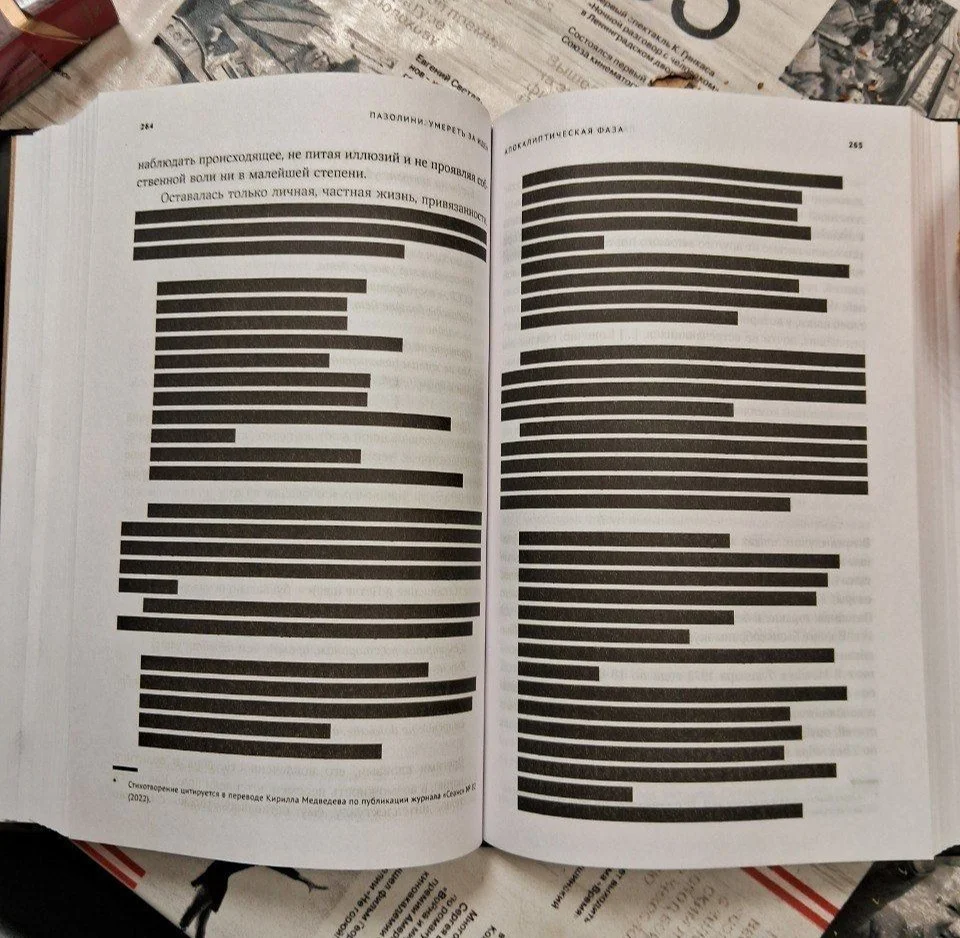
BAST-Oda-dressed censorship of the times of late Putinism has nothing to compare with times of late Brezhnevism, when any carrier of “destructive neoliberal” could go to the Illusion cinema, buy a ticket from speculators (there was simply no one to get the enemy cinema) and watch this very Pasolini until the films “The flower of a thousand and one and one nights ”and“ lard, or 120 days of sodom ”. If a different meticulous reader suddenly decides to ask what is hiding behind the black stripes of censorship in the book of Roberto Carnero “Pasolini. In some cases, he can do this, because some works of Pierre Paolo were published in Russian-both in the cinematic periodical and in the fundamental collection of his 2000 works, sent to the set under the democratic President Yeltsin: then it never occurred to anyone to censor anything, not to mention the Pasolini, which was still important for the unfinished Russian intelligence, Painted cinema of the 1950-1970s. There is no doubt that Carnero’s book would have gone unnoticed for any wide masses, if not for the riot of censorship.
Die for ideas
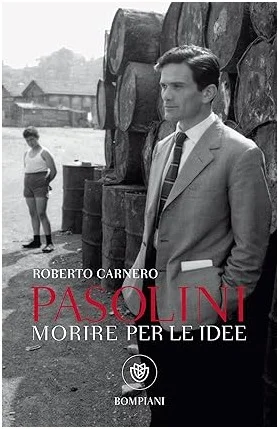
Roberto Carnero’s book, of course, has nothing to do with the propaganda of same -sex relationships. The very life of the director, and even, rather, the remaining mysterious death is a counter -propaganda of this case - on the beach in Ostia he was killed by either a temporary young partner, or a group of comrades who ordered a crime. The cover of the original Italian publication is hinting at this (this is what the “destructive neoliberal” European attitudes mean-even in book publishing!): There is just Pazolini on the beach, and a boy in shorts and an alcoholic T-shirt looks at him. Here Pierre Paolo, however, is very young - the time of filming “Akkaton” or “Mom of Roma”, the flower is a belated of leaving neorealism.
Our censors are not aware that the book is not at all about what they all the time are thinking or dreaming of for some reason for some reason. She is not about “this”, but about the ideas and the readiness of such a passionate and even fierce person as Pazolini, to really die for them.
This, of course, is not in its pure form of communist ideas - in the end, for what our censors are concentrated on, pasolini expelled from the Communist Party before the film. These are ideas for the fight against consumer “attitudes” (we will use the Argo of the Kremlin ideologists) of the mass society of the bourgeois industrial era, the erosion of the traditional culture (yes, expensive censors, Pierre Paolo idealized the traditional values of archaic Italy, however, did not like clericals) and fascism (real, not invented).
In this - especially in warnings about the possibility of reviving fascism - Pazolini came closer to Visconti. But stylistically, although both gave tribute to neorealism, these two great masters diverged. And not only in the preferences of the actors and, probably, partners-the cold-arrogant Nordic Viscontiev Helmut Berger and the People's Personal Curly South South Peresolini Nineto Davoli (known to the general Soviet public for the “unusual adventures of Italians in Russia” from “the discharge of tension”).
The human mud (and blood) is enough for both, but the decadent interiors of the offspring of the Milan aristocratic family are terribly far from the cesspool, in which a researcher of morals of a punks, from which he as a result, fused with medieval directness.
Visconti did not like Pazolini, threw the stone into the garden of the competitor: Ah, if Pierre Paolo, like his friend Alberto Moravia, could write as well as D'annunzio! In addition, we note that in vain he is about Pazolini, whose prose is diverse both thin and Moravia: European cinema is glorified by his brilliant adaptations-from Vittorio de Siki to the “conformist” Bernardo Bertolucci and “contempt” by Jean-Lyak Godra (whose aesthetics of Visconti also could not stand it).
The poet Pazolini wrote poetry on Lenga Forlana - the Friul language, which is sometimes considered dialect. At first there was poetry, then prose, and only then - cinema. At first there was Marxism, then disappointment in the official communism with admiration for Antonio Gramsha, about which Pierre Paolo wanted to make a film. (And who was not a Marxist then? “I was a Marxist, like everyone else,” said Alberto Moravia years later.) A conflict, but an extremely insightful publicist whose best examples, imbued with anti -bourgeois pathos, were published in the very bourgeois newspaper Corriere Della Sera. Pazolini went through 33 trials, including for insulting the feelings of believers (though there were without a “two -legged” for this).
Fleet to utopia and from it
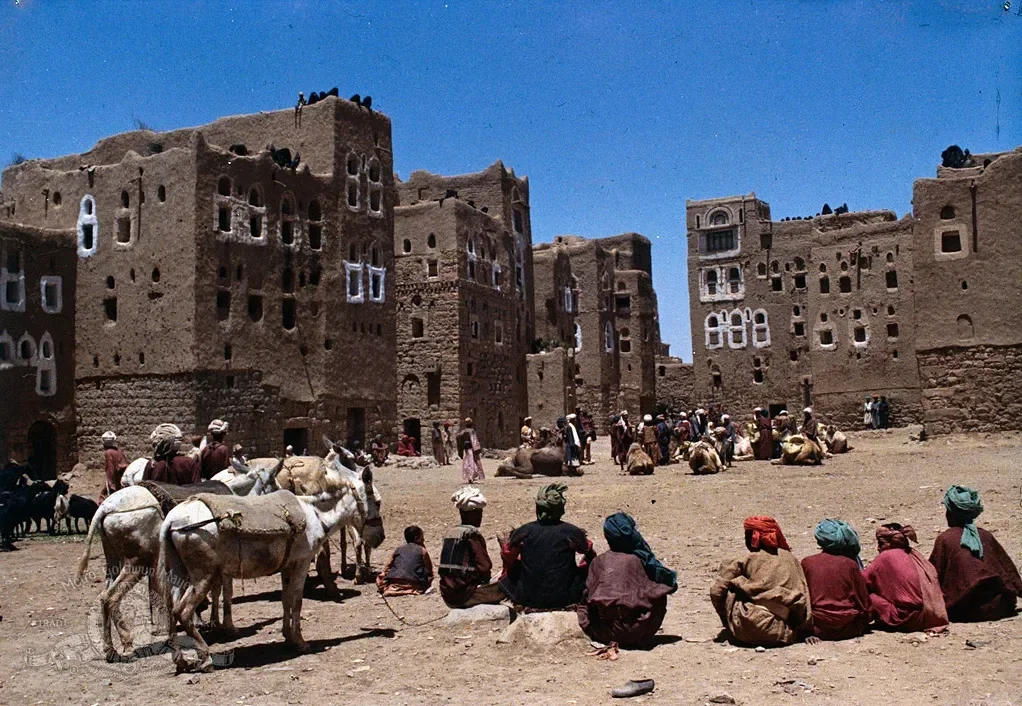
The poet, writer and director in everything wanted to reach the very essence, but these searches were unsuccessful. Operating a society of mass consumption, he was looking for authenticity and sincerity where it is not. He traveled a lot in Asia and Africa. In Palestine, he was looking for ancient manifestations of holiness, and although he removed the Gospel of Matthew, he found nothing - “otherness and alternative to the industrial world of the West”. Pierre Paolo considered mass culture to be anti -democratic, which means leading to totalitarianism.
Kremlin ideologists should not cross out pasolini, but it would have been the main product of this, alas, to the Western mass -support - television, which the director considered the main disaster of modernity.
And then Pazolini ran away from the utopia of the East to utopia and the gardens of the past, to the “Trilogy of Life” - “Decameron” (1971), “Canterbury Stories” (1972), “The Flower of a thousand and one night” (1974), and he presented himself, and very organically, in the form of Jotto. Utopia of the East, utopia of the past, utopia Eros. And again, everything is not that: it began as usual - the film of the “Flower ...” is in the prosecutor's office of Milan, the next scandal is brewing. And suddenly the court fascinated by Eros officially recognizes the film as a “work of art”. Well, since the world of violence and mass consumption is given before the pressure of the wildness of art, then Pazolini in the fight against “repressive tolerance” of consumerism renounces the “trilogy of life”.
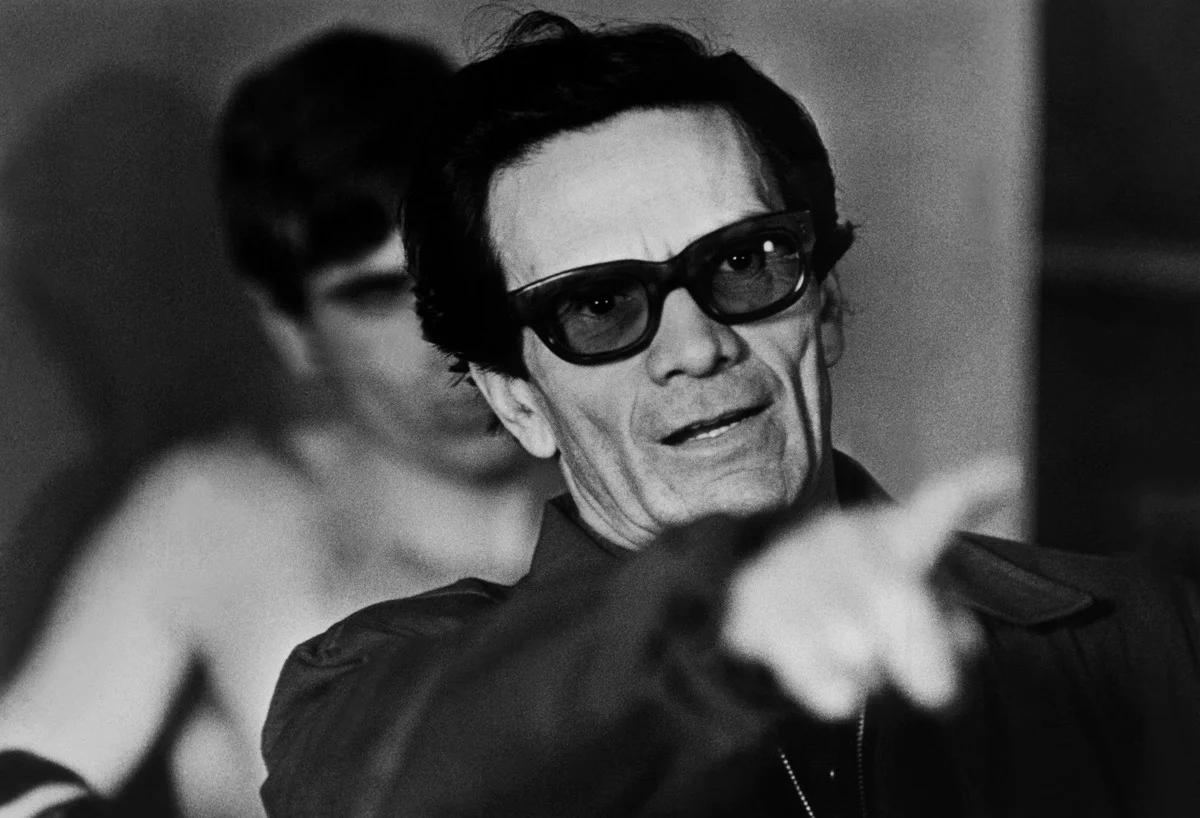
Corsair, pure corsar ... Then his anti -bourgeois, but extremely insightful journalism (“Corsair letters”) is published in the newspapers, however, Pasolini sometimes even engages in poems - it is in one of the poems, he, being more distinguished by all, called the late Brezhnev’s congestive USSR “petty -bourgeois state”. And so it was:
The decrepit imperial ideocracy lived in consumer interests - on the banner of the Middle Soviet City Man, not Marx - Engels - Lenin flaunted, but "apartment - car - cottage."
In 1968, the student revolution meant a rebellion riot against old bourgeois. But capitalism turned out to be so flexible that it changed, absorbed and absorbing this counterulture, turning it into part of the new bourgeois culture. (The unrest of the 68th did not like Pazolini, he believed that the children of the poor, police officers were forced to speak out against the children of the bourgeois and students.) The bourgeois was updated by sexual, sanitary, contraceptive and just a consumer revolution, and overcoming, including the coherent censorship obstacles. In fact, the so-called demographic transition was reflected in those events of the line of the 60-70s-a new way of existing the dominant city middle class (with a delay and in their forms, the same began to occur in the Soviet Union: “Today you wear“ Adidas ”, and you will sell your homeland tomorrow”).
This trend was more sensitive than all the philosophers of Pazolini in the essay of January 1973 “what“ they talk ”about”-the counter-cultural aesthetics of the Oburzhuani and became a sign of a new fashion:
“What did these hair talk about? We are not one of those who die here with hunger, not of these underdeveloped poor people, stuck in the era of barbarians! We are employees of the bank, we are students, we are children of wealthy parents working in an oil state; We know Europe, we read a lot. We are the bourgeoisie, and our long hair is evidence of our belonging to the modern, international class of privileged persons ... The circle is closed. The subculture of power absorbed the opposition’s subculture, making it its component: with devilish agility, it turned it into fashion. ”
Good killers
So he captured the trends and underwater trends of the world around him. Yes, he is a traditionalist, but an anti -fascist, an opponent of a set of “traditional values”, which Pazolini considered a dangerous for life: “Church, homeland, family, obedience, discipline, order, frugality, morality”. His traditionalism is personal, intimate, is it from the area “with whom did his bones flowed? With himself, with himself ":
“I am a force emanating from the past.
Only in tradition is my love.
I left the ruins, from the churches,
From the gates of altar, from the villages,
lost in the foothills of the Alps and in the Apennins ... "
In this, he strangely looks like Tarkovsky and Shukshin at the same time; More precisely, in their searches - creative and intellectual - they are similar to Pazolini, because they were painfully trying to understand what is happening with the world on the breakdown of traditionalism and the celebration of Art Nouveau, and with their personal world too. Andrei Arsenievich called his diary “Martyrologist” - Pazolini also felt his life.
Pierre Paolo painfully experienced Anni di Piombo, “lead years”, a period of red terror and the risks of neo -fascist conspiracies (which was also reflected in the Viscontiev “family portrait in the interior”). He believed (and this is a message to the current passive-conformist population of Russia) that it is impossible to move away from trouble, to pretend that nothing happens when a person is in the epicenter of the disaster. In the collective film of 1969, “Love and Fury” (as the name fits Pazolini!) He shot the short story “with a paper flower”. Carnero describes the content of the episode as follows:
“Ninetto Davoli, smiling carefree, goes through Via National in Rome, while the pictures of war, violence, modern genocide (from Vietnam to the Cold War) are replaced in the background). In the hand, the unperturbed Ninetto holds a huge paper flower. The voice of God ... tells him how His innocence legalizes someone's guilt. In punishment, God kills him with electric shock, as Christ curses the barren figures in the gospel. ”
In the last years of his short life, Pazolini talked a lot about some general danger to the world. His last interview Furio Colombo, which the director gave a few hours before his death, is full of predictions. Pazolini repeats:
“Today, many believe that we need to kill ... I continue to say: we are all in danger.” This is an amazing conversation, it is about the fact that people are doing “refusal” who are able to say “no” of external authoritarian power. And again and again - about the dangers of conformism: “You can meet a person, in all respects of the sweetest that“ cooperates ”(say, on television) or because you need to earn a living, or because he believes that this is by no means a crime ... everyone wants the same thing. If at my disposal administrative council or exchange manipulations, I use them. If not, Dubin ... Because they told me that I want it to be worthy ... I exercise my right -dominance. I am a killer, and at the same time I am good. ”
We live among such people. When the circumstances change in radical way, they change. Hannah Arendt wrote about them in her post -war essay, wondering where - by clicking - the Nazis disappeared in Germany. The son of Nobeliat Klaus Mann wrote about the same thing: suddenly all the Germans began to say that they “knew nothing” and generally “always against” the regime, and the most interesting thing began to look for Jewish roots. Jewish grandmother or daughter -in -law (as in the case of shamefully indifferent Richard Strauss, from whom the younger Mann interviewed) were in price!
Death on the beach
Like Pazolini, Gustav von Ashenbach from Death in Venice also died on the beach.
It is strange that Thomas Manna filmed not Pierre Paolo, but Lukino Visconti. However, this only confirms the proximity of their work during mutual repulsion. There was no particular secret in the death of Ashenbach, his passion was a secret, which is from now on in Putin's Russia to be forbidden and subject to censorship.
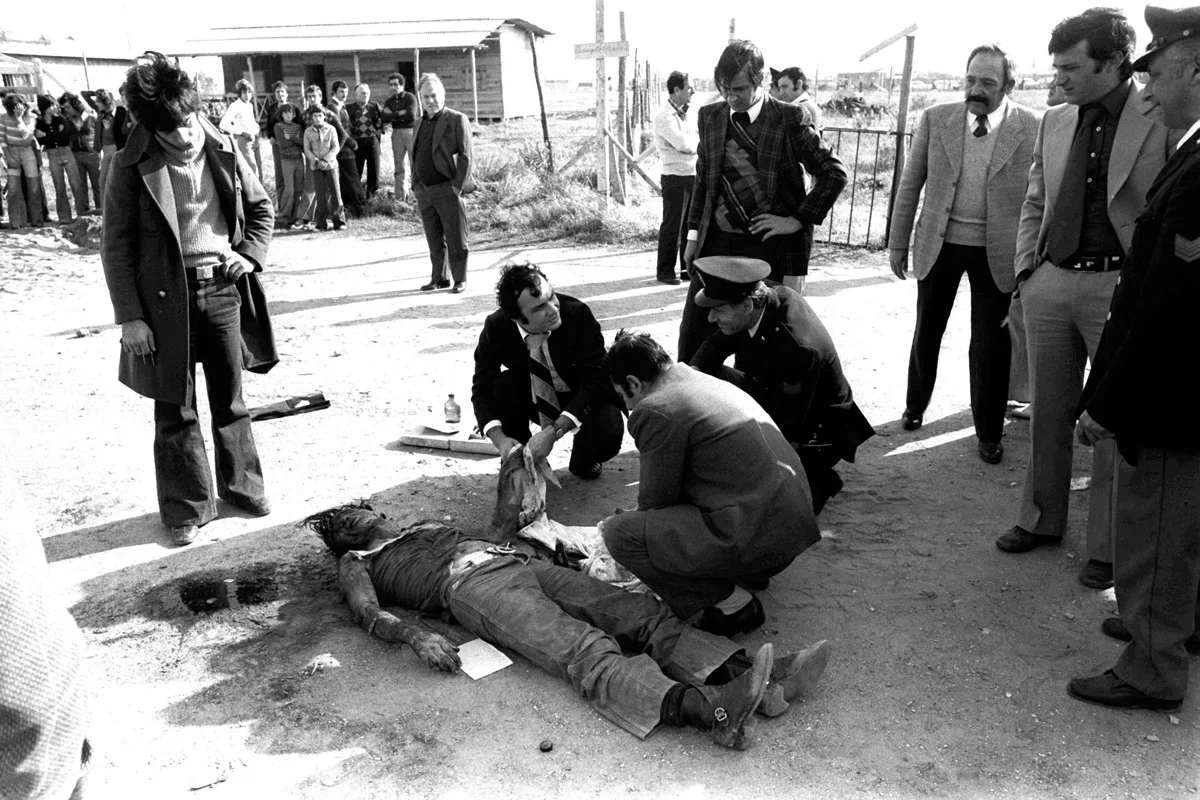
Photo: AP / TASS
The death of Pazolini (despite the fact that his killer seemed to even leave a book about those events that did not make clarity, but added doubts and confusion) remained one of the main mysteries of the 20th century. Carnero analyzes all versions, and a lot of facts and circumstances speak in favor of assumptions about an organized murder. The author of the biography of the master quotes the 2010 open letter of Walter Veltroni, the former mayor of Rome, the Minister of Justice Angelino Alfano, with the demand to resume the investigation of the crime: “It was bastard years ...” Yes, the years of violence and, possibly, conscious tensions (it was called: Strategia del Tensione - “Strategy of tension”) to change) The nature of the authorities. The frail 17-year-old Giuseppe Pelosi could hardly kill an adult strong man, and he could participate in the organization of the murder.
“The moralist says“ no ”to others, a moral person is only to himself” - this is the political testament of Pierre Paolo. The “unclean” Pasolini was a highly moraine person who feels like a seismograph, the onset of an anthropological catastrophe. And his death on the beach became, no matter how interpreted it, a metaphysical refusal, moral “no” and creative statement. Pazolini:
“Death completes the installation of the film about our life: it selects its most significant moments ... Only thanks to death does our life become a statement.”
It is strange that this phrase was not smeared with black typographic paint. Probably because the “death” in the Russian language of the feminine. However, as in Italian.