
Translated material
Immortal matter
As a consequence of Beslan, 20 years have been proving the state’s non-involvement in the tragedy and why every sheet in this criminal case will become evidence of its guilt
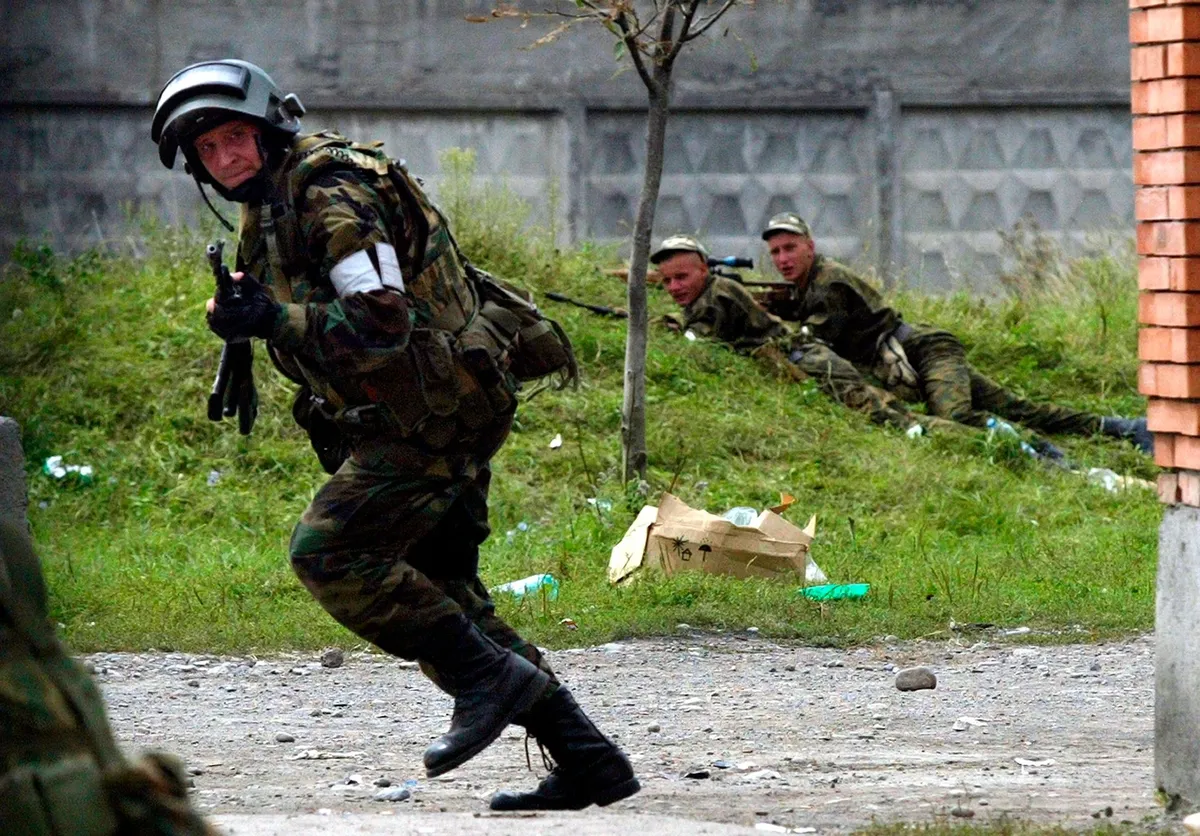
Today is 20 years since the storming of the Beslan school, during which 333 hostages died. 10 days before the tragic date, Putin flew to Beslan, knelt down, mixed up the number of hostages, and was surprised that the case, it turns out, had not yet been investigated.
But the case was not investigated for the reason that as soon as the investigation is formally completed, the victims will have access to the investigation materials, and the state is terribly afraid of this. Because from these case materials, the residents of Beslan, and with them, we will all learn and realize the true picture of what happened. And we will also understand how much the state, represented by the investigation, has done to carefully hide this picture from us.
Read the first part of Elena Milashina’s investigation here
In this criminal case, every page, every examination, every interrogation, every line will be polished and verified in accordance with the canonical official version, according to which the gym of the Beslan school was blown up by terrorists. All the hostages died from the first explosions. The tanks only fired at the school at night, when there were no longer any hostages in it. Flamethrowers were used only to kill terrorists. Firefighters began extinguishing the fire in the gym in time. The rescuers were effective in rescuing. The Alpha and Vympel special forces fired at the school with hostages “only with single shots and only to defeat the militants.”
And yet, all these verified and polished investigation materials will be evidence of the opposite.
Because all these 20 years, the residents of Beslan not only demanded an investigation from the state. They themselves were investigating the circumstances of the death of their loved ones. And they know enough to understand from this criminal case exactly how the state hid the Beslan truth from them.
Sooner or later, the investigation into the Beslan case will be completed. Sooner or later, this case will be reopened due to new circumstances and facts revealed during the “people's investigation.” Sooner or later, a criminal case will be opened against those who, following orders, tried to hide the truth about Beslan, rewrite it, replace it.
Yes, none of the officials and security officials will sit in the dock for the deaths of the Beslan hostages. The statute of limitations for criminal prosecution has already expired. But the investigation, which sooner or later is obliged to establish and record the Beslan truth in Russian history, has no statute of limitations.
On this tragic anniversary, we are publishing for the first time the testimony of witnesses in the Beslan case: servicemen of the 58th Army, rescuers and firefighters who took part in eliminating the consequences of the storming of the Beslan school.
These documents appeared with us completely legally. The state itself exposed them to the public when it was forced to communicate with the Strasbourg court on the complaint of 409 former hostages and relatives of the victims who appealed to the ECHR for judicial justice. Up to this point, the Beslan residents have gone through 127 Russian courts, and all of them denied them their right to an objective investigation.
These documents are an insignificant part of the criminal case file. And all of them can be divided into three parts:
testimony of firefighters who were interrogated about the circumstances of extinguishing the fire in the gymnasium of the first school;
interrogations of military personnel and tank crews of the 58th Army about when and what weapons they fired from;
interrogations of rescuers from the Ministry of Emergency Situations about how many corpses and, most importantly, from which premises of the school they removed immediately after the assault.
The Russian state carefully selected these materials from a huge criminal case in order to prove to the Strasbourg court its canonical version: only terrorists are to blame for the deaths of the hostages, and state representatives do not bear any responsibility either for the seizure of the school or for the 333 people who died in it.
But using these materials as an example, we will show how evidence of the innocence of government officials, with careful reading and the knowledge accumulated over 20 years about the Beslan tragedy, turns into evidence of their guilt.
We will also tell you by what methods the state, represented by the investigation, obtained this evidence.
Well, you can judge for yourself whether you believe them.
The Strasbourg court did not believe it.
Interrogations living and dead
All interrogations of witnesses, declassified and transferred by the Russian state as part of the communication of the complaint to the ECHR, can be divided into two groups. The first group (such interrogations are in the minority) are live , real witness statements in which investigators recorded exactly this way and exactly what the person who witnessed the tragedy said.
Here is an example of such an interrogation, in which an employee of the North Ossetian Ministry of Emergency Situations tells how, together with hostages rescued from a school, a girl whom he suspected of being a terrorist got into his car:
FROM THE PROTOCOL OF THE INTERROGATION OF RUSLAN ANDREEVICH TAVASIEV, EMPLOYEE OF THE NORTH OSSETIAN SEARCH AND RESCUE SERVICE OF THE EMERCOM OF THE RF
(Spelling and punctuation of the original have been preserved. - Ed. ).“...09/03/2006 at approximately 13:00 I was at the position where we were secured, namely approximately two blocks from the school on the street. Comintern between a hardware store and an electrical substation.
<…> When we saw that civilians in their cars were evacuating the wounded to the hospital in Beslan, we were given an order to the hospital in Beslan <…>
Having arrived at the hospital, we stayed there for no more than a minute, after which we turned around and headed straight to the school, where we began evacuating the victims. Since I was in the car, I was transporting the victims <…>
When I made the second flight, they put four girls about 10-12 years old in my car, and one girl about 20 years old, thin build, with blond hair but of a Caucasian type, who at that time was not dressed like all the hostages, i.e. not festive. On the way, the little girls, because they were in shock, began to ask me not to kill them, to which I tried to calm them down, saying that I was a rescuer, after which one of the girls recognized me.
Next, two of the little girls asked me to call their parents, but neither of them could remember the phone numbers. Next, an adult girl sitting behind me began using gestures in the rearview mirror for me to dial the number, which she also tried to show me on her fingers. Since I was driving fast, I told her that I had no time to look at her in the mirror and that she should say the number like that, but she didn’t do this until the last moment. She spoke the numbers of the number one at a time and intermittently, and for this reason I did not immediately catch the accent. I dialed the phone number she asked for, but no one answered the phone.
In response to the question, I answer that when I meet, I probably won’t be able to identify this girl and won’t be able to describe her to draw up a portrait. On September 3, 2004, in the evening, I learned from someone that from a hospital in Beslan, a UAZ 3962 ambulance was stolen by a terrorist who entered the hospital as a hostage. I suggested that this terrorist could be the girl who tried to show me the phone number on her fingers. Because of this, on the morning of September 4, 2004, I went up to a dark blue car with “FSB” written on it and reported my assumption. There they gave me a person who accompanied me to the Federal Security Service of the Russian Federation in North Ossetia-Alania in the Right Bank region. The person accompanying me went inside and after a while came out with another person, as I understood, an FSB officer, but I don’t know his last name, first name and position, to whom I also told about my assumptions and gave the phone number to which she called.
After that, the FSB officers no longer contacted me, and I myself also did not find out whether they had established her identity...”
The line with the possible surviving terrorist does not receive any development in the case materials. Neither Tavasiev nor anyone else is being questioned about this. But investigators interrogate other witnesses several times, although, it would seem, why?
The second group of interrogations from the “Beslan dossier” sent to the ECHR (and the majority of them) are “ dead ” interrogations, which are not a recording of the witness’s direct speech, but the investigator’s “blanks” signed by him. These interrogations were carried out using the “copy-paste” method, which is widely known in Russia, when the testimony of witnesses coincides word for word and even the spelling and punctuation errors in their testimony are the same.
Such interrogations, of course, are not truly unique eyewitness evidence, but they perfectly confirm (in investigative jargon, “fix”) the version of the investigation. In this case: that all the hostages in the Beslan school died at the hands of terrorists.
But there is a nuance. The one who collected the Beslan dossier from the materials of the criminal case for the ECHR sent interrogations of the same witnesses, done at different times, to Strasbourg. And a comparison of these interrogations allows us to see how the testimony of witnesses changed and why.
The details of the events of September 1–3 were unique, that is, they actually recorded from the words of witnesses, mainly the very first interrogations conducted by investigators immediately after the tragedy. It was a very short period of time. Until about mid-September. Then, obviously, the investigators had not yet tried to follow some kind of main version.
“Dead” interrogations, that is, those when a person simply signed a prepared testimony, were carried out much later than the Beslan events. And they were carried out, this is also obvious, in certain waves.
The most informative element of these interrogations, oddly enough, are the dates. We can observe how people who had already been repeatedly interrogated in the Beslan case suddenly began to be summoned en masse to the Investigative Committee again. The dates of their interrogations coincide with breakthroughs in the “people's investigation” of the tragedy, which was conducted by the residents of Beslan themselves, together with journalists, civil activists and member of the federal parliamentary commission Yuri Savelyev .
Every time the “people’s investigation” revealed another vulnerability in the official version, the investigators woke up and began re-interrogating witnesses in order to refute the truth of Beslan.
This is what happened when Beslan residents found tubes from used grenade launchers abandoned by special forces and demanded that they be included in the case materials.
This was the case when people raised the question of when the fire in the gym in which the hostages were burned began, and why this fire was not extinguished for two and a half hours.
This is what happened when people demanded to know why tanks were shooting at a school with hostages.
This was the case when Yuri Savelyev presented his version of the causes of the first explosions and proved that it was not terrorist bombs that exploded in the gym, but thermobaric shells for grenade launcher systems - weapons that only the special forces of the TsSN FSB had.
In the “Beslan dossier” submitted by the Russian government to the ECHR, the most sensitive topic for the Russian authorities of the first explosions in the Beslan gym, which began the storming of the school, is almost not touched upon. First of all, because the investigation actually had nothing to send to the ECHR.
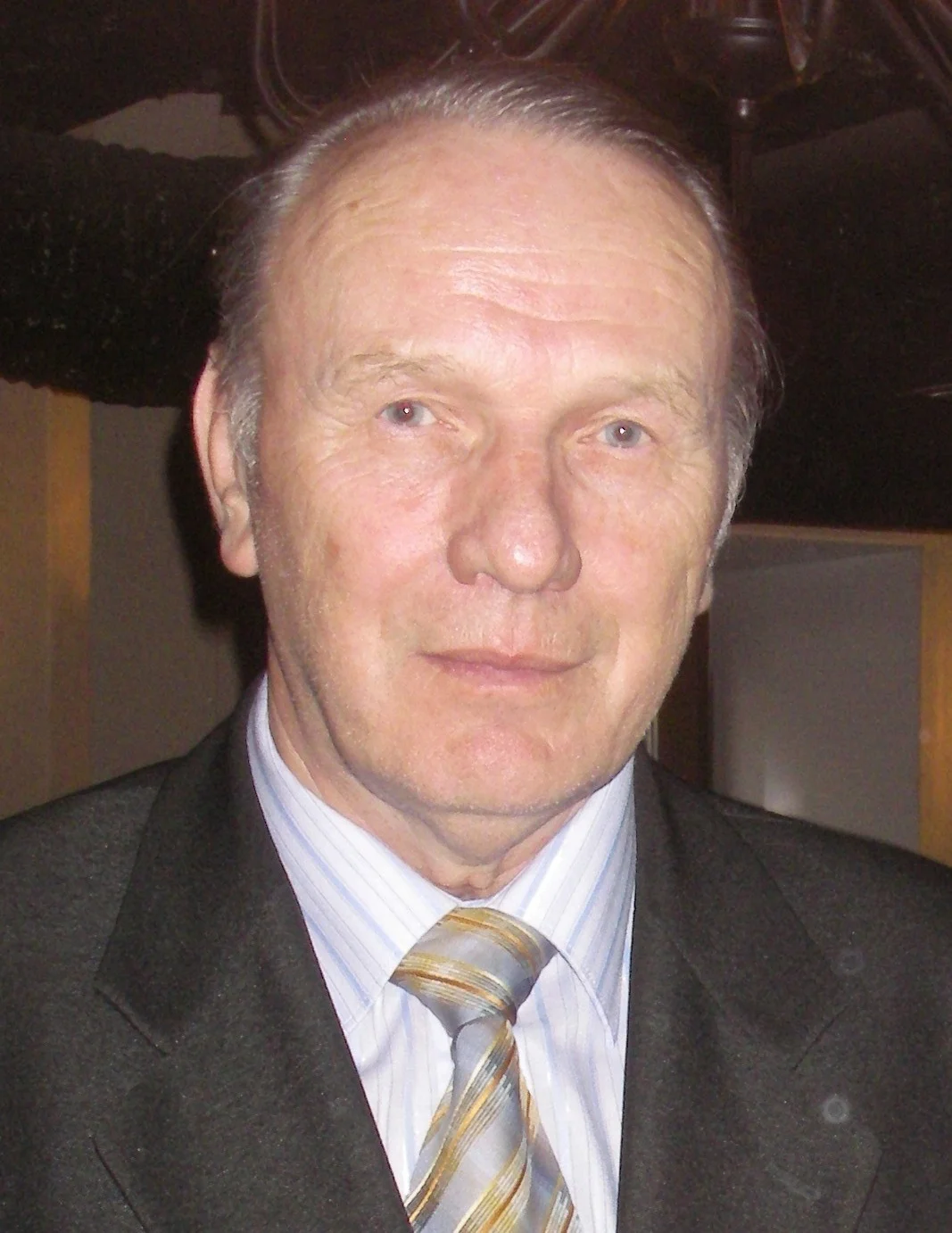
Yuri Savelyev's arguments turned out to be devastatingly evidential. So much so that the investigation was forced to agree with them at least in part and radically change the location of the explosions in the gym and bring it into line with Savelyev’s calculations. But not only that. The fact is that Yuri Petrovich Savelyev relied heavily on the testimony of the hostages themselves, which the investigation ignored until his version appeared, and very often even avoided asking them questions about the first explosions. But the hostages gave this testimony anyway - at the trial of the only surviving militant, Nurapashi Kulaev.
After Savelyev’s report appeared, the investigation still did not recognize the fact that the cause of these explosions were shots from outside at the gym from grenade launchers. But, on the other hand, now the investigation could not provide a convincing explanation of what actually (if not thermobaric shells fired from grenade launchers) exploded in the gym.
The fact is that (and this fact is confirmed by the case materials themselves) the terrorists simply did not have bombs of such power to pierce the roof at one end of the gym, and a thick brick wall at the opposite end of the room.
Savelyev explained the mechanism of occurrence of all these damages using physical and mathematical laws (in fact, he single-handedly conducted a large-scale examination of the mathematical modeling of the first explosions). And since then, the investigation has not been able to counter his examination with any scientifically based counterarguments. Today, the official version is based on the subjective assumption that the terrorists COULD HAVE a powerful bomb, although, as it is written even in the official explosives examination conducted by FSB forensic explosives experts, “there is no objective data for such an assumption.”
And therefore, the main evidence that Savelyev was allegedly mistaken was repeated interrogations of the hostages, whose testimony Yuri Petrovich used in his work. These hostages were re-interrogated, and people changed their primary evidence.
Fire
The investigation did the same with the testimony of the firefighters who participated in the fire extinguishing the gym.
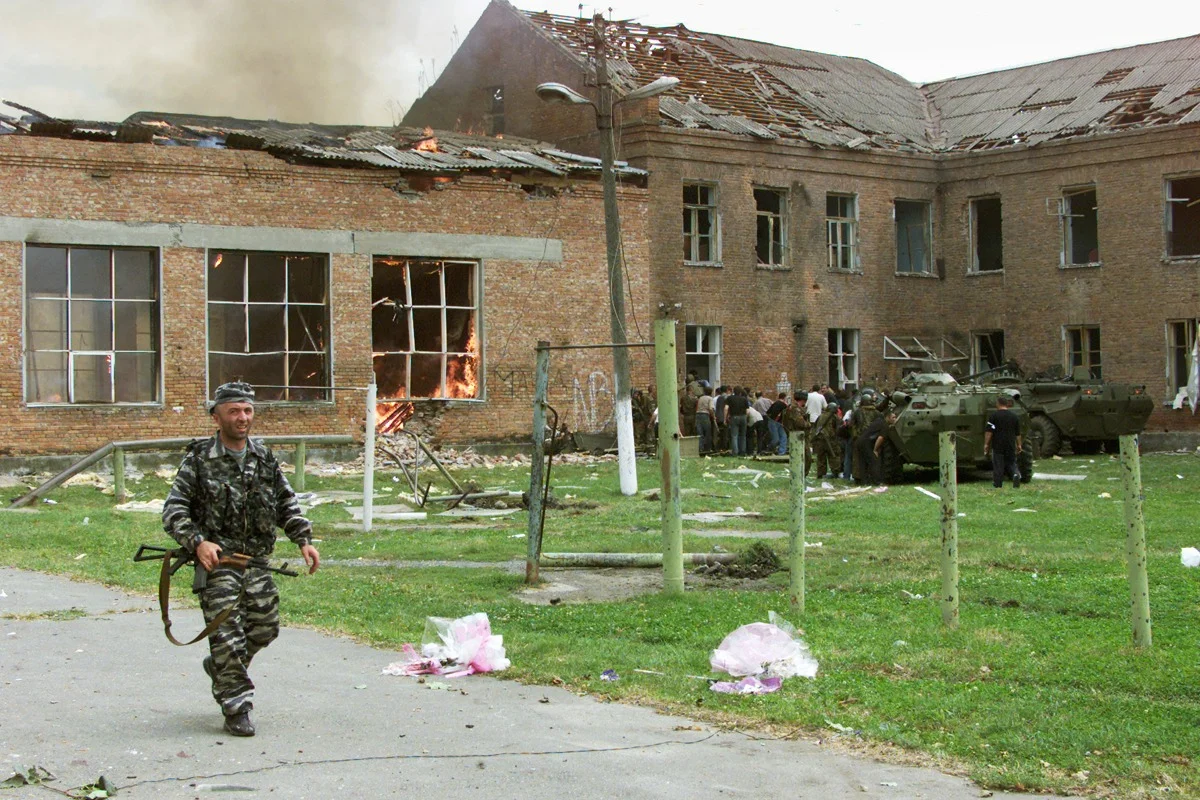
The fire in the Beslan school gym started immediately after the first explosions. At that moment, all the hostages were inside. More than a thousand people. Some of them died from the blast wave, others were wounded, shell-shocked, and immobilized. Those who were able to come to their senses crawled out, scrambled out, pulled out other survivors and escaped from the gym on their own. The terrorists took a group of hostages who were confused or frightened but could move to other premises of the school. Only those killed by the first explosions and those who were unconscious or unable to move due to injuries remained in the gym. How many of these there were, we will never know. On September 4, 116 bodies will be taken out of the gym and delivered to the morgue. The cause of death of these hostages, as forensic experts would later write, could not be determined “due to the exposure of the bodies to open flames up to complete charring.”
Why did they start putting out the fire so late? The Beslan victims still cannot get a clear answer to this question.
And then, in the morgue, peering at these 116 charred bodies, people could not understand who was whose relative. Recognized on a whim. Only DNA examinations helped establish the identities of the burned hostages, and when the results of these examinations arrived a few months later, exhumations began in Beslan. Because in September people mistakenly buried other people’s children, other people’s relatives...
It was one of the most terrible moments for Beslan, which had just experienced the largest mass funeral in the history of modern Russia.
That is why questions about the death of hostages in the gym from a fire have always been one of the most important for the residents of Beslan.
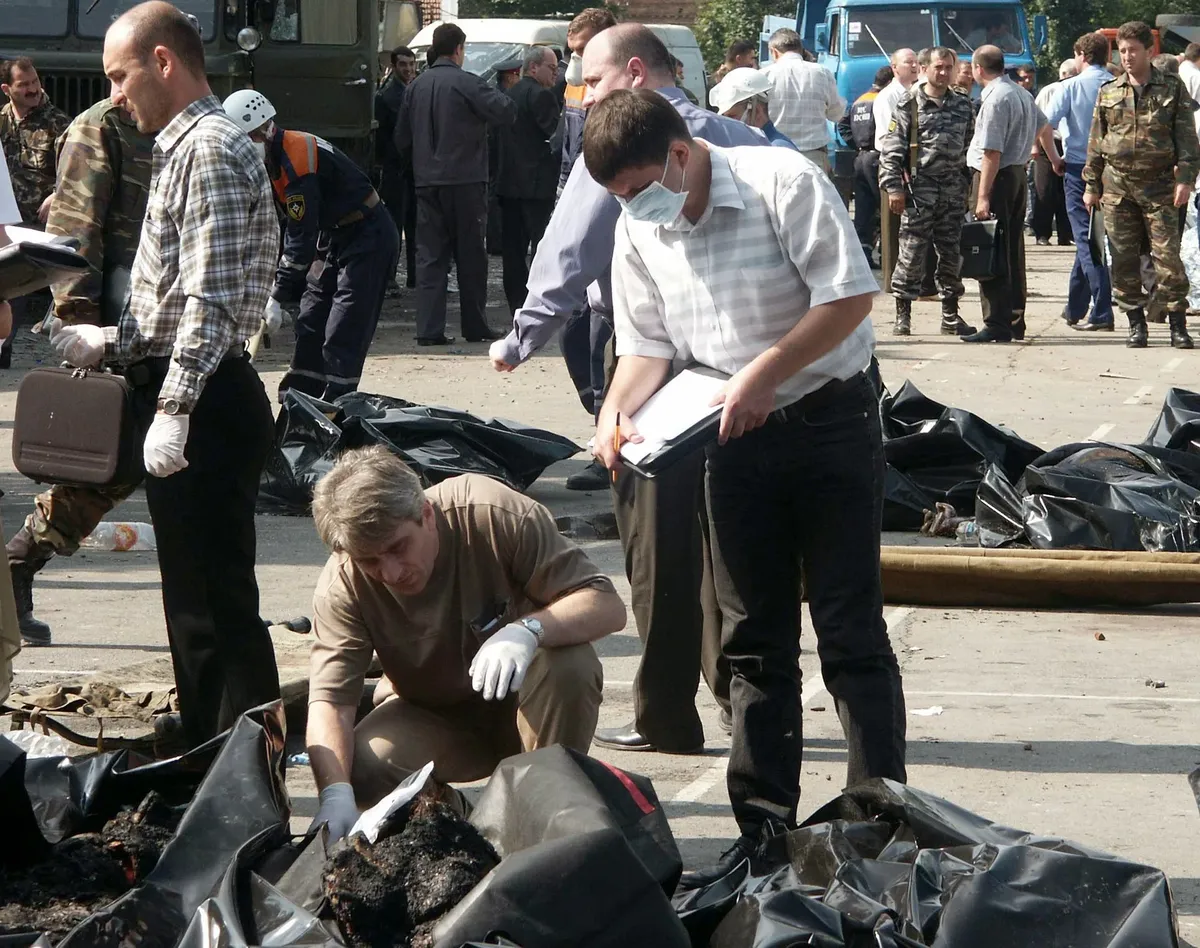
In the materials of the criminal case, as well as in the court record in the case of the only captured terrorist, Nurpashi Kulaev, there are hundreds of evidence that the fire in the gym started immediately after the first explosions. At 13:05 on September 3, 2004.
In addition to the testimony of the hostages themselves and numerous eyewitnesses, this was also recorded by objective data - photographs of numerous photojournalists. For example, photojournalist Dmitry Belyakov, who arrived in Beslan with special forces, photographed the roof of the gym from the moment of fire until the moment when the ceilings burned down and the remains of the roof collapsed on the bodies of the hostages.
But besides this fact, there is another fact, established no less objectively.
The fire in the gym started at 13:05, and fire trucks arrived at the burning gym only at 15:20. And when they arrived, the roof had already collapsed, and there was no one to save.
Then (and, in fact, now) the residents of Beslan primarily blamed the Ossetian firefighters for this two-hour delay. The firefighters, in turn, referred to the fact that they had not received an order from the Minister of North Ossetian Emergency Situations Boris Dzgoev.
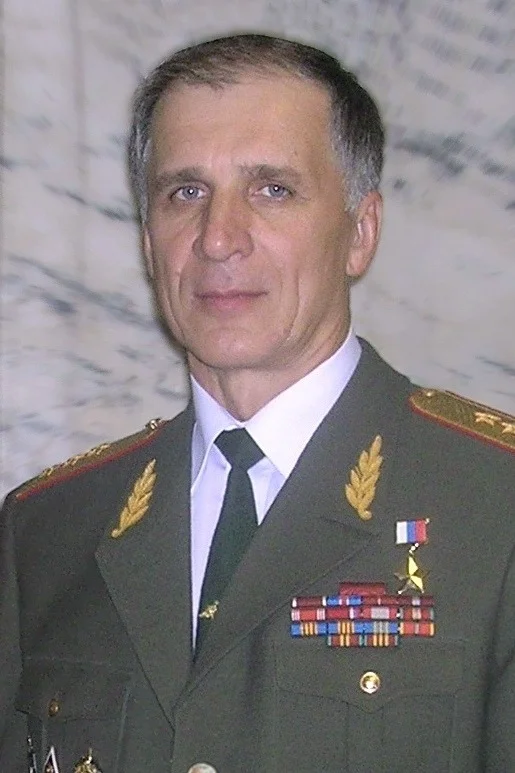
Boris Dzgoev referred to the lack of permission from the head of the operational headquarters, the head of the FSB RSO-A Valery Andreev and the head of Alpha and Vympel, FSB General Alexander Tikhonov . It was Tikhonov, together with Patrushev’s deputies , FSB General Pronichev and FSB General Anisimov (in Beslan they were in the role of “consultants”, and their official powers have not yet been reflected in any documents) who developed the plan for the counter-terrorist operation. As follows from the case materials, in particular, from the situational assessment, from the beginning of the assault, from 13:50, General Tikhonov was in charge in Beslan. He led all departments involved in the operation and gave orders to members of the operational headquarters.
In theory (at least according to the law), an investigation should have established those responsible for not rescuing the hostages in the burning gym. But the investigators in the Beslan case were not interested in these questions. They were worried about something else.
And the logic of the investigation can be clearly seen in the interrogations of firefighters, which the Russian government handed over to the ECHR.
The most important ones are probably interrogations of two people who directly extinguished the fire in the gym. This is Viktor Kharkov , head of the fire department of the Right-Bank District of the RSO-A, and Yuri Romanov , 1st Deputy Minister of the Ministry of Emergencies of the North Ossetia-A.
Here is what Viktor Kharkov told investigators in his very first interrogation of September 15, 2004 ( spelling and punctuation of the original were preserved. - Ed. ):
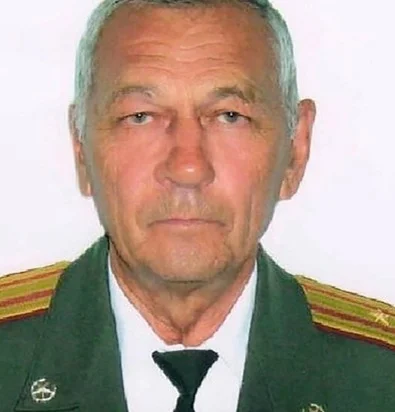
From the testimony of Viktor Kharkov
“... at about 13 o’clock, from a radiotelephonist <...> a message was received that a fire in the SSh School No 1 gym was reported directly to DZGOEVA B.M., however, the instructions were not received at that time.After about 10 minutes, explosions began to be distributed, after which, after another 5-10 minutes ... Mingaliev S. ( the head of the Centrospasa of the Ministry of Emergencies of the Russian Federation. - Ed. ) Ordered to the employees to accept the readiness of no 1, similar instructions received us almost immediately From Romanova Yu.A.
Having accepted the combat readiness of no 1, for about 1 hour, we were waiting for the order Romanova Yu.A. To the performance, during this time the last several times gave the order to nominate to school, after which, literally a few minutes later, abolished it, ordering to expect further orders at the base. From the base of the Ministry of Emergencies ( school No. 6. - Ed. ) To the school building, with free passage, the movement time is about 5 minutes.
Waiting for the order Romanov Yu.A. I, from the trainee-inspector Murtazova ... I received another message that the fire at school intensified, the hostages may suffer, which I, in turn, reported to Yu.A. Romanov, but he did not give the order to the nomination.
Over the following about 15-20 minutes, Romanov Yu.A. Another 2 or 3 times gave an order to nominate 2 tankers to the school building, after which he canceled it, returning the car to the base.
After Romanov Yu.A. Once again, I returned the tankers to the base, I went up to him and asked what was the matter, to what he replied that the exit to the building and work there to eliminate fires are not possible due to the fact that the special services do not ensure security. At this moment, from one of those present, or from a message by a walkie-talkie, I and Romanov Yu.A. They heard that people were burning in the school (highlighted by ed.) And only after that did the latter gave me an order to nominate to school.
<When we drove up> The overlap of the roof of the school for the most part collapsed by this time, there were no longer living people there, in fact, the room was watered by us with the purpose that the corpses did not burn much ... "
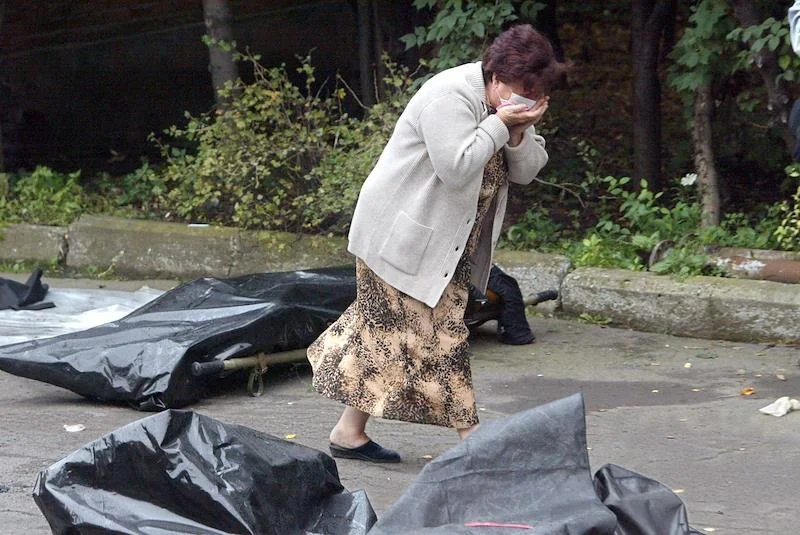
But the testimony of the First Deputy Minister of the North Ossetian Ministry of Emergencies Yuri Romanov.
From the testimony of Yuri Romanov
“The question of the investigator>: how much did you receive the first message about the occurrence of a fire in the premises of the gym of the Beslan's Light 1 gym, and how did you react to this message?Answer: 09/03/2004, at about 13 hours 15 minutes, I was on the territory of the secondary school No. 6 of Beslan, when I am from Kharkov V.A. It became known that in sports. The Hall of the Secondary School No 1 Fire, which I immediately informed DZGOEV B.A. (Minister of the Ministry of Emergencies of the North Ossetia-A. - Ed. ).
DZGOEV B.A. He told me that he knew about the fire, while he gave an indication <...> without his order, no action, including on departure and extinguishing a fire at the facility, could not be taken.
About 5-10 minutes before the message of the fire, I heard, reporting from the Secondary School of NO 1, the sounds of explosions, after which the shooting intensified. I was given an instruction to subordinate employees to accept the readiness of no 1 ...
For about 2 hours, i.e. Until 15 hours 10-20 minutes 09/03/2004, I was with the personnel in the territory of the secondary school No. 6, waiting for the order of Dzgoyev B.A. To the exit, while I have repeatedly received reports about strengthening the fire in the school gym and the deaths of people there.
In this regard, I repeatedly approached Dzgoyev B.A. And he proposed to move to the object, to start extinguishing the fire, to which he gave an instruction to expect his team.
Several times, being in a state of excitement, fearing for the life of the hostages, I gave an instruction on the departure of fire trucks, after which, realizing that I could be responsible for actions without appropriate instructions, I canceled them ... ”.
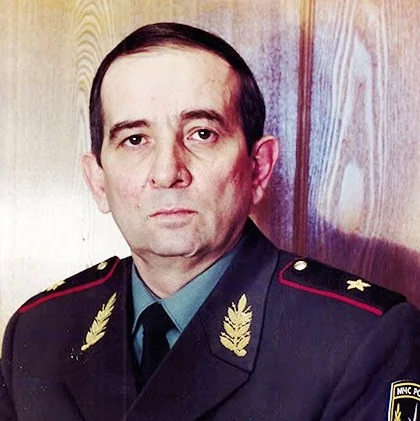
... In May 2005, the court began in the Vladikavkaz in the case of Nurpashi Kulaev, the only one, according to the investigation that survived the Beslan terrorist. I must say that the state made truly titanic efforts to imagine everything in a profitable light, and even for the first time in the history of Russia, it provided a living terrorist for a judgment. But to canalize the grief of people in the right direction and in this way it was not possible to get away from uncomfortable questions. The Beslanians seemed to not even notice these efforts and certainly were not grateful. On the contrary, they recovered from shock after mourning (when it was so easy to convince them to subscribe to the desired consequence of the papers, including refusing to familiarize themselves with the materials of the criminal case) and actively joined the lawsuit in Kulaev.
And with each new meeting, the trial of the terrorist was increasingly turning into court of the state. Kulaev was not asked the victims of their questions about the reasons for the capture of the school and the death of hostages, but to officials, military, employees of the FSB and the Ministry of Emergencies.
State prosecutors and the court removed these issues as not related to the essence of the process, but people continued to demand the investigation.
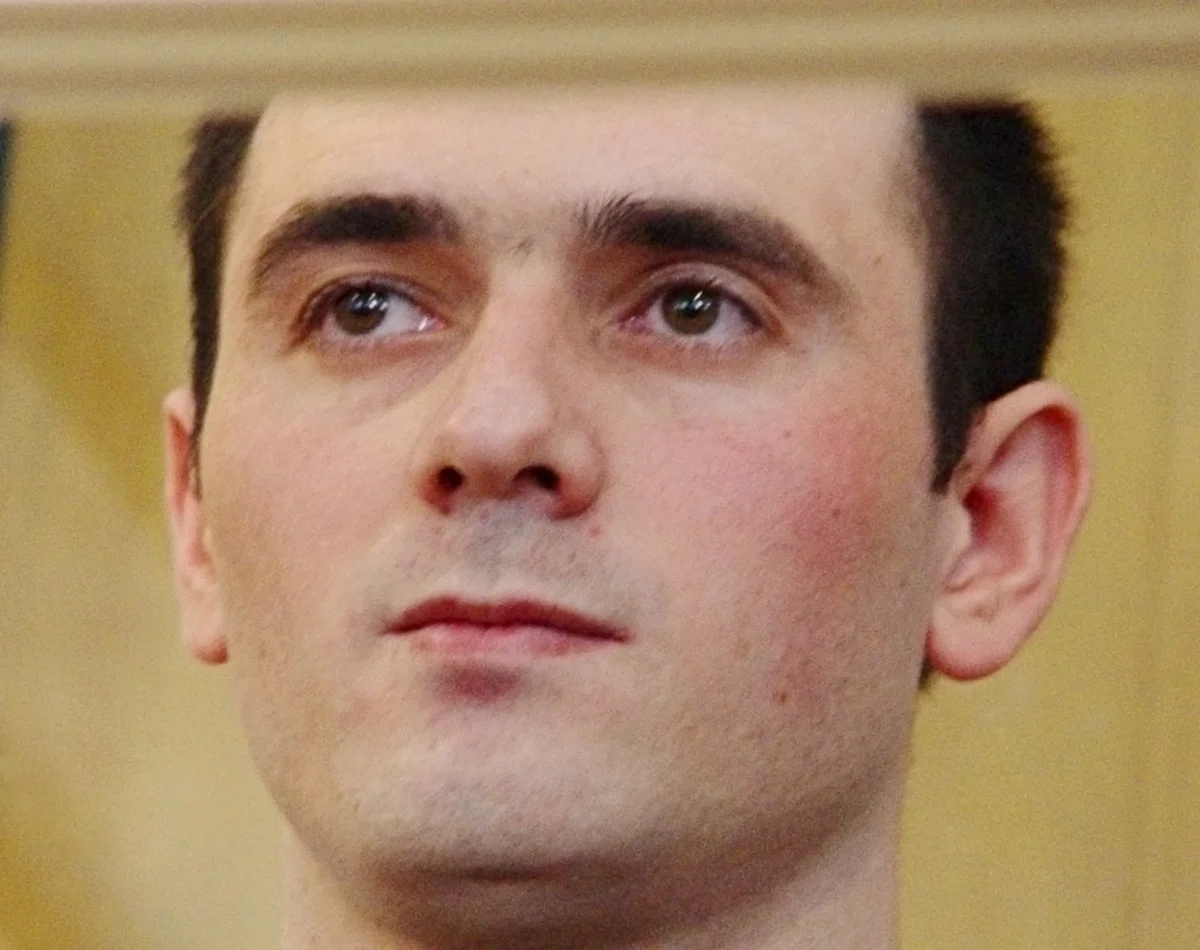
Therefore, in August 2005, the investigation was still forced to appoint examinations about the causes of the first explosions and the circumstances of the occurrence and liquidation of a fire in the gym. And up to this point, these actually the key issues of investigators in the Beslan case were not interested in the investigation. They dryly designated in the case file that all the hostages died through the fault of terrorists, and transferred the criminal case to the court. Hoping that with the verdict Kulaev in the history of the Beslan tragedy will be put a fat point. It didn't work out. People did not need kulaev. People needed truth.
That's then a series of advanced examinations reached out, which were supposed to give “necessary” testimonies that contradict what these people saw in Beslan and what they talked about at the first interrogations.
On August 15, 2005, Viktor Kharkov was summoned.
Here is his testimony ( spelling and punctuation of the original are preserved. - Ed. ).
From the testimony of Viktor Kharkov
“In essence, the criminal case can show the following. Earlier, I completely confirm these indications, except that the time of fire in the Sosh No 1.G gym of Beslan 03/03/2004 - 13 hours 05 minutes <...> actually a fire in the gym <...> occurred at about 14 hours 50 minutes.The instruction of the <...> extinguishing of the fire arose there was received only after 30 minutes, at about 15 hours 20 minutes, while we were explained that the special services would ensure the safety of the fire extinguishing participants <...>
At the time of my arrival at the school, two fire brigades, at about 15 hours 20 minutes, some of the hostages were still alive. I can’t say to what extent that the collapse was at that time, I can’t say the overlap of the gym, due to strong smoke ... ”
That is, a year later, Viktor Kharkov radically changed his testimony, and now they did not contradict the official chronology and situational examination conducted by order of the investigation and recognized the actions of members of the operational headquarters, security forces and rescuers, “fully complying with the requirements of applicable federal laws, charters, instructions, manuals, manuals, guidelines orders, as well as other legal acts applying to anti -terrorism activities. ” As experts wrote in their conclusions, and then investigators, in the decision to refuse to institute criminal proceedings against members of the operational headquarters, firefighters and security officials, “incorrect actions of officials were not established”.
Similarly, Kharkov behaved on repeated interrogations, all the employees of the Ministry of Emergencies, including the First Deputy Republican Ministry of Emergencies, Yuri Romanov, and even the dispatcher of the unified salvation service Zalin Salatova. It was her recording in the journal of the central fire point on the start of the fire at 13 hours 05 minutes on September 3, 2004 that almost the only unshakable evidence of the real time of the fire began. And here is what testimony Salatova gave on July 8, 2005.
From the testimony
“When filling out the journal of the central point of the fire service (CPPS) <...> I made a mistake that I was under one time - 13.05 - recorded all the events that occurred in Beslan 09/03/2004: the beginning of the explosion, the beginning of the fire , the actions of the fire departments <...> the above error was made by me when transferring information from a draft to the journal of the Central Bank. Thus, in the column: “Time of receiving information” of the TsPPS magazine did not record the time to receive information about the fire in the gym <...> in draft records the time of receiving information about the fire in the gym <...> I recorded: 14 hours 51 minutes ... "
Why suddenly all these people decided to change their testimony overnight?
Everything seems to be very commonplace.
During repeated interrogations, investigators, as if by chance, unexpectedly, suddenly asked witnesses to the Beslan tragedy ... On corruption in the Republican of the Ministry of Emergencies.
“Do you know anything about the unlawful actions of Romanov Yu.A. and Dzgoyeva B.A., related to the illegal wiring of funds with subordinate employees, as well as from private entrepreneurs and managers of other facilities located in the city of Vladikavkaz? ”
“Do you know anything about the illegal actions of DZGOVA B.A. and Romanova Yu.A., related to the illegal assignment of them and inappropriate spending of budget funds? "
Everyone understood this fat hint.
But here's the thing. Even of those few materials of the case that became available to the victims, it is clear that the salvation of hostages in Beslan was, in principle, there was no priority for those who prepared the storm of school.
According to these materials, the power operation plan began to be developed on September 1, and it provided for many important points. So, in accordance with this plan, sniper groups consisting of the Employees of the FSB Central Bank and deployed on the roofs of five -story buildings (and this is the ideal position for shelling the school), they brought an additional batch of grenade launchers with thermobaric shells (Bumblebee flamethrowing) on September 2. Boxes with grenade launchers were entered by the police officers of the Right -Bank District, which they then testified in the court of Kulaev.
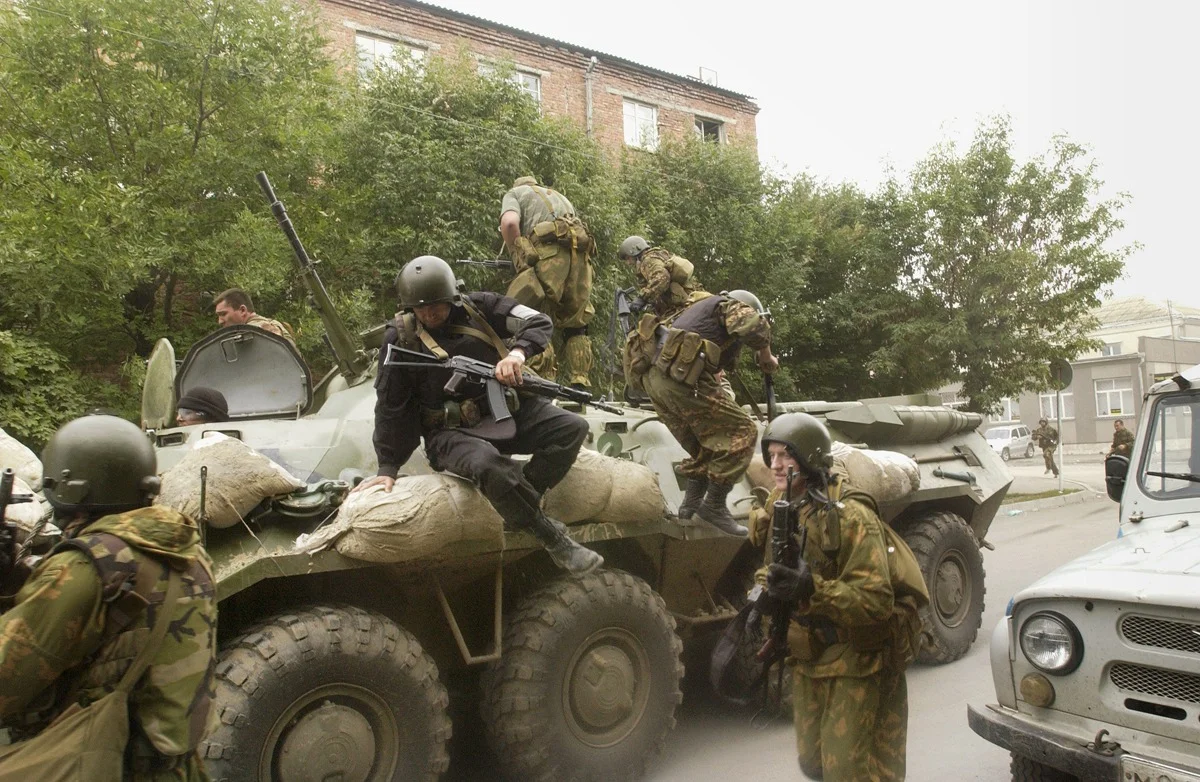
On September 2, the military personnel of the 58th Army distributed gas masks. Employees of the FSB Central Bank instructed the military that gas masks will be needed if gas is used during the assault. Gas, as indicated in the testimonies of the military, was the one that the special forces of the FSB Central Bank used at the Dubrovka Theater, brought to Beslan from Moscow on September 1.
The developers of the assault plan took care even about accumulating a large number of engineering equipment in Beslan ahead of time.
And here's why.
From the testimony of Haji Dztiev
“The head of the Ministry of Emergencies on the basis of the secondary school No. 6 of Beslan was appointed Dzgoyev B.A. In addition, the main headquarters of the <counter -terrorist operation> was created in the building of the district administration, who was its leader I can’t say. <This headquarters> also included B.A. Dzgoev, the latter at the same time periodically gave us additional instructions ...09/02/2004 <...> I was assigned to the organization and collection of engineering equipment at the pharmacy No. 1 of Beslan on the street. Lenin - bulldozers, tractors and other equipment. This instruction was fulfilled by me - the entire equipment in the amount of 14 units was assembled by 10 o’clock on September 2, which I reported to the minister.
<Also> DZGOEV B.A. I gave me an instruction to prepare 10 containers for loading garbage from the analysis of the rubble in case of their possible occurrence. This instruction was also performed by me ... "
These are the testimony of Haji Dztiev , the head of the Office for Civil Defense and Emergencies of the Right -Bank District.
From these indications it follows that the assault on the Beslan school provided for the possibility of serious destruction of the building. Which, in fact, happened. But these destruction was not the result of undermining the bombs of the terrorists, but, as the inhabitants of Beslan found out and calculated Saveliev, the result of the shelling of the school from grenade launchers and tanks.
On September 2, tank crews were picked up by tank armor, which protects against shots from under -barrel grenade launchers. That is, the assault plan, as we can assume, directly provided for the use of tanks during the battle, and therefore the tanks should be protected from the fire of terrorists.
Only firefighters and rescuers of the Ministry of Emergencies were left without any means of personal protection against bullets and fragments. They were simply forgotten to provide body armor and helmets. Why?
A similar fate befell the route of movement, which the employees of the Ministry of Emergencies of the North Ossetia-A-A-A-AD developed and presented to the headquarters in advance so that the military created the unhindered and speedy entrance of fire engines to hydrants. The headquarters received this route of movement, but it was ignored.
On September 3, all entrances to the school were blocked by military equipment, and the special forces of the FSB Central Department Store, as witnesses say, deployed fire engines. They circled around the Beslan school, changed the route three times, and when they finally arrived, there was no one to save ...
In the next part of the new “New” investigation, read:
Why did the investigation classify the testimony of the tanker Guram Abuladze, who refused to fulfill the order and shoot from the tank at school during the assault
As immediately after the assault from the premises of the school - the dining room, classes and workshops of the southern outbuilding - the bodies of hostages were first carried out
Why were the rescuers of the Ministry of Emergencies to lie that this was not