
Translated material
"Dog's heart" froze
In Engels, officials demand the demolition of a shelter for homeless animals
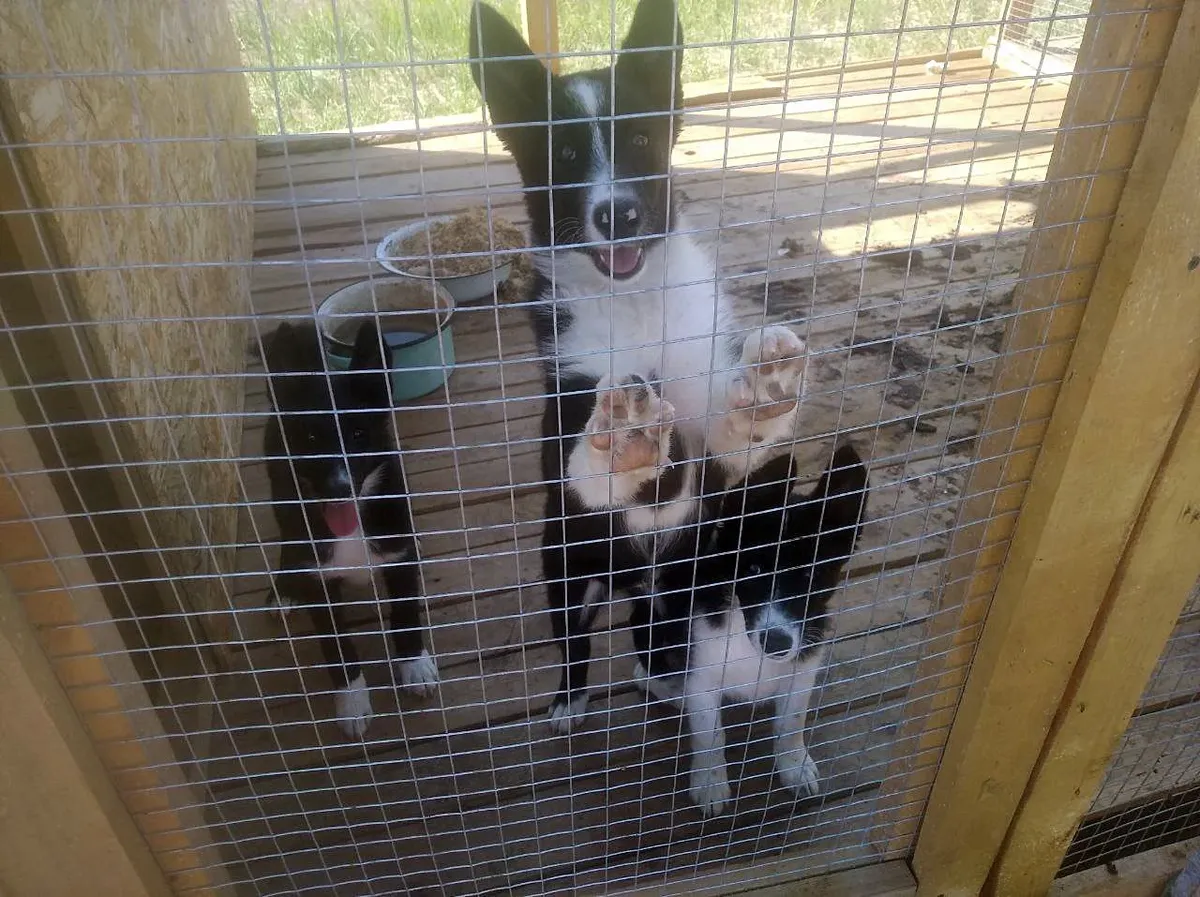
The Engels Committee on Land Resources demands the dismantling of enclosures at the “Dog’s Heart” shelter for homeless animals. According to officials, the land on the outskirts of the city was allocated for the construction of walking and training areas, and not for the permanent keeping of animals. According to the director of the shelter, Olga Bogomolova, 72 dogs, including two dogs whose owners went to the Northern Military District, are at risk of ending up on the street.
The situation in Engels is one example of the attitude of Russian officials towards homeless animals. In 2023–2024, laws were passed in 11 regions allowing the killing of stray dogs. Representatives of the authorities in Saratov, Samara, Yekaterinburg called for sending street four-legged animals to SVO. In particular, the chairman of the Saratov Public Chamber, Boris Shinchuk, proposed “throwing stray dogs into the positions of Ukrainian nationalists.”
“As bombed as I am”
The baby looks like an East European Shepherd. Black back, wide red chest. Gray hair is showing on the muzzle. Lolling out his tongue, the dog falls heavily on Olga’s lap, waiting for affection.
The previous owner left the Baby in the entrance of an unsafe three-story building. “Her son brought a dog from SVO last year. The Kid's back was broken. The fighter paid for the operation and went back, giving the dog to his mother. The baby had not yet recovered and was getting dirty in the apartment. Here the house was designated for demolition, and the owner was given a new home. She didn’t want to take the old dog there,” Olga recalls.
At the shelter, the Baby crawled and gradually began to rise to his paws. Now he doesn’t move particularly gracefully, but confidently. There is no connection with the owner in Donbass.
At the end of the row of enclosures is another soldier’s dog, Altai. A huge black and white alabai rises to its hind legs in one movement. Now he is as tall as Olga. He tilts his forehead and looks coquettishly. The giant knows that he is beautiful and enjoys human admiration.
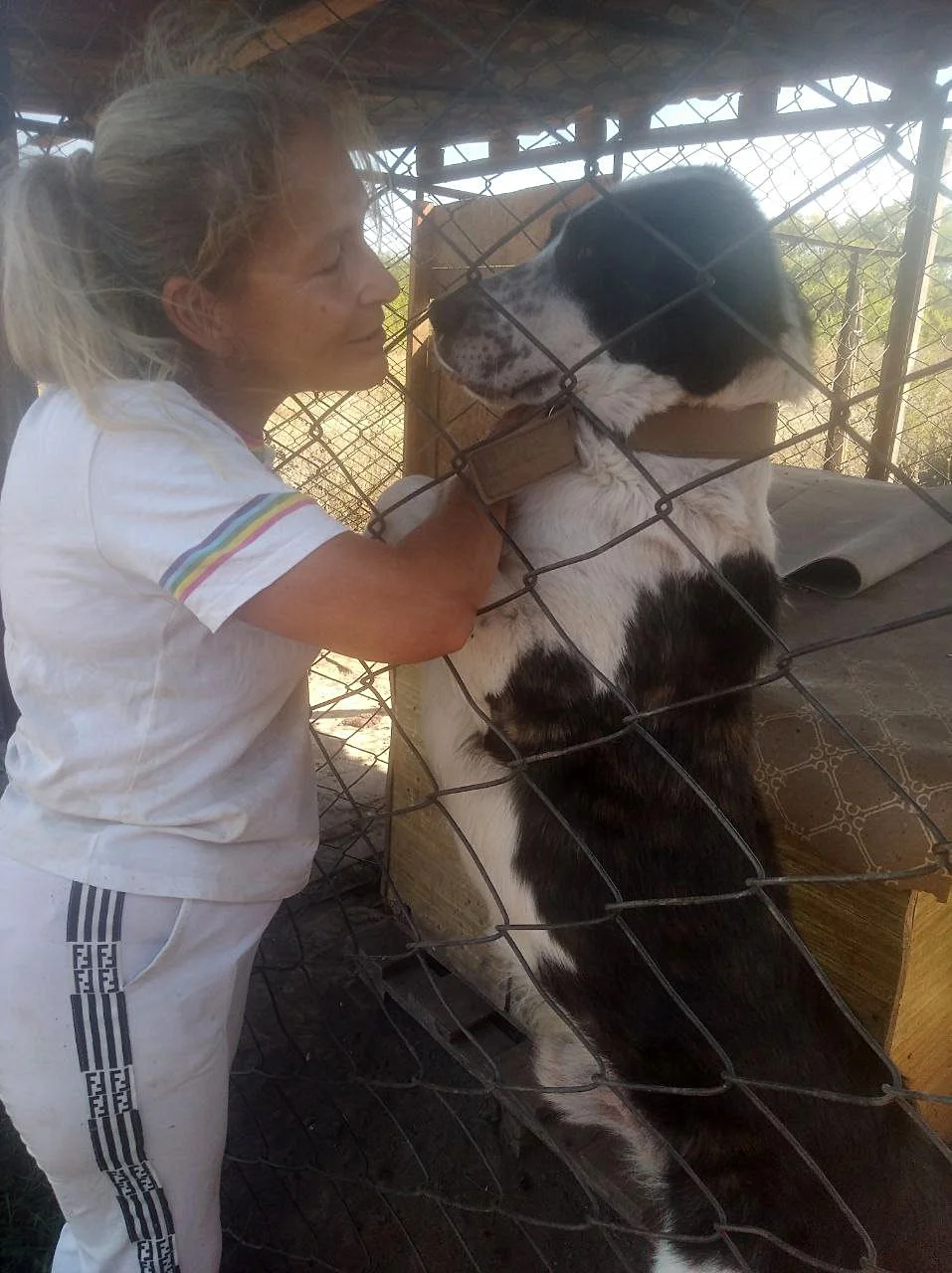
Before leaving for the Northern Military District, the owner of Altai took his mother to the suburban village of Awakening. An elderly woman could not cope with a large dog. Altai walked unattended wherever he wanted. “People were afraid of such a big dog, they drove him away with sticks and stones. The story could not end well. Altai was hit by a car. After that, he came to us,” says Olga. The owner of the alabai did not contact the shelter.
The pointy-eared Fox gallops on her hind legs, thrashing her front legs with all her might against the mesh of the enclosure, trying to get to me. She really wants to be petted. Olga found Lisa as a puppy in May 2023 near one of the Engels churches.
“I’m a believer, but I smoke,” says Olga, running her fingers through her pet’s long wavy fur. “I confessed this to my priest in confession.” He did not allow me to take communion; he said loudly to the whole church: “Go and haven’t gotten ready yet!” I felt so offended, because I was fasting and reading the canons. I hesitated and hesitated and left the church. I see a puppy running along the road. She rushed to him. I almost didn't have time. The car ran over the Fox’s tail and paw.”
Olga took the dog to the veterinarian. Fortunately, the fractures healed without consequences.
“We found Oscar at “The Living and the Dead” ( that’s the name of Engels’ microdistrict, built on the site of an old cemetery . - N.A. ). A resident called and said that a Labrador was lying near the house and couldn’t get up,” Olga finds a year-old video on her phone: Oscar awkwardly walks on the shiny tiles in a veterinary clinic, his ribs and spine protruding under his light skin. “It was 17 kilograms! Hemoglobin was 43 grams per liter, with the norm being 120. Every few steps he lost consciousness from exhaustion,” recalls the director of the shelter.
It turned out that the Labrador had an autoimmune disease - lupus. Because of it, ulcers form on the animal's face. “Apparently that’s why they threw him out,” Olga suggests. The dog was prescribed lifelong treatment with prednisolone. The owner buys medicine with her own money: “Once the pills disappeared from the pharmacies. I asked for help on social networks, people brought from their supplies.”
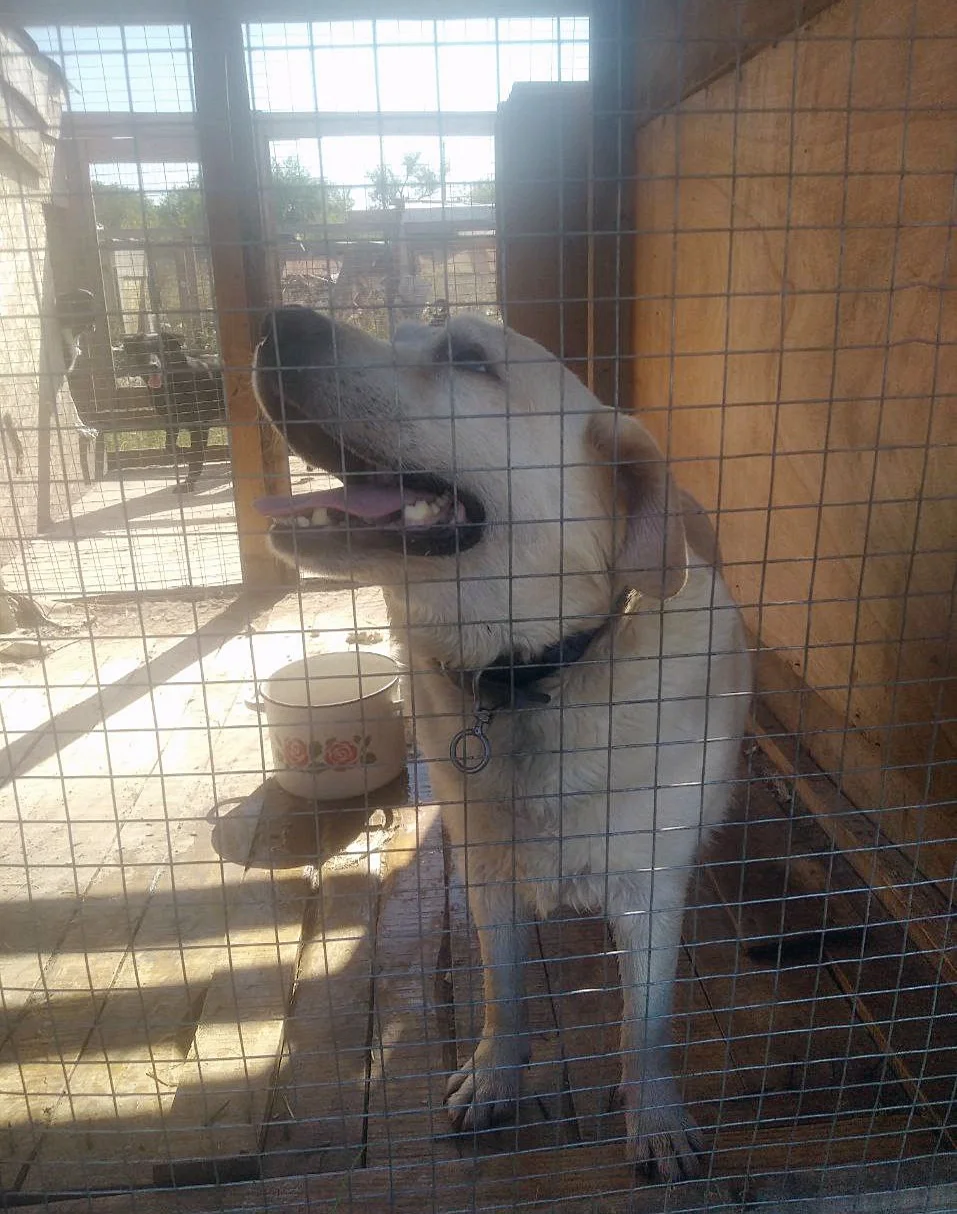
Now Oscar, as befits a Labrador, looks like a pig with a propeller. “At the beginning of summer he weighed 49 kilograms. Now, probably more. He’s a glutton, like all labs,” says Olga, scratching her pet behind the ear.
“When someone asks me: “Why do you need this, Olya?” - I ask in response: “Do you need it?” As a rule, the person answers that he would not bother with stray animals. The universe does not tolerate emptiness, there must be someone who cares. Bombed like me,” Bogomolova laughs.
She believes that her work is needed “not only by dog lovers who feel sorry for the homeless, but primarily by those who are afraid of them and want to get them off the streets.”
“The dogs started piling up”
Bogomolova’s parents left Engels in 1976 to build the BAM, taking their two little daughters with them to the taiga. Olya was not even three years old at the time. “My first memories are of a West Siberian husky, a wolf and their three puppies. The mother picked up sick and wounded animals. A wolf that grows up next to people is perfectly domesticated. But only if there is no other wolf nearby. If you have a second one, they form a family, and there is no longer a place for a person in it,” says Olga. — We lived in the village of Novy Uoyan. It still exists, and there is still no road there; all cargo is delivered by helicopter.”
In 1993, Bogomolova returned to Engels, got a job at a factory, and received a room (12 meters) in a dorm. One day, daughter Katya told Olga that a dog was lying on the street, hit by a car, “and it can’t get up, and it’s not dying.” “Gerda was lying on the side of the road, completely drowned in liquid mud. Only the nose and paw remained on the surface. I thought: let him die, but at least in the warmth. She wrapped it in a blanket and brought it home. Until the morning she changed her mind about dying,” Olga recalls.
Then she first posted on social networks asking for help. Concerned people paid for the x-ray examination and surgery. “The dog walks around, crooked, of course, but has been living a full, well-fed life for 7 years,” says Bogomolova.
As Olga says, she “started to accumulate dogs.” Since 2019, she has written to the governor and president asking for land for the shelter. One day a miracle happened: “I got a call from the land committee. We picked this area. There was nothing here, the same weeds grew,” Olga points to the wasteland surrounding the shelter.
In December 2021, the Engels Committee for Land Resources issued Bogomolova permission to use 1.3 hectares of land “for the purpose of placing areas for walking and training dogs.” “The wording confused me.
I didn’t dare to build anything for two years. I asked the land committee: do I have the right to open a shelter here? They told me: this is just a legal turn, we are allocating land to all animal rights activists on these conditions, feel free to build.”
In May 2023, Olga began construction. She saved up the money herself: “I worked as a seamstress, the salary was good - 40 thousand rubles. And also a pension for the third disability group - 6 thousand plus.”
She puts everything she has into the shelter. Saves on yourself. Doesn't do home renovations. Very rarely buys clothes. For “luxury,” he allows himself “only coffee with milk.”
One and a half centners of porridge per day
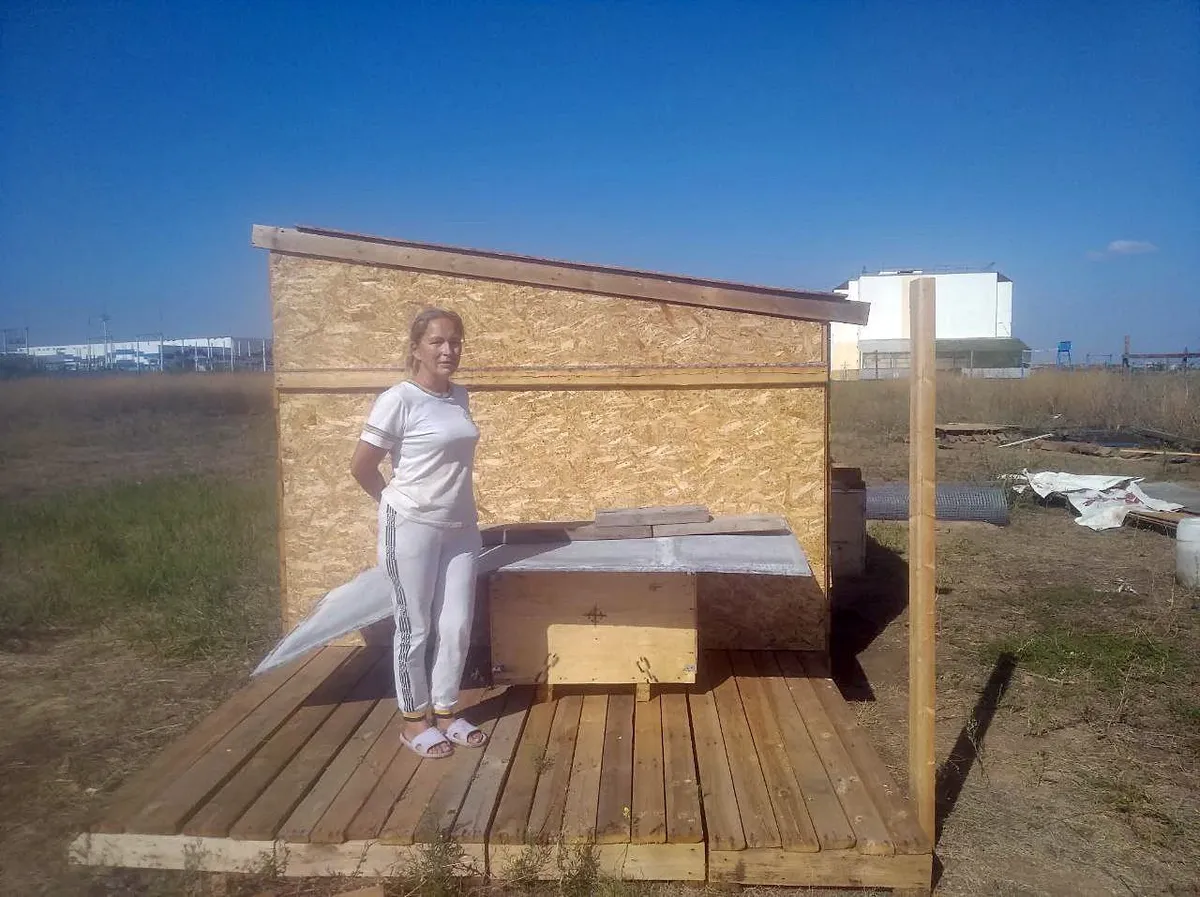
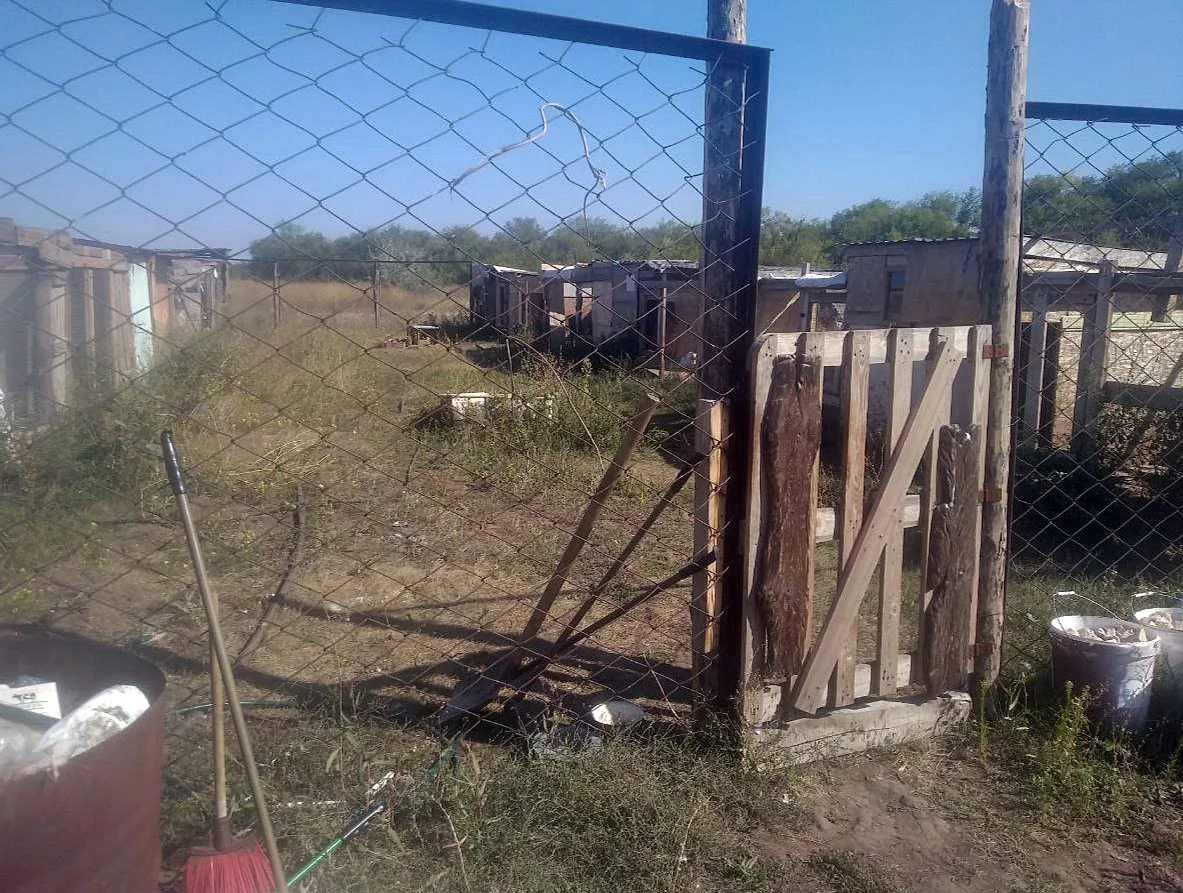
“I started with this squalor. “I built it with my own hands, alone,” the hostess shows the first little pens, put together from gray boards. Over time, Bogomolova, in her words, became an “experienced designer”: she empirically determined the design of the enclosure, which is not easy to chew, and found out the optimal dimensions. Each enclosure is 4 meters long, 2.5 meters wide, and the inside of the booth is about a meter by meter. Today the shelter has 32 enclosures and 72 dogs. Adult pets are accommodated in groups of two.
Olga learned to work with a screwdriver and a chainsaw. “If you have at least one assistant, such an enclosure can be installed in two days,” she assures. The director asks those who bring dogs here to help with the construction.
“Three months ago, a man brought a Staff ( American Staffordshire Terrier - N.A. ). Nickname Caesar, 9 years old. The dog lived at home all his life, but the owner married a woman who is afraid of dogs. And this is the solution they found. The man left 3 thousand rubles to feed Caesar and built him an enclosure. I ask: is it a pity? Amstaff is a short-haired breed, how will he spend the winter here? The guy threw up his hands and left,” says Olga. She plans to take Caesar to her home for the winter.
Some city residents help the shelter in memory of their pets. The director is grateful to Engels resident Sergei, who waters the dogs every day - he travels three kilometers from the city for free to wash and refill seven dozen bowls. Sergei buried his German shepherd in 2009.
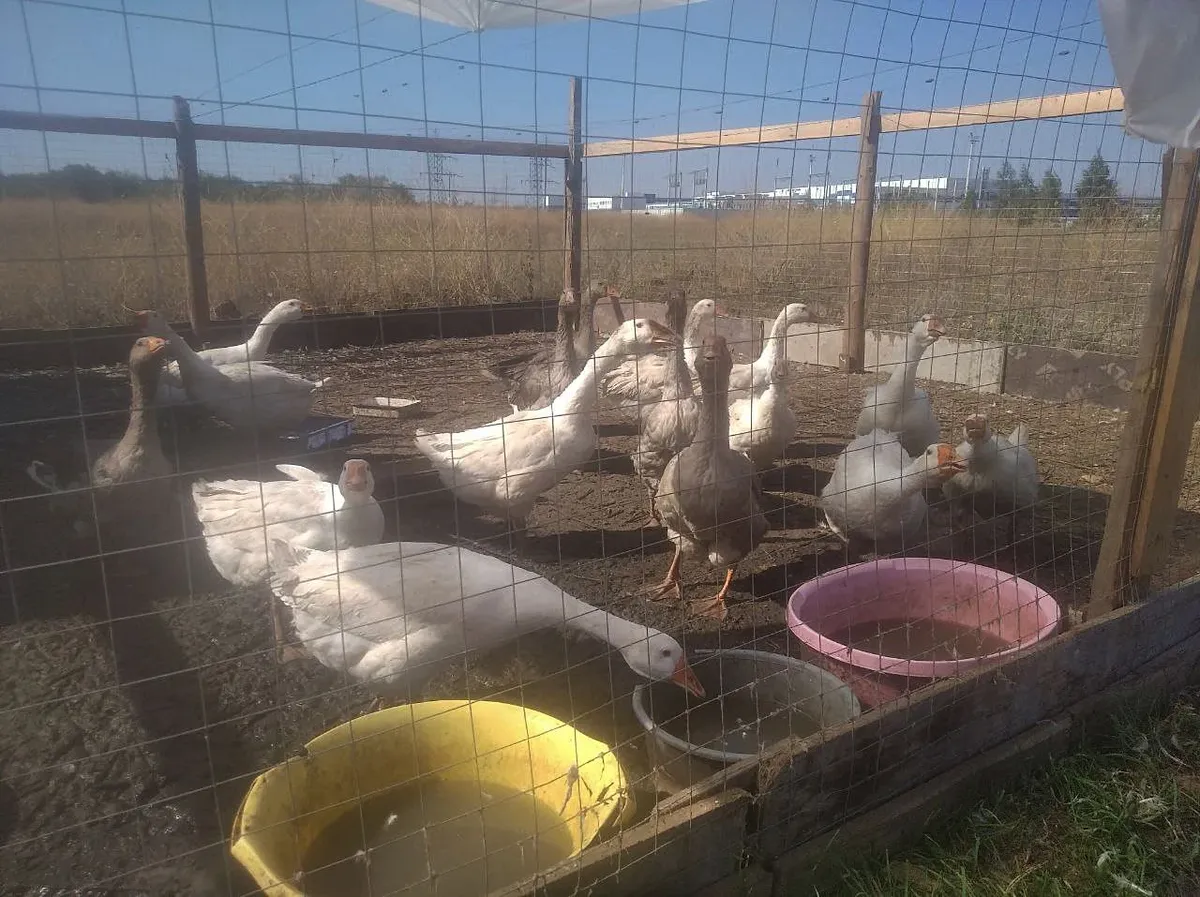
“Here our food grows,” the director shows two pens with ducks and geese. Geese, unlike dogs, are not welcome to guests: huddled together, they stretch their necks towards the bars and cackle angrily. Next year, Bogomolova plans to get a dairy goat to feed newborn puppies. All animals here are sterilized (two veterinary clinics give the shelter discounts from 15 to 50 percent on services).
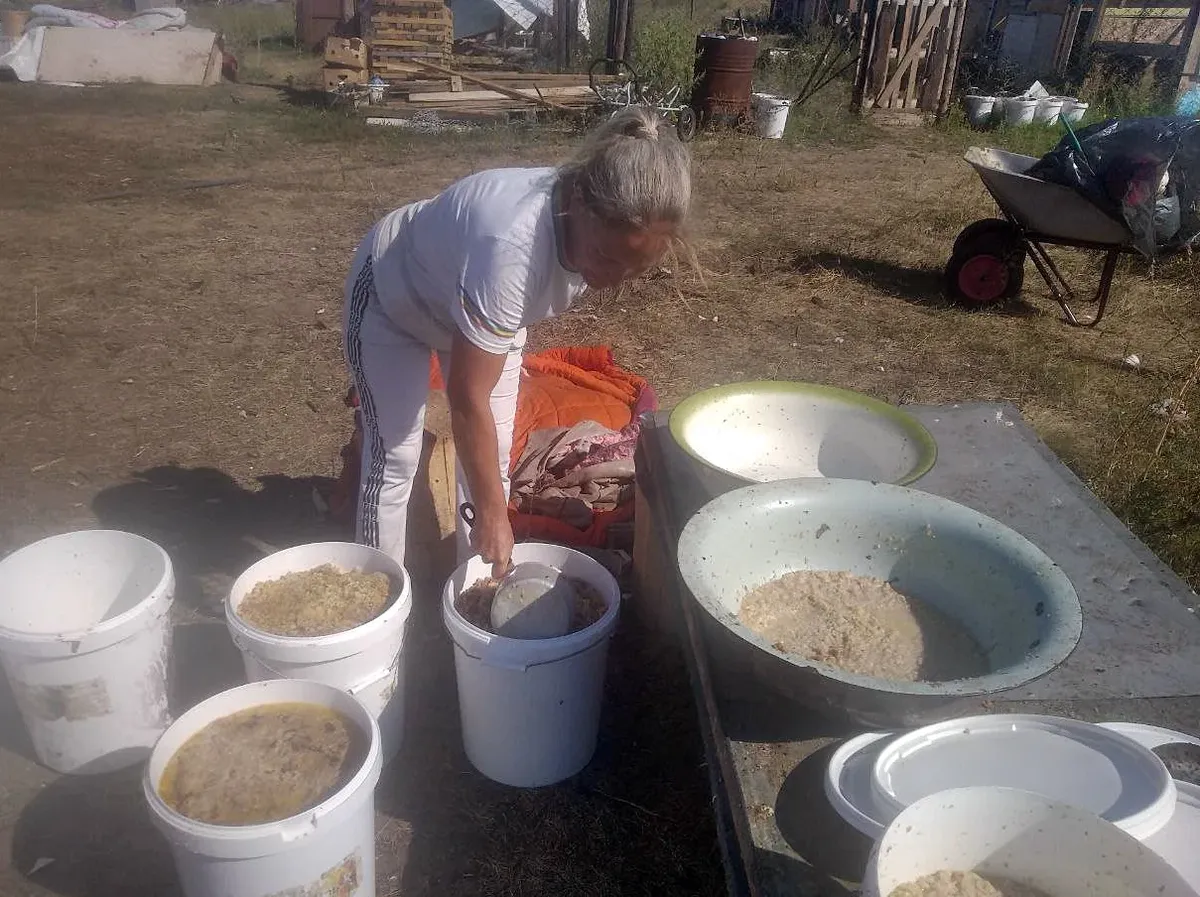
There are white plastic buckets with porridge on the distribution area. The hostess proudly removes the lid: “If I had been given such porridge when I was in the hospital, I would have said: oh, we really have a great country!”
Entrepreneurs who sell meat donate beef meat to the shelter for free. Olga cooks at home. “My stove works almost around the clock. First, I boil the mosli for eight hours. I cook porridge with this broth with meat. I put the porridge into buckets to bring here. I’m putting a new batch of moslov on the fire.” Dogs need almost 150 liters of porridge per day.
The director of the shelter buys buckwheat, egg, and rice in bags at grain stores. She carries groceries on a brand new tricycle (this is a large three-wheeled bicycle with a luggage basket), which was given to her by benefactors, or on an ancient Zhiguli four.
The pets take turns walking in the fenced area between the enclosures. Olga is proud that all her dogs go for walks every day.
Only one dog is forced to sit on a chain; at the shelter they named him Druzhko. “Nobody knows what his name was before. I only know that he spent his whole life on a chain, his mistress drank and mocked him. One day the neighbors noticed that she had not been seen for a long time. We went into the house. It turned out she died. It is unknown how long Druzhok was without food and water. I took him away exhausted and distraught.”
Olga cleans enclosures, washes dishes, and gives medicine to sick animals. There are a lot of sick patients here. “Chocolate lives in this enclosure. He rarely leaves the booth. He was brought in with gunshot wounds. He spent a month and a half in the veterinary clinic. Another month here. I treated his fistulas, but they did not heal. She took me for a new examination. It turned out that there were metal particles left inside, so small that veterinarians could not find and remove them. I don’t know who treated the dog like that and why.”
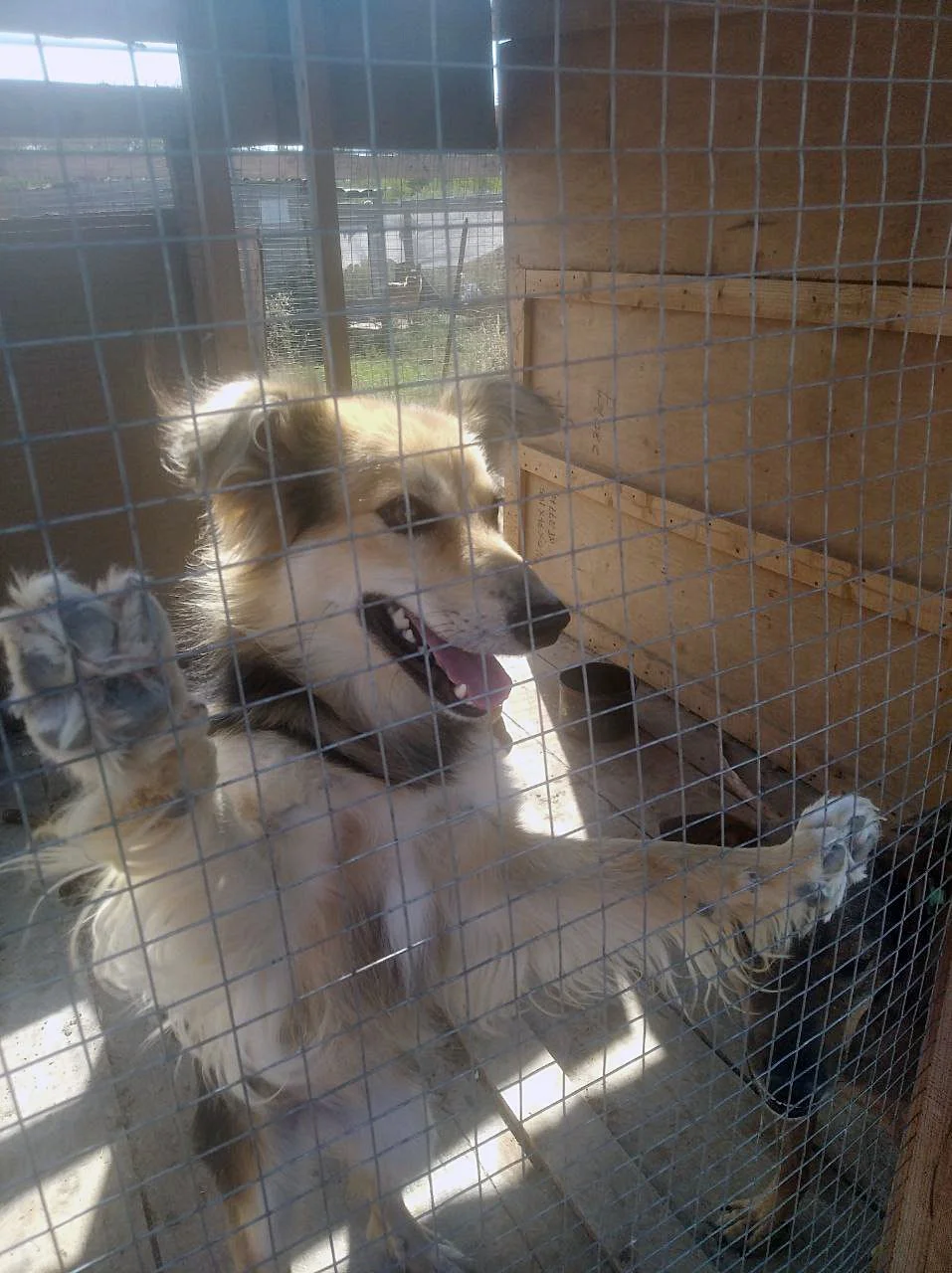
Dick was found near the dumpsters. Passers-by considered the bloody dog dead. But when he heard the noise, he jerked. The veterinary clinic said the dog was hit with something sharp, possibly a shovel. Dick looks a little slow now. Slowly wags his tail, approaches the mesh of the enclosure, and allows himself to be petted. Behind the ears, under the black fur, a scar can be felt. Traumatic brain injury makes itself felt. Olga says that Dick has seizures.
“Why does man consider himself the crown of creation, to whom everything is allowed? Why doesn't anyone value other people's lives? - Olya asks, flicks the lighter and takes a deep drag. —
Dogs know how to love us, even if we don't deserve it. Having experienced such pain, they continue to believe in a person. We can’t do that.”
Unlucky Neighborhood
As Bogomolova says, from the beginning of the construction of the shelter, representatives of the neighboring locomotive plant (from the enclosures to the fence of the enterprise are about two hundred meters) persistently suggested that she “clean up the kennel.”
The Engels Locomotive Plant was built in 2015. The investor was a subsidiary of Vnesheconombank, VEB-Leasing, which invested about 6 billion rubles in the project. The opening ceremony of the enterprise was attended by the highest officials of the region. The then Saratov governor Valery Radaev called this event “one of the main ones of the year.” A member of the board of directors was Alexander Strelyukhin, at that time a deputy of the regional Duma, now the State Duma.
Even at the construction stage, representatives of Russian Railways expressed doubts about the feasibility of Engels production. As Vice-President of Russian Railways Valentin Gapanovich said , the railway company purchases locomotives from other manufacturers, whose capacities are quite sufficient. In 2019, railway workers confirmed that they do not intend to buy products from the Engels plant.
In 2020, the Arbitration Court of the Saratov Region declared the locomotive plant bankrupt following a claim by VEB Leasing. The external manager indicated in the report that the reason was difficulties in entering the industry market.
In January 2023, the company was sold for 2.8 billion rubles (with an initial price of 3.8 billion). The new owner was the Moscow JSC Inter Cargo Company, which repairs and sells freight cars. Later, the creditors' committee stated that the buyer was affiliated with the debtor.
In March 2023, the Engels Locomotive Plant began work at the same production site under the leadership of the former general director. According to information from open sources , in the first year of operation the company received more than 105 million rubles in net profit. What exactly is being released here is not entirely clear. In January 2024, the Saratov Ministry of Industry reported that “due to the impossibility of supplying components, the process of searching for a new product that can be produced is underway.” The “Product Catalog” section on the company’s website is currently empty.
How a small shelter could interfere with an industrial giant with a hundred million dollar profit, Bogomolova does not know. Is it only because the crippled, shaggy creatures collected from the trash heaps insult the fashionable neighbor by the very fact of their presence within sight.
Recently, the director of the shelter found a receipt for a registered letter in the entrance of her dormitory. At the post office she was given a claim from the Land Resources Committee. The document states that a land control specialist discovered that Bogomolova had enclosures for animals, “the presence of which violates the rights of the district administration to dispose of the land.” The complaint does not say whose complaint was the basis for the investigation.
Officials offer Olga to demolish the shelter herself. Otherwise, they threaten to go to court.
“At the Land Committee, the same employee who advised to build boldly now says that she could not say such a thing. I went to an appointment with the head of the district, Mikhail Isaev. I sat in front of the office for 3 hours and 15 minutes. I ask the secretary: will he accept me? She replies: “Yes, he left a long time ago, he passed by you.” But I don’t know him by sight!” - Olga throws up her hands.
“I collected dogs from the streets and took them away from the city. Here on one side there is a garbage dump, on the other there is a cemetery. But they are driving us out of here too.”
Novaya turned to representatives of the locomotive plant and the Engels Committee on Land Resources for comments. At the time of writing, no responses had been received.
"Dump stray dogs into Ukronazi positions"
As a study by Mars Petcare conducted in 2021 showed, at that time there were about 4.1 million homeless animals in Russia (there are much fewer dogs than cats - 735 thousand). This is 6 percent of the total population of dogs and cats in the country. According to this indicator, Russia is at the level of European countries: in the UK, 5 percent of animals do not have a specific owner, in Germany - 7. 144 thousand tails live in domestic shelters.
According to the All-Russian Pet Census conducted by the Center for the Study of Animal Nutrition and Welfare in 2023,
29 percent of dog owners adopted a friend from the street, through an advertisement, into good hands, or from a shelter. Among cats, the proportion of adopted cats is even higher - 43 percent of murks and leopards ended up in the family this way.
Last year, 12 percent of Russians donated money to help homeless animals. According to the Center for Research on Civil Society and the Non-Profit Sector at the National Research University Higher School of Economics, supporting shelters ranks third in popularity among charity areas (donations to sick children are in first place, and donations to elderly people in second place).
At the same time, 47 percent of Russians believe that dogs on the streets of their village or city threaten the safety of people. 24 percent of respondents had ever been attacked by an animal.
According to Vedomosti, which surveyed veterinary services in 18 regions, attacks on people are often caused not by stray dogs, but by domestic dogs walking unattended. For example, in the Volgograd region they account for 70 percent of bites, in the Nizhny Novgorod region - 80 percent. According to State Duma deputy Vladimir Burmatov, since 2020, the number of dog attacks on people has decreased by 16 percent.
According to the Federal Law of 2018 “On the Responsible attitude to animals”, it was forbidden to kill the homeless four -legged in the country, with the exception of cases of serious illness or injury. The so-called ATV program (capture, sterilization, vaccination, return) was launched, within the framework of which the contracting organizations under an agreement with local authorities must catch hopeless dogs, take it into shelters, sterilize, vaccinate, vaccinated, so that it is not so that it is not so that it is not It was occupied by rats and foxes who came from the forest.
However, according to the deputy of Burmatov, some regions sabotaged the law without concluding contract contracts and sterilization. Where the contractors were still hired, officials were creatively approaching the development of budget funds: according to the Ministry of Natural Resources, each third purchase in this area contains violations in the terms of reference and calculating the price of the contract. According to Burmatov, garbage and road enterprises entered the competitions. According to State Duma estimates , over 6 years of the law in the country, 25 percent of the necessary shelters were built.
In the summer of 2023, as the New "already said, the State Duma handed the regions the right to independently decide what to do with a draw four -legged. In Buryatia, Tuye, Udmurtia, Transbaikalia, Altai Territory, Yakutia, Khanty -Mansi Autonomous Okrug, Chukotka, in the Magadan, Astrakhan, Orenburg regions, laws on the killing of harnessed dogs were developed.
The indications for euthanasia were different. In Altai, they offered to kill those for whom the owner was not found for 11 days. In Astrakhan - dogs above 40 centimeters at the withers. In Magadan - those who at the time of catch lived in a pack of more than three individuals.
In Buryatia, zoo defenders filed a lawsuit to cancel the law allowing the murder of animals. The Republican Court applied for an explanation to the constitutional.
In July of this year, the Constitutional Court recognized euthanasia as an exceptional measure, possible if the animal attacked a person, suffers from a dangerous disease or experiences intolerable physical suffering.
“The remaining grounds for euthanasia can be interpreted very widely. Those who catch animals will strive for the use of these grounds, ” says lawyer Svetlana Grant.
After the KS decision, the regions edited their laws, removing points on the destruction of dogs that were not in demand at the end of overexposure.
Meanwhile, representatives of the authorities in different regions offer other no less flaying ways to solve the problem. In the spring of this year, the chairman of the City Duma of Samara Alexei Degtev put forward the idea of sending the ownerless Murok and balls to the Donbass, where life is “revived” and people need new pets. The deputy of the City Duma of Yekaterinburg, Arthur Ziganshin, stated that "dogs need to find use on his own."
The idea to solve two problems at once pursues the bosses of the second year. In December 2022, the chairman of the Public Chamber of the Saratov Region, Boris Shinchuk, proposed to “reproach planes and, except missiles, send stray dogs to Ukraine. It is necessary to drop them in the position of Ukrainian nationalists! ”
Saratov region