
Translated material
Macron “sent the Republican Front”?
The 73-year-old Barnier, a representative of the right-wing party, which took only fourth place in the elections, became the Prime Minister of France. Leftists promise mass protests
On September 5, 60 days after the extraordinary parliamentary elections he himself appointed, French President Emmanuel Macron decided on the candidacy of a new prime minister. They appointed Michel Barnier, a 73-year-old former European Commissioner and multiple minister in the governments of Chirac and Sarkozy. Thus, the president chose a right-wing prime minister, despite the fact that the leftists still took first place in the last elections. They have already scheduled the first nationwide protest for this coming Saturday.
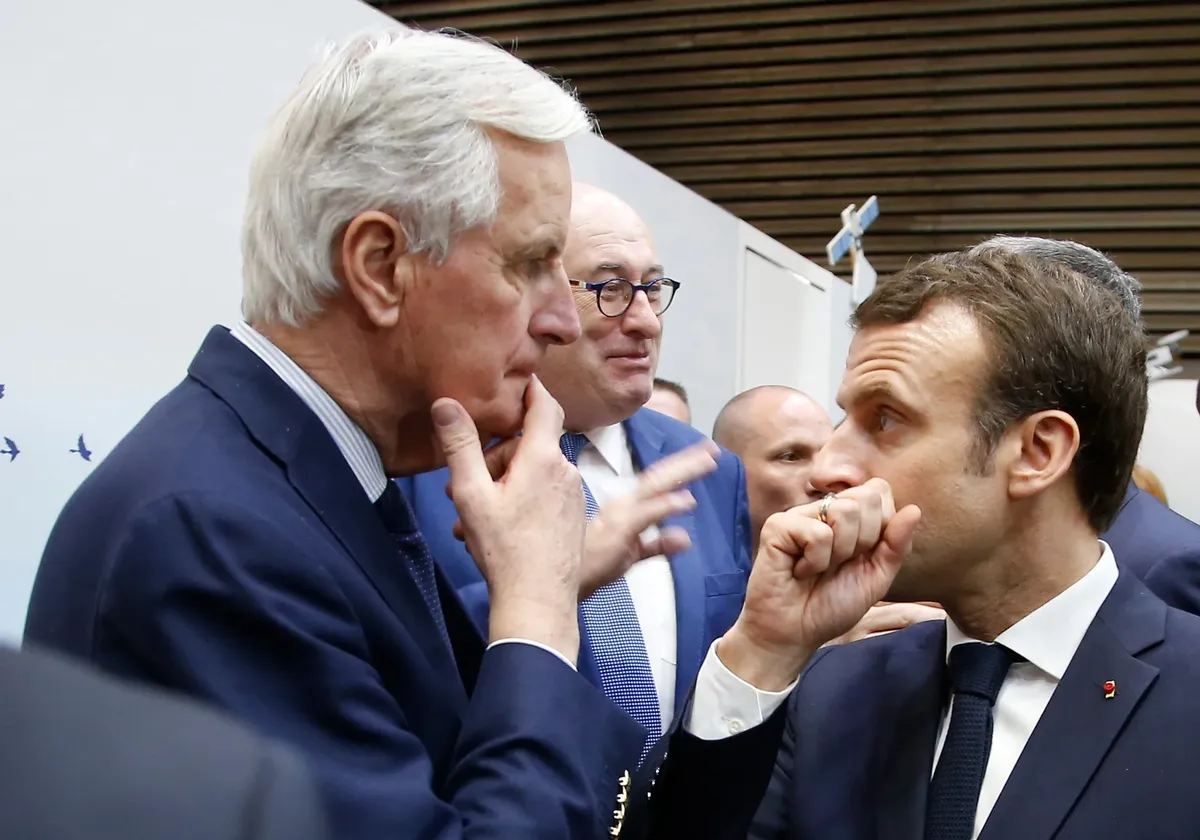
How did it come to this...
Before we talk about the new prime minister and the reactions caused by his appointment, a short background.
Based on the results of the early elections to the National Assembly that ended on July 7 (which Macron, according to him, decided to hold in “response to the aspirations of voters” who gave victory to the far-right party Le Pen in the June elections to the European Parliament)
first place was taken by the left coalition “New Popular Front” (178 seats),
in the second place, to everyone’s surprise, was Makron’s centrist bloc “Together for the Republic” (150 seats),
and the third came Lepen’s “National Association” with its allies (142).
It is also important to remember that this
the victory over the extreme right was won thanks to the fact that Makron’s supporters agreed with the left on the creation of the so-called republican front.
That is, the withdrawal of candidates in favor of each other in most electoral districts - so that the remaining candidates from the “progressive camp” increase their chances of winning over their rivals from Le Pen’s party.
As a result, the victory of the “Republican Front” was achieved, but mainly due to the efforts of the left, who sacrificed approximately twice as many of their candidates as Makron’s supporters.
Nevertheless, immediately after the elections, the president once again repeated that in no case would he appoint as prime minister a representative of the far-left party “Unruly France”, the odious Jean-Luc Mélenchon (which received the most votes - compared to representatives of two dozen other parties of the “New Popular Front” "). Among the main reasons were the “anti-Semitism” of Mélenchon and many members of his party (this political force is the most influential “supporter of Palestine” in France), as well as a complete discrepancy in views regarding the political and economic development of the country.
That is
By appointing a far-left prime minister, Macron risked undoing all the work his governments have done during his presidency since 2017.
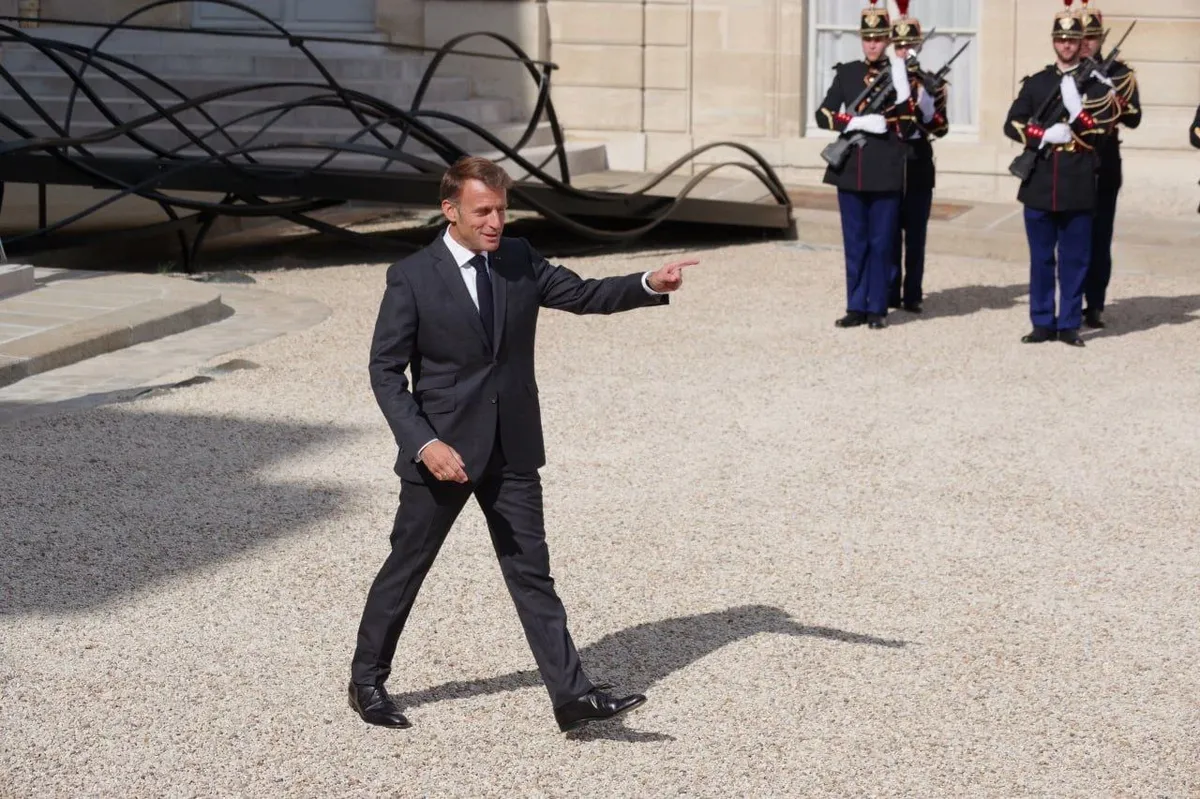
The option of an extreme right prime minister was not considered in principle, especially since the third place of Le Pen’s party did not even formally allow her to demand this.
The day after the elections, Macron’s advisers said at a briefing for journalists that the president was more inclined to appoint a head of government from the “center-right camp,” with which he has the most political and economic “points of contact.”
But, of course, not a representative of his own party (whose “defeat in the elections the president acknowledges”), but someone from the outside. And since only moderate rightists remained “from the outside” (members of the “Gaullist” party “Republicans” or its former members), it became clear that Macron was leaning in this direction.
At the same time, observing political decency, the head of state invited the New Popular Front (which, given the plurality of parties included in the coalition, also has many disagreements) to work on the issue of agreeing on a “single candidate” for the post of prime minister from the left. The calculation was, among other things, that the left would never reach an agreement.
Eight days later, having “not found” a candidate for the post of head of the Cabinet* (who still must be supported by an absolutely fragmented, motley parliament, where for the first time in the history of the Fifth Republic three diverse forces dominate at once - the left, the center and the extreme right), Macron adopted an interim solution. It went like this: the president formally “accepted the resignation” of his government led by Gabriel Attal, but announced that the same cabinet would manage “the day-to-day affairs of the country” (without making “political decisions”) until a new one was appointed.
At the same time, sources at the Elysee once again repeated that the president was unlikely to appoint a new government before the end of the Olympic and perhaps Paralympic Games. Macron himself then called on all political forces for an “Olympic truce” - so that the country could hold this most important event stably, without bad surprises.
The “truce” actually ended in the last week of summer, when, returning from a short post-Olympic vacation, Macron announced “political consultations” on the appointment of a prime minister.

The first consultations, held from August 23 to 26, did not lead to the announcement of a new name and the appearance of “white smoke” over the Elysee Palace, where Macron “conferred” with representatives of all parliamentary parties and the heads of both houses of parliament. But based on the results of the first consultations, the Elyseesky no longer declared at the level of leaks, but quite officially: the president will not appoint a left-wing prime minister.
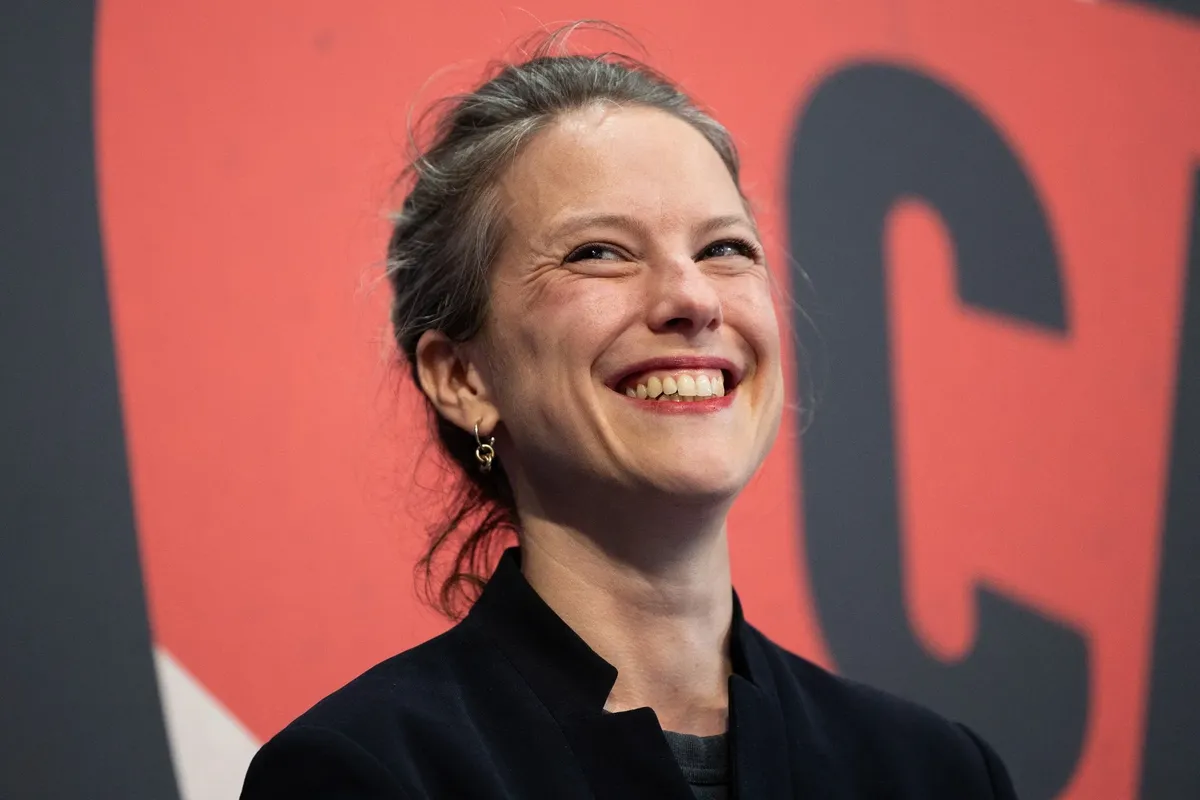
Despite the fact that the different forces of the “New Popular Front” managed to agree among themselves on a single candidacy for the post of prime minister - they demanded that the president appoint 37-year-old Lucie Castet, an economist, head of the department of the Paris mayor’s office for finance and procurement, formally now non-party, but “left the ranks” » Socialist parties. Even the zealous Jean-Luc Mélenchon agreed to this candidacy, promising, if Caste was approved, to “give up” claims to have people from his party get into the new cabinet.
Mélenchon's close ally Manuel Bompard of Defiant France condemned Macron's "maneuvers" "aimed at preventing (the left) from governing the country" and warned that appointing any other prime minister than Lucie Castet would lead to "a vote against " of a new government, "mobilization" on the streets and the "impeachment" of Mr. Macron.
But the president was not convinced by the arguments of the left.
The Elysee Palace explained why: “At the end of the consultations, the President of the Republic stated that the government <...> proposed by the alliance with the largest number of deputies, the New Popular Front, would be immediately rejected by all other factions represented in the National Assembly. Such a government would immediately be opposed by an (absolute) majority of more than 350 deputies, effectively rendering it unable to act. Taking into account the views expressed by political leaders during the consultations, <...> this option should not be implemented.”
Having also briefly described the proposals of other political forces (but without mentioning Le Pen’s party), the Elysee announced: “Tomorrow, Tuesday, August 27, a new round of consultations will begin with party leaders and leading figures with experience in serving the state and the Republic.”
At the same time, Macron called on “all political leaders” to “show a spirit of responsibility” “in this unprecedented moment for the Fifth Republic, when the expectations of the French people are high.”
The “New Popular Front”, however, immediately announced the holding of the first national protest action this coming Saturday, September 7. The proposal was supported by trade unions. The justification for the reason for the protest is logical and understandable: the president “completely does not take into account”* the opinion of left-wing voters, whose forces took first place in the last elections.
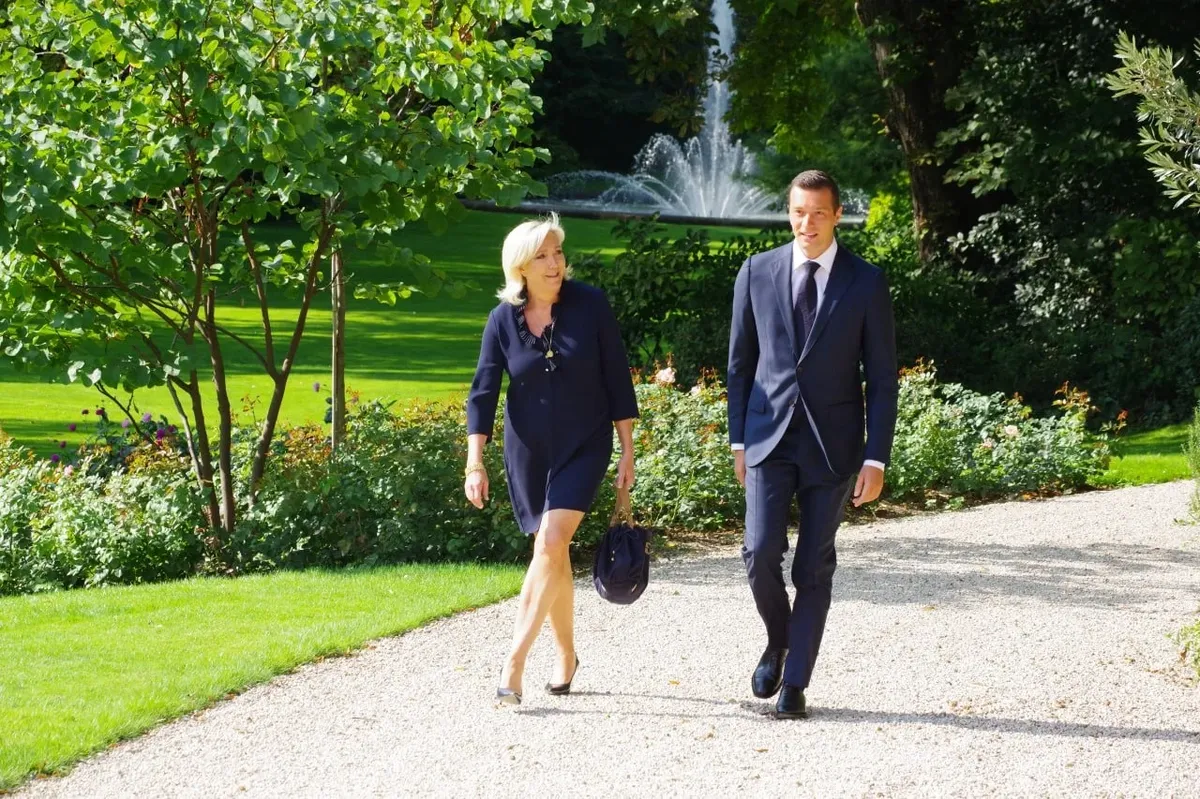
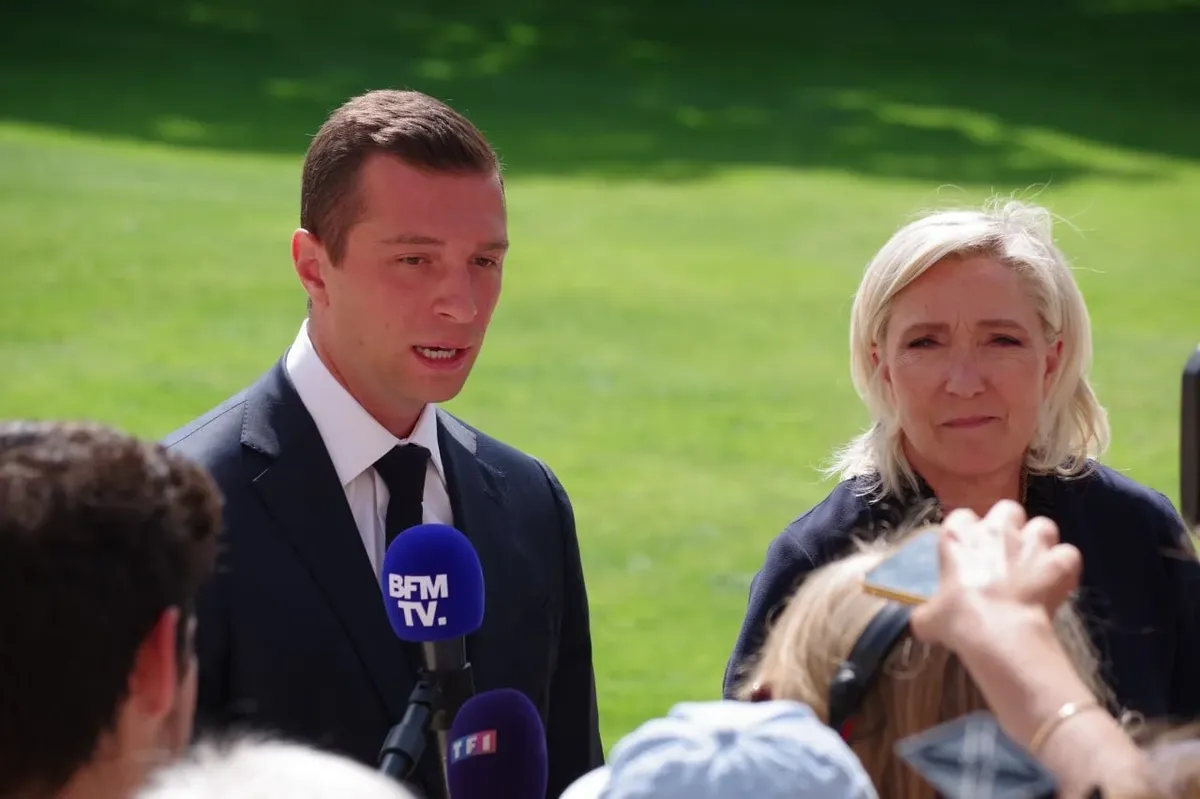
Le Pen and Bardell, the leaders of the far-right National Rally, also spoke about “ignoring the will of 11 million voters” when they left Macron on August 26.
“We cannot act as if nothing happened” in the parliamentary elections, said Le Pen, who opposed the proposal for a technical government: “I don’t believe in it at all. <…> There are only political governments hiding behind technical names.”
Who is Michel Barnier
As a result, Macron chose the option that, taking into account the logic of the development of “political consultations” and the balance of power in the National Assembly, could seem to him the most acceptable from at least three points of view.
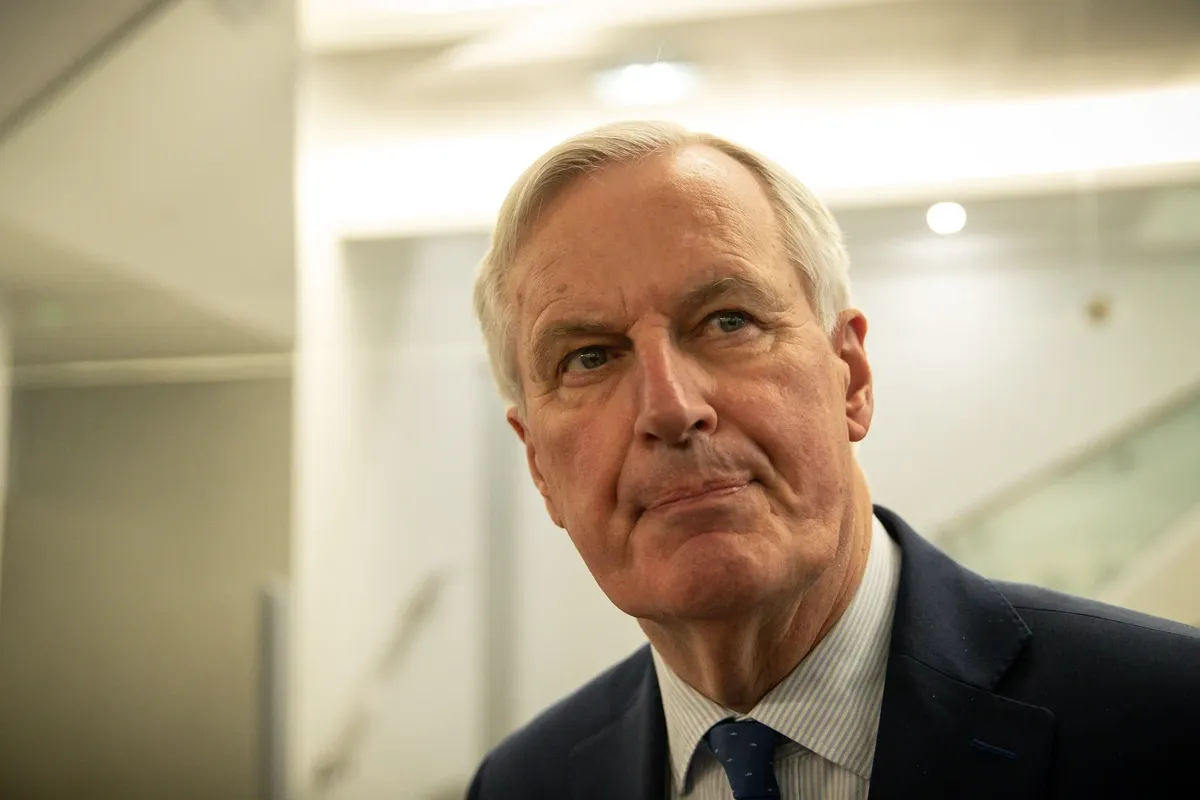
On the one hand, Michel Barnier has enormous, comparable high-level management experience to few others in the country: former Minister of Nature (1993–1995), Foreign Affairs (2004–2005 + Minister Delegate for European Affairs 1995–1997), Agriculture (2007–2009), twice European Commissioner (for regional policy 1999–2004 and for the internal market 2010–2014), former MEP, former deputy and senator of France...
under the text
The “old horse” will not run for president
The media have already noted that 73-year-old Barnier is the oldest prime minister in the history of the Fifth Republic. And - here it is continuity - he replaced the youngest head of government in the history of France, 35-year-old Gabriel Attal. Many Macronists also believe, writes AFP, that Barnier, given his age, should not frighten all those who dream of running for the Elysee Palace in 2027. The “race” has already de facto begun: recently former Prime Minister (2017–2020) Edouard Philippe declared himself the first official candidate for the presidency of France.
Secondly, Barnier is from the right, from that very “Gaullist party”, which during his more than half a century of “political service” managed to change four names and today is called “Republicans”...
The only problem is that in the last elections to the National Assembly, the “Republicans” took only fourth place, sending only 47 deputies to the 577-seat lower house.
On the other hand, Barnier—at least in the last decade—has not been a prominent participant in the country’s domestic political life (and having participated in his party’s primaries to nominate a candidate for the French presidency in 2021, he failed miserably), and therefore can be presented as “ “technical prime minister”, which the country now needs in the conditions of the impossibility of appointing a “political” prime minister... Actually, that’s how it was presented.
“The President of the Republic has appointed Mr. Michel Barnier as Prime Minister. He instructed him to form a unifying government in the service of the country and the French,” the Elysee Palace announced on the afternoon of September 5.
The same report emphasizes that Barnier is a prime minister in whose “stability” Macron is almost confident: “This appointment came after an unprecedented cycle of consultations, during which, in accordance with his constitutional duty, the president guaranteed that the prime minister and the future government will create conditions for maximum stability and have a chance to unite the broadest majority.”
Here you need to pay special attention to the phrase “will get chances.” Because he will still have to look for support outside the “center-right camp.”
The mathematical breakdown is as follows: Macron’s party and other closest centrist allies have 166 seats + another 22 for the LIOT faction (a union of center-left, center and center-right) + 47 for the “Republicans” = 235*.
And this is far short of an absolute majority (289 seats) in the lower house.
But, judging by the statements of Lepen’s supporters and their opponents, the missing support for the new prime minister can be provided by... the extreme right (Barnier himself, although a former European Commissioner, has spoken harshly in recent years about migration and the “priority of French interests” over European ones).
It is already known that while the new prime minister forms the cabinet, “acting” officials will remain in office. ministers" from the Attal government.
Reactions
“The President sent the Republican Front away, it <...> has always strived for more right-wing positions in the political sphere,” complained the national secretary of the Greens (part of the New Popular Front) Marine Tondelier.
The head of the Socialist Party , Olivier Faure, criticized the appointment of “a prime minister from a party that took 4th place and did not even participate in the Republican Front” and said that “we are entering a regime crisis.”
Jean-Luc Mélenchon denounced “an election stolen from the French”, assuring that Michel Barnier was appointed “with the permission and perhaps at the proposal of the National Rally”, and called for a “powerful mobilization” on Saturday during an anti-Macron protest.
“There is almost certainty” that if Mr. Barnier was able to be appointed by President Macron, then “it is because the National Rally, that is, the extreme right,” said the socialist ex-president Francois Hollande, who also became an MP from "New Popular Front".
Hollande emphasized that he sees a “paradox” in this situation, since “the Republican Front was created precisely in order to push back the extreme right,” and now “it is the extreme right, in a certain sense, that gives Mr. Macron the opportunity to appoint a prime minister of his choice.”
“I believe that he (Barnier) will have to explain himself about this in the National Assembly,” the ex-president added, referring to the new prime minister’s upcoming speech to deputies “on general policy directions.” The speech should take place after the formation of the Cabinet.
The chairman of the National Rally, Jordan Bardella, in turn, did not criticize the appointment, saying that the party would wait for Prime Minister Barnier’s keynote speech in parliament.
The owner of the ultra-right party, Ms. Le Pen, actually declared that she supported Barnier’s candidacy during an exchange with Macron: “As we announced to the President of the Republic, we will demand that the new head of government respect the 11 million French people who voted for the National Rally, so that he respects them personality and their ideas..."