
Translated material
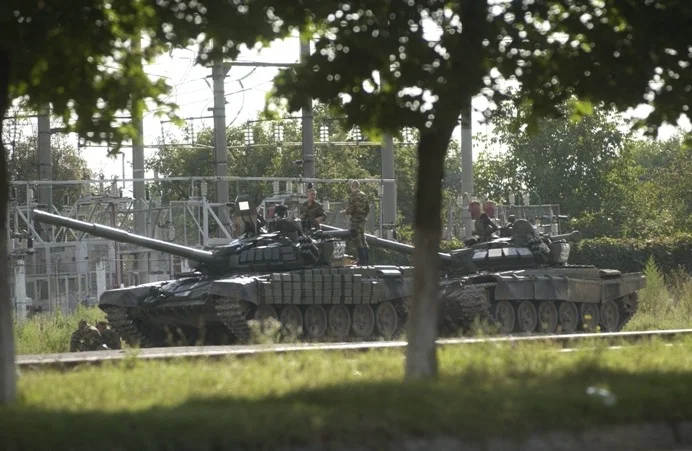
Tanks in Beslan
On the 20th anniversary of the worst terrorist attack in Russia, Novaya publishes materials from the criminal case, which the state has been hiding from victims and society for so many years
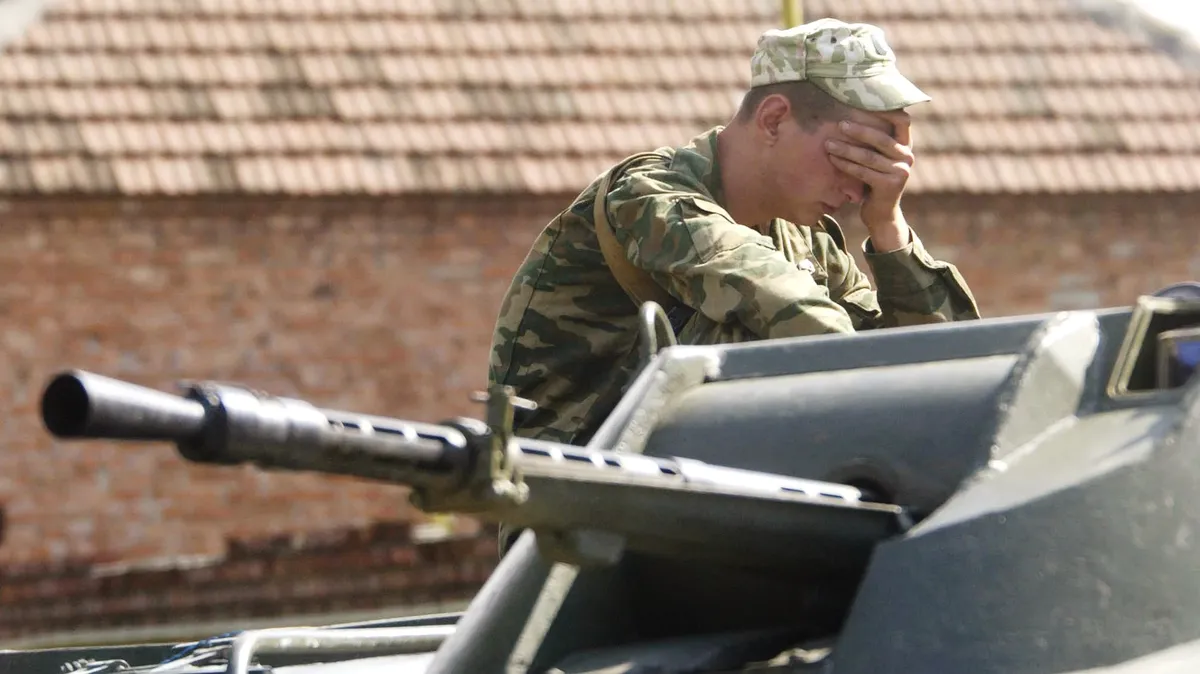
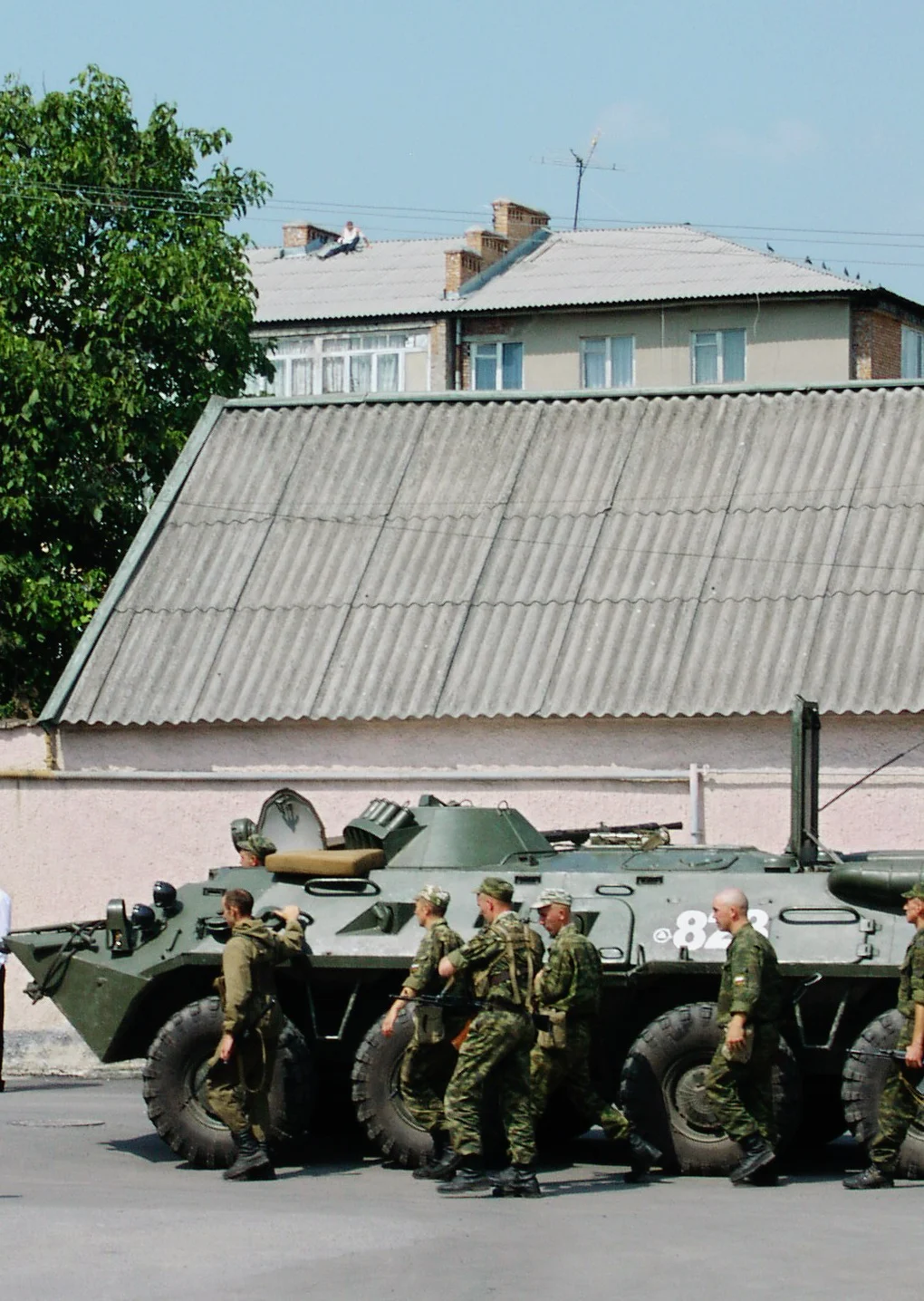
Military personnel are on duty near the building of School No. 1, captured by militants. Photo: ITAR-TASS / Grigory Sysoev
These documents, published for the first time, concern the most important issues surrounding the circumstances of the assault on school No. 1, in which more than three hundred people died, including 186 children. 20 years have passed, but the investigation has not answered a single question from the victims concerning the guilt of the authorities and their specific representatives.
In the previous chapters of our investigation (read here and here), we talked about how investigators hid the fact of shooting at a Beslan school with flamethrowers and grenade launchers, and why they began to extinguish the fire only when there were no longer any living hostages left in the burning gym. Today we'll talk about the use of tanks.
...Beslan. September 2, 2004. At the operational headquarters created to conduct a counter-terrorism operation, preparations are actively underway for the assault on the school. At some point, the head of the FSB TsSN, General Alexander Tikhonov, informs the chief of staff, head of the FSB Directorate of North Ossetia, Valery Andreev, that he has appealed to the command of the 58th Army with a request to allocate Alpha and Vympel to the special forces for the rescue operation hostages... tanks. ( This is a documented fact, known from Andreev’s testimony in court in the case of Nurpashi Kulaev, the only, according to investigators, surviving terrorist who participated in the seizure of the Beslan school. - Ed. ).
The idea of using tanks, the ammunition of which includes high-explosive fragmentation shells, in urban conditions, and especially during a “hostage rescue operation,” apparently did not raise any objections from any of the members of the headquarters. It is not known whether this very dubious tactical decision from the point of view of the success of rescuing the hostages was discussed at all by members of the headquarters. No written minutes were kept of meetings of staff members.
However, it is not even known whether these meetings took place at all, since at the trial of Kulaev, most members of the headquarters reported that they learned about their inclusion in its composition only after the tragic outcome of the Beslan events.
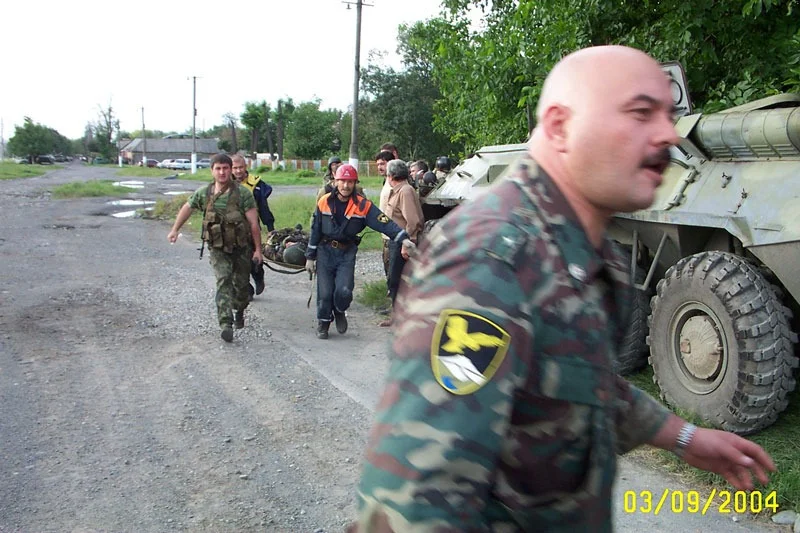
As follows from the testimony of Andreev himself, he took General Tikhonov’s information into account, and the commander of the 58th Army, Viktor Sobol, who was also part of the operational headquarters, unquestioningly gave the corresponding order to send tanks into Beslan.
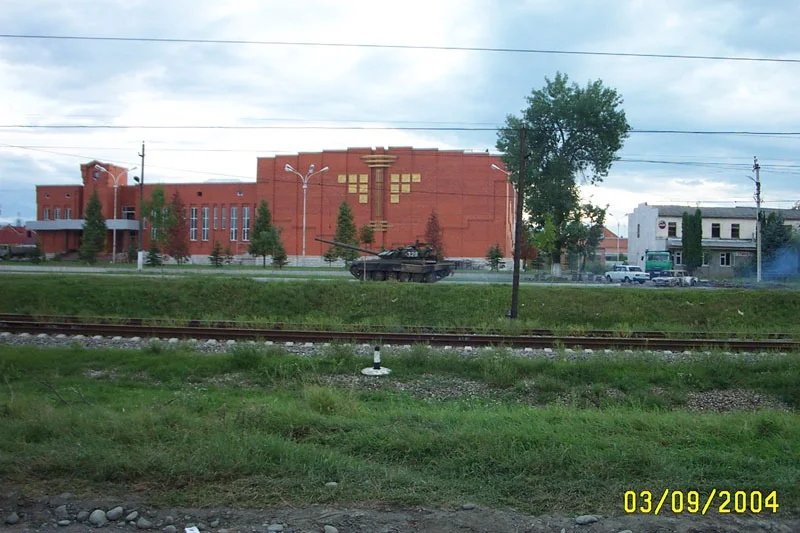
At 18:00 on September 2, exactly an hour after the former President of Ingushetia, General Ruslan Aushev, led 26 hostages out of a school seized by terrorists and was able to convince the militants to continue negotiations and allow the bodies of the dead hostages to be taken away, tanks entered Beslan and defiantly stood near a transformer substation nearby with crossing the railway track, three hundred meters from the school seized by terrorists.
Unnamed commanders
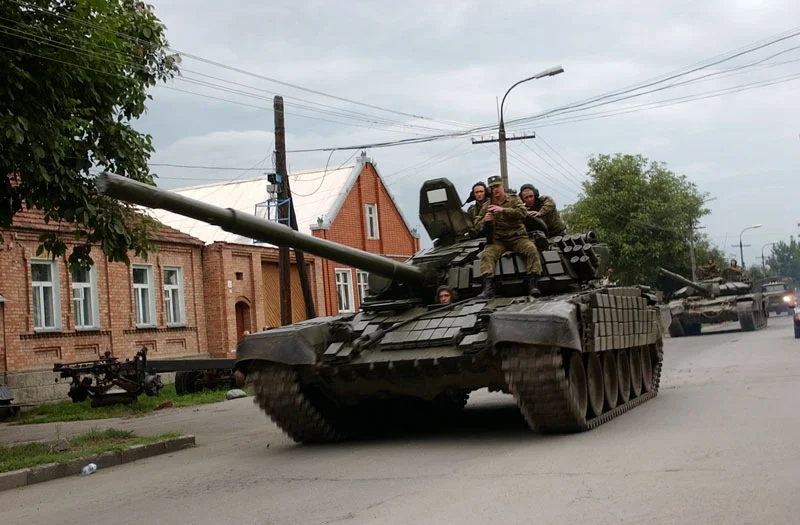
Three T-72 tanks with full ammunition and, accordingly, three tank crews were involved in the operation. The tank numbers, as well as the names of the crew members, are known. The tanks were “attached to the TsSN FSB of the Russian Federation,” which translated from military language meant the following: on September 2 and 3, the tankers obeyed and carried out orders not from the command of the 58th Army, but from the officers of the TsSN FSB. But, as follows from the testimony of the tankers themselves, they did not know the names of these officers, or even their call signs. That is, orders to the tank crews were given by people who maintained their complete anonymity and thereby shifted responsibility for the consequences of the use of tanks during the assault on the school to the tank crews themselves. Most of them, by the way, were conscripts.
On September 3, at approximately 2 p.m., by order of the FSB TsSN officers, the tanks moved to their firing positions in accordance with the plan for the assault on the school prepared the day before by the operational headquarters. Tanks No. 325 and No. 328 took up positions near a private household at the address: st. Comintern, No. 101. Tank No. 320 took a position on the opposite side, near a private household at the address: st. Comintern, No. 95. Directly opposite the school.
FROM THE INTERROGATION OF CONTRACT DMITRY GODOVALOV, TANK COMMANDER No. 328
“On September 3, 2004, we woke up in the morning and had breakfast. One of the commanders told us that our 2 T-72 tanks with numbers 325 and 328 were being placed at the disposal of Alpha. Then a Gazelle car drove up to us, a man in green camouflage got out and asked who was the eldest. Senior Lieutenant Abuladze Guram approached him. He got into his car, then came out about 5 minutes later and showed us the diagram and firing points.After that, Alpha special forces sat on my armor, behind the tank turret, and my tank moved to a firing position. Abuladze's tank also moved into a firing position. My tank No. 328 stood between the DOSAAF building and a residential building, and tank No. 325 stood between the DOSAAF building and the sports complex ... "
FROM THE INTERROGATION OF CONTRACT GENNADY GORBUNOV, T-328 TANK GUNNER
“When we were driving towards DOSAAF, the OSN Alpha employee was on the transmission behind the turret, and when we took up positions near DOSAAF, I no longer saw the Alpha employee. What was the call sign, rank, unit of the Alpha OSN employee, his personal data, I don’t know that.”
Dining room trap
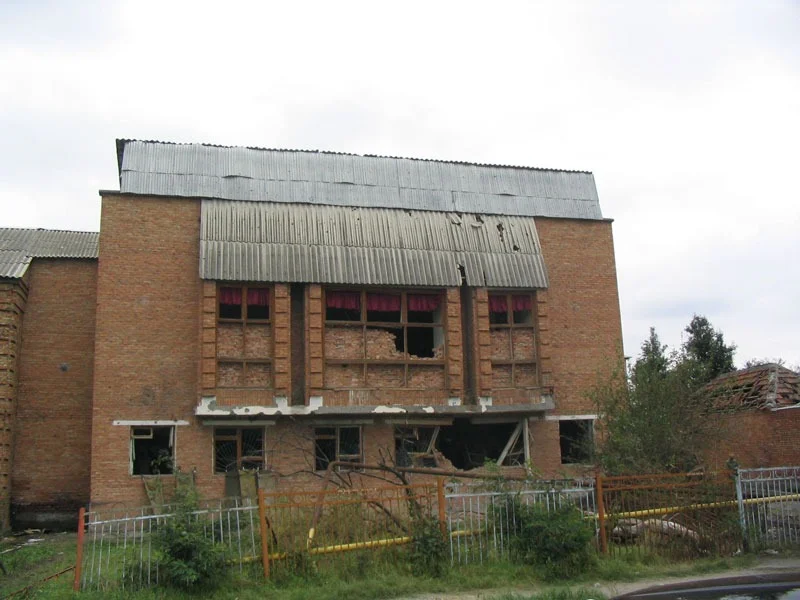
From firing positions predetermined by the assault plan, the entire main school building came under tank fire, and first of all, the windows of the dining room (on the first floor of the school) and the assembly hall (the second floor of the school).
The gym, in which there were more than 1,100 hostages at the start of the assault, is located in the school yard, perpendicular to the main building, and was not visible from the Comintern Street and was not under fire from tanks.
After the first explosions that sounded in the gym, when a massive fire began to develop very quickly, the terrorists took most of the hostages out of the gym and dispersed them in the main school building. A lot of hostages ended up in the dining room and kitchen, as well as in the workshops of the southern wing. Thus, the hostages who survived the first explosions in the gym found themselves in the direct line of fire from the tanks.
The terrorists understood this well, and therefore they threw off part of the desks that had barricaded the dining room windows on the first day of the school seizure, and forced the hostages to stand on the window sills.
FROM THE TESTIMONY OF HOSTAGE ALENA GASSINOVA
“We were taken into the dining room and driven to the windows that overlook the parade ground. We locked the children in the toilet, and we stood on the windows... <other hostages> showed me to go inside. But I couldn’t go in because I saw a tank walking in front of the school.”FROM THE TESTIMONY OF HOSTAGE VICTORIA KASTUEVA
“To prevent the girl from being lifted onto the window, a table was moved to the corner window of the dining room, and I climbed onto it with my sore, wounded leg. Then the <terrorists> told me: “Put a chair on the table, sit on the chair and wave <the curtain>... They handed me a chair, I sat down on it. That’s how we stood: the woman also stood next to me in the window. Her jaw was broken, with a little boy. The girl who stood next to me said that she had two small children left in the gym. There was a woman standing on the floor nearby who had three left there [in the gym]..."
The tankers, who were in their combat vehicles, had a clear view of the hostages on the dining room windows through the viewing slots and triplex.
FROM THE INTERROGATION OF CONTRACT DMITRY GODOVALOV, TANK COMMANDER No. 328
“The hostages stood in the windows of the dining room and waved white rags.”
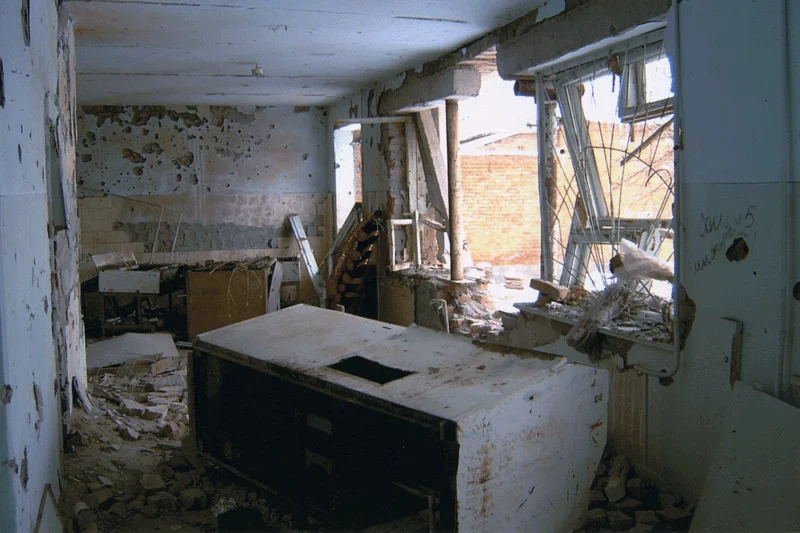
...For the hostages, this canteen became a real trap. The fact is that in the entire 1st school only bars were installed on the windows of the dining room. Moreover, the bars were installed not outside the windows, as is usually the case, but from inside the room. This fact is clearly recorded in numerous photographs of the canteen destroyed during the assault, including such photographs in the materials of the criminal case.
These bars became the main obstacle for the operational combat groups “Alpha” and “Vympel” stationed on the side of Comintern Street, because they did not allow special forces to get inside the school. When developing the assault plan, they could not help but think about eliminating this obstacle. On the eve of the assault, special forces from the FSB TsSN conducted reconnaissance of the area around the school; the building itself, all communications and approaches to it were carefully studied.
The headquarters tried to develop an assault scenario with a minimum number of casualties among both hostages and special forces - General Tikhonov spoke about this at a meeting of the parliamentary commission, in addition, this point was reflected in the situational assessment, but, unfortunately, any scenario ended badly, and The forecast for casualties was disappointing.
The bars on the dining room windows could have been a determining factor in the decision to use tanks. Because the internal fastening of the gratings did not allow them to be knocked down or pulled out using heavy equipment
(and such an attempt was also made - we will talk about it further). These bars could only be knocked inward, for example, by shooting at the dining room windows.
First shot
At 2:25 p.m., one of the tanks fired direct fire at the dining room window, onto which at that moment the terrorists had placed the hostages as a human shield. Member of the federal parliamentary commission Yuri Savelyev, who analyzed in detail in his dissenting opinion the use of tanks during the assault on the Beslan school, suggests that it was tank No. 325, since compared to other tanks it had more powerful active armor that protected the equipment and crew from fire from terrorists. Fortunately for the hostages, this shot was unsuccessful: a tank shell hit the school gate post.
Apparently, having changed its trajectory from a collision with an obstacle, the tank’s shell ultimately did not hit the dining room, but hit a little higher - in the assembly hall. It was on the floor of the assembly hall that during an inspection of the school on September 4, investigators discovered a piece of a steel cylindrical school gate post with a diameter of about 15 centimeters and a weight of approximately 30 kg with characteristic damage to one of the ends of this fragment of the post in the form of a “rose” (as if the metal had been torn). A torn fragment of a metal school gate post could only get into the school assembly hall in one case: it was thrown onto the second floor by a tank shot. In addition, characteristic destruction and damage (shifts) to the walls and floor were recorded in the assembly hall, which could only be explained by the impact of a high-explosive fragmentation tank shell.
Second series of shots
In the Kulaev trial, more than 50 witnesses from among the former hostages and townspeople, primarily residents of houses on Kominterna Street, who witnessed the use of tanks during the assault, testified that the tanks fired at the dining room in the time interval between 15 and 16 hours ( closer to 16 o'clock) September 3.
As can be judged from the materials presented by the Russian government to the ECHR, it was at this time, at 15:10, that General Tikhonov gave the order to the Alpha and Vympel combat groups to directly storm the school. Until this time, the school, mainly at the militants’ combat positions, had been under active fire from small arms and grenade launchers (the grenade launchers were fired by sniper groups of the FSB TsSN, stationed on the roofs of five-story buildings on Shkolny Lane).
This is a very important point, which many still do not realize: in the period from 13.05 to 15.10, not a single special forces commando of the FSB Central Security Service was directly at the school, since there was no order for this.
At this time, dozens of hostages were able to escape on their own or with the help of local residents from the gym destroyed by the first explosions.
However, a significant number of hostages, at the request of the terrorists, moved from the gym to the main part of the school (classrooms, cafeteria, kitchens) and to its southern wing.
It was at this time that an attempt was made to tear off the bars from the dining room window by the crew of BTR-80 No. 834, commanded by the commander of the reconnaissance landing platoon of military unit 12356 Andrei Shuvarikov. However, the terrorists, hiding behind hostages, stopped this attempt with direct lethal fire. Trying to carry out the order, Andrei Shuvarikov and warrant officer Sergei Ryabikhin were wounded, and the armored personnel carrier was hit by terrorists using an under-barrel grenade launcher.
Despite the fact that this attempt was unsuccessful, the investigation nevertheless supported the official version: the servicemen of the crew of APC No. 834, Shuvarikov and Ryabikhin, managed to hook the cable and tear off the bars on the windows.
This version was refuted in court in the Kulaev case not only by the hostages, but also by the terrorist Kulaev himself.
FROM THE TESTIMONY OF NURPASHA KULAYEV:
“When they fired from the tank, the grate [in the dining room] fell... There was a grate inside. The tank was not fired at the second floor. And they shot at the bars. This is inside the first floor..."
And here are the testimonies of those hostages who were lucky to survive in the dining room. (We will never know how many people died in it. Immediately after the assault, all the bodies of the victims were taken out of the dining room. An autopsy of the bodies and the establishment of the real causes of death of the people who died at the school were not carried out. And in the criminal case and death certificates they wrote that all hostages died as a result of explosions in the gym.)
FROM THE TESTIMONY OF NADEZHDA GURIEVA
“There was a bang and the grate in the dining room bounced back a little. Everyone shouts: “Alik ( Alik Tsagolov, hostage - Ed. ), why are you standing there, remove the bars. “The two of them moved the bars. The grate fell because there was a shot, but it was not a machine gun shot. And there was no explosion in the room..."FROM THE TESTIMONY OF ZITA SIDAKOVA
“We sat under the window [in the dining room]. They knocked the bars right on me. I was holding the table cover. I took this lid and covered myself with this lid. My legs were not under the cover. And then the bars fall on my feet.”FROM THE TESTIMONY OF ZHANNA TSIRIKHOVA
“We went deep into the dining room, there we were sitting at the table. And tanks were shooting from the street. And when the next shot occurred, the bars flew off the window and fell onto the table, right where we were sitting. I remember there was a strong shot, and then the grille [flew off]. I determined that these were shots from a tank by ear, by the way the room shook when they fired. Before this, the militants also fired from machine guns and something else. Then the building also shook, but not to such an extent.”FROM THE TESTIMONY OF LYUDMILA GUDIEVA. DIALOGUE WITH THE JUDGE
Hostage Lyudmila Gudieva: “There were bars there [in the dining room]. And I thought about how to tear them off in order to escape. There was a dull and heavy explosion, and the grate fell at my feet. I pushed her away.Tamerlan Aguzarov (judge in the case of N. Kulaev. - Ed. ) : When you were in the dining room, did you see the tank shooting?
Gudieva: We were lying on the floor, then there was a dull explosion, after which the grate flew out. There was a tank near the school..."
<…>
“In the dining room, all the windows had bars. In general, a dead end. And suddenly they started shooting, I don’t know with what! Everything was flying, everything was terrified; They were probably shooting at tanks! When I looked at the window again, I saw that the bars had been knocked out. Well, probably from the explosion after all. The roar was so powerful! We thought that was all. We won't get out of here alive..."
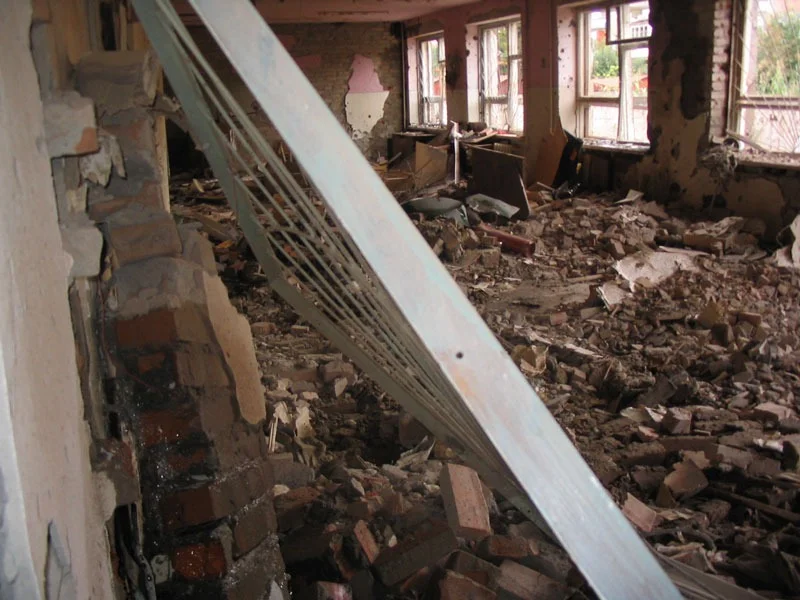
What is important is that already on September 4, during an inspection of the school, investigators actually found window bars inside the dining room ( see photo ). In addition, the same inspection recorded a large number of characteristic destructions of the internal walls, ceilings and ceiling of the dining room and adjacent utility rooms, which could not have occurred from the use of firearms and grenade explosions. These were fundamental destructions of the internal frame of the school, and they could only have been caused by the use of much more serious weapons.
Did the investigation ask quite logical questions: how did the bars, which soldiers of the 58th Army allegedly tore off the windows with the help of a cable and an armored personnel carrier, end up inside the dining room? What caused the destruction of the interior walls and ceilings of the dining room?
No. For the investigation, these were not logical questions, but rhetorical ones. That is, not requiring an answer.
One who didn't shoot
Until 2007, the investigation strictly adhered to its version of the cable and the armored personnel carrier and categorically denied the fact that tanks fired at the school while there were living hostages in it.
In the materials that the Russian government transferred to the ECHR, it is possible to clearly identify three waves of interrogations of crew members and military personnel of the reconnaissance and landing platoon of military unit 12356. At the same time, the Russian government did not send a single interrogation of the FSB Central FSB officers, who on September 3, 2004, 2004 They gave orders to the tankers. There is no certainty that the investigation interrogated them or even simply established their personalities. But the investigators tortured tankers with their interrogations. Already much later, when the conscripts who participated in the counter -terrorist operation in Beslan were served and parted through the Russian regions, the investigation found them, interrogated and corrected them.
The first interrogations were carried out in September 2004. The version of the grill, cable and armored personnel carrier immediately appears in them. The tankers in these testimonies claim that only one tank No. 325 shot. This tank was commanded by Guram Abuladze.
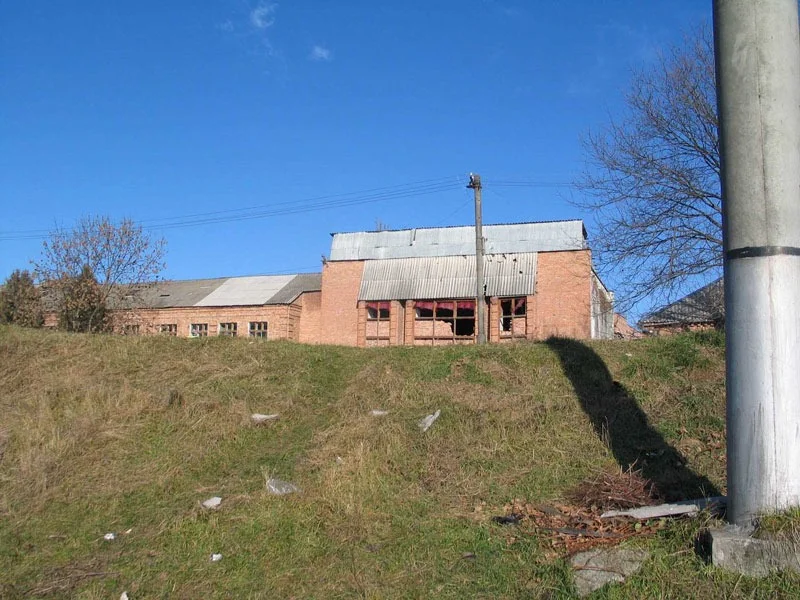
In the evening (from 21 to 22 hours on September 3, 2004), he fired seven shots of fragmentation and fluent shells on the walls of the dining room and southern outbuilding. The tank made these shots, bringing the muzzle of the tank to the wall at a distance of 50 meters, that is, almost point blank. The purpose of these shots in interrogations is indicated as follows: to hit terrorists who have settled in the basement of the school.
The second wave of interrogations took place in 2005, after the victims showed the victims at the court of Kulaev that all the tanks were repeatedly shot at the dining room in the afternoon, at the time when there were still hostages. Repeated interrogations of tankers and military personnel of military personnel 12356 almost word for word coincide with their first interrogations. Only one phrase is added: “Tank No. 325 ( it was they who commanded Gum Abuladze. - Ed. ) Should he shot at the school when it was“ no longer living hostages ”.
The third time tankers were interrogated in 2006. And this is probably one of the most important materials of the case on Beslan. Because from these interrogations it directly follows that the commander of the tank No. 325 Gum Abuladze between 2005 and 2006 is unexpected and, very importantly, voluntarily changed his testimony and said that he said that he was under the protocol that
On September 3, 2004, he and other tankers received an order from the officers of the FSB of the Russian Federation to shoot at the dining room in which the hostages were located. But Guram Abuladze, apparently, refused to comply with this order.
Unfortunately, there is no interrogation of Abuladze in the "Beslan dossier". Although that Abuladze gave such evidence in Beslan it was known for a long time. Investigators told about this to the victims. (In particular, Valery Karlov, whose father Ivan Karlov died in a Beslan school. Karl himself was actively involved in the investigation of the circumstances of the Beslan tragedy, he had good relations with investigators.) However, the investigators categorically refused to present these testimonies for the familiarization.
However, in the "Beslan dossier", which our government transferred to the ECHR, this fact was "declassified." It directly follows from the interrogations of four tankers, which the investigators interrogated in 2006.
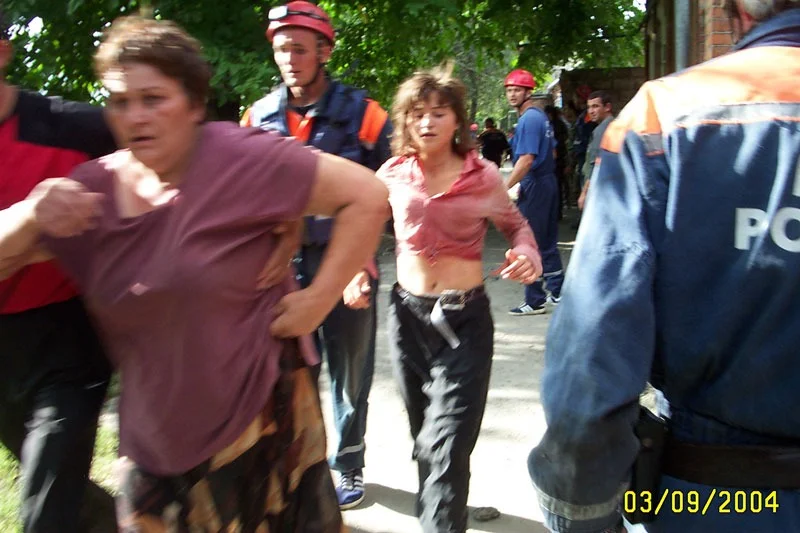
From the testimony of Gennady Gorbunov of May 25, 2006
( Spelling and punctuation of the original hereinafter preserved. - Ed. ):“I do not know anything about the order of the special services employee Abuladze G.I. About the production of shots at the school in the daytime, when the hostages were there, and the latter’s refusal to fulfill it, even when the operation was completed, we did not talk about it ...
The testimonies of witnesses and victims, who claim that after explosions at school in the daytime, the tank was shot at the school, including the dining room, I can’t explain how to explain, but I can say for sure that the tank in which I was located did not make shots ..."
From the testimony of Ivan Bazhenov, the mechanic-driver of the tank No. 320, dated May 18, 2006:
“In the afternoon of 09/03/2004, we brought us dinner, after which about an hour later I saw that the alpha special forces began to prepare for the assault on the school, after which automatic and machine-gun shots began to be heard from the school side and in the direction of the school, and so The Alpha BTR shot, which stood on the opposite side of the school opposite us. Soon Lukashevich ( tank commander. - Ed. ) Given the team to sit in the tank, after which I gradually “began to advance towards the school, behind ... We followed the alpha special forces.We drove to the school and stood a little further than the corner of the school,
Soon Lukashevich gave the team to drive back a little. When we drove away, Lukashevich got out of the tank. Soon, the battalion commander ( commander of the tank battalion. - Ed. ) C, who ordered the tank to its original position, after which Volkov crawled out of the tank crawled into the tank. Soon, on the radio station, I heard the voice of either Volkov or Kindeev commander of the regiment, who shouted to Godovalov or crew No 325 so that they would not be nervous and would not shoot.
Nobody shot from tanks during the assault, at least I did not hear shots. On the radio station, I did not hear that someone would order Abuladze to shoot at the school, at least when I was in the tank, and when I left it, I could not hear the walkie-talkie ... "
From the testimony of Alexander Asharin dated June 9, 2006:
“The fact that Abuladze refused to comply with the order of the OSN employee ( the Central Executive Committee of the FSB. - Ed. ) To shoot the school when there were hostages there, I do not know anything. I can’t explain why the witnesses and the victims claim that the tank shot in the daytime, maybe something was confused ... ”
These testimonies are proved by the fact that Abuladze gave the investigation that he received the order of the officers of the Central Administration of the FSB to shoot a school.
But the testimony of Dmitry Godovalov, who confirm that such an order was indeed.
From the testimony of the commander of Dmitry Godovalov, tank commander No. 328
“I know that there was an order for the production of a shot at the school in the afternoon, when there were hostages there. But we refused to shoot at school, as the hostages stood in the windows and waved with white rags. ”
Based on these testimonies, Godovalov, who directly confirmed the testimony of Abuladze, the investigators, in theory, had to establish questionnaires and interrogate the officers of the FSB Central Department Store, who gave the tankers such orders. But the most important thing, based on these interrogations, as well as from the entire aggregate of material evidence and the testimonies and eyewitnesses about the shooting of tanks at the canteen with hostages, the investigation was supposed to establish: who fulfilled this order instead of Abuladze and Godovalov?
We do not know if this has made this consequence. But 16 years after the assault in Beslan, it admitted that the tanks really shot at school during the assault.
Here's how it happened.
Boodles and boobs
In 2019, probably the most important work in his brilliant filmography was released by Yuri Dudia* “Beslan. Remember." In this film, Yuri managed to get into all the pain points of the state and press them with such force that the state literally shouted. And the information gateways were opened tightly for the theme of Beslan. It is from the moment the film “Beslan. Remember "about Beslan and his truth were spoke (albeit denying and refuting) the state media.
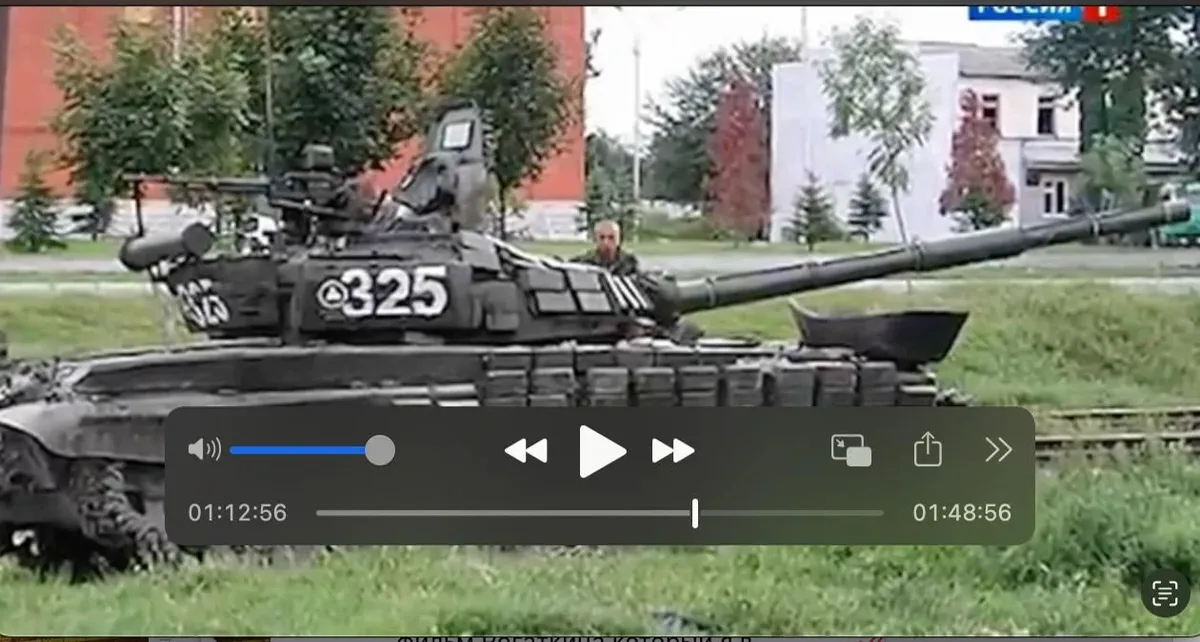
In 2020, the film of Alexander Rogatkin was released at the VGTRK. In this film, in the 73rd minute, Tank No. 325 and crew commander Guram Abuladze are shown. The following is the following text:
Quote from the documentary of Alexander Rogatkin 2020
( Says Alexander Rogatkin ) “Tank was also used. He shot with blanks in order to make breaks of the walls for the passage of special forces, and combat shells. ”From the documentary of Alexander Rogatkin 2020
Albert Khasanov , senior investigator for particularly important cases of SU in the North Caucasus Federal District:“The T-72 tank was used before, but it shot blanks. The combat use of the tank, that is, when it shot fragmentation-fluid shells, it was after 21 hours. ”
Unfortunately, the investigator Khasanov apparently forgot that all the acts in arms in the criminal case have long been declassified by the investigators themselves at the request of the Federal Parliamentary Commission.
So, in these acts, in service, all three T-72 have only fragmentation and fluid shells.
In addition, during the interrogations of tankers, the investigation always asked this question: were there any blanks?
Do you know why? Because
The version about the “blanks” was created by the victims themselves, who saw that the tanks were shooting at the school, but it did not fit in their heads that tanks could shoot at the hostages standing in the windows and waving white rags.
Therefore, the theme of "blavins" appeared - this was a consequence of pure water of the psychological self -defense of people.
All these years, the investigation asked the question about the "blanks", knowing very well that no blanks exist in nature. There are so -called practical shells and training shells intended, respectively, for landfill tests of artillery systems and for educational shooting. However, investigators interrogated and overturned all the tankers, the entire command of the tank battalion of military unit 6643, who took part in the counter -terrorist operation, and ironically proved the fact of the absence of practical or training shells at tanks No. 320, 328 and 325 at the time of their completion of a combat mission in Beslan.
From the testimony of Dmitry Godovalov, tank commander No. 328
On September 3, when firing at school, he replaced the gunner-operator Aucarin in tank No. 325“The armament of my tank: 125 mm gun, rolled up with a gun PCT machine gun 7.62 mm. It seems that there was still a NSVT machine gun on the tower, but I definitely don’t remember. The ammunition of the tank was made up of fragmentation and fluent shells. In the ammunition of combat tanks, training shells are not included, their ammunition includes fragmentation-fluent, cumulative, armor-piercing shells. We did not shoot training shells on 09/03/2004. ”
Oleg Lukashevich, tank commander No. 320
“I can add that each tank in its ammunition has three types of ammunition: fragmentation and fluent shells, cumulative and armor-piercing. The decision to use this or that type of ammunition is determined by the crew commander. As a rule, when firing at buildings, fragmentation-flood shells are used, and when shooting at armored targets, cumulative or sub-caliber shells. ”Ivan Bazhenov, Mechanic driver of tank No. 325
“The ammunition of the T-72 tank is 42 shells, including armor-piercing, sub-caliber, fragmentation, fragmentation, cumulative, in addition, the tank has a 7.62 mm caliber machine gun, as well as a large-caliber machine gun of the NSVT.”
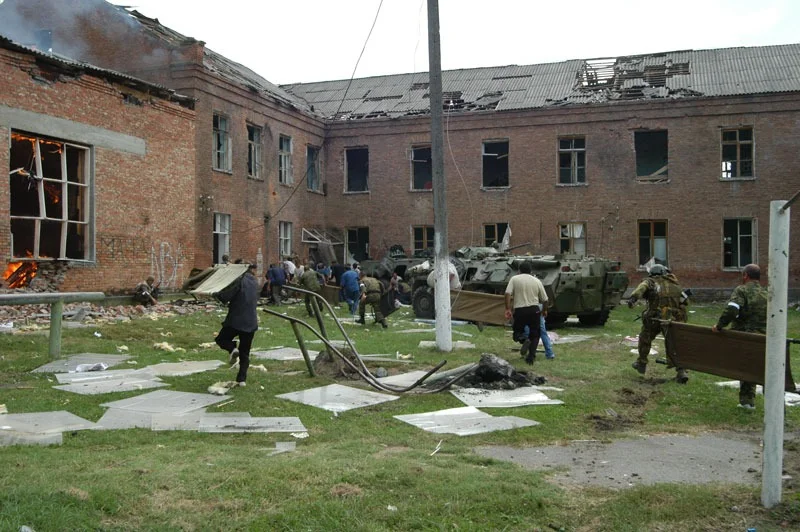
The report used photographs of D. Belyakova, Yu. Tutova, Nikobshina, K. Zavrazhina, V. Zvartsevich.
Read in the next series
In the final part of the investigation dedicated to the 20th anniversary of the Beslan terrorist attack, we will tell
About an unprecedented night special operation to clean up the crime scene.
Why, from the premises in which the battle of special forces with terrorists came, the first steps were hurriedly carried by the bodies of hostages,
And why at night, after the assault, the Beslan school was shot point -blank from tanks and flamethrowers.