
Translated material
Hello, Marlene is on the line!
A unique book “Marlen Khutsiev in the memories of friends and colleagues, documents and photographs” has been published. "Collected Works" dedicated to the master of all times
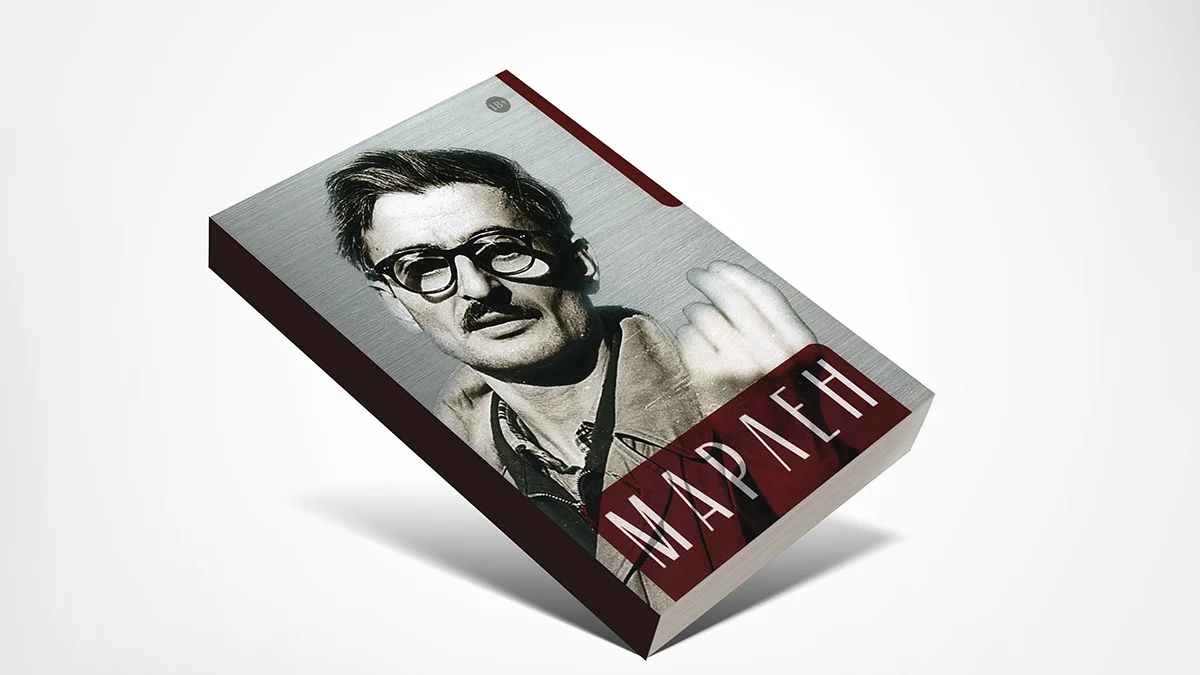
Cover of the book “Marlen Khutsiev in the memories of friends and colleagues, documents and photographs”
I'll start with the personal. I really miss Marlen Martynovich. From conversations with him in a small Georgian restaurant next to Khutsiev’s house on Vasilievskaya, from gatherings in his junior suite in White Pillars during the archive festival during its heyday, in the Directors’ Guild of the slowly dying House of Cinema...
And here is an amazing, impossible meeting. Thanks to the gigantic efforts, first of all, of the director and educator Andrei Yuryevich Khrzhanovsky, who invented and compiled this absolutely incredible book in all respects, edited by Stas Dedinsky. This heavy tome (“the well-fed children of Khrzhanovsky” is how Naum Kleiman calls the impressive books of Andrei Yuryevich), under the cover of which directors, screenwriters, artists, students and fellow artists of different generations met - the color of cinema and the country: the living and the departed. Shukshin, Pyotr and Valery Todorovsky, Sergei Solovyov, Bella Akhmadullina and Yuri Rost, Veniamin Smekhov, Pavel Finn, Yuri Bogomolov, Naum Kleiman and Yuri Norshtein, Marianna Vertinskaya, Veniamin Smekhov, Sergei Shakurov, Evgeniy Mironov, Sergei Garmash and many, many, many... As Sergei Soloviev (also a member of this community) said: “Those with whom I...”
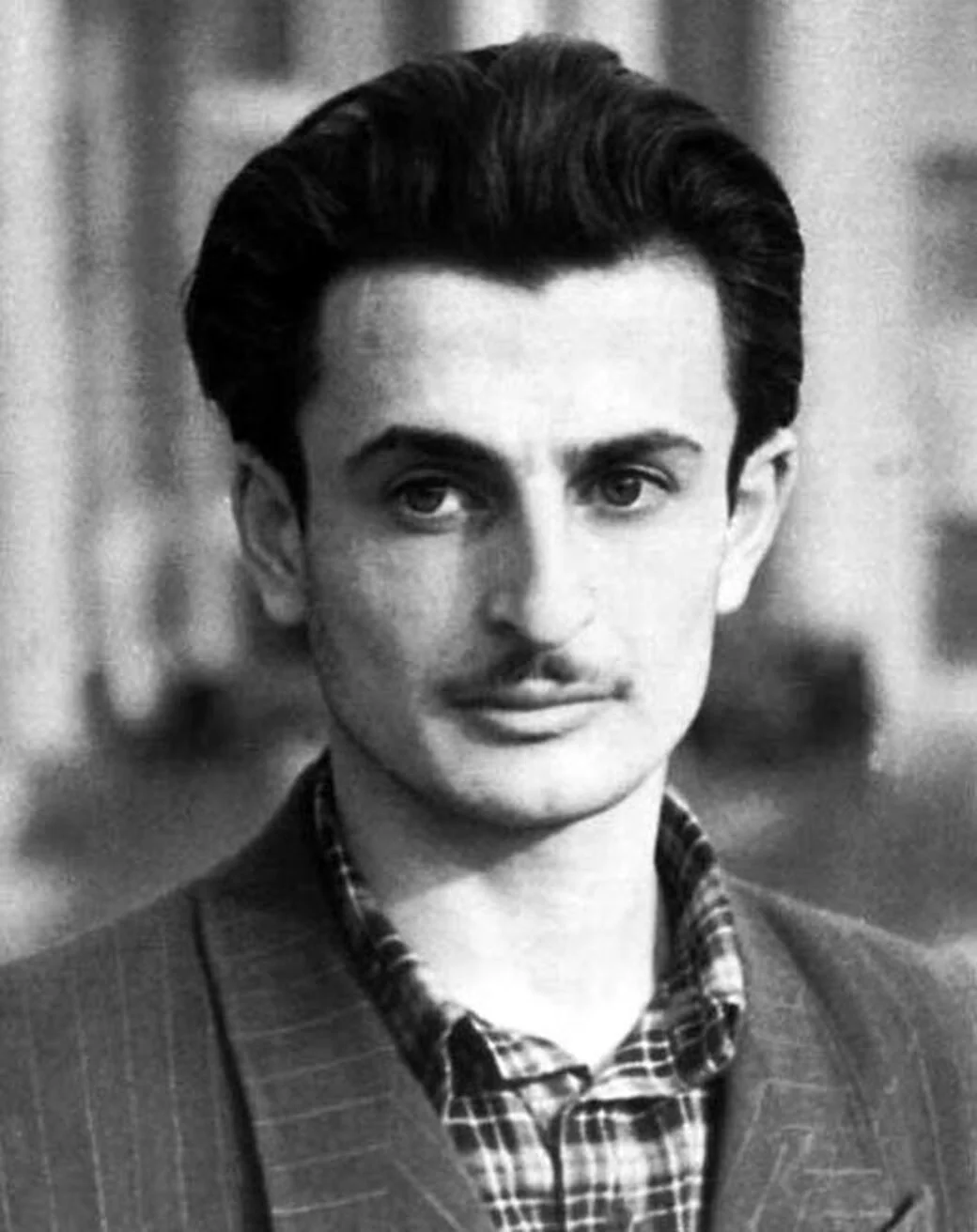
And in the center of this inflorescence is Marlene. Truly a center of attraction, an “icon of Thaw cinema,” which largely changed the intonation of cinema and its language. As my colleagues Pyotr Shepotinnik and Asya Kolodizhner noted (the book contains many of their dialogues with Marlen Martynovich):
“He shaped the style of time in the smallest details, spaces, conversations, and more, maybe even in the pauses between conversations.”
We listen/read Marlen Martynovich, who in his thoughtful, unhurried manner tells us about his works, plans and problems - for him there were main and secondary topics and problems. And if the book shows particularly close attention to Ilyich’s Outpost and Pushkin, it is only because the dramatic circumstances of the artist’s life are connected with them.
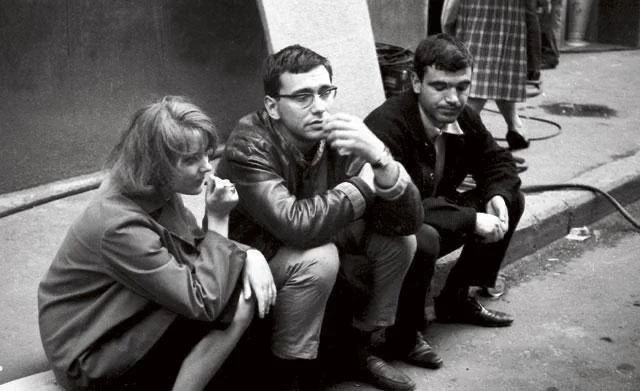
Yes, he is one of the galaxy of directors awakened by the thaw. But he was one of those few who, with his talent and breath, warmed and humanized time. A man with a name made up of the surnames of the leaders - Marx and Lenin - gave us a feeling of unprecedented, unprecedented, unregulated artistic freedom. If his characters wanted to think and be silent, they were silent. And we thought with them. These legendary Khutsi pauses, echoing passages through Moscow streets... He composed the rhythm and language of time. And the person at the center of this thoughtful cycle.
“In his films,” says Yuri Rost, “there is the genuine charm of a living person.” I’ll add: contemporary. Living here now. Asking himself and us questions that were asked by the entire young post-war “twenty-year-old” generation.
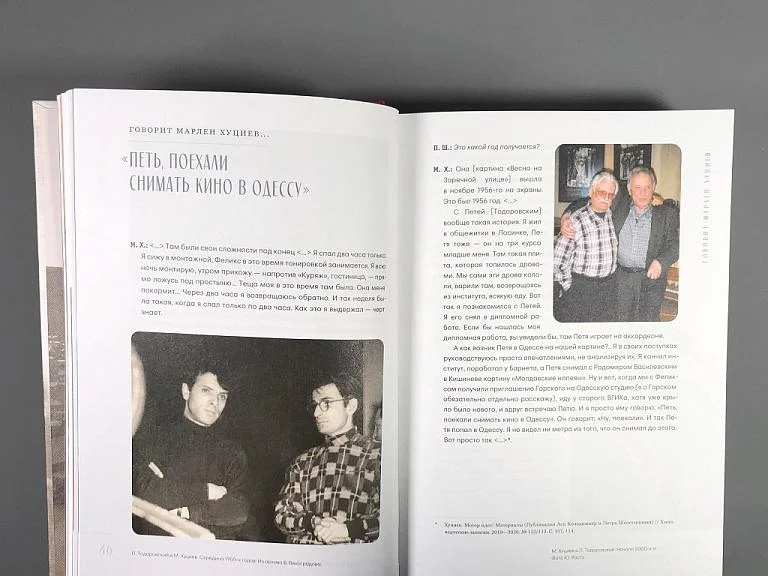
In introducing the book, its creators write that it contains “memories of a master,” but “memories” are about the past. And the book “Marlene,” like Khutsiev’s films, is a portal into today’s reality, distorted by terrible news. It is charged with such a current of love, controversy, hopes of meeting an artist, whose world and art are revealed from page to page. It was as if we had gone on an amazing journey with amazing guides.
We are driving along the route from the “Spring on Zarechnaya Street” station - through the “Ilyich Outpost” that enraged the authorities (the aesthetic and ethical manifesto of a generation) - to the failed “Pushkin”, tortured in the process of creation, through “July Rain” - to the most heartfelt film about the war “It was the month of May,” from the philosophical “Afterword” to “Infinity”...
But both “Infinity” and the unfinished “Never-Evening”, in which he combined his favorites Chekhov and Tolstoy, have an open ending. Because the destination station - "Marlen Khutsiev" - is simultaneously approaching and moving away.
He is the very “Infinity” that we try to comprehend throughout our lives. Understand and feel the excitement, even the fear, with which he entered into new filming: meaningfully and every time - as if going on a first date. This is an almost mystical relationship with each scene, with the actor, with the frame - he returned again and again to the material that had already been filmed. On the palette of the screen he mixed documentary with his dreams, ideas about reality with fiction. In different proportions. Pure alchemy. And the Khutsi method began to take shape from the moment the master parted with his co-author Felix Mironer. They say that Khutsiev himself asked the question:
“Does it matter to you where a person goes?” Felix replied: “Yes, definitely!” “It doesn’t matter to me,” said Marlen.
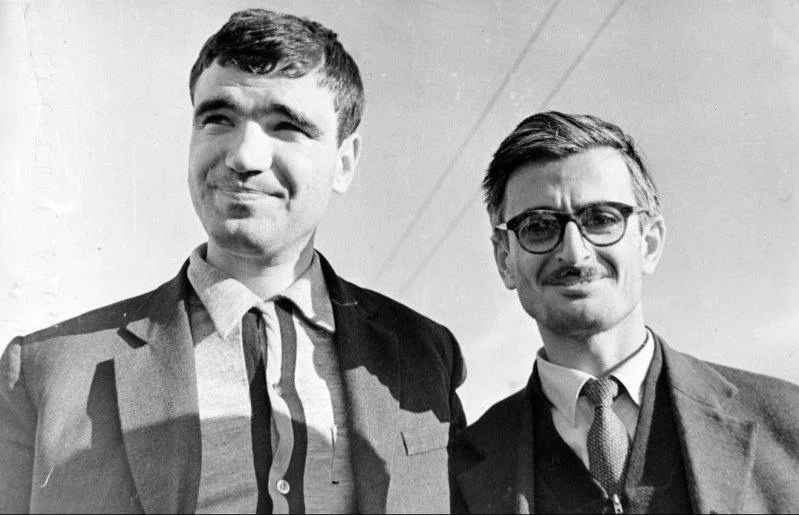
The book is like a movie, assembled from voices, fragments of life from films and live meetings. In addition to Khutsiev’s direct speech, correspondence with his co-author Gennady Shpalikov (the same letter where they vowed not to make Pushkin without each other), letters from Andrei Tarkovsky and Andrzej Wajda. Wajda writes about how he accidentally had the opportunity to review the film “Two Fedoras” at one of the festivals “... and once again make sure that the place that I believe you occupy among my favorite masters - Bergman, Fellini, whom I adore - worthy of you." And in the postscript, Vaida writes that he is really looking forward to meeting Khutsiev’s new film, about which Tarkovsky told him a lot - we are talking about “Ilyich’s Outpost.”
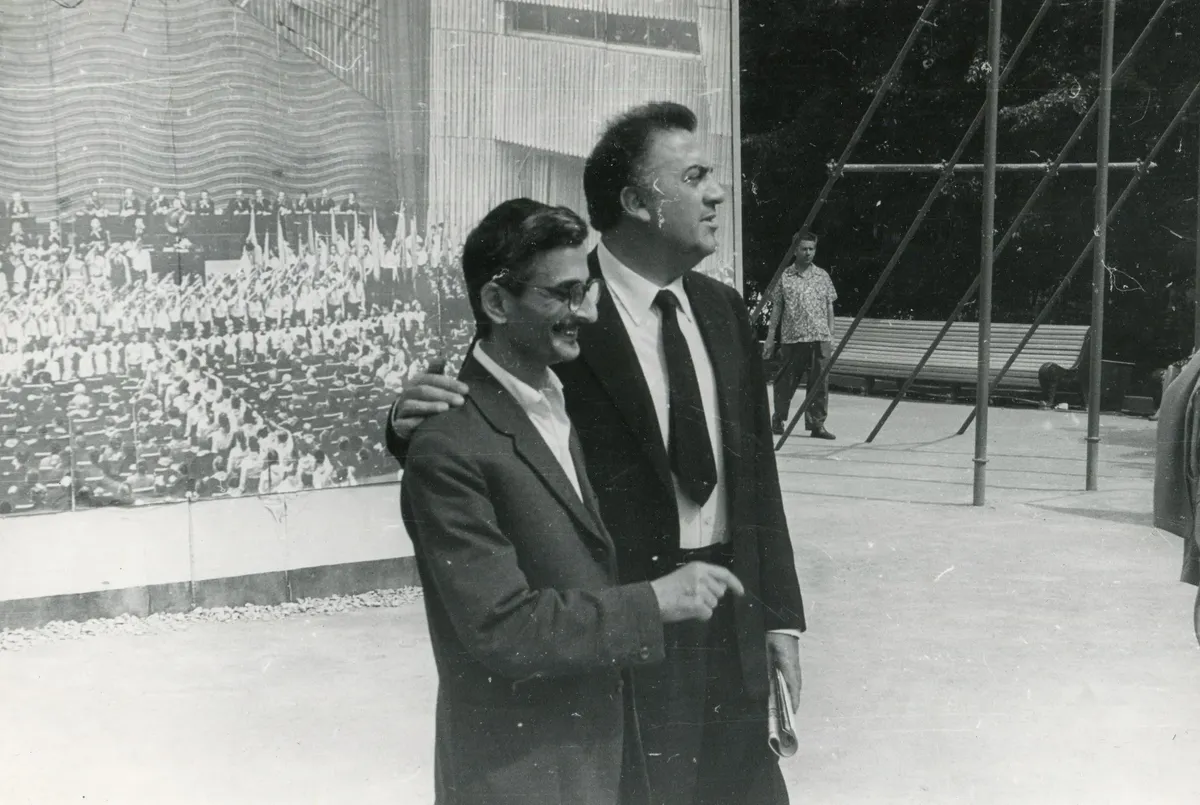
He himself was a contemporary of Pushkin and Chekhov, Mayakovsky, Zabolotsky and the “commissars in dusty helmets.” Stitching the past and present together with a living thread, he spoke to them as his hero in “Ilyich’s Outpost” asked his father, who was younger than him, for advice.
How to convey the feeling of Khutsi cinema, its wisdom and naivety, the atmosphere, the pre-dawn click of heels, the roar of the May demonstration, the rustle of the telephone dial and the click before the interlocutor’s breathing can be heard at the other end of the line? “Hello, Marlene is on the line!”
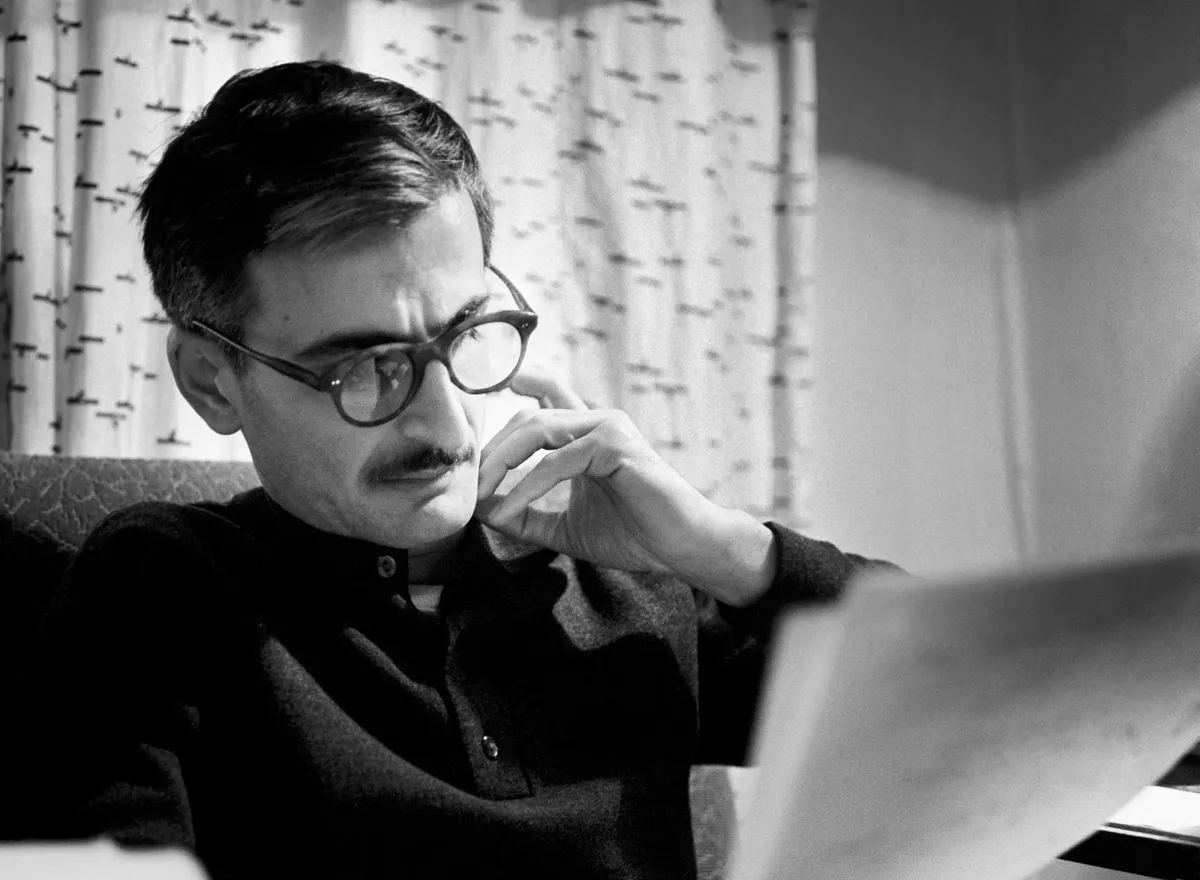
It is a great honor for me to take part in this large multidimensional conversation between people of different generations and professions about the magic of cinema, about the unique complex personality of Marlen Martynovich Khutsiev. It was like hearing his quiet voice again. After all, no matter what he filmed, no matter what we talked about, the eternal gladiator of his youth, he enthusiastically plunged into a heap of pressing and philosophical questions that concern everyone. Like the one that arises in the conversation between a father killed in his youth and his adult son in Ilyich’s Outpost: “How should one live?” Marlen Martynovich, how?
MORE ABOUT CINEMA
Larisa Malyukova runs a telegram channel about cinema and more. Subscribe here .