
Translated material
Operation Double
The Biden administration has accused the Kremlin of organizing a campaign to manipulate public opinion ahead of the elections.
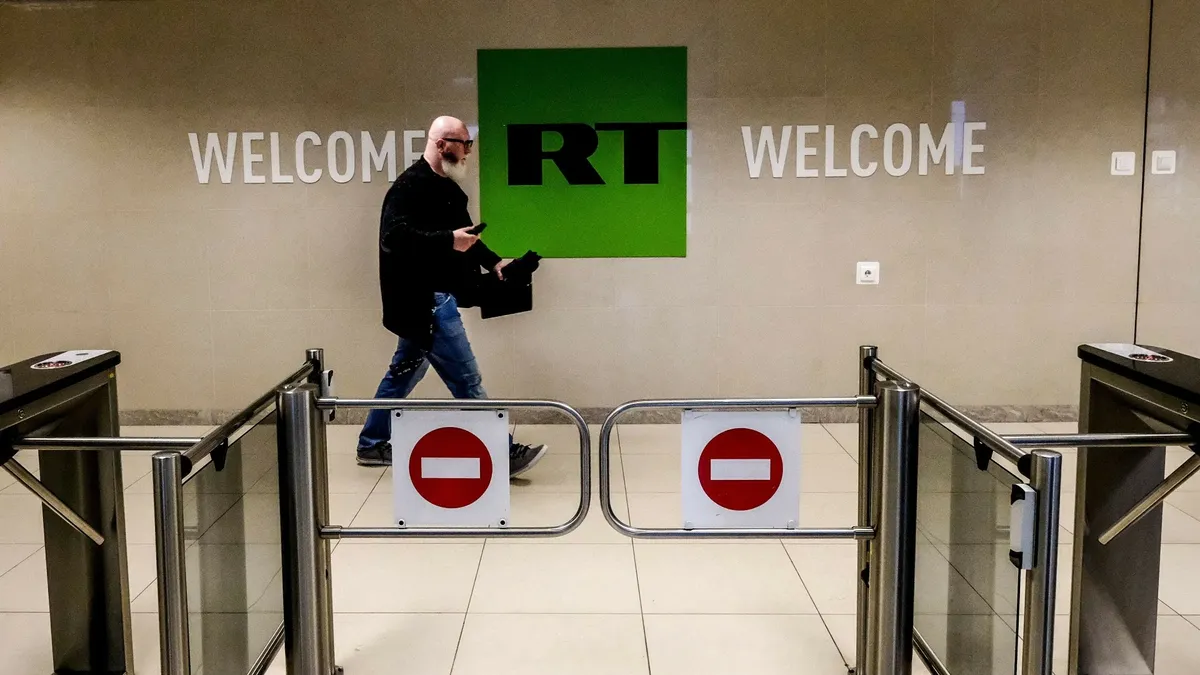
Photo: YURI KADOBNOV / AFP / East News
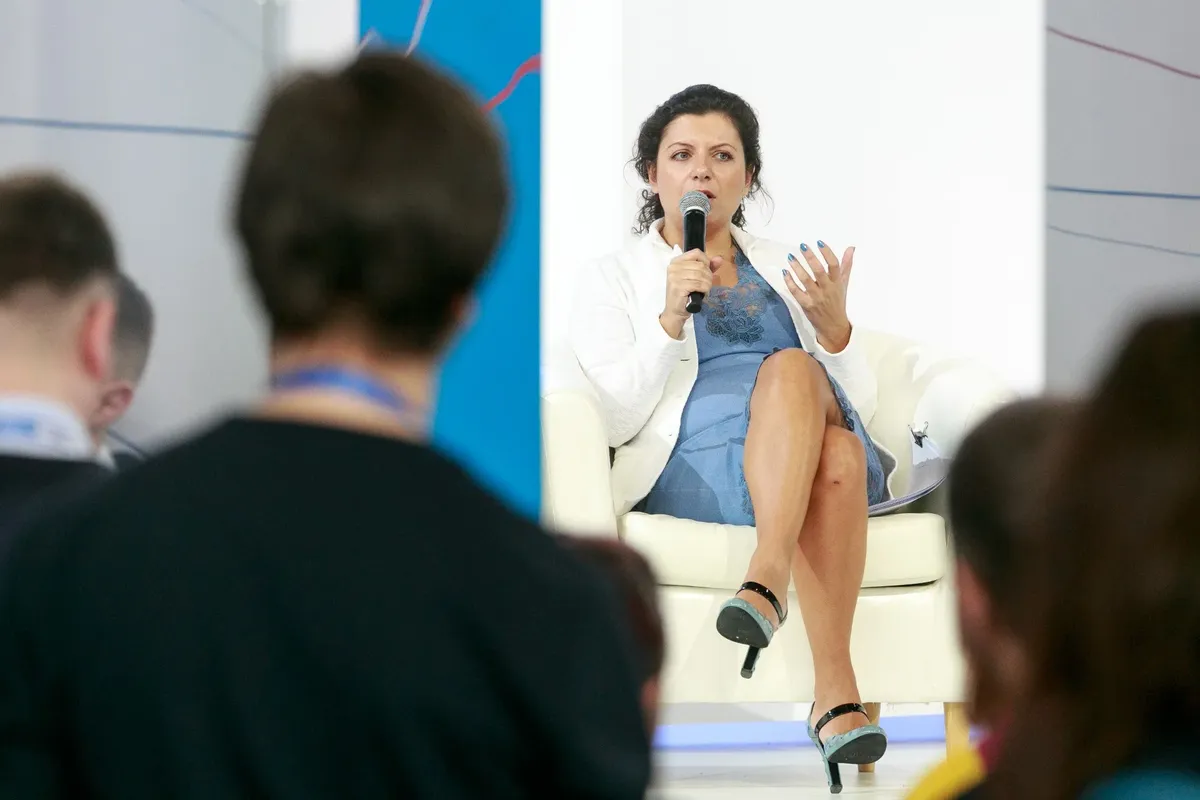
On Wednesday, the United States announced coordinated sanctions and new measures taken simultaneously by the State Department, the Ministry of Justice and the Treasury (MoF). The new sanctions list of the Ministry of Finance includes 10 individuals, including Margarita Simonyan, head of the RT television channel, the Rossiya Segodnya agency and Sputnik radio, as well as two companies. The Justice Department charged two RT employees with conspiracy to commit money laundering (up to 20 years in prison) and violating the Foreign Agent Registration Act (up to 5 years).
The State Department announced three new measures:
limiting the issuance of visas to individuals who, acting “on behalf of Kremlin-backed media organizations, use them as cover for secret activities”;
The Rossiya Segodnya holding and its subsidiaries RIA Novosti, RT, TV-Novosti, Ruptly and Sputnik have been declared “foreign missions” in the United States. Under the Foreign Missions Act, these organizations are required to notify the State Department of all employees working in the United States and disclose all real property they own in that country;
The Rewards for Justice program is offering a reward of up to $10 million, as well as possible relocation, for information about foreign interference in US elections.
The FBI announced it has issued a search and seizure warrant to seize assets of the Social Development Agency (SDA) for activities on behalf of the Russian government. Sanctions were imposed against this organization and the company Group Structura LLC, as well as their leaders - Tupikin and Gambashidze - in March of this year. Let me remind you that last month searches took place in the homes of two Americans collaborating with Russian state media: Scott Ritter, who was formerly a UN weapons inspector, and Dmitry Simes, an adviser to ex-President Donald Trump and host of a program on First.
The New York Times reported that Americans collaborating with Russian state propaganda will be subject to new searches.
Law enforcement is interested in possible violations of sanctions and the law on lobbying in the interests of a foreign state (FARA - Foreign Agents Registration Act). By the way, as local media note, in 2017 RT registered in the United States as an “agent of a foreign government.”
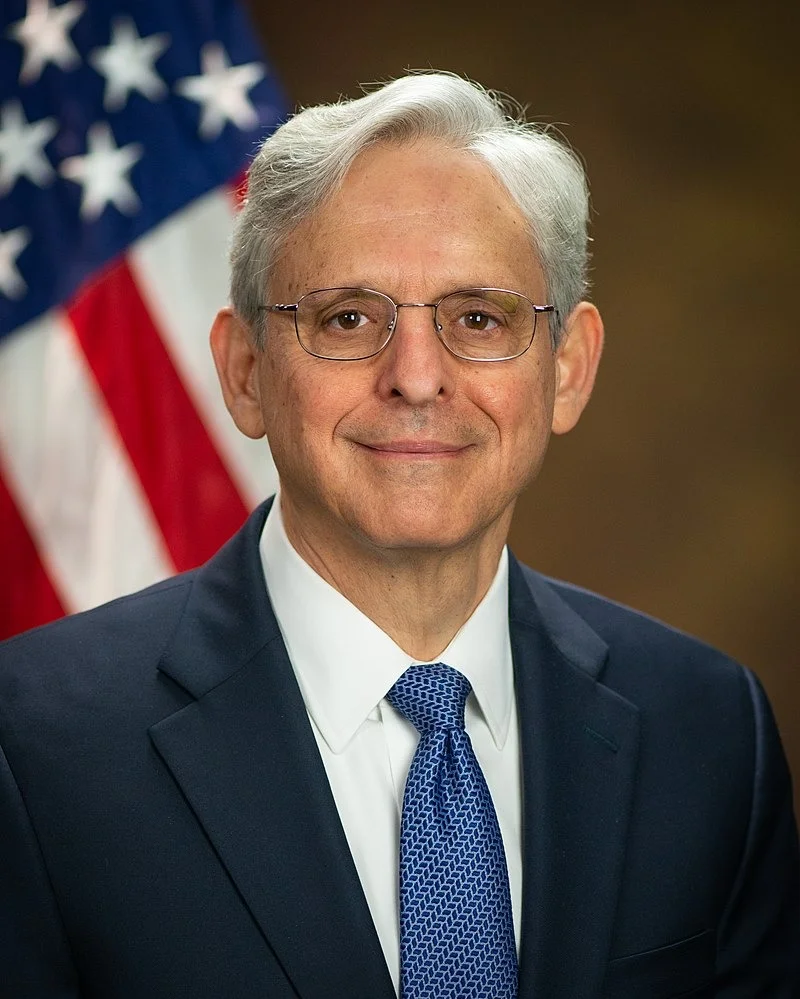
US Attorney General Merrick Garland also announced the confiscation of 32 Internet domains that he said the Russian government and Russian actors used to influence US elections as part of the so-called Operation Doppelganger. Fans of the TV series Twin Peaks will appreciate the analogy with the evil and good Agent Cooper. About media doubles - below.
In Russia, the new actions of the American administration are regarded as a manifestation of “open Russophobia”, “a gross violation of freedom of speech”, and retaliatory measures have been announced. The reaction followed at all possible levels: from the president to deputies and the official representative of the Ministry of Foreign Affairs, Maria Zakharova.
Let's try to figure it out.
Freedom of speech is enshrined in the First Amendment to the US Constitution. As the State Department said in a statement, “We are taking action against these individuals solely for their nefarious covert influence activities, and not for the content of any reporting or disinformation activities.”
In other words, harsh criticism in media materials (even deliberately dishonest ones) is different from an undercover sting operation that uses false names, fake Internet sites and fake money transfers (when money for counter-propaganda was transferred as money for technical supplies, such as iPhones).
Special propaganda has nothing to do with freedom of speech, just as any subversive operation has nothing to do with journalism.
Now to the essence of the accusations. As Vladimir Putin has said in relation to past allegations of Kremlin interference in US elections, “provide names, appearances, addresses.”
According to the US Department of Justice, RT executives tried to secretly recruit unsuspecting popular American bloggers, so-called influencers, using a front company to hide their own involvement or the involvement of the Russian government. The 32-page indictment, unsealed Wednesday in the Southern District of New York, alleges that RT employees Konstantin Kalashnikov (manager of the department of digital media projects) and Elena Afanasyeva (an employee of this department) participated in a covert operation that cost about 10 millions of dollars, aiming to influence American public opinion and sow social discord. Their client, an American company with an address in Tennessee (the name is not specified in the indictment - just US Company-1), created and posted approximately two thousand English-language videos on social networking sites, including TikTok, Instagram *, YouTube and X, “reflecting Russian state propaganda" and collected 16 million views on YouTube alone.
Kalashnikov, 31, and Afanasyeva, 27, ran the operation from Moscow using fake names and shell companies, and targeted Americans who received Russian messages without knowing their origin. The videos published by US Company-1 contained commentary on issues in the United States such as immigration, inflation and other topics related to domestic and foreign policy. In order to conduct a secret campaign of “RT influence in the United States,” Kalashnikov and Afanasyeva worked under false names. Posing as an outside editor, Kalashnikov edited content and oversaw the financing and hiring of employees of the American company. Using fake names (Helena Shudra and Victoria Pesti), Afanasyeva managed the content of hundreds of videos.
For example, after the terrorist attack in Moscow’s Crocus City Hall on March 22, Afanasyeva asked one of the founders of US Company-1 to blame Ukraine and the United States for the attack, writing: “I think we can focus on the Ukraine-US aspect. The media spread falsehoods that ISIS claimed responsibility for the attack, although ISIS itself never made such statements. All the terrorists were detained as they headed towards the Ukrainian border, which makes it even more suspicious why they wanted to go to Ukraine to hide.” End of quote.
Between October 2023 and August 2024, RT sent bank transfers to the American company totaling approximately $9.7 million, representing almost 90% of the company's bank deposits from all sources combined.
The transfers were sent by shell companies in Turkey, the United Arab Emirates, and Mauritius and were often accompanied by bank notes attributing payments to electronics purchases. For example, a bank note for a payment of $318,800 from a shell company in Turkey dated March 1 read: “purchase of goods-INV.013-IPHONE 15 PRO MAX 512GB.” US Company-1 never disclosed to its viewers that it was funded and operated by RT, nor did the company and its two founders register with the Ministry of Justice as “foreign agents.”
The Social Design Agency, previously sanctioned (let me remind you, the FBI received a search warrant and confiscation of its property) and the Structure Group, according to American law enforcement, “on behalf of intelligence” created a network of more than 60 websites that pretended to be news organizations from Europe (primarily Germany, France, Italy, Ukraine and the UK) and used misleading social media accounts to enhance the “content credibility” of the fake websites. The fake websites were created to closely imitate the appearance of real news sites, and included embedded images and working links to the real sites. Now the property of the creators of “information doubles” is confiscated. The question is how much such property is located in America, given that now an information subversive war can come from anywhere on the planet.
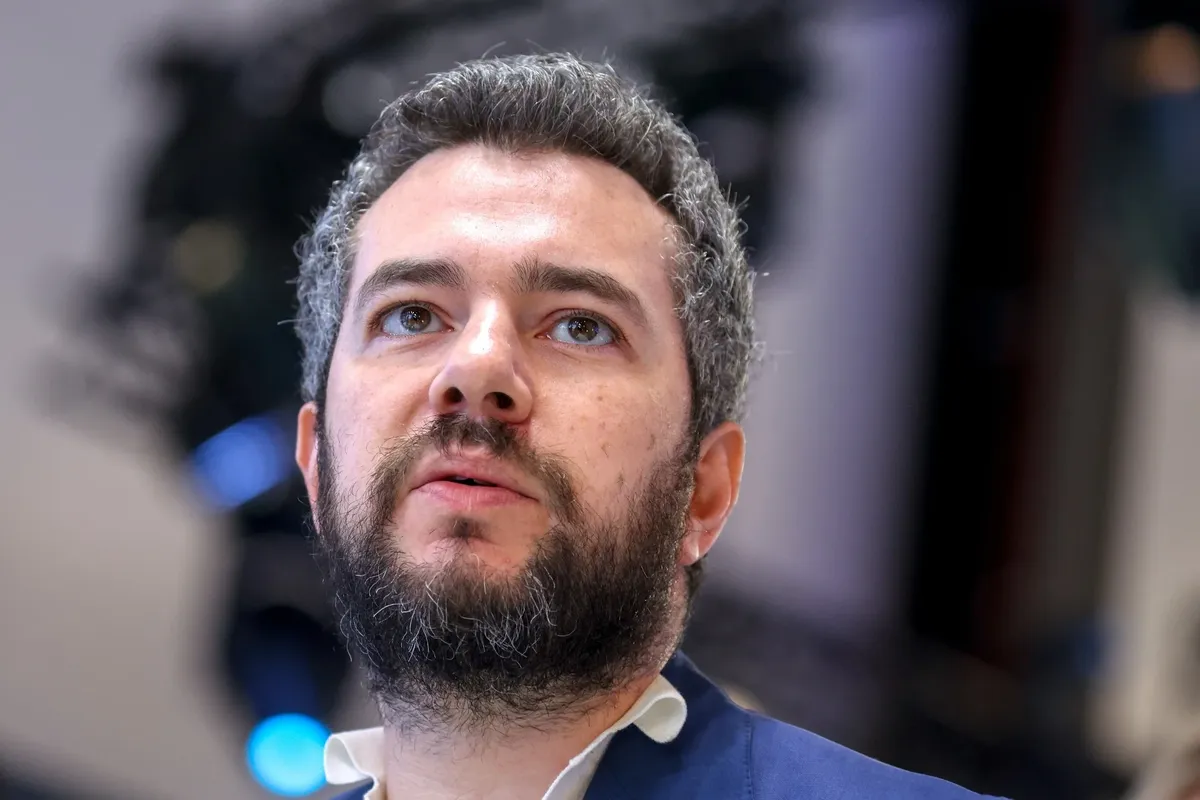
Two Russian organizations are accused of Operation Double: the company Dialog (ANO Dialog), founded in 2019 by the Moscow government and using artificial intelligence technology for online disinformation against election campaigns in other countries, and its subsidiary ANO Dialogue Regions". Vladimir Tabak, the general director of these organizations, previously worked in the presidential administration of the Russian Federation. According to the US Department of Justice, last fall, Dialog employees identified lists of public figures in the US, UK and other countries as potential targets for deepfake projects. The EU imposed sanctions against the company.
For valuable information about another structure, RaHDit (an abbreviation of the phrase that translates as “Russian evil hackers did it”), the State Department promised a reward of $10 million. The hackers, allegedly led by alleged former FSB officer Alexei Garashchenko, influenced elections in other countries through cyber operations and “pose a threat” to elections in the United States. Members of RaHDit spread propaganda and disinformation from the Kremlin-funded and directed organization RT, the State Department says.
Are you still surprised by some of the election results in Europe and other parts of the planet - victories of nationalists and the far right? So, they are actively being helped.
In conclusion, here is a complete list of sanctioned journalists (according to the Kremlin) or participants in “subversive operations” (as the current American administration is convinced) in alphabetical order. Their positions and assessment of their activities were formulated by the American side (we present them as such), and possible ranks are not indicated:
Elena Afanasyeva (aka Victoria Pesti, Helena Shundra), employee of the RT digital media projects department;
Anton Anisimov, deputy editor-in-chief of RT. Carries out activities on behalf of the Federal Security Service of Russia (FSB);
Elizaveta Brodskaya, deputy editor-in-chief of RT;
Alexey Garashchenko, head of RaHDit, was an FSB officer when he began leading the group. Directly interacts with employees of Russian intelligence and security services, employees of the Russian Presidential Administration and RT employees;
Konstantin Kalashnikov, manager of digital media projects at RT (along with Afanasyeva, charged with money laundering and violating FARA);
Andrey Kiyashko, Deputy Director of English-language news broadcasting RT. Responsible for keeping Russian government officials informed and providing an overview of RT's activities. In the middle of last year, Brodskaya and Kiyashko, according to the FBI, carried out a large-scale operation on US social networks in order to hide RT’s connection with content designed to influence the American online audience;
Alexander Nezhentsev. Works with Garashchenko and is the administrator and developer of cyber tools used by the FSB;
Margarita Simonyan, editor-in-chief of RT and a "central figure" in the Russian government's efforts to exert "malign influence." Allowed a shell company to operate under the guise of RT.
Vladimir Tabak, head of the Dialog and Dialog-Regions companies (see above);
Anastasia Ermoshkina. Is an affiliate of Garashchenko.
And two organizations:
autonomous non-profit organization “Dialogue”;
autonomous non-profit organization "Dialogue-Regions".
It must be emphasized (and this is noted in the press release of the US Department of Justice): all charges are allegations, and the persons against whom they are brought are considered innocent - until a court decision.