
Translated material
The library closes
Internet Archive stores millions of digitized books and gives them to read for free. The copyright holders accuse NPOs of piracy and win in the courts. At stake - the spread of knowledge on the Internet
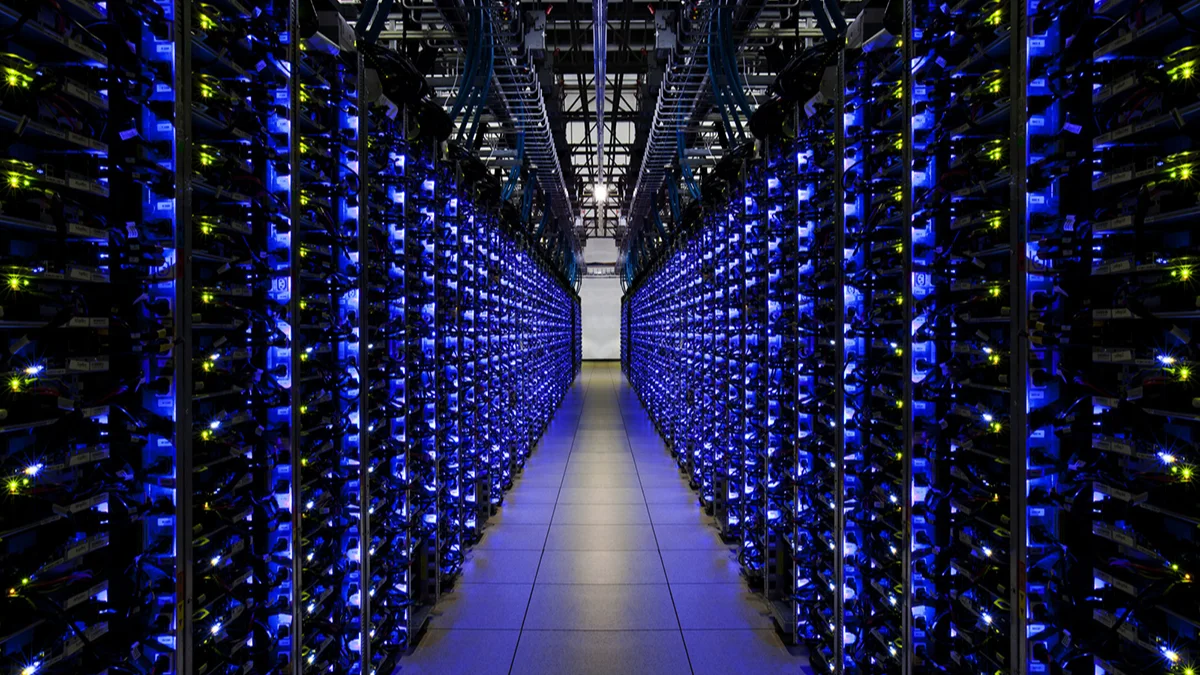
Date Center. Photo: Vida Press
On September 4, the US Court of Appeal issued a decision by which it forbade the incomplex organization Internet Archive to provide free access to more than 500 thousand digitized books without the permission of copyright holders.
We are talking about the National Emergency Library project - a free catalog of 1.4 million works, access to which anyone can get. Internet Archive at the beginning of the Covid-19 pandemic, when quarantine measures began to be announced around the world, presented the service as an obvious replacement for traditional libraries. Bailiffs have been going on for four years: large US publishers have been accusing NGOs of violation of copyright and piracy. The library users, after the court’s decision, sided with the Internet Archive and collected more than 100 thousand signatures in its support, and Ilon Musk became the most famous defender. In social networks, they are afraid that the case will harm the dissemination of knowledge and hint that the removal of digital copies of books is beneficial exclusively by the already rich publishers.
What kind of Internet archive and what he became famous
The mission of a non -profit organization - "ensure universal access to all knowledge." Internet Archive in 1996 was founded by programmer Bruster Cale. He conceived the service as a place in which all the sites should have been stored all the time: for this, his team archived web pages and saved them on Internet Archive servers.
Now the Wayback Machine website stores more than 866 billion web pages for more than 28 years. With its help, it is convenient to track the history of changes in articles, find remote pages and study the evolution of the Internet-for example, Wayback Machine stores web pages of the early version of YouTube and Twitter.
Since 2005, Internet Archive has digging books in English in cooperation with libraries, grant organizations and Microsoft. By 2013, the organization had more than 4.4 million books in its catalog and 33 scanners around the world. And in September 2024, the library has more than 44 million books and texts.
Works for Internet Archive are provided by libraries. You can read the text online in a web-reader or download in a convenient format-for example, upload a “live yard” of George Orwell to PDF or EPUB for iOS devices.
In 2006, Internet Archive launched Open Library - a separate project for reading books. Unlike the main Internet archive, Open Library has not only books from public access, but also works protected by copyright.
To get a book in Open Library, you need to register on the site and apply for a text in the catalog. The site provides access to the encrypted file for two weeks, and then closes it for reading.
At the same time, only ten books can be in the digital library at the same time, and the texts are not in public access to a separate waiting sheet according to which files are provided for only 24 hours to one person.
In March 2020, Open Library allowed readers as part of the National Emergency Library project to download an unlimited number of books and removed a waiting sheet for all texts. The company explained its decision by the fact that people cannot go outside and go to a regular library - so their service worked as an idea before the end of emergencies in the United States.
Many books of four leading book publishers in the United States - Hachette, Penguin Random House, John Wiley & Sons and Harpercollins were discovered. Together they sued Internet Archive and said that Open Library violating the laws on copyright.
National Emergency Library stopped working on June 16, 2020. Internet Archive asked the publishers to withdraw a lawsuit and resolve the conflict peacefully. However, even this did not convince the company to stop the proceedings.
Why are the copyright holders are judging due to digitized books?
According to publishers, Open Library scans books without the permission of copyright holders and spreads them without any right to do so. It is also indicated in the lawsuit that Internet archive violates the chain of creating and distributing books, depreciates the general expenses for their spelling, editing, design and printing.
“Without any license, payment by the authors or publishers of Internet Archive scans printed books, downloads illegally scanned files to their servers and distributes literal digital copies of books in full through public sites. In just a few clicks, any user connected to the Internet can download the full digital copies of books that are subject to copyright, ”the publishers say .
The ARCHIVE guild also sent its complaints to Internet Archive. The organization created a petition in June 2020, which demanded that the National Emergency Library be removed.
“This is pure piracy, regardless of how Internet archive and its founder Broister Cale mask the National Emergency Library for the social good. The provision of hundreds of thousands of books protected by copyright to download is theft. It is illegal and should be closed ",
- The representatives of the guild wrote .
Some writers were outraged by the launch of the National Emergency Library. So, the author of the novel "Edinburgh" Alexander Chi said that due to Internet archive, the creators of books are losing income. The laureate of the Pulletseri Prize, Kolson Whithed, known for the Underground Railway, also expressed his discontent. In his opinion, Open Library "scans books illegally and posts them online." He later deleted his tweet for unknown reasons.
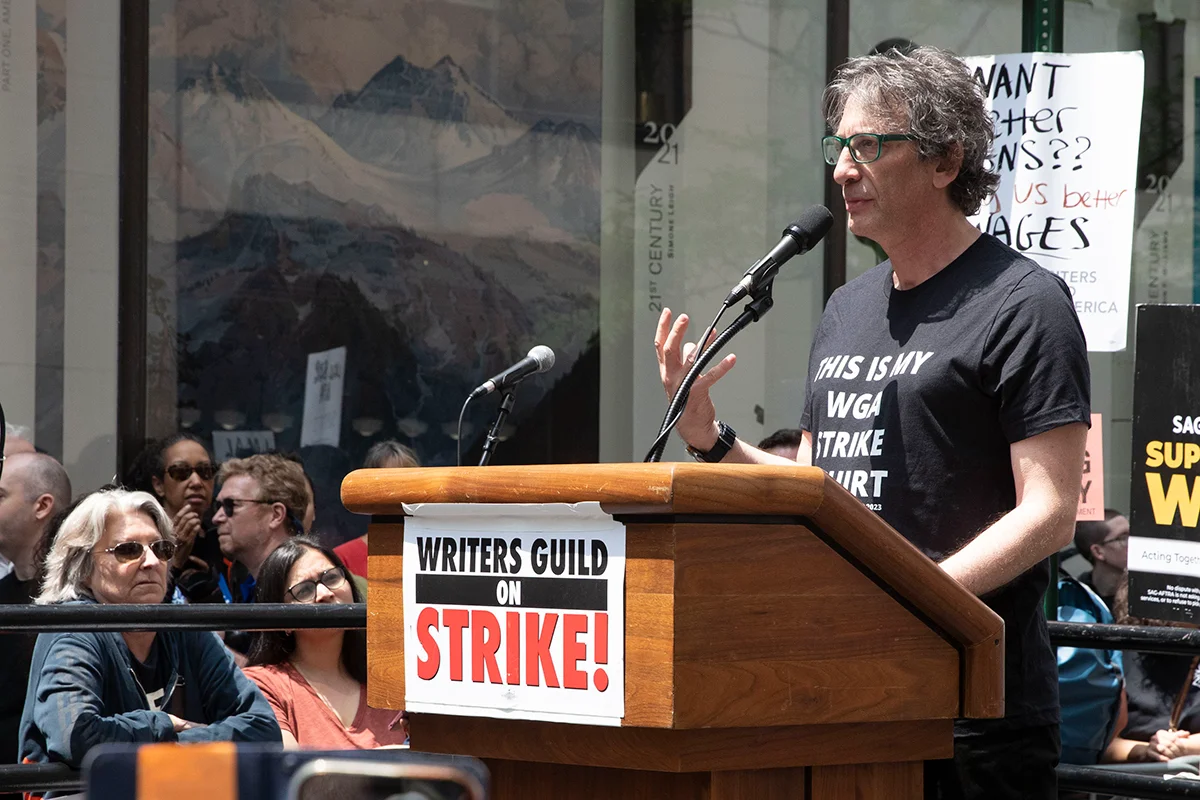
Different media called the critic of National Emergency Library and the writer Neil Gaiman, the author of “American gods” and “good signs”. In his tweet, he wrote : “Guys. It doesn't help at all. ” Two years later, Gaiman explained that his words were interpreted incorrectly and he has nothing against Internet Archive.
That Internet archive is responding to criticism
The organization believes that the copyright holders filed a lawsuit in vain. In the blog, Internet Archive representatives say that they received support from hundreds of libraries and universities around the world, including Massachusetts Technological University.
The company claims to buy all books, and access to them was provided temporarily. In her appeal, she also asked readers, if possible, to purchase books in local stores or order them online in marketplaces like Amazon to support publishers and writers during the pandemic period.
“As a library, Internet Archive acquires books and provides them for temporary use, as libraries always did. This supports publishers, authors and readers. Publishers sue the library for the provision of books - in this case, protected digitized versions - at a time when schools and libraries are closed. This does not correspond to anyone’s interests, ” said Bruster Cale in June 2020 in a commentary for the publication of The Verge.
The organization also claims that all its files are subject to conscientious use, and according to the American doctrine of the first sale, it has the right to do anything - including learning digital scans - with books purchased by it. After a loss of appeal in September 2024, Internet Archive issued a separate application.
“We study the court decision and will continue to protect the rights of libraries to own, issuance and preservation of books”,
- They wrote on the company's blog.
By a court decision, more than 500 thousand books belonging to large book publishers were removed from Open Library. Internet Archive asked his users to tell how they reacted to this decision and what it means to them.
The company is ironic that at the request of copyright holders from Open Library, the anti -utopian novels “1984” and “451 degrees Fahrenheit” were removed - in these works of the state, unwanted books burned. Nothing is known about the further steps of the company.
Why did the whole Internet stand on the side of Internet Archive
In 2020, many favorably reacted to the idea of National Emergency Library. So, The New Yorker has called the service “a gift for all readers around the world”, as it gives access to books to those people who cannot allow physical copies or cannot leave home.
When Internet archive lost the court with copyright holders, users of social networks called the incident a tragedy and compared the possible closure of the company with the burning of the Alexandrian library: after all, there will be no one else will archive web pages and store millions of texts in the public domain.
The general director of the social network X Ilon Musk also got to the side of the organization.
“Although INTERNET Archive has a lot of negative nonsense in my direction, this is still the social good that should exist. Support Internet archive! ”,
- wrote the entrepreneur.
The online bibliotek is publicly supported by thousands of people. They tell how with the help of Internet Archive and Open Library they wrote dissertations, worked on scientific articles without access to university libraries and read books online, as they could not allow them to buy them in stores. Also, social networks pay attention to the fact that large corporations often use users data without their demand for teaching neural networks, while ordinary people are left without free access to knowledge.
The petition on Change.org emphasizes that Internet archive and Open Library allow students, graduate students and teachers around the world to freely receive knowledge and conduct research. In addition, the service is needed not only during the pandemic: the service makes it possible to read books to people who, for some reason, cannot visit libraries. This is not to mention the conservation of texts on the generation forward.
What will happen to Internet archive further
Experts rightfully believe that the loss of Internet Archive in the Court of Appeal will forever change the Internet and the book market: probably many publishers will completely remove their books from public access and will distribute them online exclusively by subscription, as they do with films and series. For example, this opinion is shared by a teacher of the law school of New York University Jason Schulz.
“The constancy of library funds can be a thing of the past. If the platforms decide not to publish e -books or publishers decide to remove them from the shelves, the reader will be losing. This can be compared with situations where the songs on Spotify disappear because the sound recording company revoked a license to them, or when films and TV shows disappear with Netflix and Amazon, ”the professor said.
Peter Syubert, director of the Harvard Open Access project, providing free access to the research of Harvard University, believes that book publishers want to forever block the possibility of learning online books on request.
“By law, we will not be able to fully use the possibilities of the Internet to exchange literature, and this will be a tragedy. Internet archive, obviously, will have to curtail their activities, and such public libraries will also have to retreat. Ultimately, both readers and researchers will suffer from this. "
- said Syubert.
Broister Cale himself claims that the loss of Internet Archive in court may mean the end of free access to information on the Internet.
“People are concerned about the ban on books and reducing library financing. But I'm not sure that they know about the gradual bias towards access to electronic materials exclusively in licenses. Libraries are not just an analogue of Netflix for reselling books to its readers. The libraries have always been something big, ” said the founder of Internet Archive.