
Translated material
"Quiet To Do List"
How does the artist of the world Vladimir Spivakov, who turns 80 on September 12, live?
Flight to the Caucasus mountains
Spivakov says: “You haven’t been to Tbilisi for a long time. And we haven’t been there with “Moscow Virtuosi” for a very long time. Come with us! We are giving one concert. Once upon a time they were well received. Now I don't know. And one more thing: the Catholicos-Patriarch of Georgia is soon eighty-five. Do you know that Ilia II writes music? We will come to him with an orchestra and play as a gift.” I know. He writes poetry and icons. Of course, let's go.
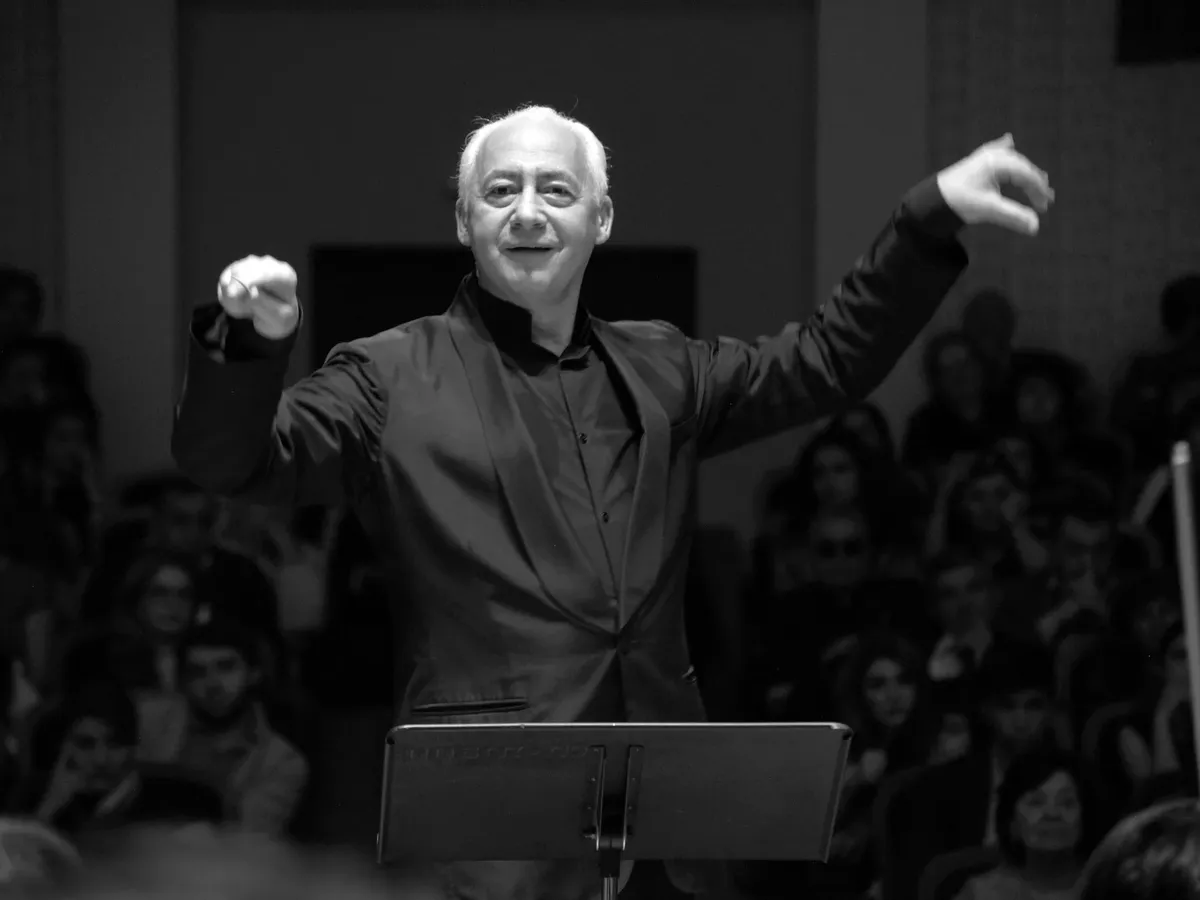
The concert took place on Plekhanov, in the hall named after Volodya's comrade Dzhansug Kakhidze. I knew him, and you remember him from Otar Ioseliani’s film “Once Upon a Song Thrush.” There he plays the conductor, that is, himself.
Wonderful faces of women and men who came to listen to music. The hall is full, but on the street there is still a crowd of mostly young people who did not get tickets.
“Vakho,” Spivakov said to the director of the hall, Vakhtang Kakhidze, conductor and son of the conductor. - Let's put chairs on the stage behind the orchestra and let everyone in.
- Won't they bother you?
- No.
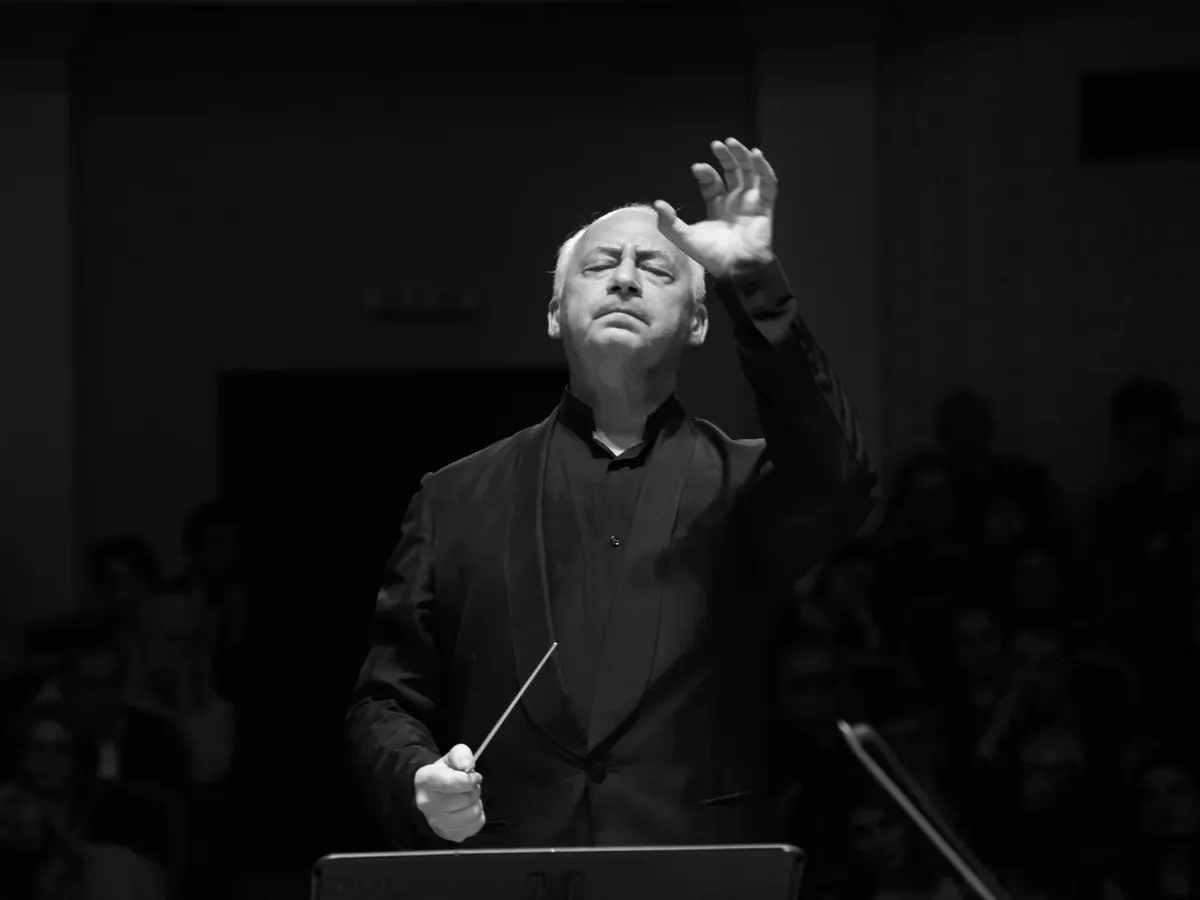
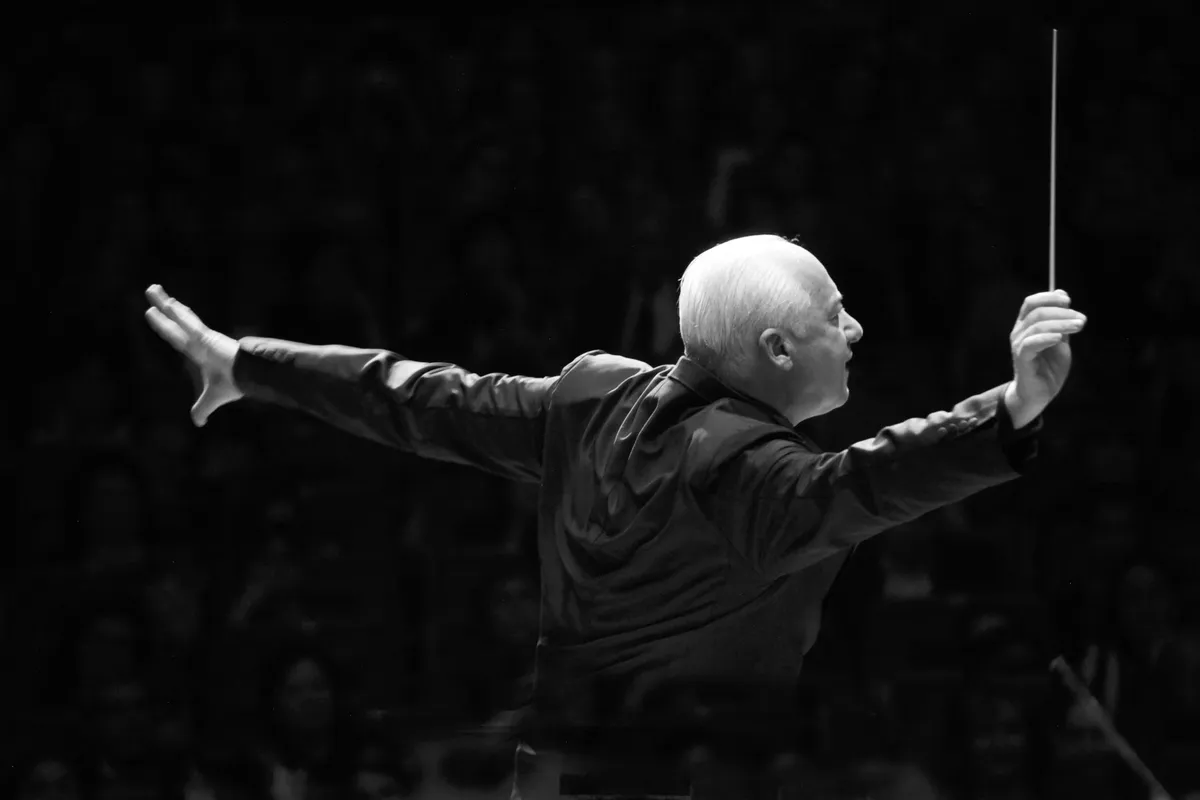
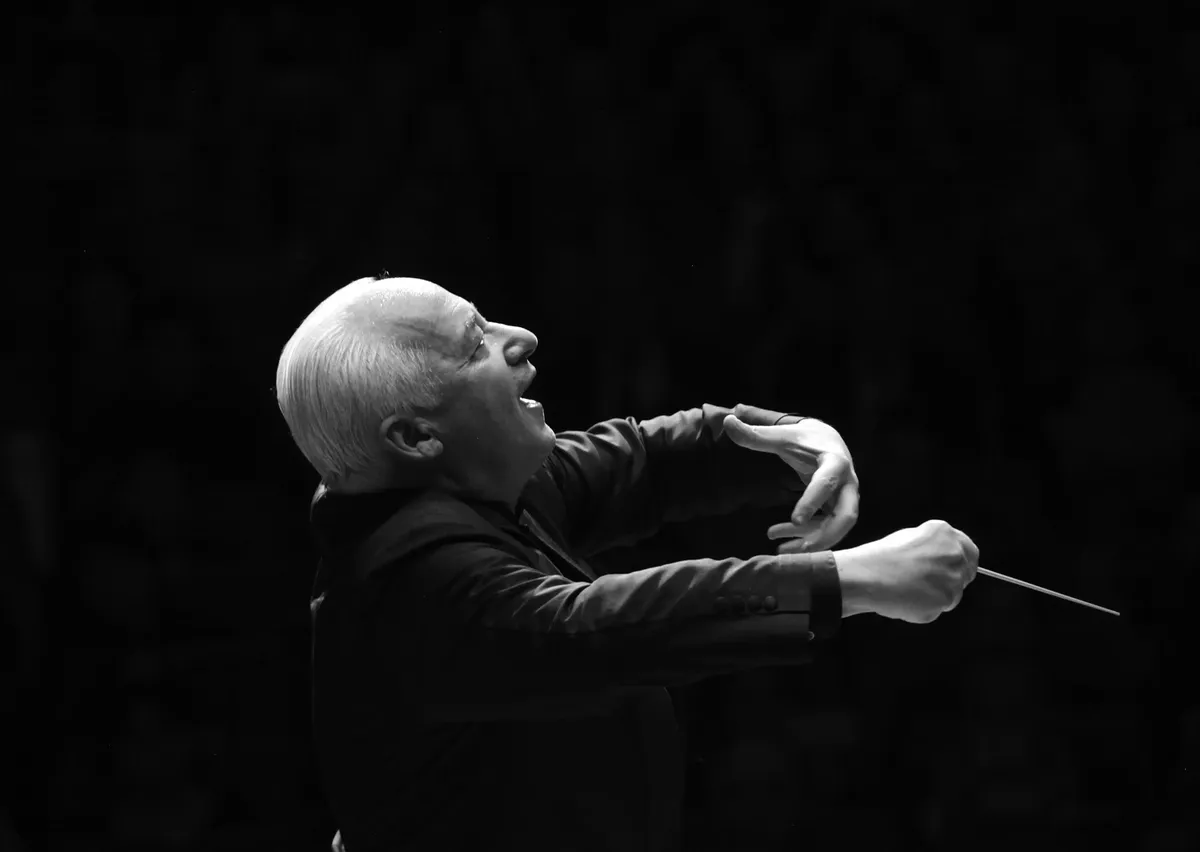
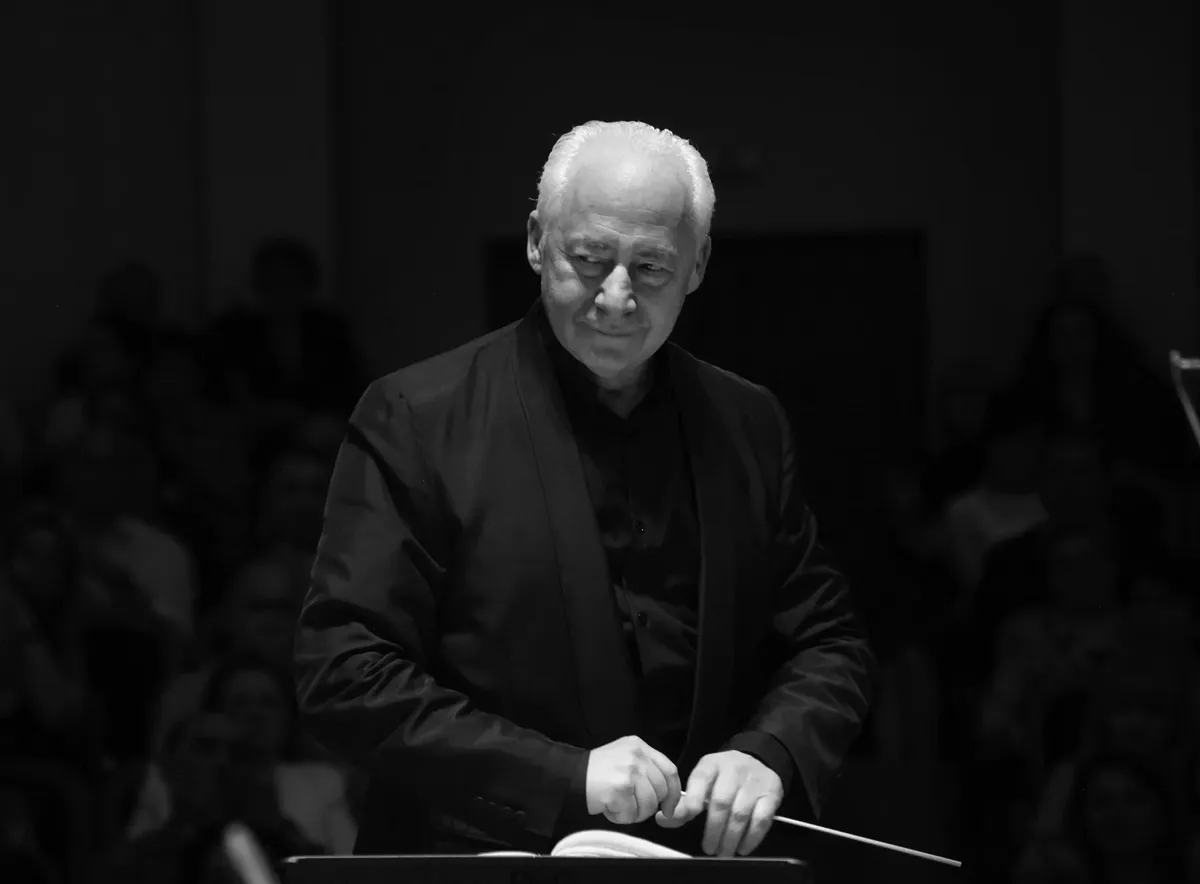
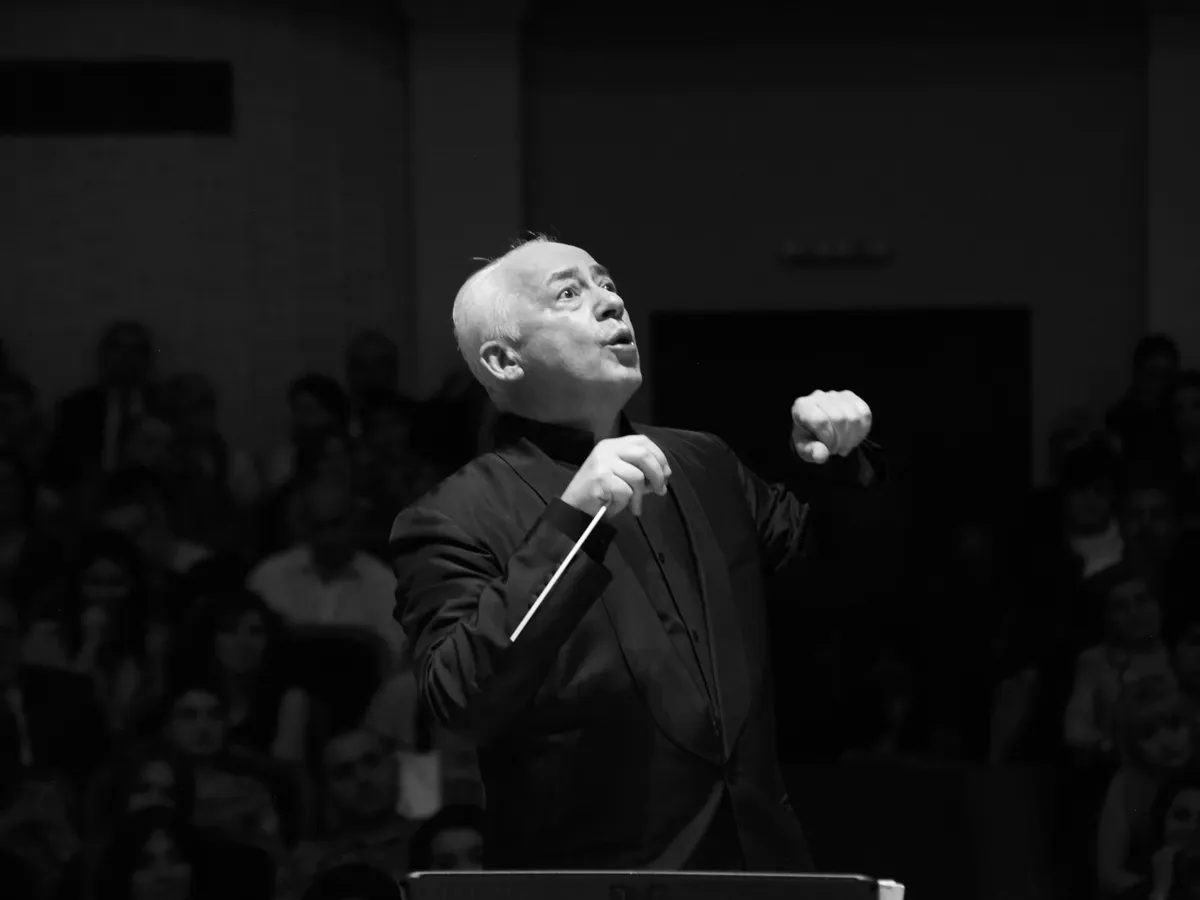
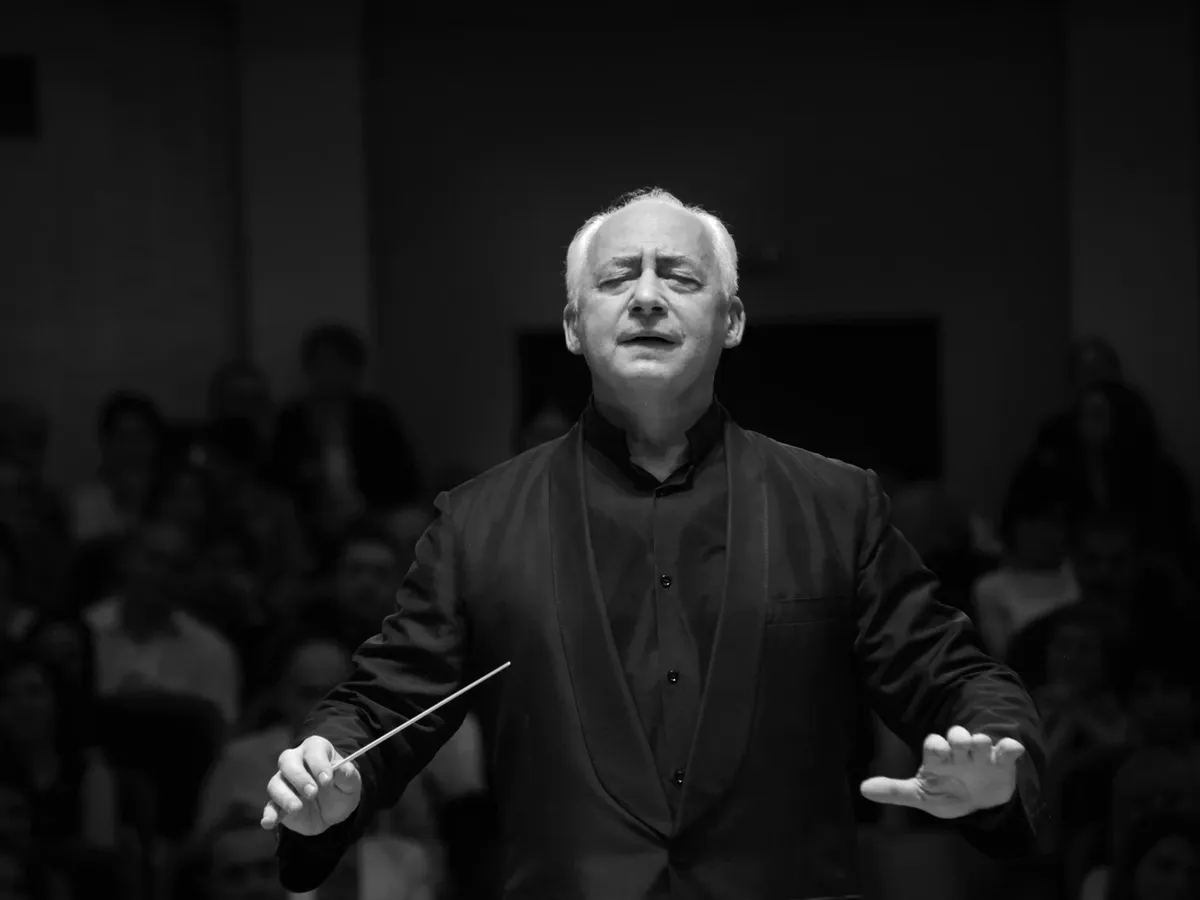
And they let everyone in. I sat in these rows and photographed Vladimir Spivakov from a rare point when his face was visible during musical work. It was a separate performance. I present to you a partial report on it (see photo).
After the triumphal concert and a visit to Ilia II, who was truly moved by hearing the Ave Maria he had written performed by a world-famous musician and his orchestra, we went to Yerevan, where the story with chairs for ticketless youth repeated itself.
On the way from Tbilisi to Yerevan, we had enough time, and we could talk not about music at all, but about those quiet affairs that give Vladimir Spivakov the happy feeling of participating in the correction of other people's destinies, sometimes not related to music at all.
This topic, despite our friendly relations, always hung in the air as soon as I delved into it. Volodya shrugged it off and said that he didn’t remember much, because he didn’t consider it obligatory for himself to remember. Nevertheless. He mentioned something in the conversation. I knew some things, and some stories were told by people who work and live near him. The description, albeit incomplete and concise, of these affairs of his - hidden from the public - seems important to me.
It’s such a time now that it’s much easier to dig up incriminating evidence than to find out about good human deeds. Especially if a person does them not in the name of creating an image, but because he likes to be morally pure in front of himself. Well, yes, for myself. If you want to be good, be it.
Here are a few stories about the secret life of Vladimir Spivakov.
Porter and maestro
Once Vladimir Teodorovich was flying from America with a fellow traveler, Vyacheslav Fetisov. The famous hockey player, who offered to help the musician carry the bag, coped with the weight, but was puzzled:
- What do you have there, dumbbells?
- No, notes.
A porter took it upon himself to carry this bag at Sheremetyevo airport. He picked her up and dragged her with difficulty towards the plane.
-Are you feeling unwell? - asked Spivakov.
- The joint needs to be changed. But the waiting list is three years, if there is a quota. But there is no money for a paid one. I live with my wife in a communal apartment, no parents.
- Let me carry it myself.
- No, this is my job.
At the plane, the musician said to the porter:
— Collect your documents and wait for my call.
Returning to Moscow, I called:
- Go to Botkinskaya. I've decided everything.
And I really decided.
Two years later I had to decide on the second leg. This time the operation was performed in Hospital No. 31.
Now on holidays - Christmas, Easter, Annunciation, Alexey Vatolin (I write his last name for Spivakov, who doesn’t know it) calls Vladimir Teodorovich and says:
- Thank you! I lit a candle for you!
Let it burn.
Royal Kisin
Evgeniy Kissin was fifteen and a half years old, and his parents asked the then director of Virtuosi, Robert Bushkov, to help replace Zhenya’s rental piano with a newer one, because he had knocked out half of the keys on the old one.
Spivakov thought that Kisin would soon be sixteen and it would be a shame not to give this brilliantly gifted young man a worthy instrument for his birthday.
He learned that a man who was going abroad forever was selling a small cabinet Steinway. True, quite expensive.
Spivakov sold a painting by Korovin from his collection for 60 thousand rubles. It was a lot of money back then. He put them in an envelope, the envelope in his trouser pocket. And he went to buy.
— How much does your piano cost?
- Forty thousand.
Since he doesn’t know how to bargain, he counted out the money from the envelope and gave it back. And then I saw an ancient icon on the wall.
“You don’t want to part with this board?”
— If you give me the “change” that’s left from the piano, take it.
The instrument was taken to Kissin. On the keyboard was a note from Spivakov: “Dear Zhenya, on this piano you will be able to achieve even greater success to please your audience.”
Zhenya came home, looked at the instrument, closed the lid, and with his mother and teacher went to the House of Composers' Creativity, where, at Spivakov's request, Tikhon Khrennikov assigned him so that Kissin could study there in peace.
He was silent the whole way, but when we got to Ruza, he asked to stop the car, jumped out into the snow and began jumping and shouting: “I have a piano!”
- And the icon? - asks the mechanic. — Stayed with Spivakov?
Unpacked, it actually lay in Vladimir Teodorovich’s house for twenty-nine and a half years.
How an ancient icon found its place
Abbot Philip, the rector of the All Saints Church under construction, came from Strasbourg to the first (of almost 30 now) Spivakov festival in Colmar, France, and asked Spivakov to join the board of trustees. Volodya refused. He didn't want to be a wedding general. But then the patriarch sent a letter with the same request... Construction was slowed down due to lack of money. Rich companies, at Spivakov’s request, helped get rid of the debt, and he began to think about how he could help himself.
And then, before performing at a charity concert, he remembers the ancient icon he bought and decides to donate it to the Strasbourg church.
The gesture was beautiful (Volodya is not at all alien to truly beautiful gestures). Spivakov brings the 18th century icon of the Smolensk Mother of God (Hodegetria) onto the stage, and it turns out that the Mother of God is the patroness of Strasbourg, and Abbot Philip was ordained in Smolensk. Everything came together.
He also had other wonderful coincidences. He saw on TV the director of the Estate Museum S.V. Rachmaninov "Ivanovka". And Alexander Ivanovich Ermakov impressed him so much with his passion and dedication to his work that, upon meeting, Spivakov gave him a 17th-century icon of the Archangel Michael as a gift to the museum.
“Archangel,” said the amazed Ermakov. — Do you know that Archangel Michael was the patron saint of the Rachmaninov family?
Vladimir Teodorovich did not know. I just gave it as a gift. And Alexander Ivanovich showed the transcription he found by the brilliant violinist Jascha Heifetz of Rachmaninoff’s romance for violin and piano. And you and I will bear this news more or less calmly, but Spivakov almost fell out of his chair.
The story of Sasha Romanovsky
Eleven-year-old Kharkov resident Sasha Romanovsky was already an unusually talented pianist at that age. The boy suffered with his knees. He walked with difficulty and could not press the pedals. Spivakov sent him to CITO to his friend Mikhail Ivanovich Grishin. The professor removed the tumor, and Sasha came to Colmar for the Spivakov festival still on crutches, but he played Chopin amazingly. People were crying.
At this time, the Union collapsed, and Volodya advised the boy to continue studying in Italy, in the city of Imola, where there was a good school.
Sasha’s mother got a job in a bar washing dishes, and Spivakov helped them with money, which he completely forgot about. Sasha reminded him when he recorded Rachmaninov’s concerts with Spivakov. By this time, Romanovsky had won first prize at the Balzano competition and played with the brilliant conductor Carlo Maria Giulini, who considered him the most talented young pianist in Italy.
"Farewell Symphony" in San Lorenzo
Spivakov helped the sick a lot. He often gave and now gives concerts, the fees for which go either to children's hospices, or to the Raisa Gorbacheva Cancer Hospital, or to victims of natural disasters.
Spivakov created an orchestra that understands him and shares his willingness to help people. All musicians play from time to time for a good cause, refusing fees.
They played to help Turkish orphans, poor children in Spain, the sick in Japan... Whenever Spivakov is in America, he helps children who need surgery for a cleft lip or cleft palate... He bought medicines and syringes with his own money abroad.
On December 9, 1988, Spivakov was walking across the bridge over the Arno River in Florence and saw two nuns from the Catholic charitable society Caritas at the Vatican with a poster: “We are collecting funds for the victims of the earthquake in Armenia.” Volodya invited the nuns to an evening concert, and he himself went to dinner with Domella and Stefanio, representatives of the ancient Florentine Baldeschi family. He said that the entire fee for the concert would go to the victims in Spitak and Leninakan, and asked Stefanio to appeal to the two thousand listeners who came to the concert in the Church of San Lorenzo with a request to participate.
The orchestra played Haydn's Farewell Symphony by candlelight. That evening they collected 60 thousand dollars (translated from Italian lire).
After the concert, the nuns said to the maestro:
- Our piggy bank contains a thousandth of your collection.
“No,” said Spivakov. — We collected this money together.
Arriving in Colmar for his festival, he bought 30 children's wheelchairs and sent them to Armenia.
Wedding background
A young violinist from Kazakhstan named Asel called. Almost like Grinov’s heroine, Spivakov remembered. “Vladimir Teodorovich, I have blood cancer. A bone marrow transplant is pending. It costs money beyond my reach. Maybe you can help with something?”
With his friend, he contacted the hospital named after Raisa Gorbacheva, with whom he was friends. And he helped the violinist get to St. Petersburg.
Once Volodya ended up in a hospital abroad, and he was temporarily put in a large ward, separated only by curtains, along with seriously ill cancer patients. Their moans and tense silence of waiting were a difficult test for him. He did not want the girl, who was not at all familiar to him, but “tamed” by him, to live in an atmosphere of readiness for pain. She and her friend rented an apartment for her and her dad, which they paid for for more than a year. When “Virtuosi” toured in St. Petersburg, Asel came to the concert to listen to music. No eyebrows, no eyelashes. With his head wrapped in a scarf.
“You’ll get better,” Spivakov told her.
She made it out. And she gets married.
Violin by Ioann Berdyugin
In Yekaterinburg, after a concert, a woman approached Volodya and handed him a letter. It wasn't about money. She asked to know the name of the doctor to whom she could entrust her son for heart surgery.
Spivakov left her money for the trip to Moscow. I called the director of the Center for Cardiovascular Surgery. Bakulev to Professor Leo Bockeria and asked to help a small child.
The operation was successful, and a year later Spivakov again found himself giving concerts in Yekaterinburg. There was a woman standing in the hall with a thin boy.
“I brought you a gift,” said John Berdyugin and held out a prayer book.
- Do you read such books?
- My dad is a priest, and I want to be like you - a violinist.
In Paris, Spivakov bought a children's violin, and the boy began to be taught music. Then he switched to viola, and Spivakov brought him the instrument.
He likes to repeat the words that we are responsible for those we have tamed.
Berdyugin became a student at the Moscow Conservatory and a trainee at the National Philharmonic Orchestra of Russia.
Once in Yekaterinburg, when Sasha Romanovsky was playing with this orchestra, Ivan Berdyugin came backstage.
- Hug! - said Vladimir Teodorovich. -You are godbrothers.
At this time, the musicians were sorting out 120 blessed Easter cakes, which John’s father had baked as a gift.
Conclusion
Probably, if Vladimir Teodorovich had been talked into, the list of quiet good deeds would have been more detailed, but he carefully guards this part of his life. However, the stock of stories that I have collected from different people is not exhausted. But my task was not to create a register of the optional affairs of one of the world's largest contemporary musicians.
I just wanted to tell you, reader: some who have the opportunity do without a crocodile bag.