
Translated material
Who are you? Russians?
Metamorphoses of post-Soviet Russian nationalism: less violence, more bondage. Ressentiment is inevitable
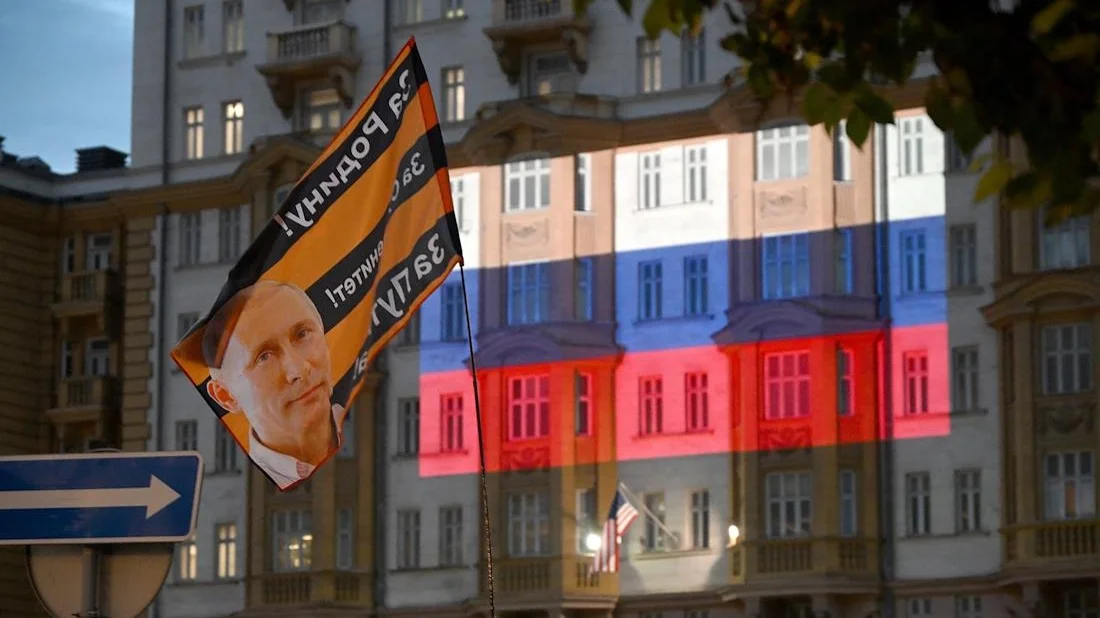
Photo: Anton Novoderezhkin / Kommersant
Russian nationalism is one of the most discussed types of worldview and political orientation in Russia over the past almost 40 years, starting with Gorbachev’s perestroika. This is not a single movement: Russian nationalism is extremely heterogeneous both in time and in the political space of these four decades. Therefore, there is no agreement on which figures and associations should be classified as Russian nationalism and which should not. There are also big disagreements about how significant Russian nationalism was for Russian politics and society in one period or another.
In many ways, the problem is that both in science and in everyday language there is no generally accepted definition of nationalism. And there are always disagreements regarding the attribution of certain views to Russian nationalism. But still, we can, based on ideas about figures and organizations that are considered representatives of this movement almost by consensus, form an idea of Russian nationalism. And then - to understand how it changed, what its borders were at different times, and what place Russian nationalism occupied and occupies in our society.
This is the first of the publications prepared by the media project “ Country and the World - Sakharov Review ” (telegram project - “ Country and the World ”) on the development of post-Soviet Russian nationalism.
There are many movements, ideological and political, that their participants and/or observers consider nationalist. These movements, unlike others, pay more attention to “nationalist” themes. This is exactly how, it seems to me, it is most effective to distinguish between different ideological types of political associations: to look at which elements of the political agenda have comparatively greater significance for them.
If an association or author is most concerned with the theme of the ethnocultural identity of society and the state, its borders and sovereignty, language policy, the historical pride of the nation, and the protection of its traditions, then the subject of interest allows such an association or author to be classified as nationalist. This does not mean that they do not have other interests, or that other associations and authors are completely indifferent to elements of the nationalist agenda.
Nationalists may have different views on different elements of this agenda. For example, they have no general idea of who Russians are.
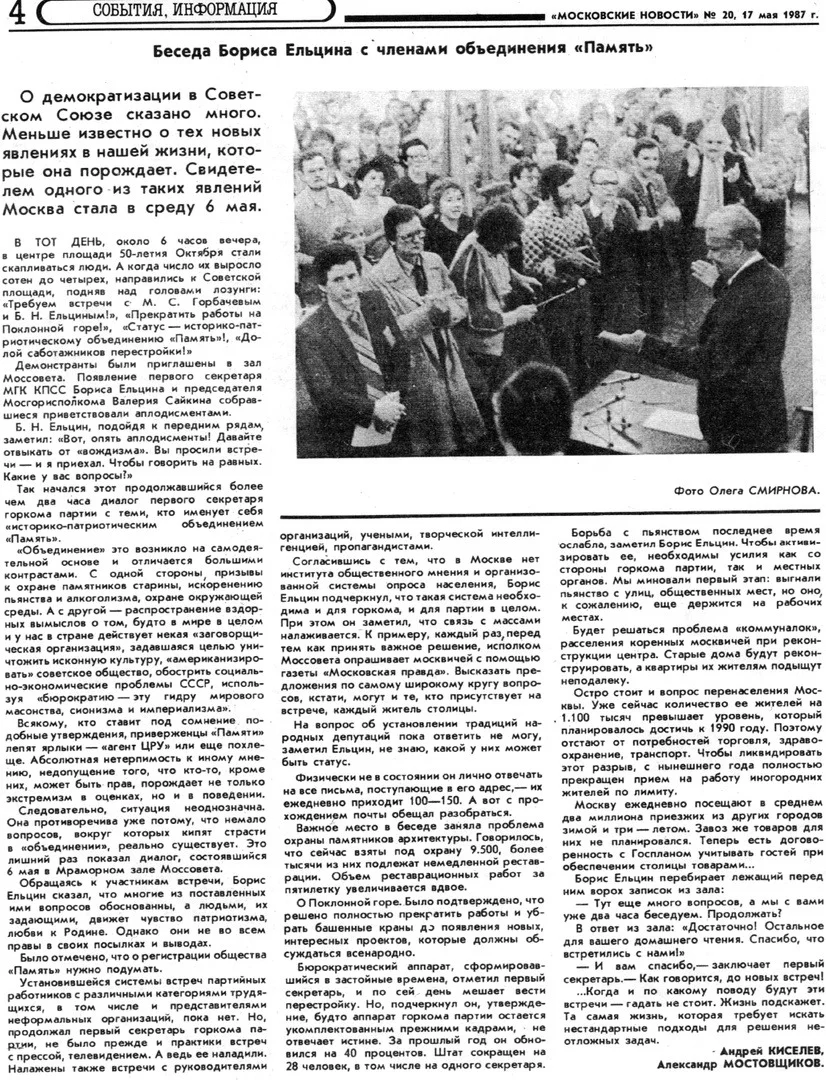
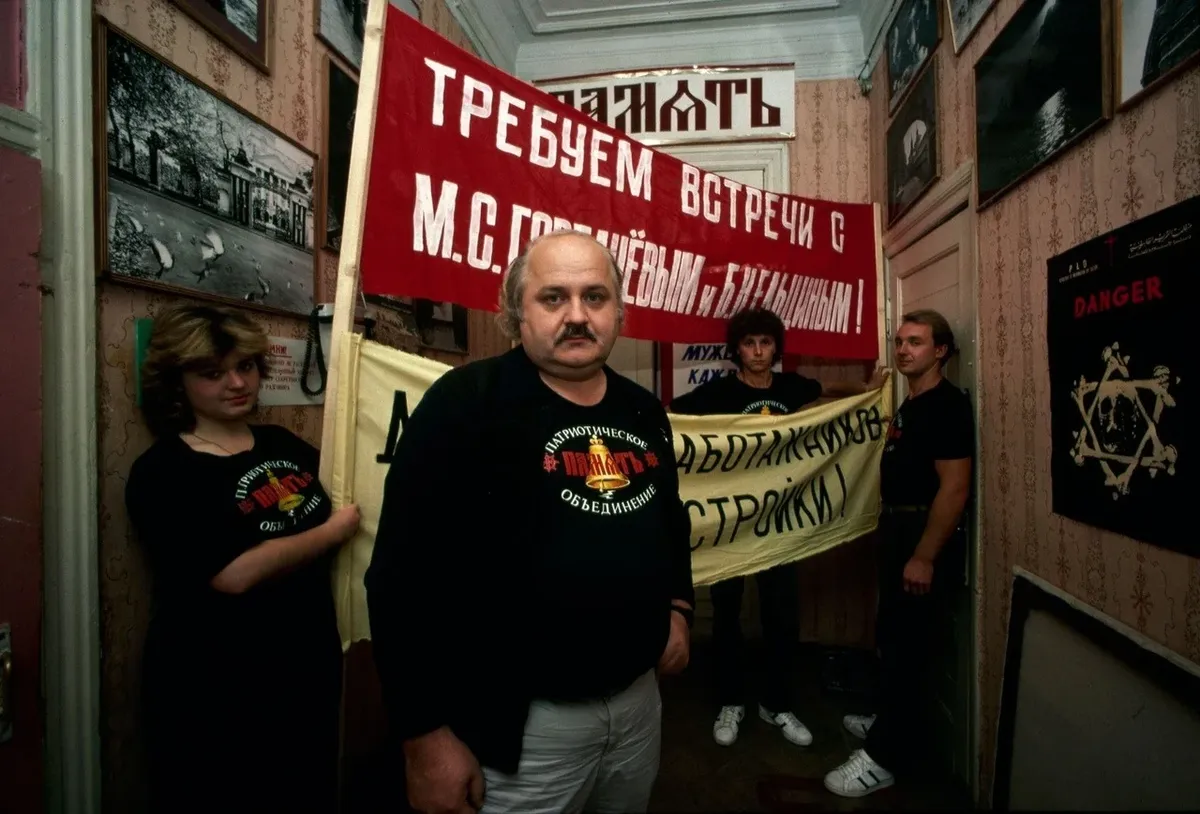
Late-Soviet Russian nationalism, which existed both in the establishment and as grassroots, even dissident activism, entered the political scene in 1987, when Dmitry Vasiliev’s “Memory” was able to organize a procession in Moscow from Manezhnaya to the Mossovet building and achieve a meeting with the head of the city committee of the CPSU Boris Yeltsin .
Almost immediately after this, a split occurred in “Memory” into the “Reds,” who tried to combine ideological loyalty to both the Soviet and pre-Soviet heritage, and the “Whites,” who clearly preferred the latter to the former. For the period of perestroika this was a fundamental difference. Then it was reproduced many times in other organizations. Opposition to Gorbachev’s and then Yeltsin’s course was built primarily from pro-Soviet positions. For many years, the nationalists who participated in this opposition had to decide for themselves the question of choosing between the “red” and “white” orientations or their reconciliation, and they resolved this issue in different ways.
Organizationally, the history of Russian nationalism for five to six years after the campaign to the Mossovet mainly revolved around three subjects. The first is the endless splits of organizations dating back to Vasiliev’s “Memory”, with a simultaneous increase in their total mass. The second is attempts at self-organization by Soviet-era nationalists close to the establishment. At first, these were mainly cultural figures, grouped according to the Soviet tradition around literary magazines (some country writers, Alexander Prokhanov, Valery Ganichev, etc.), and then they were joined by high-ranking Soviet apparatchiks of various profiles (Gennady Zyuganov, Pyotr Romanov, etc. .d.). The third is the construction and destruction of opposition coalitions of “red” and “white”, which would be too long to list. The apotheosis of this process was the creation of the National Salvation Front in 1992.
Ideologically, two main trends dominated. “White” was addressed to “Russia, which we lost” - to the Romanov Empire. “Red” refers to the USSR during its imperial rise, that is, to Stalin’s time.
The second trend clearly surpassed the first both in opposition coalitions and (at least since the end of 1991) in mass sentiment (judging by the VTsIOM polls of that time).
In the situation of the potential and then real collapse of the USSR, nationalism was mainly nostalgic in nature. In addition to these two options for the “golden age” to which it was necessary to return, there were others that were inferior to them in popularity. For some nationalists, even Russia in the pre-revolutionary decades and centuries was too pro-Western. Therefore, they wanted to return to “Holy Rus'”, to the idealized image of the Muscovite kingdom. An even more radical option considered the baptism of Rus' to be a departure from the roots. So the “golden age” should have been sought in mythological Slavic pagan antiquity.
Since Soviet times, there have also been nationalists who found a “golden age” not in the Russian past, but nearby - in the ideas of European fascism and national socialism. There were few successors of Mussolini or Hitler among them. More often it was a matter of confirming radical nationalist views on the development of Russia by appealing to these authorities (sometimes simply with the help of stylistic gestures). At the same time, the idea of a “third way” (neither socialist nor capitalist), important for the fascist tradition, enjoyed quite wide popularity at the turn of the 1980s and 1990s, not only among those who considered themselves fascists, since it was then that the country was moving from the socialist vector development to capitalist. In this sense, “Russian fascism” was a product of nostalgia and the choice of utopianism as an alternative to reality.
But a consistent choice of ideological orientation was not the lot of many. Since “Memory,” eclecticism has dominated the views of nationalists. Thus, the views of the longest-living party of moderate nationalists, the Russian All-People's Union (ROS)* of Sergei Baburin, were clearly eclectic. The most famous nationalist organization of the 1990s—Russian National Unity (RNE)* by Alexander Barkashov—was only fascist in appearance. Its ideological ideas were very poor and very heterogeneous. And from the very beginning of the 1990s, the star of the main political eclecticist of post-Soviet Russia, Vladimir Zhirinovsky, rose.
The political organizations of the nationalists of perestroika and the 1990s looked back one way or another - to the past of Russia, Germany, etc.
The only exception was the National Bolshevik Party (NBP)* of Eduard Limonov and Alexander Dugin, which bizarrely and variably combined a variety of “anti-system” views, without relying on any “golden age” in the past.
But the National Bolsheviks remained an exception that did not give rise to any trend of their own.
Russian nationalist organizations were on the rise around 1995. The nationalist blocs themselves, starting with the LDPR, were then able to collect about 17% of the votes in the parliamentary elections, and with the partially nationalist Communist Party of the Russian Federation and the KRO - about 43.5% (which was noticeably better than the total 35% in 1993). In the second half of the 1990s, their activity and electoral results gradually declined. In the Duma elections in 1999, nationalists received 8%, and together with partially nationalist parties - 32%.
Apparently, by the end of the 1990s, nostalgia for the collapsed USSR, as the main engine of Russian nationalism at that time, ceased to work as a factor in political mobilization. Although, of course, this nostalgia never fizzled out, and later it was successfully used by a variety of political forces. It was also important that ethnic xenophobia, which, according to VTsIOM estimates, gradually grew from the late 1980s to the mid-1990s, then began to decline, and only at the end of that decade began to increase again.
What about the authorities, the ruling part of the political class? Throughout the post-Soviet years of the last century, they were surprisingly little concerned with any issues on the nationalist agenda.
Some ruling groups could tolerate and even fuel xenophobic prejudices, as was the case with the Chechens even before the first Chechen war. They could intervene in conflicts in the former Soviet republics. But the Russian authorities did not pursue any nationalist goals. Probably, to a certain extent, the goal of keeping the country from collapse can be considered nationalistic, which, apparently, was the main motive for the start of the first Chechen war. Only towards the end of the decade, through the efforts of Yevgeny Primakov, another nationalist theme became real - the defense of sovereignty and sphere of influence in the confrontation with the West.
Meanwhile, in the second half of the 1990s, a new and young generation of Russian nationalists—Nazi skinheads—multiplied terribly in the country. They were extremely anarchic, took almost no part in politics, and were generally very skeptical of the “old nationalists.” They gave rise to a huge wave of street violence, making it a real strategy to revolutionize the masses in the fight against ethnic and political enemies. They differed sharply from their predecessors in that they were Russian nationalists only secondarily (and some were not Russian nationalists at all). First and foremost, skinheads were white racists. This determined their attitude to almost all issues of the nationalist agenda. For example, they were little concerned about the borders of the empires that the Russian Federation inherited. They would prefer boundaries that make it easier to achieve racial purity.
It is believed that in the early 2000s the number of this movement reached approximately 50 thousand people, although, of course, the active core was much smaller. In the absence of open and widespread public debate between the "old" and "new" nationalists, it is impossible to say how mass support might be distributed between them. Obviously, the majority of citizens who were significantly concerned with elements of the nationalist agenda simply did not understand or think about the ideological differences of the nationalists.
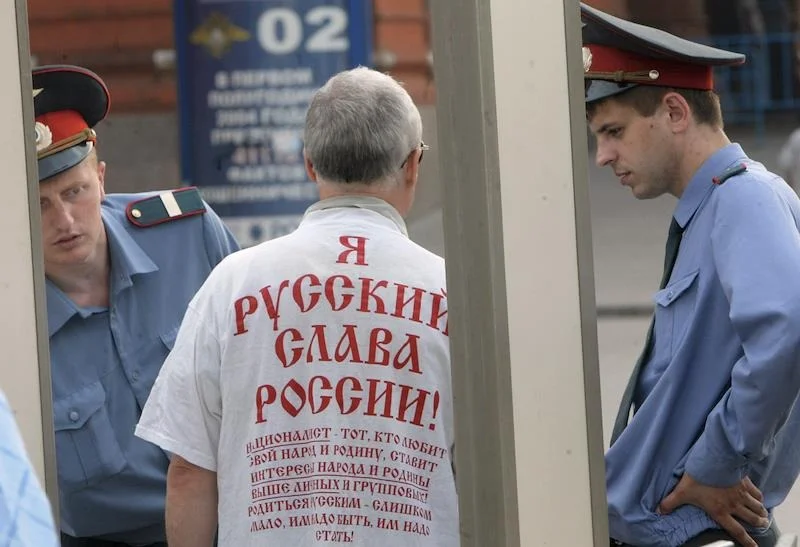
It was on the skinhead activist base, which had matured a little, that the main nationalist movement of the 2000s arose - the Movement Against Illegal Immigration (DPNI) * Alexander Belov. DPNI was clearly racist, but at the same time it sought to be populist, following as best it could some Western European models (at that time the most famous in Russia were the French National Front and the Austrian Freedom Party). This forced him to at least partially abandon the dogma of white racism, while maintaining a commitment to everyday racism, which is very widespread in post-Soviet societies.
But most importantly, DPNI was no longer looking for a “golden age” in the country’s past. It proposed its project for the future - “Russia for Russians,” that is, a society ethnically homogenized to a certain level, in which ethnic Russians would be in a privileged position. Unlike the organizations of the 1990s, DPNI was very little concerned about other characteristics of the social structure of the DPNI.
The new wave of Russian nationalists sought emotional support not in weakened imperial ressentiment (although it has not disappeared to this day), but rather in xenophobia and migrant phobia.
They had reason to expect success: just from the beginning of the 2000s, the level of xenophobia in society increased noticeably and then almost never decreased. More than half of the citizens gave positive answers to a number of control questions (about the desirability of discrimination against migrants, etc.), and even more in the capital. Xenophobia and concern about the “migrant threat” have remained the main theme of Russian nationalism from that moment to this day.
DPNI was not alone. Over the course of the decade, more obvious neo-Nazi organizations alternated between collaborating and competing with him: the Slavic Union*, the National Socialist Society*, “Russian Image”, and many remaining autonomous neo-Nazi groups focused primarily on violence.
“Systemic” nationalists also continued to operate: the Rodina party of Dmitry Rogozin and the LDPR and the Communist Party of the Russian Federation, who occasionally turned to nationalist themes, as well as various groups of nationalist intellectuals, from the old circle of the newspaper Zavtra to Konstantin Krylov and Yegor Kholmogorov. These groups and movements grew and became more visible - if not in elections, which were already strictly “regulated,” but at the level of “street politics.” In it, by the end of the 2000s, nationalists bypassed not only the liberal opposition, but also the Communist Party of the Russian Federation.
The authorities sought to limit and at least partially suppress opposition nationalist activity using various methods. They took this seriously after the riots in Kondopoga in the fall of 2006, focusing on groups practicing racist violence and terror. And in a few years they were quite successful in this. Since the beginning of the 2010s, the government has moved from crushing militant groups to banning political ones, seeking to marginalize ethno-nationalism in Russian political life.
At the same time, on the foreign policy agenda, the authorities increasingly developed the course chosen in 1999 towards confrontation with the West. In domestic politics, permission was given in 2003 to create the Rodina bloc in order to weaken the Communist Party of the Russian Federation, and in the late 2000s attempts were made to manipulate nationalist groups. In those years, this was called “managed nationalism”: the authorities supported some far-right organizations as opposed to others (primarily “Russian Image” against the DPNI), ordered pro-Kremlin “youth groups” to use elements of far-right rhetoric in a moderate form.
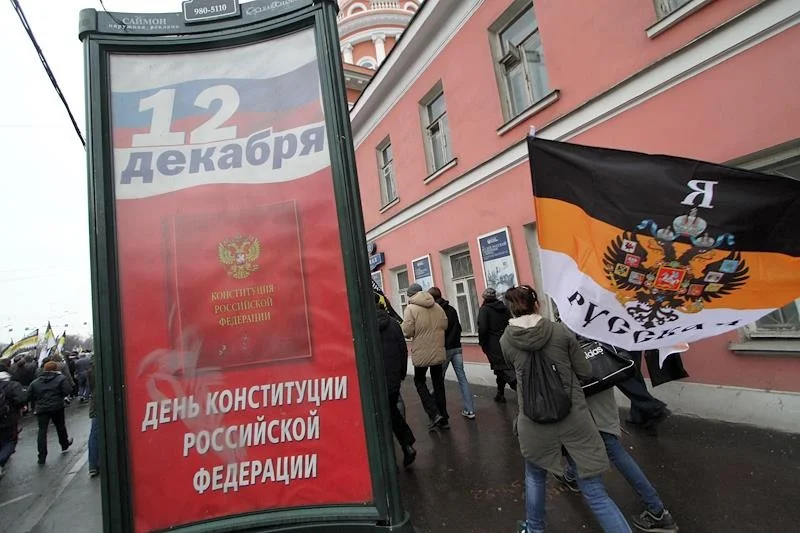
But this was just a tactical game. Authoritarian tendencies have been growing in domestic politics since the very beginning of the 2000s, but the authorities rarely seriously addressed the nationalist agenda. This changed after the far-right riots on Manezhnaya Square in Moscow in December 2010. Then a unique situation arose: the police were unable to cope with several thousand fans and far-right activists, right under the Kremlin walls.
The authorities responded to the unrest with speeches and official documents, which in 2011–2013 formed the “official version” of Russian nationalism (later, in 2020 and 2022, changes were outlined in it).
Official nationalism emphasizes the political unity of the Russian nation, contrasting it with ethnic nationalisms, including Russian. This ideological program asserts the priority of political loyalty over ethnic and religious ones.
The basis of common identity in this ideology is the restoration of the greatness of the empire (the word “empire” itself is not used), which defends itself from a significant and powerful Other - the West. Ethnocultural diversity is cultivated in the empire, but the idea of its ethnocultural core—Russian and Orthodox—is affirmed. Therefore, the topic of preserving the sphere of influence inherited from the USSR is understood not only in a geopolitical sense, but also in the sense of ethnocultural proximity.
The Empire does not define itself through a global ideological project, as the USSR used to do. But she still has such a project: she positions herself as a global leader in the defense of “traditional values.” Mikhail Suslov, author of a recent book on Putin's ideology, does not consider this nationalism. But this project is focused on elements of the nationalist agenda, and this focus has only intensified recently. So, I believe, it is more correct to consider the modern Russian official ideology as a kind of version of nationalism, which the authorities put forward in many ways as an alternative to the ideas of Russian ethnonationalists.
The Russian nationalist movement, as it was at the beginning of the 2010s, still had a strong component of white racism, which was not very popular in Russia, and a completely unpopular attachment to neo-Nazi roots. When the nationalist movement tried to participate in the 2012 protests in this form, it only led to its internal crisis. Later, at the beginning of 2014, a large-scale and still unresolved split occurred in the movement on the “Ukrainian issue.” Internal problems contributed more to the further rapid degradation of the movement than ideological competition or repression by the authorities.
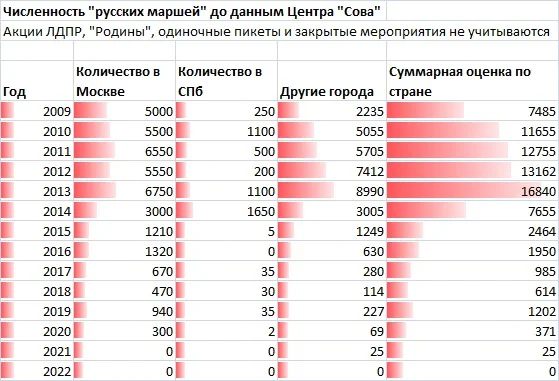
It is interesting that the split on the “Ukrainian question”, both then and now, was not predetermined by how individual groups or authors understood the Ukrainians - as part of the Russian people, part of a certain triune community, or as a separate people. Explanations for why this or that nationalist took one side or another in the conflict or avoided it are very diverse. But one cannot but notice that among Prokiev Russian nationalists were dominated by those who were closer to white racism, and among the Prodonets - those who, with all their ethno -nationalism, were closer to the topics of the greatness of the state and its confrontation with the West.
Of course, this brought the Prodonets to the official course. But one should not think that this excluded their opposition: relations with the authorities among different groups of nationalists were not easy. And the nationalists have an attitude to authoritarian rule as such, positive or negative, over the years changed and did not correct very correctly with the positions on the “Ukrainian issue”.
By 2020, the Prokievsky and, in general, the racist wing of Russian nationalism was much weaker than the Prodonetsk and sovereign. Although the latter was significantly weakened, losing state propaganda. In fact, this meant that the opposition Russian nationalism, as we knew it in the 2000s, exhausted ourselves.
By the way, the level of ethnic xenophobia in the country amid the conflict in the Donbass for several years has been steadily declining. When he returned to the previous level in the late 2010s, politically organized opposition nationalism has almost disappeared.
What could have replaced the nationalism in the style of the 2000s under pressure more and more overwhelming and increasingly ideologized state power?
Even at the turn of the 2000-2010s in the self-determination of Russian nationalism, a turn was planned to the National Democracy and, in general, to more civil, and not ethnic or imperial nationalism. This was evident not only in the then activities of Alexei Navalny and not only in the participation of nationalists in the protests of 2011-2012. But this turn did not take place, and the “nationalists” remained only in small groups.
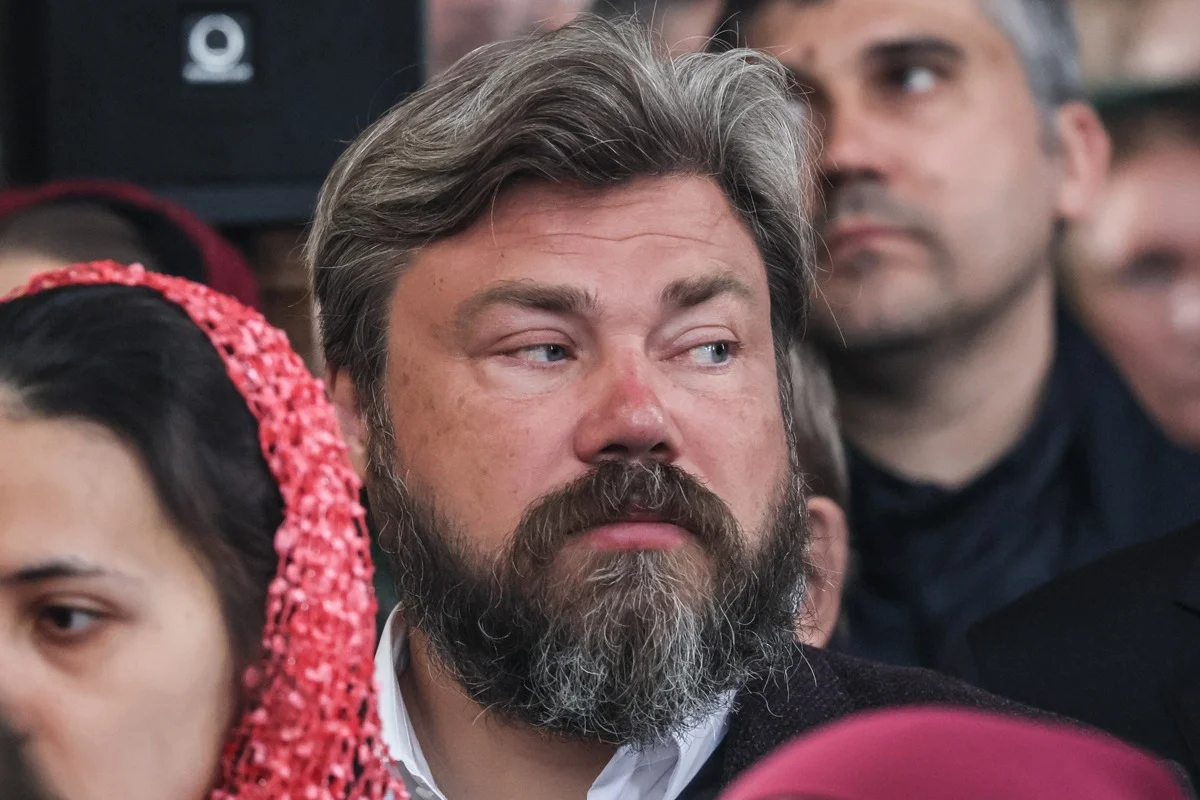
On the other hand, there was also no more oriented trend, in general, who is generally focusing on the described ideological priorities of the Kremlin, also did not work out: the authorities were clearly not interested in self-organization from below even in support of the official course. The attempts observed since 2019 to revive nationalist movements, for example, by the forces of Konstantin Malofeev, clearly had no chance of success.
Since 2022, the situation of large -scale armed conflict has created the need for ideologically motivated support from below. She did not have to be nationalist, mostly, but such was also suitable. And no less important, in parallel and regardless of the “Ukrainian question” since 2021 in propaganda, the theme of the “migrant threat” unexpectedly became aggravated again. Since then, she only spins more and more.
These two factors - the desire of the authorities to receive support from below and anti -migrant sentiments inspired by propaganda - together launched the process of changing the ideological and propaganda complex, which can be called official nationalism. But this process is still far from completion, but also, it seems, from a decisive turn.
At the same time, the same two factors and the began ideological changes at the top created a fertile ground for a new rise in nationalism from below. It unfolds in conditions of a significantly more authoritarian regime than in the 2010s and even more so in the 2000s, not to mention the 1990s. Therefore, groups that do not diverge from the authorities ideologically and do not try to enter into political competition can take advantage of the growing demand for nationalism, which can not be too diverge. Moreover, the “criticism of individual shortcomings” by such groups is quite tolerant. Therefore, recently, associations such as the network “Russian community”, which are active in three areas - confrontation with migrants, protection of “traditional values”, support for their own, have been raising.
This dynamics does not yet give sufficient reasons to imagine what Russian nationalism will be - both state and nonsense - in a few years. The main uncertainty is how soon the situation of “returning politics” will arise in Russia in any form. If this happens in at least some foreseeable future, the current Russian nationalists have somewhat more chances to mobilize support than the nationalists of the 2000s.
In comparison with the DPNI and similar forces, in the current movement from below, we see less revolutionary; less criminal violence; a more balanced theme (in particular, less white racism); More protecting customs (for example, from immigrants and from gay propaganda). Finally, the current support will eventually convert into proximity to the inevitable massive resentiment. But since the movement is developing in the shadow of “official nationalism”, much depends on how the latter would be by that time.
Author - Head of the Research Center "Owl"