
Translated material
"Lubla" instead of "love"
According to various estimates, from 3 to 10% of people in the world are dyslexics: it is difficult for them to read and write because of the characteristics of the structure of the brain and the perception of information. Nevertheless, in Russia, not everyone is aware of this phenomenon. Because of this, children and adults with dyslexia often come across ridicule. “Cold” talked with people who have diagnosed dyslexia, as well as with specialists on its correction and found out how to determine what a child or adult dyslexia has and what can be done with this.
What is dyslexia and how people in Russia live with it
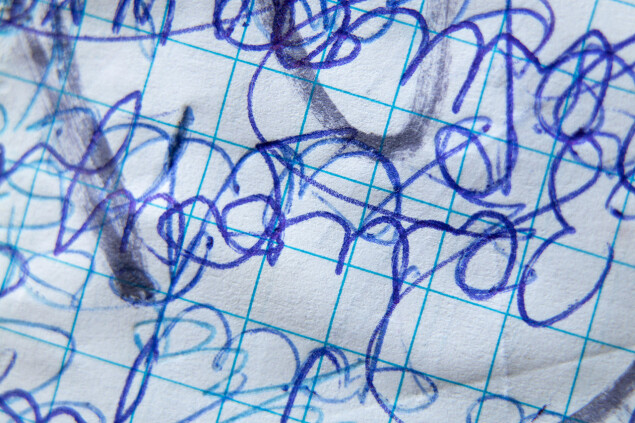
Alice from Moscow is 32 years old. At school, it was difficult for her to put syllables in words. She read the worst of all, because of which classmates laughed at her. The teacher told Alice that all her problems at school because of laziness. The girl was hired by tutors, but they also did not guess why she confuses “B” and “D” for the hundredth time and could not learn some topic. Alice recalls: “Adults did not try to help. They just shouted: “It's time to understand and remember!” ”
Sophia from St. Petersburg faced the same problem - now she was 30. In childhood, it was difficult for her to learn to read and write: “I was taught by my mother, dad, grandparents, but nothing happened. Once they gave me a book and said: “Come on! You know everything, remember - read.” And everything was blurred before my eyes. ”
Sophia says that before graduation, she lived with the feeling that she was not trying enough: “Once I gave my parents to check the homework in the Russian language. My mistakes made them laugh. Soon they began to guess in advance that for the dictation I would receive a deuce or at best a three, but did not understand that low points were not because of the unwillingness to study or the lack of perseverance. ” Sophia is sure that neither mom nor dad just knew that the cause of the mistakes was her peculiarity - dyslexia.
"Pelka" instead of "protein"
Dyslexia is a specific inability to learning, having neurobiological origin. Dyslexics otherwise work areas of the brain that are involved in the processing of sound and are responsible for recognizing visual images . And when reading, some areas of the brain are not activated - in particular, certain areas of the temporal lobe, which are responsible for the acoustic and visual perception.
Heredity , complications during pregnancy , severe, premature or rapid birth can affect the development of dyslexia. Some scientists suggest that dyslexia is more common in boys, but modern studies have not yet confirmed this. In 15–45% of cases, dyslexia is diagnosed in children with ADHD.
People with dyslexia often have difficulties in learning that are not related to their intellect or zeal. They read the words in the letter, and not by syllables, incorrectly connect the syllables, try to guess the words and hardly understand the meaning of what they read. Their reading speed is much lower than that of peers.
It is also difficult to write to many dyslexics. They can confuse the letters: “e” and “ё”, “e” and “and”, “s” and “w”, often - paired consonants like “b” and “n”. Because of this, they, for example, can write “diaper” instead of “protein”, “lubla” instead of “love”, “Pavda” or “right”-instead of “truth”. Often they write words with prepositions together, because with dyslexia everything is heard by one. They also miss letters, rearrange them in places or do not add words.
I have an RPP for 19 years, and I do not believe that it will once pass my weight ranged from 38 to 74 kilograms. Now I can understand how I look, only by photographs and video society 16 minutes of reading
This is how Sofya describes the process of writing: “I do not have a feeling of automatism that ordinary people have when writing. I can’t remember how the word is written, although I saw it thousands of times. To write for me is to think about every letter. ”
At school, children with dyslexia are often not understood and they feel lagging behind. Teachers think that such students do not read and write well, because they are lazy or try little. They advise them to engage in more, which is why many schoolchildren have anxiety or depression.
"Are you probably dyslexic?"
Alice realized that her difficulties were not related to laziness, only at the university. She tried to read something aloud, after which the teacher suggested that she had dyslexia. But Alice did not dare to go to the specialist for confirmation - and there was no particular need: “I learned to compensate, agree with myself about reading - that now it will be very difficult and have to concentrate extremely. Although this feature still sometimes spoils my life when you need to quickly read and react something. ”
Sophia also learned about her dyslexia at the university. In the third year, she passed the term paper over and over again, but the teacher rejected it without explanation. It soon became clear that due to many grammatical errors in the text it seemed to him that the student did not respect him. When, at a personal meeting, he realized that Sofya was well versed in the subject, he asked her: “Are you probably dyslexic?”
Sophia had previously guessed that she had some features associated with reading and writing, but before this case, everyone was more condescending to errors. This time she decided to confirm her fears with a speech therapist-defectologist-a specialist who is engaged in diagnostics and correction of speech disorders. He confirmed dyslexia. The doctor did not give out any official paper, but after a visit to the doctor Sophia, it became easier to explain to others why she writes with errors.
Global warming threatened the life of the arches of prey is getting less and less, and it is difficult for them to survive. How they help them in Norway - in the photo station "cold" society 9 minutes of reading
In fact, signs of dyslexia can be seen in early childhood (four to five years), says Nadezhda Popova, a methodologist of the DDAI dyslexia correction center ( DDAI ). Children with a predisposition to dyslexia are often different from their peers, brothers and sisters: they can be clumsy or jump through the stages of development (for example, they learn to walk and only then crawl), they do not like games with the ball, because due to a violation of visual perception, it can be difficult for them to coordinate their movements and catch it. It may also be difficult for them to tie laces and keep balance, ride a bicycle or scooter.
How dyslexia in children is diagnosed in Russia
In case of suspicion of dyslexia, the first step is to send a speech therapist or the passage of online diagnostics , and then-a consultation with a neurologist and a neuropsychologist. You can also contact the specialists of the Association of parents of children with dyslexia .
Children with learning problems can take a psychological and medical and pedagogical commission ( PMPK )-experts will evaluate their reading and understanding the text and clarify the diagnosis. You can go through PMPK in any region for free. If difficulties with reading are preserved for two years, then the child can diagnose dyslexia at the commission, but more often the wording of “reading and writing disorders” is used. They may also diagnose ZPR and/or ZRR (delayed mental or speech development). For children with such diagnoses in Russia, on the basis of the conclusion of the commission, the free assistance of a speech therapist and psychologist is supposed to, as well as training in an adapted program (AOOP) - in a regular or special school.
If the child is assigned to the status of disabilities (limited health opportunities), he can get extra time to complete tasks and other reliefs - for example, the ability to take a GVE instead of the OGE or the exam.
According to the speech therapist and the author of courses on the correction of dyslexia and dysgraphia Margarita Masyutina , the difference in the wording of diagnoses is due to the fact that Russian legislation is partly contrary to the terminology adopted in domestic science - there are no terms such as “difficulties in learning” or “dyslexia”. Accordingly, it can be difficult to get a diagnosis of dyslexia.
Alice and Sophia did not receive an official diagnosis: in childhood, no one dealt with their problems, and adults can get a certificate of dyslexia only from a psychiatrist. Yes, and it is rarely needed - for example, in order to claim a number of messages in an exam in a foreign language . According to experts, most often adults with dyslexia without certificates end the university and find ways to cope with their peculiarity.
Learn to cope with everyday tasks
There are different methods for correction of dyslexia. In Russia, speech therapy and neuropsychological approaches adapted to the characteristics of the Russian language are more often used. During classes with a speech therapist, children do special exercises, including in a playful way that help expand the vocabulary and train visual memory, learn to put letters in syllables, and syllables in words and understand the meaning of what they read. There are platforms where you can perform such tasks yourself.
It is better to start classes as early as possible, optimally up to 10 years. So it will be easier for the child to cope with school and will be higher than the chance to avoid psychological problems. However, you can work with dyslexia at any age - there are specialized centers that are ready to help both children and adults.
I was impoverished after the start of the war, I bought brand bags and flew abroad for the weekend. Now I have enough only for the most necessary society 13 minutes of reading
Over the past decades, the approach to dyslexia has changed in Russia. Now it is considered a feature of perception, not a deviation. And since this is not a disease, it will not work to “cure” it. But you can learn to live with her and cope with everyday tasks related to reading texts, understanding read and writing.
So, Alice graduated from the university and became a gentgenologist. She says that with proper perseverance, the desire to concentrate and figure it out, she turns out to read and write. But this requires great effort. Also now she teaches Greek. According to her, her notes are considered the best in the group. But for this, she has to listen to every lesson and thoroughly work out all new words.
Sophia learned to be a geologist, but is engaged in video editing. She said that the university chose on the principle of “no humanitarian directions” - immediately outlined specialties where it was necessary to take Russian and literature or write an essay on the entrance exams.
Life with dyslexia
There are ways to simplify the lives of people with dyslexia. For example, its correct organization can facilitate the perception and understanding of the text: certain fonts of the optimal size, large interval distances, alignment on the left edge, short and simple sentences, as well as visual additions in the form of schemes and tables.
There are also services for checking the text for literacy: Google documents, Microsoft, Languagetool and Grammarly editor for English. And also the neural networks that help write the text and select the main thing in it: Chatgpt, Gigachat, Yandexgpt, Copilot and Gemini. There are also speech synthesizers (Google, Acapela, Espeak, Voice Dream Reader, Speechify and others) that translate the text to audio. Now you can google, as words are written, and record howls instead of text messages.
There are specialized gadgets and programs specifically for dyslexics. For example, a comprehensive service for reading Learning Tools from Microsoft - this software shows a coarsely typed text, emphasizes words during reading, voices the text. It is available in several languages, including in Russian.
In Russia, a drug market took place in the place of Hydra five major players came, one of them dear to the world leader. Forbidden substances became larger than a society of 18 minutes of reading
The Dyslexia Community community also offers to use the LED reading lamp that pulses with the customizable frequency, as well as a device that scans and reproduces the printed text in audio format, or a scanner handle-when entering the text, it can translate it on a small built-in screen and transform it into audio format. True, judging by the reviews, such gadgets are not suitable for everyone.
Alice says that she often listens to audiobooks, and a smart keyboard (Gboard or SwiftKey) helps her for printing text. For records, the girl uses pens with erasing ink, and pictures and associative memory help her to learn languages.
Sophia also experiences much fewer problems than before - including thanks to ChatGPT and programs that correct typos. This helped her overcome the fear that people will read her messages with mistakes and think that she is stupid - "and this is not the impression that I want to make on them." In general, dyslexia has become part of self -identification for Sophia. She managed to accept her peculiarity and understand that this is not a flaw, but part of her personality is probably associated with the characteristics of thinking.
In order not to miss the main materials of the "cold", subscribe to our social networks!


Author: Olesya Vlasova photo for the cover of Kotarlarchuk / Alamy / Reuters