
Translated material
Visatny
Why NATO countries do not knock down Russian drones over their territory and what is noteworthy incident in Latvia
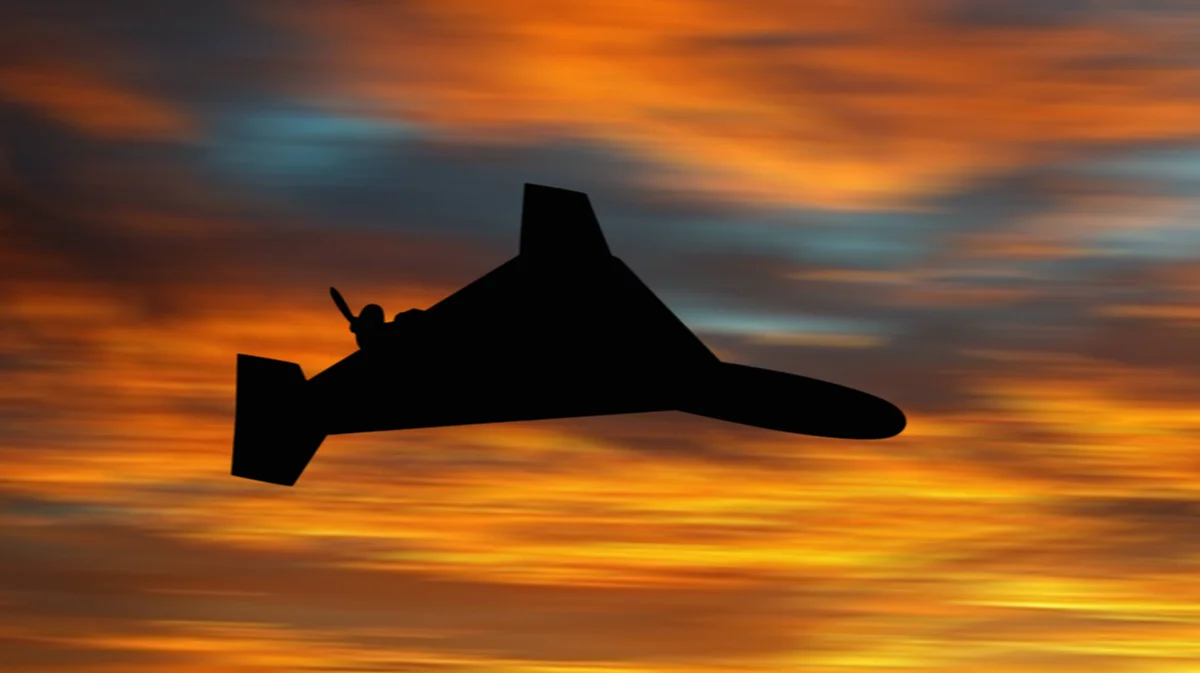
SHAHED-136 KHAHED-136 drone at sunset. Photo: Alexander Gusev / Pacific Press / Sipa / Scanpix / Leta
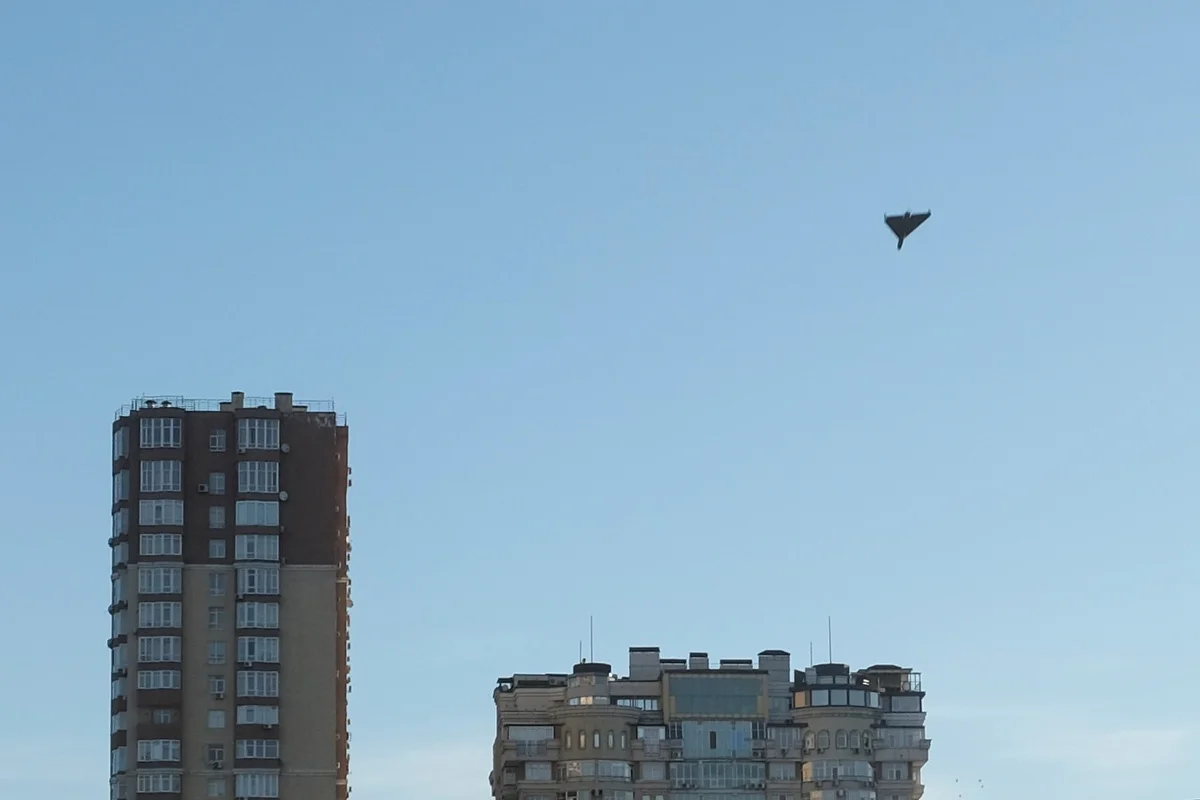
Last weekend, two countries of the Alliance - Romania and Latvia at once - recorded violation by Russian drones of their airspace. In Romania, several drones were discovered, the wreckage of one of which was found later near the city of Pariprava near the Ukrainian border. In the Latvia of the Russian BPP, Russian -made type crossed the border of the country's airspace from the territory of Belarus and, having flown 100 km, fell (or landed, which has not yet been clarified accurately) in the forest, in the territory of the Reseknensky district (Eastern Latvia, the historical region of Latgaly), 30 km from the city of Resecne.
As a matter of fact, these stories have long become familiar to a number of Ukraine-neighboring countries. Russian drones regularly fly into the territory of third powers, which forces those to bring the air defense forces to the combat readiness, in some cases to lift combat aircraft into the air, as well as to carefully monitor the movement of the UAV. However, sometimes it is not very careful how it was in Poland on August 26, when the drone was lost sight of and either fell somewhere, or returned to the territory of Ukraine. (On Thursday, September 12, the operational commander of the Armed Forces of Poland Matsu Klish suggested that the drone probably did not appear in the airspace of the country, but simply in the monitoring agent system, there was a failure due to the atmospheric phenomenon.)
However, not a single NATO country has ventured to knock someone else's drone. And for that is, objective and subjective reasons, about which are below. Publicly, each such case is accompanied by similar explanations that in a concentrated form look like this:
The drone did not pose a threat to the life and safety of our fellow citizens, as well as for objects of our infrastructure.
We have no clear evidence that our country was the purpose of the drone, and we believe that it was an accidental episode.
It is very difficult to identify the aircraft in a limited period of time, and there is a danger of attacking a civilian object.
A rigid reaction to a violation of the airspace would threaten unpredictable consequences and further escalation. (However, no one explains what these consequences would be. It is believed that everyone understands it a priori.)
Well, in the case of the incident mentioned above with the “missing” in Poland, the drone initially stated that weather conditions prevented him from knocking down. Ukrainian social networks reacted with irony and remarks that the weather, on the contrary, was very clear and cloudless that day.
As for Romania, it has an “iron” argument : the liquidation of air facilities flying over the country's territory is prohibited by Romanian law. And only after the incident on September 7, parliamentarians included on the agenda consideration of the abolition of this law.
However, if what the explanations of the country's officials and comments for the media will be argued in the statements of their own communicative abilities, then the algorithm of the military’s actions in such cases is undoubtedly agreed with the leading structures of NATO and is carried out in accordance with their recommendations. Although legally, each alliance country has the right to independently decide what to do in such situations. However, no one wants to take responsibility and, apparently, should be refrained by the unspoken installation of NATO from strict actions.
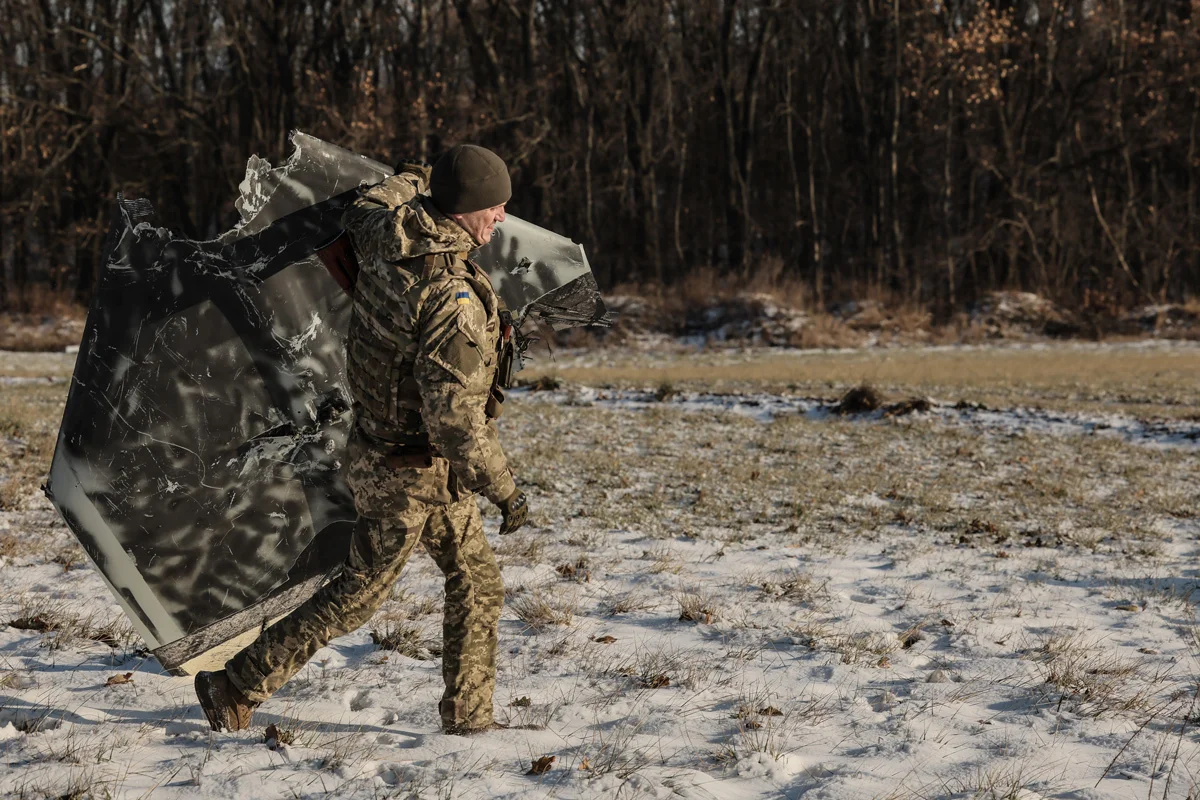
The position of NATO continues to be restrained and, perhaps, already predictable. The spokeswoman for the organization of Fara Dahllal in the usual way commented on the incidents on September 7: “Although we do not have information about the intentionally attack of Russia on the alliance, these actions are irresponsible and potentially dangerous for the allies.”
Even the case with the fall of the drone in Latvia did not change the relationship of NATO. Why "even" and what was so unusual in the Latvian incident?
Case Latvia
A distinctive feature here was that, firstly, as it turned out, the fallen drone was shocking, that is, carried a combat charge weighing tens of kilograms. It was a really deadly object that penetrated deep into the Latvian territory at a very decent distance and fell (or landing) in the forest, fortunately, without exploding.
Secondly, it was these days (September 3–8) throughout Latvia that the annual major military exercises of NAMEJS were held , in which, in addition to the Latvian armed forces and territorial defense of Zemmesarge, NATO allies took part. Undoubtedly, this fact created a specific background of the incident and suggested that the penetration of the drone was a conscious provocation.
In this regard, many questions arose in Latvia not only to the actions of the military, but also to the communication of responsible persons. After all, at first it was not reported that the drone was fighting. In addition, in their statements, both the military and government representatives in every possible way avoided mentioning large -scale military exercises in the context of the incident, so as not to create the impression of the relationship of these two events.
Unlike experts, the official Riga is nevertheless retained from the characterization of the episode as provocative.
The commander of the National Armed Forces, Lieutenant General Leonid Kalnins said that the unmanned aerial vehicle was immediately seen. “We appreciated and controlled the situation how dangerous it is, is there a threat to objects and civilian population,” Kalnin said, adding that the decision was made in accordance with the procedure provided for by the documents of the Armed Forces of Latvia and NATO Member States. It was also reported that "according to preliminary information, the object did not have" hostile goals in Latvia "and the drone" did not have a specific goal to fly to Latvia. "
“This situation is a confirmation that we must continue the work to strengthen the eastern border of Latvia, including the development of air defense and electronic warfare capabilities that allow us to limit the work of drones for various purposes,” said Minister of Defense Andris Spruds.
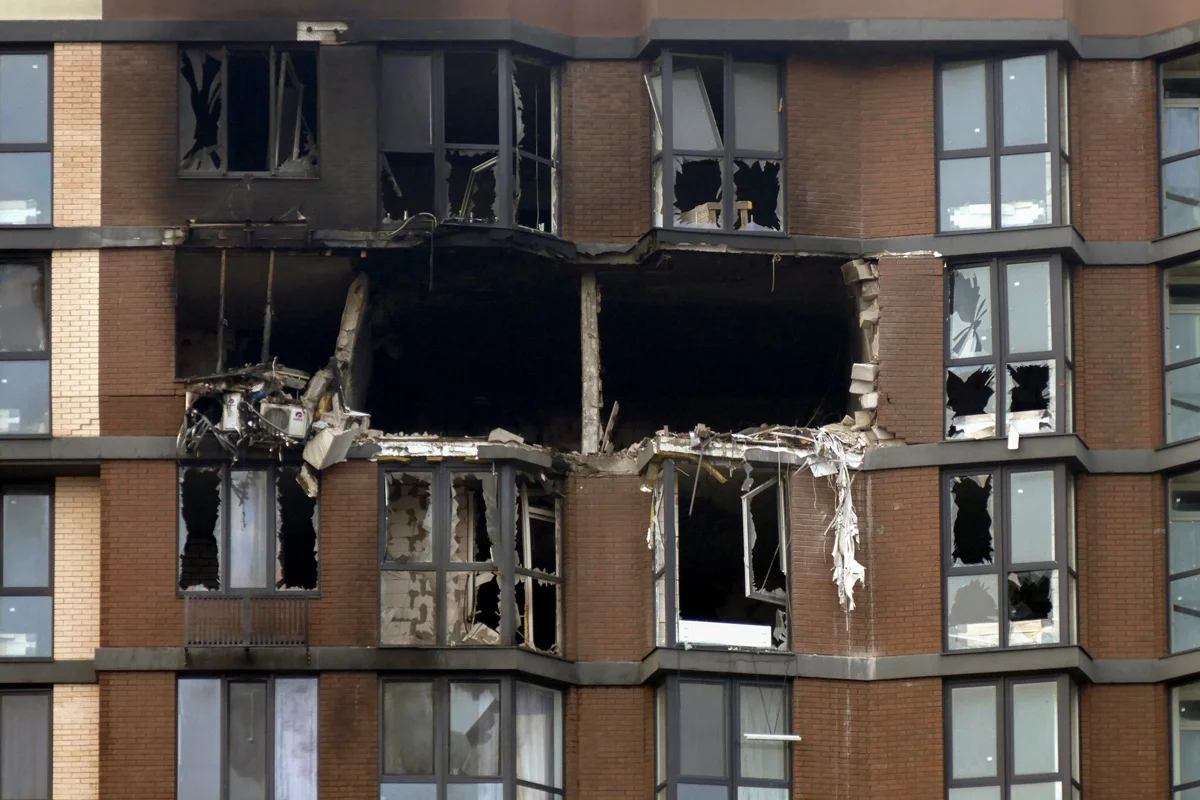
The Latvian military emphasized that from the very beginning they coordinated their actions with the NATO command, and the director of the NATO strategic communications center located in Riga, Janis Sarts even praised the national armed forces that “are able to control our airspace, knew about this jerk and now have this unmanned aircraft at the disposal of Latvia.”
And although, unlike such cases in other countries, the Latvian Foreign Ministry nevertheless stated that he calls the Russian ambassador Dmitry Kasatkin for explanations, until Monday September 9 in the Latvian information space, taking into account the tone of statements and the time of the weekend, the theme of the drone over the resect was discussed not so vividly. (However, as expected, Kasatkin rejected any involvement of Russia in the incident. The formula “We are not there”, well known to Ukrainians since 2014, since the beginning of the war in the Donbass, continues to be used by the official Kremlin in all directions.)
However, on Monday, September 9, the leadership of the National Armed Forces held a press conference, where it was first released that the drone was an impact with an explosive explosive, which was then neutralized on the ground by a unit of the armed forces. Answering the question why Shahed was not shot down, the Latvian military referred to traditional arguments that the purpose of the UAV was not Latvia, that his movement was closely monitored from the moment when the drone was in Belarus, and that this particular response method is the safest.
Andris Spruds added that by low -flying and small object -it is possible to immediately determine what kind of drone it is. Regarding the last remark, Prime Minister Evik Silin at Tuesday September 10, President Edgars Rinkevich, the National Security Council admitted that Latvia’s opportunities are limited to identify such drones.
Meanwhile, not everyone in Latvia was satisfied with such explanations. The main criticism of experts and politicians, not to mention social networks, was aimed at actions, or rather, the inaction of the military, who allowed the penetration of the drone into such an impressive territory deep into the country. No less numerous and acute are reproaches about the slurred communication of the military and governments with society. The professor of political science of the University of Latvia, Yanilctens, even wondered on the air of the LTV television company with a rhetorical question: can we compare the incident with the drone, which occurred precisely during military exercises in Latvia, with the humiliation that the Kursk operation of the Armed Forces of Ukraine became for Putin?
His colleague from the University of Riga named after the sufferer Lelda Metla-Rosentale is perplexed what the “neigetical drone” means and how to find out that the drone is “hostile” or “neugene”. Why was he even considered "neugene" this time?
Former Minister of Defense Artis Pabrix believes that Shahed should be shot down, and the communication and actions of the responsible officials were belated.
Pabrix admits that with the neutralization of the drone, there would be risks associated with the place of fall, but what would have to be done if Shaheda fell in the resect or in the camp of the soldier and exploded?
The former secretary of the Ministry of Defense Syanis Garisses also draws attention to communication failures, claiming that the public had to know the truth from the very beginning, and that much clearer answers should have been obtained, why it was decided not to bring down the drone, knowing that he was a fighting one and could fall to the settlement.
The incident and the traditional opponent of the central authorities, many years of Daugavpils Andris Elksnish, did not disregard. Despite the fact that Elksnins often finds reasons (far from always reasonable) to criticize Riga, in this case, obviously, his discontent has reason. According to the mayor, to this instant from the Ministry of Defense, he officially did not contact any body of Latgalia’s self-government, and with any local civil protection commission and did not provide information about what happened.
The reaction of Ukraine
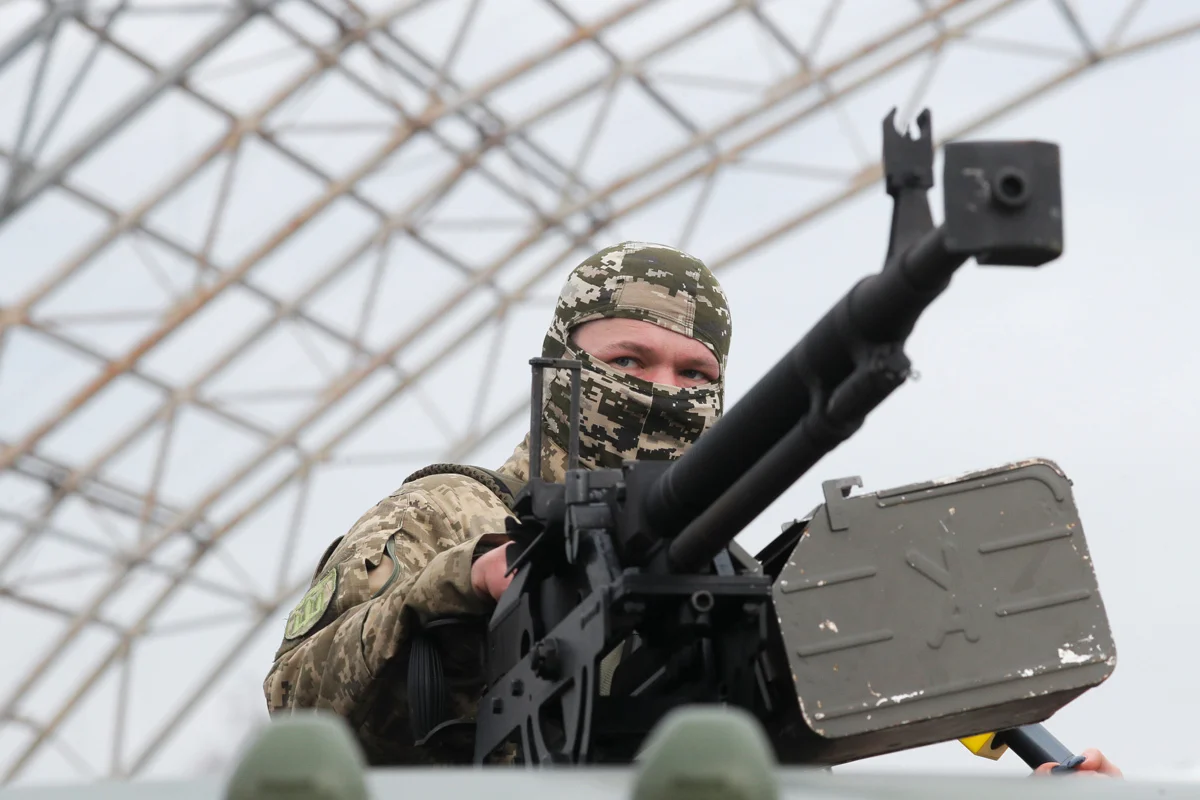
In other similar cases, this reaction is sometimes quite acute, both from the media and from the expert community and even officials. This time, the Ukrainian side was limited to the repetition of his calls for NATO to act more decisively and again defined these incidents as the provocations of the Kremlin, which he tries to destabilize the situation in the countries of the alliance and intimidate the population of these countries by the threat of a direct armed conflict with the Russian Federation. The man of the head of the Office of the President of Ukraine Mikhail Podolyak called it “tactics of Salya” - discrediting NATO, at first glance, at first glance, at first glance, at first glance, at first glance, at first glance, at first glance. incidents.
At the same time, in Ukraine, they were absolutely fair and reasonable from criticism of Latvian actions directly, because Latvia is among the most devoted and joint allies of Kyiv. Despite the modest size of the economy, Latvia allocates 1.15% of its GDP to the aid of Ukraine (occupying fifth place in the world after Estonia, Denmark, Lithuania and Norway). And this is not to mention numerous initiatives from both the Latvian government and civil society and volunteers.
Any remarks would be completely inappropriate and on the eve of the visit of Prime Minister Eviki Silini to Kyiv. (The visit took place on September 11, four days after the incident with the drone, and during it it was announced to provide Ukraine with the third military assistance package worth 40 million euros this year. It will include armored vehicles, drones, individual equipment for soldiers and equipment for military engineers.)
Moreover, it is Latvia that is one of the most active participants in the so -called international “drone coalition” aimed at the transfer of drones to Ukraine, and in 2025 it will be the international coalition summit , designed to popularize its activities, create reliable components supply chains and develop the production of drones in NATO countries.
Of course, in the context of the incident under consideration, this may look somewhat ambiguous, however, it is impossible to deny great solidarity, efforts and effective assistance from Latvia in any case. However, one cannot deny them from Poland. However, given from time to time the arising misunderstandings in Ukrainian-Polish relations, then on issues of history, then in connection with the transit of Ukrainian grain, it is not surprising that when Poland is inactive in the situation with the vast Russian drones, there are very sharp comments in its direction from Ukraine.
However, everyone perfectly understands that neither Latvia, nor Poland with Romania, as mentioned above, decide on independent measures without the permission of NATO. And NATO does not yet give such a permit.
The elimination of drones is the “red line”?
If so, it is obvious that the main reason for NATO indecision lies in the political plane. The elimination of UAVs with an identified Russian origin can indirectly lead to the need to recognize the fact of aggression. This, in turn, will make it possible to appear on the horizon for many in NATO “Ghost” of the 5th article of the charter of the Alliance, which regarding the attack on one of the Blok countries as an attack on all its members, which entails the need for armed response. Although there are many nuances. Firstly, what exactly is the fact of aggression (the charter does not give this interpretation)? Secondly, an attack country should herself turn to the allies for help. Thirdly, each country has the right to independently decide what the character of her help can be, and he may not be a military man.
However, the very possibility of developing the situation according to such a scenario is still unacceptable and draws the prospect of a collision of an alliance with nuclear Russia. Nobody wants this, and much more comfortable support for the formula "salvation of Ukrainians is the work of the hands of the Ukrainians themselves." Well, the weapons supplied to Ukraine by the West, the volumes, nomenclature and the nature of the use of which is constantly the subject of long discussions.
In this regard, the intriguing is a desperate attempt by Ukraine to convince the alliance members to close the sky even over the western part of the country, knocking down Russian drones and missiles over Ukrainian territory. This is even spelled out in the Ukrainian-Polish security agreement concluded in July this year. But the question arises, if members of the alliance, like the alliance in general, do not dare to shoot down Russian drones at their own, fearing the notorious “escalation”, will they go to such a radical step, agreeing to destroy enemy flying objects in Ukraine?
However, probably, the destruction of Russian drones in the territory of NATO countries can be “designed”, bypassing their identification as a fact of targeted aggression. You can recognize them with a threat of life and security of citizens or infrastructure and eliminate them, as in a situation of some natural disaster. But then other factors are used - economic, technological and safety factor.
Ukrainian military expert Ivan Stupak explains that the elimination of drones is feasible with the help of weapons, the cost of which is several times higher than the cost of drones. Given their regular appearance in NATO airspace, the destruction of drones can simply deplete the reserves of expensive missiles, undermining the military and economic capabilities of the block.
In addition, the fact of insufficient technological capabilities of the same Latvia or Poland cannot be discounted. It is not for nothing that their officials repeat their officials that they do not have the necessary recognition systems for flying objects or a reliable electronic warfare system. It is difficult to say whether it is an excuse that covers the political indecision of the alliance itself, or the real state of affairs. If the last, then it looks no less anxious.
And finally, we can assume such grounds for response to drones as a risk assessment for security. Indeed, the destruction of UAVs can lead to an uncontrolled fall in its fragments.
The military of the countries where the Russian drone flew, should decide in a very limited period of time that it is safer to knock the object or monitor its movement. So far, everyone is inclined to the latter.
Какой бы из этих факторов (или даже все они вместе) ни был пояснением реакции стран НАТО на российские БПЛА, стоит признать, что, независимо от того, «случайно» ли залетают дроны в воздушное пространство Альянса либо с преднамеренной провокативной целью, Россия пока остается бенефициаром данной ситуации. И дело не в том, что таким образом обнаруживаются уязвимые точки в оборонной системе стран-членов и подсвечиваются слабые места в их технических возможностях. Раз за разом, с каждым подобным инцидентом НАТО попадает в неловкое политическое положение, когда любая «комфортная» реакция дискредитирует и сам Альянс, и его участников, вызывая острые дебаты внутри стран, оказавшихся в эпицентре случившегося, порождая недоверие, страх и фрустрацию в обществе.
Что и является одной из целей гибридной войны России против Альянса, про которую уже не стесняются говорить сами же натовские чиновники.