
Translated material
Psychology of real elections
How democracy works in difficult moments of history - on the example of the debate Harris and Trump
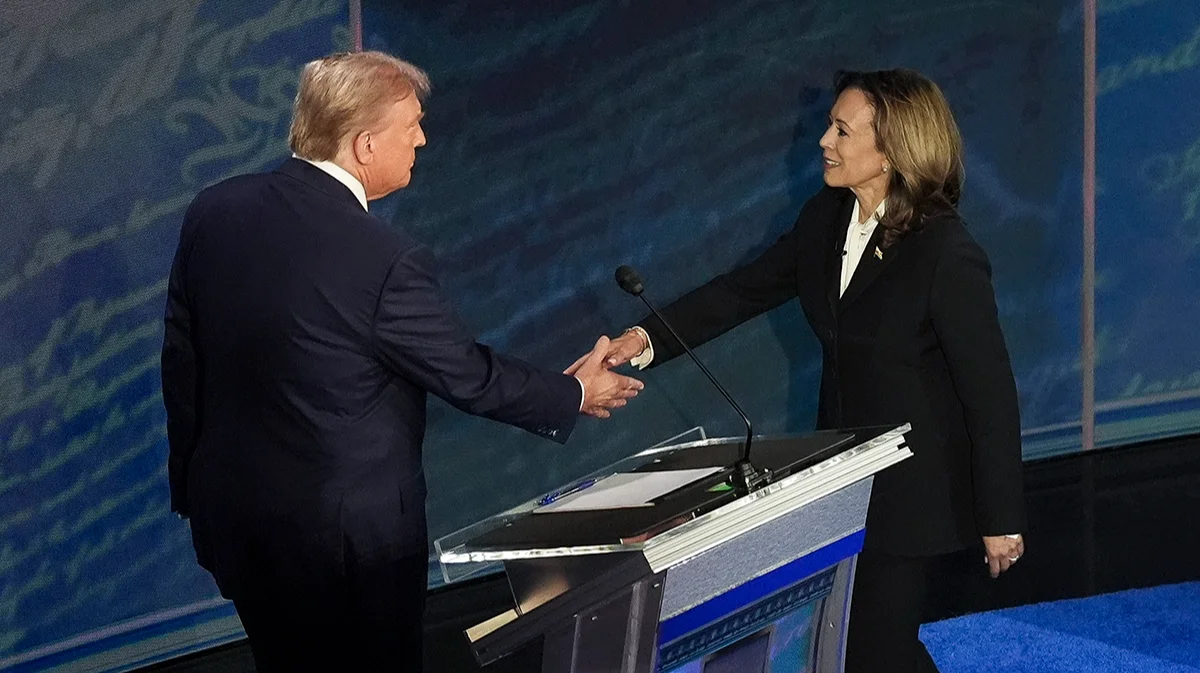
Donald Trump and Kamal Harris shake hands at the beginning of the presidential debate, Philadelphia, Pennsylvania, USA, September 10, 2024
Elections - real elections, not farce - an amazing phenomenon. In the world -oriented world - in many countries, even to repair an electric outlet or toilet, it is necessary to take exams and have a confirmed certificate - issues of war and peace, the development of the country, the future of humanity are resolved by voting. That is, they are taken out for discussion of those who, being amateurs in the economy, ecology, military affairs, have, nevertheless, regardless of education, income and other things, equal to other voting right.
The way they vote does not determine everything. They can be deceived - promise and not to do. They can take advantage of the powers provided not at all the way they would like it. But, nevertheless, it is they who determine who to be the president and to whom to sit in parliament. It was they who changed the composition of the National Assembly and forced Macron to change the government. It was they who brought Britain from the EU. They will decide, Trump or Harris.
They make decisions very differently. When we still had elections, I myself saw an elderly woman on the polling station, who, carefully considering portraits of candidates, explained that she wanted to vote for the most beautiful of them. And this happens all over the world. In the United States, a higher candidate won the election for a long time.
Once, when there were still disputes about the expansion of the voter corps, the cancellation of the qualifications and, ultimately, the transition to the universal and equal electoral law, it was assumed that people, realizing their interest, vote more or less rationally. This is not always the case.
In addition to the rational component, there is also a purely emotional one. Talks about greatness, mission, injustice lead to election urns not only of the supporters of demagogues. Kennedy’s “new borders” - an appeal to the greatness and mission of America or the call of Reagan to stop reflecting the crime of the Vietnamese war - all this made no less contribution to their victory than economic programs. And Yeltsin did not have any program during his electoral triumphs - there was only the country's fatigue from the Communists and associated with the name of Boris Nikolayevich Nadezhda millions of people that life may be different.
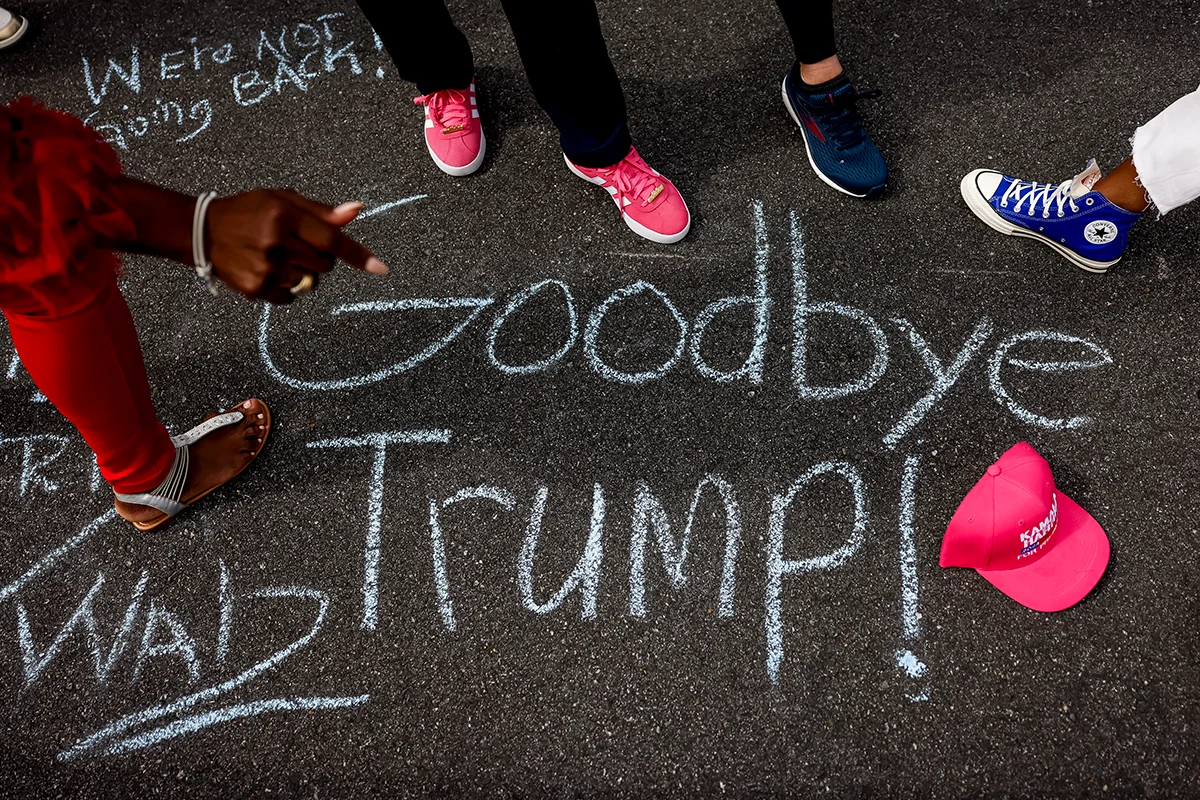
And with rationality, not everything is clear. What is more rational to vote for a program presented by a person or party or for the person himself (a group of people), if you trust them?
It depends on at least two points. Firstly, do voters have an effective control of the fulfillment of promises? Unfortunately, even for the most democratic countries, the answer is rather negative. The mechanisms of recalling deputies existing in some countries are not too effective, impeachment is generally an event for any country is absolutely extraordinary. The courts over former leaders are more common, but this is already retribution, not a correction of current policy. Actually, the only real mechanism is the following elections, when deceivers can not be elected. But this is Post Factum.
Secondly, it is important in what period the matter happens-calm or turbulence? If there is reason to believe that by the end of the cadence there are no new disturbing factors - war, a qualitative exacerbation of existing problems - then people can focus on programs. Here the person says that he will do in these four years, and I think that this is right.
But if everything around is in a fever - and now the whole planet is in a fever - then this means that the chosen authorities will have to answer not so much to today as tomorrow, unknown calls.
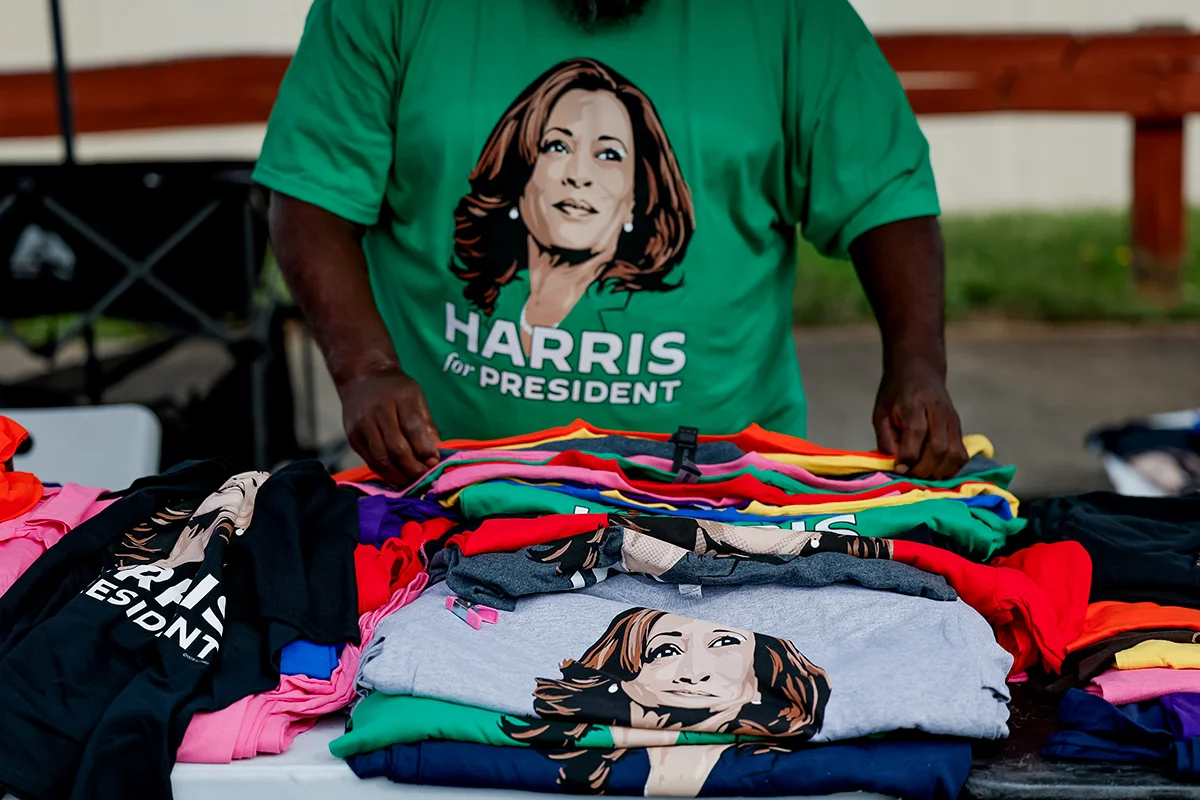
Then I must choose a person who can make decisions in a new situation, the parameters of which we cannot predict today. Therefore, in conditions of unpredictable changes, the elections become more “human” - people do not vote for programs and declarations, but for people who are believed and with whom they want to identify. And this is right: the less stable the situation is, the less depends on the rules and powers prescribed on paper. And the more from a person - his intellect, the ability to work in conditions of manifold, a tendency to risk, or, conversely, the desire to avoid danger, from his moral qualities, in the end. More precisely, not from these qualities, as such, but from our perception - from whether we see these qualities with him, but we are dealing not with a person, but with his image. And it is for the image that we vote. And the rational choice of programs is for calm times.
Participants of the most significant elections for the whole world - American - act based on the understanding that they vote not for the program, but for a person.
True, one must understand that they turn, indeed, to a fairly small percentage of the Americans - to the hesitant, that is, to the choice that has not been determined. Most of the choice made a long time, and often focusing not on the candidate, but on family traditions (“We always vote for the Republicans”), on their attitude, which they consider close to the image of the world of one of the main parties, and so on.
But the undemanded also represent a different “value” for candidates, depending on the state in which they live. Voters of the so -called oscillating states are important, that is, those in which the outcome of the vote is not clear. The American electoral system is arranged so that if Harris, for example, will convince the supporter of Trump from California, where the victory is guaranteed to be guaranteed, this will not affect the result - the votes of all electors from the state will be for it, the winner receives everything. But if in Pennsylvania, about which nothing is clear, then this can solve the outcome of the elections in the country (which is why she spoke about 800 thousand Americans of Polish origin during the debate - in Pennsylvania a huge Polish diaspora - accusing Trump that he was ready to give Poland to be torn to Dine Putin). And, of course, it is for those who have not yet made a decision that the human qualities of candidates are important. They are trying to demonstrate them.
On the debate, it is important to make you root for yourself. And Harris took a brilliant first step - she went to Trump, extended her hand, introduced herself (they had not met before) and said: “Let's spend good debate,” - initially demonstrating the contrast with Trump's spurs of all rudeness. He was clearly confused.
And throughout all the debates, the candidates spoke not so much about the programs, although they also showed themselves about them. Relative youth, cheerfulness, speed, goodwill to all - in the case of Harris. Confidence, experience, authority, past successes, wrestling qualities in the case of Trump.
Trump’s wrestling qualities, his ability to hold a blow, by the way, few people question. The famous photo of a bloodied Trump with a fist raised, repeated several times: "Fight!" “I would definitely make him president: people want a strong leader.” But Bayden’s refusal mixed the card from the nomination, and Trump seemed to be unable to rebuild. Harris even told him during the debate: “I'm not a baiden. You do not run against him, but against me! "
The former unusually influential US Vice President Cheney, after the debate, opposed the candidate from his party in support of Harris. It is difficult to say how much this will affect the outcome of the elections, but it is important that he said, justifying his decision so non -standard for a system policy. He did not talk about mistakes or the wrong steps of Trump when he was by the president. Neither incorrect intentions and software statements. He spoke about him exclusively as a person - a man who cannot be trusted with power.
Actually, the human qualities of candidates are also addressed to the Celebriti campaign. The main event that happened immediately after the debate was the long -awaited statement of the most popular Taylor Swift about the support of Kamaly Harris. The headquarters of candidates traditionally consider public support from celebrities very important, although, as far as I know, no one was still reliable to calculate the effectiveness of such shares “in the voices”. But the headquarters know better. But why, in general, does Taylor Swift or other celebrities have a matter? After all, they do not claim competence in the government. If they began to talk about the economy or demography, about how to reform the armed forces, this would be counterproductive. But they simply express confidence in the person - it is to him (her), and not the declared program. And in this, since they are emotional leaders for their fans, they are trusted. And they vote for the one whom I trust the one I trust and with whom I will identify.
But if we choose according to human qualities, then how to explain the phenomenon of Trump, which was repeatedly caught on rudeness, sexism, lies (lies from his mouth sounded during the last debate)? A person who, in law -abiding jury, was found guilty of quite serious crimes, who went through bankruptcy many times? Whose apartment in New York is finished with gold, like the dwelling of the Russian thief in law-is this with their puritanism?
And he appeals to people who are tired not only from the power of the Washington bureaucracy, but also from these tough moral norms imposed by him. To people who themselves want to be like him - not to choose expressions, to forget about political correctness, and “suckers to bred for money” are also not opposed.
These are people who would behave like him. If they could. He does it for them. Therefore, many things that, it would seem, had to bring down his rating contributed to his popularity. When, during the 2016 campaign, an audio recording of his words was published that he could grab any woman for any place (it was said tougher), the Democrats believed that this would cause him terrible damage, at least among voters-women. Well, if not vice versa! And this is not only an American phenomenon-Putin's jokes “below the belt” also once supported its popularity.
And about lies, too, everything is ambiguous. And again, not only in America, but throughout the world. Here Putin immediately after the annexation of Crimea, with a difference of about a month, said that our troops were not there, and then - that, of course, were. But those to whom he turned to, who approved the annexation, he did not deceive. He, as it were, winked at them, said that I am not for you, we understand everything, I am to them-to the enemies, the West. And they perceived it, rather, approving the dashing of which he circles around the fingers of stupid Americans. Trump does the same. These, who pester with stupid questions, are our enemies - both mine and yours. Well, I’m fighting off them, but you understand everything, we are with the same blood.
Voting in a democratic country, people choose not so much what to do in the country, how much to do?
They choose how they want to see her - with strokes, without details. When America voted for Obama, she wanted to comply with the great principles laid down by the founding fathers. And the people who chose him were proud that they themselves and their country turned out to be worthy of these principles. Now also a choice. Between traditionalism and modern, between world leadership and isolationism. People choose not the president, but the country and themselves.
But they have not chosen yet. Hilary Clinton in 2016 also won the debate. And the celebrities were for her. Only Trump became president.