
Translated material
Maria Petrovykh
Mandelstam and Lev Gumilyov were both in love with her at the same time - she rejected both. Tvardovsky asked for her poems, but she didn’t send them. I've been writing to nowhere for decades
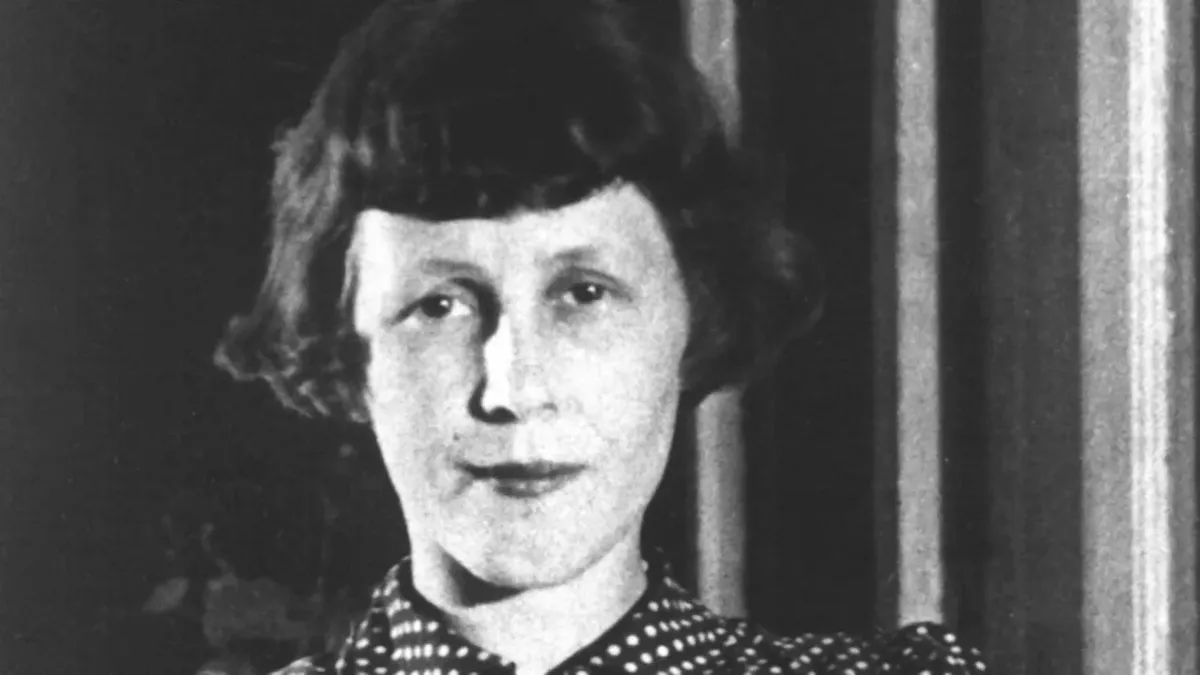
Maria Petrovykh. Photo: archive
Vladimir Admoni, when he first met Maria Petrov at Akhmatova’s, asked: “Who is this girl?” Her years were then approaching fifty, but in the eyes of the future learned doctor, honoris causa, she was “a young, very young girl.” This is what she looked like.
Short, thin, with lush hair, which in some memories is called blond, and in others - dark, she listened more than she spoke. And she looked carefully at the speaker. Some saw her beauty, but to others she seemed like a “nondescript woman” in a reddish felt hat. The hat was fashionable in the twenties, and she wore it in the forties. In those days, many had no time for fashion, but “the inability to dress always accompanied it.”
She lived in a two-story house at the intersection of Begovaya and Khoroshevskoye highways. The house was drowned in the greenery of poplars. Houses at the address: Moscow A-284, Khoroshevskoe highway, 8, building 2, apt. 11 - long gone, but reading memoirs about her, you can even find out her phone number: D.Z. 00. 80, extension 5-29. The apartment was on the second floor; access was via a wooden staircase that creaked underfoot. Akhmatova climbed heavily along these stairs to her door. Here she had one of the many “alternate airfields” - in case the Ardovs’ room was occupied. And behind the door there were two sofas, one opposite the other, a round table, at which she always fed everyone who came to her and gave her tea; Her favorite dish was buckwheat porridge with hard-boiled eggs. There were no decorations or trinkets in the Petrovs’ room, there was strict cleanliness and even an empty workplace.
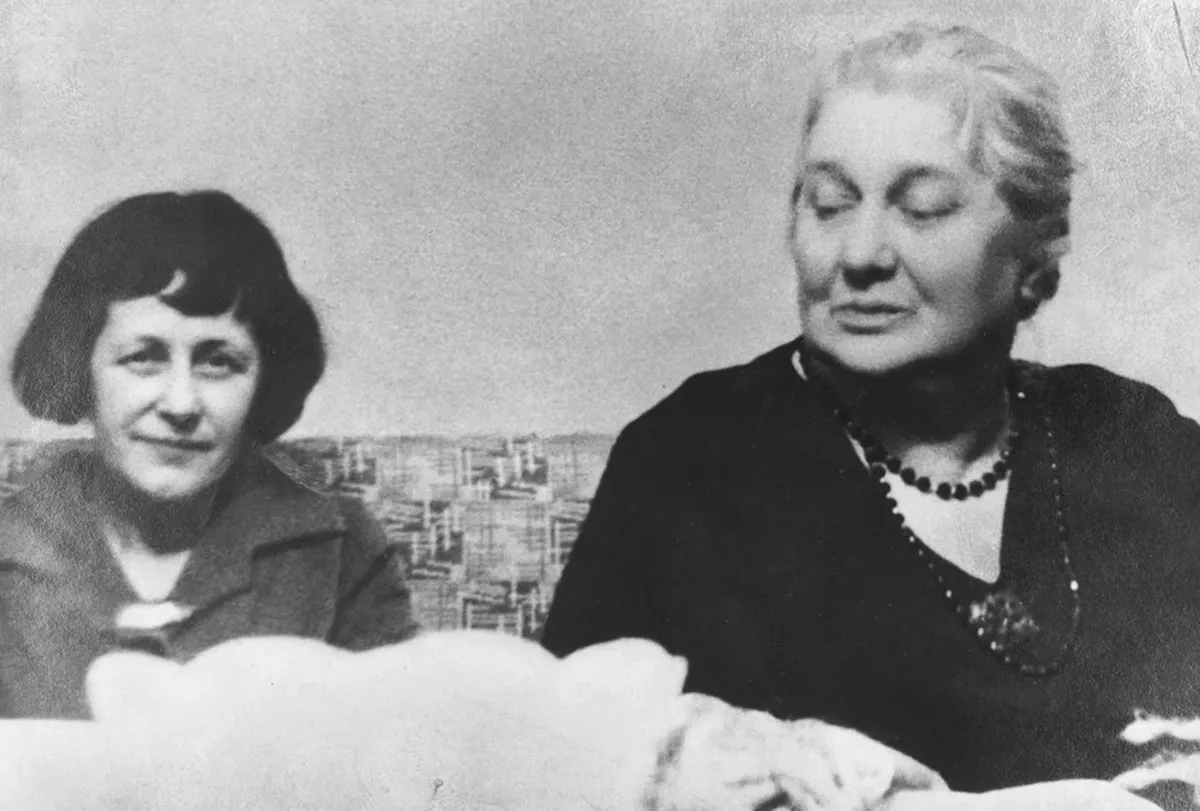
She lived with her daughter Arina and her mongrel dog Dymka. At home she had a black and green blanket and a green robe. She did not write poetry at her desk. I wrote while sitting on the sofa, on a large sheet of paper, putting something under it.
In the summer of 1930, she was in Koktebel and read her poems to Voloshin. In 1933, she herself came to Akhmatova at the Fountain House to get acquainted. At the end of 1933, Osip Mandelstam and Lev Gumilyov were simultaneously in love with her; Mandelstam, in addition to “The Master of Guilty Glances,” dedicated another poem to her, several lines of which she remembered by heart. But I didn’t write it down. And they disappeared.
All of them in those terrible days were in love with each other, played an erotic exciting game, and everyone wrote something.
Lev Gumilyov wrote an epigram on her, where he called her “Manon Lescaut”. The epigram also did not survive. Maria rejected both of them - Osip and Lev. And both went their way of the cross, one to death, the other to long imprisonment.
She herself said that Mandelstam was not interesting to her: “He is an old man.” But, as Emma Gerstein writes, she left his room “with glowing cheeks and an ecstatic look.” He asked her to call him “you” and received an almost rude “well, you” in response. This was when there were only a few days left before his arrest.
She was among those nine (or eleven) people to whom Mandelstam read “We live without feeling the country beneath us.” She was the only one who wrote down the poem (then burned it). They called her to the authorities and tried to make her an informer. Sometimes, reaching the point of despair, she thought that she would tell them everything. But they did not receive any testimony from her. Her husband was arrested and died in the camp.
In the post-war literary world, she had her own. She belonged in publishing offices, in a writing company at the same table with Pavel Antokolsky, in the House of Writers' Creativity in Golitsyn. Everyone knew her as a translator. And as a translation editor. What about a poet? They also knew, they knew that she wrote poetry, but she was always somehow on the sidelines with her poems.
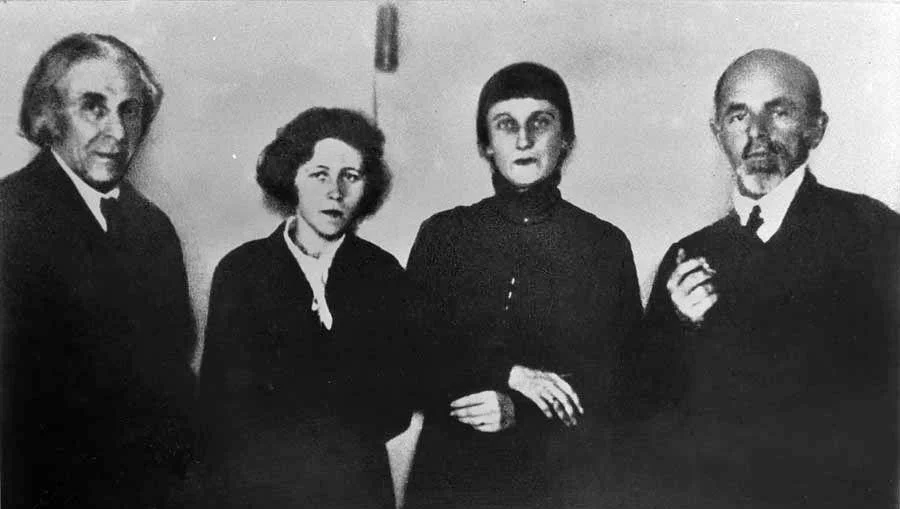
She was slow. Deep within herself. Slowed down? She spoke slowly, interrupting herself with pauses, as if she was thinking about where the sentence was going; she would start talking and fall silent, striking a match on the box and lighting a cigarette. She smoked a lot. What exactly - are they really ordinary cigarettes that you have to knead between your fingers before lighting them? Those who remembered her in her memoirs were honored to express everything they thought about her poems, but not a word about the fact that she smoked.
She was a closed person, she did not have a soul wide open, revealed to the whole world. Restrained and even dry, she seemed to keep within herself - herself, the pain of her muteness, the pain of her fate, her sentence to silence.
And when one day one person, himself a quite successful Soviet poet, offered her help in compiling a collection of poems and promoting it in the publishing house, she answered him coldly: “I don’t need benefits.” Tvardovsky, having become the editor-in-chief of Novy Mir, asked her to send poetry to the editor. She didn't send it. When in 1956 she was asked to give poetry on Poetry Day, she did not give it. She didn’t want to publish a collection of her poems in the publishing house “Soviet Writer” - something that many people dreamed of. And she didn't explain why.
Perhaps she, who knew Akhmatova and Pasternak closely, saw her smallness next to them; Perhaps the memory of the banned and sent into oblivion Voloshin, in whose house she felt happy, Mandelstam, who once asked to pet him, and she responded with a contemptuous wave of her hand on his shoulder, stopped her. “Sometimes it’s shameless to become famous.”
She stubbornly refused to read her poems. I gave in and read two or three if they really asked. She needed to step over something within herself, to break that invisible wall behind which she, the Petrov poet, lived.
It was a whole event for her - to come out of herself, from her loneliness, and appear before people with her poems. She read in a quiet voice, squeezing the fingers of one hand with the fingers of the other. A blush appeared on her cheeks.
In 1925, she sat all night at Yesenin’s coffin in the Moscow House of Press. In 1956, she sat at the coffin of Fadeev, who was her only love. Not because there was nothing else - there were others and others - but because “you became light and air for me.”
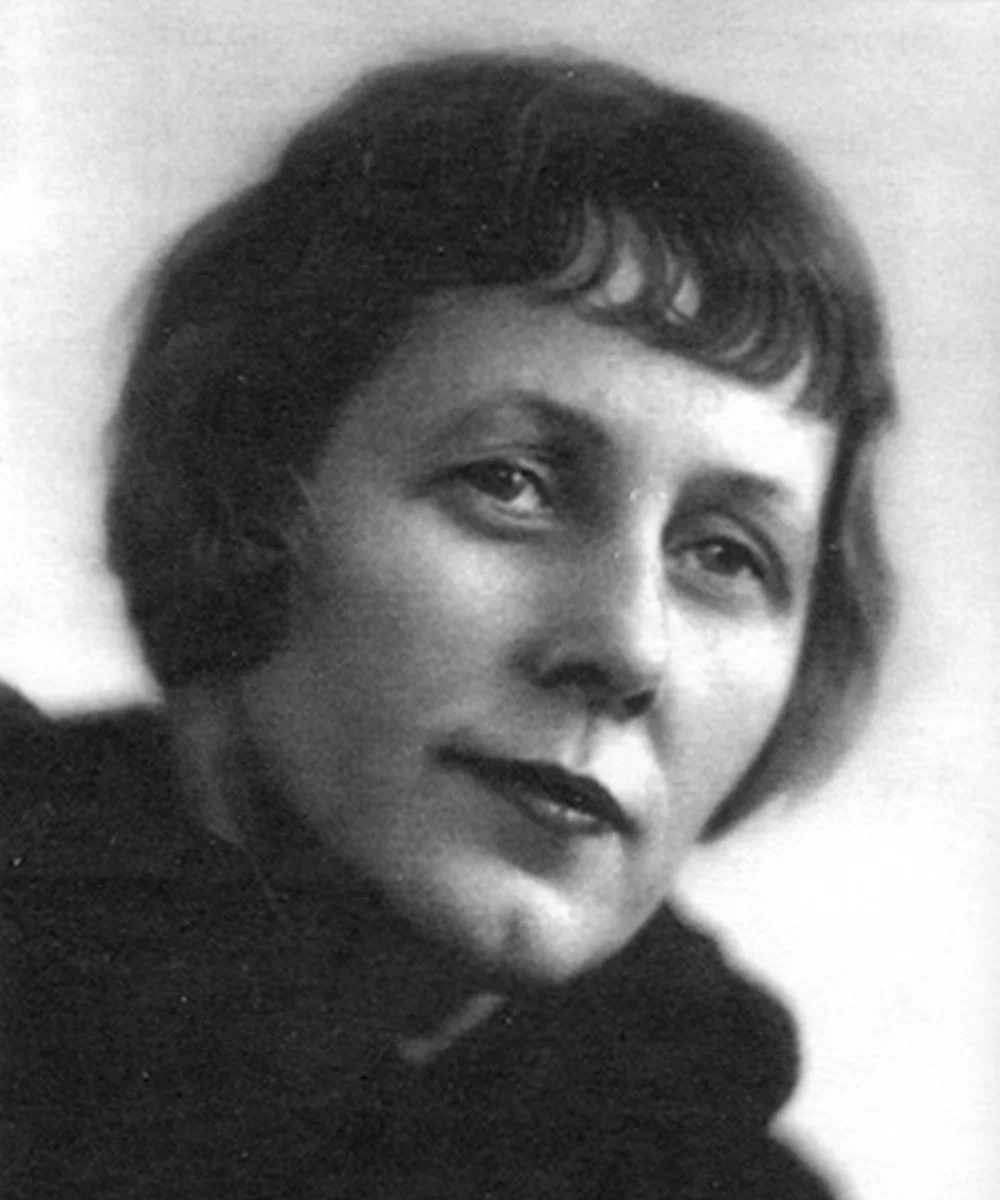
Decades of writing to nowhere eroded her resilient character. There were and never will be any guarantees for the future. Pasternak once advised her to be bolder, but what does it mean to be bolder? Silence set in. Akhmatova was no longer there, Pasternak was no longer there, and there lived, lost in the vastness of Moscow, a thin woman with bangs, bending over translations every day. She worked so carefully on the translations that she never managed to submit them on time.
It was her work, her cross - to put all of herself into other people's lines and in the end feel crushed and crushed by an endless mountain of other people's words, other people's thoughts, other people's rhymes. “I am a ridiculous, awkward, numb person.”
MARIA PETROVIKH. POETRY
Give me a date in this world.Give me a date in the twentieth century.
It's hard for me to breathe without your love.
Remember me, look around, call me!
Make an appointment with me in that southern city,
Where the winds drove across the surrounding hills,
Where the sea captivated with a seven-colored wave,
Where the heart did not know unrequited love.
Do you remember your first secret date,
When we wandered together around the outskirts,
Between the cramped houses, along the narrow streets,
Where they answered us with a non-Russian accent.
The landscapes were indeed poor and pitiful,
But remember that even in a landfill
Tins and bottles sparkle like diamonds,
It seemed like they were dreaming of something beautiful.
The path circled higher and higher above the abyss...
Do you remember that kiss from heaven?..
I don't know the date, but from this day
You have become light and air for me.
Let the years rush by in a reverse swirl
And we will meet in Granatny Lane...
Make an appointment with me here on earth,
In your hidden warmth.
We'll still meet each other,
While we are still hearing
While we still see
While we're still breathing,
And I through sobs
I conjure you: make an appointment with me!
Make an appointment with me, even if only for a moment,
In a crowded square, under an autumn storm,
It’s hard for me to breathe, I pray for salvation...
At least in my last hour of death
Make me a date with blue eyes.
1953, Dubulti
You took away both light and air from me,
And you want to know where I get my strength,
To breathe, to see the sky in the stars,
To get to work in the morning.
Well, I’ll answer you, dear:
Hearts trampled alive
Despair suddenly fills with strength,
Despair without edge, without end.
1958
About what, about what, if the world is vast?..
I woke up late, not a soul around.
What is it about? About the snow? O sun without spots?
And if the stains on it are good?..
About people? But either silence or
Only the truth, but I can’t get to it.
About life?.. My love, my light, thank you.
About death?.. My love, my light, forgive me.
October 8, 1960
- Why are you silent from year to year?
Apparently there is nothing to say?
- Oh no, I’m saddened
From human grief.
There is no living place in me,
And all the roads have been passed,
And I have been silent for decades
The silence of the bitter homeland.
My soul was in hell.
Will I find a loud word!
I love any mortal misfortune
I walked around the edge.
Before the deadline, the best of us
In the silence of death they dropped out.
And no one saved anyone
From inevitable death.
When would I say this out loud!
But again it takes your breath away...
Make up your mind, make up your mind desperately,
Say it even if it’s accidental!
Then it's not scary to die
And life is not scary. Whoever you meet -
You will illuminate everyone with victory.
But I will remain silent for the whole miserable century,
A freak, a cripple of cripples.
Why I lived, I don’t know.
1958
Is it easy to understand after tens of years -
I’m not here, well, I’m just not here.
I didn't remember my earthly days.
The plant probably understands it
Days pass, but for me they are
Like dim spots on the moon.
1969