
Translated material
Big waste
By 2027, the “military overspending” of the Russian budget can reach 31.5 trillion rubles. It’s like if the government spent the whole year only on war
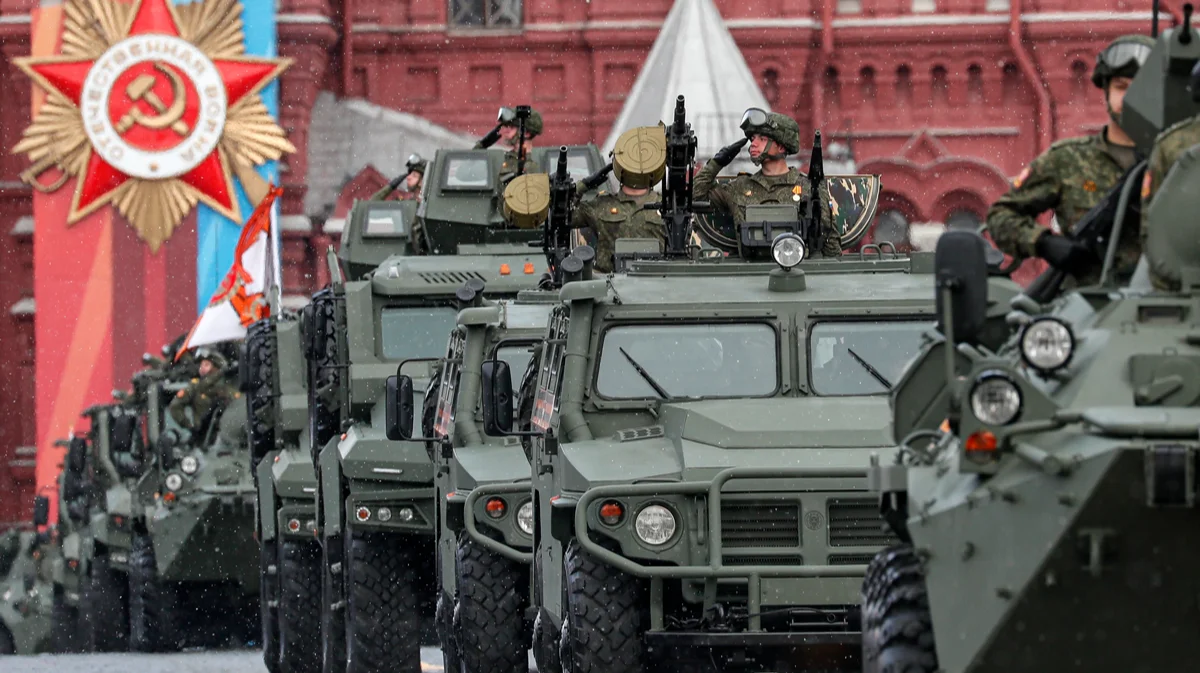
Russian armored vehicles on a military parade on Red Square in Moscow, Russia, May 9, 2024. Photo: Yuri Kochetkov / EPA-EFE
Russia spends tremendous money on the continuation of an aggressive war. The general “military overspending” of budget money - that is, the difference between the planned and actual expenses - in four years (2022–2025) will probably reach 23 trillion rubles. This is almost equal to all the expenditures of the federal budget for 2021, the new newspaper Europe calculated. If the Kremlin leaves military costs at the same level in 2026, then in five years the “military excess” will reach 31.5 trillion rubles. Flutting the expenses of the treasury is fraught with overclocking inflation and can lead to a new increase in taxes, experts say.
Until October 1, the Russian government should submit a draft law on the budget for 2025 to the State Duma, it also contains a budget plan for 2026–2027. According to Bloomberg, the treasury expenses in the National Defense section in 2025 and 2026 should exceed 13 trillion rubles annually. These are record spending: neither before the war, nor in its first years, Russia was going to allocate so much for military goals. There were no such plans even last year. On the contrary, according to the law on the budget adopted in the fall of 2023, the defense expenses of 2025 should have been reduced to 8.5 trillion rubles (from 10.4 trillion planned for 2024).
In 2022, the Russian authorities believed that they would take Kyiv in three days, and citizens of Ukraine would meet the army of Russia with flowers. But 2.5 years passed, the war did not end, and the Kremlin promises it to continue until its “goal” is reached. What are these goals is unknown, but it is known how they are measured in money.
The increase in the Russian military budget at times has become the norm - we will learn about this every year, when the next budget law for the next three -year -old is introduced to the State Duma. In 2021, when the Russian authorities violently denied any full -scale invasion plans, the State Duma decided that in 2022–2023, 7 trillion rubles would be spent on defense, in equal shares annually. And in fact, for the first two military years, they spent about half, or 8.1 trillion rubles, more (it is difficult to say for sure, because the Russian authorities did not publish official data on the expenses on the National Defense section for 2022 and 2023). The difference is the same "military excess".
For 2024–2026, overspending will be even higher. For these three years, if you are guided by the logic of budget planning of the model of 2022, Russia was supposed to spend about 13.2 trillion rubles on defense. In reality, it can spend 23.4 trillion rubles more - it follows from Bloomberg data about the budget for 2025 and 2026. Note that this is unofficial data, because Prime Minister Mikhail Mishustin and Minister of Finance Anton Siluanov, presenting the draft budget on September 24, did not say a word about defense spending. Siluanov only called them one of the priorities for the next year.
The total amount of the “military budget bust” for five years-31.5 trillion rubles-is comparable not only with the annual federal budget. It is 1.6 times higher than plans for the re -equipment of the army and fleet by a decade.
We are talking about the arms program adopted in 2018, it was planned to spend “only” 19 trillion rubles in 2018–2027 on it.
In 2025, secret budget expenditures should grow, and there are not only parts of the National Defense section, but also the other head of the budget - National Security and Law enforcement. In just four years, total expenses for closed articles have more than doubled: from 6 trillion rubles in 2022 to 12.9 trillion, planned for 2025. The budget had 19% secret expenses - and there will be 32%.
As we thought
Novyevropa compared the expenses of the budget section “National Defense” with the level that they could stay if there were no large-scale invasion, or if it were not a long-term war, but a local operation, as the Kremlin planned. Forecast figures are available in the “Budget for Citizens” section on the website of the Ministry of Finance.
At the Niceboron, according to the last pre -war budget law, it was supposed to spend 3.5 trillion in 2022 and 2023. But in fact it turned out - 5.4 trillion and 9.7 trillion rubles, respectively. Moreover, these data did not officially publish, defense expenses of 2022 are an assessment of the Gaidar Institute, 2023 - Reuters information. Thus, overrun for the first two military years amounted to 8.1 trillion rubles.
In 2022, the authorities “allowed” to increase the defense costs up to 5 trillion rubles in 2023, and then (probably having achieved “fulfilling the goals of Switch”) to slow down to 4.6 trillion rubles in 2024 and 4.2 trillion rubles in 2025.
The plans for 2026 were not announced, but we decided, having made an assumption, to take 4.4 trillion (the average from plans for 2024 and 2025). This figure reflects the logic of budget planning of the 2022 model, because then the Russian authorities did not say anything about the intention to increase the costs of war at times.
In total, in 2024–2025, about 13.2 trillion rubles should have been spent on National Bason.
However, this year at least 10.4 trillion rubles will be spent on the war (this is already according to the last year’s budget law), and for the next two, according to Bloomberg, - 13.2 trillion and approximately 13 trillion rubles. In total, this is 36.6 trillion rubles according to the section "National Defense" for 2024–2026. This gives an overspending of 23.4 trillion rubles only for this three -year -old, and with the addition of overrun for the first two years of the war - additional military expenses of 31.5 trillion rubles for 2022–2026.
If you take overspending only in 2022–2025, then it is 22.9 trillion rubles.
Not only "defense"
10.4 trillion rubles in this and 13.2 trillion rubles next year - this is a conservative assessment of what Russia spends on military purposes. In fact, these expenses can be higher.
In accordance with the definition, which is guided by NATO, the total expenditure of Russia's budget for military purposes in 2024 can be 13-14 trillion rubles, and in 2025-already 16-17 trillion rubles, the military-economic expert, the head of the Eastern Advisory Group consulting company and Royal United Services Institute (London) Richard Konnolly. According to the interpretation of NATO, military expenses include some articles from the budgetary sections “Social Policy” (these, for example, military pensions), “Education”, “Health”, “Culture” and “Media”, explained the expert of Novo-Europe.
- Russia will continue to spend a lot of money on defense in order to fight in Ukraine and restore the army so that it can withstand a long conflict with NATO. And yes, this is evidence that the Kremlin will not only stop, but that it has more financial mechanisms that it can use to escalate war and to re -equipment for a future conflict with NATO, ”Connolly told us.
Where does the money come from for war?
To finance the war, the authorities plan to increase the total expenses by almost a quarter in 2025 - about 8 trillion rubles (up to 41.5 trillion rubles) in comparison with last year's budget plan.
It is significant that the opposite was planned a year ago. According to the law on the budget “three -year -old” adopted in 2023, the treasures of the treasury in 2025 were to be reduced by almost 10%, along with the allocations of defense. But a year has passed - and everything has changed. There is a possibility that the authorities will continue to increase expenses, including the military, as they had made in the last years, several economists interviewed by us said.
While the tax reform and higher income from VAT, excise taxes and customs fees for imports were brought to war this year, Richard Konnoli told Novo-Europe. An increase in tax rates, primarily corporate income tax and personal income tax for citizens, according to independent economists, can bring more than 3 trillion rubles of new income next year, economist Dmitry Nekrasov told us. An increase in taxes caused by an increase in the economy will bring about the same or even more, the invited researcher of the European Political Analysis (Cepa) Alexander Kolyandr Center for Analysis (CEPA) said in an interview from Novo-Europe.
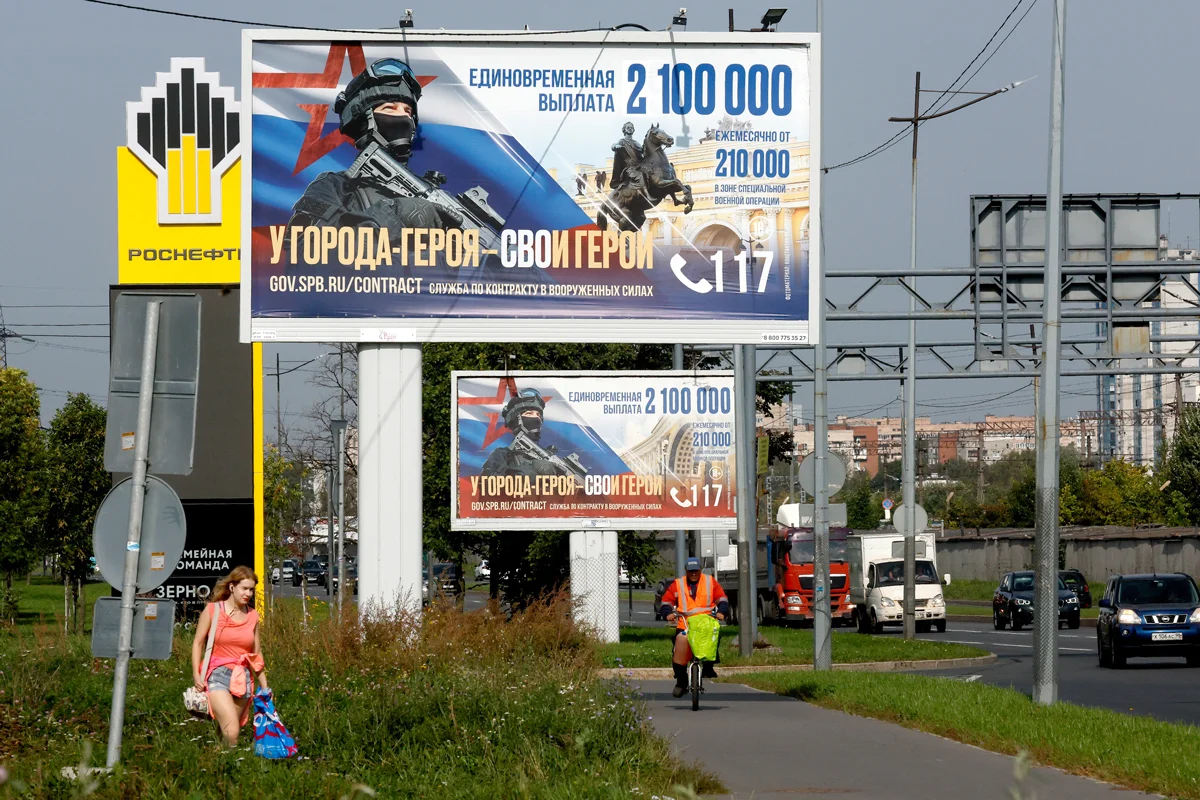
According to the economist of the Western Bank, the weak ruble will remain one of the important factors of the budget. This is important, because from oil and gas production in 2025, the government expects to collect only 27% of income (11 trillion rubles) to the budget, and the stronger the ruble, the less this money will receive less.
So far, the budget looks conservative and does not promise significant problems with its execution, even if military expenses eventually turn out to be higher, Nekrasov believes. The public debt is extremely low - 17% of GDP (and in developed countries on average - more than 100% of GDP), the government can take ten times more for several years in a row than today - the debt will still be small by world standards, he added.
Although “now the issue of an acute budget crisis is not worth it, problems for the future are accumulating,” says the economist of the Western Bank. For a balanced budget, you need the price of Urals in the region of $ 90 per barrel ( now- $ 69 per barrel), he explained to Novo-Europe. Other sources of replenishment of the treasury are not particularly reliable.
For example, Liquid funds of the Federal Tax Service (yuan and gold, due to which it is possible to finance a budget deficit if necessary) - only $ 57 billion (less than 3% of GDP), the interlocutor in the Western Bank transfer.
At the same time, “external loans are doubtful, the capacity of the internal debt market is not that unlimited,” the banking economist continues. Therefore, “sooner or later the question will arise either about the sequestra of a number of expenses, or about another increase in the tax burden,” he summarizes.
The fact that the state can carry out another tax reform is also said by our other interlocutors. “When they begin to increase taxes, it is already difficult to stop,” said one of the economists we interviewed. It is significant that if, before the reform of 2024, the Ministry of Finance promised not to increase taxes, then this year the authorities did not make such statements - on the contrary, the Minister of Finance Anton Siluanov said that he did not exclude the “point setting up” of the tax system. The authorities may well carry out such “optimization”, and if there is a significant and sustainable slowdown in the economy - a more serious increase in taxes is possibly, Konnolly says. Although, he admits, while the economy is growing rapidly, there is enough money.
- They are all temporary workers, and their goals are temporary. Problems are solved as it is received. Tomorrow there will be a new day and new tasks, few people think about this today, ”the head of one of the research economic centers in Russia said to the New-Europe.
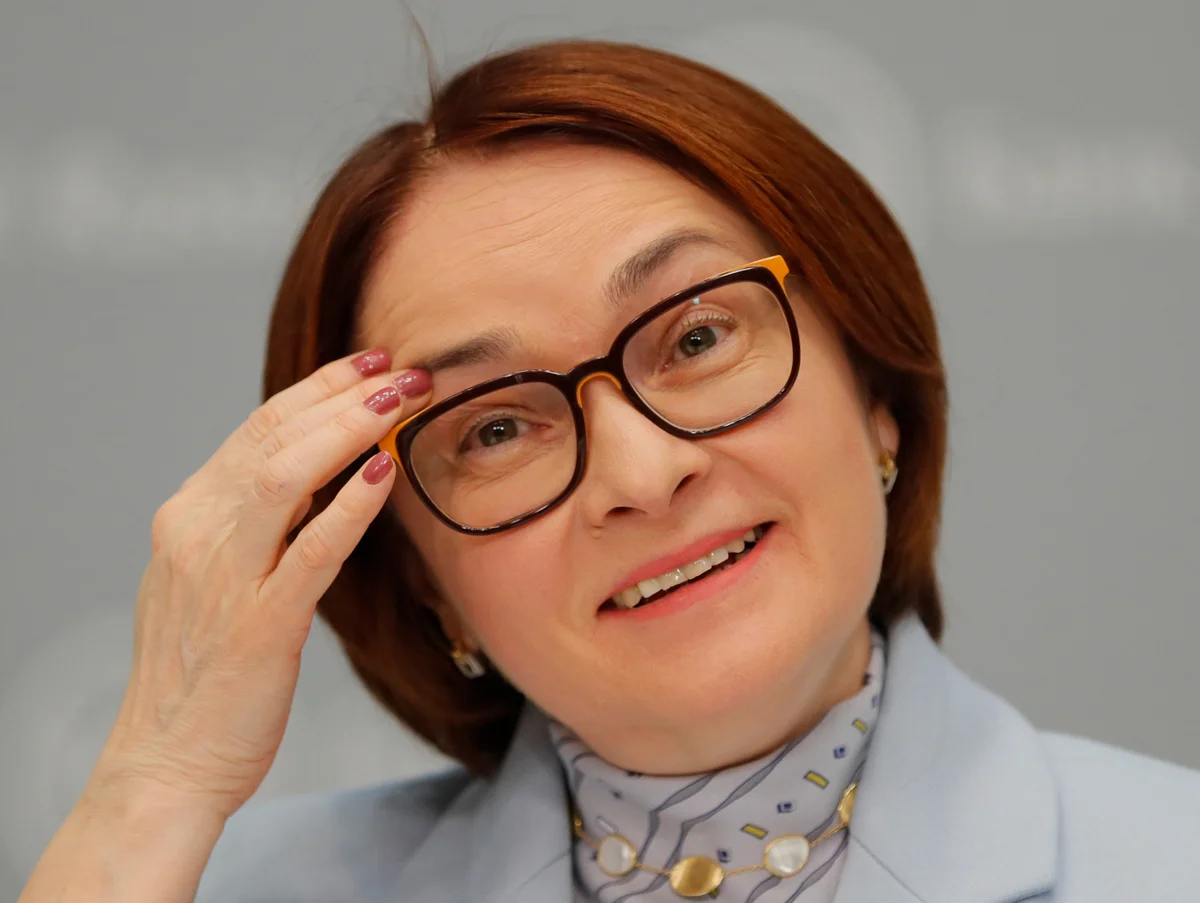
Will Nabiullina withstand?
All economists whom Novyevropa asked to comment on budget plans for 2025, said that inflating expenses is a powerful inflation growth factor. This means that the longer the war is, the stronger the Russians will feel this on their wallets in the form of an increase in prices for goods and services. And the main question is whether the Central Bank will be able to continue to maintain inflation in the depth.
The Central Bank cannot reduce inflation with a tool, by moving the key rate, because enlarged state -owners are the main dullflation factor, Kolyander told us. “And this factor will not go anywhere,” the expert added. The situation is aggravated by the fact that it is not just expenses, but “the costs of such unproductive things as war are growing,” adds Nekrasov. If the state stamps tanks and subsidizes a loan from the budget for ELPC enterprises, this disperses inflation, especially because loan subsidies increase the costs of the treasury even more, the economist from Russia says.
In September 2024, the Central Bank not only raised the key rate to 19%, but did not rule out further increase in October. The Central Bank has a goal - to achieve inflation of 4%, now it is at the level of 9.1%. During the war, reducing this indicator to 4% is an obviously impossible task, but there are no risks that inflation will get out of control, Dmitry Nekrasov believes.
- So far, this is controlled inflation. Conditional 9-10% is a local peak, and I would not expect significant growth in the horizon of six months a year. Inflation in the range of 10% for many countries and eras is considered a normal phenomenon, ”Nekrasov said New-Europe.