
Translated material
"Israel will have to end Hezbollah"
Arabist Dina Lisnyanskaya talks about what will change on the border between Israel and Lebanon after the liquidation of Nasrallah
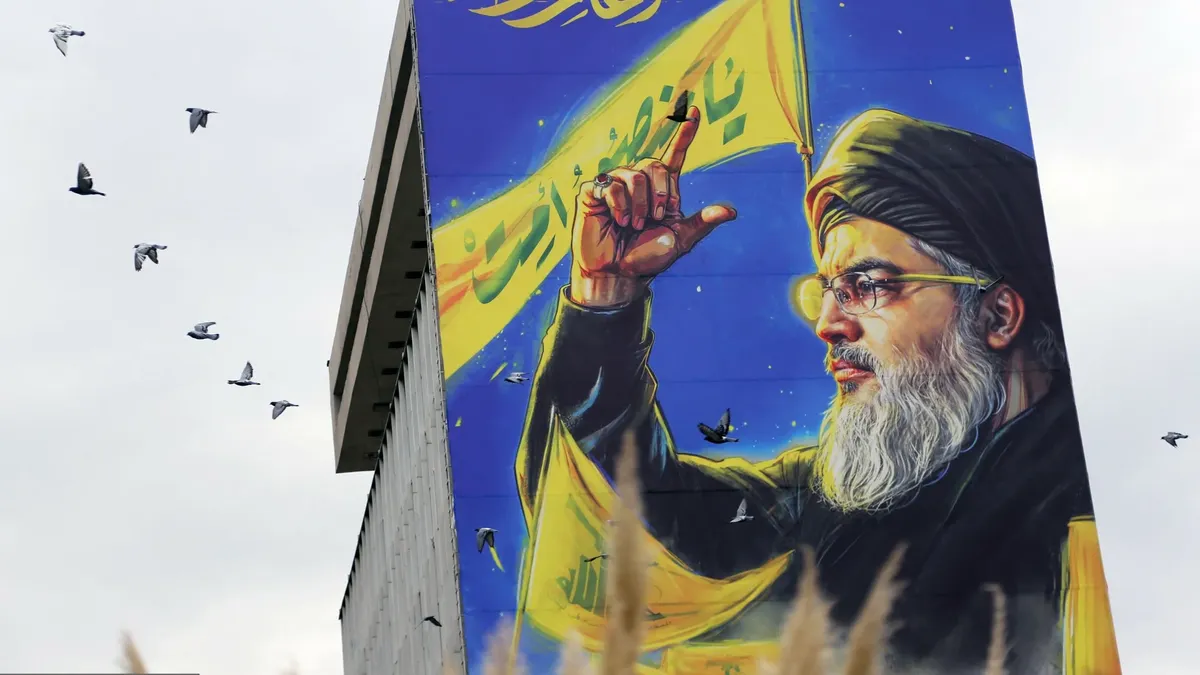
Photo: AA / ABACA / Abaca / East News
18+. This material (information) was produced, distributed and (or) sent by foreign agent Borukhovich (Tumakova) Irina Grigoryevna or concerns the activities of foreign agent Borukhovich (Tumakova) Irina Grigoryevna.
The Israel Defense Forces (IDF) on Saturday announced the assassination of Hezbollah Secretary General Hassan Nasrallah. The airstrike hit the terrorist headquarters in the south of Beirut; not only Nasrallah, but also other high-ranking Hezbollah commanders were hiding in an underground bunker there. The Lebanese Ministry of Health, which is also led by a Hezbollah supporter, announced the death of six people and 91 injuries. The Russian Federation strongly condemned this “political murder” - this is what Russian Foreign Minister Sergei Lavrov called the IDF operation. The department urgently called for “an immediate cessation of hostilities,” which “would help stop the bloodshed and create conditions for a political and diplomatic settlement.” This call is addressed to Israel. For some reason, the Russian Foreign Ministry did not call on terrorists. How the “political assassination” of a leader, who is considered the head of the largest terrorist organization in the world, will affect the Middle East situation, says Dina Lisnyanskaya, a lecturer at Tel Aviv University, a researcher of political Islam and radical movements in Islam.

— Hezbollah is a complex structure, in which certainly not everything depended on the personality of Hassan Nasrallah. What might change after his death?
— Hezbollah, in principle, is considered the largest and most serious terrorist organization in the world, and it was turned into both an army and a political structure a long time ago; in Lebanon it is a state within a state. And, of course, everything in it should not rest on one leader. It is important that Hezbollah has two self-identities:
firstly, they are Lebanese patriots, Shiites, Arabs from Lebanon,
secondly, they are loyal to Iran, specifically to the Islamic regime, their Shiite religious component is directly connected with Iran. The organization was created, structured and sponsored by Iran. It turns out that Hassan Nasrallah, on the one hand, is Lebanese, on the other, his loyalty was primarily religious, Shiite, pro-Iranian.
The next question is whether it will be possible to find such a person among the remaining Hezbollah leaders? We are talking about the last two weeks, during which Israel has killed a huge number of high-ranking Hezbollah commanders. In addition, lesser-ranking commanders were "incapacitated" as a result of the "pager attack." Who stays? There remain people who were close to Nasrallah at the political top. First of all, this is his right hand Naim Qassem. Before all this happened, Hashem Safieddin was also named as a possible successor; he is Nasrallah’s closest relative, married to the daughter of General Qassem Soleimani. ( According to unofficial information, it was Hashem Safieddin who was elected general secretary of the movement. - Ed. ).
— Soleimani, who was eliminated by the United States in 2020?
— Yes, yes, these people entered into so-called political marriages, using their children. That is, here, too, everything is tied to loyalty to Iran. Hashem Safieddin was tipped to be Nasrallah's successor, and his loyalty also lies in the Iranian plane.
— If a person with a Lebanese orientation comes to replace Nasrallah, is that good or bad for Lebanon? Hezbollah has brought a lot of troubles, primarily to Lebanon itself. Will things get better inside the country?
“There is no answer to the question of whether this is good or not for Lebanon, since Nasrallah could be replaced by people of Pro-Lebanese orientation, Lebanese patriots who are only for Lebanon. There will still be a Shiite pro-Iranian component in this, it will just be, perhaps, less dominant, because Nasrallah was literally nurtured by the Iranian regime. He was trained by the former head of Hezbollah, and he was an Iranian, directly an Iranian protege.
As for Lebanon, the population there is not homogeneous, it is divided into four groups, these are minorities living in one country: Maronite Christians, Sunni Muslims, Shia Muslims and Druze. Previously, the majority in Lebanon were Maronites, these are Uniates, that is, both Catholics and Orthodox. Today they have ceased to be the majority. Although no one is conducting surveys, this is fraught with a new civil war.
Lebanon is a country that has suffered from several civil wars that have led to enormous devastation, and they are trying with all their might to keep the population from another such war.
Government positions are essentially divided between the four faiths. For example, the president is always a Maronite, the prime minister is always a Sunni, the minister of defense is always a Druze, the head of parliament is always a Shiite. Now the Shiites say that they are already the majority. Demographically, this may be true. It would seem that it is necessary to change the division into categories and give the main post of the President of Lebanon to the Shiites.
— Would this automatically strengthen the role of Hezbollah?
- That's right. And Hezbollah, as we see, is destroying Lebanon. The situation is complicated, in Lebanon no one wants to revise this law, and it turns out that now the minority, in fact, rules the majority. And something like this is always fraught with serious consequences; we saw this in Iraq and Syria.
— What role did Nasrallah’s personality play in this?
— Nasrallah had enormous weight not only in Hezbollah, but also in Lebanon. In recent years, that is, after 2006, Nasrallah’s role in Lebanon grew and grew, his influence became absolute, he became indispensable, Hezbollah turned into an alternative state within Lebanon. The economy in Lebanon has been collapsing and collapsing, especially after the Beirut port explosions in August 2020. And Hezbollah supplied the country’s residents with everything they needed. It replaced the state, which, in fact, ceased to exist as a state. That is, it was very difficult for the state to provide education systems, health care, social services, and so on. This has all practically passed into the hands of Hezbollah, even at the official level: the Minister of Health for many years was from Hezbollah, now it has more and more seats in parliament, that is, we see the dominance of Shiites from Hezbollah there. But there are Shiites who are not associated with Hezbollah, for example, the Amal movement, which is a different organization. There are Shiites in general, what is called “non-party people”.
One way or another, the role of Hezbollah grew, and this affected the atmosphere as a whole. And the key to this was the merit of Nasrallah, because he was a very charismatic leader, he had enormous opportunities, they obeyed him, they even loved him. He concentrated enormous forces in his hands. He was the second man in Lebanon, if not the first.
“And now there is no such person.” Could this increase the likelihood of war between Shiites and Lebanese of other faiths?
- Vice versa. Now the time has come for those forces in Lebanon who did not want to put up with Hezbollah, who were confident that the movement was harming Lebanon, turning Lebanon into a fundamentalist state similar to the Islamic Republic of Iran. In fact, Iran assigned Hezbollah the role of a conductor in the export of the Islamic revolution in the Middle East. And they created Hezbollah so that it would turn Lebanon into an Islamic republic like Iran. And if to this day it has not been possible to do this, this does not mean that it would never have been possible, everything was already heading towards this. And now there is an opportunity for Maronites, Sunnis, and Druze to unite against the Shiites and come up with something to change the situation.
— But you said that demographically the Shiites are now in the majority. If the rest united against them, wouldn't it threaten to turn into a civil war?
— There has already been a civil war in Lebanon.
- And not alone, that’s the point.
- Yes, and this happened in even worse conditions. Now it cannot be said that the Shiites are the majority, they are simply the largest of all minorities. Shiites are approximately 27% of the Lebanese population, Sunnis are about the same, the rest are Maronites, Druze, Orthodox, Armenians, and so on. In such a situation, the Shiites, of course, would like to change the laws, but this cannot be allowed, so as not to give Hezbollah the opportunity to officially seize Lebanon. It should not be perceived as a legitimate party. Essentially, it is a terrorist organization, which means it can be banned by law. And not all Shiites in Lebanon are members of Hezbollah, this is also important to understand.
— Let’s assume that Hezbollah can be outlawed in Lebanon. But this is a powerful paramilitary structure. Has Israel destroyed the movement's power enough to make it unable to resist outlawing?
“Israel has taken the first step in the right direction. This does not mean that this war is over. This does not mean that Hezbollah has been destroyed. We must continue, this time. Two - it would be good if Lebanon, for its part, also took up this issue. Israel will defend itself and its territory, and Lebanon itself must defend the territory of Lebanon from terrorists.
“What is happening now between Israel and Lebanon has already begun to be called the “Third Lebanese War.” Does the liquidation of Hezbollah's leadership bring a full-scale war closer or further?
“I want to say right away: “The Third Lebanese War” is not the third Lebanese War. This is Israel's third war with Hezbollah. This is not a war with Lebanon as a state. At this point, Lebanon is allegedly not responsible for Hezbollah committing heinous crimes from its territory. I repeat: this war was initially not with Lebanon, but with Hezbollah. And the Second Lebanon War was also a war not with Lebanon, but with Hezbollah. And what is happening must be viewed precisely through the prism of Israel’s war with Hezbollah. Not as the “third Lebanese”.
— You said that Lebanon “seems” not to be responsible. But in fact, the state was either unable to change anything, or was ready to put up with the fact that terrorists were operating from its territory, and did not want to change anything. Now the terrorists are left without a leader. If a war breaks out now, can it be called a war between Israel and Lebanon?
- No. Lebanon as a state does not attack Israel, and Israel does not attack Lebanon as a state. Hezbollah is located on Lebanese territory and commits all sorts of horrors and crimes from Lebanese territory. If Hezbollah leaves Lebanon for another country and wages war from there, territorially the war will no longer be waged in Lebanon. Therefore once again:
It doesn’t matter that everything is happening on the territory of Lebanon, this is a war not with Lebanon, but with a terrorist organization called Hezbollah, which is located on the territory of Lebanon.
— After the death of Nasrallah, did the likelihood of an IDF ground operation in Lebanon become higher or lower?
“She remained the way she was.” Now everything depends on how Iran will react and whether there will be new injections into Hezbollah on its part. Iran is already threatening that they will. In this case, the likelihood of a ground operation increases, because now no one will give Hezbollah the opportunity to raise its head after so many resources have been invested in weakening it.
On the other hand, if Iran now no longer invests in Hezbollah, but in other Shiite military formations located, for example, in Syria or Iraq, then, of course, the center of gravity of the war with the Shiite pro-Iranian axis of resistance will move to other places. But Israel will have to deal with Hezbollah to the end. We cannot leave her the opportunity to be reborn and raise a new Nasrallah.

— Let’s assume that the centers of Shiite resistance will no longer be concentrated in Lebanon, but will be distributed across other countries. For Israel, will this mean a weakening of the enemy or a war on many fronts?
“Unfortunately, after October 7, 2023, Israel has no choice, Israel is forced to fight on many fronts, because Israel was attacked from different fronts at once. And this is no longer a question of what is best for Israel. Israel does not need war at all. On the Israeli side, no one wanted this war; no one started it. Hamas started the war, and Hezbollah joined the next day. And there are, of course, the Houthis, there are Shiite militias in Iraq and Syria. You called it the “Third Lebanon War,” but in fact it is the First Iranian War. This is the first war Iran has declared against Israel.
—Can Iran directly enter the war? In April of this year, he already attacked Israel. Can he escalate such attacks so that they escalate into a full-scale war in the Middle East?
— Iran can enter the war directly, but in any case it will act through its Arab proxies, it will only involve them even more. Hezbollah in this sense was a very important resource for Iran, which hoped to use it to restrain Israel, kill Israel, and commit “October 7” again and again. This is why Hezbollah was nurtured in Iran.
It is much easier for Iran to sacrifice Arabs or Lebanese, and it is much easier for it to lose Sunnis such as Hamas in a war with Israel. Of course, they didn’t want to dump Hezbollah. But if this is the case, it would be better if it were Hezbollah than the Iranians.
Now Iran has announced a call for those who want to go to war against Israel. This does not mean that the unfortunate Iranians will now all be mobilized and forced to fight Israel. Individual people will join the next detachments, which will again be called something symbolically. But this again, apparently, will be a war of Iranian proxies, and Iranian proxies are, as a rule, either Arabs or Afghans, but not Iranians. The Iranians will remain in the rear, rub their hands and rejoice that for the sake of their ideas those who are easy to sacrifice are now dying. I will emphasize: this is not about Iranians as a people, but only about the regime of the Islamic Republic of Iran.
— The world community, in particular the Russian Federation, has recently reacted somehow painfully to the liquidation of terrorists if it is carried out by Israel...
- Always.
- As a rule, yes. But Hezbollah caused enormous harm to the United States, France, Great Britain, and other countries; hundreds of Americans, French, and British died during the attacks. Now, why is this very world community dissatisfied with Israel’s actions?
— Before our conversation, I specifically looked at what different figures were saying on different channels. Britain really suffered a lot from Hezbollah, British soldiers died. And now the BBC is turning to Israel, accusing it of killing civilians along with Hezbollah terrorists.
- But they really died.
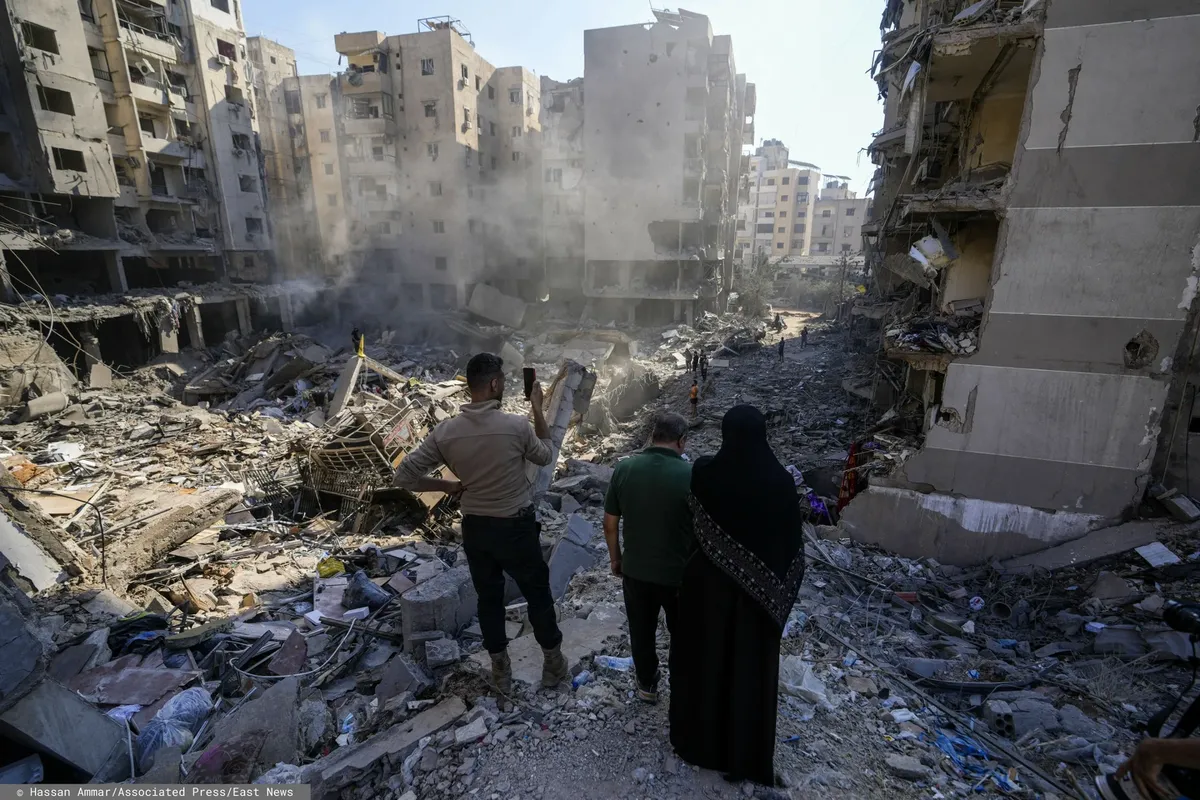
“In principle, civilians should not have been there, and this is another important topic.” Hezbollah leaders sent their families away from Beirut in advance, sending wives and children to Iraq on private jets. And civilians in Beirut remained at the epicenter of events. The strike targeted Dahiya, which is the movement's "working area" in Beirut. But the international community calls the strike on Hezbollah precisely a strike on Beirut, on civilians.
“His daughter died along with Nasrallah.
“Nasrallah’s daughter was not a child, she is an adult woman who was involved in terrorist activities with her father.
— Many countries around the world recognize Hezbollah as a terrorist organization; citizens of these countries have died in terrorist attacks. And still, Israel should not have hit its leaders?
“Still, all the criticism is directed at Israel; accusations are directed at it that it “unleashed a major regional war.” But soon it will be a year since Israel has been under fire from Hezbollah. So many Israeli towns and villages have been damaged that 80,000 people cannot return to their homes. But the world community is silent about this.