
Translated material
“The main thing is not the land, but learning how to cultivate it”
Doctors Without Borders stopped working in Russia by decision of the Ministry of Justice. We remember how the organization managed to influence the healthcare system over 32 years of work
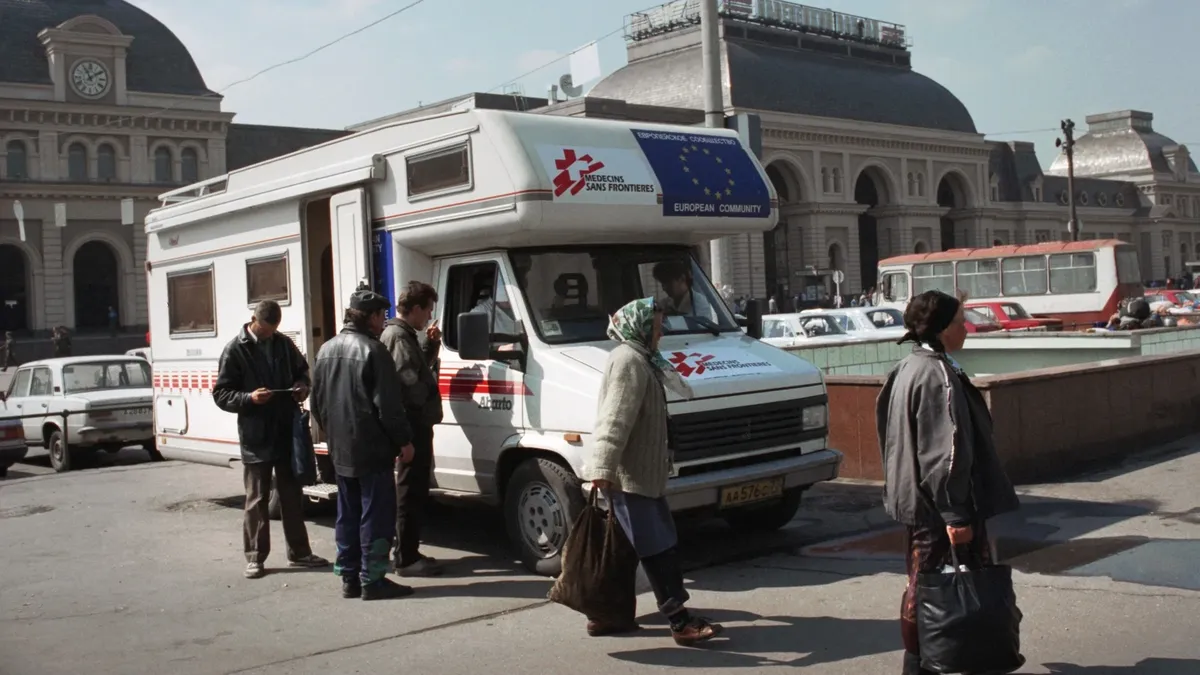
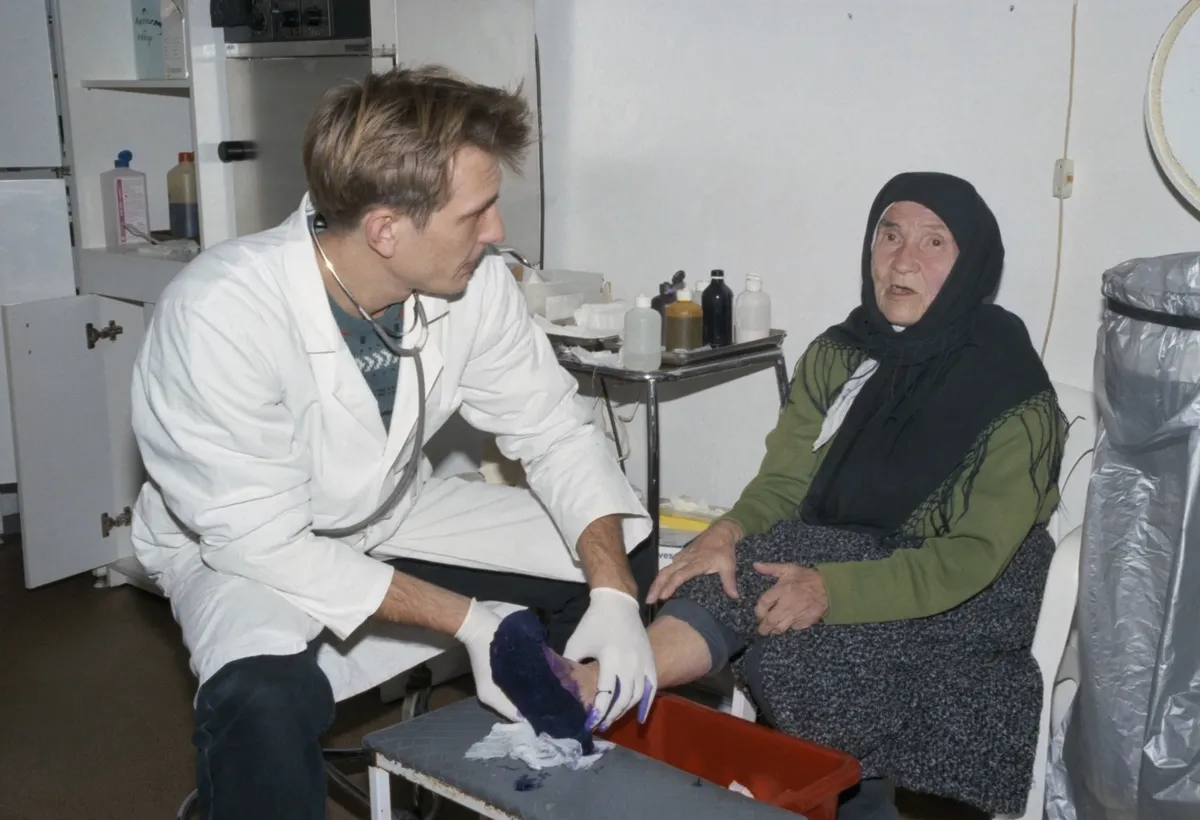
Homeless people receiving necessary medical care in a mobile outpatient clinic of the independent international organization Doctors Without Borders at Paveletsky Station. Photo: Irakli Chokhonelidze / TASS Photo Chronicle
While homeless people and prisoners go to a tuberculosis clinic to die, the Nobel Prize winner, the International Mission Doctors Without Borders, managed to convey to the Ministry of Health a new effective protocol for the treatment of drug-resistant tuberculosis, which will begin to be used in early 2025. But the Ministry of Justice expelled the organization from Russia.
Together with the deputy medical coordinator of the MSF Dutch mission of Doctors Without Borders, Alexey Nikiforov, we recall what Doctors have managed to achieve over these 32 years.
— How did Doctors Without Borders enter Russia?
— For the first time, Doctors Without Borders appeared on the territory of the USSR during the earthquake in Spitak, Armenia, 1988. This was one of the first steps on the part of the Soviet Union when it accepted help from international organizations.
— But at the same time, you returned to the 1990s, although MSF usually works in regions with military operations or survivors of natural disasters...
— In the 1990s, the entire social situation in Russia changed and became catastrophic; the most vulnerable group were the homeless. Doctors Without Borders works on projects. First, an assessment is made of which population needs help - and if it turns out that there is a need, then a specific project begins. Thus, our first project in Russia is a medical and social project to help the homeless. And the subsequently changing situation - the First and Second Chechnya - served as the reason for what is spelled out in the Charter - providing assistance to victims of armed conflicts.
— How does the system of the Doctors Without Borders Mission work?
— The first organization that came to Russia was Doctors Without Borders. Belgium". This organism originated in France - that's why we are called Médecins sans frontières. But the movement turned out to be so attractive and so popular that many countries also wanted to have similar organizations. Then branches of Doctors Without Borders were created in Belgium, Holland, Switzerland, Spain, England, Norway, the USA, Japan - and in different countries they began to create their own associations. Five European countries, including Holland, whose branch continued to operate in Russia until recently, became resource-accumulating centers. The organization works on the principle that there is a head of mission, there are medical and financial coordinators, and all the main work is done by local staff.
— How did you become part of it?
— I worked as the head of the therapeutic department at hospital No. 56, which quite often admitted homeless people. And Doctors Without Borders began to come to us in 1994 - then they invited me to run the program that they had already started.
— How did you organize assistance for the homeless?
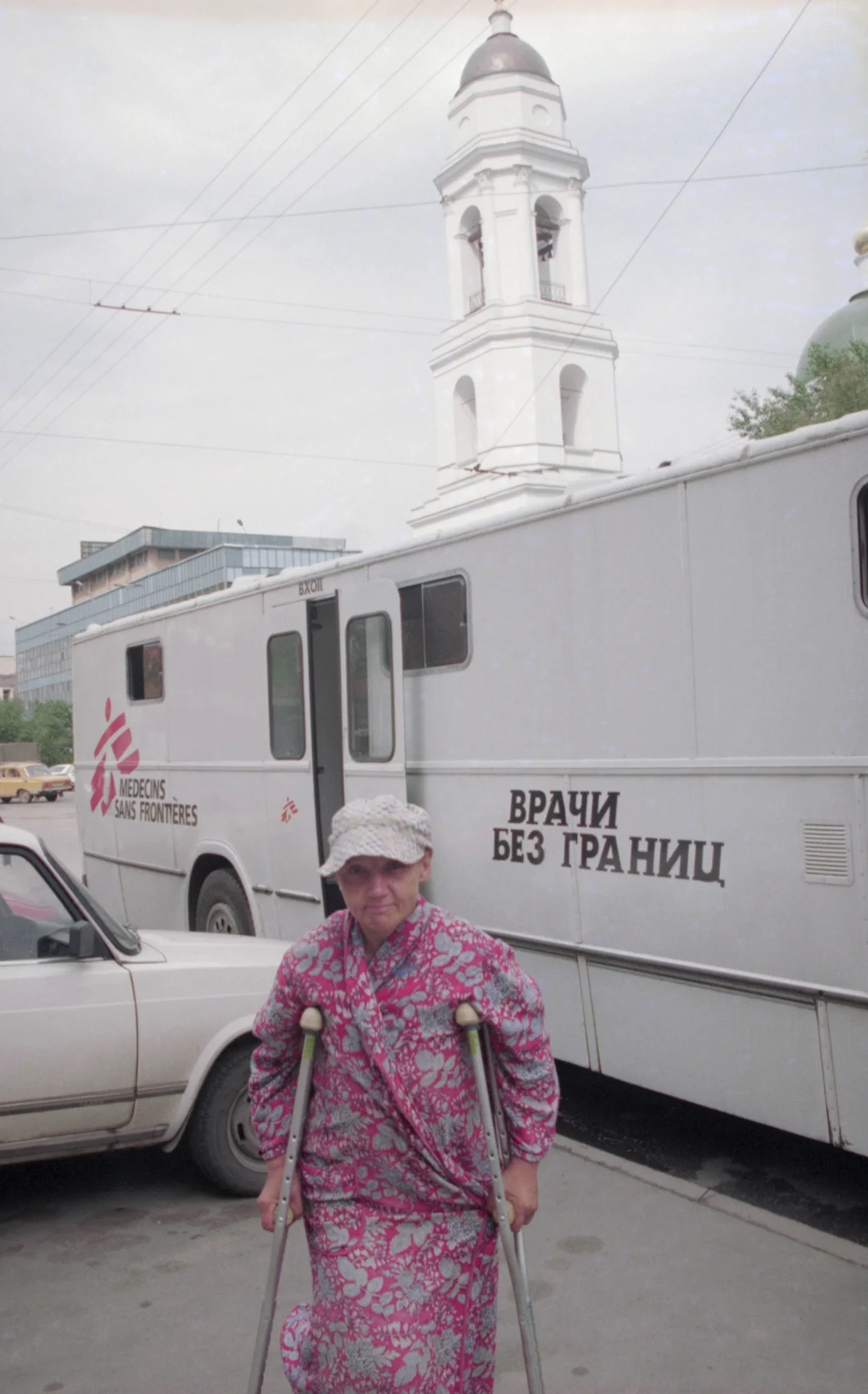
“At first these were mobile teams that, by agreement with the administration, worked near or on the territory of Moscow stations - mainly on the Three Stations Square and on Paveletsky, but usually we were guided by the situation, these same points were permanent. Subsequently, we had a stable medical center on the territory of the sanitary checkpoint. And work also continued on mobile buses, which were equipped as medical centers in the same areas of several Moscow train stations.
— The founder of Nochlezhka, Valery Sokolov, said that it was difficult to push through initiatives related to the homeless, the authorities reacted almost with phrases that they all needed to be shot. Have you encountered anything similar?
— There were no special problems. Although when the police had a plan, they simply came to the sanitary inspection station and immediately took away our clean homeless people, so as not to have to wash them. There were also separate raids when homeless people were rounded up and taken out of the city. If we found out about this, we tried to write to various authorities. One such trial even reached the prosecutor's office.
— With whom, besides Nochlezhka, whose work you joined in St. Petersburg in 1997, did you collaborate on homelessness issues?
— For example, with Lisa Glinka’s organization - a project to help street children, but it was very short. As far as I know, Lisa then had the opportunity to have a hostel in which she could receive families with children who came to Moscow but were left without housing. Then we provided them with our doctor and medicines to provide assistance on the spot - the shelter was located on Basmannaya Street. To be honest, I really didn’t like the approach that Glinka took.
- Why?
“The fact that volunteers brought food to the Paveletsky station is good. But at the same time, homeless people came up to them and said that they needed something for blood pressure, antibiotics, and so on - and they simply handed out medicine. But it would be better to think about how harmful it is.
— Were the authorities ready to cooperate with MSF then?
— In the 1990s, when everything was in short supply, Doctors Without Borders was received quite well everywhere—there was no opposition. Because everyone, including the city administration, had to solve problems - and they looked for any way. If we needed to get a medical license, we got it easily. If it was necessary to obtain permission, the director of the organization easily gave it... We worked normally - we met with the vice-mayor of Moscow and with many deputies.
The period of homelessness is the calmest and freest period of the Mission’s work in Russia.
In the future, of course, it became more and more difficult due to the fact that the administrative apparatus began to be more and more isolated.
— Nevertheless, at some point you placed a bus right under the mayor’s windows with constantly updated information about the number of people who froze over the winter...
“It was an action to attract attention - the issue should have been resolved radically: if people are freezing on the street, the shelters and the metro should be opened at night. But we must understand that our organization has never been involved in political activities. Our only task is to provide medical care and support to those people who find it difficult for various reasons.
— Doctors Without Borders not only provides medical care, but also helps different groups of the population and social issues. Has the work against homelessness in Moscow yielded fruit?
— Several night shelters have appeared in Moscow - at least five. That is why we ultimately stopped our work: a medical and social center appeared in the city, where a person from the street could simply come, and he would receive medical assistance there, he could also dry his clothes there and wash himself; and no one detained him. That is, the city began to implement our project under the roof of the Moscow Department of Health in 2003, then we curtailed this program.
— How did “Doctors” enter Chechnya?
— We started working during the First Chechen War - around 1995, the first office was opened in Grozny, but it did not last long because the office was attacked, as a result of which everything valuable was taken out of there. Some armed people came, put all the employees face down on the floor and looted the premises. After this, Doctors Without Borders left Grozny directly. And they began to work around the Chechen Republic in neighboring republics outside of hostilities, helping refugees, of whom there were hundreds of thousands on the territory of Ingushetia. At that point, many refugees (displaced people) found themselves in the same homeless situation we started with. Because they are not registered here - they belong to no one. And, accordingly, for them medical care in Ingushetia or Kabarda was simply necessary, but practically unattainable.
Then, when the situation began to improve and the fighting ended, the Chechens themselves began to move back to their republic, where much was destroyed. The Russian Ministry of Emergency Situations built temporary accommodation centers - small houses where people could live. There we also continued our work. But in 2009 they decided that it was necessary to stop - former Chechen refugees began to live no worse than everyone else.
— While the fighting was going on, did you provide assistance to the wounded?
“Such patients were admitted to the hospital, not to us.” We worked in temporary accommodation centers and encountered common diseases: hypertension, inflammatory processes.
Among the peculiarities of our work in Chechnya, we had two abductions of the heads of the Mission.
One head of the Mission was kidnapped, but due to the fact that the head of our office was very popular in Chechnya, through his connections he was able to negotiate - and two weeks later the head of the Mission returned. The second kidnapping was not in our Mission, but at Doctors Without Borders. Switzerland" in Dagestan - the head of the Mission was held hostage for several months, then he was released ( Novaya columnist Major Vyacheslav Izmailov took an active part in this. - Ed. ).
— What motivated you?
- Some kind of dark story - it’s still unclear who kidnapped him and why.
In the future, we worked, in general, quite normally. And together with Doctors Without Borders. Holland" restored tuberculosis service in Chechnya. We ended up there when there were only 12 TB specialists in the whole of Chechnya. Thanks to this, the Chechen Republic has one of the best TB systems in the country: we laid down the system - correct diagnosis, approach to treatment - but at that moment big federal money came in in terms of material construction. But the main thing is not just the land, but learning how to cultivate it, which is what we did - we helped restore the correct approach to the diagnosis and treatment of patients with tuberculosis.
— At the same time, you had a project with tuberculosis related to the penitentiary system...
— When we worked in the Kemerovo region, it was emergency assistance, because at that time there was a crisis situation in phthisiology in the country - and especially in the penitentiary system. If the disease is not treated, but the number of sick people accumulates, then its spread increases, since it is an infectious disease. And in the penitentiary system, people are generally shoulder to shoulder - and the spread of infection is even more likely if measures are not taken correctly. Our task in the Kemerovo region was to help, at the first stage, to establish a correct and quick diagnosis, so that in the presence of a contagious disease, a person could be isolated - do x-rays, smear microscopy. And then start treating in a timely manner.
This program was very well supported by the leadership of the Federal Penitentiary Service - they simply held on to us with both hands while we worked there. That is, it was a very favorable environment.
The only difficulties arose with the fact that the penitentiary system began to overtake the civilian system for treating tuberculosis at that time. And people left prisons - cured or untreated - and could not continue to be treated properly once they were free.
— As far as I understand, your project on tuberculosis continued until the closure of the Mission in Russia and even influenced the standards of the Ministry of Health, which we will soon see...
— We tried our best to apply WHO standards on the territory of the Russian Federation so that they would be applied here as quickly as possible. Because WHO standards are standards that are based on evidence-based medicine, and they are based on facts and existing experience, collected and assessed by experts. And only after this are given reasonable criteria with proven effectiveness - we tried to implement these recommendations as much as possible so that they reach the Russian patient as quickly as possible.
— Tell us how the program developed.
“We managed to achieve that, starting from January 2025, Russia will finally be able to treat tuberculosis that is drug-resistant for 9 months and without injections. Now this is in the clinical recommendations approved by the Russian Ministry of Health. Only thanks to our project in the Arkhangelsk and Vladimir regions, where we carried out a scientific and practical project together with Russian doctors, the results of this study served as the basis for talking about the possibility of changing treatment standards.
Until today
in Russia, tuberculosis is treated for 18 or 24 months - and for the first 8 months the patient receives injectable drugs. And the fact that from next year it will be possible to treat patients without injections and for 9 months in accordance with the diagnosis is only thanks to the results of our work.
In Belarus, already last year, 95% of patients with drug-resistant tuberculosis were treated without injections for 6 or 9 months, while in Russia they continue for 18–24. In Belarus, this also happened thanks to our work, as well as the local national anti-tuberculosis program and the people who work in this state program. But the very methodology of 6- and 9-month treatment was brought to Belarus by Doctors Without Borders.
— Why does tuberculosis need to be treated faster? What does this give?
— Firstly, at the moment the effectiveness of treatment of drug-resistant tuberculosis in the Russian Federation is 51%. That is, only every second person is cured. And six-month treatment is at least 90% effective. There is a difference.
In the case of short-term treatment, highly effective drugs are used in the correct configuration, because the work is based on identifying the type of drug resistance. Plus, this is a painless treatment - fewer side effects. This is also a completely non-injection protocol: few patients withstand this to the full extent - many simply break down and stop treatment. In Russia, the only ones who have now begun to treat tuberculosis in 6 months are Doctors Without Borders, together with Arkhangelsk and Ivanovo doctors.
We started this in September last year according to a specially approved protocol - and have accepted 42 patients for treatment since September last year. And 15 of them have already recovered. But the rest, unfortunately, are currently receiving treatment thanks to the Ministry of Justice.
— What other projects were closed with the decision of the Ministry of Justice to exclude the organization’s office in Russia from the register of representative offices of foreign non-governmental organizations?
— The project for assistance and prevention of HIV infection among vulnerable groups in Moscow and St. Petersburg has also been closed. We worked together with Humanitarian Action in St. Petersburg and the Steps organization. Especially
many HIV-infected people from Ukraine were left without medications due to SVO. It turned out that a large number of Ukrainians who lived freely in Russia and had a diagnosis were simply thrown to the sidelines - they could not receive treatment.
At this moment our help was very noticeable and necessary.
Also, now we cannot do what we did for two and a half years - from the very first day of the outbreak of hostilities in Ukraine, we helped refugees from Ukraine in Russia.
We had relationships with local organizations in Belgorod, Voronezh, Rostov-on-Don, and most recently in Taganrog. We found partners directly in Donetsk, even met with the Minister of Health of the “Donetsk Republic”, agreed on the purchase of some consumables for the work of doctors, but we were still fed breakfast... Since we do not have a medical license, we helped with the purchase medicines – victims were given vouchers to receive medicines.
— Did other Doctors Without Borders missions go to this hot spot from the other side?
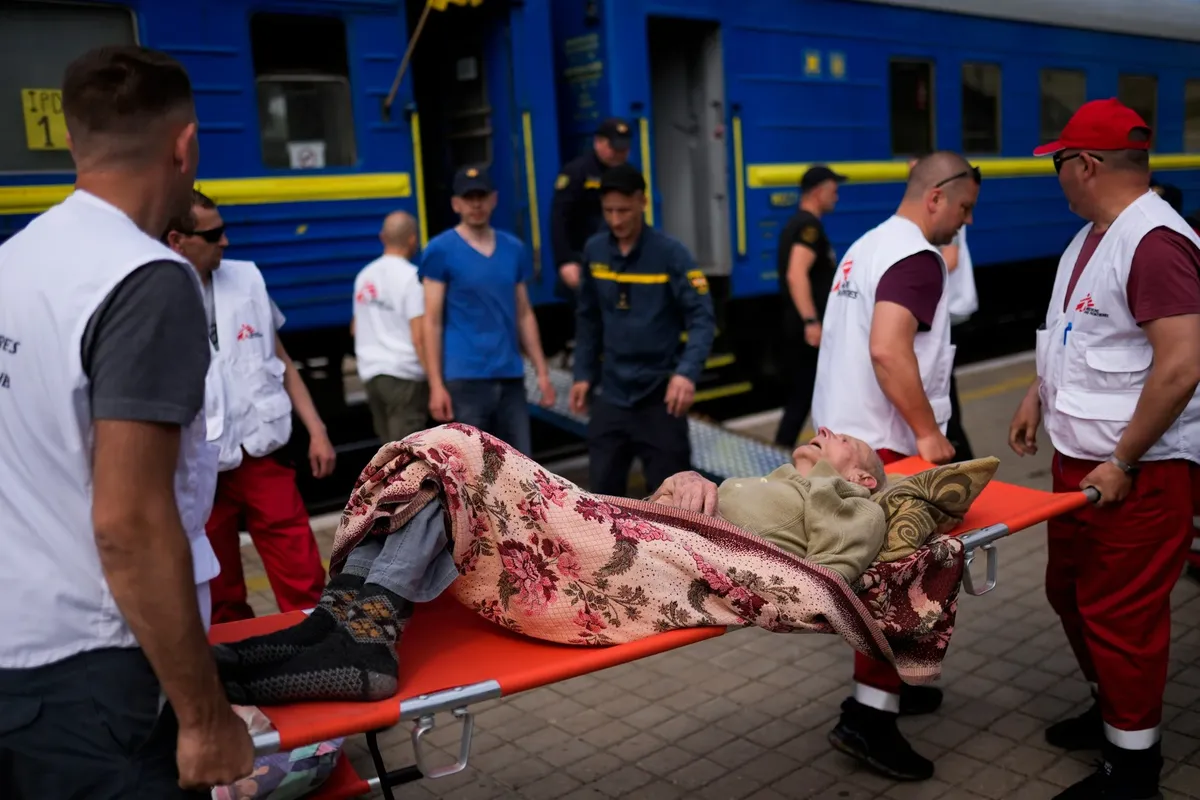
— They worked and are working on the territory of Ukraine...
Interviewed by Anastasia Medvetskaya.