
Translated material
“No one took war into account during the construction of the station”: why the Kursk NPP is not protected from direct attacks during hostilities
Hitting some station objects can cause a dirty bomb effect.
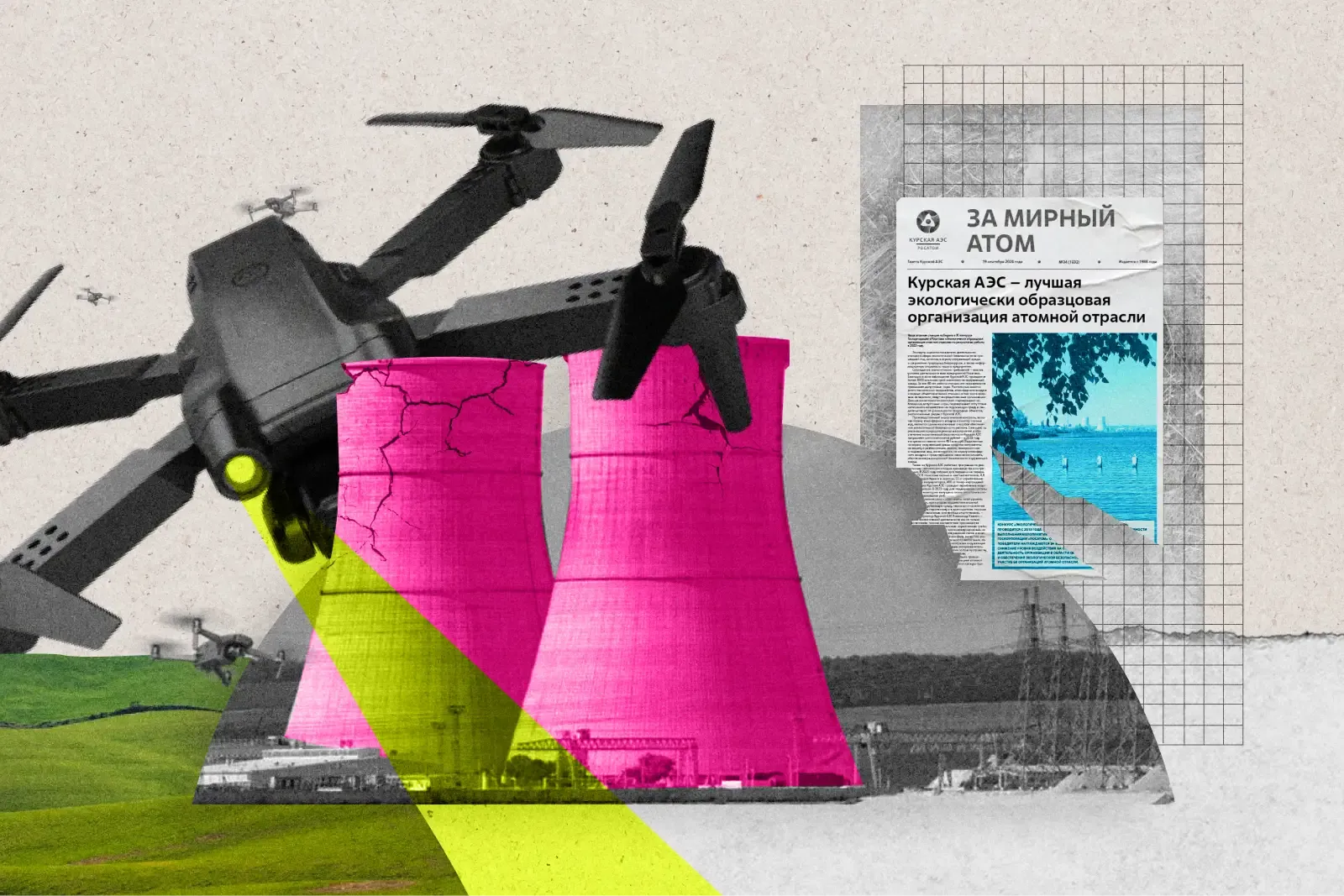
On the evening of October 3, the media reported about downed drones 5 kilometers from the Kursk Nuclear Power Plant, and a fire started at the site where one of them fell. According to them, the target of the attack could be either the station itself or military facilities not far from it. Experts and sources close to Rosatom told VERSTKA that the nuclear power plant is not ready for such attacks, and that hitting some of the plant’s facilities could cause the effect of a “dirty bomb,” that is, a projectile with radioactive substances, but without a nuclear charge.
In order not to miss new texts from “Layout”, subscribe to our telegram channel
What is the threat of an attack on the Kursk nuclear power plant?
According to Russian media, the Ukrainian military launched several drones at the Kursk nuclear power plant (located near the city of Kurchatov, approximately 30 km from the front line). Ukrainian media and the representative of the country's National Security and Defense Council Andrei Kovalenko deny that the Ukrainian Armed Forces tried to attack the station, since “it is inappropriate.” Advisor to the governor of the Kursk region Roman Alekhin said the same thing; according to him, there is “no point in dispersing what was aimed at the nuclear power plant, because it is pointless.”
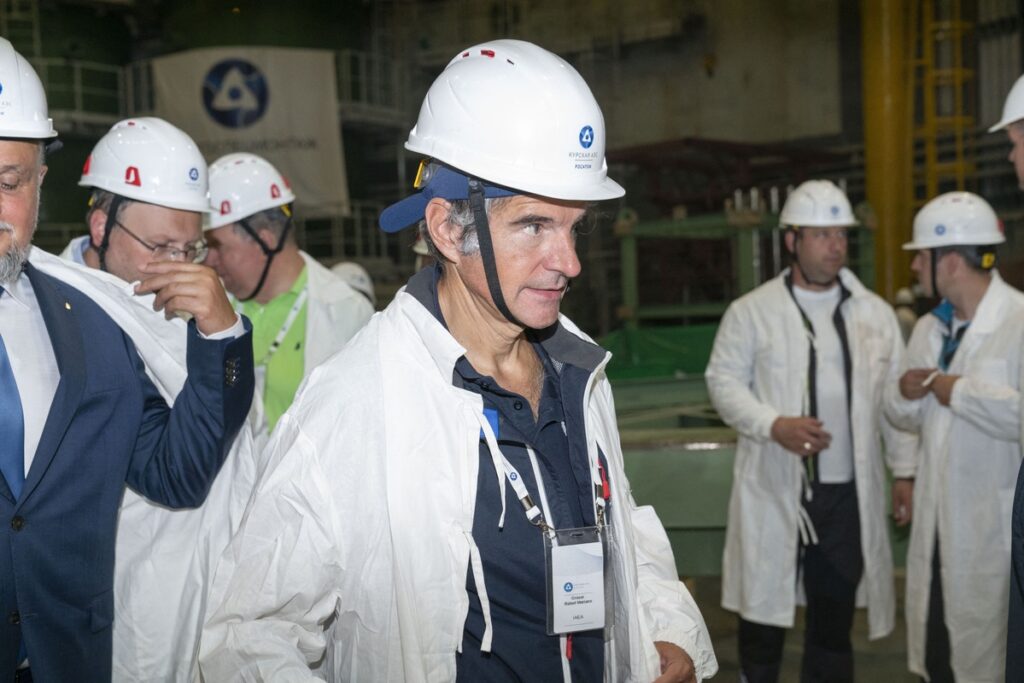
However, this attack is probably the most potentially dangerous incident for the nuclear power plant since the beginning of the July offensive of the Ukrainian Armed Forces in the Kursk region . Although the plant has already announced that it is “operating as normal,” in fact, the nuclear power plant does not have sufficient protection from direct attacks during military operations. This was stated by the head of the IAEA, Rafael Grossi , during a visit to the Kursk NPP in August, and was also confirmed by Vestka sources close to Rosatom and independent experts. According to Alexander Nikitin, an expert from the environmental organization Bellona Foundation, when designing each facility with a nuclear reactor, lists of “design” and “beyond design” emergency situations are compiled.
“Project ones are those that can quite realistically happen,” he explains. – Beyond the design – something that cannot happen, but is still calculated. When all nuclear power plants were being designed, no one, even in the design list, took into account what is called war or military impact on a nuclear power plant.” According to the expert, what is happening is “an emergency situation that is happening for the first time.”
This is partially confirmed by Vorstka’s sources who are familiar with the work of Rosatom. “No civil energy infrastructure building, be it nuclear or any other power plant, is obviously adapted to events like missile arrivals. Moreover, the structures of the Kursk NPP were designed 40–50 years ago. Technologies and materials then, of course, were inferior to modern ones,” said one of them.
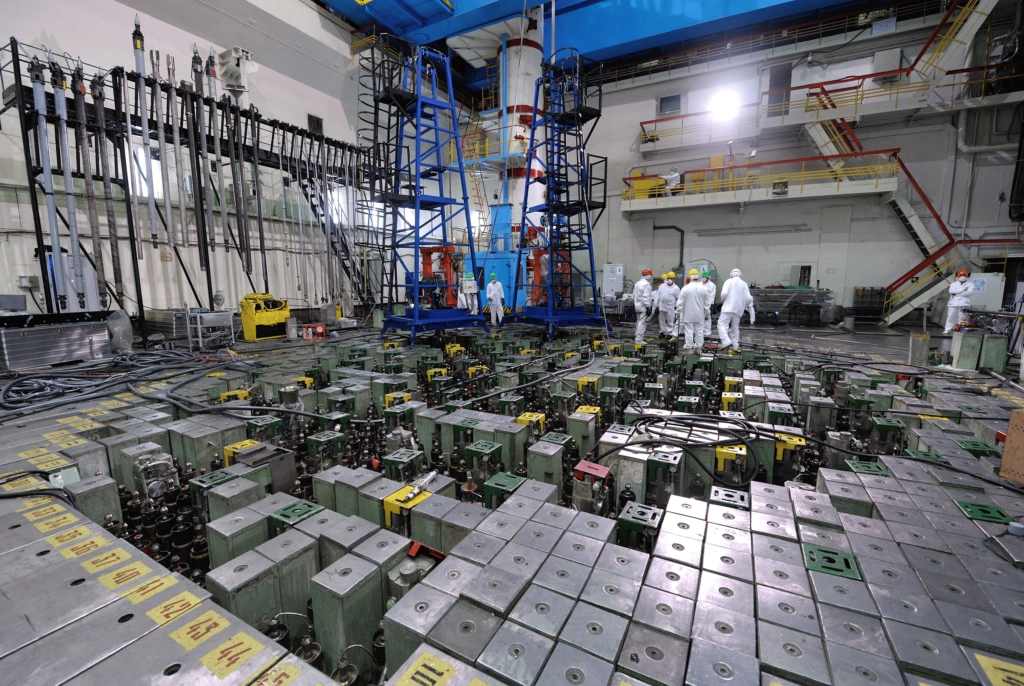
The reactors and nuclear fuel storage facilities themselves can still be called relatively safe, since part of the fuel is “in special reinforced concrete containers”, designed even to fall from a height of two meters. However, the spent fuel that has already been unloaded from the reactor is located in the so-called “storage pools”, where the residual nuclear reaction is extinguished. They are located separately from the reactor unit and, according to the second interlocutor of “Verstka” from the structures collaborating with Rosatom, are protected “little better than fortified civilian buildings.” “Damage to such an object threatens an environmental accident,” states the source.
Expert Alexander Nikitin compared such a potential emergency with “very high contamination” akin to a “dirty” bomb,” that is, the explosion of a projectile with radioactive substances without starting a nuclear chain reaction . “The reactors of the Kursk nuclear power plant have rather weak protection, and if they start shelling it, it will not withstand,” he clarified. It is difficult to predict the consequences of such accidents - too many uncertain factors need to be taken into account, both the expert and employees of the state corporation state.
The Kursk nuclear power plant was improved after the Chernobyl accident and the September 11 terrorist attack
The Kursk Nuclear Power Plant, launched in 1976, and Kurchatov are similar in their original design to the Chernobyl Nuclear Power Plant and its satellite city of Pripyat. After the accident at the Chernobyl nuclear power plant, its “related” stations - the Kursk, Leningrad and Smolensk nuclear power plants - tried to modernize. However, the vast majority of these changes affected insurance against “internal” factors that could provoke an accident.
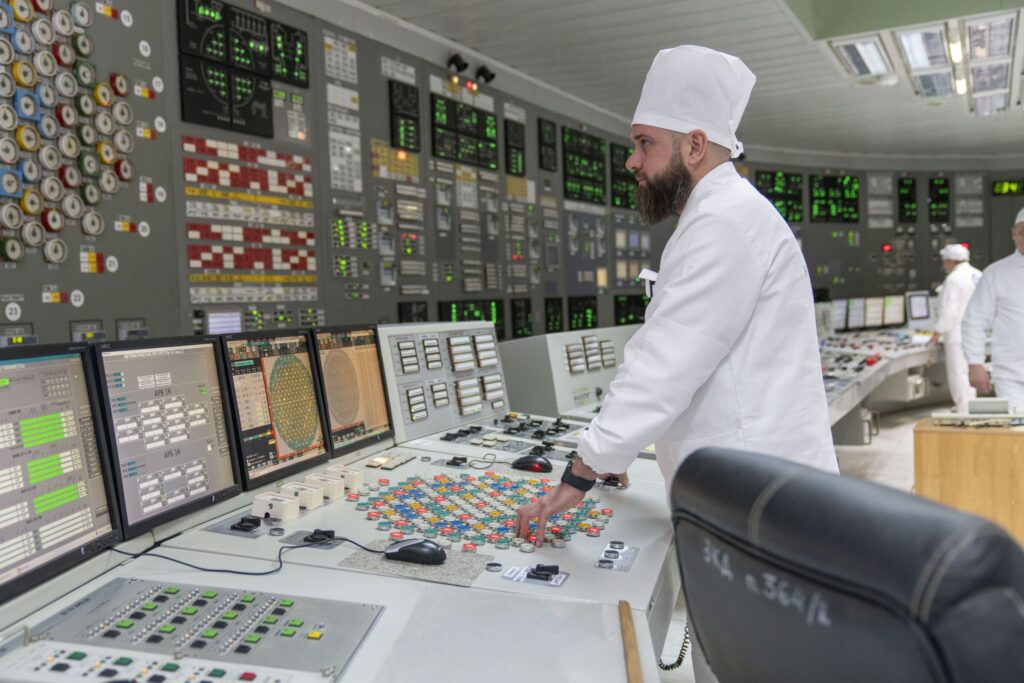
Among them, Rosatom calls the complete elimination of the influence of people on the operation of reactor safety systems and the guarantee of their functioning even in the event of a complete blackout of the nuclear power plant. Alexander Nikitin does not doubt the high qualifications of the station’s employees: “There is an established team there, which they are trying to keep at the station by hook or by crook. And the “pedigree” of this nuclear power plant is such that they have not seen and dealt with any situations there.”
Initially, the Kursk NPP operated four power units of the RMBK-1000 model, identical to those at the Chernobyl NPP. Currently only one of them is operational. Two were previously taken out of service, one is undergoing technical repairs. A new Kursk NPP-2 with planned four power units of a more modern VVER-TOI model is being built next to the old station. Its launch into the network is planned to begin in 2025.
Newer nuclear power plants, including the Kursk NPP-2 under construction, after the September 11 terrorist attack in the United States, are designed for a direct plane crash into a nuclear unit. “A sarcophagus is placed around them that can withstand the fall of a large liner. But this does not apply to the old Kursk NPP. When it was designed, there was no talk about this,” Nikitin explained to Vorstka.
International agreements do not provide for liability for attacks on nuclear power plants
According to Alexander Nikitin, international agreements, although they indicate the inadmissibility of using weapons against peaceful nuclear facilities, are only advisory in nature.
“These documents do not strictly prohibit doing this, but only say that we must refrain from such attacks,” he clarified. “There are no papers that all countries with nuclear power plants would sign, in which there would be a hint of at least some kind of mandatory responsibility for such actions.”
In addition, the expert claims, these agreements have “many clauses - someone signed them, someone first signed them, and then refused to sign.” “And as the current war [Russia against Ukraine] has shown, documents with only political responsibility do not play a serious role,” Nikitin says. He clarified that during the current conflict there were no “strikes aimed directly at these stations”, but there were “incidents that can be called random.”
In order not to miss new texts from “Layout”, subscribe to our telegram channel
The activities of the main international organization monitoring the development of nuclear energy, the IAEA (a UN structure), are “technical, not political,” the expert says. “No one has ever heard political statements from its leader Rafael Grossi,” Nikitin clarified. “The IAEA does not have sufficient powers, resources, and there is nothing in its charter to exert direct influence on the participants in such incidents.”
Sources from structures close to Rosatom in conversations with Vorstka said that to protect nuclear power plants they rely on their own forces and the resources of the Russian Ministry of Defense. “We are systematically working to equip facilities with means of detecting and countering UAVs; their use has already proven its effectiveness more than once. And the military is taking maximum measures to suppress attacks from the Ukrainian Armed Forces,” an interlocutor close to Rosatom told Vorstka.
Alexander Nikitin considers the accident at the Kursk nuclear power plant potentially more dangerous than at the larger Zaporozhye nuclear power plant, which has long been located in the combat zone. “ZNPP is completely “cold”, all reactors are shut down. One works at the Kursk station. And this is alarming,” he explained.
Support “Vestka” - it’s important and safe →