
Translated material
Broken windows
About how they play normal life in Belgorod
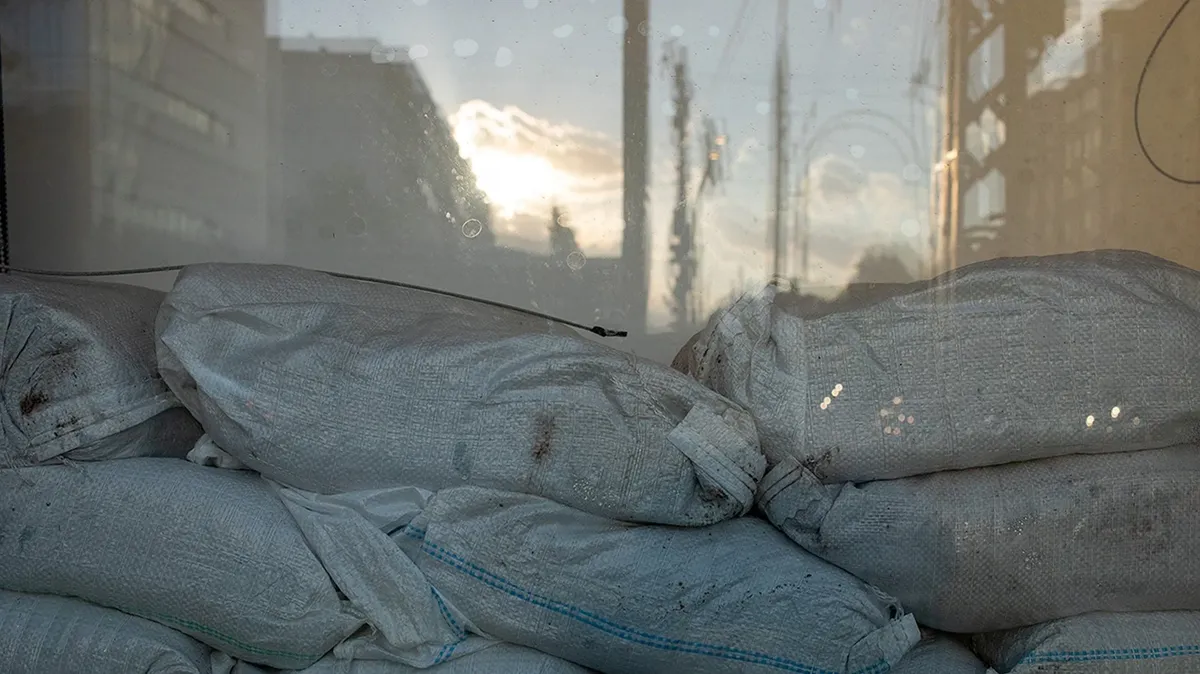
Belgorod. Photo: Alexey Dushutin / Novaya Gazeta
Music is playing in the bar.
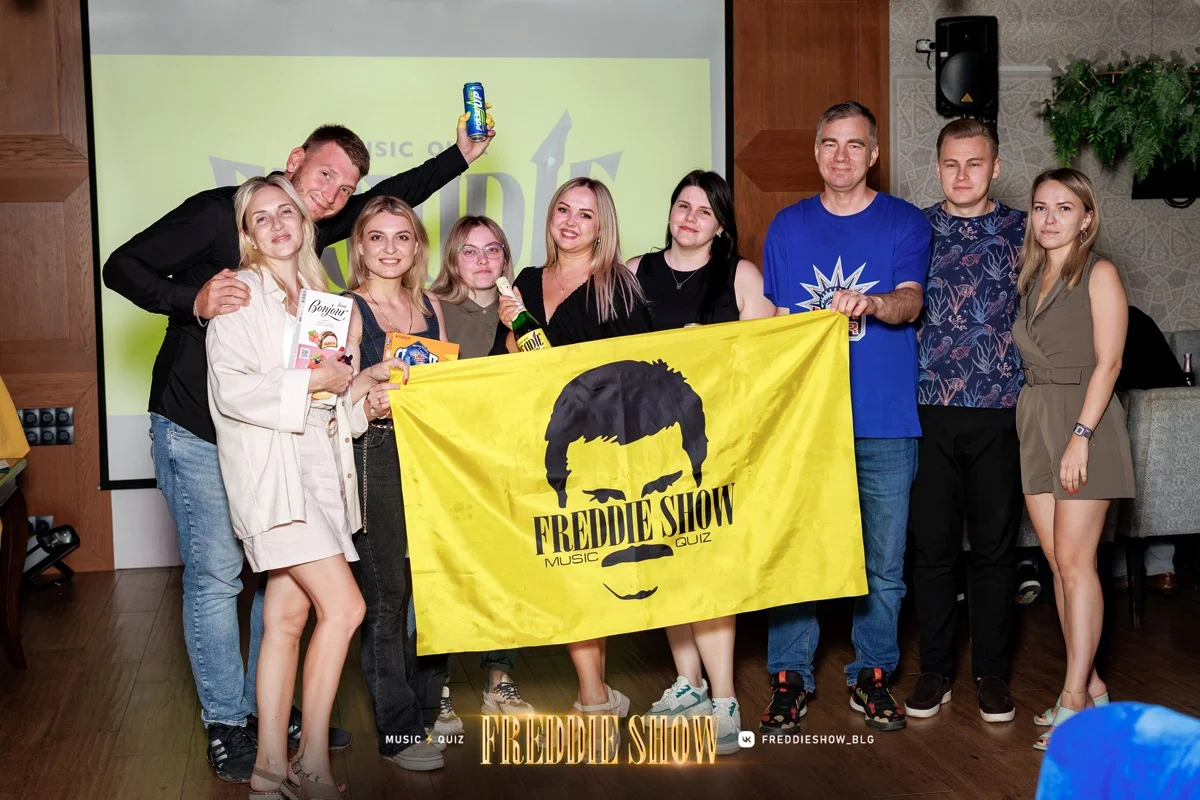
In the bar of a half-empty city they sing, drink, dance - and at each table, shouting over the beat, they reach out to the one who quickly writes something on a lined form. The one who writes is the captain, the rest are members of the team, and for the next three hours their life is a game. In the next three hours, the most important thing is to remember the title, or a name, or a line from a song, to reach out, to shout out, to have time to answer, to get ahead, to win. Several years ago, Belgorod had little idea what quizzes were, especially musical ones, but now he knows, and once every three weeks on Saturday evenings, the hall of the karaoke club is filled with players of the “Freddy Show” - from the bar counter, the entire width of which is stretched yellow a flag with the outline of Mercury's face, up to a mirrored wall in which it is reflected. A beam of illumination snatches from the twilight a yellow vest flashing around the hall - this is the presenter, her name is Lena Krasilnikova, and the show belongs to her.
“Freddy” is two years old - it appeared in September 2022, when Belgorod had not yet been bombed. At six in the morning on February 24, Lena was woken up by her eldest daughter - Polina ran into the bedroom, shouting “***! *** has begun! Lena didn’t understand and didn’t believe it: “What kind of nonsense are you talking about, what kind of ***?” But when the daughter fell silent, in the six-hour silence of the sleeping house, both heard distant explosions.
Then it was the end of winter, then spring, then summer - the “Bajas”, as they are called here, were not approaching, Belgorod residents were minding their own business, and they decided to raise the yellow flag with Freddie Mercury after all. And while the *** is walking, they are playing.
There's music playing in the bar, and walking through its doors is almost like switching tracks on a playlist: a siren has just blared outside. But they will talk about it behind the walls - they will discuss how long the shelling will last, they will count the casualties, they will think about how to visit loved ones - behind the walls this is almost all they talk about. But here there won’t be a word about it: here some man with a crutch will spend the whole evening proving to Lena and everyone who happens to be nearby that the answer “Cha-cha-cha” instead of the name of the immortal hit “Chu-Chu Cha-Cha” is necessary was counted. Because as long as the show goes on, "Cha Cha" is more important than planned leg surgery - and even more so than the constant threat of flights.
In the hall there are those who flew straight into the yard (and - lo and behold! - the windows on the first floors did not break), and there are those whose house it flew into twice (and the players remained alive - a miracle squared off).
They all - or almost all - have known each other for a long time: not so much from the young “Freddie”, but from “Minority Report” - a more adult quiz, Lena’s first project in Belgorod.
She is the organizer of these games, the creator, the energy accumulator and the center of meaning. She came here five years ago from Murmansk - at first, as in her hometown, she led weddings and corporate events and (also like in her hometown) made a name for herself from this. Then she got tired of it, and she remembered how at home she played quizzes on weekends: on Sunday evenings, she didn’t have to think about what to cook, iron or wash, but drink cider with friends and listen to the brains of other similar participants creak in sync. tired of everyday life. Lena decided to bring the game to Belgorod - and then the hero’s journey began.
Nowadays, twenty-five teams of ten people each can sit in her hall (or even 68 teams at several venues, but this is her unbroken record), now registration for games closes instantly - even in a deserted city with two empty thirds are cafes and parks. Four years ago, when Minority Report opened just after the pandemic began, this was not the case. That is, I liked it right away (there were other quizzes in the city, but with a smaller audience - and the players, tired of sitting at home, were happy with any movement).
But the first six months when the project was launched, according to Lena, look like a scene from a typical film about a self-made hero: she is sitting at the computer, the flashing pages of VK are reflected in her glasses - Belgorod residents under thirty, to whom she manually writes personal invitations, to that “VK” periodically responds with blocking, - and through editing, day and night alternate, the husband brings the children from kindergarten and school, snow begins to fall outside the window. After another montage with the signature “four years later,” she receives another letter asking her to register another team for the next game, and, scrolling up the correspondence, she sees that four years ago her invitation remained unanswered. At her first birthday, the quiz thunders, naturally, “We are the champions” - the same song now ends the “Freddy Show” games.
The hero’s journey turned out to be successful: now Lena has four different projects, all extremely successful, the players love her, they invite her to play board games in the evenings and barbecue, and her son and daughter rush around the room during rounds and collect answer forms.
Only this all happens to the accompaniment of sirens and explosions - and she always takes the children with her because she does not want to leave them alone with the missile danger.
The eldest daughter, Polina, is terrified of arrivals: the roar starts to shake her, like in Parkinson's. Lena has to lie on top of her, covering her with herself: her daughter is calmer, and if she arrives, at least she will remain alive. Six-year-old Sasha simply follows his sister - and also pretends to be terribly scared. But they follow safety precautions synchronously: if they hear a siren, they go down to the first floor, curtain the windows, lie down on a high-back sofa and cover themselves with blankets. And they believe that now they will not be affected.

In all two years, “Freddy” fell silent only for two months - in March, during the elections, when the heaviest shelling began in Belgorod. Lena says that they went according to schedule: “About eight - morning shelling, then lunch, then evening, then late evening. And every time - death, every time - victims, every time - destruction, every time. Finally the husband said:
- Let's go to the sea for three days - just to breathe.
I speak:
- Are you crazy, what three days? A day there, a day back - why?
But the next day there was shelling again, panic again, and I said: okay. We waited half an hour after the lunchtime shelling - and gassed.
They returned from Anapa not three days later, but two months later - it was impossible to enter the city earlier. They returned, however, not in full force: Lena’s best friend, who once came to play her quiz and whom they took with them, remained in Anapa: she also had a business in Belgorod, but she did not want to raise children under fire.
“I’m also a mother,” says Lena, “but in addition to my family, I have players - and this is also my family.” In addition, I am proud of everything I have done and achieved, I have earned the trust of a large audience - and it was a hard, thorny path. I can’t give up everything now, start again from scratch. I felt very bad all these two months: I didn’t work, I slept until lunch, my condition was terrible. And when I returned, many of my players, not one or two, came up and said: since you returned with your quizzes, it means normal life has returned.
When I look at the people in the “Freddy Show” hall, I understand that their joy, their fun seems somehow heightened: they laugh louder than anywhere else, are deeper immersed in table conversations, their reaction to jokes is brighter.
Such sincerity and spontaneity are not found in Moscow bars - only those who know the score, who understand that tomorrow there may be no reasons for joy, can have fun like this.
Huizinga wrote in Homo ludens that a game is a world that is separated from the rest of life by its own space, its own boundaries, its own flow of time, its own rules. In other words, a game is a separate world in which a person playing can live the life he dreams of. Now the reality, apparently, is that people dreaming of a normal life are forced to play it.
* * *
On September 24, Lena was going to stay at home - she had to read through the packets of questions for Saturday's "Freddie": check the wording and the balance of fun/serious, understand whether the questions would sound in the right intonation and whether they would make the right weather, whether they would dance to them - in general, she had a lot to do, and she didn’t want to go on any visits. But the players (a married couple and her long-time friends) called for a reason: their baby is two weeks old, it should be noted, and who knows what plans the baby has for the weekend - maybe it won’t be his day of reception. Besides, Sasha had long wanted to look at him. In the end, Lena agreed: she gathered the children, persuaded her father to get behind the wheel, argued with him about whose car it was better to get there - hers or her husband's, took her mother with her, who did not want to sit at home alone all evening - and at 19.20 the car drove out of the gate. At 19.40 - arrival in the yard: the father’s car was left standing in fragments, on the first floor, where the children usually hide, all the windows were broken.
September 24th is Tuesday. And on Saturday the bar plays music again.