
Translated material
Russia will expel the Taliban from terrorist organizations
"Vilayat Khorasan", one of the branches of ISIS, is waging a guerrilla war against the Taliban who seized power in Afghanistan.
The decision to exclude the Taliban movement from the list of terrorist organizations in Russia has been made, it remains only to formalize it, said the special representative of the Russian President for Afghanistan, Zamir Kabulov. “The Russian leadership has made a fundamental decision, but this process must be done within the legal framework: this is the work of lawyers, parliament, it is necessary that the process be completed in the manner prescribed by law,” Kabulov said.
According to him, Afghanistan “fits more and more organically into our broad regional family.”
In order not to miss new texts from “Layout”, subscribe to our telegram channel
The FSB claims that the Taliban is aimed at “restoring order” in the country and will help fight the “Vilayat of Khorasan”
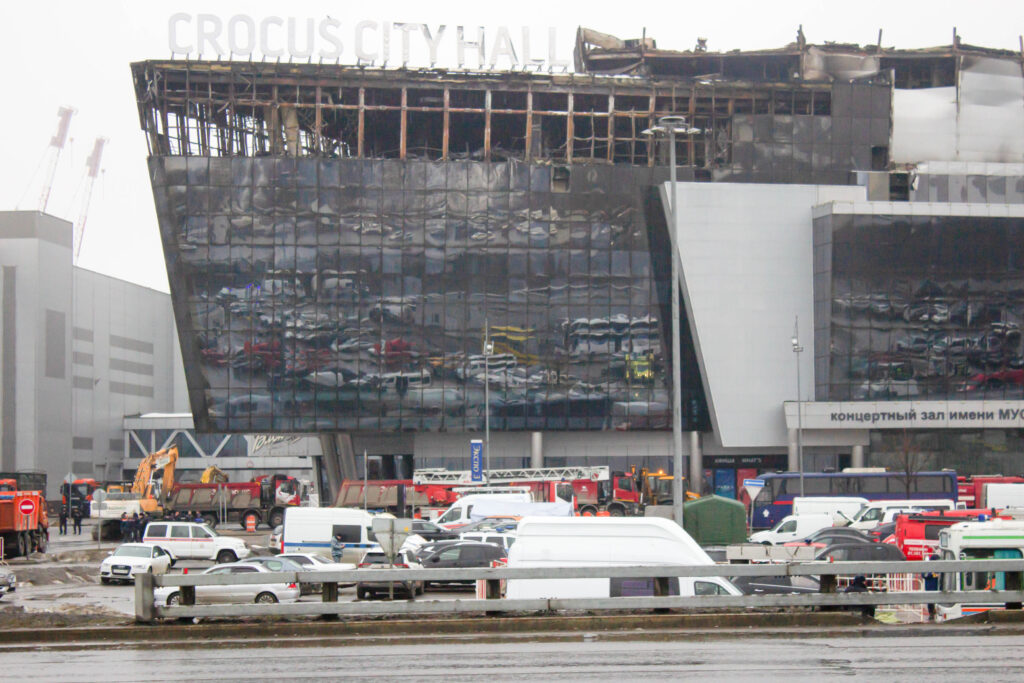
The head of the FSB, Alexander Bortnikov, said on October 4 that Vilayat Khorasan and “Western-controlled Ukrainian special services” were responsible for the terrorist attack in the Crocus City Hall shopping center near Moscow . Bortnikov said that the West provides resource support to this group, and also said that in order to fight the Vilayat Khorasan, it would be advisable to “establish contacts with the Taliban.”
“We believe that establishing pragmatic cooperation between intelligence agencies will be mutually beneficial. This is especially relevant in the context of the fight against international terrorist organizations, drug trafficking and weapons smuggling,” Bortnikov said.
For the first time, the Ministry of Foreign Affairs and the Ministry of Justice proposed to Vladimir Putin to remove the Taliban from the list of terrorist organizations at the end of May 2024. Sergei Lavrov argued that such a step must be taken, since the movement has now become the real power in Afghanistan. Later, Putin also said that it is necessary to build relations with the Taliban, since “these are the people who control the country.”
The Russian government's statement about the possibility of cooperation with the Taliban drew criticism from the United States. Thus, the coordinator for strategic communications at the National Security Council of the White House, John Kirby, said that the Taliban have not fulfilled a single obligation they assumed after coming to power. At the same time, we are talking not only about their actions towards women, but also about supporting the economy. “If Russia does this [remove the Taliban from its list of banned organizations], we think it will send a bad signal to others,” Kirby said.
Why are the Taliban ready to help the Russian authorities in the fight against Vilayat Khorasan?
The Taliban is an Islamist religious-political paramilitary movement, recognized as terrorist in many countries around the world. In September 1996, the Taliban took Kabul without a fight and founded the Islamic Emirate of Afghanistan. In 2001, during the war in Afghanistan, which began after the September 11 terrorist attacks, the United States, with the support of the Northern Alliance, overthrew the Taliban regime.
In the summer of 2021, the United States withdrew the last troops from Afghanistan, and the Taliban launched a massive offensive. As a result, by August 15, almost the entire territory of Afghanistan was under their control.
In turn, Wilayat Khorasan, or Islamic State in Khorasan Province (ISKP), is a cell of the Islamic State in Afghanistan that seeks to overthrow the current authorities in the historical region of Khorasan. This is a relatively young group: it was created in early 2015, after a number of militants broke away from the Taliban, pledging allegiance to the Islamic State.
In order not to miss new texts from “Layout”, subscribe to our telegram channel
Thanks to active recruitment of militants and terrorist tactics, ISKP initially controlled territory in eastern Afghanistan, especially in Nangarhar province. However, after the Taliban came to power in August 2021, the situation for ISKH has changed dramatically. The Taliban defeated the ISKP forces, killing or arresting many of the group's leaders and militants, which led to their loss of control over the territories of Afghanistan. As a result, the group went underground, changing tactics to guerrilla warfare and focusing on carrying out terrorist attacks abroad.
The “partisanship” of the IGPH consists of a constant propaganda campaign on the Internet. The Afghan cell of the Islamic State, unlike other affiliates of the group, has created its own independent media structure through its Al-Azaim Media Foundation, which produces materials in Arabic, English, Farsi, Pashto, Tajik, Urdu and Uzbek. (Read more about this in the text of the “Layout”: “ Vilayat “Telegram”: how the propaganda of the “Islamic State” works on the Internet ”).
As for the IGKh terrorist attacks, their peculiarity lies in the fact that many of them involved citizens of Tajikistan. This is explained by the difficult socio-political and economic situation in the country. Most of the alleged accomplices and all four alleged perpetrators of the terrorist attack in Crocus City Hall, for which IGKH claimed responsibility, are also natives of Tajikistan. After evidence appeared in the media that security forces tortured detainees, ISKH released a brochure about the terrorist attack, as well as a poster threatening revenge for the torture of detained “Islamic State mujahideen.”
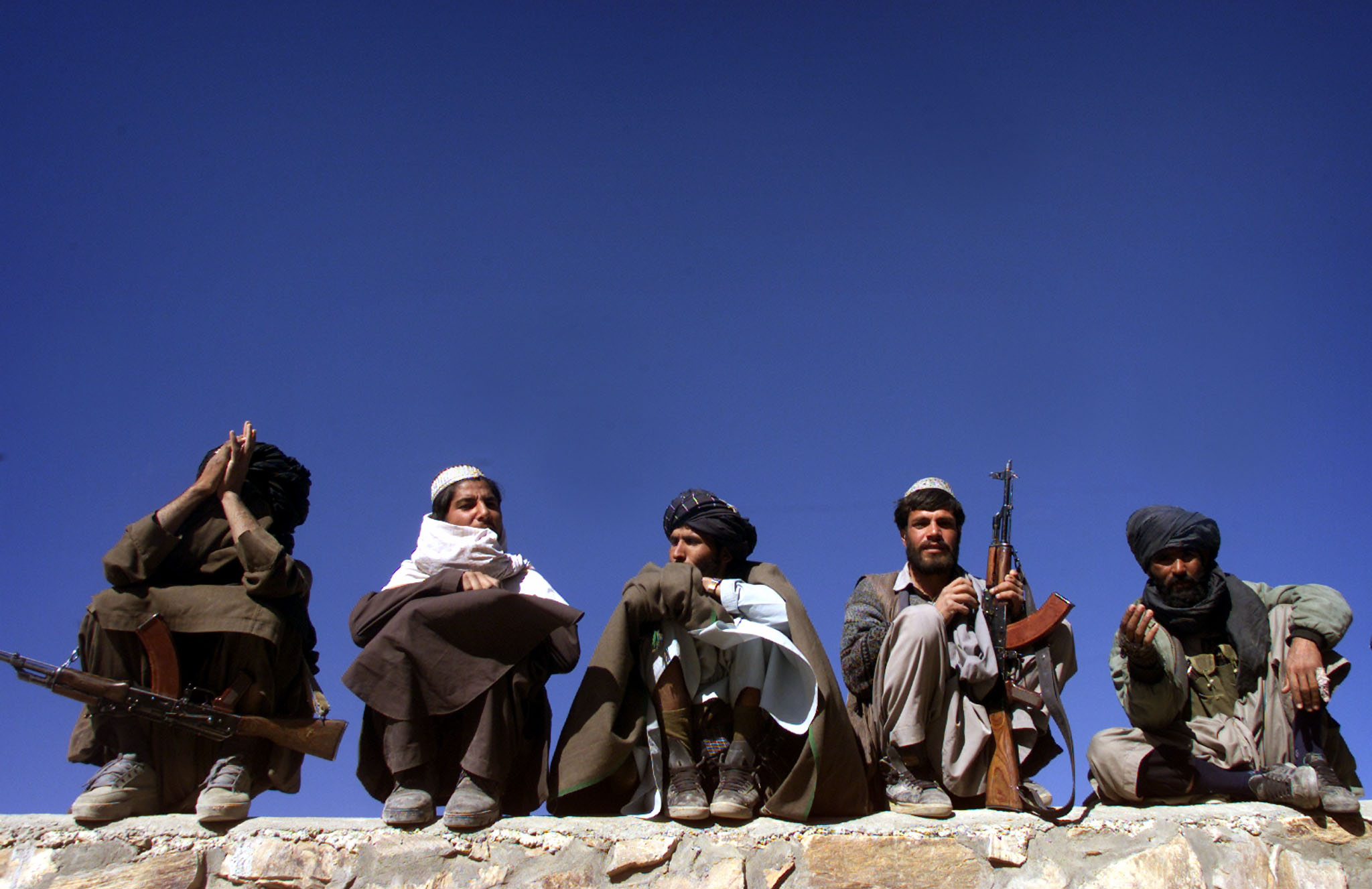
Photo: Taliban sit on the wall of the city of Maidan Shahr, west of Kabul. REUTERS/Damir Sagolj DS/AA