
Translated material
Suspicious bad luck
In September 2001, in one of the Dutch hospitals during the shift of the 39-year-old nurse Lucia de Berke, under unknown circumstances, a seven-month-old girl died. It turned out that this is far from the first sudden death of patients that Lucia looked after. About how the police proved her involvement in 13 murders-in the new issue of the weekly trigrum of the Cold section .
The nurse from the Netherlands was too often on a shift when patients died in the hospital. She was put on life, but the investigation had doubts
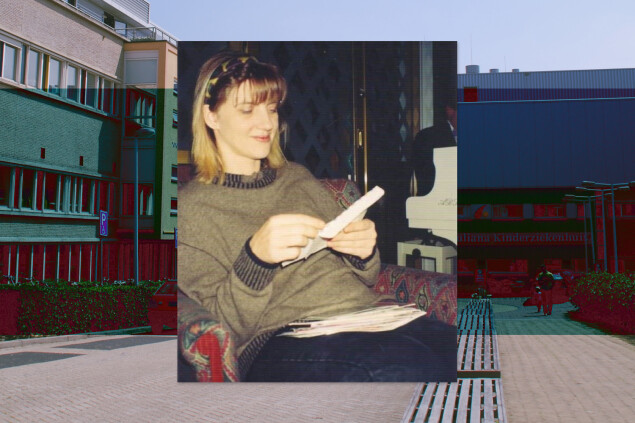
On the morning of September 4, 2001, a seven -month -old patient named Amber died in the Yuliana Children's Hospital in The Hague. She had congenital abnormalities of the heart, brain, lungs and intestines - Amber could not eat on her own, she was fed through the probe.
In July, Amber conducted a heart operation, which stabilized the condition a little, but a month later it became sharply worse. The day before her death, she had abundant vomiting and diarrhea. On this day, two nurses followed the girl, one of whom was 39-year-old Lucia de Berke.
I earn from 100 to 400 thousand a month I teach at the university, I work as a translator and a guide in the summer season, but I still can’t get out of loans 9 minutes of reading
At about 11 o’clock in the evening on September 3, Lucia de Berke connected Embers to the monitor and followed her life indicators - with every hour the girl’s condition worsened. Lucia called doctors.
Amber put a dropper and diagnosed enteritis - inflammation of the small intestine. However, doctors did not consider her condition dangerous. After the examination, Amber was returned to the ward.
The night, at 02:46, the breathing frequency suddenly and sharply decreased , and the heartbeat slowed down. Lucia called a resuscitation team, but it was too late. For 45 minutes, the doctors fought for the life of Amber, at 03:35 she died.
Doctors came to the conclusion that the girl died for natural reasons, and did not find any suspicious signs in her death. However, the very next evening the hospital officially annulled her conclusion after one of the nurses came to his superiors to tell about her suspicions. She was worried that in two years that Lucia de Berke worked in a children's hospital, five patients died during her shifts.
To collect as much information as possible, the general director of the hospital Paul Smiths contacted other hospitals where Lucia previously worked, and requested a list of cases of death at which she was present. Based on the results of his survey, Smiths officially announced Lucia's involvement in several murders and attempts. Including - poisoning of children of Amber, Ahmad and Ashraf.
Probability theory
Almost immediately, the history of Lucia was picked up by the Dutch media. She was nicknamed the “Angel of Death” and compared her with the British nurse - Beverly Alitt, who killed four children, and also had serious injuries with six.
On December 13, 2001, Lucia de Berk was arrested and accused of 13 murders and four assassination attempts.
Lucia was in shock and was worried about what had happened. She tried to explain to the police that she was not involved in the murders, but the accusation insisted on her own. The trial of it began a few months after her arrest.
By that time, de Berk had been working in a children's hospital for two years, in which not a single case of an inexplicable death was registered before her arrival. This only increased the suspicions of the investigators.
The forensic scientists conducted a blood test of Amber. The sample for the study was squeezed out of gauze napkins with which her body was wiped during the autopsy. The analysis showed that a mortal concentration of a drug called digoxin was present in the blood.
Doctors assured that the Amber body should not remain traces of digoxin in the body. Although she received the drug in the first four months of her life, the treatment was discontinued two months before her death, and by that time all traces had to completely exit the body.
The police found out that Lucia had a key to the hospital cabinet in which Digoxin was stored, and found another suspicious fact. According to the notes in the hospital, about an hour and a half before the death of Amber Lucia turned her off from monitoring physical indicators for about 20 minutes. It is so much time that Digoxin begins to act.
During the search of the house de Berk, investigators found strange notes in her diary.
For example, on November 27, 1997, she wrote : "Today my obsessive idea prevailed." On that day, during the shift of Lucia, the elderly patient Frau Zoneleld died, who was treated with cancer.
The investigation was interrogated by the surgeon who treated the Sonsneverd as a witness. He stated that he was surprised by the death of the patient and was sure that she would live longer.
When Lucia was asked what “obsessive idea” they were talking about, she said that she often wondered on tarot cards for her friends, family and patients, although in hospitals this was considered unacceptable practice. Lucia had a deck of Tarot cards, which she kept in a wooden box. Lucia explained the shutdown of Amber from the devices by the need to examine the doctors. However, her words were not taken seriously.
At the trial, the prosecutor called Lucia a liar. During the investigation, the police found out that she had not graduated from school and forged a school diploma to enter the nurses, and before that she earned prostitution.
The woman was decapitated by her own son shortly before the murder, she took him from prison. The body was found by relatives who prepared her surprise for her birthday crime 3 minutes of reading
The decisive in the case de Berk was a statistical analysis conducted by the invited expert Henk Elffers, a well -known Dutch professor of law and psychology.
Elffers studied the mortality table provided to him by doctors and presented the results in court. He came to the conclusion: there is only 1 chance out of 342000000, that Lucia could accidentally be in the place where so many natural deaths occurred. “Your honor was not a coincidence,” he said at the hearing. According to the police, the probability was even lower: 1 to 7000000000.
Despite the pressure, Lucia did not plead guilty. Her lawyers managed to prove that the three deaths that were associated with her did not occur in her shift, but this was not enough.
In the last word, Lucia said : “They portrayed me a monster, but this is not true. <...> I love life and I will never take it from another person. ”
On March 24, 2003, the court sentenced Lucia to life imprisonment for four murders and three assassination attempts that were considered proven. The judge applied the principle of "chain evidence." This means that if several murders are proven, then to prove the subsequent sufficiently indirect evidence.
No chance for freedom
Lucia appealed to the verdict, and in June 2004 the case was revised in the Hague Court of Appeal.
In support of the fact that De Berke really committed crimes, the prosecution provided the testimony of another prisoner who claimed that once during a walk in the courtyard of the prison he heard that she "liberated these 13 people from suffering." However, when he was interrogated in the courtroom, the man admitted that he came up with this story.
Nevertheless, Lucia’s appeal was not satisfied. The court indicated that he was considering as murders that are precisely proven, only the affairs of Amber and Ahmad - in his blood they discovered an abnormally high level of chloral hydrate, substances that were used as sleeping pills. Other deaths were attributed to Lucia on the principle of “chain evidence”. The court separately noted that although the statistics provided by the expert Henkom Elffers are convincing, it was not taken into account when making a decision, and the court addressed exclusively to medical facts as evidence.
The record number of Russians advocated the end of the war with Ukraine, they are ready to abandon the goals of “Svo” and compromise. Chechnya is waiting for the world more than Moscow Society 8 minutes of reading
As a result, one of the most severe sentences in the history of the Netherlands came into force: a lifelong conclusion with forced psychiatric treatment. Despite the fact that the psychiatrist who observed her for six months before a forced decision did not reveal any signs of a mental illness.
Lucia filed the last appeal in 2006. The Supreme Court of the Netherlands canceled forced treatment, but upheld the sentence in force, which deprived De Berke of the last chance to challenge the sentence and be released.
After she found out about the next refusal of the court, Lucia had a stroke. The prison employees did not provide her timely assistance, and, having spent several hours in the cell, Lucia lost the ability to speak and move the right side of the body for a long time.
System error
In 2006, Metta de Well, a relative of the senior pediatrician of the clinic, where Lucia worked, became interested in business, decided to conduct her own investigation. She carefully studied the materials of the investigation and revealed many inaccuracies in medical evidence that previously charged.
For example, the state of one of the babies, which, according to the investigation, died of poisoning by digoxin, worsened within a few days after the operation. Lucia asked the doctors to pay attention to this, but no one reacted to her requests.
When de well turned to support her colleagues, she was ignored. Then she turned to her brother Ton Derksen, a professor of philosophy, who studied the mistakes of the judicial system.
Derksen plunged into the case of Lucia and came to the conclusion that the statistics that guided the investigation contain many errors, and Lucia’s medical evidence is insolvent.
He went behind the Hamburger and sat down for the murder of a child, the American served for a crime for 16 years, which he did not commit. His wife never believed that he was innocent
Crime 10 minutes of reading
Derksen also found other gaps in the investigation. The accusation claimed that the death of patients began only after Lucia arrived. However, Derksen found out that in the year of the release of De Burk, the department changed the name, and therefore there was no data on deaths in statistics. It turned out that the department had seven deaths three years before Lucia and six - three years after. In addition, Derksen came to the conclusion that despite the court’s statements, that he did not take into account the statistics of Elffers, the decision was based on it.
The investigation of Derksen, which he published in the form of a book, was drawn to the attention professor of statistics at the University of Leiden Richard Gill. For the first time, Gill heard about the case of Lucia in 2003 from his wife, who asked him to intervene. But then he did not see the grounds not to trust Elffers's calculations.
The book by Derksen brought Gilla into "Absolute Fury". He was very angry with himself for not joining the investigation in time. Gill conducted his independent analysis of the data and in January 2007 published an article in which he stated that Lucia could accidentally be attended by all deaths than expected - 1 to 100,000 (against 1 to 3420,000 in Elffers). Gill added more and more variables to his analysis - after many years he came to the conclusion that, taking into account the experience of nurses and their professional skills, the chance of coincidence increased to 1 to 49 %20EXTREMELY%20SMALLL%20PROBABILITIS).
Richard Gill began to speak in the media, urging him to revise the case. He openly said that Elffers data are wrong, despite the fact that Elffers was a respected specialist and many Dutch statistics did not dare to question his conclusion. Help, convinced of the innocence of Lucia, Gill created a petition demanding to resume the matter. He convinced her to sign her Nobel Prize in the physics of Gerard Hooft. Including, thanks to the efforts of Gill in 2007, the Judicial Commission recommended that the case revise and organize a new investigative group, which came to the conclusion that evidence of poisoning was insolvent. A year later, the Supreme Court of the Netherlands agreed to resume the case and stopped executing the verdict against Lucia.
No offense
April 2, 2008 Lucia de Berk was released from prison to the new court. The court instructed to conduct additional medical investigations in terms of cases of two more children, again providing the medical group with access to all data related to children.
Experts came to the conclusion that the death of Amber, with which the persecution of Lucia began, occurred for natural reasons, and confirmed Lucia’s testimony that on the patient's day she turned her off from instruments for examining doctors.
The examination showed that digoxin in her blood appeared due to dying hearts of the heart and after death fell into the surrounding blood vessels. Moreover, they noted that during the first examination they analyzed the blood that was squeezed out of gauze, which is not enough to conduct accurate analysis.
The main toxicologist of previous trials agreed with new medical conclusions, indicating that at the time of the investigation, the court provided him with partial information about the state of health of Amber.
At a meeting on December 9, 2009, the court stated that Amber, Ahmed and Ashraf died a natural death. These were the only cases in which Lucia’s guilt was straight.
During the trial in March 2010, doctors who studied the medical aspect of the case acted as witnesses and said that patients in the Julian hospital died due to improper treatment, poor diagnosis or natural reasons. As a result, the state prosecution demanded that Lucia de Berke make an acquittal verdict from the court.
On April 14, 2010, the court satisfied this requirement.
After the release, Lucia no longer returned to the hospital. She said that she misses her profession, but could not return to her not only because of the past-after the stroke, her right hand remained paralyzed.
Six years after the release, Lucia received compensation in the amount of 45 thousand euros from the hospital in which she worked and payment from the Ministry of Justice, the amount of which was not disclosed.
In April 2014, a film was released in the cinemas about the case of Lucia de Berk and was nominated from the Netherlands to the Oscar Award in the category “Best Foreign Language Film”. Lucia actively participated in the script. “I want people to know my story. I want to warn everyone, especially the nurse: what happened to me can happen to you. Even in such a legal state as the Netherlands, ”she said in an interview.
In order not to miss the main materials of the "cold", subscribe to our social networks!


Author: editors of the "cold" photo on the cover ofcarole edrich / wikimedia; Joris / Wikimedia (CC by-SA 3.0)