
Translated material
I left Ukraine at the height of mobilization
35-year-old Mariupolets Stanislav (name changed) for 7 years worked at sea abroad. In February 2022, he arrived in his hometown on a two -month vacation. He was going to have fun with friends and family, but the war broke these plans. Stanislav took out a family from Mariupol and was going to leave for the UK, where work on the ship was waiting for him, but was a disorder of the universal mobilization in the country. He got out of Ukraine through the territory occupied by Russia and now, according to him, rejoices in life in Europe. Many compatriots condemned him and considered him an act by betrayal, but Stanislav says that he does not feel obligated to fight. He told the Cold about how his path was and why he does not regret his decision, despite criticism.
I got married and build my life in Europe. They call me a coward, but I do not feel guilty for refusing to fight
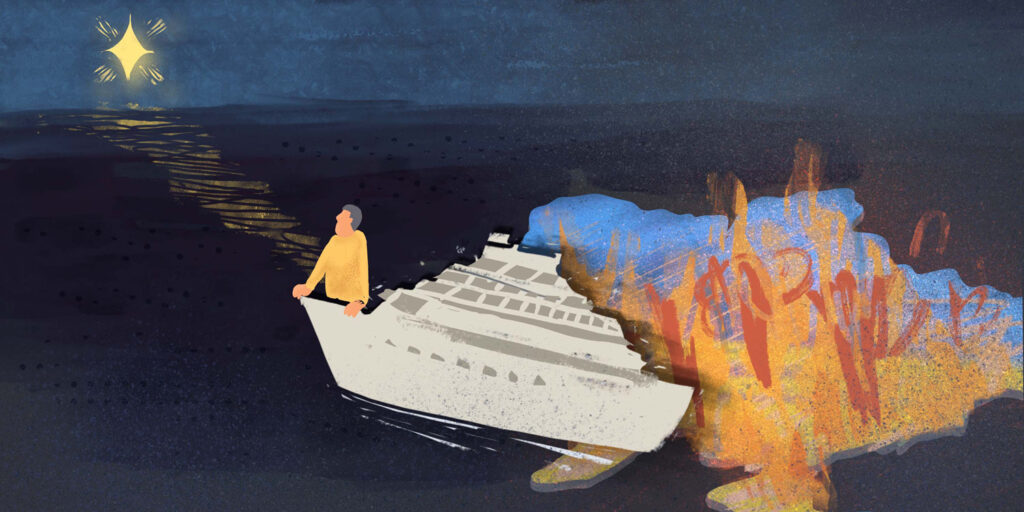
"Camon, what war?"
I left Mariupol seven years ago at work . I always dreamed of working at sea, and in 2017 my dream came true - I got a job in the crew of one foreign ship. Over seven years, I changed many ships and posts, visited a countless number of countries. I assumed that in the foreseeable future I want to “go to land”, but at the same time I was not going to return to Ukraine-rather, I sought to settle somewhere in the north of Europe.
In Mariupol, I had a mother, a younger brother and an apartment, so I periodically came home on vacations, visited my relatives and just had a fun time. My salary of 2 thousand dollars allowed me to feel a very wealthy person in Mariupol, where the salary could be $ 150-300. I went to restaurants and shops, I could afford a lot.
The heart of the war while the Russian troops bombed the Azovstal, civilians of Mariupol hid in the shelters under the plant. This is how they survived society for 31 minutes of reading
In February 2022, I had a two -month vacation, and I, as usual, was going to spend it in Ukraine. Of course, I heard the rumor that Russia was preparing an attack, but did not take them seriously. My mother, living in Mariupol, did not believe that war could begin. What can I say about me. Far from the house and all these geopolitical unrest, I did not feel at all that these threats were any real. We can say that he became infected with overseas serenity .
"Camon, what is the war in the 21st century?" I thought.
On February 19, I came to Mariupol. Until February 22, the situation in the city was calm. I met friends, people around were also engaged in familiar affairs. But in the evening of February 22, thousands of people went to the square near the Drama Theater (the question of the same Donetsk Academic Regional Drama Theater, during the bombing of which on March 16, 2022, according to various sources, from 300 to 600 people were killed. “Cold”) with Ukrainian flags. Just to show that Russians are not waiting here and no one wants to join the Russian Federation. And the next day I noticed that many chain stores are closing in shopping centers. It surprised me, but I thought that they were just a panic, and did not attach any importance to this.
This is not forgotten seven months ago by the Russian army retreated from Buchi. "Cold" restored what happened in the city during the occupation of crime 48 minutes of reading
And at five in the morning the next day a friend called me. She was going to come to Mariupol, undergo a medical examination here, but said that she could not get to the city. I opened the window, heard some explosions in the distance, saw how on the road to the departure from the city and at the gas stations huge lines from cars were gathering on the road. So I realized that the war began.
I called my mother and brother who lived in the house in the private sector, and told them to urgently come to me at the 23rd microdistrict. We all were scared, and no one understood what to do next. But I insisted that we need to get out of the city as soon as possible, because it is not clear how the events would develop further. Mom really did not want to leave the house, but after six hours of persuasion, my brother and I finally managed to put her in the car with us and move forward towards the Kiev region. We could not leave my grandmother to leave.
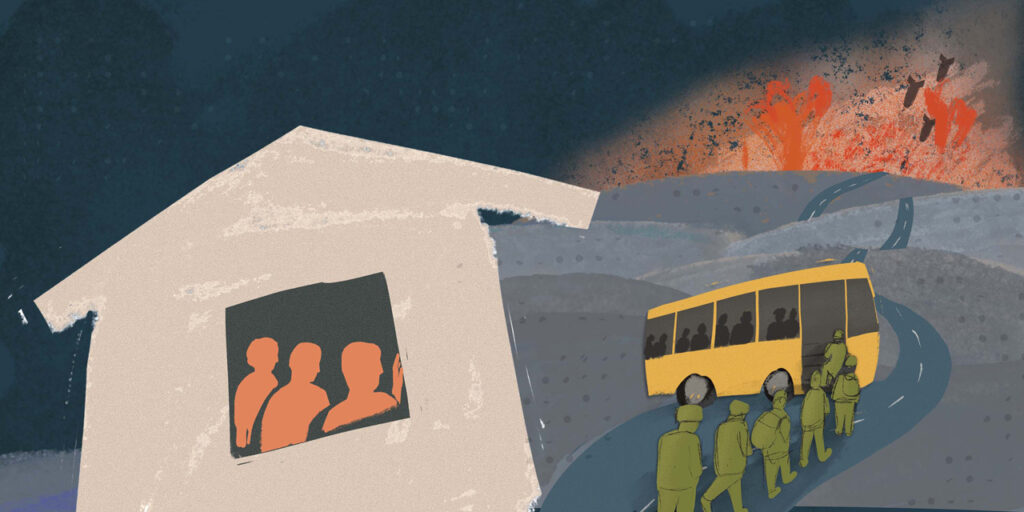
With the grandmother, thank God, everything was fine. She remained in her parental house on the outskirts of the city, away from the fighting. She ate spin and conservation , all kinds of blanks that parents did for the winter. I think that if it weren’t for them, the grandmother would have had a bad thing (in Mariupol during the siege of the city there were no water, electricity and warmth. Many residents of the city were starving, since foods ended in food stores, moreover, many were afraid to leave the houses due to shelling.-approx. “Cold”) .
In our case, the decision to leave saved our lives. The house in which my apartment was located burned to the ground.
Anti-patriot
At night, my mother and brother got to Kremenchug. We rode for a very long time, because on the first day of the war many tried to leave their cities, and terrible traffic jams formed on the roads. In Kremenchug, we spent the night with friends and the next day we went to the village near Pereyaslav (a city in the Kiev region - approx. "Cold") , where my father's relatives lived. Daddy's old house remained there, and we settled in it.
The living conditions were Spartan: the house was terribly cold (and from warm outerwear we had only one jacket) and it was impossible to take a shower. I wrote off my girlfriend, whose parents lived in Cherkasy, and asked them to shelter. For two months we lived with them, but then we were forced to return to my father’s village.
Our situation was aggravated by the fact that there was no work in the village, and the money that I brought with me on vacation ended . Brother and mom gathered in a hurry, did not take the money with them, and these were the only means we lived on.
At first, we received state payments with a size of two thousand hryvnias (a little more than four thousand rubles. - Note of the Cold) as immigrants, but in the second month of a full -scale invasion they stopped acting (Stanislav did not call the “cold” the reason for the termination of payments to him and his family. According to the law, payments to the migrants were to be granted monthly ). My brother and I considered the option to move to Kiev, where there was a chance to find some kind of work . But then they correlated the average salary of housing rental in the capital and realized that it was unrealistic.
“The Son thinks, mother at work” A year ago, the husband of a children's hematologist Oksana Leontyeva died. This week, from the Russian missile strike in Kiev, she herself died crime 6 minutes of reading
In the village where we lived, it was quiet, but we still did not leave the feeling that it was unsafe to continue to be somewhere in Ukraine at the height of the war. A ready -made contract in the UK was waiting for me, before the start of the war, my brother was also going to look for work abroad. We wanted to leave for Europe, but we could not do this. Since the beginning of the war, the Ukrainian authorities declared universal mobilization and banned travel abroad for men 18-60 years.
It seemed terribly unfair to me that I could not leave the country in which I do not want to be. Until 2022, I thought that only the leaders of countries such as North Korea hold their citizens by force. And he could not believe that this is possible in Ukraine, where in public discourse only of conversations, what about freedom and democracy.
I was honest with myself and immediately admitted to myself that I did not want to go to the front. I could not kill people against violence, no matter how bad they could be. And also, as far as I remember, I have always been an anti-patriot and a globalist. He did not believe in the common saying “where it was born, it came in handy there” and always sought to live abroad.
There is no deer - there is no eve deer, hunting, fishing, weddings and ordinary life - the traditions and modernity of the Yakut reindeer herders in the photo station of "cold" society 13 minutes of reading
I did not feel like something obligated to be born. All that I have achieved in life, I achieved with my perseverance and labor. My country did not help me with this. If my country took care of me, politicians did not engage in corruption , did not deceive the people and respected our rights , and people would not be toxic, and they could be trusted, to leave the house without locked up all for 10 castles-perhaps I would feel some kind of sense of duty towards the country and people living in it. But in my case, this was not so, and the war in this state of affairs did not change anything.
However, for many, my truth was uncomfortable. Ukrainian journalists only said that all men are in the lines of the military enlistment offices and eager for battle. Representatives of the world media, to whom I often gave an interview about what was happening in Mariupol in the first weeks of the war, also did not want to listen to me when I told them that they were kept as if in prison.
But from communication with ordinary people, I understood that not one like that. Yes, there were guys patriots who in the very first days went to the army volunteers. But there were those who were by hook or by crook tried to go abroad. Including many left for the Shlyakh program, but I did not consider this option. I did not have that kind of money, besides, I never dealt with corruption schemes and was afraid to resort to them.
What is the Shlyakh program?
Translated from the Ukrainian "Path". With the help of this program, the Ukrainian government, starting in March 2022, regulated the departure of drivers transporting humanitarian goods abroad. Drivers entering the lists could travel outside the country for a period of 30 to 90 days. In fact, people of different professions fell into the lists, who later never returned to Ukraine. According to Ukrainians who left the country under the Path program, getting on the lists cost them more than 15 thousand euros. In this way, more than nine thousand people left Ukraine .
April and May passed. The money ended, there was no work, the border continued to be closed. My brother and I were in a depressed state, often talked about death . Like, the money will end, we will have to go to the front , catch bullets. Such a prospect was depressing, and I even thought about buying a doxylamine in a pharmacy for the last money and mixing it with alcohol (mixing sleeping pills with alcohol could lead to an overdose up to a death. - Approx. Cold) . But it helped me a lot that people from other countries regularly sent me some money. We worked with any of them, someone did not know me at all, just listened to my interviews to foreign channels and wanted to help me.
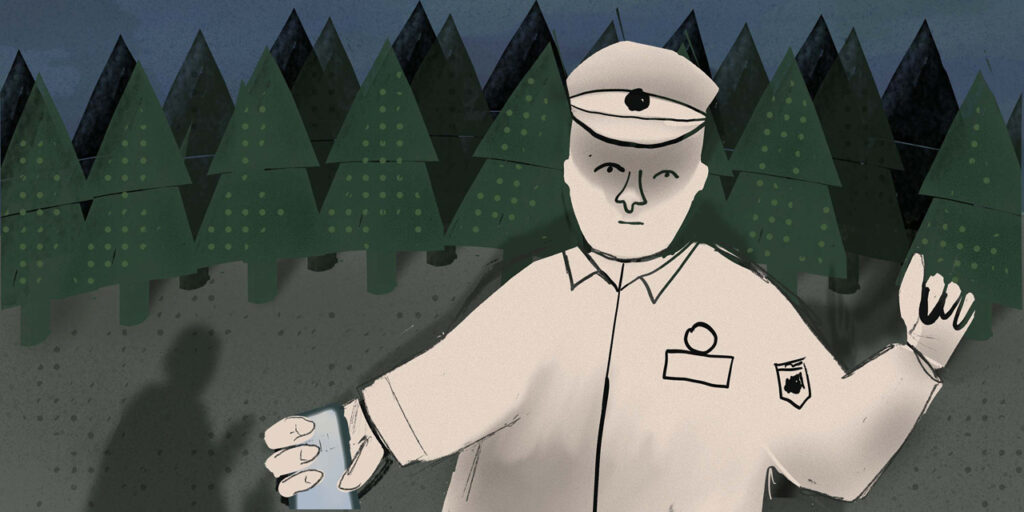
In June, I learned that some sailors manage to leave the country. The decision that allows Ukrainian sailors to leave the country was made only on August 27, 2022. But already in June, many began to use some confusion in the laws and the fact that not all officials wanted to understand who was supposed to travel abroad - teachers, students or sailors. I realized that this is my chance. He came to the territorial center for completing and social support in Pereyaslava, showed his employees his contract for work at the sea and documents of the sailor. Women in the form looked at me with hostility, but nevertheless they accepted me, asked me to translate all the documents into the Ukrainian language and assure them from the notary, and when I did this, they sent me to go through a military medical commission. They warned that they did not encounter the new law, they did not meet the sailors in Pereyaslav and the decision in my case would be entirely dependent on the boss.
The boss, apparently, turned out to be a kind person. A few days after passing the commission, I received an official permission to travel abroad and I was deregistered in the military enlistment office.
Check on the border
Having received the treasured piece of paper, my mother and I went on the same day by car to the border with Poland, to the city of Ustilug. At six to seven o'clock in the evening we got in line at a checkpoint.
Employees of the border service, two women and one man (they did not introduce themselves), first asked me to present permission to leave. Having received it, they ordered to get out of the car. They spent me at the border service department, which was not far from the line on the border, and put me in a small room, where they interrogated until six in the morning of the next day.
For some reason, they did not believe that my certificate was not fake. And to call my proposals to the military commissariat or personally to the lieutenant colonel, who signed my document, aggressed. One woman was especially hostile. She insulted that I was talking to her in Russian, and she burst into a whole tirade that all of us Mariupols were Rusnya. She said that it was because of us and our Russian war began, and added that it would be better for me to stay in Mariupol.
Around six in the morning the next day, the police came for me. First, they took the phone and forced to sign the paper, which stated that I gave it voluntarily. I did not want to do this, but then the police instructively told me that those who refuse to cooperate with them are now called collaborators. And they are not looking for such people, even if they happened to be abandoned in the forest. I regarded these words as a threat and made everything that was demanded of me.
I stay in Russia and I'm afraid of the persecution of the security forces. Can you prepare for this? Partly - yes. We tell how - in the Gaid "cold" society 12 minutes of reading
Then I was taken to the police station in Lutsk (the administrative center of the Volyn region, an hour and a half drive from Ustilug. - Approx. "Cold") . Mom, who sat all night in the car, while I was interrogated in the border point, went after us. In the site they explained to me that they will conduct an independent examination of my document, but for now I am obliged to be in the city and not go anywhere. They offered to stop at a roadside hotel, owned by the head of the local police. Despite the fact that the hotel was more like a bad and seeing a hostel, a number in it cost 500 hryvnias (a little more than a thousand rubles. - Approx. "Cold") per night.
Every day I came to interrogations to the police station. The police asked me the same questions from time to time: how and where I fed the document, who helped me with this. I did not understand what they want from me and why they could not call the military registration and enlistment office in Pereyaslava and find out from them, my fake documents or not. I thought that in a couple of days they would make an examination. They will find out that this was some kind of misunderstanding, and they will let me abroad.
But this did not happen. Therefore, I decided that I had to do something. From my mother’s phone I called the first lawyer, whose number I came across on the Internet, and the lawyer whom my friend from Israel advised me. They both told me that the situation in which I was in is an abnormal. They advised them to play “in silence” with the police and not tell them anything.
And the second still suggested a scheme according to which you can leave Ukraine through the occupied territories. Before the lawyer told me about this, I had no idea that people get out abroad so that Ukrainian border guards generally let anyone in the territory occupied by the enemy.
Here Russia is already torture and walks in parks: how the occupied Kherson lives
Society 21 minutes of reading
I was scared to go this way, but I decided to try. At that moment, I had the feeling that the police were preparing to put me in prison on a fictitious charge and another way out, except to flee , I did not see. On the third day of my stay in Lutsk, I turned off my mother’s phone so that the police could not localize us, and went to Pereyaslav with her. Leaving her there, I took my brother with me, and together we went to Zaporozhye.
In Zaporozhye, the bus station had a very oppressive atmosphere. The people who came from Mariupol were left without housing, spent the night straight at the bus station or in nearby hostels. Everyone was in a very depressed state and looked very bad. At the bus station, we met a bus driver who agreed to take us to Melitopol for $ 100.
We were already climbing his bus, as we saw that a bus that had just arrived from the occupied territories was unloading nearby. I wanted to know from these people what to expect from the trip, and went to one of the men leaving the bus. He began to tell what hell was going on there, the Russians can drop out of the car, rob and shoot anyone whose appearance they would not like. And he called our plan of the trip to suicide. My brother and I were very scared. We got back into the car and returned to Pereyaslav, to my mother. Once again they wanted to think and weigh all our prospects.
"The occupation forces took us for their"
Two days later, I realized that I couldn’t do that anymore. My brother stayed in Pereyaslava, and I bought a simple phone for myself - mine remained from the police in Lutsk - I put on old things to look as inconspicuous, gathered documents in a small backpack and even made a secret pocket in my underpants, into which he hid the remaining money. He returned to the bus station in Zaporozhye and got on the bus to Melitopol.
The bus drove at six in the morning and after half an hour got into a large traffic jam of 300 cars - the line at the checkpoint. Ukrainian police officers working on a checkpoint landed all passengers from cars and buses, checked their documents (they allowed only people with a residence permit in Mariupol or Melitopol), studied the contents of bags and passed further. Our turn came only at one in the afternoon.
We were planted from the bus, everyone was checked and read to us the parting speech about what all the creatures we are, that we are going to the territory occupied by the enemy. Потом, правда, один из полицейских еще раз зашел к нам в автобус и уже по-человечески с нами поговорил. Попросил беречь себя и пытаться как можно скорее выезжать в Европу. Не задерживаться на оккупированных территориях и в России. Потому что там скоро будет одна выжженная земля.
Тут дома стоят, а у нас домов нет Как украинских беженцев эвакуируют в Россию и как они живут в стране, которая на них напала Общество 17 минут чтения
Мы проехали еще несколько украинских блокпостов, но на них осматривали уже одного только водителя и особо не задерживали. Около трех часов дня мы подъехали к блокпосту у Васильевки, который контролировала российская армия и встроились в очередь из 200 с лишним машин и автобусов. Водитель сообщил нам, что русские пропускают машины только до пяти вечера, а еще пропуск частенько закрывают из-за обстрелов близ дороги, так что он нередко проводит по двое суток в очереди. Дела наши были плохи. Военные очень тщательно досматривали машины и пропускали по одному автомобилю каждые полчаса.
На дороге встречались сожженные и расстрелянные автомобили, по обочинам валялись мины. В какой-то момент мимо нас пролетел снаряд и мы услышали взрыв. Всем было очень страшно, но перспектива ночевать в таком месте особенно не улыбалась женщинам с маленькими детьми, которые находились в нашем автобусе. Одна женщина подговорила своего сына притвориться, будто ему плохо и он теряет сознание. Две другие выбежали из автобуса, замахали руками и принялись громко кричать, что здесь плохо ребенку и звать врача.
Скоро к нам подъехала «буханка» с большой литерой Z на борту. Оттуда вышло трое молодых солдат довольно грозного вида. Один из них зачем-то навел на наш автобус пистолет. Женщины объяснили им, что мальчику плохо. Тогда второй солдат сказал первому убрать оружие, зашел в автобус, посмотрел на мальчика и вызвал по рации медика. Через 15 минут к нам подошел человек, представившейся врачом. Нам повезло, что тот мальчик довольно искусно притворялся больным.
Врач осмотрел его и сказал, что мальчику стало плохо от жары и обезвоживания. В тот день и правда было жарко, 35 градусов, а в автобусе не было кондиционера. Очень многие изнывали от жары. Врач велел принести нам воды и пустить вне очереди. Эта идея не понравилась военным, но посовещавшись, они решили последовать советам врача. Принесли нам воды, быстро осмотрели документы и проводили наш автобус в начало очереди.
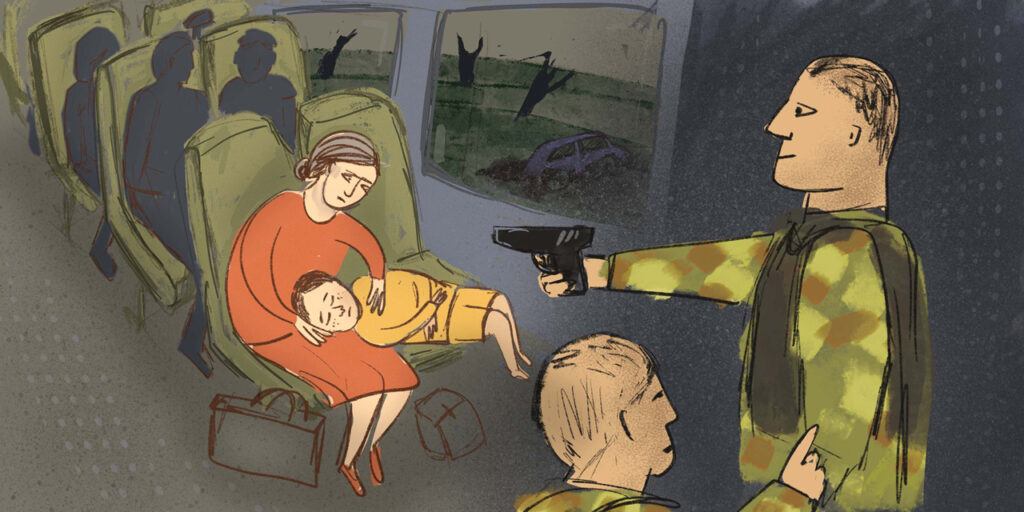
Думаю, скорому решению нашего вопроса помогло то, что российские военные видели мариупольскую прописку и относились к нам как к «своим» , а один из них открыто флиртовал с одной из женщин, бывших в нашем автобусе. Но мне было все равно на то, что военные считали меня «своим» — я не собирался доказывать им обратное и просто радовался тому, что нас пропустили и не убили.
По дороге в Мелитополь мы останавливались у еще пяти блокпостов. Но у них уже не было значимых очередей, военные просто каждый раз заходили в автобус на две минуты, проверяли наши документы, вглядывались нам в лица и пропускали дальше. Вечером того же дня мы приехали в Мелитополь. На автовокзале висел список с телефонами перевозчиков, я позвонил по одному из них и узнал, что следующий автобус в Чонгар (село в Херсонской области) выедет только в девять утра следующего дня. План мой заключался в том, чтобы поехать в Чонгар, оттуда в Крым , потом в Россию — и в Европу.
Where did my angel go? От российского ракетного удара в Виннице погибла четырехлетняя девочка. Вот история ее семьи Криминал 8 минут чтения
На автовокзале я подружился с таксистом, он подсказал мне, где можно купить российскую симку и устроил меня на ночлег к своей знакомой. На следующее утро я сел на автобус до Чонгара и довольно быстро, за два часа, оказался на границе с Крымом. Водитель автобуса не стал довозить нас до самих пропускных пунктов (их было несколько), высадил и показал как дойти до них пешком. В группе все тех же людей (все были украинцы) мы дошли до границы и стали долго проходить там множественные проверки. По дороге как могли поддерживали и подбадривали друг друга, потому что все очень нервничали и переживали, что нас могут не пустить.
Российские пограничники спрашивали у меня, еду я в Россию транзитом или собираюсь надолго. Я отвечал, что держу путь в Европу. Тогда они выдали мне бумагу, в которой было написано, что я имею право на законных основаниях находиться в России трое суток. После этого меня и всех остальных мужчин отвели под тент, натянутый у пограничного пункта. Посадили на землю, принесли нам ящик воды и приказали ждать. Так я понял, что нам предстоит пройти «фильтрацию» (процедуру, в ходе которой сотрудники российской ФСБ осматривают содержимое багажа и телефонов украинцев и допрашивают их, прежде чем пустить в Россию. — Прим. «Холода») .
«Увидишь ты свой корабль»
Через четыре часа меня позвали зайти внутрь странного помещения — большого контейнера, переоборудованного под комнату для допроса. Там меня встретил мужчина. Он не представился, но, как я понял, был сотрудником ФСБ. Он попросил меня открыть рюкзак и, не касаясь вещей, изучил его содержимое. Затем приказал отдать ему мой телефон. Ему не понравилось, что телефон был новый и пустой. Но когда я рассказал историю о том, как мой телефон у меня отобрали украинские пограничники на границе с Польшей, подобрел. Эта история ему явно понравилась.
Вообще, он был очень хитрый, иногда включал «доброго полицейского» и говорил со мной дружелюбно, даже улыбался. Иногда, наоборот, играл роль «плохого полицейского»: переходил на резкий тон и всячески показывал мне, что мне не верит. Он очень долго и подробно расспрашивал меня о моей работе в море, вынудил рассказать много подробностей о жизни на корабле и путешествиях.
ФСБ использовала мошенника против матери-одиночки Он провоцировал ее вопросами о войне, записывал ответы на диктофон и написал донос. Теперь ей грозит 22,5 года Общество 20 минут чтения
Я не знаю, сколько минут или часов длился этот допрос, но мне показалось, что с его начала и до того момента, как этот мужчина проводил меня обратно на улицу, прошла целая вечность. Перед тем как вывести меня на улицу, он сказал мне: «Увидишь ты свой корабль. Я сейчас вынесу тебе паспорт и телефон, и будешь свободен».
Я ему не поверил: думал, он сейчас загуглит меня, найдет кучу моих интервью иностранным изданиям и антивоенные комментарии в соцсетях и никуда не пустит. Но через 10 минут он действительно вернулся с моим телефоном и паспортом в руках. И я перешел границу.
На выходе из пропускного пункта я увидел множество автобусов, которые развозили людей кто в Польшу, кто в Грузию, Латвию, Эстонию или Германию. Я забрался в первый же автобус, который ехал в Польшу, заплатил 600 долларов за поездку и провел следующие 42 часа в дороге. Мы иногда останавливались на заправках — там менялись водители, а мы закупались едой. Ехать так долго было непросто, но никто об этом не думал. Мы столько пережили, что долгая дорога не казалась нам серьезным испытанием. Разве что последним рывком к свободе.
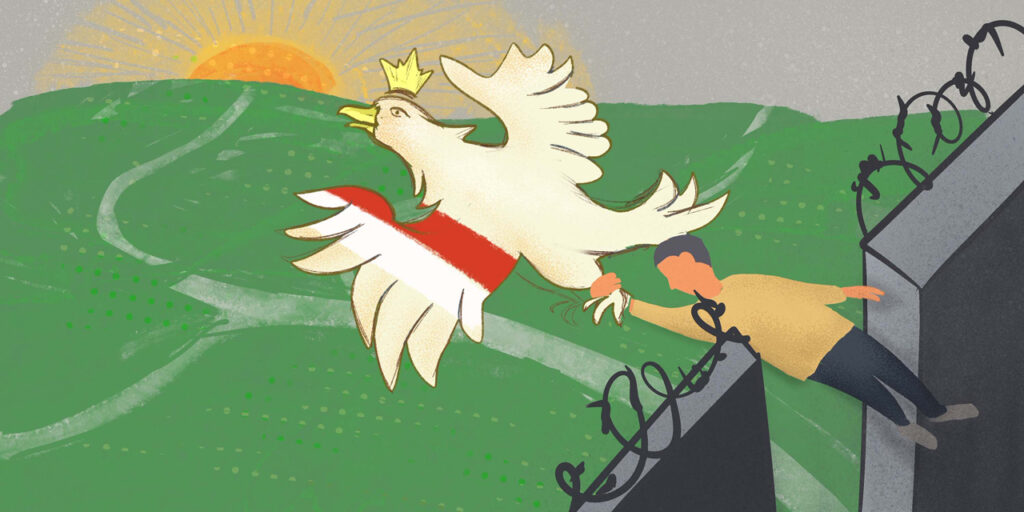
Но вышло так, что перевозчики нас кинули. Водитель высадил нас у границы с Латвией на пропускном пункте «Убылинка», а сам уехал. На границе стояла толпа из нескольких сотен пешеходов, но их пропускали сильно медленнее, чем людей на машинах. Люди спали, ели и ходили в туалет на траве у дороги, лишь бы далеко не отходить от своего места в очереди. Я подошел к сидевшим в очереди людям и узнал, что они ждут там третьи сутки. Мне стало дурно от услышанного и увиденного, и я стал срочно искать выход.
Я стал стучаться в окна стоящих в очереди машин и предлагать им деньги за то, чтобы те перевезли меня через границу. К тому моменту у меня осталось всего 400 долларов в потайном кармане. Но никто не хотел меня пускать даже за деньги, мне все показывали какие-то заполненные листочки и говорили, что спускают только по спискам. Через час безрезультатной беготни от машины к машине я увидел, что в очередь встроился красный микроавтобус «Мерседес». Я подбежал к нему и договорился с водителем, что он довезет меня до Польши за 100 долларов.
У него в машине было пять свободных мест, он сторговался с еще парой ребят, дал нам заполнить анкету, в которой надо было указать наши данные и данные автомобиля. We did so. Границу мы миновали без проблем, у всех, включая меня, документы были в порядке. У меня был полный пакет документов: биометрический украинский паспорт, по которому я мог без визы въехать в Европу, а также шенген, виза США и ID моряка, позволяющий мне въезжать в Великобританию.
«Живу так, как всегда хотел»
19 июля 2022 года я заехал в Польшу. Этот день я до сих пор считаю своим вторым днем рождения . Я спустил еще немало денег на то, чтобы добраться до Варшавы и средств на покупку авиабилетов куда-либо у меня не оставалось. Да и лететь мне было некуда. Судно, на которое я стремился попасть по контракту, отходило из Саутгемптона только через две недели. Тогда я позвонил знакомому мне испанскому журналисту и попросил его о помощи. Он купил мне билеты в испанский город Кадис и приютил у себя.
The record number of Russians advocated the end of the war with Ukraine, they are ready to abandon the goals of “Svo” and compromise. Chechnya is waiting for the world more than Moscow Society 8 minutes of reading
За два дня я оформил убежище в Испании и получил ВНЖ, а через неделю ко мне по тому же маршруту приехал брат . С единственным различием, что он добирался до Испании из Грузии, а не из Польши, как я. Он остался в Испании, а я отправился в круиз, работать.
Маму я тоже уговорил уехать. Мой папа к тому моменту уже несколько лет как работал дальнобойщиком в Латвии и, как и я, приезжал в Мариуполь только во время отпусков. Был в рейсе, когда началась война. Мама уехала к нему. Примерно тогда же она рассказала мне, что ей позвонили следователи из Луцка. Сообщили, что две независимые экспертизы подтвердили, что мое разрешение на выезд из страны не было поддельным.
У меня не было времени думать о том, как все произошедшее сказалось на моей психике . В моменте я не анализировал ситуации, в которые попадал, не поддавался эмоциям и пытался мыслить рационально. Хотя порой мне было очень и очень страшно. Первые же месяцы в Европе я просто радовался тому, что наконец нахожусь в безопасности, и отдавал всего себя работе. Но по ночам мне часто снились кошмары, будто я так и не выехал из Украины. Снились кадры разрушенного Мариуполя из новостей, допросы у пограничников — неприятные воспоминания все равно настигали меня, как бы я ни пытался от них отгородиться .
My family and I live 30 thousand a month I am a military wife, and his salary is the only source of income for us and the child. We took a mortgage, we are repairing an official apartment and hard to save society 8 minutes of reading
Брату этот период дался гораздо сложнее, чем мне. Он рассказывал, что постоянно думает об Украине и побеге оттуда. Когда я уехал, он остался в Испании. Выучил язык, так что мог почти свободно на нем изъясняться, но трудоустроиться так и не смог. Через год жизни в Испании он нашел работу в Нидерландах и переехал туда.
В феврале 2023 года я отработал свой семимесячный контракт на корабле и загорелся идеей перевезти всю семью в Норвегию. Эта страна давно меня манила, я мечтал туда переехать. А еще я очень хотел собрать под одной крышей всю свою семью . Нам всем пришлось очень нелегко в последний год, и я хотел, чтобы мы держались вместе.
Мы действительно все переехали в Норвегию и получили там коллективное убежище. Брат и отец выучили норвежский язык на базовом уровне, купили катер и стали ходить на рыбалку, наслаждаться местным колоритом, но маме это оказалось не под силу. Она не могла выучить язык и адаптироваться к новой реальности. Очень скучала по дому, постоянно ездила в Мариуполь к бабушке. Они из-за этого ссорились с папой. И в этом году мама окончательно вернулась в Мариуполь. С папой они расстались .
Мама рассказывает сейчас, что город потихоньку восстанавливается, хотя теперь там все «по-другому». Я пытаюсь уважать ее выбор, но, если честно, его не понимаю. Не столько из-за политики, сколько по личным мотивам. Я не понимаю, зачем жить в городе, где объективно небезопасно строить свое будущее, если можно совершить небольшое усилие над собой и влиться совсем в иную реальность, где нет войн. Стать частью населения страны со стабильной экономикой и одним из самых высоких на свете индексов человеческого развития .
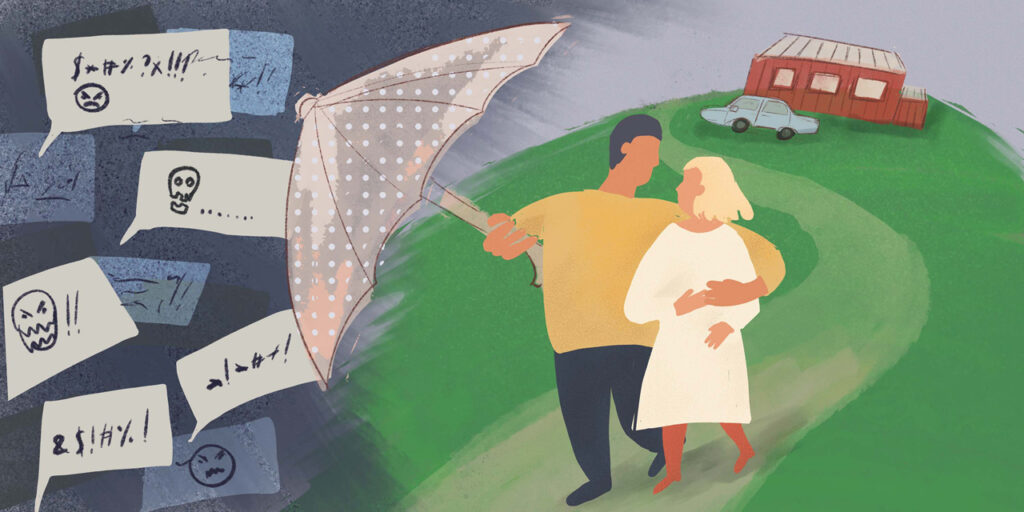
Я очень хотел жить в Норвегии с братом и папой, но случайным образом основался в Латвии. Когда в 2023 году я помогал родителям переехать из Латвии в Норвегию, я встретил девушку. Я не рассчитывал на что-то серьезное, сразу сказал ей, что мне скоро уезжать, предложил просто классно провести время, попить вино, поесть хинкали. Но влюбился в нее с первого взгляда. И поскольку она не захотела переезжать ни в какую Норвегию из родной Латвии, я съездил, решил все дела в Норвегии и вернулся к ней. Мы два месяца повстречались, а потом я сделал ей предложение.
Мы уже год как женаты, купили в Латвии машину и пока планируем свое будущее здесь. Я продолжаю ходить в рейсы, иногда мы с женой навещаем папу и брата в Норвегии. Я чувствую, что живу именно так, как всегда хотел. На свободе, в спокойствии и достатке — как того заслуживает любой человек.
«Не стыдно быть мужчиной и хотеть мирной жизни»
Я бы хотел забыть, что со мной было, и просто жить спокойно дальше. Но новости из Украины не позволяли мне закрыть глаза на происходящую там несправедливость. Это немыслимо, что людей сейчас спокойно при свете дня похищают на улицах, сажают их в автобусы и насильно отправляют на войну (в этом году в Украине действительно были зарегистрированы случаи принудительной мобилизации. — Прим. «Холода») . Что те украинцы, которые не хотят умирать и убивать, вынуждены прятаться по подвалам или рисковать жизнью в попытке пересечь закрытые границы с Европой, которые охраняются с дронов так же, как фронтовые границы с Россией, — если не лучше. В то время как чиновники, знаменитости или просто богатые люди запросто избегают мобилизации.
Я понимал, что если бы не бежал два года назад, то мог бы оказаться на месте тех мужчин, которых похищают сотрудники ТЦК (Территориального центра комплектования и социальный поддержки. — Прим. «Холода») в рамках «бусификации» ( термин наподобие российской «могилизации»; с помощью него украинцы описывают принудительную мобилизацию, происходит он от слова «бус», так как нередко сотрудники ТЦК увозят принудительно мобилизованных людей именно в микроавтобусах. — Прим. «Холода») , и тех, чьи тела находят в реке Тиса на границе Украины с Румынией.
Сначала я писал о таких случаях у себя в соцсетях, чтобы обратить внимание своих фолловеров на то, что творится в Украине. А потом написал там же и о своем побеге. Я сделал это в терапевтических целях. Выговорился о наболевшем, чтобы окончательно отпустить эту ситуацию и почувствовать облегчение.
We lost a fortune because of my husband, he made bets on sports and was engaged in cryptocurrency trading. We went through hell, but I am still with him. Now he is going to his "
Society 27 minutes of reading
А также для того, чтобы нормализовать мой опыт, показать ребятам, которые поступили так же, как и я, что они не сделали ничего плохого. Слово «уклонист» сейчас используется в негативном ключе: «уклонистов» принято ругать, называть предателями. Но на самом деле никакие мы не предатели. Мы просто хотим жить обычной жизнью вдали от смерти, войн и грязных интриг политиков, которым до нас нет никакого дела. Работать на нормальной работе, быть рядом с любимыми, строить семью, покупать машины и дома, ездить в путешествия. При военном положении сейчас только женщинам доступны такие вещи, но я считаю, что это не стыдно — быть мужчиной и хотеть мирной жизни.
Конечно, со мной многие не согласны. Под рассказом о побеге и под рядом других своих постов я вижу обзывательства в свой адрес. Украинцы пишут мне, что я трус, коллаборант и поддерживаю русских. But I don't give a damn about it. Если люди так думают и привыкли видеть мир только черным и белым, мне их в этом не переубедить. Я просто радуюсь тому, что кому-то мой рассказ откликнулся, что многие меня поддерживают и радуются тому, что мне удалось спастись.
The hero’s opinion may not coincide with the opinion of the editorial office.
In order not to miss the main materials of the "cold", subscribe to our social networks!


Автор:Инга Ольшанская Иллюстрации:Алиса Красникова