
Translated material
Rocket paintball
None of the Iranian leaders are serious about war. And Israel will not be able to launch an effective strike without the United States
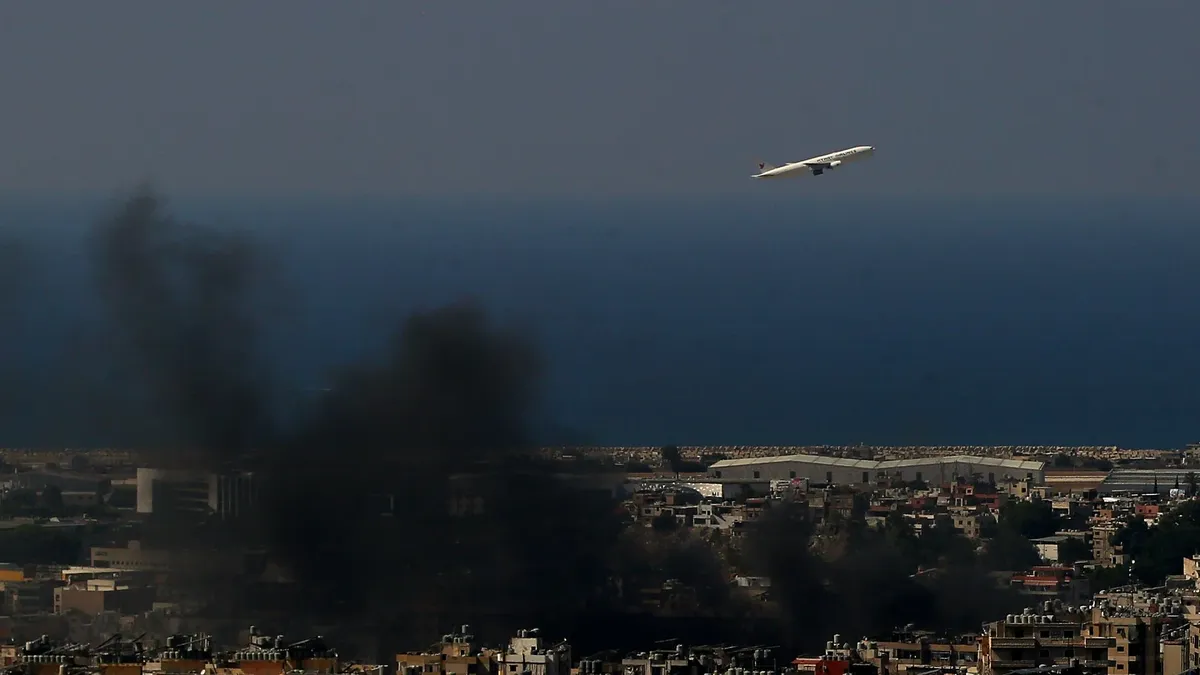
Israel continues to carry out airstrikes on the southern suburbs of Beirut. Photo: dpa/picture-alliance
The speed with which military-political situations follow each other in spirals of escalation is amazing. After the attack on military targets in Israel with medium-range ballistic missiles on October 2, the world community, including the US administration, began to “talk” about the conflict, hoping for a gradual decrease in tension, as was the case in April. Then, a pre-announced Iranian missile strike was carried out with minimal damage as a response to an Israeli attack on the Iranian consulate in Damascus (several high-ranking officials were killed).
And this time, many expressed hope that after consultations with Washington, the Netanyahu government, which destroyed the military leadership of Hezbollah, Tehran's closest ally, including its long-time leader Hassan Nasrallah, would show restraint. And it seemed that this was possible even in the context of the developing (however, quite limited in goals and means) IDF operation against Hezbollah in Southern Lebanon. According to IRNA, on October 5, Iranian Foreign Minister Abbas Araqchi said during a visit to Syria that there are initiatives for a ceasefire in Lebanon and Gaza. And he hopes that the consultations that are ongoing on this matter (among whom, I wonder?) will lead to results.
Before this news had time to spread around the world's editorial boards, Al Arabiya reported that Safi ad-Din, Nasrallah's successor, outlived him by only a week. He was killed in an Israeli air attack on Hezbollah's secure command center in the southern suburbs of Beirut on October 4. High-ranking IRGC officers and several Hezbollah commanders also died there.
The Israeli commanders and intelligence agencies who monitored Hezbollah's top functionaries have, without a doubt, achieved outstanding successes. If Al Arabiya's information is confirmed, the military organization of the Lebanese Shiites will be almost decapitated. They are starting the next Lebanese war in a much weaker position than the second Lebanese war in 2007 - then the Israeli army suffered significant losses.
As in that war, Israel’s goal is to push Hezbollah away from the borders within artillery range, that is, to create a buffer zone.
This will require a permanent presence in southern Lebanon of a significant contingent. At the same time, the army is conducting an operation in the Gaza Strip with considerable resources.
The Netanyahu government escalated the situation by killing the Hezbollah leader. Iran, following regional ideas about the role and image of power, was literally forced to retaliate with more than 200 ballistic missiles of various modifications. Since they were all sent to military installations where the personnel had taken all precautions in advance, there were no casualties. The attack ended with the death of one bystander, an Arab from Gaza.
As can be seen from Tehran’s position, no one among the Persian leaders is seriously inclined towards war. Having familiarized myself with the main Iranian media over the past 24 hours, I can state that even the ritual “decisive statements” of mullahs of various ranks and engaged journalists bear obvious signs of fatigue. In the provincial press, editors often limit themselves to one message on a topic and immediately move on to local problems.

Since there is no common border between the countries, they can only fire missiles at each other. Today, based on the results of these exercises, it can be considered established that Israel’s missile defense and air defense system has been breached (it doesn’t matter in what way). For the Iranian military, this can also be considered an important result for the future: the launch vehicle of the promising “Shiite revolutionary nuclear warhead” was created and tested in real combat conditions.
In the meantime, all this mutual shelling will not lead to any military result. Israel is not able to destroy the infrastructure of Iran's nuclear industry without the help of the United States (and they have already disowned such an action). Its air force may strike S-300 air defense installations as a warning and warning for the future. But this cannot be considered an impressive result.
Iran also cannot cause any serious damage to a country that detects its missile launches in advance and has a bomb shelter in every house.
Therefore, the offensive in Southern Lebanon will develop according to the command’s plan. Hezbollah fighters, if the IDF commanders do not lose their heads and show real professionalism, are unlikely to be able to inflict significant losses on them this time, which will force the government to immediately curtail the operation.
But the “maintenance and maintenance” of the buffer zone will place a separate burden on Israeli society and the economy. In the end, this or any other government will be forced to admit that even the destruction of the entire enemy command is a temporary success if the replenishment of Hezbollah's ranks is ensured by the full support of the Shiite population of Lebanon. The confrontation will continue as long as Tehran, Hezbollah’s main ally, sponsor and supplier, denies Israel’s right to exist. Everything is ahead.
As for Russia and Ukraine, their leaders will now be interested to hear whether US and Pentagon spending on urgent assistance to Israel will affect the shipment of additional ammunition and weapons for the Armed Forces of Ukraine. This is the most important thing for them.