
Translated material
Bakuradze in Ioseliani's yard
The drama “Snow in my yard” is the director’s best film with the characteristic intonations of Georgian masters
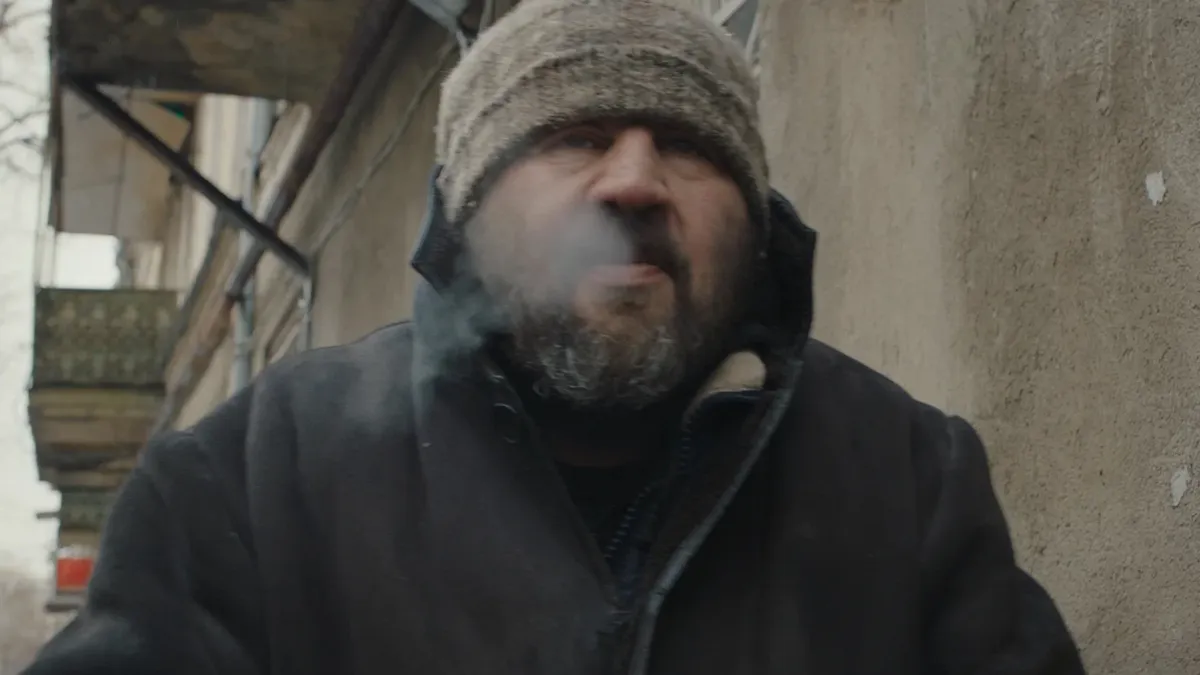
Still from the film “Snow in my yard”
“Snow in my yard” is like a leisurely flow of life with a quiet breath with which you breathe in unison: funny and sad, one hundred percent authenticity and poetry. But poetry grows from prose - minutes, seconds of reality, which, like the rare snow in Tbilisi (we were so lucky, it fell during filming), fly, fall and melt. It’s like the embodiment of Akhmadulin’s lines about Georgia: “When winter is dirty and snow-white, my sadness is not completely sad, my hope is not completely hopeless.” And the heroes (Levan and Givi), with their restlessness, loneliness, hopes in hopelessness, are the kind of strangers you want to hug when you meet.
At first the film was called “Levan and Givi.”
Levan itself seems to be part of old Tbilisi. His room is a mess of poverty, the window above the door is covered with paper, peeling walls, hanging wires, the roof is leaking, it stinks of dogs. Behind the windows, which have not been washed for a long time, we see an overweight man. Levan has diabetes, which worsened after a stroke. He is on tranquilizers due to panic attacks. His wife and children live separately, in a country house (in her opinion, he is so infantile that he has become an equal to their twins). There is practically no money. Levan lives off the help of his neighbors. But he lives, at times he’s even happy. When, for example, a thief neighbor brings glasses with the correct diopters.
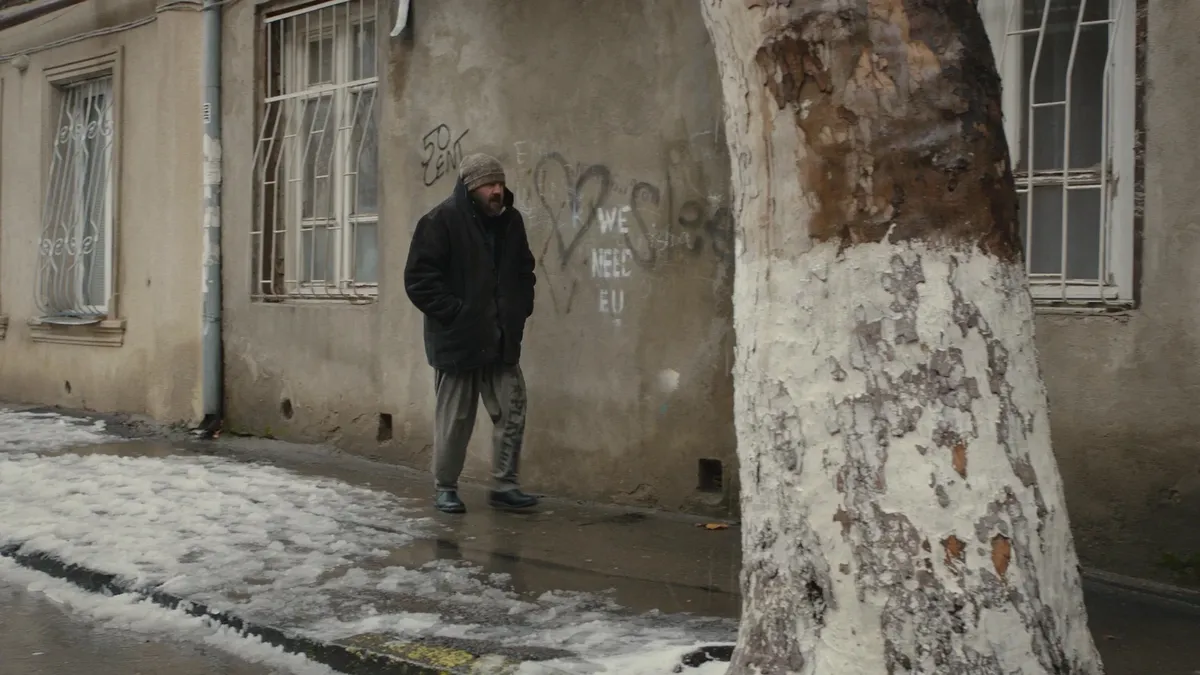
Levan’s long-forgotten childhood friend, film director Givi (Bakur Bakuradze) from Moscow, responded to Levan’s request on social networks for medicine.
For humanitarian reasons, Givi suggests that Levan write at least half a page a day. He will pay him 5 GEL per page. “What should I write? — Levan is amazed. “Day after day, nothing changes.”
But in this dusty everyday life a philosophical grain, an air of reality, is revealed. On an old computer with dented keys, Levan describes his life.
About the fact that there is only money left for medicine. The city is changing so much - you no longer meet people you know on the streets, it’s all tourists. About the fact that the legs of diabetics are a weak point. About children. About my brother, a KGB colonel, who spends hours in a blizzard on the phone. About my two beloved dogs - big Jessie and little Jessie.
This movie contains the wisdom of life in all its colors and blots. And acceptance of death lurking nearby. Like the quiet, uncomplaining death of big Jessie, which little Jessie is aware of.
Nothing seems to be happening here, just like in Levan’s short notes. Exactly the same heartbeat, slow pulse. But the characters’ experiences hidden inside become your heartbeat and your empathy.
A funny episode that portrays the current film industry: director Givi is trying to persuade the producer (Garik Martirosyan) to launch a film about his Tbilisi friend Levan. And then the sniper-precise dialogue: they say, stop making auteur films, he’s half-hearted, there’s no time for experiments, let’s make blockbusters. Givi has her own struggles and crises, her own loneliness. That’s why he wants to sell the apartment and move to the city of his childhood, Tbilisi.
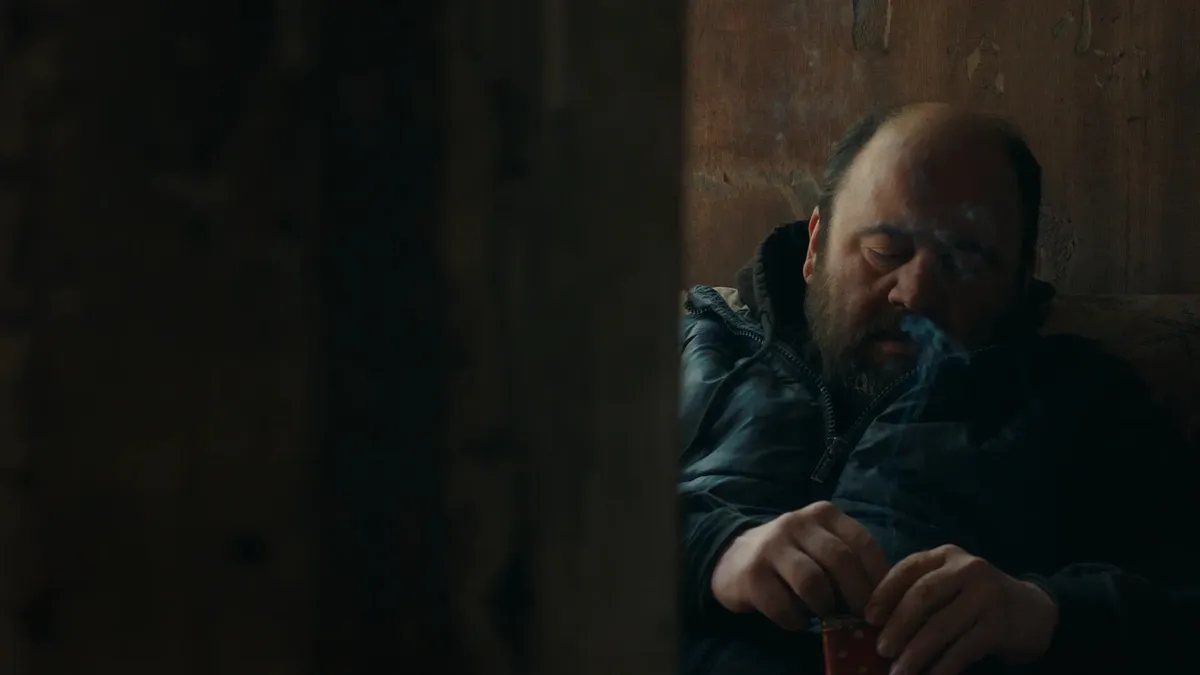
When I read the script, it was assumed that Levan Gogoladze would play himself; a famous actor-showman was planned for the second main role, who, for well-known reasons, refused to come to filming in February 2022... literally the day before it began. And then Bakur himself became Givi. That’s right: in the film he either grows together with his character (for example, in a scene with the producer), then he completely distances himself, and on the screen there is already a certain Givi, whose wife has left him, who has a creative crisis, and the headlights in his car are bad.
How can you see the road without light? Well, if not to the temple, then at least to your real home.
In the film, the warm evening light is in-frame, with virtually no cinematic backlighting. And in general there is no cinematic pretense or forcedness. Alisher Khamidkhodjaev’s camera seems to simply spy on the characters, bringing their faces closer to us with all their spots and flaws, connecting two distant kindred souls - Levan and Givi.
What makes good directing? Everything was played out both according to the notes and seemingly spontaneously. Nothing superfluous: a leisurely movement of history that you can’t tear yourself away from. Details, details from which the fabric of airy and earthly reality is created with one touch. Tbilisi slush of unreliable snow and flowers under the snow on a balcony planter, which are diligently watered by a neighbor, Batumi tobacco, which Levan smokes, nets and boxes on a hanger, glasses with a broken temple, a pair of stolen eggs or tires, a soldier who snuck into Levan’s snow-whitened garden for pomegranates, and Levan himself in woolen socks, which he warms with a hairdryer on a winter evening.
Melancholic humor, as warm as the light of the evening lanterns in the frame.
This is the first film about Georgia by the director of the universal European arthouse Bakur Bakuradze, in intonation close to the cinema of Ioseliani and Rekhviashvili. This deceptively simple movie is perhaps his best film. In any case, the most necessary for us today, healing, setting us up for life in times of “confusion, grief and melancholy.” Promising spring, which comes closer to the end of the picture.
The world premiere of "Snow in My Backyard" took place at the 26th Shanghai International Film Festival, and Bakur received the prize for best director.
MORE ABOUT CINEMA
Larisa Malyukova runs a telegram channel about cinema and more. Subscribe here .