
Translated material
100 years ago Andrew Irwin climbed Everest. Perhaps he succeeded (although it is believed that the mountain was conquered only 29 years later)
Now we have found part of the remains of the climber, writes National Geographic
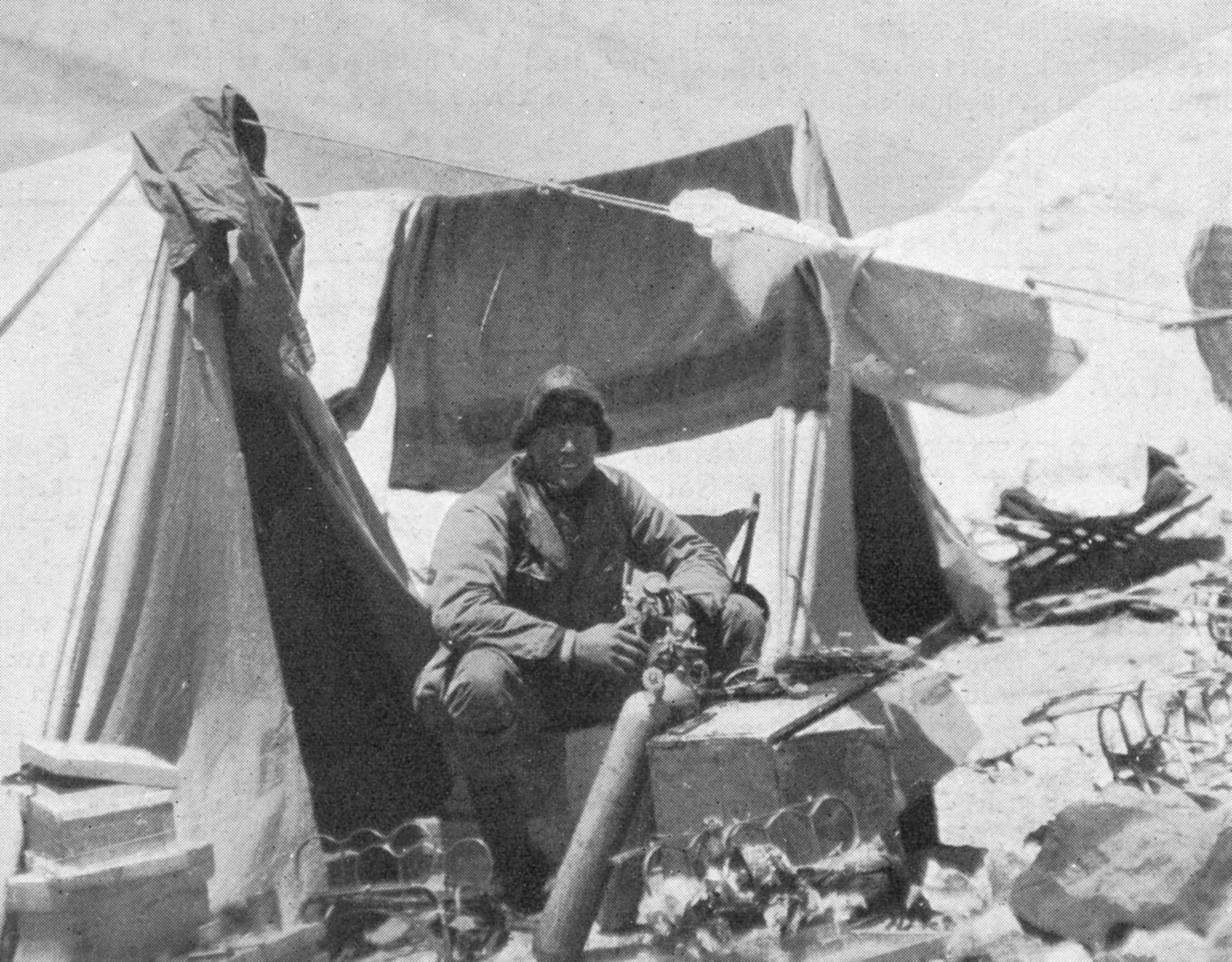
At Everest, part of the remains of the climber Andrew Irwin, who climbed the mountain in 1924, was found with his partner George Mallory, reports National Geographic. The expedition of Irwin and Mallory was one of the first attempts to conquer its peak - the question of whether they managed to do this remains open for 100 years.
Jomolungma has been known to European researchers since the middle of the 19th century; Around the same time, the first calculations appeared, which indicated that the mountain could be the highest in the world. At the beginning of the 20th century, with the support of the authorities, the Jomolungma Committee was created in the British Empire, which took up the organization of expeditions in order to reach the top of the mountain. After the reconnaissance mission, the first attempt to climb was committed in 1922 - climbers managed to reach a height of 8320 meters above sea level (the height of the top of Jomolungma - 8849 meters).
The expedition in which Irwin and Mallory participated took place in 1924. It included three attempts to climb - during the first two peaks it was not possible to achieve. During the Third, Irvin and Mallori did not return to the camp and were declared missing. The last one who saw them was the photographer of the expedition - it was from afar, to binoculars, and it was not clear whether they descended from the top, conquering it, or only tried to rise.
Officially, the first people who conquered Everest were Edmund Hillary and Tenzing Norga 29 years later, in 1953.
Over the next decades, climbers have repeatedly found separate objects of equipment of Irwin and Mallory. In 1999, a special expedition was organized for their searches, the participants of which at an altitude of 8155 meters discovered the remains of Mallory; Damage to the body testified that he fell from a height. Under him, they did not find a photograph of his bride and the British flag, which he promised to leave at the top of Jomolungma before the expedition, if he reached her.
The body of Irwin was not found either in 1999 or in later expeditions. It is assumed that he had to have a camera with an unknown film with him - in fact, the only thing that could clearly prove that climbers reached the top, if it really happened.
According to the National Geographic TV channel on October 11, about a month ago, a group of climbers who shot a documentary found an oxygen cylinder of 1933: an expedition rising to the mountain then found an ice ax belonging to Irvin in this area.
Members of the crew suggested that somewhere nearby there could be the body of a climber, and for several days examined the territory around. Soon they discovered part of the leg in a boot, which was exposed due to melted ice. According to climbers, the ice in this place melted just a week before. The body itself was not found. The searches will probably continue.
It has not yet been officially confirmed that part of the remains of Andrew Irvin was found on Everest. In the UK, a DNA analysis is carried out, which should confirm this. However, in fact, this can be considered a formality: the inscription "AC Irvine" was embroidered on the toe found inside the boot.