
Translated material
March, camp, campus
In Israel, hundreds of thousands of people act against the actions of the government. We understand how their requirements for the country's authorities are different
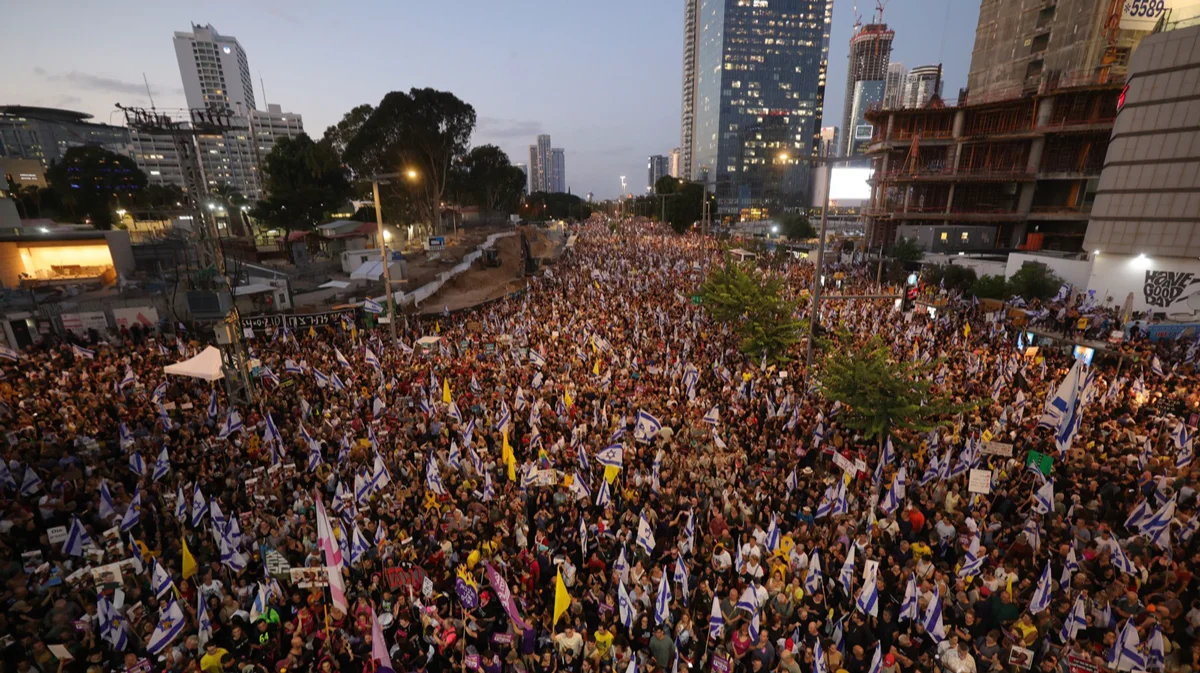
Demonstrators speaking in support of the families of Israeli hostages held by Hamas, near the building of the Kiriya military headquarters in Tel Aviv, Israel, September 1, 2024. Photo: Abir Sultan / EPA-EFE
A year ago, on October 7, 2023, Israel survived one of the most tragic moments of recent history. Hamas terrorists attacked the southern settlements of the country and military facilities, having killed about 1,200 people and taking 251 hostages. In response to the Israeli leadership, the military operation in Gaza chose, as a result of which, according to the UN used, about 40,000 people died. The military campaign continues to this day. But if a year ago, the Israeli government could count on wide public support and mobilization, today in society the voices of supporters of the ceasefire sounds louder.
The protest movement in Israel has gained a large scale (hundreds of thousands of people come to rallies), but it itself is of a heterogeneous nature. Activists for peace can be adjacent to those who wish Palestine Freedom, and those with relatives of hostages requiring a deal with a hamas for the return of their relatives. Read about the variety of protest in the material of the journalist Alexandra Lisogor from Jerusalem - especially for the Novaya Gazeta Europe.
March in Tel Aviv
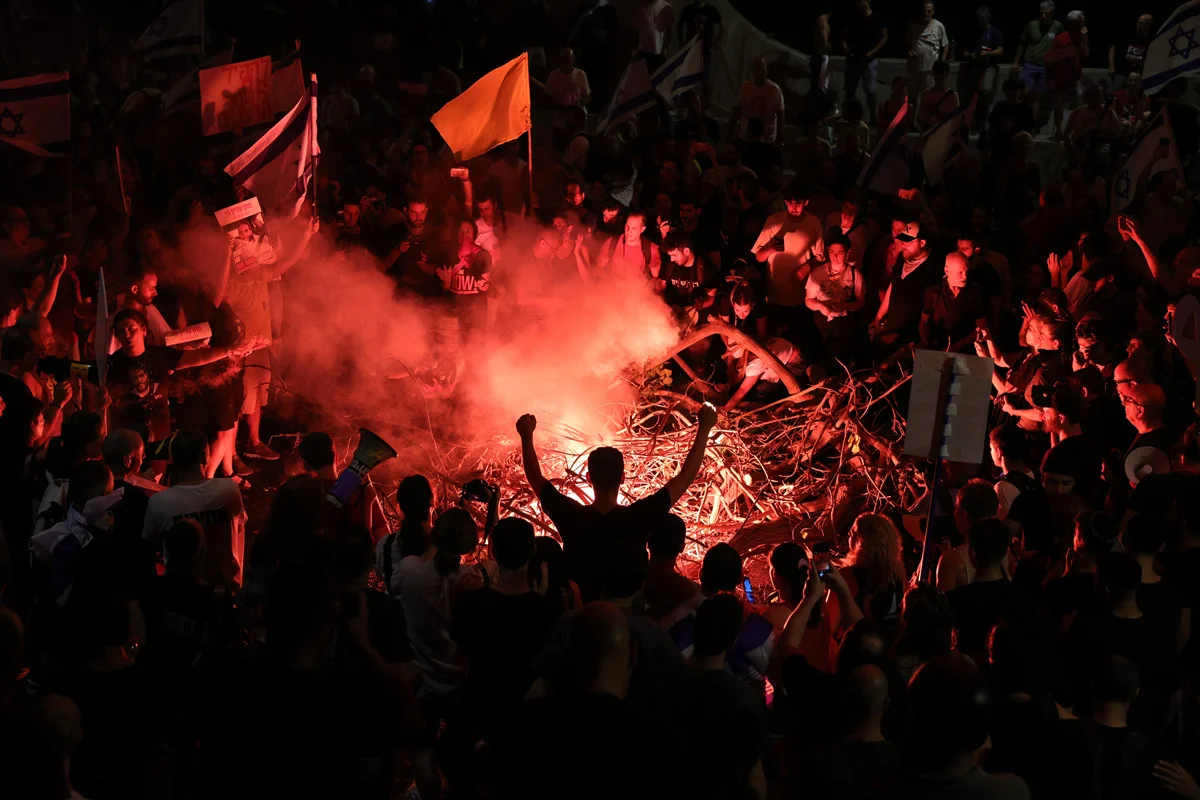
The Ayalon highway is a concrete artery pulsating in the center of the country. It crosses Tel Aviv, and cars in its stripes stand in traffic jams. However, on a hot evening on September 1, the highway is filled with a different life. Thousands of people go along it - they burn bonfires, shout into megaphones: “A truce - now!”, Knocking into drums.
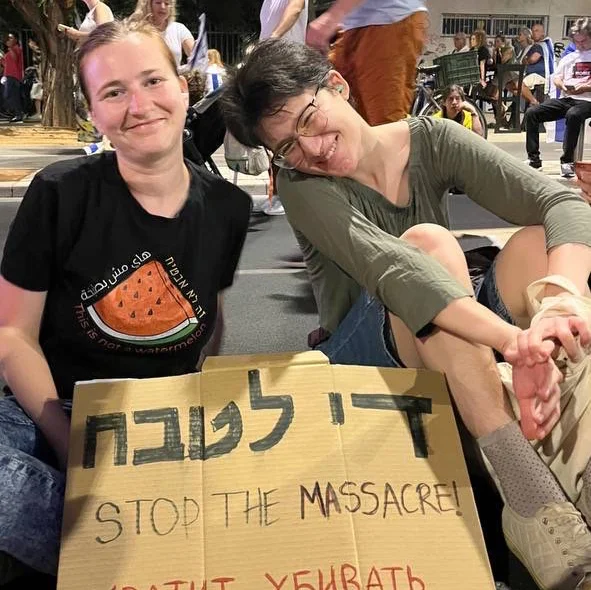
Among these people there is Rivka Lviv, an activist of the compass ( one of the many local civilian organizations for the rights of Palestinians, founded by Russian-speaking activists in November 2023. This week the IDF detained the founder of the “compass” Andrei Khrzhanovsky, the “New European Europe” requested a commentary to the DSAL, but the department has not yet responded to the request of the editors -ed. ). On it is a T -shirt with a watermelon - a symbol of solidarity with the Palestinians, she holds a poster “Stop killing!” Above herself! In three languages - English, Hebrew and Russian. At the age of 29, she is simultaneously a Russian immigrant in Israel, and a former IDF soldier, and a former religious Jewish, and an activist for human rights in Palestine, and now also an anti -war activist.
The Hamas attack on Israel on October 7 took everyone in Israel by surprise, and activists are no exception.
“They bombed us, I was scared,” Rivka shares his feelings. But soon it became obvious to her that the scale of destruction in gas exceeds the damage from other armed operations of Israeli in recent years.
However, the open expression of anti -war views met repression by the authorities. From the very beginning, law enforcement agencies did not allow shares in support of the victims in Gaza. In October, after the forceful acceleration of the anti -war rally in Haifa, the police commissar of Israel Kobi Shabtai said that he was ready to put all the inhabitants “solidarity with the gas sector” and send him there. In Jerusalem, the participants in the “Standing Together” movement ( the largest lower Arab-Jewish organization, numbering five thousand members and acting as one of the applicants of protest rallies.- Approx. Aut. ) Disheated for placing posters with the inscription: “Jews and Arabs, we cope with this together,” and Arabic and Arabic.
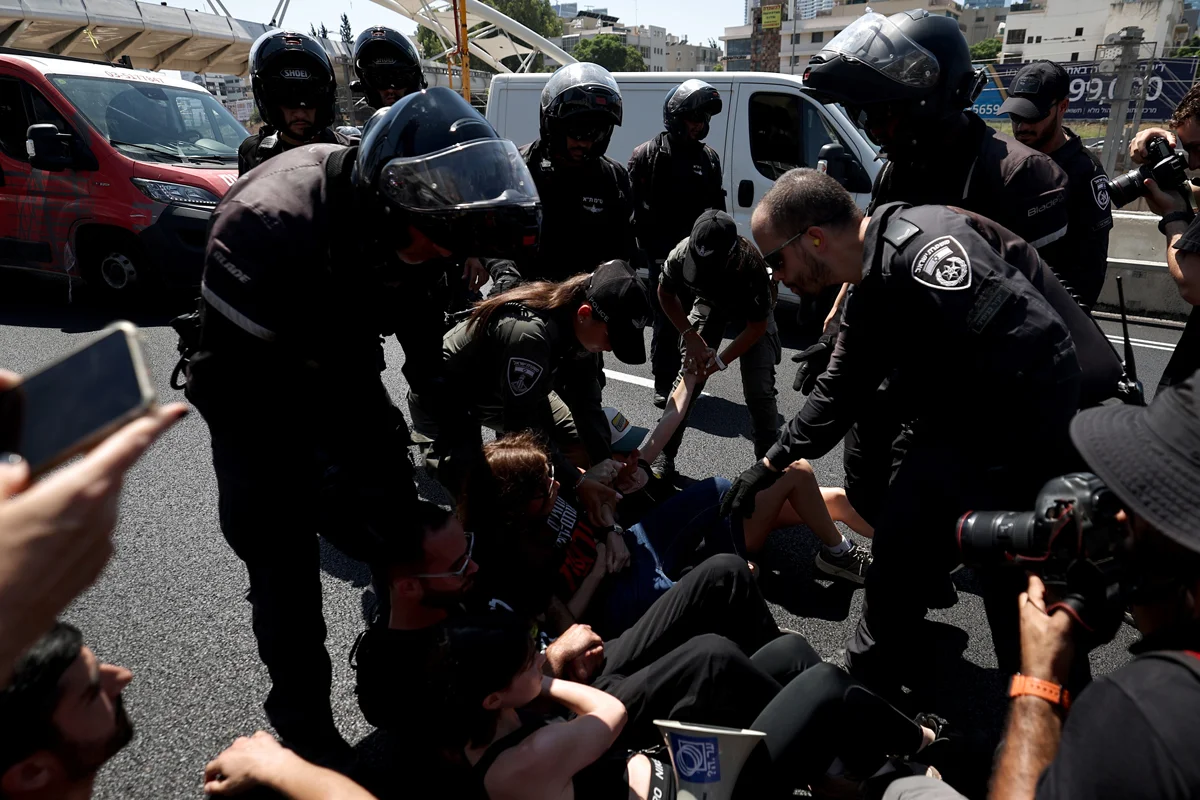
Cases of police cruelty in recent months have only become more frequent. On small spontaneous promotions that do not require preliminary permission in Israel, as well as at large demonstrations that the organizers agree on in advance with the municipal authorities, the police continues to arrest activists, disperses protest shares using direct violence , and participants in the shares have to apply for medical help. Even doctors and relatives of hostages participating in anti -war protests fall under the hot hand of police officers.
Despite the direct ban on the legal adviser to the police on censorship , the police continue to withdraw posters with the slogans “Do not kill”, “Stop genocide!” And "Stop the war!"
Such an attitude to anti-war activists by the police is a consequence of the policy of the Minister of National Security of Itamar Ben-Gvira. In the past, Ben-Gvir himself was convicted of inciting racism and the support of the Jewish extremist organization "KAC" ( a radical religious and nationalist movement recognized in Israel with a terrorist organization. - Approx. Author ). His direct instructions of the police to prevent anti -war rallies, which he openly reports on the social network X, forced the Supreme Court of Israel to officially warn the minister that he should not in this way unlawfully interfere in the work of the security authorities. However, the warning of the Supreme Court did not really help protests, activists say.
Rivka has repeatedly become a witness to police cruelty, although he herself avoided arbitrariness. She had to be on duty all night at the police isolator, waiting for her friends who were less fortunate.
But the anti -war protest nevertheless continued to gather people. In September, the organizers of the rally said that about half a million people gathered in Tel Aviv. A quarter of a million entered the demonstration in settlements across the country.
“Most protesters, in fact, are not particularly worried about the fate of the Palestinians,” says Rivka. -People mostly come out due to hostages.
This assessment sheds light on complex motives that underlie street protests in Israel. In addition to crowded demonstrations, there is a deeper shift in the public consciousness.
In December 2023, according to the surveys of the Israeli Democrail Institute, the majority - 56% of the Israelis - supported the continuation of military operations to free hostages. Only 24% of the population approved the idea of cessation of hostilities, as Hamas demanded in exchange for the liberation of captured Israelis.
By June 2024, public opinion has undergone radical changes. Recent surveys of the same Institute of Democracy show that most Israelis (56%) now support peace agreements to liberate the prisoners and end the war in gas.
Despite the shifts in public opinion, Rivka does not expect that the situation will be resolved quickly and easily. It suggests that the war will end no earlier than a year and a half, and even this is rather hope, and not a realistic forecast.
With the onset of the night from September 1 to 2 in Tel Aviv, the main demonstration diverges, but the intensity of passions among the protesters only continues to grow. Rivka is in the stream of people who poured on the Ayalon highway. The air is saturated with the smells of sweat and burning tires. The highway turns into a human sea with flags and homemade posters. The cars froze, their headlights barely break through the smoke, protesters scream between them.
Bonfires flare up on the asphalt. A group of protesters with yellow bandages in front of our eyes (the yellow color was spontaneously chosen back in October 2023 as a symbol of protest for the return of hostages) Silently sit in the middle of the road.
The waves roll and retreat the screams: “Democracy! Why are they still in gas? ”, - interrupted by the bang and hiss of firecracker.
On October 2, after the IDF entered Lebanon, the rear command announced that the meetings in the Tel Aviv area were limited to 1000 people, which means-until 20:00 on October 7, mass demonstrations similar to the protests of September 2024, Israel would not see.
Camp in Jerusalem
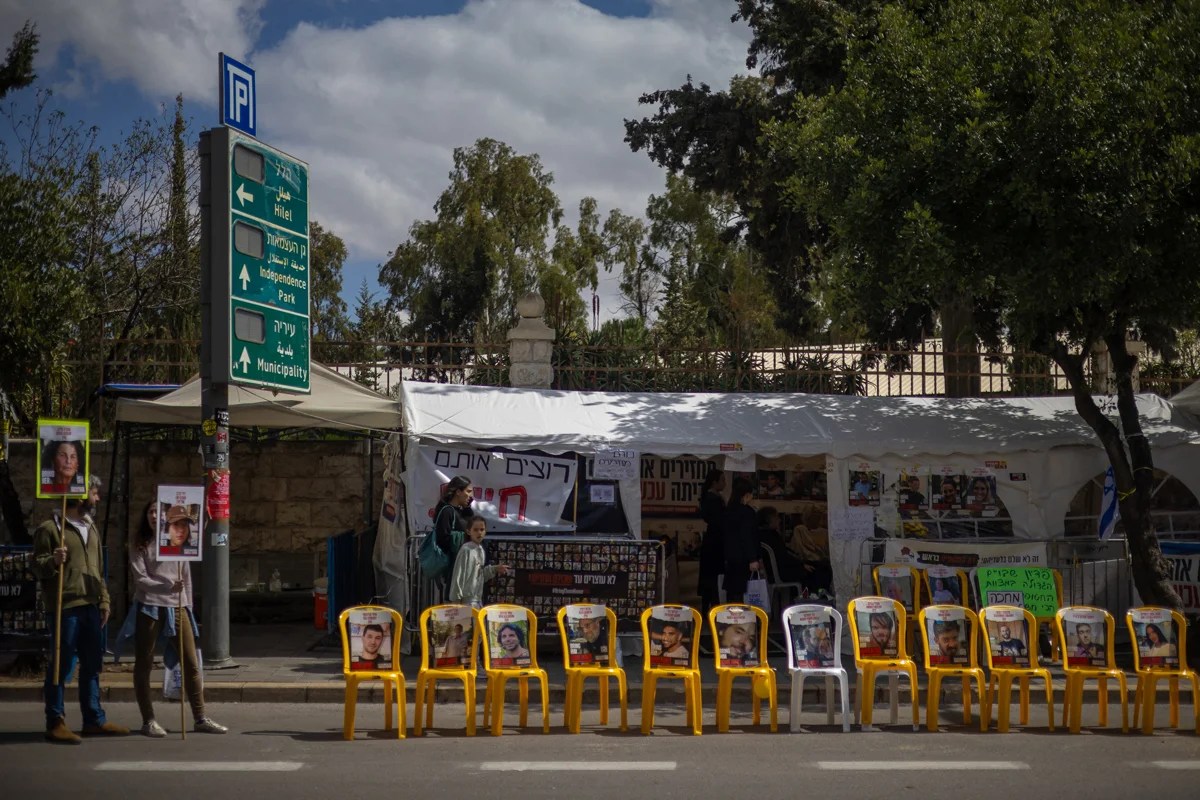
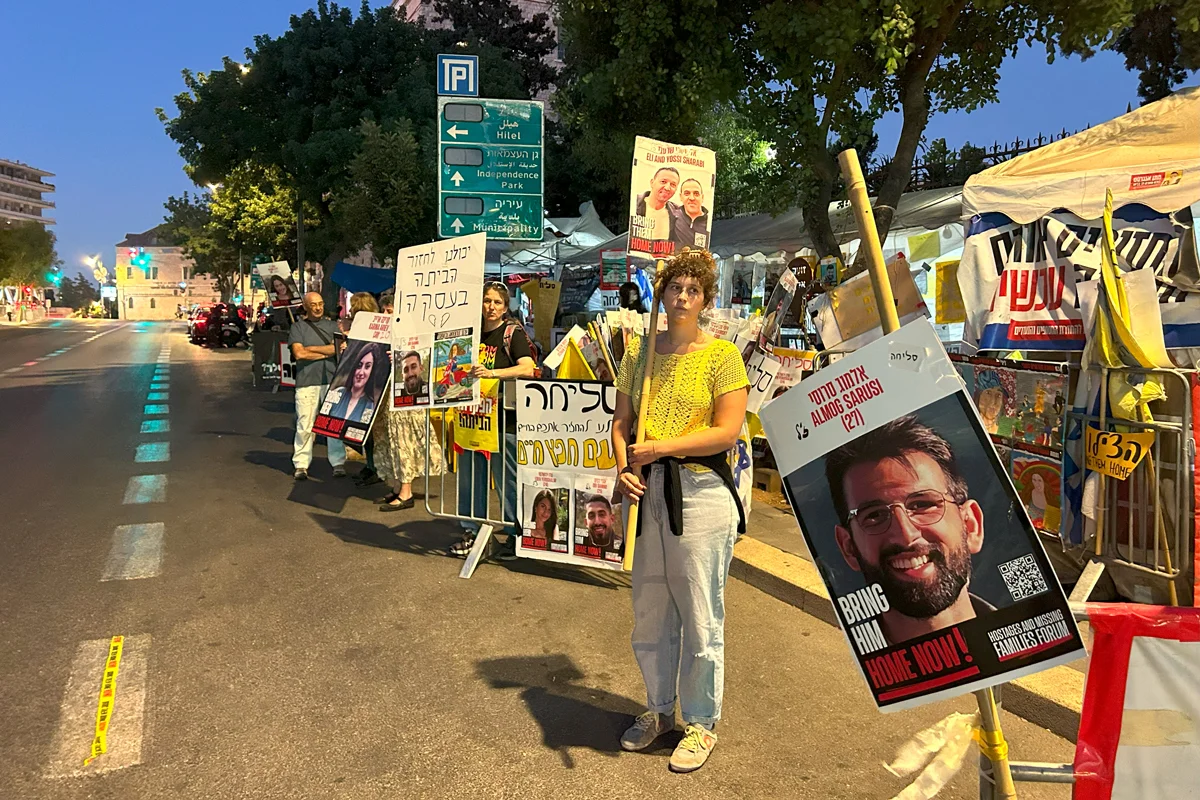
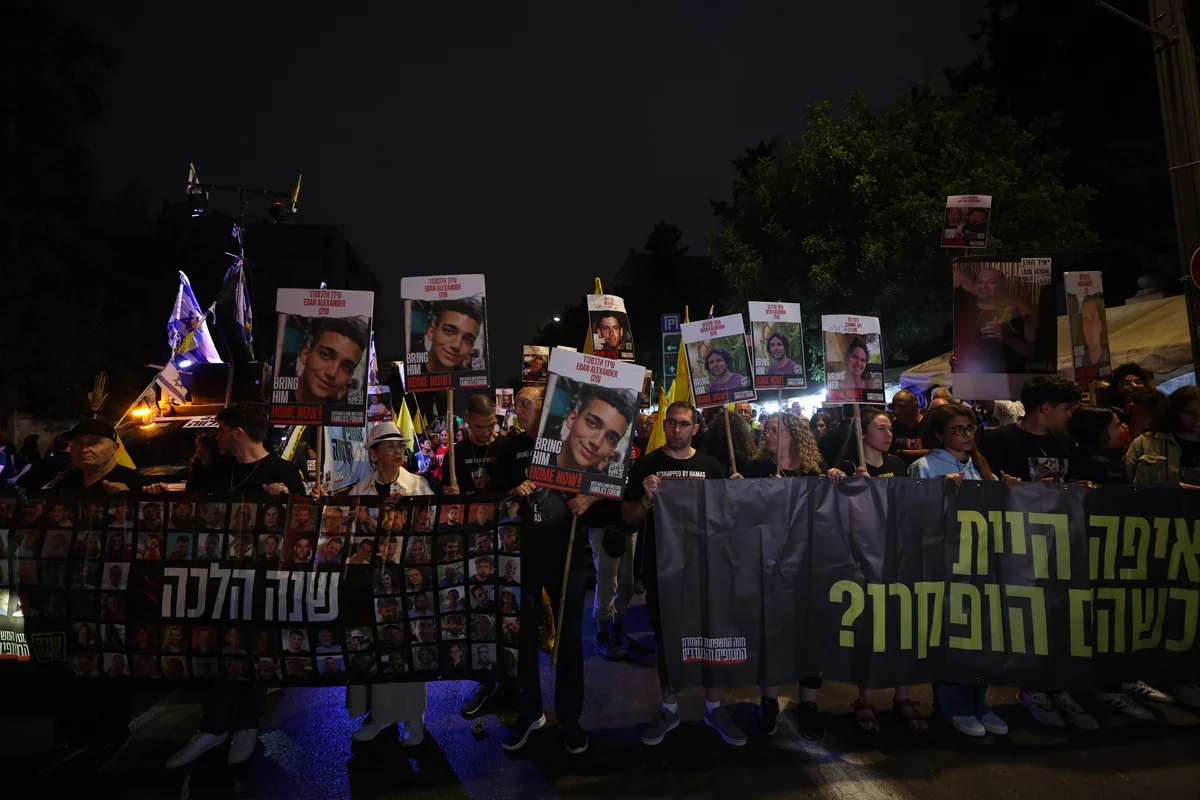
While in Tel Aviv the highway is overlapped, in Jerusalem people gather around the tent camp in support of families of stolen Israelis, defeated by activists opposite the residence of the Prime Minister. On stone fences hang posters with images of prisoners. Under some of them, such as, for example, under the portrait of the 23-year-old Jerusalemian Hershe Goldberg-Polin, the murdered Hamas in the Gaza tunnel in just a few hours before the arrival of soldiers, one word is written: “Sorry”.
In the camp you can find an opit of Lugasi. She sets the projector to show the gathered and passers -by Hershe’s parents at his funeral, she distributes leaflets and gives orders to other activists.
But a year ago, the opit was hidden from the militants of Hamas, who penetrated on October 7 in its area in the city of Deero in the south of Israel.
“The terrorists were very close to our street, near our house,” she recalls. That evening, when the offite and her family began to realize the scale of the horror, they first learned about friends and acquaintances who were kidnapped or killed. “Emily [Damari], with whom I studied, Gali [Berman], Ziv [Berman], who were with us at school,” the names of captured Israelis lists an opit with pain in her voice.
After a month and a half of service in the reserve, the opit was in Tel Aviv, feeling lost.
“I realized that I should suspend my life and do something more significant,” she says. This brought her to the tent camp in Jerusalem. “My safety is Emily's safety, Gali safety, Ziva safety,” she says. - This is the safety of all of us, everyone.
At first, the forum participants in the return of hostages - the main alliance of the hostage and missing families, in which the opit participates - tried not to declare a political position in relation to the government of the country and the war in Gaza. But dissatisfaction with the actions of Netanyahu and his chosen strategy of military pressure instead of negotiations gradually grew.
In April, a group, consisting of several members of the hostage families, turned to the government through the media and said that "the state of Israel should choose: hostages or war."
“Netanyahu should stop to breaking the transactions,” the opit claims. - Human lives are much more important.
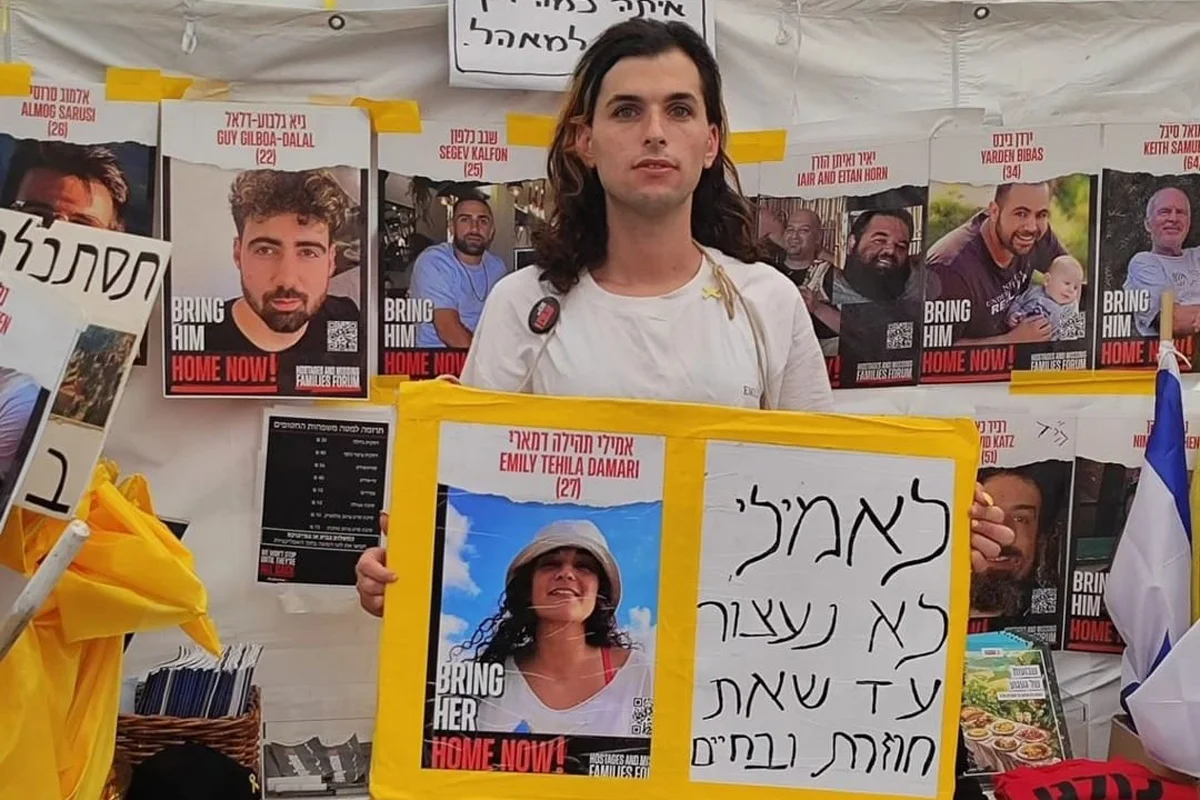
The forum dissatisfaction with Netanyahu policy is due to the fact that the Prime Minister repeatedly rejected the deal with Hamas to release prisoners of the Israelis. Former spokesman for the forum Haim Rubinstein claims that the project of such a deal was lying on the table of Netanyahu a few days after the fighting attack: then, in response to the liberation of all hostages, Hamas demanded to abandon the military invasion of gas.
Since October 2023, ministers from the Netanyahu office are publicly arguing about what terms of the transaction can be accepted and which - rejected. The centrists Gadi Aizenkot and Beni Hanz, who supported the idea of accelerating the deal with Hamas and the ceasefire, left the Netanyahu government in June. Since then, the political survival of the Prime Minister depends on the extreme right members of the coalition that threaten to leave the government if Israel “surrenders” with the requirements of Hamas and releases too many Palestinian prisoners or agree to the withdrawal of the troops. The far -right Minister of Finance Bitsalel Smoitsich said in February that the return of hostages was not a “main thing”, which caused rage from the hostage families.
The preservation of the coalition in the government can help the Prime Minister remain in power and avoid a prison term-after all, Netanyahu passes the defendant in several cases of corruption . In addition, a significant part of the company has the main responsibility for him for the inability to prevent the tragedy on October 7. Publishing polls show that Netanyahu and the coalition will lag behind their rivals if the elections take place today. Therefore, critics of the Prime Minister are confident that his decisions are motivated by the desire to remain in power, and not the interests of citizens.
This makes many members of the forum doubt that the liberation of their family is generally important for the government: while Israel continues military operation, hostages are dying. In February, Israeli intelligence found that at least 30 hostages captured by Hamas and his allies on October 7 were already killed.
But the most important thing is that hostages die from the fire itself. In December, three Israeli prisoners died from Israeli fire, stepping towards the Israeli military with raised hands and a white flag. In June, it became known about the death of four more hostages, and the IDF checks whether they were killed by the Israeli army . In September, the IDF admitted that three more hostages were killed at the Israeli bombing.
“Time does not just leave,” says Chaim Rubinstein. “It has already come out.”
Certificates of liberated hostages add doubts to the forum participants that the goals can be achieved by a military way. At a meeting with the military cabinet in December 2023, the released captives said that their main fear was to die under the bombing , and not at the hands of the militants. The hostage Luis Har, released in June in June, confirms this: "Israeli planes were our main fear." In August, Noah Argamani, also released IDF, said :
“I had cuts on my head and injuries throughout my body,” - due to the collapse of the building, which was bombarded by the Israeli Air Force.
“You claim that you have reconnaissance data, but in fact [you] bombed us,” said the hostage freed in November in contacting Netanyahu. - My husband was separated with us three days before our return to Israel and took him to the tunnels. And now you want to flood the tunnels with sea water? You bomb the tunnels where the hostages are located! ”
In January, the IDF confirmed that he had flooded the network of tunnels in gas with sea water.
“We have reached 500,000 people,” says the offite, referring to the demonstration on September 1. - I think we are approaching two million people who are a little tired of this situation (the population of Israel is 9.8 million people. - Approx. Ed. ).
At the end of the day, a group of opponents gathers opposite the tent town. These people oppose the return of hostages “at all costs”, claiming that the liberation of the Palestinian prisoners and the termination of the war in exchange for hostages is an unacceptable concession. They hold a poster with the inscription in Hebrew: "The liberation of terrorists is bloodshed."
Opow takes a megaphone - the day of calm agitation flows into a stormy protest night.
University in Jerusalem
The city center is not the only place where clashes occur. At the Jewish University in the eastern part of the city on May 28, one could see how two groups of students were divided against each other, separated by university security and barriers.
On the one hand, Israeli flags and supporters of “Tirts”, the ultra -right organization. They shout: “The people demands to drive the terrorists! Let your village burn out! " ( This refers to Palestinian villages. - Approx. Auth. ). On the opposite side you can see several Palestinian flags, and among students - Ayu Hatib, a twenty -two -year -old activist of the organization "Standing together". Aya screams at the megaphone: "The government has no solution - neither peace nor security!"
Such a free statement of position is rather an exception to the rules. Aya recalls the tense atmosphere reigning after October 7th.
The Israeli security forces detained, arrested for the “tending [public calm] behavior”, “incitement to terrorism”, supporting Hamas or the organization of hundreds of Palestinian citizens. With some, the police conducted warning conversations due to the fact that the security forces considered suspicious posts that they published on their social networks.
Among such Israelis is the famous singer and influentor of Nazareth Dalal Abu Amne. Because of the post in social networks with the image of the Palestinian flag and the inscription on Arabic: “There is no winner except God,” Abu Amne was detained in the police for two days, and then placed under house arrest. The singer, known in the Arab world with her songs about Palestine, claimed that her post was a statement of faith, but the Israeli authorities interpreted him as a call to the struggle.
Those who shared quotes from the Qur'an were subjected to arrests in social networks, information about the victims in gas or simply wrote “good morning” in Arabic. According to the legal center "Adala", which protects the rights of the Arab minority in Israel, all these arrests were carried out without a legal justification, using gross force and took place at night.
Студенты израильских высших учебных заведений оказались особо преследуемой группой. Тот же центр «Адала» представлял интересы 95 студентов, против которых были инициированы дисциплинарные разбирательства. Почти половина дел (47%) завершилась временным отстранением или отчислением студентов. В большинстве случаев, по данным «Адала», поводом послужило либо выражение солидарности с жителями Газы, либо цитирование Корана — действия, защищенные правом на свободу слова. Примечательно, что подавляющее большинство обвиняемых (79%) составили девушки.
Ая рассказывает, как многие ее друзья-студенты, испугавшись возможных преследований, были вынуждены принять тяжелое решение — полностью бросить учебу.
— Они боялись даже разговаривать по-арабски в университете, — говорит Ая. По ее словам, напряженность усилилась из-за присутствия еврейских студентов, многие из которых являются резервистами и носят оружие в аудиториях и на территории кампуса.
Напряженные общественные настроения выливаются в эксцессы, приближаясь к попыткам линча . Так произошло 29 октября 2023 года в арабо-израильском колледже в Нетании, где студентов палестинского происхождения пришлось спасать из общежития после того, как толпа из сотен евреев собралась снаружи, утверждая, что палестинцы нарушили субботнюю молитву в соседней синагоге. Во время беспорядков разгневанная толпа штурмовала кампус, размахивая израильскими флагами, скандируя: «Смерть арабам!», и пыталась сломать ворота, чтобы ворваться внутрь общежития. Палестинских студентов пришлось эвакуировать из общежития.
В сентябре палестинская школьница сказала в классе, что дети в Газе умирают от голода . Одноклассники ответили кричалкой: «Пусть сгорит твоя деревня», — и напали на нее после урока.
Школа сообщила родителям, что отстранила ее от занятий для ее же защиты, однако представители Министерства образования обвинили ее в «подстрекательстве против армии».
В такой атмосфере выражение антивоенных взглядов проблематично: хотя граждане Израиля палестинского происхождения составляют 20% населения Израиля и большинство из них настроены негативно по отношению к продолжению войны, они мало участвуют в антивоенном движении.
Ая говорит, что не чувствует, что уличные протесты представляют ее интересы. Она отмечает, что люди выходят на массовые демонстрации в основном, чтобы вернуть заложников, но не обращаются к «боли палестинцев или к тому, что станет с Газой [по окончании войны]».
Кроме того, Ая часто встречает расистские высказывания в адрес палестинцев на протестах.
— «Смерть арабам!» и «Арабов — в Газу!» — когда слышишь такое, как можно ожидать, что арабы присоединяться к таким протестам? — Ая отмечает сложность своей ситуации: — С одной стороны, я палестинка, с другой — у меня есть израильский паспорт. — Но она не чувствует, что живет в демократической стране, из-за антидемократических законов, таких как « Закон о национальном государстве » или « закон о Накбе ». Несмотря ни на что, Ая остается оптимисткой, думая о будущем. — У меня столько друзей-евреев, это дает мне надежду. Я верю, что мы можем построить лучшее будущее.
Антивоенное движение в Израиле — сложное явление, отражающее глубокие противоречия израильского общества. От Ривки Львовой, выступающей за права человека в Палестине, до Офекит Лугаси, борющейся за освобождение заложников, и Аи Хатиб, стремящейся к арабо-еврейской солидарности, — каждая из этих активисток представляет отдельный взгляд на конфликт и пути его разрешения; иногда эти взгляды входят в противоречие друг с другом.
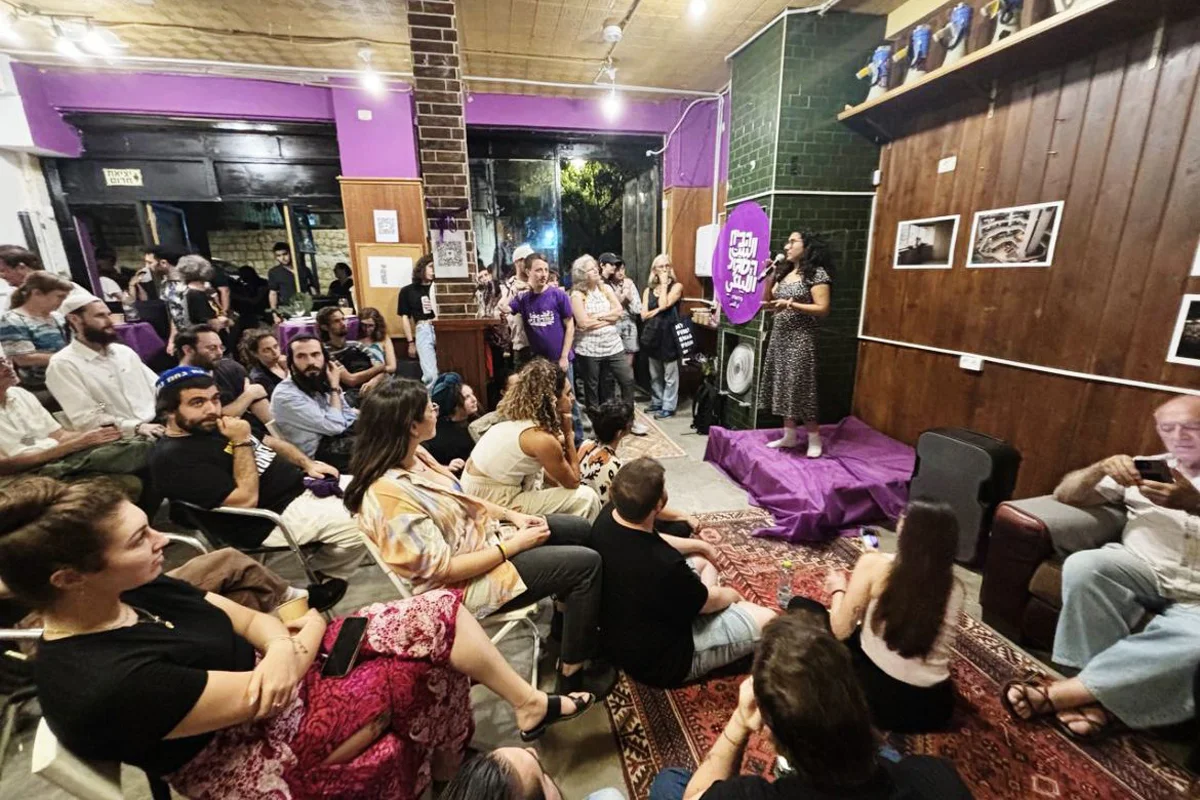
Если в Тель-Авиве были введены ограничения на массовые собрания, то в Иерусалиме ситуация складывалась иначе. Здесь нет ограничений на проведение акций, и 7 октября, в годовщину трагических событий, Форум семей заложников организовал масштабный протест и марш с требованием освобождения пленных. Активисты движения «Стоим вместе» также не остаются в стороне: 10 октября они планируют провести вечер палестинской поэзии и искусства.