
Translated material
"Violence is the main theme of its texts"
Alexander Gavrilov - O Han Gan, the first Nobel Prize in Literature from South Korea
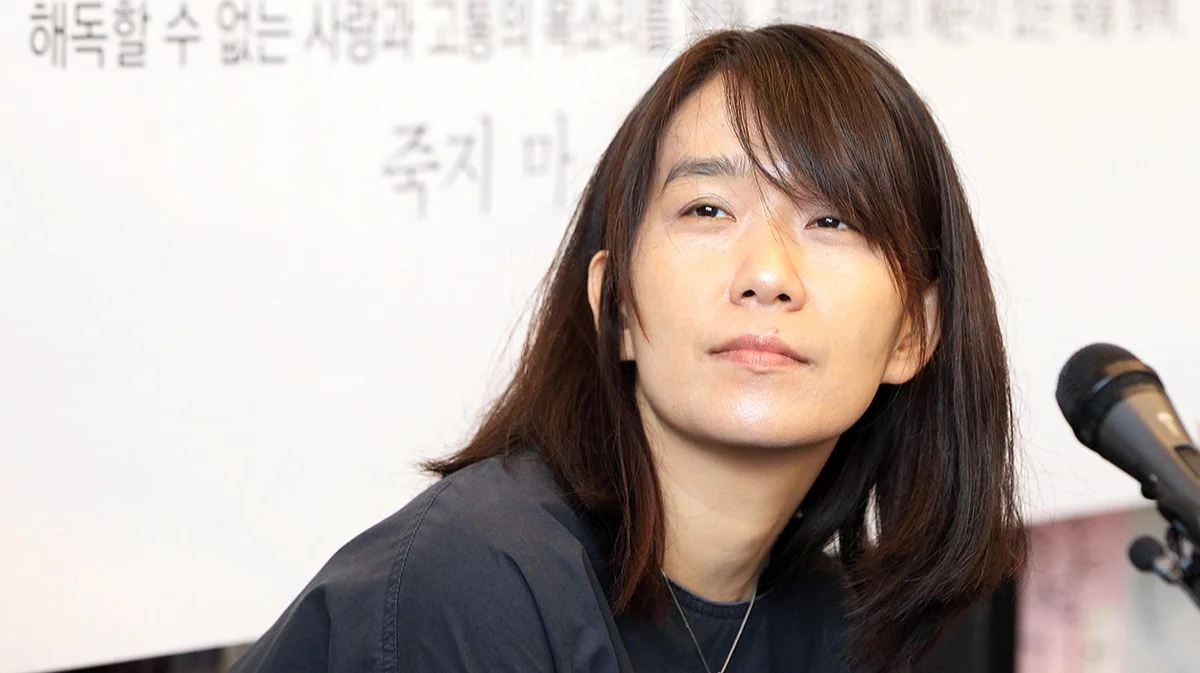
South Korean writer Khan Gan, May 16, 2016. Photo: Kukminilbo / EPA-EFE
In 2024, the Nobel Prize in Literature was first awarded to the Korean writer. Khan Gan (born 1970), known to the Russian reader from the novels “Vegetarian” and “Human actions”, became a laureate. Until the last, the bookmakers put other candidates to the victory - the Chinese woman Tsan Xue and the Australian Gerald Mernain. The unexpected choice of the committee was topical. The main questions about the writer, her style, the main novels and the choice of the Committee are answered by a literary critic, organizer of the Enlightener Award and co -founder of Vidim Books Alexander Gavrilov.
Why did Khan Gan's choice be unexpected for bookmakers?
Each bonus has its original mechanisms, and surprise is one of the main properties of the Nobel, starting from the moment of its institution. Well, when did everyone say that this is exactly the nobel we were waiting for? When the prize was given to a little-known American poet of Russian descent Joseph Brodsky, Italian proto-stand-up Dario Form or singer Bob Dylan? The same applies to the authors like Murakami, Pinchon or Welbek, who have been in the favorites of the award for many years, but they will not receive it in any way. The Nobel Committee likes to escalate Saspens.
This year, Nobel was closer to other large awards. After the laureate’s announcement, the Swedish press replaced with reproaches that Nobel turned into a second booker ( in 2016, Khan Gan received an international Buker prize for the novel “Vegetarian”.- Approx. Ed. ). The Nobel Committee can afford to reward a distinctly complex and experimental work. And the booker must ensure that the winning novels are not only substantial, but also readable. Han Gan's books are precisely reader literature, not for a "narrow circle." But guessing about the reasons for such a decision seems to me a deliberately failure. We will recognize them in 20 years, when the Nobel Committee will open the archives.
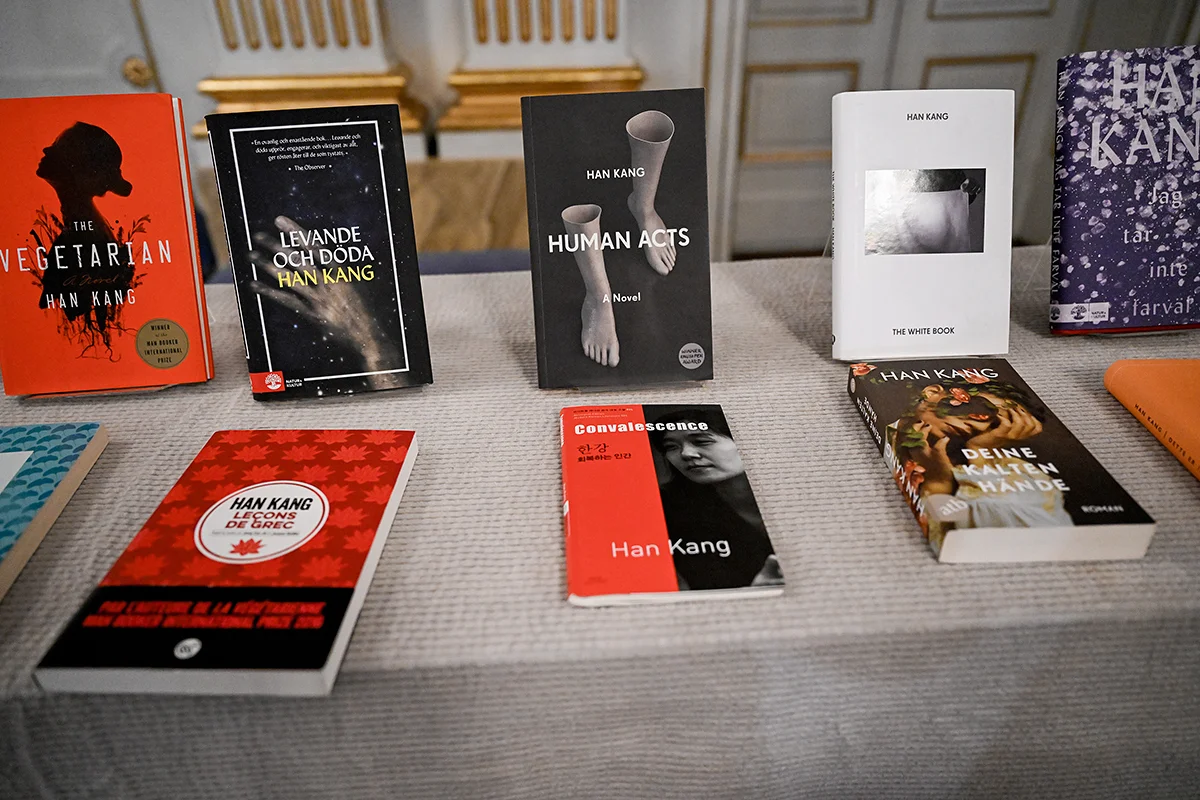
What to read by Khan Gan?
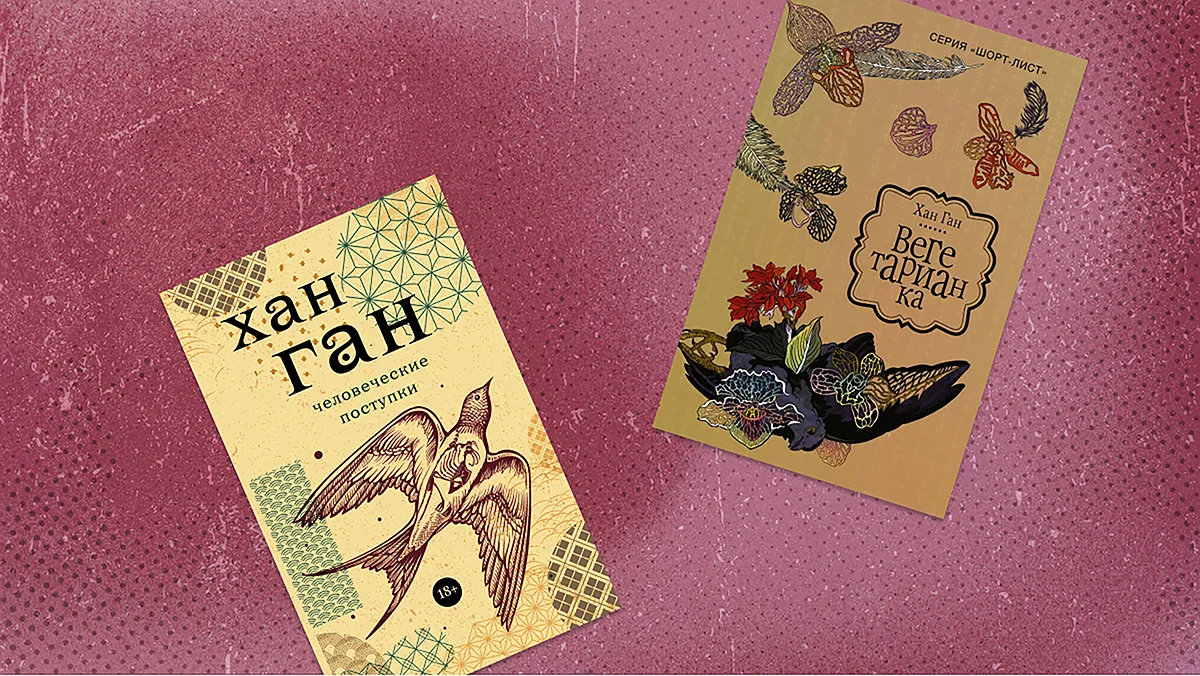
Two of its main and most crowned with various prizes of the text - “vegetarian” (AST, 2018) and “Human actions” (AST, 2020) were translated into Russian. In Russia, they caused a moderate response, but did not go unnoticed. The Korean original was translated directly, and not the English -language version, as often happens. It is worth saying that Lee San Yun translated them perfectly. In Russian, this is also very “sounding”, “musical” literature.
To start acquaintance, in my opinion, is wiser with a “vegetarian”. This is a wonderful modern prose that does not require involvement in the Korean context. In “Human actions”, nevertheless, we are talking about an anti-government performance in Kwangju ( in 1980, the rebels of three days controlled the writer's hometown.- Approx. Ed. ). Without at least an approximate understanding of the historical context, this novel is read worse. Although, of course, it can be perceived through the prism of a person in general, appearing in the face of the forces of history, cruelty and death.
How and what Khan Gan writes about?
The novels Han Gan have two seemingly contradicting properties. Firstly, these are very lively, “dancing” texts that are easily read. It is no coincidence that the definition of the Nobel Committee speaks of "poetic prose." Khan Gan entered literature just as a poet. This is important because the prose writer works with history, characters and their reliability, and the poet with sound and language as such. Last year's laureate Yun Fossa is originally a poet. Fazil Iskander began with poems, and in his prose, in my opinion, a very noticeably poetic structure of the phrase. Personally, I have no reason to doubt that the prose writers that come from poetry are on average stronger than those who immediately began to write prose. However, Vladimir Sorokin, for example, began as an artist. Perhaps for a prose writer, in principle, it is useful to feel some other type of art, to have it in its arsenal.
The second, perpendicular poetry feature of Romanov Han Gan is a very direct image of violence, and in extremely cruel forms. She boldly and shamelessly pokes the decaying corpses in the face of the reader. Violence is the main theme of its texts. “Human actions” is a book about the uprising and its hard suppression. Khan Gan is not very interested in political circumstances, heroes and executioners of these riots. It gives at the same time turned on and, as it were, a children's look. The novel begins already during the suppression of protest. Communication with the outside world in the city is disabled. People go missing hundreds. The first scene takes place in the place where corpses crippled by security forces are stored in the kingdom of the dead. The boy is looking for his friend there. They ask him if he went around the morgues and hospitals: "Yes, of course."
Heroes are placed in the space of total horror. For Khan Gan, this is rather a natural tool than exceptional.
The “vegetarian” is also consonant. This is a book that violence spilled in society is so suppressed by a sensitive person that he is trying to destroy the chain of violence at least at some point in his life. The point is not so much the murder and torment of animals as in how society reacts to the heroine’s refusal. Vegetarianism itself in the novel is not particularly important. The conversation is about violence as such. Khan Gan considers it as a property of human nature. But he also studies manifestations of violence in historical circumstances - in connection with the structure of society.
Despite the fact that the books of Khan Gan do not actually have a “entry threshold”, they will not be easy to read to people who can hardly tolerate cruelty. I can easily introduce experienced and diligent readers who describes the crippled corpses in the first ten pages will lead to a terrifying state of mind and will not allow me to enjoy “human actions” further. For everyone else, it will be a great prose.
Han Gan - Asian author for the West?
You can never be sure whether the author works, keeping only a native reader in the thoughts, or turns to the whole world. For example, in the history of Russian literature, of course, there were writers who addressed works primarily to the world or at least all of Europe and North America. Such an author is Leo Tolstoy. His influence on Gandhi or American religious groups is explained precisely by the fact that his message was intended for the whole world, and not just his native country. Turgenev is also quite a “export writer”. His works, by the way, are still included in the French program of high school.
It seems to me that if we formulate a claim that the writer does not “for native aspen”, but for the global conjuncture, then we limit ourselves very much. The same Dostoevsky was translated into all conceivable and inconceivable languages at about the speed of publication. Orientation on going beyond the limits of national culture is rather a plus than a minus.
In my opinion, this is evidence that the artist is able to think about global categories and human interests, regardless of his national and cultural origin.
Another question is, do we deal with conscious exoticization? We know the authors of the twentieth century, who deliberately emphasized the features of national culture in their work and seemed to act on its behalf. The most striking example, perhaps, is Gabriel Garcia Marquez, who even received Nobel in the Colombian Kosovrok, and not in a suit with a tie. But can we devalue him because of this?
As for Khan Gan, the paradoxical plexus of poetry and cruelty makes it essentially very Asian artist. In this sense, it is consonant with the Chinese, Taiwanese, Korean cinema, where the aesthetically selected angle and the built -up game of light are adjacent to the terrible Rubilov in the frame. This is what people born in the 1970s fell in love with Asian cinema. Surely everyone remembers the Royal Battle and similar films. But if the “royal battle” demonstrates violence for the sake of violence, then Khan Gan explores him.
Suddenly the relevant Nobel laureate?
We do not know what motives the Nobel Committee was guided by. In past stories, it is known that they could be completely random and unpredictable. But this year, the choice really turned out to be relevant - in the sense that the books of Khan Gan demonstrate their readiness to directly look in the face of violence and not lose human autonomy and artistic freedom before him. This is a specific type of interaction with violence - not only not to close from it, but also to be able to build fantastic poetic worlds in the neighborhood with it. It seems to me that this is a rather relevant artistic behavior, caused by life not at all the circumstances in which Khan Gan now exists and creates. She itself is still immersed in the historical process. With “human actions” everything is clear, but the “vegetarian”-the story is not at all about the Hipster girl. Moreover, the book has been written for a long time. However, now reality, unfortunately, caught up with it.
Questions was asked by Sorin brom