
Translated material
Turnkey brigade
Report from a secret French base where Ukrainian military are trained. And also from the Elysee Palace, where Macron and Zelensky met
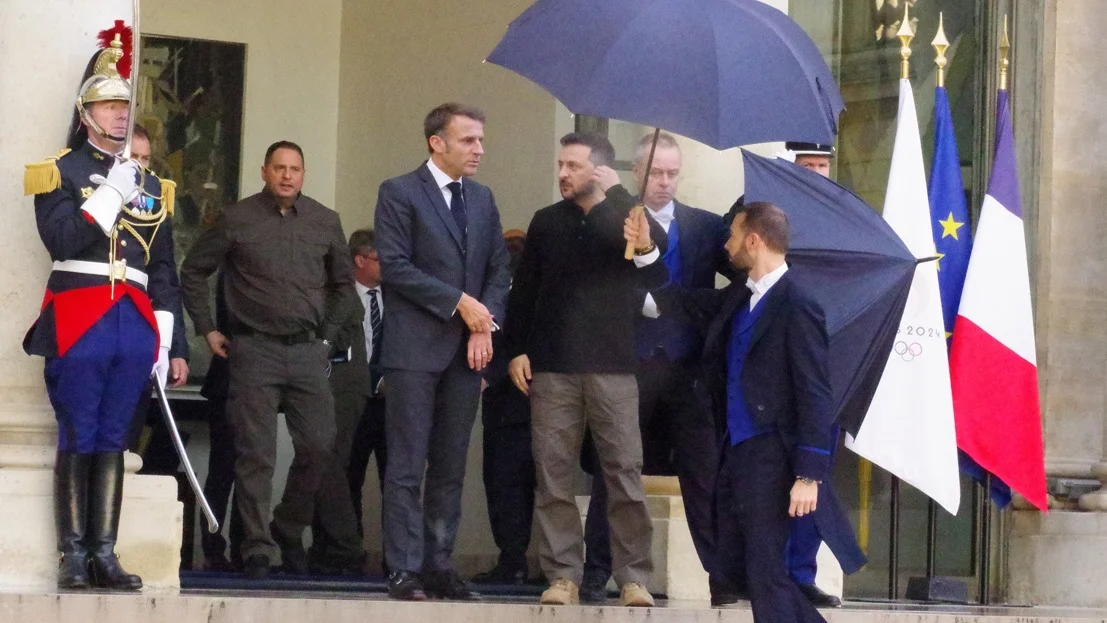
Emmanuel Macron and Vladimir Zelensky. Yuri Safronov / Novaya Gazeta
Hurricane Milton brought a lot of troubles not only to Florida. By moving the schedule of the Ramstein meeting with the participation of Biden and other leaders of allied countries, he also changed the schedule of Vladimir Zelensky. Having no way to stall for time until Ramstein’s new date, the Ukrainian leader decided to make an urgent forced march to the main capitals of Europe. London-Paris-Rome-Berlin... He introduced his “Victory Plan” to the allies, spoke about the situation on the battlefield and, of course, about the urgent needs of the army. Zelensky’s Paris visit, as well as Macron’s visit to the Anna Kievskaya brigade being trained there in the northeast of France, was observed by a Novaya correspondent.
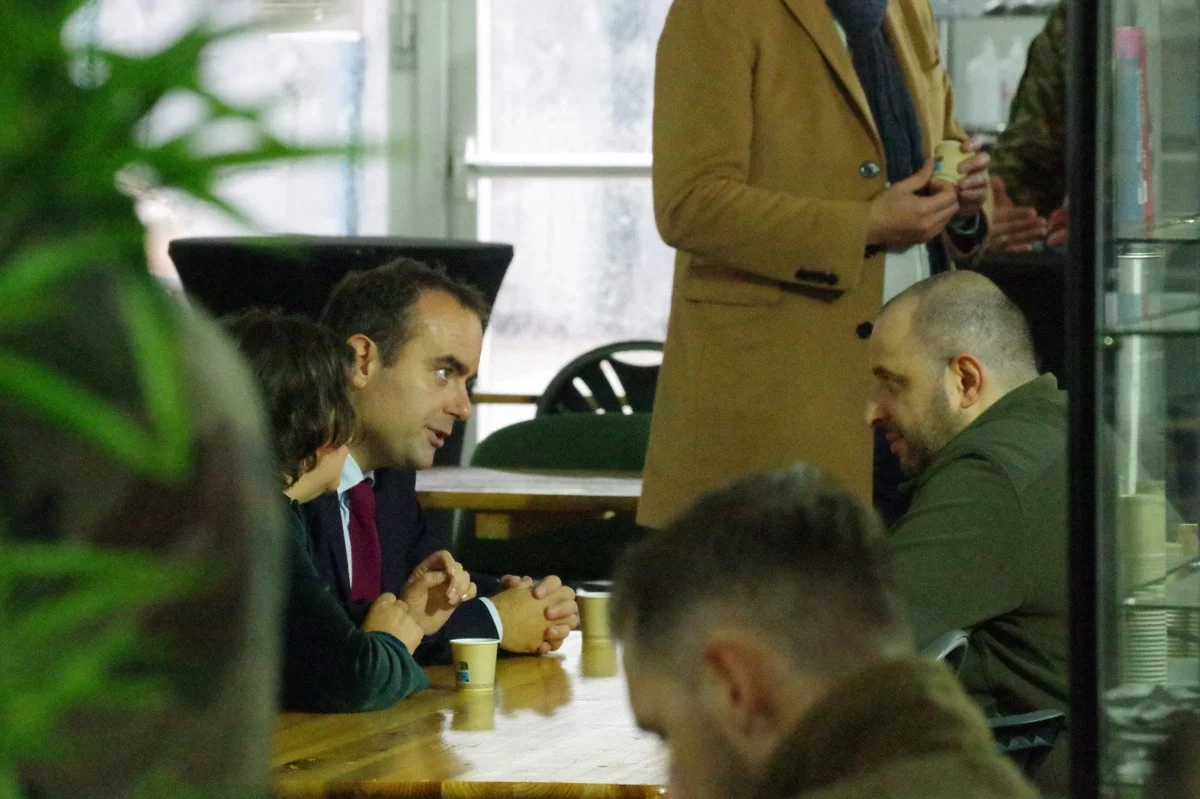
The hurricane, as forecasters said, carried its influence to the French region of Grand Est, where Macron's visit was accompanied by continuous gray cold rain. As a result, “due to weather conditions,” they decided to cancel the presence of the president at the demonstration shooting exercises. Journalists were not told whether this was due to the fact that the shooting was carried out with live ammunition, but in the end, the exercise was observed “only” by the heads of the defense departments of both countries - Sébastien Lecornu and Rustem Umerov, as well as several key French generals, including the Chief of the General Staff of the Armed Forces France by Thierry Burcard.
One of these high-ranking military men will later tell us what he thinks about the situation on the battlefield in Ukraine, but for now we - a small group of journalists, security guards, employees of this military base and about 50 Ukrainian and French soldiers each - are waiting in a huge tent for the arrival of the president . The translucent tent is a “relaxation room” that operates here all the time and is formally called a “bar.” In the “bar” there is coffee, tea, lemonade, honey, condensed milk, small “madeleines” cakes. For entertainment, there are three table footballs, two electronic darts, three slot machines... Here, next to the counter, are the essentials - warm socks, gloves. Ordinary things for the everyday normal life of normal people.
At the entrance to this giant tent there is a piece of paper with an inscription in Ukrainian about the opening hours of the bar “From Monday to Week”.
We need to distract ourselves somehow. Because two or three months - and the Ukrainian military “will be ready to be sent to the front,” as the president’s military advisers and people from the French Ministry of the Armed Forces dryly say. But when you look at these young people - some 20, others 35, others over 40, so different in all signs and parameters (there are also “intelligent bespectacled men”), at how respectfully, albeit ironically at times, they communicate with each other, as they share cola and bring cookies to tables before the distinguished guest arrives - it is impossible (in the sense of unbearable) to imagine that these “two or three months” will fly by and they will go to the front line...
It is forbidden for journalists to speak with Ukrainian military journalists - “a request from the Ukrainian side”, strictly voiced to us by the press service of the Elysee Palace before entering the tent - but I, for example, in any case would not know what, and most importantly, why they have ask.
“We are making efforts to create a combat situation”
Several French instructors “urge” us on and tell us about some technical details of the training. Nicolas says: everyone received at least basic training in Ukraine, but there are also “a certain number of veterans”... Most often among them are officers and junior officers. “We have the second largest training base here in France.” “Here the weather conditions are as close as possible to Eastern Europe... And we are creating conditions as close as possible to what they will have at the front...”
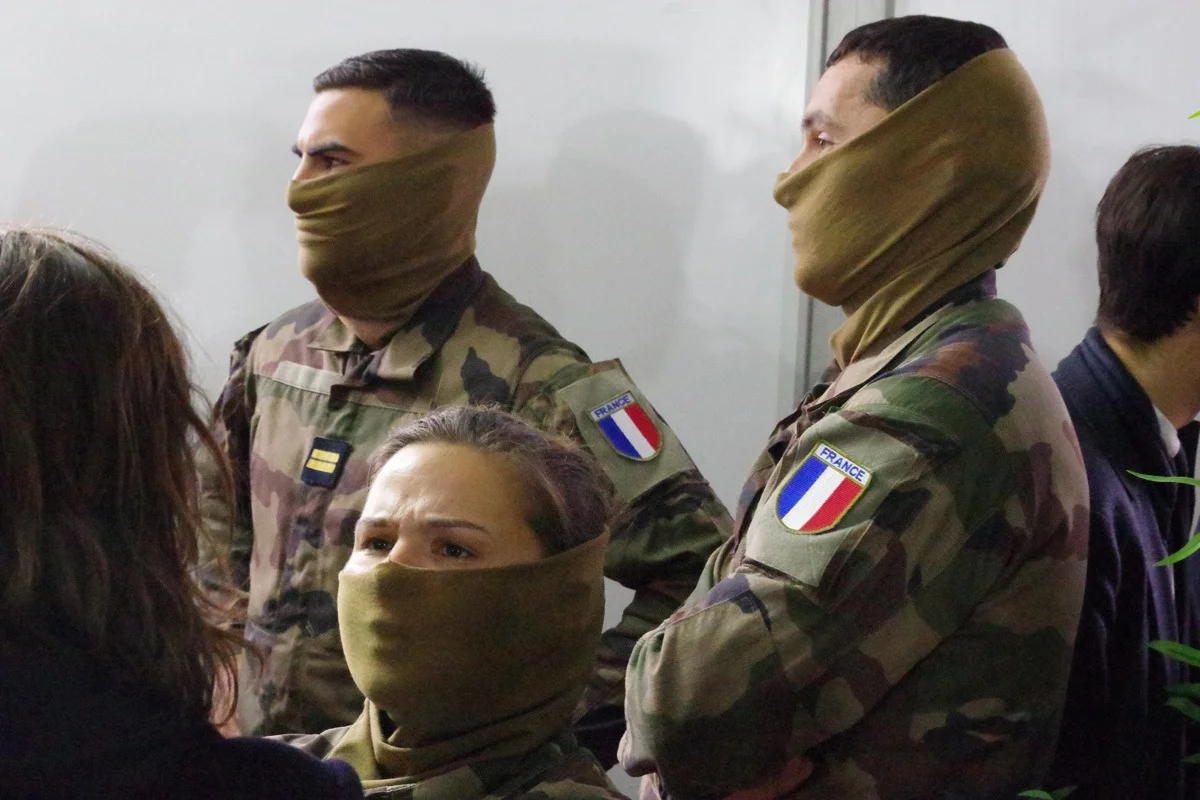
“We are making efforts to create a combat environment, that is, to immerse people in real combat conditions, with stress, noise, drones - with everything... almost everything... that they will see “on the ground,” said one of Macron’s military advisers.
And Colonel Paul said at the training ground to Ministers Lecornu and Umerov after demonstration shooting exercises: “The training is going very well. Ukrainian soldiers are progressing faster than we thought... We agreed with the commander of the Ukrainian brigade that we would exchange information before the briefing to tailor the training to Ukrainian needs.” He emphasizes: we not only teach, but also learn ourselves, “in return receiving (from those who have already passed the front) experience and know-how.”
An instructor named Geoffroy, a military adviser to Macron (“This is a major and extremely important investment for our armed forces”), and, finally, one of the leaders of the French army, whose name we were asked not to disclose, speak about the same thing. We, several journalists, surrounded the general to talk for about 10 minutes, which remained until the arrival of Supreme Commander Macron. “We are certainly adopting experience from the Ukrainians, because, unfortunately, they have real experience. When you have people from the army that is conducting (military operations), you, of course, learn from this army,” says the general and adds: “And we received a lot of useful things from what we already did during training (of the Ukrainian military by French instructors) in Poland. And we adapt, because Ukrainian needs also change on the battlefield.”
“The methods of training Ukrainians here and in Poland are quite similar... We train the Ukrainian military taking into account their technical specifications and what they themselves ask... Training and equipping an entire brigade is something that also meets Ukrainian requirements,” the general continues.
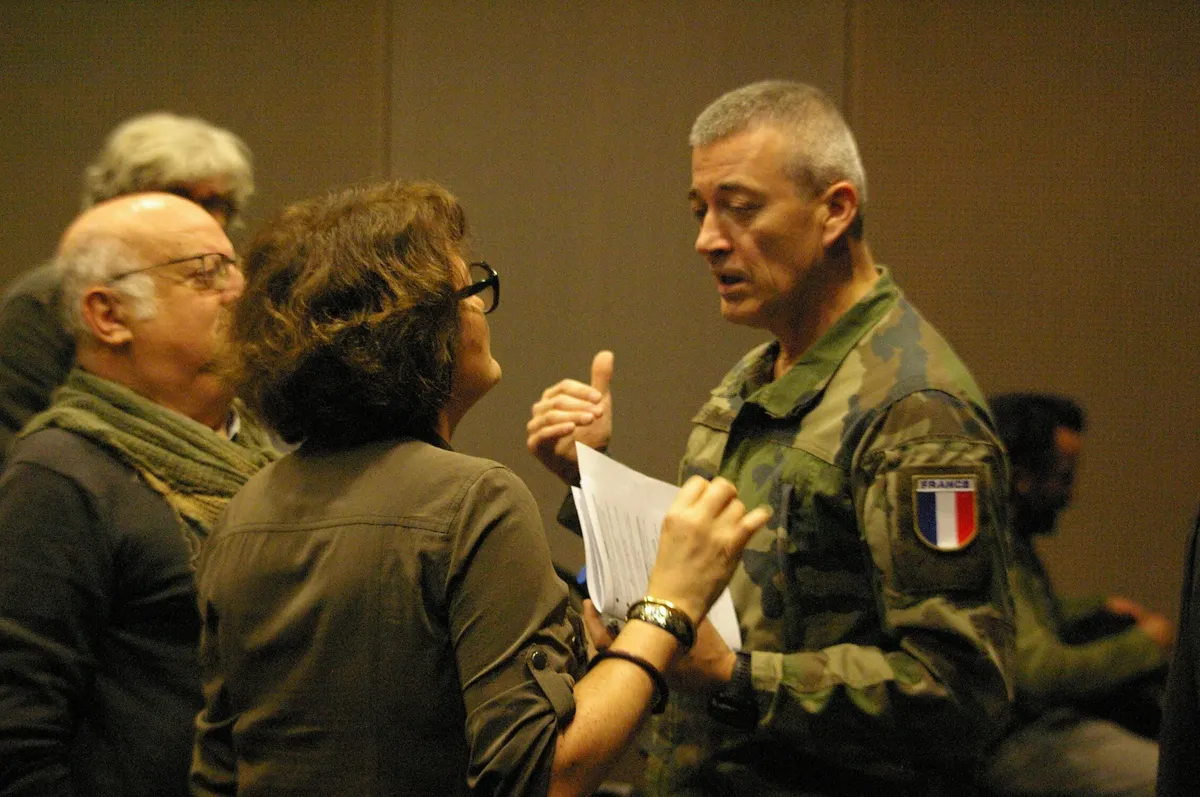
— Are the combat methods you teach the same as in NATO? - my colleague asks him. The general replies: “Yes, very close. Especially in the area of artillery support and things like that.
But you still need to look for a compromise - on the one hand, so that it is as compatible as possible with NATO standards, and on the other hand, it is impossible for the change to be too drastic for the Ukrainian army. It’s not for us to insist, this is not the time and not the place: stop this and do everything according to NATO standards. We must remain realistic."
He emphasizes: the French are the first to train and equip an entire brigade (4,500 people) on a turnkey basis, and thus, “France once again shows that it is at the forefront of supporting Ukraine.” Reminds: “We were the first of the Western allies to deliver tanks to the Armed Forces of Ukraine” (we are talking about light wheeled tanks AMX-10 RC, the delivery of which Macron announced in January 2023, when in the Kremlin this was considered a “red line.” - Yu. S. ) ... "We organized an artillery coalition " ...
The President of France in June said that he was also creating a “coalition of instructors” for Ukraine, but then said that “the issue of sending themis not yet on the agenda,” and since then there have been no more public statements. Although the topic is certainly being “worked on” among the allies. For example, just these days, Times sources in the UK Ministry of Defense reported that they were “considering the possibility” of sending small groups of instructors to western Ukraine. This, among other things, will reduce “logistics costs” for sending and training Ukrainian military personnel abroad.
The French general tells us:
“Yes, the President (Macron) did say that France - if Ukraine asks - will be ready to conduct training in Ukraine - in approximately the same way as here: with our instructors, our support, but at the moment this is not being done yet.”
Macron also made a promise to prepare a brigade personally, and in June, when Zelensky came to France for the ceremony of the 80th anniversary of the Allied landings in Normandy (Russia was not invited to it), he confirmed the promise publicly. He said then: France will provide Ukraine with French Mirage 2000-5 fighters and will “assemble a coalition” to supply these aircraft (following the example of the previously created coalition of American F-16 fighters). He specified: “We will train Ukrainian pilots this summer. It usually takes five to six months.” And he said that a ground brigade should also be fully trained in France: “We propose to train and equip 4,500 Ukrainian military personnel.”
As for the training of pilots, it, as promised, has been going on for several months - just like the training of mechanics (not at the base from which we are now reporting); and Ukraine should receive the first Mirages, as Minister Lecornu said the other day, “in the first quarter of 2025.” As we see, the promise to prepare the brigade is also being fulfilled. 2,300 of the 4,500 people will be trained here (“and most of the 2,300 have already been on site for several weeks”), and the rest, judging by statements from several sources, “in Ukraine - by Ukrainians.” Some of the officers who will be trained on Ukrainian territory “will be sent to France at the end of the training, as part of the exercise, to ensure the integration of all tactical units of the brigade,” a source in the Elysee said earlier.
The brigade will be equipped with French equipment.
“The equipment plan for this combined arms brigade is: 128 VAB armored personnel carriers, 18 CAESAR guns, 18 AMX-10 light tanks, 10 TRM 10000 (heavy trucks) and 20 Milan ATGMs,” the source added.
“Here we will teach Ukrainians not only to operate this equipment, but also to maintain and repair it at a basic level,” says “our” general.
Question: “Is two to three months enough to prepare?” Answer: “You know, I will say, a soldier is never prepared enough.”
“When you put 30% of your budget into defense, do you really think you can build hospitals?”
“To prepare an entire combat-ready brigade at once is not at all the same (in terms of efficiency) as to compose it from those who arrived from different training centers,” he continues, and says that France, “if the Ukrainians send people,” “in theory will be ready to consider the possibility of continuing this experience, but for now we must prepare one brigade.”
It is clear that this is, first of all, a question of the availability of funds. To train 2,300 Ukrainian military personnel, 1,500 French forces are involved: this is if you count everyone - from high-ranking military supervisors, instructors and translators to service personnel, not forgetting, of course, security.
And it's expensive. France has planned to allocate 3 billion euros of military assistance to Ukraine for the entire 2024 (Germany, for example, 8 billion - Yu.S. ), and what will happen next is still unknown. Right now, the new French Prime Minister Barnier is looking for ways to save 60 billion euros over the next year in order to slightly reduce the astronomical public debt that has accumulated over decades. Macron is very reluctant to cut aid to Ukraine, so it probably shouldn't be reduced. But it is difficult to hope for its increase.
— If you teach Ukrainians, you should probably believe in our victory? — a Ukrainian journalist asks “our” leader of the French army.
— Of course, I believe in Ukraine and the Ukrainian army. That's why we prepare you here to give you the best possible chance.
— How do you assess the situation on the battlefield in Ukraine today? - asks the French journalist.
— To be clear, the situation is relatively balanced. And there is no army that is much stronger than the other. So we have a front that is relatively static. Even if we see that the nibbling of territory today is happening in favor of Russia. But this is just a nibble. You need to take a good look at the situation. Do you really think that Putin <...> did this in February 2022 with the idea that <...> he would be forced to completely mobilize his country to the point of spending 30% of his budget on defense? When you put 30% of your budget into defense, do you really think you can build hospitals? Roads? Treat people with cancer? <…>
So that's where the plot is. But for us, for the entire free world, the most important story is that it is not only the future of Ukraine that is being played out now. This is something else much more important. If Ukraine loses, it will show: look, power is winning over right today.
- What is the defining element - time?
- Yes, this is the time. Do you believe that the Russians can endlessly make SUCH efforts to take the regional centers of Ukraine? All calculations here are obvious. That is why under no circumstances should we weaken our support for Ukraine now.
In fact, people from Macron’s team also spoke about this. They emphasized that his visit to the base is “a very clear way” to show that support “is not weakening and will not weaken.” This is the president’s first visit to the base where Ukrainian military personnel are being trained, although the French have “already trained 15,000 of them since the beginning of hostilities,” the same sources say.
Macron: “We are proud to have the opportunity to teach you”
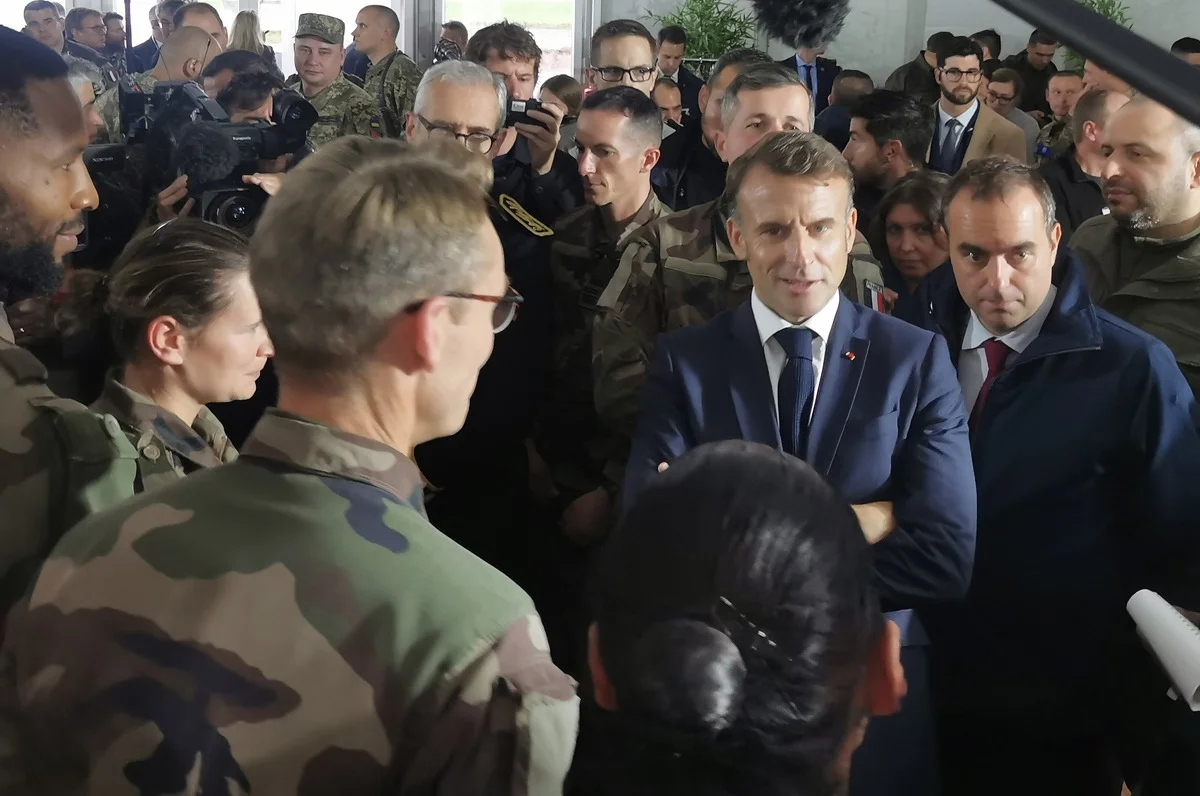
The President stopped by the base for an hour and a half, and we spent about fifty minutes in our tent, each of which he devoted to small talks with French and Ukrainian servicemen. And shaking everyone’s hand, he gave at least one “mercy”, looking straight into his eyes with a grateful look. That is, in fifty minutes the head of the French state had to say at least one hundred and twenty “thank you.” I write: “should have” because the working conditions (behind the backs of the military) and weather conditions (the rain beat tirelessly on the roof of the tent) did not contribute to audibility, although they helped the main task: maximizing confidentiality. Of course, there was no talk of military secrets.
“You should be proud of what you do,” Macron told French instructors, for example. And “we are proud that we have the opportunity to train you” - Ukrainian Armed Forces soldiers.
By the way, the brigade was named after Anna of Kyiv, the youngest daughter of Yaroslav the Wise, who made a career as Queen of France. The decision, of course, is not accidental - even before the start (of hostilities), there was a heated media dispute between Ukraine and Russia about “whose Anna is.” Ukrainians logically pointed to her place of birth. Russian propaganda is based on the word “Rus”... If only we could continue to argue like this...
But peaceful life is for weaklings who “die in an accident or from alcohol”...
One of the Ukrainians, in response to a question from the French President, says: “In a past life I was a carpenter.” To the question: “Is everything going well?” (in the sense of military training) - answers: “Very intense.” Another one says: “I am an officer, in the army since 2020, participated in battles, was in reconnaissance...”
Macron:
“Thank you... You have changed many things for the better thanks to your actions... We will try to do everything in our power to help you during this training... And it is important that there is a response from you... If something is wrong...”
Then to someone else: “How is everything going? Does this meet your needs? What experience do you have, what did you do before?” The Ukrainian answers: “I was a worker.” Another: “I was a driver.”
The President moves on: “Is the reception in France going well?” Answer: “Great” and a thumbs up. Macron: “The idea is also that we have feedback so that we can improve something...” Ukrainian soldier: “We have the best instructors.” Etc.
Before leaving, the President says, “So, who wants to take a photo?” Those who want to take a photo with the head of state who supports Ukraine are there.
Macron leaves in the downpour: another reminder that the Ramstein was postponed due to the storm, which became known that same morning.
Of course, it was not Macron, or even Biden, who sowed the storm in Ukraine... And how to stop it?
On the way from the base back to Paris, we pass a sign for Verdun.
Zelensky in the Champs Elysees: “the work is both military and diplomatic”
In order to urgently take new measures, which the President of Ukraine planned to discuss at Ramstein on October 12, he did not wait to set a new date for the meeting with the participation of the leaders of the countries, but immediately flew to the main European capitals. From the planned summit “Ukraine - Southeastern Europe” in Croatia to London, where he met with Prime Minister Keir Starmer and NATO Secretary General Mark Rutte, who joined them. Then to Macron at the Elysee, then to Rome, to Italian Prime Minister Giorgio Meloni, and the next day to Berlin to see Chancellor Scholz (and add a Friday morning meeting with the Pope). Despite the fact that each time it was not an appearance for show, but rather long conversations.
The President of Ukraine and the delegation spent about an hour and a half at the Elysee Palace. Then there was an exit for us, the journalists, for 5 minutes, of course, no more. Together with Macron.
Halfway from the palace to the journalists, the presidents hugged each other. A sign of mutual warmth and respect, they say. After greeting the journalists (Bonjour! Vous allez bien?), the French leader, smiling broadly, gave the floor to his guest. Macron himself, as it turned out later, had nothing to say. At least from what he could make public.
A tired Zelensky told us with sympathy: “Emmanuel and I decided to come to you, you have been here in the rain for so long...” Then he thanked France, its people and Macron himself for their support. He continued: “Today I shared our plans with Emmanuel Macron. Victory plan and others. The situation on the battlefield. We are grateful for everything. As we prepare for winter, we need your support... and I am grateful for everything you (points to Macron) have done for us.”
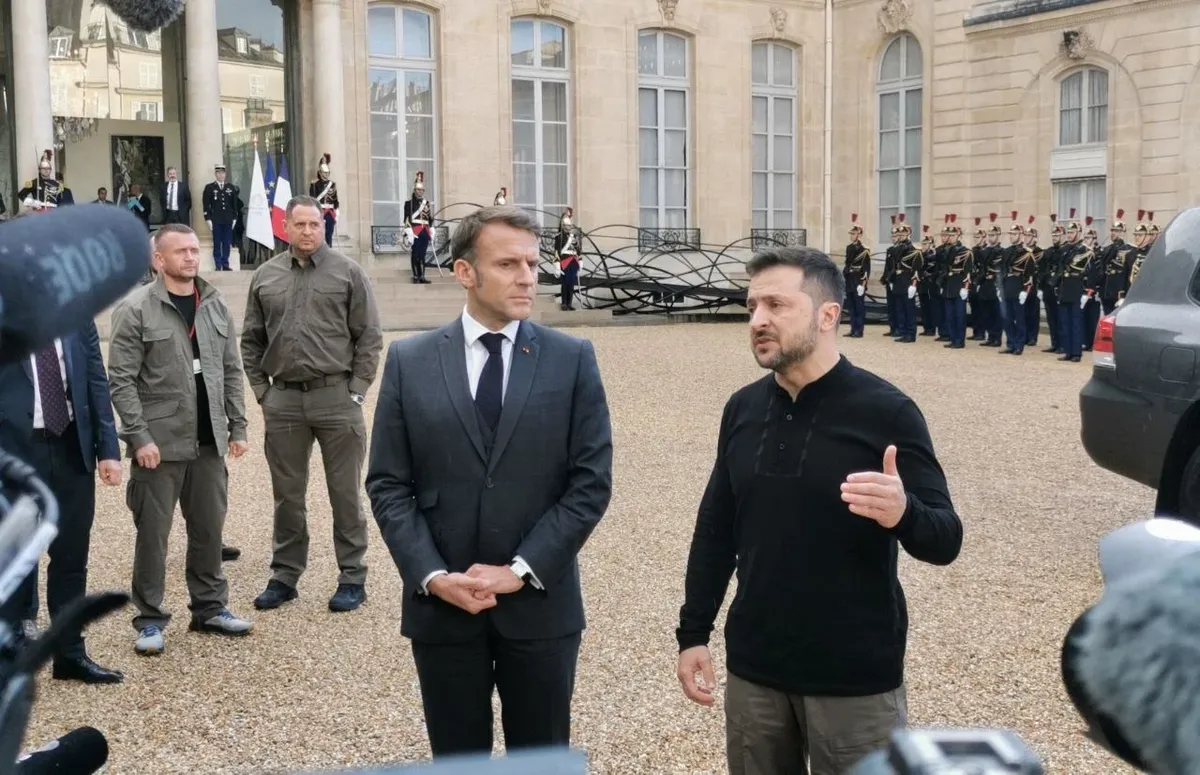
Macron thanked him in response and confirmed: “We had a very good conversation with the President today, who detailed his “Plan” and work for the next weeks.” He recalled: “Yesterday, together with the defense ministers, we were able to see progress in the training and equipment of the (Ukrainian) brigade. <…> And here I want to once again repeat France’s support for the Ukrainian resistance <…>. He emphasized: “Now is an important moment. And it was important to discuss with the president (Zelensky) the coming weeks and months - work that is both military and diplomatic (Zelensky nodded in response).
The President of Ukraine was asked: “We are hearing alarming reports from the east of the country... Can you tell us what the situation is there now?” Zelensky answered without hesitation: “The situation in the east is complicated. I understood something of what Emmanuel said about the training mission for our soldiers, our brigade. We are grateful to France for this. A lot of things depend on this, especially the situation in the east, because we did not have a sufficient number of rotational brigades fully, 100% equipped. So now we are working with France and some other partners..."
He mentioned another request to partners regarding attacks on military targets on Russian territory: “Of course, there is a large shortage of equipment. This is the first one. And the second - we also talked about this - concerns some ammunition and... you know... permission for their long-range use.
Today we have insufficient production of long-range drones. So we are looking for some funds for this for domestic production and are waiting for some permissions from our partners.”
Speaking about drones, Vladimir Zelensky may have voiced the “argument” that, according to media reports, some Western partners put forward to him when he is once again forced to ask for “the need to give permission to use long-range weapons against Russian military targets.” The argument is: “you have your own long-range drones,” so “let’s not escalate.” Macron expressed his opinion on this issue several months ago, and it coincided with Zelensky’s opinion. In May, the French President said: “...We believe that we should allow (the Ukrainians) to neutralize military sites from which missiles are launched <...>, but we should not allow them to hit other targets in Russia: obviously civilian targets or other military targets...”
That evening the President said nothing on this topic.
In response to the journalist’s subsequent question about how Zelensky views the theoretical possibility of a “ceasefire subject to security guarantees from Western partners” (recently, articles have begun to appear in some Western media about the “readiness” of the Ukrainian authorities to “exchange” those already occupied by Russian troops territory to end the war with simultaneous guarantees up to joining NATO - Yu. S. ), the President of Ukraine replied: “No, this was not the subject of our negotiations - any kind of ceasefire. We didn’t talk about this with other allies either. I saw something in the media... today there was a lot of information... that I came to talk (with partners) about a ceasefire. No! This is not true. <…> Russia works a lot with the media, with disinformation. So this is understandable."
To the last question (“about the next “Peace Summit”), Zelensky, who was already in a hurry to catch a plane to Italy, replied: “The next “Peace Summit” should take place in November. The “Plan” (“Victory Plan”) will be on the table. But I don't know the exact dates. I don't think anyone knows today. But we will prepare everything that we have decided, and at the very beginning of November the “Plan” will be with all the details.”
It turns out that Macron and other allies have now “in detail” familiarized themselves with the “Plan” in general terms? And this plan “without details,” judging by the statement of the Ukrainian leader, does not provide for a ceasefire.
Why will the “plan with details” be presented in early November? Perhaps because the US presidential elections will take place on the 5th. How can one build a “Victory Plan” when it is unknown who will become the president of the main ally...
It seems even Hurricane Milton was easier to predict.
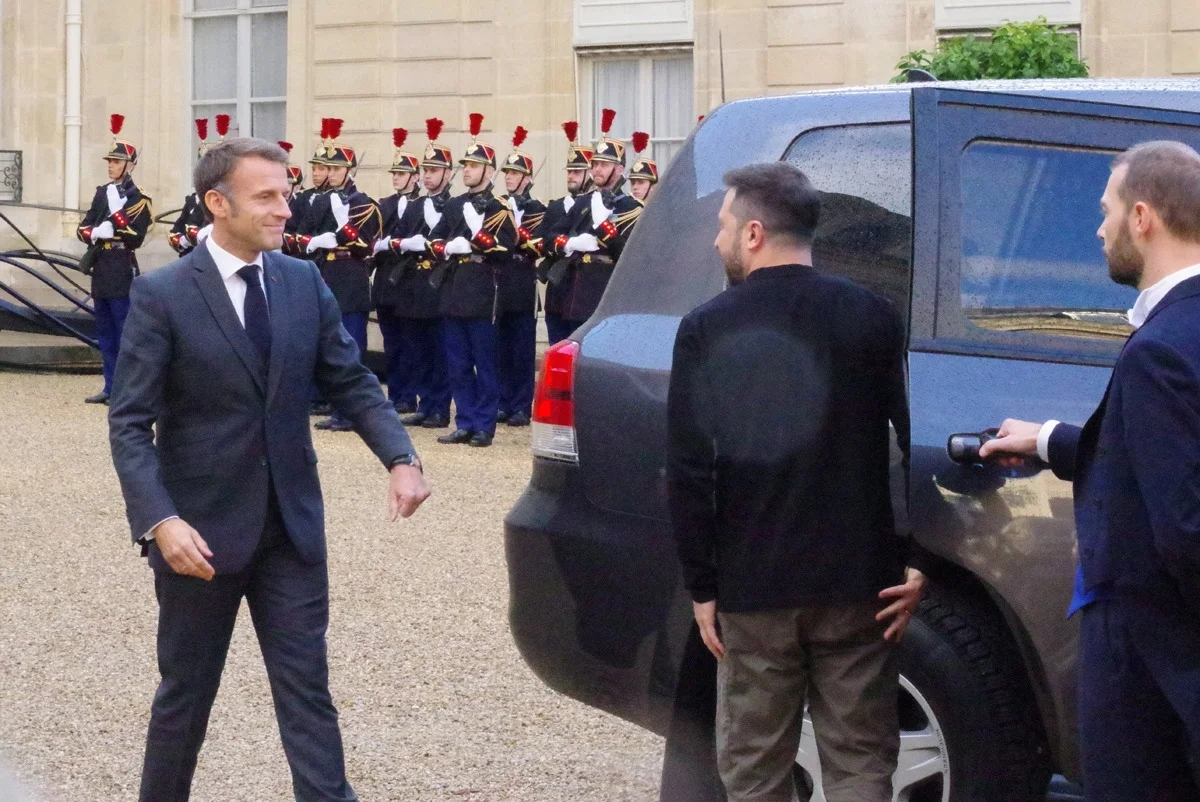
Macron added, already leaving us together with Zelensky to the car that was taking him away: “You know that within the framework of the first “Peace Summit” (held in Switzerland in June), “it was decided to hold several thematic conferences.” France, in accordance with its obligations, will organize a conference on nuclear safety on October 17.”