
Translated material
Simply the best
Nikita Simonyan turns 98 on October 12
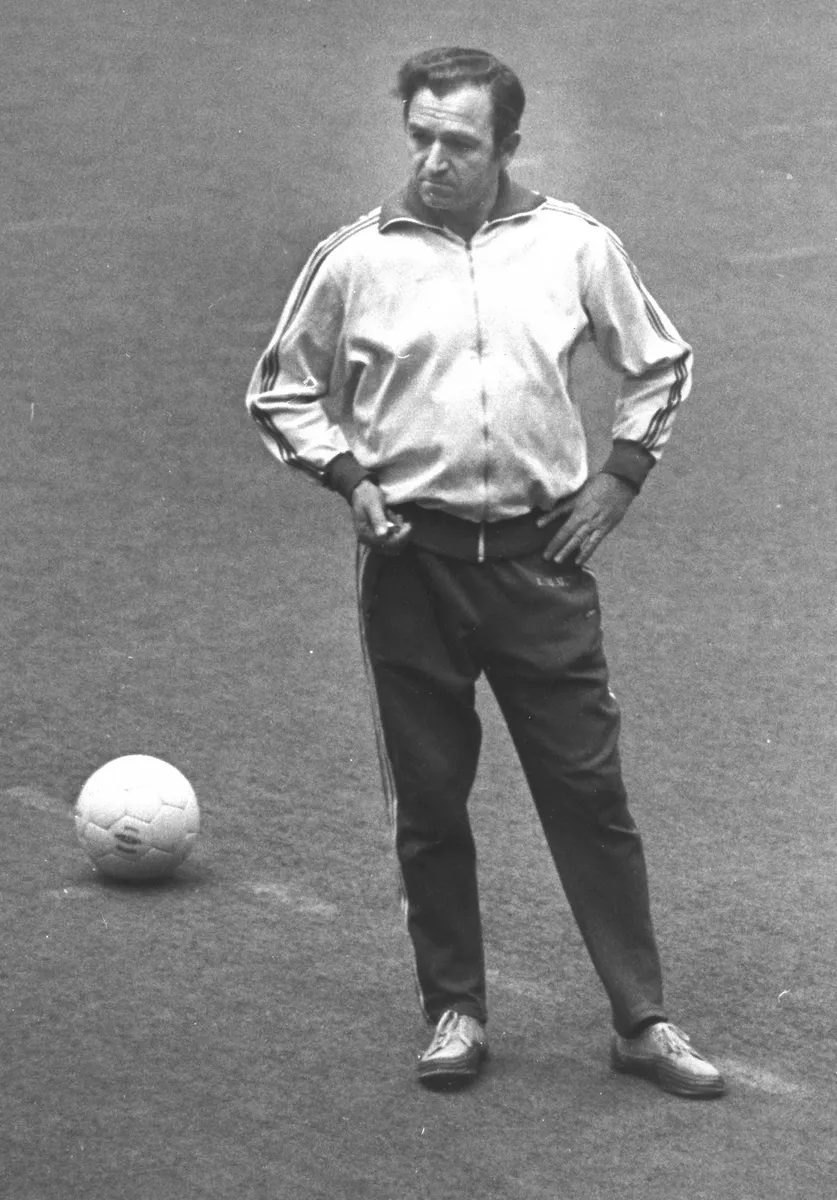
Nikita Pavlovich is the mind, honor and conscience of Soviet football. There probably isn’t a single fan (no matter what team) who would have a bad opinion about the forward, who treated his opponents chivalrously and treated the referees with the utmost correctness. And there is not a single football player or mentor whom Simonyan publicly criticized. But the Honored Master of Sports has every right to reproach and reproach.
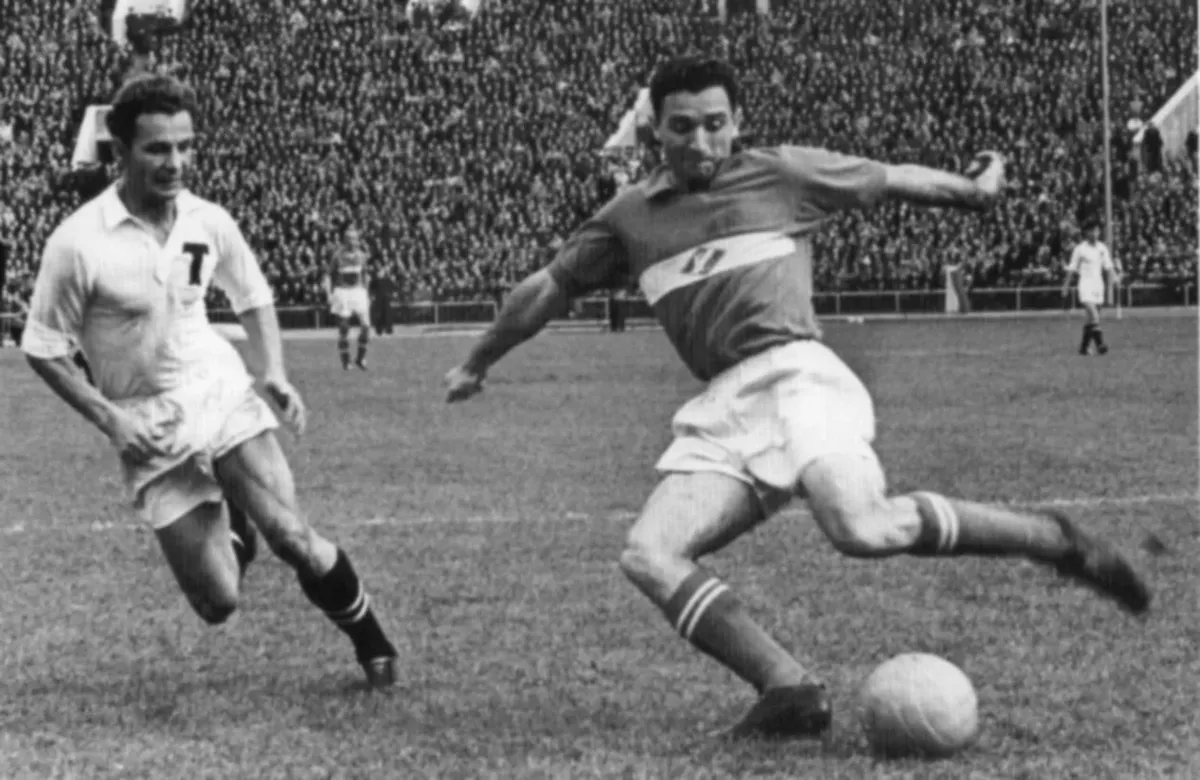
He, who possessed excellent dribbling and an accurate shot with both feet, subtle positional sense and speed, lived beautifully for 11 seasons at Spartak and is the top scorer in the history of the club (160 goals in 244 matches). He became the national champion four times (1952, 1953, 1956, 1958), won two national Cups (1950, 1958) and won the title of top scorer of the championship three times (1949 - 26 goals; 1950 - 34 goals; 1953 - 14 goals) . By the way, his achievement from 1950 lasted 35 years.
Having hung up his boots and turned into a coach, he twice led his favorite team to the championship, and in 1973 he did the incredible: he immediately achieved a golden double with Ararat Yerevan. By the way, in domestic football he is the second (after Nikolai Gulyaev) owner of an honorary double (winner of the championship and national Cup in one season) as a player (1958) and coach (1973).
Almost everything is probably known about our last living champion of the Olympic tournament - 1956, captain and scorer of the first goal of the USSR national team at its debut world forum - 1958 in Sweden. But on the birthday of this unique and wise veteran, who continues to serve as the first vice-president of the RFU, let us remember the most interesting facts of his biography.
- In fact, a native of Armavir, who spent almost his entire childhood in Abkhazia, is no Nikita Pavlovich. From Simonyan’s book “Football – is it just a game?”: “My parents gave me the name Mkrtich. But try shouting it out on the field... By the time you say five consonants, the ball will be in the hands of the opponent.
- Why did they call me such an unfortunate name? - I asked my father. “You have a beautiful name,” he answered. Mkrtich means baptist. This did not console me at all, and the street did not freeze in reverence before such a translation. She christened me in her own way: Mikita. “Mikishka! Hit!
In 1946, Simonyan moved to Moscow, to Krylia Sovetov. And literally before the first match of the season between Dynamo Minsk and Krylyshki in his native Sukhumi, his father was arrested. This was done in order to force the boy, who already showed great promise, to move to Dynamo Tbilisi. But Nikita did not give in to persuasion, entered the field and scored the only goal. And he will explain to the then Minister of Internal Affairs of Abkhazia that he cannot let down the people who believed in him before. My father was released a few days later.
“Mikita’s” dad Pogos Mkrtychevich was a shoemaker and strongly scolded his nimble son for his passion for football and his broken shoes. But when Nikita was already playing for Spartak (Krylia Sovetov was disbanded in 1948, and the striker ended up in the red and white squad), his father somehow came to Moscow. The fans recognized him, raised him in their arms and shouted “It’s Simonyan Sr., hurray!” started pumping. He will return home discouraged, but satisfied. And he will proudly say to his wife: “But my son is very respected in the capital...”
In 1951, when a Spartacist and his comrades were vacationing in Kislovodsk, two adjutants of Vasily Stalin - Mikhail Stepanyan and Sergei Kapelkin - approached him and urgently asked him to fly with them to Moscow on a special plane to talk with the commander. In a mansion on Gogolevsky Boulevard, Vasily Iosifovich, who dreamed of creating a dual Bobrov-Simonyan center, sternly informs Nikita: “I swore with the ashes of my mother that you will play on my team... I’m waiting for your decision.” The striker, to the horror of those present during the conversation, replied that he did not see himself in another club and wanted to stay with his friends in Spartak, whom he would not betray. And in the ensuing silence, Stalin’s son said: “Thank you for not wagging. Run for your Spartak. And in the corridor the daredevil will be given a ticket to Kislovodsk.
* Simonyan once upset Fiorentina twice. At one point, Mikhail Ogonkov walked along the left flank and made a soft pass. The ball went over the center back and the striker had time to process it. But the skillful Nikita did not let the ball touch the lawn and volleyed into the far corner. Giuliano Sarti, one of Italy's best goalkeepers of all time, was powerless. And the president of the Violets, delighted with such a masterpiece, offered Spartak, according to Simonyan himself, 80 thousand dollars for the miracle forward. For 1957 - a lot of money. But it was unrealistic to think about leaving then.
- Nikita Pavlovich loved to savor one true story. In Tarasovka, after the match lost to the torpedo team, a debriefing took place. Nikolai Petrovich Starostin scolded defender Maslenkin, who was unable to restrain Eduard Streltsov: “Why didn’t you, Tolya, stop Edik? He gave us two. But Boris Khrenov (Torpedo defender) completely turned our Simonyan out of the game!..” To which the offender objected: “Well, what are you comparing?! Simonyan and I would turn it off!” And everyone laughed in unison, forgetting about defeat.
* Another wonderful and very touching story is connected with Streltsov and Simonyan. Nikita Pavlovich played all the matches of the Olympic qualifying tournament, but in Melbourne 56, in his position, young Eduard won all four matches and scored two goals. However, before the final with the Yugoslavs, the coaches shook up the squad and, among others, bet on Simonyan. The USSR won 1:0, and, according to the rules of that time, gold medals were awarded only to those who participated in the decisive match. After the award ceremony, Nikita approached Streltsov with the words: “Edik, please accept this medal. You played more than me. And the medal belongs to you, not me. You deserve it." Edward snapped: “Palych, this medal is yours, and no further talk.” Then, already on the Georgia ship, which was taking the team home, Simonyan again turned to his young partner: “I am tormented by my conscience. Take the medal, please!” Good-natured Streltsov got angry: “Palych, if you mention this again, I’ll be offended! You are already thirty, and I am not even twenty! This is probably the last Olympic medal in your life, but I still have time to win mine.” Won't have time...
- Simonyan's sniper record (34 goals per season in the national championship - 1950) was surpassed in 1985 by Oleg Protasov, who made 35 accurate shots. It is no secret that this was done somewhat artificially (the Dnepropetrovsk resident was very “well” helped by both his own and others, pulling him towards eternal achievement). Many years later, in an interview, Simonyan was asked: “Nikita Pavlovich, to be honest, your record has not been broken... What do you think?” The veteran replied: “No, he was beaten. I scored 34 goals, and Protasov scored 35. That means he was beaten. I respect Oleg very much, he really possessed all the qualities of a real forward. I won’t throw a stone in his garden. He must tell himself, if he wants, how he scored. I have no right to say this for him.”
* In 1997, Pele came to Moscow to advertise his coffee. A reception took place at the Brazilian embassy, and the famous journalist Igor Fesunenko, who had known the king of football for a long time, pointed him to Simonyan with the words: “That’s the guy you fought against in 1958 in Sweden.” Pele approached Nikita Pavlovich, shook his hand and said with an apologetic smile: “I’m sorry that we defeated you then.” The USSR actually lost in the group stage to the Brazilians, who later became world champions. However, the team of which Simonyan was the captain still reached the quarterfinals. 31-year-old Nikita opened the scoring for our team's goals at world forums, hitting Colin MacDonald's goal in the 14th minute of the match with the English.
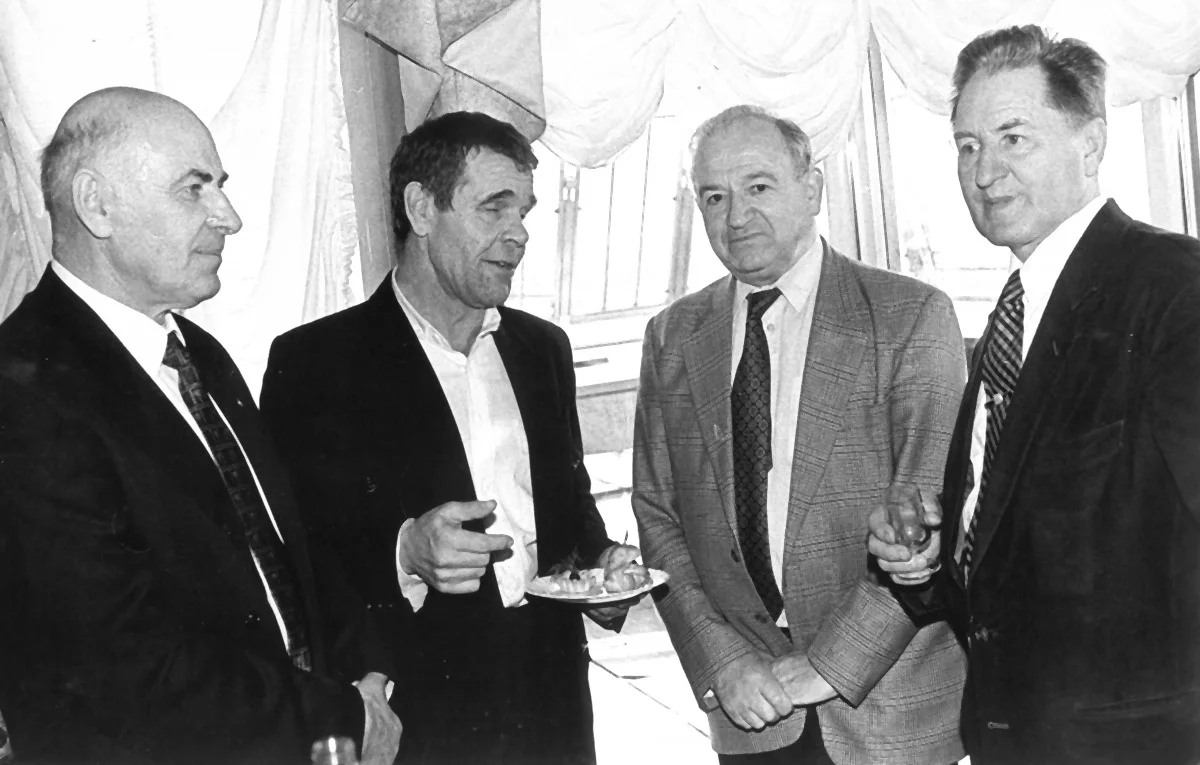
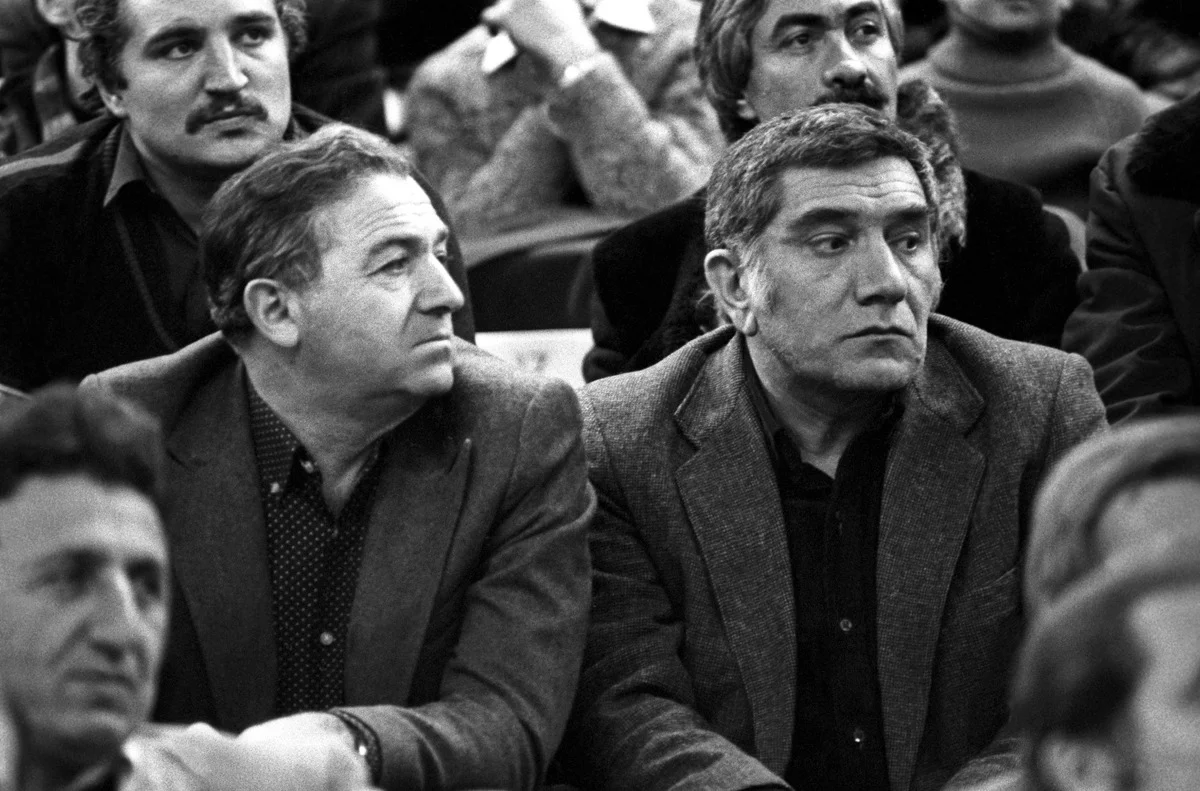
- Actor and friend of Simonyan Armen Dzhigarkhanyan said: “Nikita Pavlovich often attended performances and, in particular, came to my theater. And then one day the actors learned that Simonyan would be in the audience. Moreover, many of the guys were born already when Palych had already stopped coaching, that is, he was not an idol for them, but they, of course, had heard about his football exploits. So one of the artists got so excited that he forgot the text... But Nikita liked the performance.”
PS
And finally, a relevant excerpt from Simonyan’s book “Is Football Just a Game?”:
“There is always a lot of talk, rumors and gossip about football precisely because of the lack of reliable information. I believed and still believe that we need to talk openly about all aspects of football life. It would seem that today nothing interferes with this: both football and the press are free from party and bureaucratic dictates. But, unfortunately, the bias of some publications, the desire to interpret any fact as someone wants, has become acutely felt. To the point of absurdity."