
Translated material
Can a country get rich by reading a book on how to get rich?
Why was the 2024 Nobel Prize in Economics awarded?
The 2024 SSV Alfred Nobel Prize in Economic Sciences was awarded jointly to Daron Acemoglu, Simon Johnson and James A. Robinson "for research into how institutions are formed and how they affect welfare." But can we follow the advice outlined in their scientific works in order to achieve prosperity?

Confusing question
There is something symbolic about the fact that the Nobel Prize in Economics was awarded on October 14, 2024, exactly 60 years after the first secretary of the CPSU Central Committee, Nikita Khrushchev, was dismissed. What connection could there be here? The fact is that Khrushchev, who did a lot for the development of the consumer economy in the USSR (the mass housing construction program alone was worth something), thought in his spare time what could be done so that people in the USSR lived in fullness and prosperity.
QUOTE
From Khrushchev's memoirs
“Well, well, only 60 {rubles of salary} under our conditions and prices! Just pennies! Why bring here the so-called average wages of a worker published by our statistics? Arithmetic manipulation cleverly obscures the true picture. The mass of people live below average, are in need and in poverty. And this is when more than 50 years have already passed since the October Revolution.
This is the question of questions, because of which the working class, the peasantry, the working intelligentsia followed Lenin and made a revolution. Some will say I'm thinking too simplistic. Yes, it was precisely for a piece of bread that the revolutionary layers of the Russian working class fought...
In general, our issue with wages is complicated. And now too. And this is a question of questions. In order to achieve the monolithic nature of our society and strengthen this monolithic nature, the problem of sharing the benefits created by society is decisive.
...
When I was in Yugoslavia, I talked with Comrade Tito:
— Do many of you go to West Germany to work? - I asked.
- Yes, they are coming. They say: I am for socialism, but I will go to Germany, work there for a year and buy a car, but here it is impossible,” he answered.
Yes, they really come from there by car. Unfortunately, we still cannot afford this. We must keep in mind that every year our explanations will become less and less substantiated and fewer and fewer ears will listen to these explanations. They will scold us more. Therefore, now we need to look for ways to spend money more wisely..."
The former head of the party and government was staring at the explanations why in capitalist Germany a worker can “earn enough money for a car” in a year, while the superpower of the USSR cannot afford its citizens the same level of income, they worked worse and worse, and – let’s be objective – to this day have not yet been definitively given.
But the work of Nobel laureates allows us to get closer to answering the question: why do some societies get richer (and sustainably and for a long time), while others do not?

Word is like deed
The point is not only the difference between market and planned methods of managing economic processes.
The world's system of "socialism" collapsed a third of a century ago, but in 2019 some 648 million people lived in extreme poverty, surviving on the equivalent of $2.15 a day or less. These 648 million people represented 8.4% of the world's population, an improvement from 1990, when 35.9% of people lived on this small amount. Despite the decline in extreme poverty, in 2018, about 80% of the world's population still had a standard of living below one-third that of the United States.
The question of why some countries join the developed world while others remain poor has vexed economists for decades.
QUOTE
“This year’s laureates provided new insight into why there are such huge disparities in wealth between countries. One important explanation is persistent differences in social institutions. By studying the various political and economic systems introduced by European colonizers, Daron Acemoglu, Simon Johnson, and James Robinson were able to demonstrate the relationship between institutions and prosperity. They have also developed theoretical tools that can explain why differences in institutions persist and how institutions can change,” the award decision states.Douglas North, the Nobel laureate who is credited with pioneering the study of institutions as drivers of long-term growth, defined them as “man-made constraints that structure political, economic, and social interactions.” In other words, these are the “rules of the game.” These rules can be formalized, or they can exist as “practical knowledge”.
These institutions can be “inclusive,” when the majority of citizens can influence political decisions, or “extractive,” when real power rests with an oligarchic group relying on its armed mercenaries and propagandists.
In general, inclusiveness should be understood as an attribute of institutions that implies increased participation, reduced barriers and the ability to make individual decisions that have a significant impact in conjunction with other such decisions at the collective level.
There is a telling story about the quality of institutions.
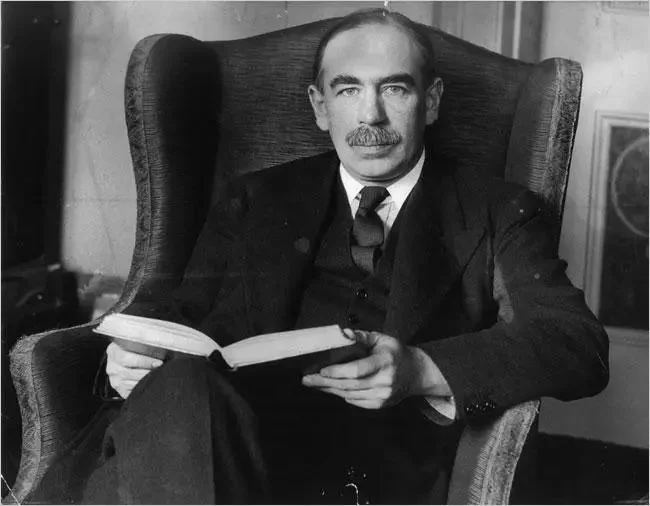
In 1925, the economist John Maynard Keynes, not yet great, but already a star, came to the USSR, and he met with Grigory Zinoviev himself, chairman of the Comintern and member of the Politburo of the Central Committee of the All-Union Communist Party of Bolsheviks, i.e. a person from the top ten leaders of the country.
The conversation turned to Western loans for Soviet industrialization.
“No,” says Keynes, “they won’t give you loans.”
- Why so? - Zinoviev is surprised.
“Risky,” Keynes replies.
What’s risky, Zinoviev doesn’t understand, we will return it, we fulfill our obligations under concessions regularly!
But what do concessions have to do with it, Keynes explains, that’s not the point at all. Look. Western capitalists are opening their enterprises here, right?
So, Zinoviev agrees.
Ok, will you protect the rights of workers at these enterprises so that they receive high wages and good working conditions? - asks Keynes.
Of course, Zinoviev answers. And what?
Nothing, says Keynes, but when workers at your enterprises demand the same wages and working conditions as at “concession enterprises,” will you also defend their rights?
Zinoviev doesn’t understand what the conversation is about at all. What do workers at Soviet enterprises have to do with it, what do their rights have to do with it, what does Keynes even mean?
But for Keynes everything was clear.
If people who have declared their policy to be “the protection of workers’ rights” will “defend” these rights at “capitalist enterprises,” but will not defend the rights of workers at “their own enterprises,” then what is there to talk about? If politicians are not going to protect the rights of their workers, what rights of foreign creditors can we talk about?
No, you can give a loan and open a concession - but, as Keynes says, this is risky. You need either high interest rates, or some kind of collateral, or excess profits. But no "trust".
Zinoviev did not find what to answer, and turned the conversation to the advantages of planned economic management - in our country, they say, “there will be no competition in production, there will be no crises and jumps in production, there will be no drop in production, but only one smooth and gradual rise.”
You can make all your plans, Keynes shrugs, “but how can you carry them out when your inhabitants have no security for their rights or their property? They cannot speak freely, they cannot criticize. They are not sure whether tomorrow they will have what they have today, whether their property will be confiscated tomorrow. Under such conditions, it is impossible to make long-term development plans.”
Intuitively, countries with good institutions have better respect for private property rights and invest more money in human capital, leading to higher income levels.
But these are words. But from a scientific point of view, the connection between institutions and prosperity does not necessarily mean that one is a consequence of the other. Maybe it is the rich countries that can afford inclusive institutions, while developing countries need something else?
So, the theoretical and empirical work of the Nobelists was to prove the existence of a strict cause-and-effect relationship from institutions to wealth, which they did in many studies in which they demonstrated the significance of institutional differences for economic growth.
Bad good example
The ideas and discoveries of the laureates are widely known mainly thanks to the best-selling book by Acemoglu and Robinson, “Why Nations Fail: The Origins of Power, Prosperity, and Poverty,” published back in 2012. In it, economists explained how different types of institutions were the main reason for the huge gap in income and living standards between the richest and poorest countries. Although Johnson was not involved in writing the book, its theoretical basis is largely based on the joint scientific work of Acemoglu and Robinson.
Does this mean that Acemoglu, Johnson and Robinson have come up with a universal key that can be turned to launch economic growth?
Not really.
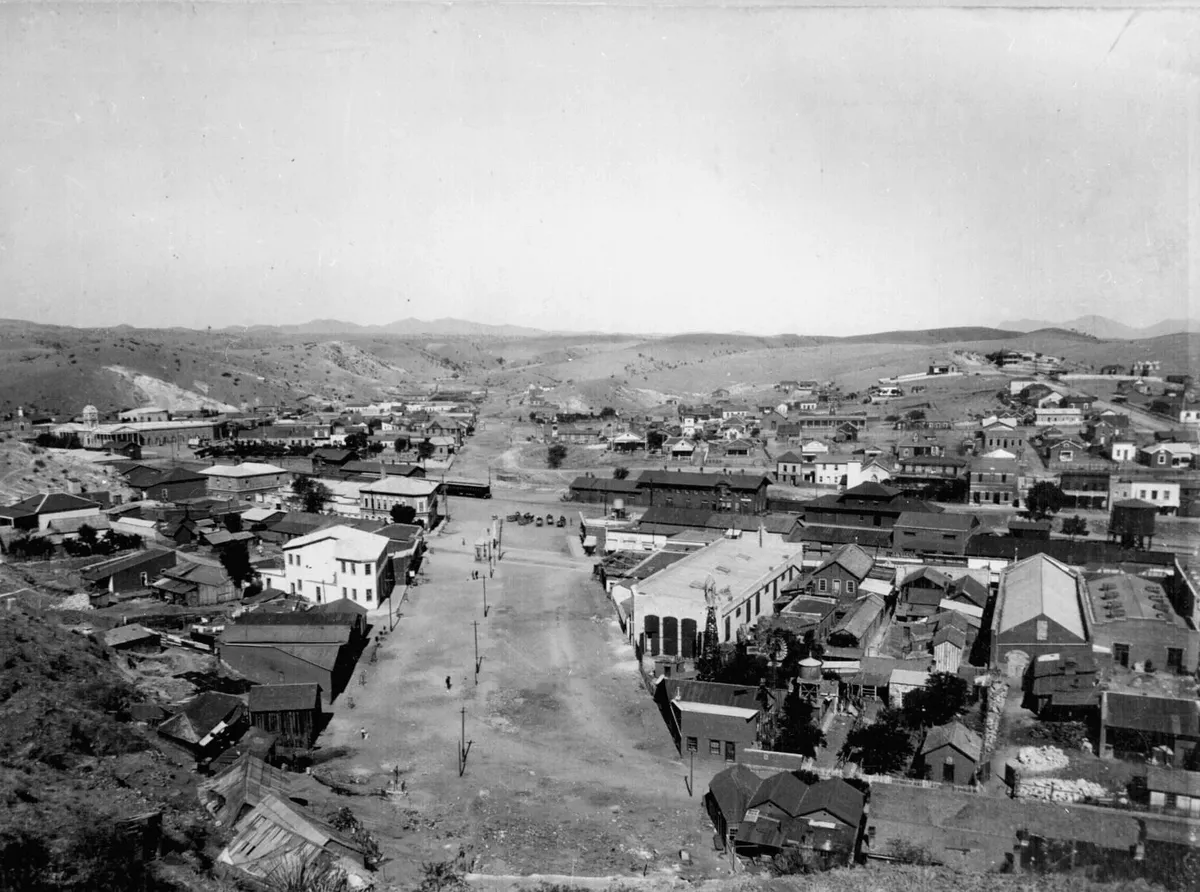
Why Nations Fail: The Origins of Power, Prosperity, and Poverty begins with a description of life in the border town of Nogales, on the border between Mexico and the United States.
QUOTE
“The city of Nogales is divided in half by a wall.North of the wall is the “American” Nogales: Santa Cruz County, Arizona, USA. The average household income in this city is $30,000 per year. … Residents of Nogales can go about their business without fear for their lives and health. Equally important, residents of Nogales, Arizona, view the government—even if it is inefficient and prone to corruption—as their hired manager. They can vote and change their mayor, congressman and senator; they vote in presidential elections that determine who will lead the country. The habit of democracy is second nature to them.
Life just a few feet away, south of the wall, is very different from the picture described. Although residents of Nogales, Sonora live in a relatively affluent part of Mexico, the average family's income there is about a third of that of the average family in the American part of Nogales. … Crime rates are high and starting a business is not a safe proposition... And the residents of Nogales, Sonora, deal with corrupt and incompetent officials every day.
Unlike the experience of their northern neighbors, democracy is a relatively new experience for the residents of Nogales, Mexico.
...
Of course, there is a simple and obvious explanation for the differences between the two halves of Nogales, and it has probably occurred to you a long time ago: it is, in fact, the very border between the two halves. Nogales, Arizona is located in the United States. Its residents have access to American economic institutions that allow them to freely choose a profession, receive education and the necessary skills, and their employers are encouraged to invest in the most advanced technologies, as a result of which they can increase their profits.
Residents of “American” Nogales also have access to political institutions that provide the opportunity to participate in democratic procedures - electing their representatives and replacing them in case of unsatisfactory performance. As a result, politicians provide the basic services—from health care and roads to law and order—that citizens demand.
Residents of Nogales, Sonora, were not so lucky. They live in a different world, which is shaped by the work of other institutions that create completely different incentives both for the residents of “Mexican” Nogales and for those entrepreneurs and companies who would like to invest here. The different incentives generated by the different institutions of the two Nogales and the two countries in which these cities are located are the main reason for the fundamental differences in the level of well-being on one side of the border and on the other.”
A bad example for illustrating the work of good institutions, argues major researcher of the US-Mexico Divide James Gerber, author of the book Border Economies: Cities Bridging the US-Mexico Divide.
In 1950, American Nogales was used for the filming of the film Oklahoma! like the nature of poor rural America, and not 1950, but 1900: the town lived in such unremitting poverty and backwardness.
For some reason, American development institutions have not acted on Nogales for more than a century, and even now the city’s per capita income is significantly lower than the average American level. American Nogales of the 21st century owes its development to a completely different institution, which James Gerber called the “border institution.” Most of the economy of American Nogales is created by the so-called. maquiladora factories, profitable thanks to a combination of preferential customs treatment (for the United States) and low-paid labor (from Mexico). Nogales's business is a classic example of frontier rent, one of the worst extractive institutions.
Who is the largest employer of American residents in Nogales? These are the US Department of Homeland Security, which oversees the Border Patrol; the police follow him. These are also institutions, but not inclusive: they hire only US citizens.
Such a gross mistake literally on the very first page of a book that has literally become the Bible of supporters of the theory of institutional development?
Maybe the Nobelists were just as mistaken in everything else?
No. Perhaps the Nogales case is not the most successful at the micro level - indeed, the city is “sitting on border rent”, but at the macro level it is quite suitable for illustrating institutional theory. Both Nogales, Mexican and American, were poor cities - but at some point, the "institutions" in the US worked in favor of the American residents of Nogales - and little by little they pulled its prosperity upward, albeit at a slow speed.
Question: is it possible to simply take and replace “bad institutions” with “good” ones?
No, the Nobelists answer, the choice of institutions is the choice of the elites.

The elite structures the political system in such a way as to benefit from it. A new political system could allow the population to change leaders. But the elites do not want change because they are afraid of losing their privileges. This is the so-called the commitment problem, in which society finds itself trapped in extractive institutions, within which mass poverty is accompanied by the growing wealth of the elite. As Leo Tolstoy wrote, “... the villains who robbed the people gathered, recruited soldiers and judges to protect their orgy, and feasted.”
But in theory, even if the population of such a country has no formal political power, it can mobilize into a revolutionary threat. Under pressure, the elite may promise political and economic reforms, but it is not a fact that people will believe these promises. And then the only option for the elites may be the transfer of power, economists explain.
New old question
In the novel “Origins,” the writer Mark Aldanov’s characters have the following conversation (the story takes place in 1880):
QUOTE
“—I believe that no one should have an income per family of less than three thousand and more than thirty thousand rubles a year.- This is, of course, simple and sweet. But how to do this?
“Many people find that it is necessary to socialize the means of production. In my opinion, the issue is much more easily resolved by the corresponding income tax.
- Why will people work if the tax confiscates their income?
“Because it’s more pleasant to have thirty thousand a year than three.”
— Yes, such a tax system cannot be established: people will hide their income.
“In my memory, the same thing was said about all serious reforms: “is it possible to liberate the peasants?”, “is it possible to train a soldier without twenty years of military service?”, “is it possible to abolish censorship?” Let the evaders be put in prison, and people will learn to pay taxes.
“The important thing, I think, is not how to reduce large incomes to thirty thousand, but how to raise small ones to three?” However, I don't argue. It is not clear to me whether a socialist revolution is necessary. I admit that “revolutions are the locomotives of history,” but different revolutionary currents do not converge with each other.”
Economists do not have a single answer to this question on how to guarantee a guaranteed increase in small incomes. But the work of the 2024 Nobel Prize winners helps us get closer to this answer.