
Translated material
School under the sign Z
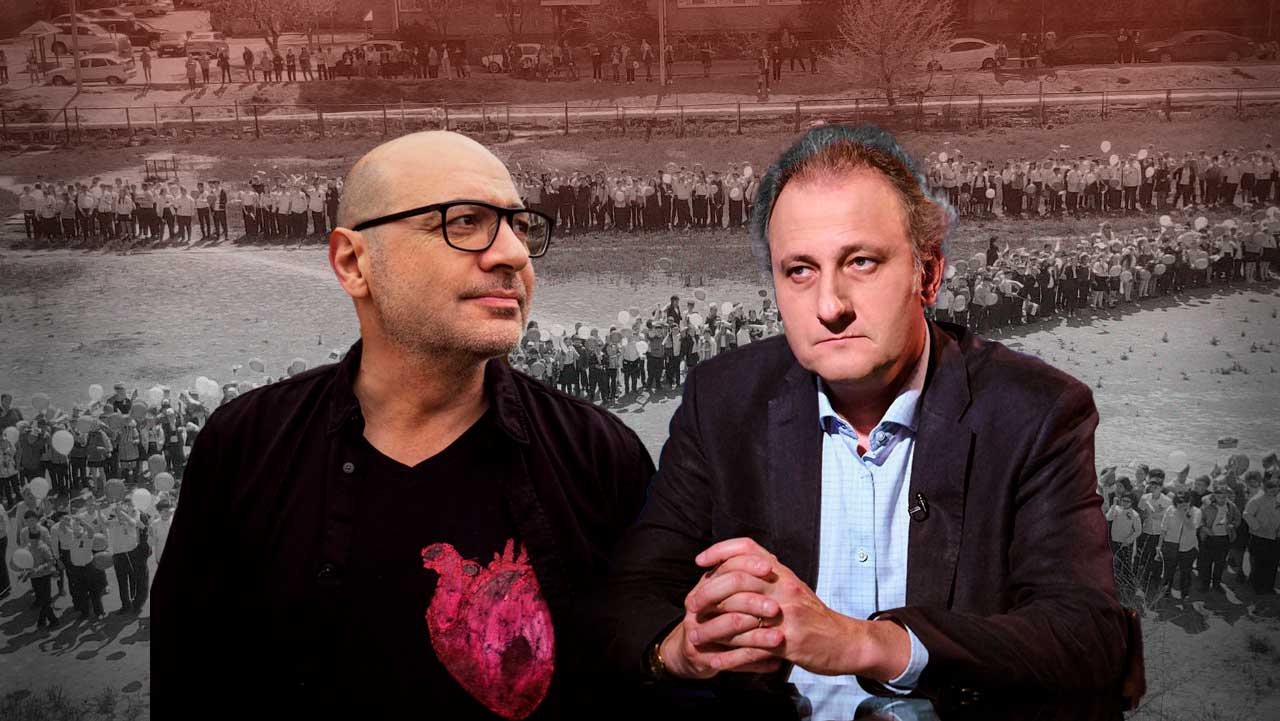
What is a zet-enlightenment, how to protect against this children and is it necessary to protect them? The New Times talked with the teacher, founder of the St. Petersburg school of informal education "Orange" Dima Zitser and Columonist NT Andrei Kolesnikov* On alternatives for teachers and parents
Evgenia Albats*: The Russian State Pedagogical Institute named after Herzen issued methodological recommendations on how to recognize future extremists to school teachers. Markers of the tendency to "destructive terrorist behavior" are listed. The publication on social networks of statuses contained by criticism and insults of other people on the basis of nationality, religion and social status. Corresponding statements in public and personal space. Subscriptions to the network communities, the names of which include words and phrases of the type “ultra”, and content in which there is an excuse for actions and the romanticization of nationalists' actions. This is very interesting, because, of course, the empire is always afraid of national movements. Further about “Haile Hitler”, and somewhere right there about Alexei Navalny **. Another news: “Mediazone”* wrote that the Khabarovsk teacher of mathematics Zaripova, who was imprisoned because of the post of Kadyrov, found a tumor and dies. Since the beginning of the war in Russia, at least 148 times have been persecuted by teachers for an anti-war position, this is the data of the OVD-info*. At least 106 administrative and 23 criminal cases were brought to teachers. Most of the denunciations of the students themselves. Many lost their jobs. 22 people were forced to leave Russia.
What really happens? From Moscow I hear different considerations on this topic. Someone says that in schools where the children of the Russian nomenclature go, there are no “conversations about the important” at all. Children who are brought to school to Bentley are not at all tormented by this. And on the other hand, they talk about how they call in the FSB and put teachers, and in schools they are going to introduce the post of deputy director for educational work from the New Year, and there is no doubt that these will be the employees of the Second FSB Office for the Protection of the Constitutional system. So what's going on?
Simulation activity
Andrey Kolesnikov: It is very difficult to generalize, because everything is really different everywhere. And so far to achieve total unification, why this regime is not finally totalitarian is not possible. Firstly, society is still modernized, it is used to living a normal private life, including in the field of education, many different opportunities, there is no habit of completely unconditionally obey. And it is difficult to administer, despite the fact that all teachers clearly go in construction and try to behave very carefully, including those who adhere to anti -war views. But this accuracy implies some cooperative relations with parents and students who, at least, should not “hand over” them if they are not very active in propaganda efforts. As for the “conversations about the important” - we all remember the political information in schools in the Soviet era, the 70-80s. It was a fairly formal event. I remember that I really liked it, because I loved to read newspapers, consider political caricatures and, accordingly, summarize the material. Actually, this is what I do as a result all my life. For example, I am writing to newspapers.
I think that in different schools these “talk about important” are really different. Somewhere very formally and seriously, and somewhere for a box. Still, Russia is in many ways a country of imitation of reports. Teachers are unhappy people, they always write some reports, they are forced to imitate activity, somehow extinguish a potential conflict, now also political. In short, sometimes it happens for a checkmark, and children fall asleep in the first lesson, finish homework. They are twisted by a movie in which they do not understand anything. Indocation as a result leads to double consciousness. You are leaving the number publicly, you understand that you may have problems if you behave openly or express your political views, which, as a rule, do not have children. On the other hand, you are free to think anything inside your family, or not to think at all, which is also a common phenomenon. Of course, the family depends on how double consciousness, double behavior will be produced in a person.
Teachers try to somehow agree with their parents: if there are problems, issues, somewhat outraged, you will solve this issue with me. Can't stand it above. Because then the problem will not be solved, and some scandal will be
Evgenia Albatz: Was they called to school? They said - what do you think there?
Andrey Kolesnikov: I was not called. We all solve this in working order. Now even parental meetings are passing through the zoom. And I heard from colleagues who have school children that teachers are trying to somehow agree with their parents: if there are problems, issues that are outraged in some ways, you will solve this issue with me. Can't stand it above. Because then the problem will not be solved, and there will be some scandal. Do not want to go somewhere, well, let's think about how to do it, how not to walk. Although everyone needs, for example, to go on some mandatory tour, for which they put a mark, and so on. In all cases, in a number of schools, relationships are built very correctly. They are difficult for children, they have completely wild loads, they are not at all up to politics, especially in high school, they are doing a lot, especially if this is some kind of mathematical class. In other words, someone is indoctrinize, someone is not, somewhere there are denunciations, somewhere there is no, somewhere everything is seriously, somewhere quite formally.
Evgenia Albats: In high school, everyone is preparing for the exam. How much are issues in the USE propaganda or are loyalty checking?
Andrei Kolesnikov: So quickly, probably, a giant set of questions will not change, even the same story, including a set of certain dates. But probably the correct answers too. I think that now the process of adaptation to the new textbook of the history of Torkunov -Medinsky -Chubaryan, which was introduced in 2023, will go.
There is a literature textbook for grade 10, written by Yuri Lebedev, he is such an Orthodox-Slavophil, although we are talking about very different writers of the 19th century. These writers were in many ways anti -demospotic, and the textbook is essentially sketchy. And it is written that children cannot understand anything in it. There is some kind of pathos endless about Holy Rus', despite the fact that it is somehow necessary to read Dostoevsky, Tolstoy, the scale of reading is giant. So in order to turn children into some faith, you still need to be able to do it.
Evgenia Albats: Is there variability in textbooks?
Andrey Kolesnikov: In history, as I understand it, no. The rest are also not particularly. Here a lot depends on the teacher, the same historians not only work on the textbook. By the way, the textbook of Medinsky - Torkunov as a school textbook is made very competently. A lot of all sorts of pictures, removals, seizures in semi -fat, many interesting facts. Methodically made well.
Patriotism from the diapers
Evgenia Albats: Now the question for the teacher Dima Zitser, who in Russia, if anyone does not know, is put on the wanted list. I carefully listened to several of your interviews, where you say that the indocation of children begins from an early age. This terrible regime that exists in Russia is trying to work with the smallest. Is that so?
Dima Zitser: Of course, so. If we had any doubts, then last week Putin dispelled them, so to speak, so to speak. There was his meeting with the teachers, and one teacher gave him a presentation (we know how this is done), said that they say talk about the important good, but we are not late. We must start with a kindergarten, from 5-6 years. Putin naturally approved this “beautiful thought” and said that it was in this way that we must go. The seal has been put on indocation from a young age. In this sense, I am much less optimistic than Andrei. Since I am a practitioner, all this flows to me. Not so long ago, a woman from St. Petersburg called me and told me about her nephew, a boy from a decent family who went to first grade last year, and at the end of the school year brought home that Putin is our everything and cannot be argued with him, and that we need to kill all Ukrainians, and that we are in the ring of enemies.
There are directors who, like lions, stand at the entrance to school and protect children from all this muck and evil spirits. But it is all more complicated and more difficult to do
You can do something with this, this is another topic. But it seems to me that we cannot now deceive the danger, because the danger is huge. In the last issue, my woman calls and tells how she took her girls 11 and 13 years old from school. Because, he says, I can’t breathe when they tell me what is happening there. Another thing is that in Russia today there are honest and professional teachers. There are directors who, you know how lions stand at the entrance to school and protect children from all this muck and evil spirits. It is all more difficult and more difficult to do. I can say about the exam in history: of course, new questions from the aforementioned textbook have been introduced, contour maps in geography have been changed. Another thing, and it is important to recall that the exam in history is not mandatory. And if a person does not want to smear in mud, he will not take the exam on history. Further, the crying of Yaroslavna usually begins. How, how, the boy dreamed of architectural all his life ... So, he will not go to the architectural. Here is such a minimum price for the war.
You know, I am also sinful. Two years ago, I was among those who said that it was, in general, the local initiative, it cannot be a company, because the system is huge because different schools and different teachers. Time passed, and it became clear that it was a campaign. The introduction of a family of seven studies is not an accident, it is part of the campaign. I agree that this will partly be compensated by the glaring unprofessionalism of many teachers who were not taught to talk on this topic. But we understand that the birthday lesson is a sign of a fascist state that climbs into bed and teaches us what relations we should be at home. All this is today - both the lessons about the “important” and seven -studies - are in the daddy, which says “extracurricular”. But I give you honestly, these lessons will declare mandatory.
Are there any exceptions? Yes, and I hope a lot. I have no statistics, I can’t say the percentage of schools who do not do this at their own peril and risk. I very, very well understand parents and teachers who hope that “it will cost”, “this will not touch us.” But the chances, if the child is small and the school is indoctrinated, is very small, not to say insignificant. It will not cost.
Evgenia Albats: According to your observation, where is the situation worse? In large cities, in the center, where is the nomenclature near, or in the province?
Dima Zitser: And so, it depends on the angle of view. In Moscow and St. Petersburg, in general in large cities, the possibility of a family to find a normal school and a decent teacher, at least in elementary school, higher. The trend of leaving the family form of learning also increases day by day. And in large cities it is quite easy for several families to unite - they created a training group, hired a tutor, dropped in small amounts and went. In small cities, it is much more difficult to do this, variability below. But in small cities, I know this from first -hand, if you were lucky with the director and the school, they are ready to gnaw the throat to the departments of education and defend what is legal (extracurricularly extracurricular), and give parents the opportunity to even write a refusal from the lesson “On the important”.
Evgenia Albats: We studied in a Soviet school, where there were many things: anti -Semitism, prohibited topics, and prohibited names. There were also beautiful teachers who talked about what they were silent about in the textbooks of Soviet history, and this happened in terrible stagnant times. This is to the fact that in Soviet times, in the deaf KGBshny, Brezhnevskoye, it was somehow possible to survive.
Dima Zizer: It seems to me that a comparison with the late Soviet Union is illegitimate.
Evgenia Albats: This is not a late Soviet Union, this is the 73rd year. And then there will still be Afghanistan, and it will become much more difficult.
Now in the provinces, criminals who returned from the war come to schools. This is a violation of moral consensus. In all countries of the world, one way or another, people agreed that we are not building children, we do not bring killers to children
Dima Zitser: I will start in the 1973rd. The difference is that you were not intentionally corrupted from above to bottom - from Brezhnev further, through the Department of Education, or it was called Rono, through teachers, etc. There was no purpose to melt you. In the early 70s, I already lived, yes, and sang songs in kindergarten about the army. There was such an ideological consensus with whom someone agreed, someone was not agreeing. However, to imagine a situation in which Brezhnev or some of his minions say “never again”, but in fact they wink at someone and mean “we can repeat”, it is very, very difficult for me. Why am I talking about corruption? We know that now criminals who returned from the war come to schools now. This is a violation of moral consensus. In all countries of the world, one way or another, people agreed that we are not building children, we do not bring killers to children. Moreover, in the early 80s, when there was Afghan, it is difficult for me to imagine that it would be. Now this is happening, and is happening deliberately: both the “desks of the hero”, and this story ... You probably heard about the dialogue between the boy and the expanse: “How you killed your first person” - when the teacher says: but they are not killed, they are destroyed.
This is a very, different material, in my opinion. Why do I call it corruption? Because a lot of what is happening, it also works according to the Nazi principle "I free you from the chimera of conscience." You can not bathe that yesterday you called it white. Today it is black. Ideology is me, as if Putin said or, I don’t know, Putin’s splendor around him, or all this company. We replace the ideology, there is no conscience, there is nothing, and you are not.
Yes, where is this story where this story comes from: nothing depends on us, I do not understand politics, we will never know the truth, and so on and so on. In the 75th year, with all their might, they sought a bright civil position that said: everything depends on me, we will build a real world, we will save Angela Davis, or who we saved there, I do not know. It looks like there are trifles, but in my opinion this is the exact opposite approach. Probably, you can compare with the Stalin era in some manifestations. Maybe. But actually, communism and fascism are a different system. Both totalitarianism, it is true, it is proved. But now we are really talking about the destruction of the moral basis. For all my, believe me, hot dislike for the Soviet Union, there is still a difference with today.
Andrey Kolesnikov: I agree, in my view it is now worse. Perhaps under the Soviet regime there were no such windows of free behavior that are still meeting somewhere. Everything was much more total uniform. But this uniformity was some kind of natural, or something, because we did not know another life. What is happening now in the degree of imposition of immoral, it is rather Stalin's time. Late Brezhnevskoye in this sense was much more lethargic and calm.
There is another point here. Now they are sent to the Great Patriotic War, draw a direct line from the Great Patriotic War to the current situation, it seems to be a continuation of that war. Our heroes are modern. Here they come to schools, here are their desks, posters hang everywhere: corporal Ivanov, Sergeant Petrov, Hero of Russia. And the 70s who was a hero? These were the real heroes of the Great Patriotic War, on their side was absolute historical correctness, it was a fair war, defensive. There was no appeal to Afghan heroes, because it was harder to motivate, and in general they were not proud of it and did not beat themselves in the chest. They performed as if international duty, but posters about them did not hang on the streets of the country, other posters hung. Yes, as then, now they are appealing to the world majority, to the oppressed peoples, to the colonized peoples, but this is still another pathos. Now he is completely incomprehensible. Some kind of artificial, you can just drive it into the head. Then there was a chili tragedy, the same 1973, I remember how in elementary grades we followed this and empathized. There was a feeling of moral, moral correctness. What is now, to a damn mother, moral, moral correctness?
Run away from propaganda
Evgenia Albats: Nevertheless, in the USSR there was a terrible intellectual stuffiness. Now there is access to social networks. Accordingly, people can watch the opposition media, albeit with the help of VPN. People have the opportunity to get information.
In Soviet times, there was a tremendous discrepancy between what was told in the Time program, and what people saw in stores, it was a very important point. And of course, propaganda now acts more skillfully than in the Soviet Union. But now there are more parents who are able to protect children from propaganda, or at least talk about an important house as they consider necessary. Isn't it?
Andrey Kolesnikov: So not so, because the parents are different. Someone does not care. Кто-то просто адаптируется к тем правилам, которые существуют, не более того. Без фанатизма, но и без сопротивления тому, что происходит. Доступ есть, действительно, ко всему, к любой информации, пожалуйста. They don't want to. Не хотят знать.
Мы все время возвращаемся в прошлое, потому что мы сравниваем. Это один из способов понять, что происходит сейчас. У меня была, я думаю, школа не выдающаяся, и учителей каких-то особенных не было. Но было самообразование, влияние семьи, книг прежде всего — это имело значение.
Дима Зицер: Продолжая то, о чем говорил Андрей: индоктринация, правильно сделанная, устроена так, чтобы у ребенка не было возможности сбежать. Дома дедушка, мама, папа смотрят Первый канал. Вышел он из дома, его встречают билборды с этими самыми ефрейторами и сержантами. В школу он приходит, на школе большая буква Z , попадаю я дальше на урок о важном, попадаю на урок семьеведенья, то есть мне не вырваться, я в силках все время.
Есть одно потрясающее исследование Колумбийского университета, на которое я все время ссылаюсь. Это исследование о влиянии индоктринации на разные возрасты. Оно продолжалось много-много лет, началось где-то по окончании Второй мировой войны, а закончилось к концу 90‑х. И выяснилось, например, что те, кто был индоктринирован в нежном возрасте, до 7 лет, не смогли от этого избавиться в той или иной мере до конца жизни. Что такое в той или иной мере? Это значит, что когда им в начале девяностых задавали вопрос о фашизме, они, конечно, с гневом говорили, какой это кошмар и ужас, но часто добавляли: но вы же не станете спорить с тем, что Сталин эффективный менеджер, а Гитлер построил дороги, например. И они точно не нацисты и не те, кто их поддерживает даже задним числом. Значит, удивительным образом это работает почти на сто процентов. Почему я ору все время в голос: если мы говорим о маленьких детях, речь идет о спасении. Чем ребенок старше, тем больше шансов, что на него это не подействует: в возрасте 14–15 лет мы со здоровым скептицизмом, чтобы не сказать цинизмом, относимся ко всему происходящему, в том числе к урокам о «важном».
Дети не рассказывают на автомате в школе все, что происходит дома. Это преувеличение, что ребенок настолько прост и глуп иногда, что он придет в школу и все вывалит, о чем вы говорите
Евгения Альбац: Давайте поговорим конкретно, что делать. Например, я родитель. Я приду к вам и спрошу: у меня ребенок ходит в школу, еще маленький, что ему говорить? Мне ему говорить: только ты, пожалуйста, ни в коем случае не рассказывай, что говорят дома? Или мне ему говорить: только ты, пожалуйста, если тебя спросят, как у тебя дома относится к СВО, не говори, что родители называют Путина убийцей?
Дима Зицер: Я выберу вариант ответа не из предложенных вами. Делать вам следующее. Во‑первых, нужно понять, в какую школу ходит ваш ребенок. Это минимальная родительская ответственность, к которой очень многие не привыкли. Куда он ходит? У него есть уроки «о важном» или нет? Если есть, как они устроены? Извините, плетут там маскировочные сети или нет? Есть такое теперь у нас внеклассное развлечение. Празднуется там 23 февраля или не празднуется? Это довольно простые вопросы. Какая там символика? Кто там ведет историю? Любой родитель имеет право это узнать. Если вам повезло, иными словами, он ходит в прекрасную школу, какой она была пять лет назад, такой и осталась, и там прекрасный учитель истории, и они пропускают всякие сомнительные праздники, и так далее. Ну здорово, вам крупно повезло, нужно просто быть внимательными, когда разговариваете. Дети не рассказывают на автомате в школе всё, что происходит дома. Это преувеличение, что ребенок настолько прост и глуп иногда, что он придет в школу и все вывалит, о чем вы говорите дома. Если важно — оговоритесь.
Но если есть малейшие признаки индоктринации, то единственный путь, который у вас есть — это уходить. Where to go? На сегодняшний день в России все еще, я с изумлением это говорю, но это правда, — лучший в мире закон об образовании. Потому что он был принят в 93‑м году людьми, которые заложили такой запас прочности, что вот его портят со всех сторон и никак не могут испортить. В этом законе об образовании записано, что форму обучения выбирает семья. Это суперпрогрессивно до сих пор, сравнивая даже со многими странами Запада. What does it mean? Это значит, что завтра утром вы можете уйти на семейную форму обучения. Tomorrow morning. Вас не имеют права не отпустить. Я делал большой выпуск, как это сделать технически, но сегодня этого уже очень много в интернете. Главное, помните, что не имеют права не отпустить.
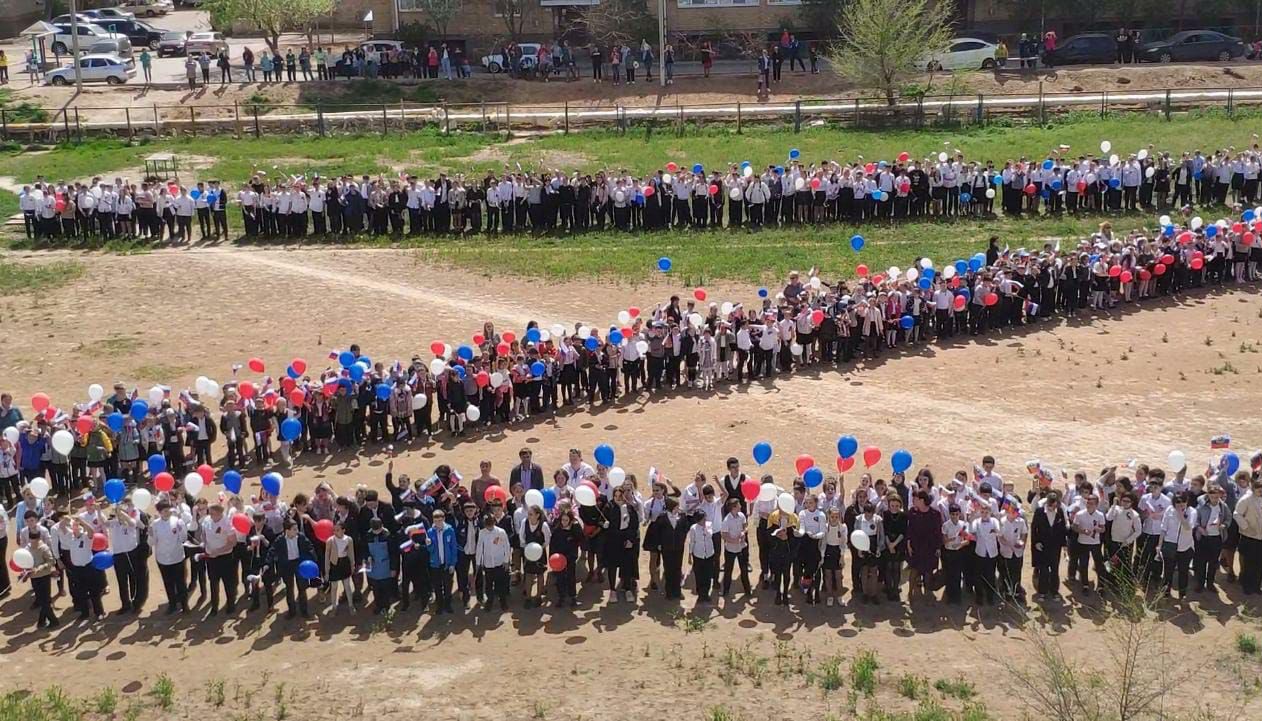
Ученики астраханской школы выстроились в форме буквы Z, апрель 2022 г. Фото: АРБУЗ TODAY
Естественно, переход на семейную форму обучения — это изменение привычного строя жизни. Но речь идет — еще раз! — о спасении детей. Речь идет о том, что мы спасаем от возможного заражения свою деточку семи или восьми лет.
Дальше государство подбрасывает всякие легенды, которые люди подхватывают и разносят. Например, о том, что семейная форма обучения стоит огромных денег. This is not true. Или что в этот момент мама или папа должны уйти с работы, потому что они сами должны ребенка обучать. This is not true. Или что невозможно объединение родителей, о котором я уже поговорил. This is not true. Я говорю все время одно и то же. Я не говорю, что это очень-очень просто, плюнули и перешли. Но цена вашей бездеятельности может быть огромна. На всю жизнь это может остаться с ними, как говорят исследователи из Колумбийского университета.
И то же самое, между прочим, стоит делать учителям. Абсолютно то же самое. «Я работаю в школе, что же мне делать? Я задыхаюсь, от меня требуют изменить себе и говорить неправду» . Встать и уходить. Потому что на ступенях школы ждут вот те самые ученики, которые только что ушли на семейную форму обучения. И спрос на репетиторство сейчас растет все время. Но потом, вы же знаете эту статистику: 193,5 тысячи учителей ушли из школы в 2023‑м году. В стране 1,2 млн. учителей. Это, извините, 15%, это вообще не шутки. Каждый год есть уход учителей из школы, но в 2023 году самое высокое число. Мы знаем истории про то, как уходят коллективами, когда увольняют директора за то, что она не дает проводить уроки о «важном». Она уходит, и с ней уходят 12 учителей. И по городу N , на всякий случай не будем называть, образовываются учебные группы, и те же учителя учат тех же детей, потому что из школы уходит больше 20% учеников. Это было полтора года назад всего. Так что вот что делать. Я понимаю, что это требует от нас и собраться с силами, и мужества, и решимости, вообще это непростая история. И никто не гарантирует, что семейное обучение не отменят. Но пока же не отменили!
Родители и учителя
Евгения Альбац: Андрей, как быть родителям? Надо ли предостерегать детей от разговоров в школе на политические темы, например? Запрещать им рассказывать о том, о чем говорят дома? Как сейчас родители поступают?
Андрей Колесников: Это тоже все очень индивидуально. Насколько я понимаю из разговоров с людьми, допустим, младше меня лет на десять, пятнадцать — молодой средний класс, у которых...
Евгения Альбац: То есть уже непоротое поколение, да?
Андрей Колесников: Да. Хорошие специалисты с хорошими зарплатами, в хороших местах, но именно средний класс. Разумные, образованные, в основном технически образованные люди. Они не очень много внимания уделяют внешней среде. У кого-то хорошая школа, изучают французский, английский, все более-менее нормально, нет концентрации на политических вопросах. Притом что многие, что следует, опять же, из разговоров, задумываются о зарубежном образовании. Но зарубежное образование — это не Китай с Индией. Это европейские страны, включая Францию, Швейцарию, и так далее. Несмотря на дороговизну, все равно приглядываются, присматриваются, думают о будущем. Нет оголтелого противостояния или, наоборот, оголтелой поддержки режима. Они где-то посередине. Насколько дети индоктринируются в этой ситуации, надо ли их спасать, это тоже, наверное, по-разному. И не только ведь школа влияет на эту самую индоктринацию. Вне школы что-то происходит. Может происходить в спортивной секции, например. Одна знакомая девочка, успешная спортсменка, говорила, и многие говорили, что парижская Олимпиада ничего не значит. Это как бы все не про нас, нам важнее наше внутреннее соревнование. Но это не школа сказала, это внутри спортивного сообщества такое звучит. Детям внушают, что незачем вам стремиться туда, у нас тут своя школа, и мы соревнуемся с Таджикистаном, с кем там еще... Опасности подстерегают везде. Ну то есть нужно быть очень внимательным к тому, что происходит и как происходит, кто что говорит. В одной школе могут быть учителя-индоктринаторы, в соседней, может быть, и нет.
Дальше же еще высшая школа. Там тоже свои проблемы, тоже свои индоктринации, тоже дети разные, там тоже где-то плетут маскировочные сети в рамках общего дела. Или не плетут.
Евгения Альбац: Как быть учителям? Есть те, кто бегут впереди поезда. Мы знаем, что много среди них ярых путинистов и путинисток. Мы знаем, что именно учителя привлекались к фальсификации выборов. Если человек участвовал в электоральном воровстве, это обязательно на нем как-то скажется. Дима говорит, ушло 193 тысячи учителей. Как тебе кажется, Андрей, у них есть этот вариант — уйти и зарабатывать себе на хлеб индивидуально?
Андрей Колесников: Думаю, такой вариант есть. Но я знаю и людей, которые побегав, поискав работу по специальности, с высшим образованием, с опытом работы, никуда не могут быть наняты, потому что человеку 45 лет, и что-то его не берут, ни в какую там госкомпанию. И он идет, допустим, преподавать экономику в школу. Это вызов для некоторых безработных специалистов. То есть идут потоки туда и сюда. Сейчас, если судить по той школе, которую я знаю, большая текучка молодых кадров. Они тоже разные, какие-то лучше, какие-то хуже. Кто-то остается, о ком-то можно пожалеть, что он ушел. О ком-то не стоит жалеть. Но это все равно другая школа по сравнению с той, которая была 10 лет назад.
Опять же, все по-разному в разных местах. Где-то детей водят на концерт с классической музыкой, где-то уже никуда не водят, чтобы не брать на себя ответственность. Перестраховываются, от родителей требуют всякие бумажки. Парадоксальное государство, которое посылает множество молодых людей в окопы, и в то же самое время они все время заботятся о том, чтобы люди не курили, например. Кино показывают по телевизору, там обязательно выскакивает: курение вредит здоровью. Мы о чем говорим, когда по другой программе кто-то толкует, что сейчас будет ядерный пепел везде! И только нас он не коснется. Ну, такое вот парадоксальное противоречивое государство.
Евгения Альбац: А, кстати, есть страх перед тем, что Путин применит ядерное оружие?
Андрей Колесников: По-моему, здесь люди уже все воспринимают, что называется, по мере поступления. Вот если в меня что-то полетит, я тогда начну думать об этом. Пока в меня не летит, наверное, оно летит мимо. Отсюда, кстати говоря, и это как бы спокойное равнодушие по отношению к Курской области. Ну сказали — приграничье, военные разберутся.
Системное разрушение
Евгения Альбац: У людей есть выбор. В советское время такого выбора у нас с вами не было. И у наших родителей особенно. То есть они тоже пытались нас отдавать в какие-то хорошие школы с углубленным изучением иностранного языка. Но все-таки сейчас выбор, мне кажется, больше. What do you say?
Дима Зицер: Я считаю разрушение активной гражданской и человеческой позиции системным и умышленным. И наличие выбора не означает побуждение к действию, то есть к тому, что люди сделают этот выбор. Выбор есть, это правда. Но от того, что Андрей только что говорил, у меня, честное слово, комок в горле. Про то, насколько люди живут только тем, что происходит здесь и сейчас. Это совершенно ужасно. Ну какой там Курск? Где-то там, не слыхали, не имеет к нам отношения...
Евгения Альбац: А сколько людей в Советском Союзе знали про расстрелы в Новочеркасске? Раздробленное информационное пространство. Принцип советского тоталитарного строя.
Дима Зицер: Это правда. Я не спорю с тем, что есть возможность выбора. Первое время, когда я начал действительно кричать на каждом углу, что есть способ спасти ребенка от индоктринации, мне хотелось всем об этом рассказать. Мне отвечали — ну есть способ, есть, успокойся уже, мы поняли. И пошли, значит, дальше. Кто-то этим выбором пользуется. Но вот вопрос, возможно, к будущим социологам: а не тот ли это самый процент, который знал про Новороссийск в Советском Союзе? Насколько из-за наличия выбора мы можем сделать вывод о проценте тех людей, которые этим выбором пользуются?
Евгения Альбац: Но революции делает меньшинство. Никогда большинство.
Дима Зицер: И в этом штука тоже. Это ведь внутренний конфликт того, что делаю я. Я полагаю, вы ощущаете то же самое. Вас слушают и смотрят в основном люди, которых не нужно убеждать. Со мной происходит то же самое, к сожалению. А дальше начинается огромный мир, огромный и ужасный, до которого пойди достучись. Это один из наших грехов, между прочим, что мы не умеем достучаться...
Полностью дискуссию можно посмотреть на YouTube :
* Евгения Альбац, Андрей Колесников, «Медиазона», «ОВД-Инфо» объявлены в РФ «иностранными агентами».
** Алексей Навальный внесен в реестр «террористов и экстремистов».