
Translated material
The third will be
The President of the Russian Olympic Committee, Stanislav Pozdnyakov, announced his intention to resign.
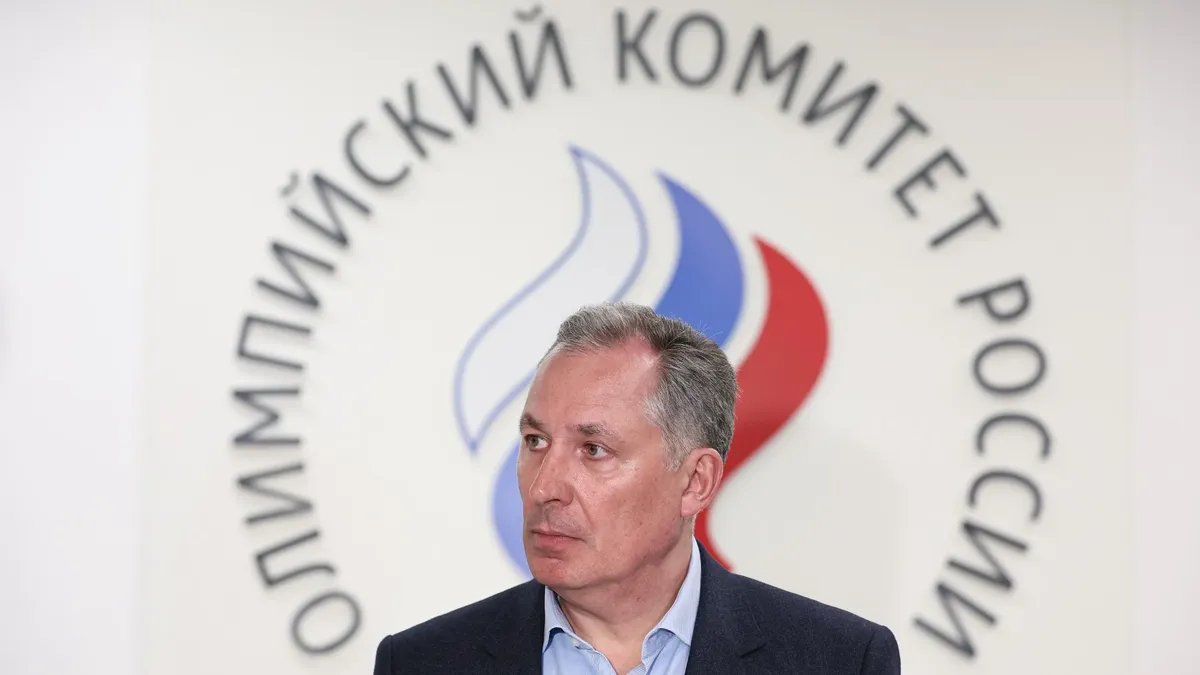
Stanislav Pozdnyakov. Photo: Sergey Bobylev / TASS
After six years in a high post, Stanislav Pozdnyakov leaves him. The four-time Olympic champion will not leave immediately, but in compliance with all the official procedures necessary for the occasion, which should culminate in the election of a new president of the Russian Olympic Committee. An organization that at the moment is not entirely useless, but for a year now has been deprived of the opportunity to fulfill its main purpose - to represent the country in the international Olympic movement.
It is unlikely that the lack of field of activity alone explains the desire of the head of the ROC to leave early - apparently, the resignation fits into the general trend of changes in leadership in Russian sports. In May, Oleg Matytsin handed over the post of Minister of Sports and was accepted by the ex-governor of the Khabarovsk Territory Mikhail Degtyarev. In the summer, Dmitry Svishchev was dismissed from the post of chairman of the State Duma Committee for the Development of Physical Education and Sports. It was clear that the authorities were dissatisfied with the fact that the country’s sports sovereignty, in conditions of almost total exclusion from international competitions, was not being strengthened as successfully as we would like. But no one seems to have a clear idea of how to develop and strengthen it, not at the level of statements and projects, but in real life. But something needs to be done, so the unspoken slogan “new challenges - new people” is gradually becoming the rule.
Pozdnyakov had nothing to do with the development and implementation of the program of major alternative international starts, but even in the situation of the removal of the ROC, he remained an influential figure, whose opinion was especially important in the Olympic year. The ROC president was expected to at least provide moral support to those athletes who were going to Paris in a neutral individual status: Pozdnyakov, as an outstanding Olympic fencer, understands everything about the main Games of our time, and as a functionary, even before being elected head of the ROC in 2018, he specifically solved problems related to with the ongoing doping scandal.
In those difficult, but still quite vegetarian, as is now clear, conditions, Stanislav Alekseevich fought with various kinds of restrictions and consistently defended the interests of his wards, appreciating the very opportunity of athletes to participate in the most important start of a career for many.
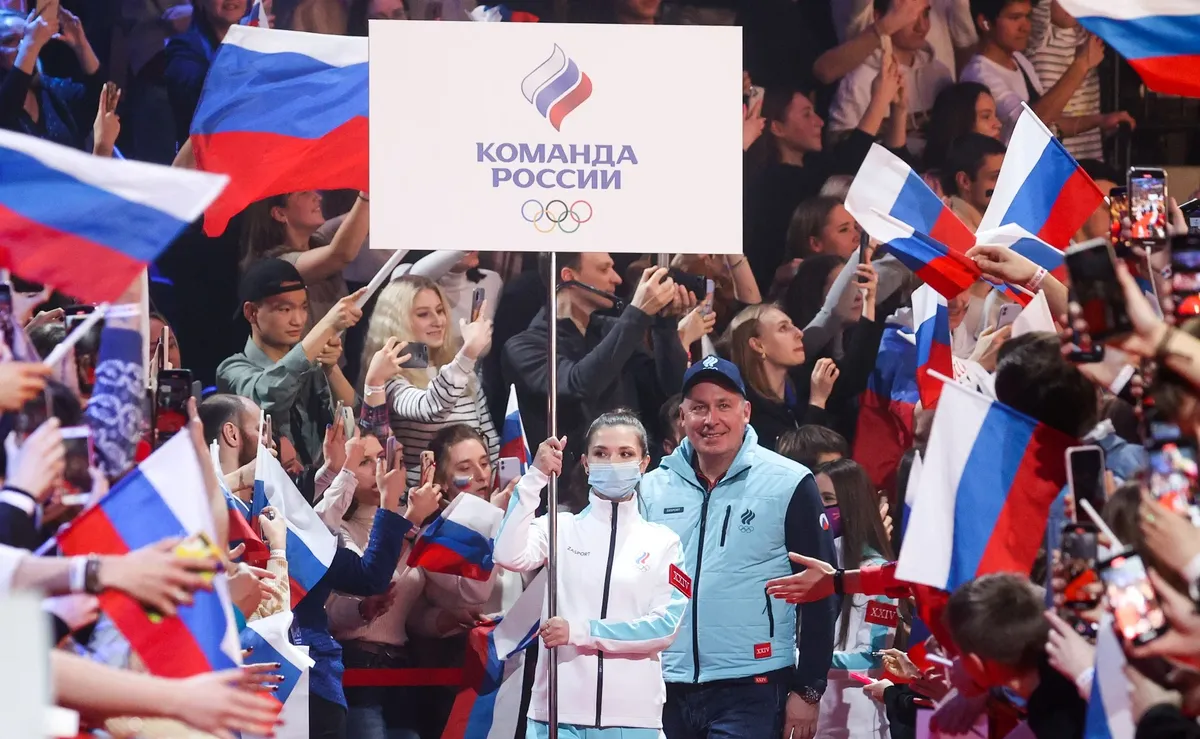
This was important in the first place, and the president of the ROC, despite all the negative attitudes towards it, did not put the concept of “neutral status” at the forefront. Moreover, everything was leading to the conclusion that after the Games in Beijing 2022, all claims against Russia would be lifted. But on February 24, what happened happened: Russian sport was expelled from the international sports movement, and the activities of the ROC were suspended indefinitely by the International Olympic Committee a year ago.
Last December, the IOC opened the door slightly for “individual neutral athletes”, accompanying the permit with a number of requirements that could only be considered “conditionally acceptable.” The topic of “agree or disagree”, “to go or not to go” on the eve of the London Olympics for six months became the main one in discussions, which, in the absence of direct instructions from above, were heated, but did not end with anything concrete: those who were against the adoption of “discriminatory” conditions, There were more, but there were also enough defenders.
The decision of this or that athlete did not depend in any way on the head of the ROC, but, naturally, they listened to Stanislav Pozdnyakov. To the surprise of many, Stanislav Alekseevich, who at first simply warned athletes against trying to go through “humiliating” selection procedures, at some point turned on rhetoric more characteristic of obscurantists from the program “There is a topic”, more similar to political information, on the Match TV channel. In April, the words “team of foreign agents” came from his lips in relation to the Russian tennis players who qualified for the Olympics, but this seemed not enough, Stanislav Alekseevich “blacked up” his entire organization: “It should be noted that the ROC is on the side of those of our compatriots from among the athletes, for whom the IOC conditions are unacceptable, neither in essence nor in form.”
The “anti-Olympic” position taken by the ROC president betrayed a certain confusion and a desire to prove that he correctly understood the hints voiced from the very top.
There was indeed a hint about the consequences for those who were going to London, but no one forced the head of the ROC to run ahead of the locomotive and brand the “apostates” in advance. However, Stanislav Alekseevich himself had no choice but to defend state interests.
The reputation, naturally, suffered, but manuals were not passed down from above, and at the end of June Pozdnyakov burst out with new statements regarding the return of Russian sports to the international arena. About the 2028 Summer Olympics it was said that “by this moment all conditions will be created so that not only sports, but also everything connected with Russia will return to normal.” Three days later, a clarification followed: “By 2032, Russian athletes will again perform with the flag and anthem of their country. But I hope it happens sooner. Any political turbulence will end sooner or later, but the fundamental Olympic values will remain.” Interested parties could only guess what was meant by “all the conditions” that would ensure Russia’s return “to square one.”
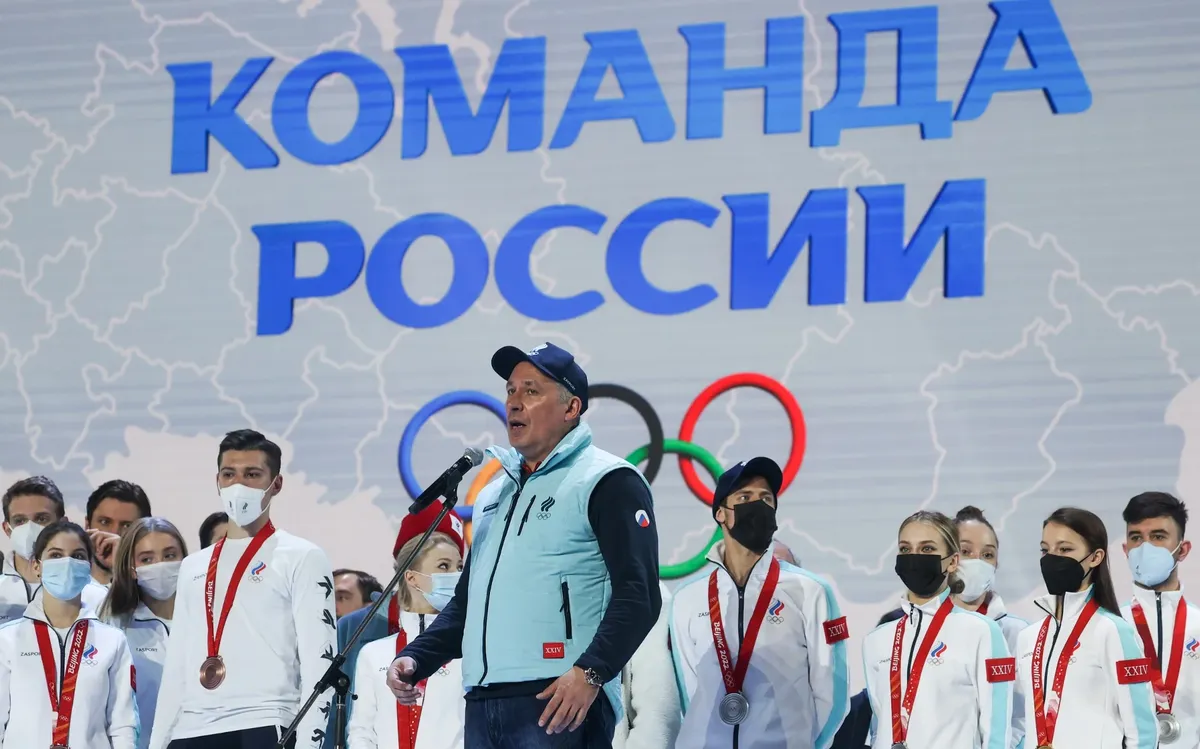
In August, France held a more than successful Olympics, without noticing the absence of the Russian delegation; the heroes of Paris included several Russians who changed their citizenship, which cannot be said about 15 “neutrals” from Russia, confused by both strangers and their own. Stanislav Pozdnyakov, again, had no direct connection to all this, but some irritation at the top with his role as president without status was undoubtedly felt. In September, he tried to convince the public that “we are conducting an informal dialogue with the Olympic movement,” but it was extremely difficult to believe this - Stanislav Alekseevich had already said so much about the IOC “trampling Olympic values” that it was impossible to talk about any contacts, even informal ones out of the question. If anyone is conducting such dialogues, it is the leaders of individual sports federations, who are slowly expanding the space for entering the international arena.
If OCD is “unblocked”, it will be the last thing, and it is not known when. The role of the Olympic Committee in a situation where the focus of attention is naturally directed to internal affairs is unenviable, but until sovereignty is fully formed, it is too early to dissolve it - it may still come in handy. But without Pozdnyakov.
Pozdnyakov did not wait for the expiration of his term of office and announced that he was leaving. The statement turned out to be symptomatic:
“The geopolitical challenges that our country faces dictate the need to optimize and centralize the management of key areas of activity, including high-performance sports. In ensuring the most effective results with proper financial support, the creation and practical implementation of new formats of high-level competitions, as well as the creation of high-quality conditions for training future generations of strong, competitive athletes, the role of the state is more important today than ever. To further strengthen the Russian Olympic movement, there are now timely prerequisites, including economic ones, for a change of leader and team.”
Throughout the doping saga, Russian officials had to prove to international organizations with varying degrees of success that our state does not interfere in sports affairs, but now, in conditions of isolation, there is no need to be a hypocrite, as can be seen from the statement of the resigning functionary. Centralization, strengthening the role of the state - all these are exactly the things that should help Russian sport survive in times of crisis, but may prevent it from returning to the international Olympic mainstream without hindrance, even under favorable external circumstances. No matter how we have to explain again that we were misunderstood.
Pozdnyakov said that he made the decision to leave easily, and stated the reasons in a statement. Words about strengthening the Olympic movement in Russia, for which “timely prerequisites have developed,” may seem like a mockery, but it is unlikely that Stanislav Alekseevich had something like that in mind.
The ROC, no matter who runs it, will wait for better times, and all responsibility for the new Russian sports life has been entrusted to the Ministry of Sports and its new head.
The old one did not disappear either - Oleg Matytsin, who was hastily transferred to the State Duma, headed the Committee on Physical Culture and Sports in September. This is called “optimization”. It is still unknown which organization Stanislav Pozdnyakov will join the ranks of, but his zeal has already received a worthy assessment.