
Translated material
Well, take a breath...
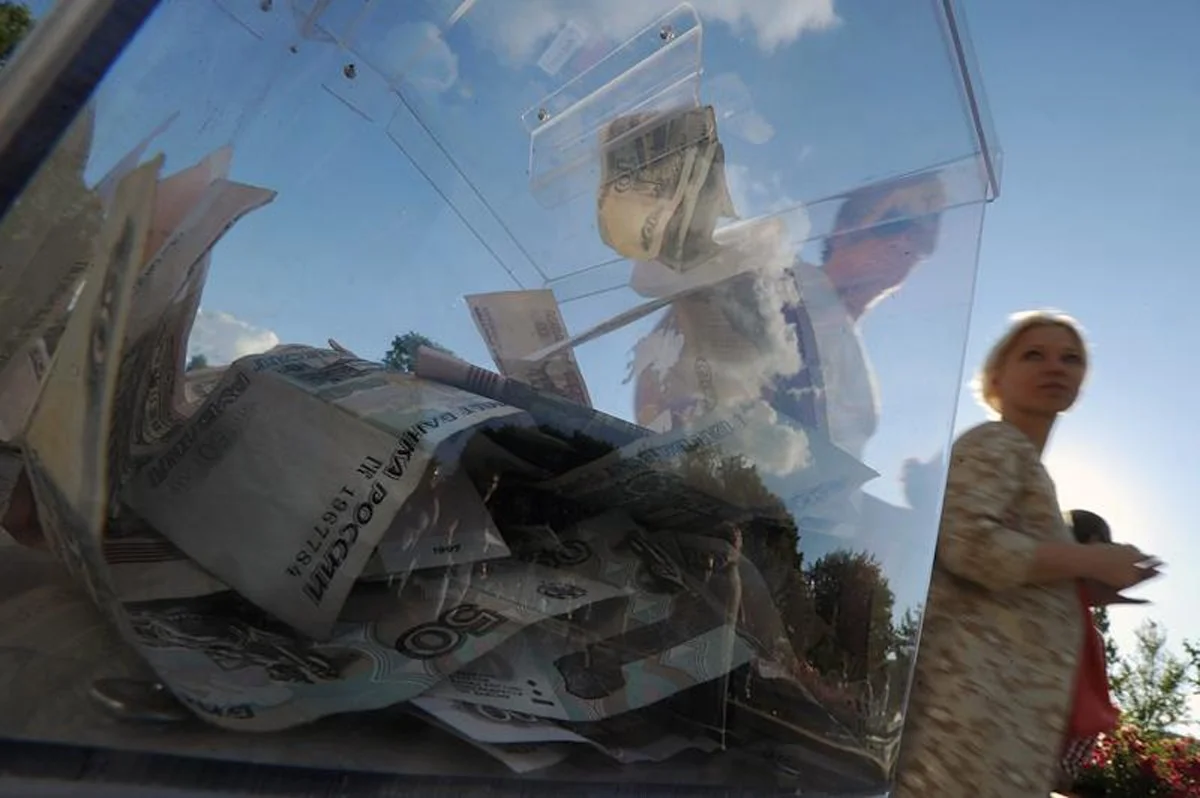
Crowdfunding - a way of feedback from society and the opportunity to help people directly - is beginning to be blocked by both private companies and the state

Photo: Alexander Miridonov / Kommersant
The disabling of the ability of global payment systems to accept donations from Russian cards affects everyone who, in one way or another, tries to conduct independent activities, but first of all, the already poor and vulnerable industry - charity - suffers. Thus, after blocking accounts, several charitable foundations, whose donors were mainly located in Russia, announced their closure. Further, unfortunately, it will only get worse. ( After all, the Russian segment of payment systems, which is under state supervision, is beginning to refuse “suspicious” ones, just like Russian banks refusing to open accounts. - Ed .).
There is nothing more vulgar than talking about the special path of the country. But back in LiveJournal's heyday, it was amazing to see the rise of citizen journalism and independent writing. This unique phenomenon arose against the backdrop of a lack of conventional tools for self-expression. In civilized countries, a wide media landscape allows one to find a platform for expressing any point of view. Bloggers, especially those with a socio-political and social orientation, are absent on the scale we are accustomed to.
After 2014, the role and share of the state in life began to grow exponentially, which was expressed not only in the percentage of shares of large companies that came under the control of officials, but also in the financing of initiatives - anything from cinema, media, inventions to charity.
Margaret Thatcher’s phrase “There is no government money, there is taxpayers’ money” did not reach Russia and has sunk into oblivion. The country began to live by the rule “Whoever pays calls the tune.”
It would seem that things were headed for disaster. The state is a bad owner, investor, and advisor, and trying to dictate its rules to grant recipients is doomed to failure, especially given progressive conservative policies that serve the interests of a narrow group of people with traditional values. But thanks to the Internet, those who were especially persistent managed to get out by starting a direct dialogue with society, proving their importance and, accordingly, the need for funding.
The population, surprisingly, has more money and opportunities. All we need are tools that allow one to easily share funds with others. This is an important point. Simplicity and transparency of payment are perhaps the main thing in this area. To get someone to like, subscribe, or share a link, stakeholders spend a lot of effort. It is difficult to imagine the scale of the tragedy when money is involved. Okay, they persuaded them to donate, but making a convenient form and bringing the user to the point of debiting the funds, so that he doesn’t give up and move on, is a feat.
Crowdfunding platforms and services for collecting donations have come a long way - from serving the wishes of the parties and creating an entire culture to technological solutions such as the appearance of a funny sticker on the broadcast screen when funds are received into the account. There is the longest queue at the “porch”, and making sure that people give their hard-earned money voluntarily and joyfully is a very difficult task, which has been solved.
A gigantic independent sector has emerged, working exclusively in the interests of its audience. These are not only charities, but also creators in the broad sense of the word. Anyone who got the public interested in their idea, be it publishing a book or making a film, could count on direct private donations - every bit of it.
If with a one-time payment in favor of a project that has a final outcome, everything is more or less clear (took the money, sent a card as a thank you, did the deed), then with systemic projects in the field of charity it is more complicated. This is a never-ending process that requires a different approach. The procedure for a one-time collection to save a specific life differs from raising funds for activities that require ongoing work.
The main funding tool for many charitable organizations has become recurrent payments - regular subscriptions, when a certain amount is debited from the donor's card once a month. Of course, it's nice to receive a grant or a large donation, but
It is the constant monthly receipts that make it possible to plan your future, having at least a fragile guarantee, based on the number of subscriptions, that next month there will be something to live and work on, something to help with.
Thanks to the Internet and technology, society has slowly but surely taken the path of independently resolving pressing issues without the help and participation of the state. Hundreds of charitable foundations and organizations have appeared, solving a wide range of problems to the best of their strength and financial capabilities. The list of those who need support could go on for a long time, and at the end of this list there will certainly be support for the participants in the process themselves - from training industry workers to banal psychological assistance. All this was made possible thanks to the best qualities of our society. Even if the numbers and scale were clearly insufficient, they still evoked pride in their contemporaries.
Now this too is under threat. It is not so important what to call the current situation - authoritarian, totalitarian or hybrid. The fact is that the existence of anything independent becomes impossible. This does not depend in any way on the type of activity, political views or ultimate goals. Any private initiative, any network organization, which most often involves financial flows, even small ones, is practically impossible. It can collapse at any moment due to a simple disconnection of the tool.
Without even trying to estimate the amount of money coming from citizens to those who are ready to rake the Augean stables, you need to understand that you can no longer count on them. Platforms and services under Russian jurisdiction, or in other words payment processing, are impossible: slowly but surely they are turning off the tap from which for many the flow (or so far the only source) of livelihood came.
The only way out is cryptocurrencies. And let many fearfully twirl their fingers at their temples, denying the difficulties of withdrawing funds and teaching all participants new tools, but there are enough successful examples, including in the field of charity. Tools are evolving, and technical literacy is increasing thanks to financial isolation. No matter what they come up with or try to ban, this is the only tool that is not under the control of the state, which means there is at least some hope of being able to continue working.