
Translated material
What do we care about them?
Electoral journey of Pavel Palazhchenko to the USA
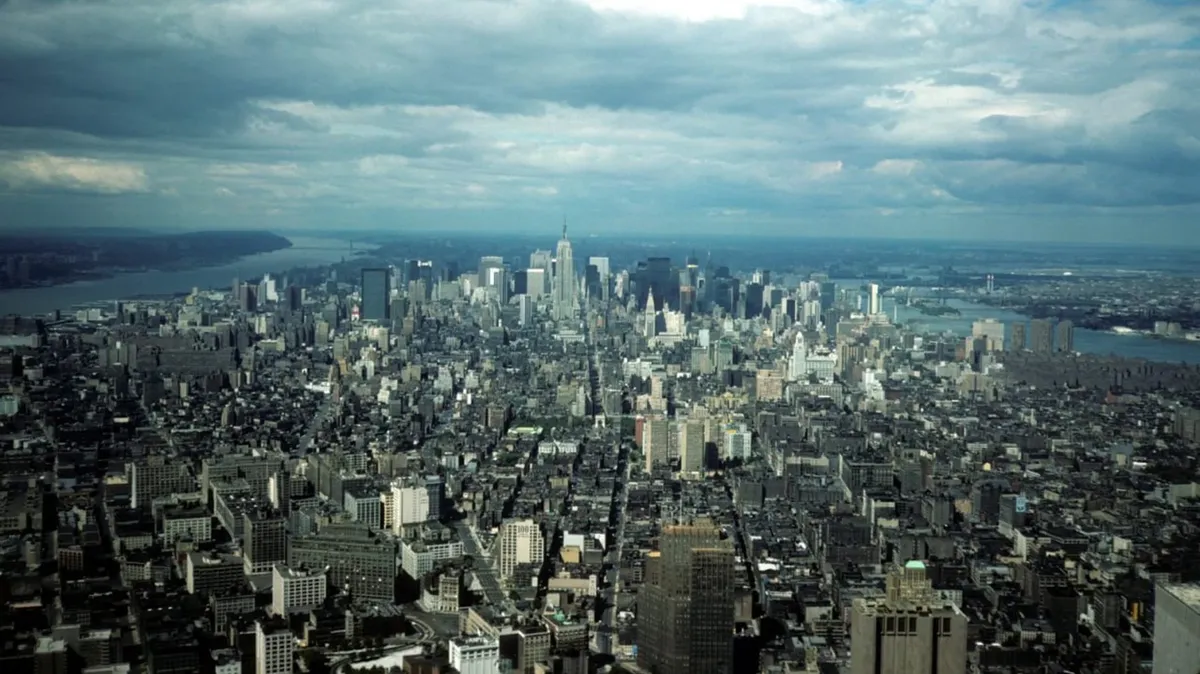
View of New York from the observation deck of one of the twin towers of the World Trade Center. Photo: Pavel Palazhchenko
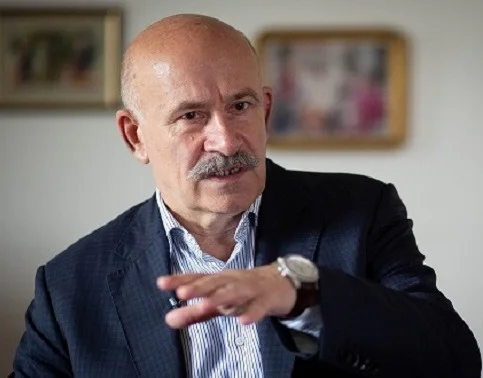
FROM THE EDITOR
We are all very lucky. Pavel Palazhchenko, Gorbachev’s former personal translator and one of the founders and leaders of the Gorbachev Foundation, went to the United States at the request of Novaya. For what? Look through the eyes of an eyewitness at the finale of the American presidential election campaign.For him, an elite translator and political analyst, the role of a newspaper special correspondent is new. But of course he can handle it. Firstly, everything he undertakes, he does well. Secondly, he knows America brilliantly, having visited it many times. Thirdly, the current campaign is already the 13th for him as an observer, and there are no secrets for him about how they all work.
And above all, Pavel is an excellent storyteller. Actually, we are waiting for his personal sketches of the electoral elements of America.
Picture One
What do we care about them?
Novaya Gazeta invited me to go to the American presidential elections. Look at them before, during and after and write about your impressions. The offer was unexpected, but I decided that if the newspaper (and, presumably, its readers) were interested in it, then I should agree.
There was another reason to agree. What a coincidence: for the first time in my life I came to America exactly 50 years ago - well, minus one month - November 14, 1974. I was 25 years old at the time, and a trip to America was, in the eyes of Soviet people, something like a flight to the moon. After completing the UN translator course at the Moscow Language Institute, I signed a five-year contract with the organization. My translation career began, which turned out well.
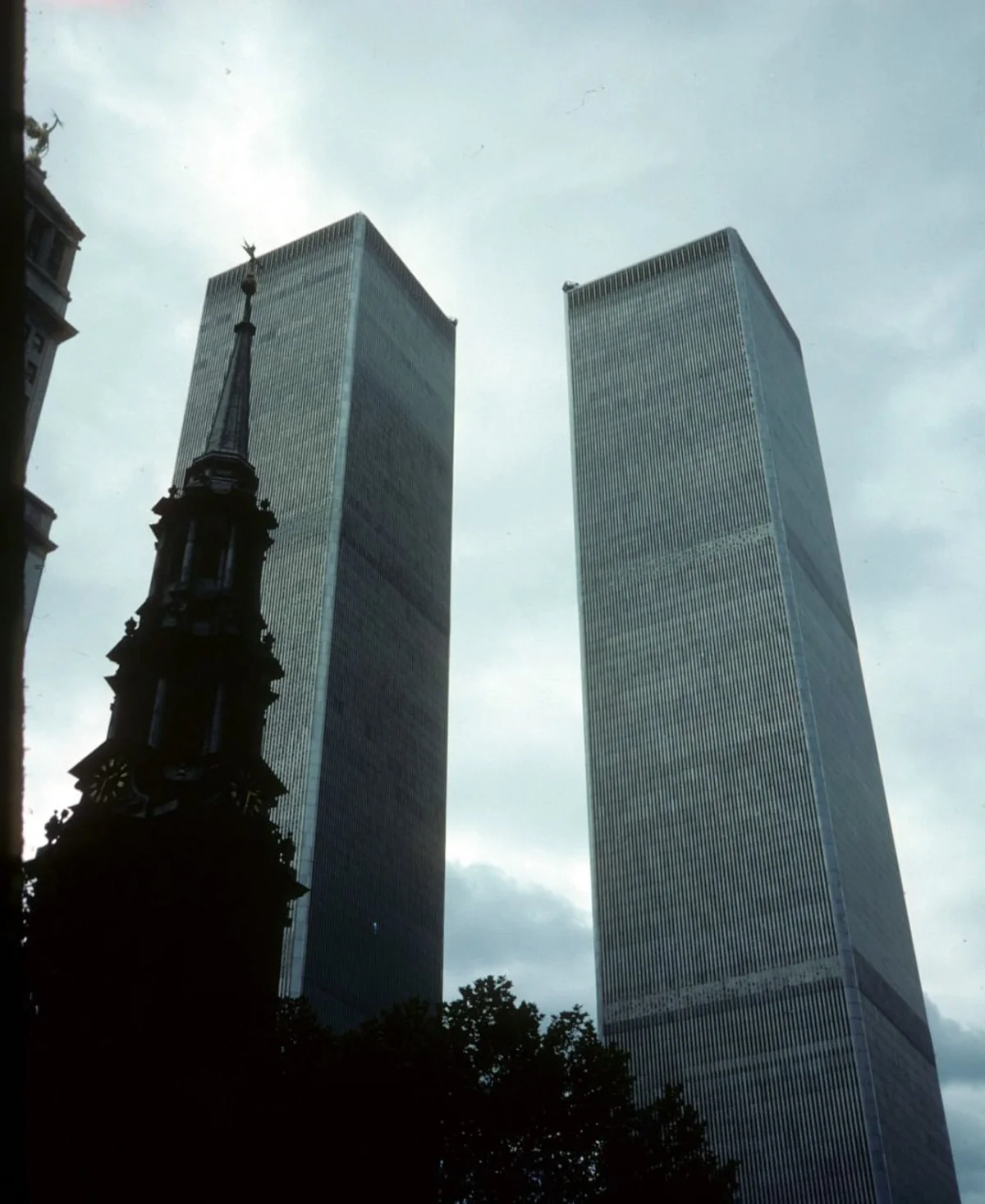
Digitized many years later, photographs preserved the memory of those years. Here is a view of New York from the observation deck of one of the twin towers of the World Trade Center. The correct translation is World Trade Center. These are the towers themselves, which collapsed on the tragic day of September 11, 2001.
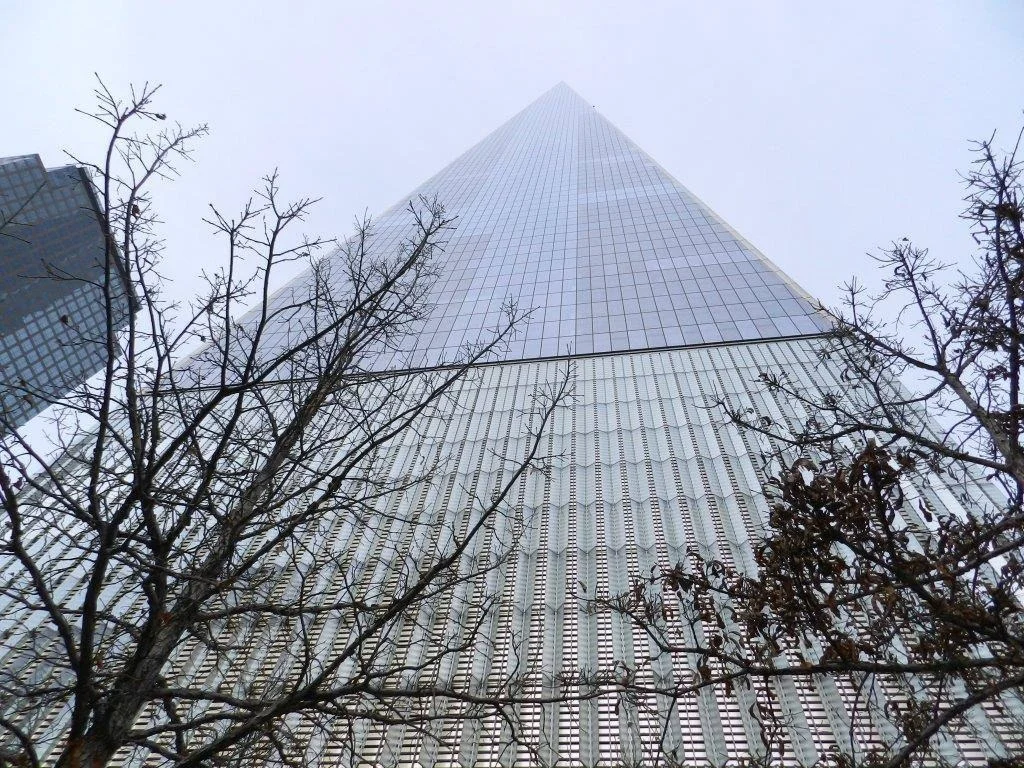
And here (this is from new photographs) a skyscraper built in their place.
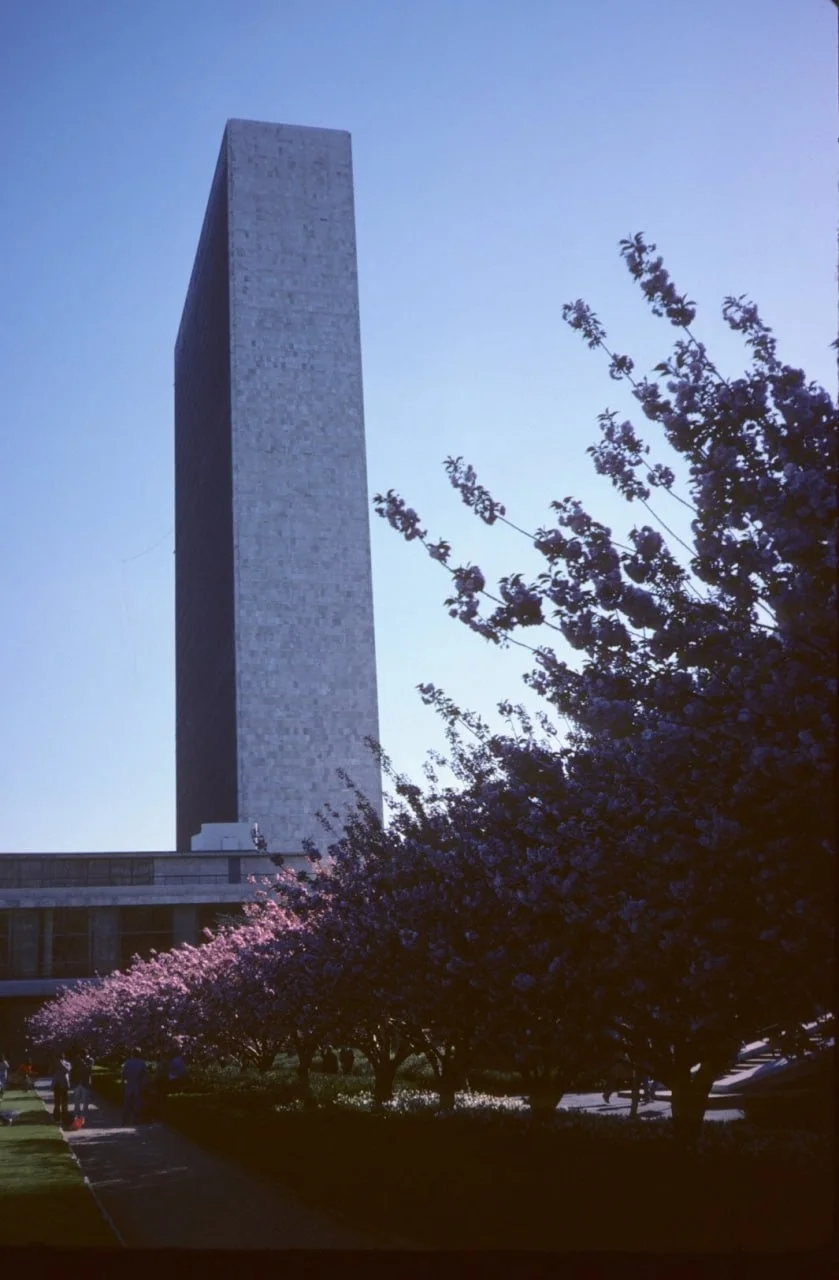
Here is the UN Secretariat building where I worked.
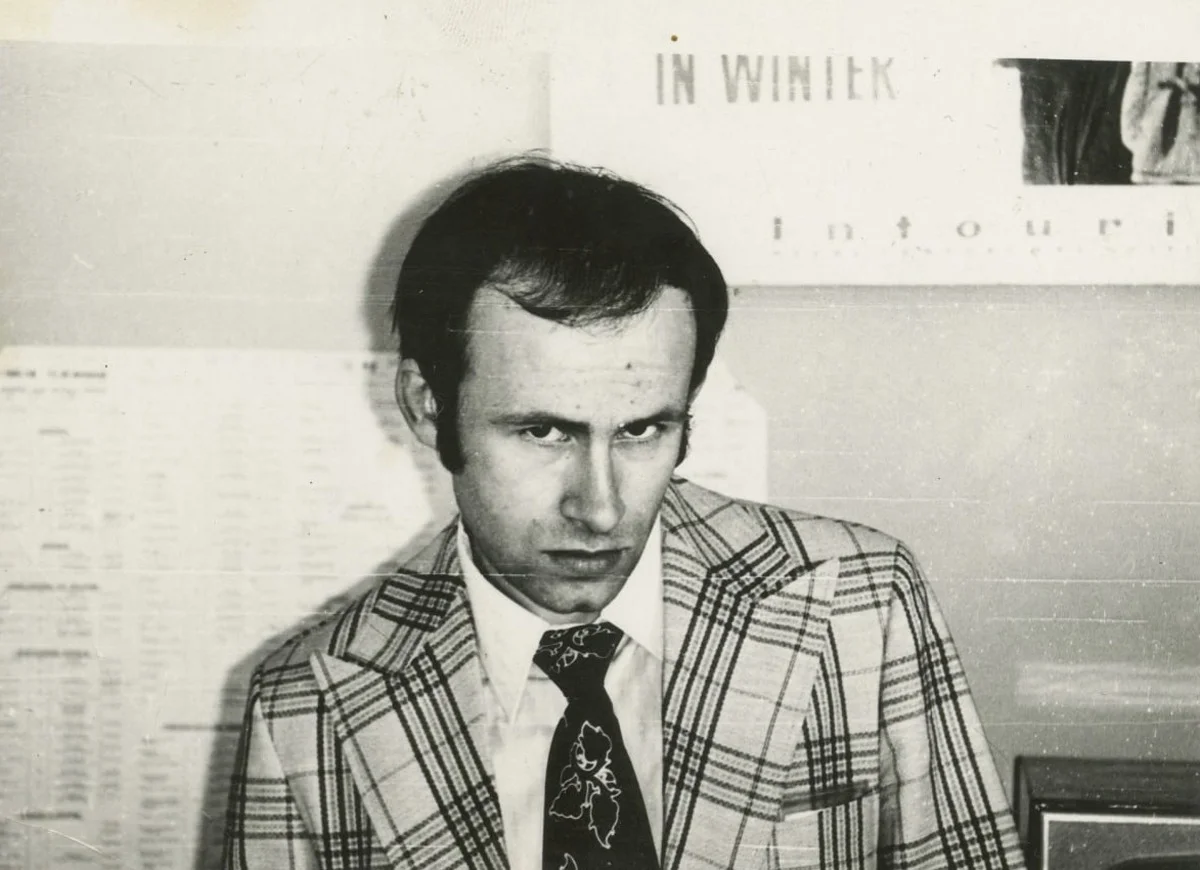
And this is what I looked like then.
Of course, everything was interesting to me. Everything was to some extent colored by the Cold War, ideological confrontation, and the division of the world into “them” and “us.” I was not a fool, I already understood some things, but I was subject to some stereotypes.
It was a contradictory time. Under Presidents Gerald Ford and Jimmy Carter, the erosion of détente—that is, the easing of tensions between the USSR and the United States initiated by Brezhnev and Nixon—began. Nixon had just resigned under threat of impending removal from office by Congress for fraud during the 1972 election campaign.
In the USSR, Nixon's departure was perceived as the result of actions by opponents of détente. But even if this was the case, that is, the “opponents of détente” contributed to it, this was not the main reason for the “Watergate affair” that brought down the president. It seemed so to me then, but now I am convinced of it. Americans love elections and want their vote to mean something. Nixon was condemned by both Democrats and most Republicans.
Since then, I have visited the United States countless times. All twelve presidential election campaigns that took place over the years remain in memory. The current one is very unusual for many reasons. And trying to figure it out is interesting to me.
But the question inevitably arises: do we really need this? Why do we need American elections? Should we root for any of the candidates? The first answer that comes to my mind is: America is interesting to the whole world, whether someone likes it or not. When you open a newspaper in any country, what news from abroad is written about first? Unless there is a war somewhere, then about America. And in almost any war, they most often look for the American trace.
In Russia, special interest in America is a long-standing one, it arose around the middle of the 19th century, long before the United States became a superpower. Among other things, there were common or similar problems - slavery in the southern United States and serfdom in Russia. As elsewhere (and as now), some had admiration and illusions, others had sharp rejection, and others had a view from afar at terra incognita. But what there wasn’t was much interest in the elections.
This changed after World War II. They say that when coming to a UN session in an election year, Soviet Foreign Minister Gromyko first of all asked the long-time ambassador to the United States, Dobrynin, about how the campaign was going and “who is more profitable for us.” And even then, in Soviet times, a fairly stable belief developed: “we are better off with the Republicans.”
The pendulum of relationships has not always swung in accordance with this opinion. Now he has reached the maximum level of negativity (or is striving for it). Perhaps this has never happened in my lifetime. But this did not diminish interest in America. And this interest is not only in current events. liters, which sells books online, reports an increase (more than doubling) in interest in books on US history. They read novels by Cormac McCarthy and Richard Russo, which, I admit, I haven’t gotten around to yet, return to “One-Storey America” by Ilf and Petrov, Ivan Kurilla’s book “Americans and Everyone Else: The Origins and Meaning of US Foreign Policy” takes pride of place in the ratings " And so on. I'm not even talking about cinema. Through torrents and VPNs, American films and TV series break through the barriers of boycotts and sanctions. Although at every opportunity they criticize America - such is the “love-hate” thing.
And, of course, we are interested in the presidential elections as before. And maybe even more than before. And if so, then people place bets. I don’t know how true this is in the literal sense, but figuratively it is exactly that. Judging by social media, people have chosen their favorites.
I have the impression that in Russia the long-standing “we are better off with the Republicans” now unites both our “elite”, the common people, and a significant part of the intelligentsia. Maybe for various reasons, but in an explicit or implicit form we sympathize with Trump.
True, before Biden withdrew his candidacy, President Putin seemed to support him as a “more predictable” person. Loyal media were somewhat confused and did not dare comment on this. And when Kamala Harris became the Democratic candidate, Putin spoke out in support of her. But it also seems to be : “I told you, our favorite, so to speak, was the current president, Mr. Biden. He was withdrawn from the race but encouraged all his supporters to support Ms Harris. So we will do this too. We will support her." For people to understand correctly, TASS gave the news under the headline “Putin ironically stated that the Russian Federation supports Harris after Biden leaves the race.” But, apparently, it was necessary to put a final point. This was done by Sergei Lavrov: “President Putin has a good sense of humor. He often resorted to jokes during his speeches and interviews.” In general, the minister explained, “the notorious “deep state” operates there.”
That is, all this is not so important.
But I remember the 2016 elections and the reaction of representatives of the Russian “elite” to them. They rooted for Trump and did not hide it. Margarita Simonyan’s bright and stylistically impeccable tweet on the day after the elections went down in history: “In general, today I drive like this: in one window is our flag, in the other is the American one. I symbolize peace-friendship-chewing gum. Advance." And more serious high-ranking people, as they say, had hopes. But it turned out to be chewing gum at best. Over the next four years, the relationship slid downhill.
Perhaps this is partly why caution now prevails in the expert community. Ivan Timofeev writes to Kommersant that “those who count on “deals” with the United States under Trump, or at least on more constructive relations, are mistaken.” It reminds us that during the years of Trump’s presidency there were no “clear results” in Russian-American relations (I would say that there were no results except bad ones) - and “in addition, Trump turned out to be an active opponent of the arms control regime,” in keeping which Russia was then interested in. By and large, the author further writes, “Moscow should not care who exactly will be the president of the United States.” That’s all true, but in the finale the author, in my opinion, goes too far: “The bottom line is that the outcome of the US elections for Russia is of purely secondary or even tertiary importance.”
From here it is not far from stating that in general relations with America are of “secondary and even tertiary” importance for Russia: “But we don’t care.” But this, I think, is not so.
Let's say, if - at least in the long term - limiting nuclear weapons is still in Russia's interests, then it doesn't matter.
Academician Sergei Rogov succinctly summarized the opposing approaches of Republicans and Democrats: Republicans believe that “the US nuclear arsenal should not be inferior to, but exceed the total nuclear forces of Russia and China” and that it is necessary to “prepare for the resumption of nuclear tests,” and “democrats are not opponents of control over armaments, they are in favor of maintaining START-3 levels.” I don’t know how significant this is for the Russian leadership.
We now have the prevailing opinion that America is running out of steam, although its “braking distance” will be long. Well, if so, then we will have to deal with her for a long time. The US election will be watched by the whole world in the coming weeks. I think we should also take a careful look at these elections, their results and, most importantly, what they have already revealed and will still reveal in American society.
* * *
New York, where I flew by the shortest route to date via Istanbul, met with good weather, typical for October. At John F. Kennedy Airport there is constant construction, a multilingual crowd, a queue at passport control that seems endless, but somehow dissolves, and the same with taxis. The trip to Manhattan costs a flat price of $87, with a tip it comes out to $100—inflation is on its way. The taxi driver, of course, “not local,” after hearing the address, said that he would need to “stop for a couple of minutes.” I asked: should I refuel? He didn't answer. A minute later, he stopped in an additional lane behind a small line of similar yellow taxis and, without getting out of the car, quietly prayed to Allah.
Thus began my “sentimental journey.”