
Translated material
So that they don’t remember
The authorities blocked the website of the “Return of Names” action in memory of the victims of Soviet power - on the eve of the actual action on October 29
18+. THIS MATERIAL (INFORMATION) IS PRODUCED, DISTRIBUTED AND (OR) SENT BY FOREIGN AGENT VISHNEVSKY BORIS LAZAREVICH OR CONCERNES THE ACTIVITIES OF FOREIGN AGENT VISHNEVSKY BORIS LAZAREVICH.
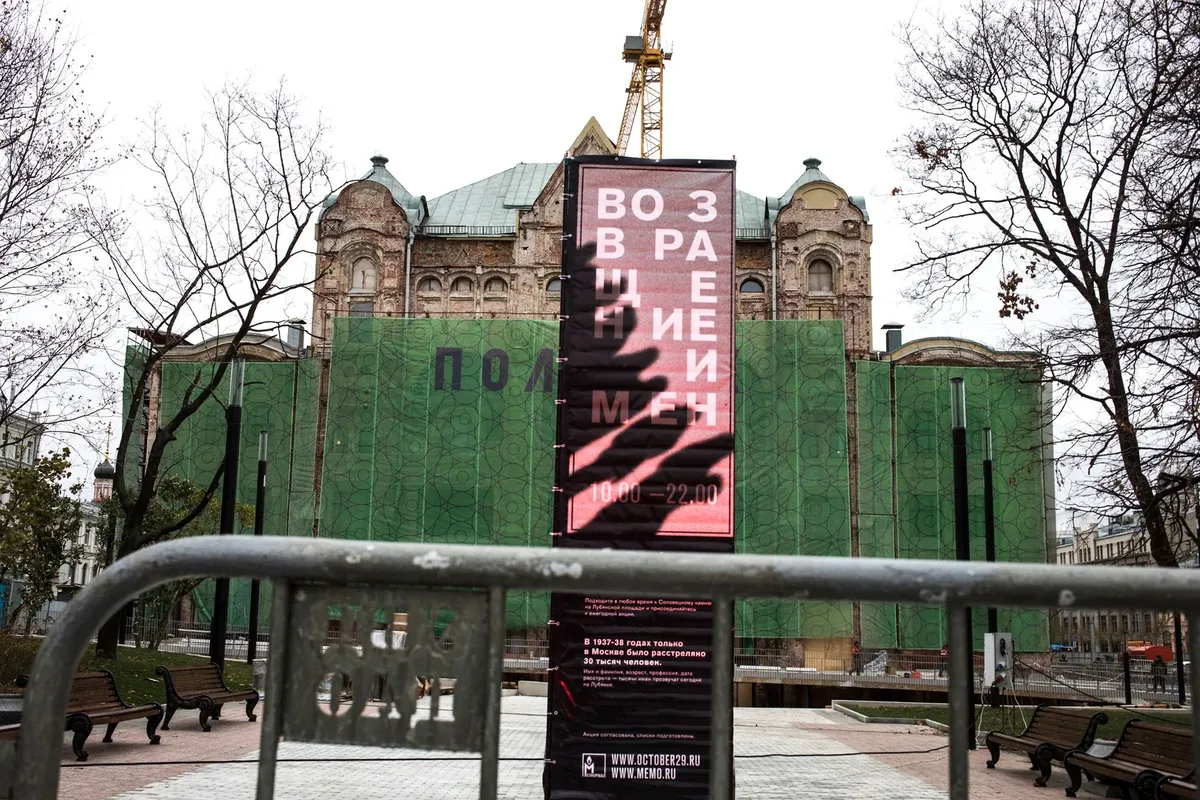
Since October 16, a number of providers have stopped opening the website of the “Return of Names” campaign, where every year on October 29 or 30 in Moscow, St. Petersburg and other cities (including many cities around the world) people gather to honor the memory and read aloud names of victims of crimes of the Soviet state.
This is not only a memory of the victims of Stalin’s repressions; during the action, the names of the victims of the “Red Terror” and other repressions of the Soviet period are read.
“Return of Names” has officially been taking place since 2007 (the action began in Moscow at the Solovetsky Stone), but in fact the tradition of reading the names of victims of repression began much earlier.
As a rule, the authorities did not interfere with it, although a cool (to say the least) attitude towards this tradition was evident.
And recently, alarming signals - and concerning various aspects of the topic of perpetuating the memory of victims of repression - have been following one after another...
The partial (for now) blocking of the website for the “Return of Names” campaign, where people can find out about the place and time of its holding in their city or receive instructions on how to organize this campaign themselves, became known on October 16.
The blocking, according to the Roskomsvoboda website*, was carried out at the direction of an unnamed “government agency” (most likely the Prosecutor General’s Office).
When you try to access the promotion website october29.ru, an error signal appears and the words “failed to load.” When using a VPN, everything opens up.
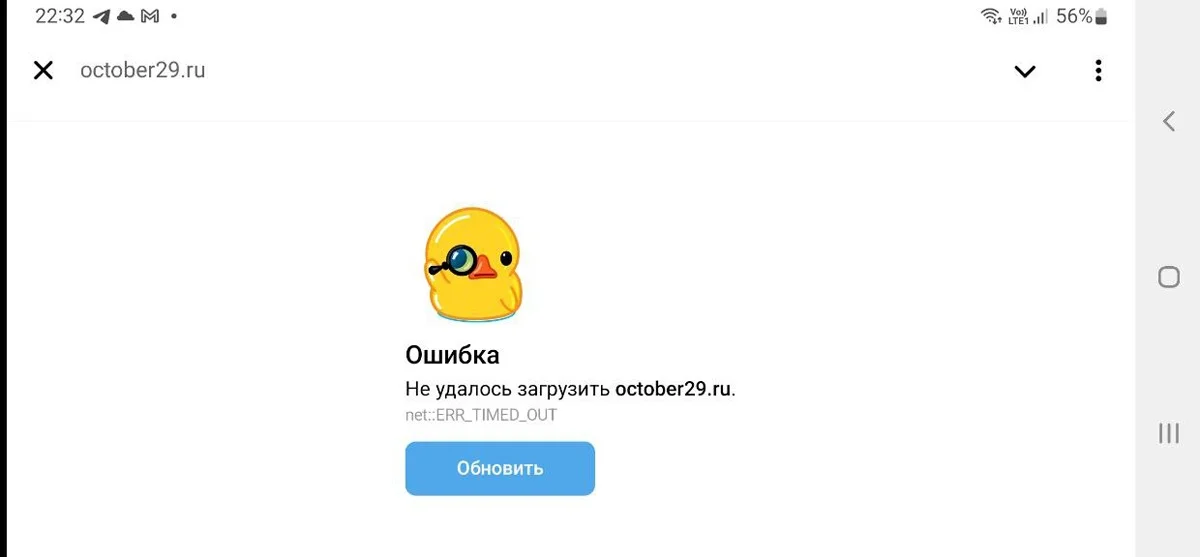
The reason for the blocking is unknown, although a number of commentators believe that the Russian “authorities” may well regard a call to come to a rally or organize one themselves as a call for “unauthorized rallies”...
The organizers of the action from Memorial, which was awarded the Nobel Peace Prize but liquidated by the Russian authorities, note that the tradition of reading the names of the victims is unlikely to disappear due to the fact that Roskomnadzor or other authorities blocked the site of the action. And that blocking the site does not in any way prohibit the action itself - even in Russia.
“October 29 is not only a memorial day, but also a day when you and I can see and hear each other and ask ourselves questions. What are we thinking about as we stand in the “Return of Names” queue? Why is it important for us to remember the names of those executed? Who are we - and what unites us? - says the promotion's website. “Perhaps we are those for whom Soviet repression was a personal and family tragedy. Or those who understand that state crimes of the past and present are connected. Those who live in Russia and those outside it. Those who are free and those who are in prison. This year we invite you to hold a “Return of Names” near memorial sites related to the history of state crimes. The action can be large-scale, or it can be for a narrow circle of people who share the values of freedom and human life.”
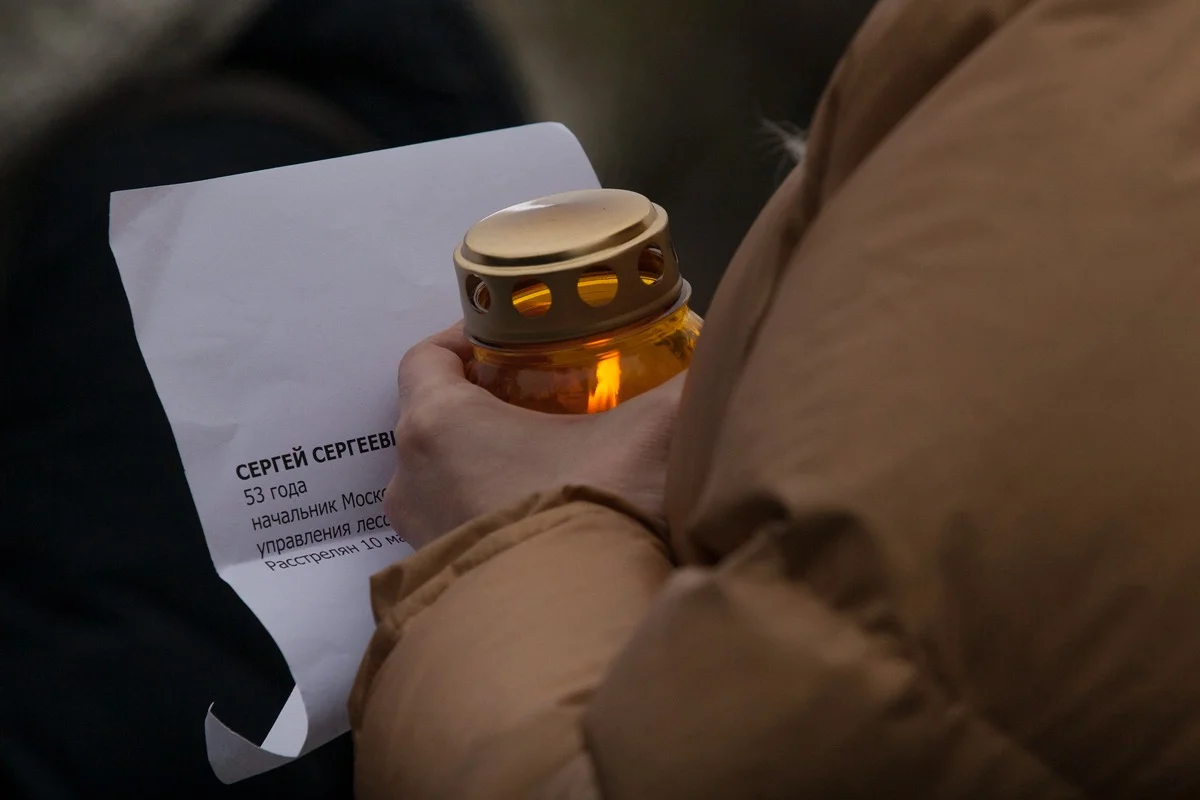
However, the Tomsk authorities actually banned the “Return of Names” event this year, refusing to approve it.
The action was traditionally planned to be held next to the monument to victims of terror - the Stone of Sorrow. However, city officials said that on October 30, a different event “will be held at the same time and in the same place” by another organizer, and proposed moving “Return of Names” to other venues.
Last year, we note that Tomsk officials first agreed on the “Return of Names”, but then banned it.
This same Tomsk “distinguished itself” once again this year: the city authorities demolished as “unauthorized buildings” pillars with portraits and names of 30 executed Tomsk residents, placed in September on Mount Kashtak, where nine thousand people were shot during the Soviet years.
One of those executed (whose name was also on the memorial pillar) was the famous poet, representative of the “new peasant” trend in Russian poetry of the 20th century, Nikolai Klyuev (sentenced to death by the NKVD “troika” in 1937).
The memorial pillars were dismantled, despite appeals from local residents who called on the Tomsk mayor's office to preserve them, declaring that the pillars did not bother anyone. At the same time, back in 2003, a nine-meter cross with the inscription “Eternal memory of the innocently killed” was installed on Mount Kashtak...
What is described fits, like cartridges into a clip, into the unkind tradition of the “pro-Stalinist renaissance” of recent years, demonstrating the revival of the foundations of the Stalinist state with its infallible leader, “infallible” organs, the destruction of enemies who do not surrender, and the danger for anyone to fall into the millstones of the repressive machine , from where it is almost impossible to get out.
And now, following the closure and inclusion in the “foreign agent” lists of those who, like “Memorial,” preserve the memory of repressions and make public the names of the executioners, they are revising the foundations of state policy for perpetuating the memory of victims of repressions that are no longer considered “massive.”
And they are demonstratively beginning to “reconsider” the correctness of decisions on the rehabilitation of victims of Stalin’s repressions.
And they refuse to coordinate (as in St. Petersburg) actions in memory of parents - victims of repression and actions in memory of victims of the “Red Terror”.
And only after a loud scandal they coordinated an action in memory of the victims of the Holocaust in Pushkin.
And they erect monuments to Stalin, like in Vologda.
How can one not remember Yevgeny Yevtushenko?
*As long as Stalin's heirs are still alive on earth,
It will seem to me that Stalin is still in the Mausoleum.*