
Translated material
Professional humanism prohibiting reason
Mikhail Edelstein on the controversy surrounding the war in Israel, photographic thinking and the dangers of irrational empathy
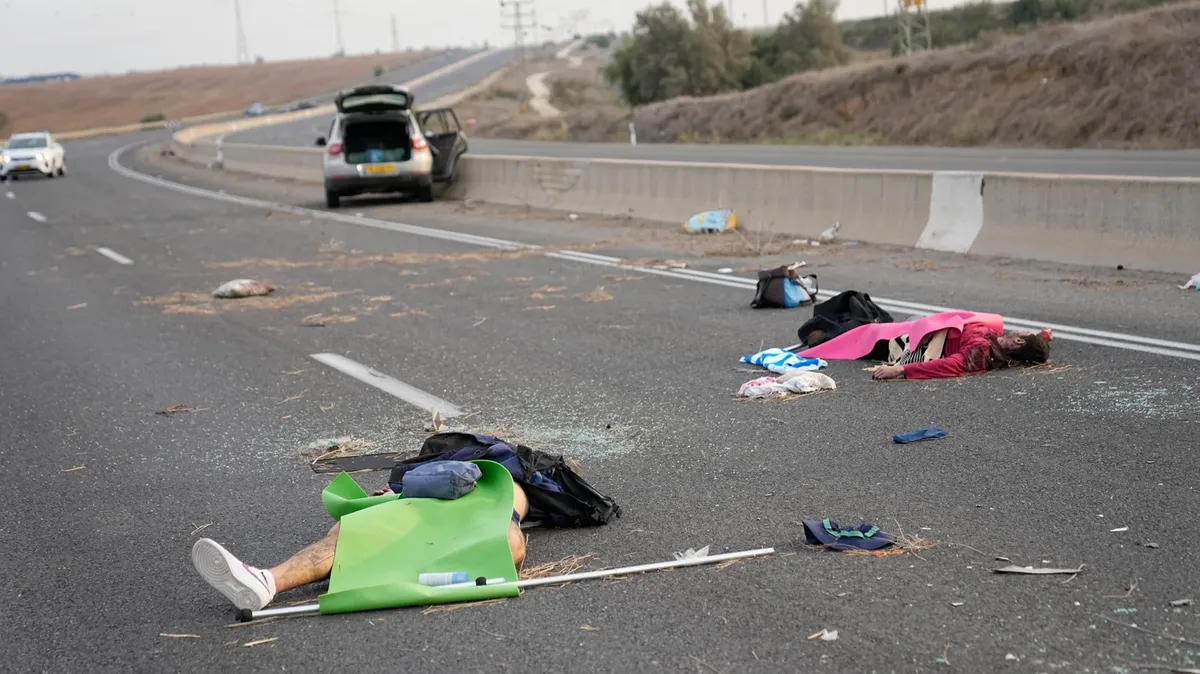
Victims of the Hamas attack on Israel, October 7, 2023. Photo: AP / TASS
In the last year, we have witnessed how a wall of misunderstanding has grown between Israelis and supporters of Israel, on the one hand, and those who demand an immediate end to the “carnage” in Gaza, and now also in Lebanon, on the other. It's not that this wall didn't exist before, but now it has become much more noticeable. Demonstrations, academic and sports boycotts, arms embargo on Israel. And most importantly, a mental abyss, the impossibility of dialogue.
I have talked—sometimes just listening, sometimes arguing—about what is happening in Israel and Gaza with dozens, if not hundreds of people. With those living in Russia and Europe. Russian-speaking and no. In person and on social networks. And it seems to me that I understood what kind of bricks this wall was made of and why it was so difficult, almost impossible, to destroy.
To put it roughly, we can say that critics of Israel are divided into two large groups.
The first is the radical left , fighters against imperialism and the hegemony of the “first world”. In their logic, Israel is an accidental surviving fragment of the machine of colonial oppression that must be destroyed.
These are religious fanatics worse than any Hamas, they have the Holy Scripture, and this Holy Scripture says: the oppressed is always right.
If the oppressed slaughters children and women (option: blows up buses), then this is the realization of his inalienable right to the liberation struggle. One can slightly scold him for his excesses, but one cannot help but sympathize with his holy cause.
It is pointless to argue with fanatics, although it would be useful and instructive to trace how fanaticism became an intellectual fashion, how it took over universities, newspapers, and city squares. But this is a topic for another discussion.
The second group is more interesting. It consists of people who do not sympathize with terrorists, do not sympathize with Hamas, but believe that Israel's response to the October 7 massacre was excessive and led to unacceptable civilian casualties . They call for a stop to the war, negotiations, and a political solution to the conflict.
Many in Israel, including officials, attribute any anti-Israel protests to anti-Semitism. This explanation is incorrect and, like any incorrect explanation, harmful. Of course, anti-Semitism has not gone away, many people do not like Jews and believe that Jewish elites have seized power over the world. But in fact, even violent demonstrators shouting about Palestine from river to sea and burning Israeli flags are not always negatively disposed towards Jews as such. Moreover, the accusation of anti-Semitism is inapplicable to civilians who are pained to see bombed Gaza neighborhoods and crying hungry children on TV or on the Internet.
And yet, the aforementioned wall between the Israelis and the “progressive public” is only strengthening.
By the way, here is another point that is not very clear from the outside. When I say “Israelis,” I really mean the vast majority of the country's inhabitants, including those generally considered on the left, who loathe the current government, demand a deal with Hamas to free hostages, and lament the failure of peace talks in the 1990s. . And even these people shake their heads and twirl their fingers at their temples when they hear arguments that seem to be similar to their views from Europeans and Americans.
“This is war,” says the Israeli. “There are always innocent victims there.” That's how it's built. Yes, we must try to minimize their number. But it is impossible to avoid them. Especially when hostilities are carried out in dense urban areas. When schools are turned into terrorist headquarters and ammunition depots. When there are entrances to tunnels under hospitals. When militants do not wear military uniforms and easily blend in with civilians.
War is a disgusting business. But if it does happen, and if I recognize it as forced and fair, then I at the same time recognize that the army faces primarily military tasks, not humanitarian ones.
“If you know that your actions will lead to the death of civilians, then there is no need to start,” his opponent objects. — Targeted operations of special services in residential areas are all right, but the army should not enter there. Bombing is even more unacceptable - after all, it will inevitably lead to mass casualties, destruction, and flows of refugees.
At this point, two discourses converge - human rights and philistine . Both say the same thing: if the price of a war is more or less massive civilian casualties, then such a war should not be started or continued. Only ordinary people express this idea in simpler language, and human rights activists use special terminology and references to paragraphs of international conventions.
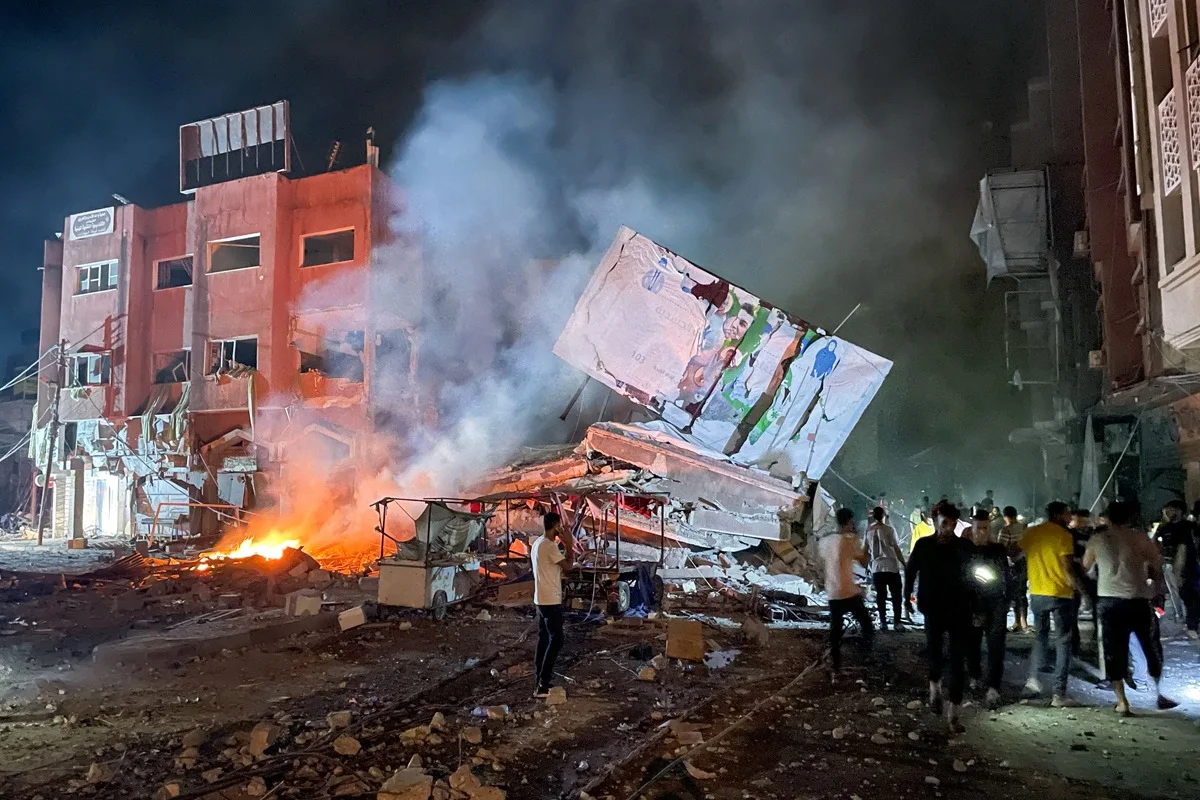
Sometimes this position is taken to its logical extreme (and that’s good, I love it when an idea is thought out to the end). Well, for example, you ask a person:
— But if in a densely populated area of Lebanon there is a rocket launcher that is preparing to fire a salvo at Israeli cities, can it be bombed or not?
“This is a really difficult question,” your interlocutor answers. “But, in the end, Israel has good air defense and bomb shelters.”
Or the recent thoughts of a respected person, one of the founders of Dissernet, Andrei Rostovtsev, about how bad it is to carry out an operation to free hostages if it means killing the owners of the apartment where the hostages are being held.
And here is a very revealing dialogue between the same Rostovtsev and one of the commentators:
— How do you propose to destroy terrorist infrastructure without bombing everything? How can I do this differently?
- Don't know. That's what diplomacy is for. But destroying civilians is no good. This is what distinguishes a civilized man from a cave man, that he has learned to use the advantages of dialogue.
And this is a very characteristic remark.
The fact is that critics of Israel almost never have a positive program, as they quite openly admit.
“You have the right to self-defense, but you can’t do that.”
“That’s not possible, we already understood that.” How is it possible?
- In a different way, without civilian casualties.
- But that doesn’t happen.
- So, no way.
Option:
“We need to create a Palestinian state.”
— Well, okay, let’s say we manage to overcome all territorial and other differences, and such a state will be created. The power in it will be given to the same people as now, so the next day weapons will begin to be imported there, and terrorists will begin to infiltrate across the Palestinian-Israeli border. Israel will be forced to send in troops, destroy ammunition and militants. That is, everything will be the same. Then what's the point?
- Well, at least let's try!
Dialogues from the drama of the absurd. The problem is that to Israelis it all sounds a little different. Something like this: to satisfy our humanistic instincts, you must lie on the floor and wait to be slaughtered along with your families. Therefore, any remark in defense of civilians in Gaza is perceived by an Israeli as a wish for death for him personally and his loved ones. Despite the fact that the author of the remark undoubtedly did not mean anything like that. He is a kind, sweet and smart person. He's just for everything good and against everything bad.
But here there is no choice between good and bad.
There is a choice between something bad for you and something bad for someone else .
If you are against the death of civilians on the one hand, then you are for the death of civilians on the other. Well, this is how things are in reality.
And we have to choose: either, amid the indignant cries of the humane public, continue to destroy terrorists and their arsenals, or allow them to continue to act, because there will always be residential buildings and civilians next to them.
These are not just different positions - these are positions based on fundamentally different axiomatics. And different axiomatics give rise to different optics and different language. For example, where a critic of Israel talks about a war crime, the defender sees a blow against terrorists, which, alas, led to casualties among civilians...
On December 15, 2023, one of the worst episodes of the Gaza war occurred. Israeli soldiers shot and killed Samer Talalka, Alon Shamriz and Yotam Haim, three Israeli hostages who managed to escape after the death of the militants guarding them. The serviceman saw a group of people approaching, suspected a threat and opened fire. Two were killed on the spot, the third took refuge in a nearby building. From there he started shouting in Hebrew: “Help! They're shooting at me! The commander ordered a ceasefire and told the man in the building that he could leave. He came out and was killed.
The investigation showed that in the first case, the soldier who shot had a limited view and did not see that the people walking towards him were waving a white flag. And in the second, those who opened fire did not hear the order due to the noise of a tank working nearby.
This story shocked Israel. It was discussed for a long time both in the media and in private conversations. But no one, including the relatives of the dead hostages, used the word “crime” and demanded that the shooters be brought to justice. It was clear to everyone that the soldiers had no malicious intent, but only a desire to protect themselves. Everyone understood the state in which the servicemen were after two months of fighting, one of whom at the decisive moment did not hear, and the other did not see.
It seems to me that this tragedy and the reaction to it is the perfect explanation of what is really happening in Gaza and in the war in general.
The soldiers shoot at their own people. The missile deviates from the planned trajectory and hits a civilian object. Reconnaissance directs bombers to a false target. A tank runs over a car carrying a family trying to leave the war zone.
Crime is the deliberate killing of innocent people. “Oh, I see a thousand Palestinian civilians, now I will fly there and kill them” - this is a crime.
However, Brodsky already said about this, describing the afterlife meeting of Marshal Zhukov with the soldiers whom he sent to certain death:
*What will he answer when he meets in hell?
areas with them? “I fought.”*
But why don’t those who blame Israel understand this? It seems to me that there are several reasons for this.
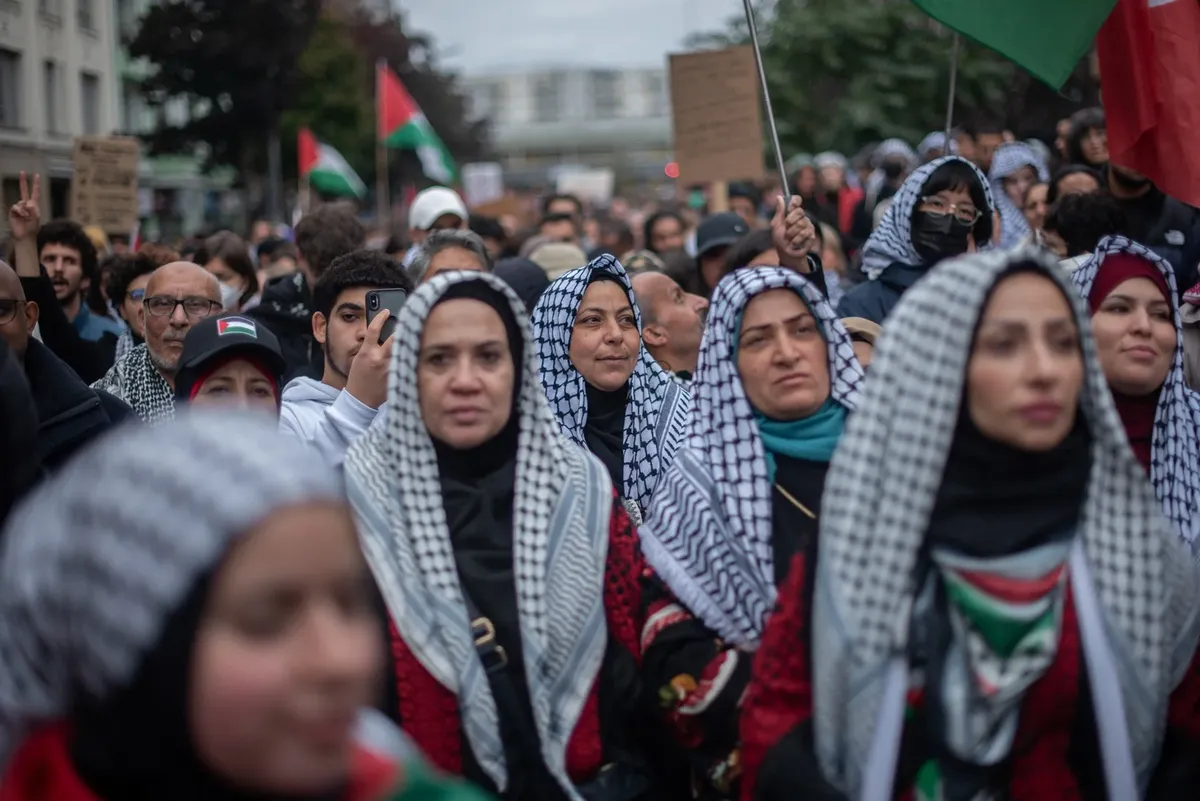
Modern ethics requires empathy from a person above all. Moreover, empathy is not together with rationality, but instead of it. Empathy that cancels and prohibits reason.
“Rationalization” has become a dirty word. “Don’t you see: blood, tears, screams? How dare you rationalize this? What right do you have to calmly talk about this nightmare? And what is your answer? “Yes, you know, I would like to rationally and with a cold nose discuss how many children it is acceptable to kill as collateral damage when eliminating a terrorist unit”? You yourself won’t sleep at night after such an answer. And it’s understandable that a person empathetically exclaims: “I can’t bear to look at this! Stop killing!” - is always in a better position than an insensitive bore adjusting his bicycle glasses with the words: “What, exactly, is going on? Let’s analyze and discuss everything in order.”
They say that modernity is characterized by clip thinking. I think this is an undeserved compliment. A clip is still some kind of movement. In fact, it is more accurate to talk about photographic thinking. Photography is frozen time, a story without end or beginning, without cause or effect. A small puzzle piece pretending to be whole. High art and an ideal manipulation tool. And even if we are talking about a two-minute story on TV news, or a video on TikTok, these are still exactly the same photographs, only with imitation of dynamics.
But the basic explanation is even simpler.
The world has become unaccustomed to war and has forgotten what it is. Which is generally good, of course. Just don’t try to talk about the war from within this “habituation.”
As they say, I have a dream. No, not world peace, much more down to earth. My dream is for professional humanists in television studios around the world to be replaced by military experts. Which would tell us what collateral damage is and what proportions are considered acceptable in modern wars. They explained who, when and how successfully they carried out military operations similar to the war in Gaza in areas with similar population densities. And they would examine specific decisions of the Israeli command, even if criticizing them. Because if a professional says: “Yes, this operation could have been carried out in such a way that 300 fewer people died,” this is important and deserves attention. And “people are dying there, let’s stop immediately” is just a meaningless vibration in the air, allowing those who say it to look good in their own eyes at the expense of others. At our expense. For mine.
There is a famous poem by Evgeny Lukin:
*At the end of the century
took and overthrew
evil man
kind person.*
*From a grenade launcher
slap him, the goat!
So it’s good
stronger than evil.*
Very witty text. The problem is that the meeting of good and evil often looks like this.
And I prefer that the grenade launcher at that moment be in the hands of a good person, and not in the hands of an evil one.