
Translated material
Moldova (not) Georgia?
Why does Russia get in Tbilisi and does not work out in Chisinau
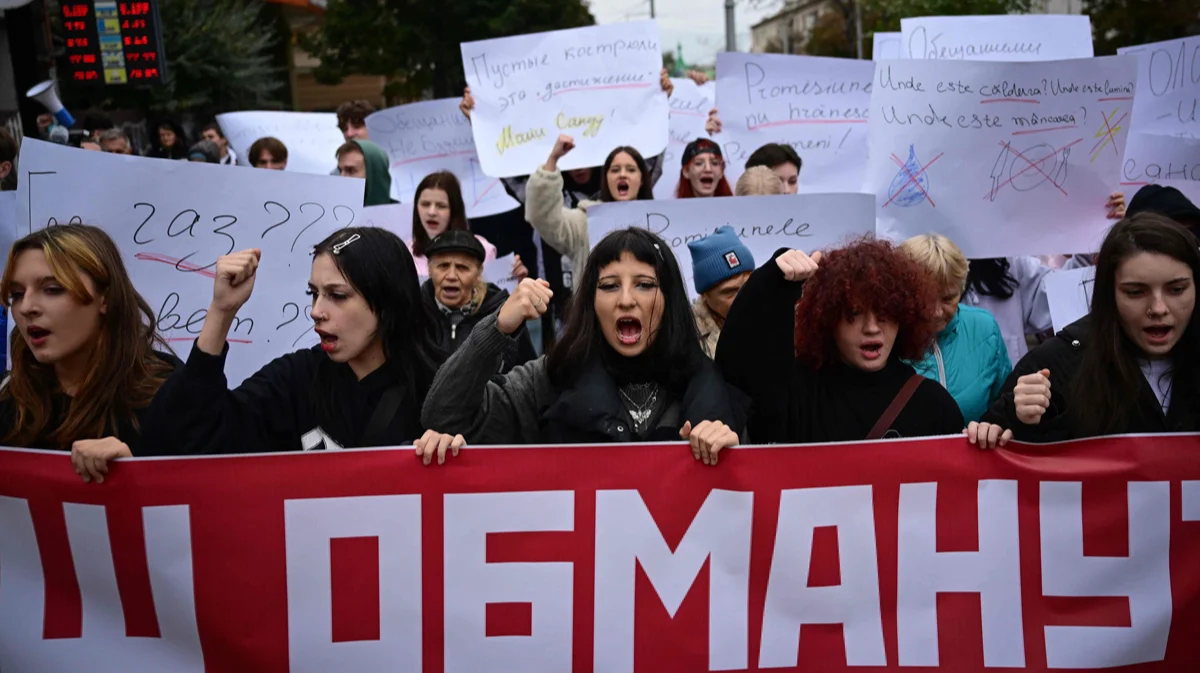
The procession against the President of Moldova and the candidate for the re -election of Maya Sandu, as well as against the accession of Moldova to the European Union, Chisinau, on October 12, 2024. Photo: Daniel Mihailescu / AFP / Scanpix / Leta
The Moldovan politicians of the pro -Russian that are increasingly leading Georgia as an example of Moldova. Tbilisi, they say, not only maintained relations with Russia after the start of a large war against Ukraine, but also went to converge with Moscow, and as if even benefited from it. These arguments also sounded in the current presidential campaign, combined with the preparation of the referendum on the entry of Moldova into the EU.
But what really happens in Georgia, where at the end of October, key parliamentary elections will also be held? How did Georgia of the European perspective cost Georgia in the direction of Moscow, and what do Georgians think about it? How does Russia try to interfere there in political processes, and is it like its actions in Moldova, where the Kremlin is trying to throw out projuroral power? Galia Ibragimova went to Tbilisi and in the material for NM tried to understand the similarities and differences in the elections in Moldova and Georgia and the strategies of the Kremlin’s influence in two countries that Moscow is trying to keep in its orbit.
On October 20, the presidential elections and a referendum on European integration were held in Moldova. And Georgia this week awaits important parliamentary elections. Both Maya Sandu in Moldova, and the ruling party "Georgian Dream" in Georgia will fight for the preservation of power. But there is a nuance.
The text was first published in Newsmaker
Neighborne neighbors
Georgia and Moldova are often compared, and they really have a lot in common. Both countries have similar demographic indicators, the territory of Moldova is only slightly less than Georgia. The level of economic development is also close: the GDP per capita in Moldova is about $ 7.5 thousand, in Georgia - almost $ 8.8 thousand. Both countries are parliamentary republics.
After the collapse of the USSR in both countries, wars began, because of which they lost part of their territories. Georgia has lost control of Abkhazia and Southern Ossetia, and Moldova - over Transnistria. Now in these territories there are Russian troops - formally to prevent a new conflict. But in practice, the Russian presence and reluctance of the Kremlin to withdraw the troops from there only complicates the resolution of these conflicts.
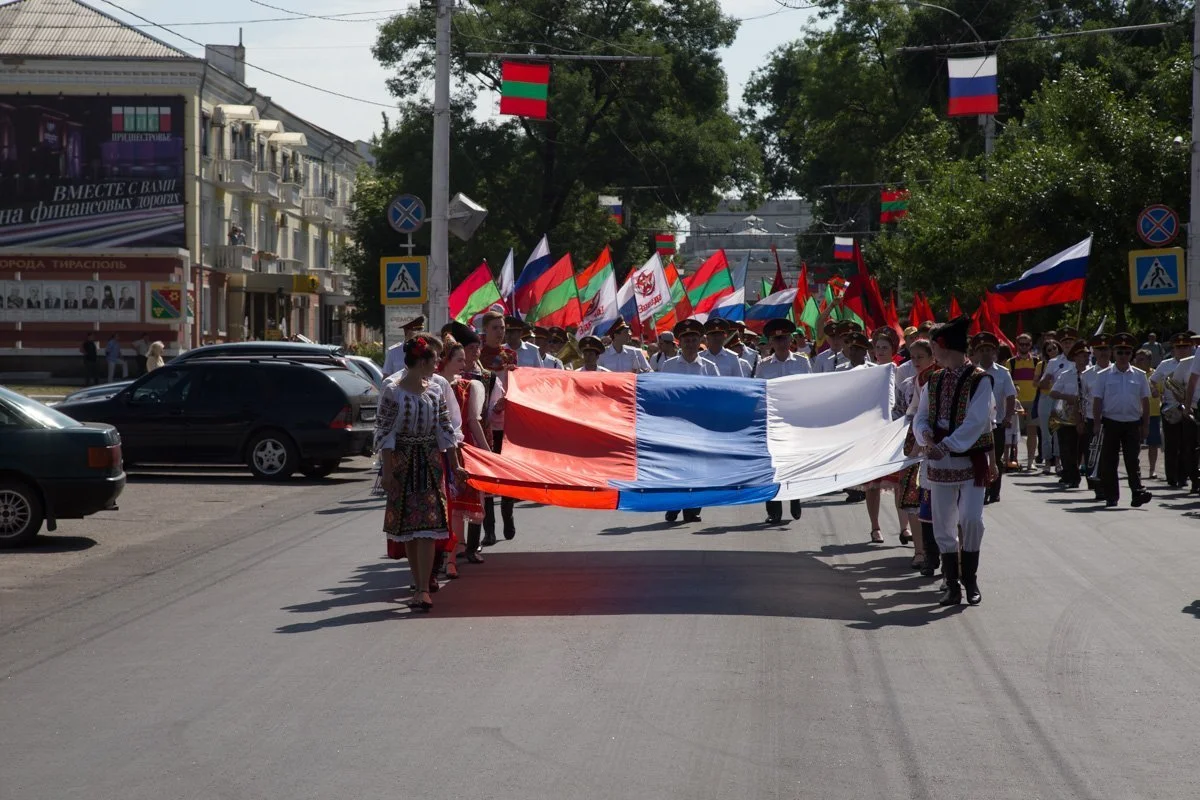
Another similarity between Moldova and Georgia-Russia still has a significant impact on these countries and seeks to preserve it. For a long time, Moscow was considered a significant political and economic partner of countries. However, in Georgia, after coming to power, Mikhail Saakashvili and the 2008 wars with Moscow deteriorated sharply. Moldovan-Russian relations remained relatively stable even after Chisinau signing in 2014 by the Association Agreement with the EU. Of course, Moscow manipulated gas prices or limited the import of Moldavian apples and drain, referring, for example, to harmful insects found in them. But, despite this, the interaction of countries continued.
A cardinal revision of relations with Russia began after its full -scale invasion of Ukraine. Moldova clearly supported Kyiv, almost completely stopping contacts with Moscow and joining anti -Russian sanctions. Georgia, which was long considered the most pro-Western country of the post-Soviet space, chose a neutral position and did not take someone's side in the conflict. The Georgian authorities substantiated this decision that they had already experienced one war with Russia and did not want to get involved in a new one. This position brought the country economic benefit: the export of Georgian wine to the Russian market has grown significantly, and the parallel imports going to Russia through Georgia have become another important source of income.
Moldova has a fundamentally important and valuable difference from Georgia: the lack of a border with Russia. Russian influence in the country, however, is still noticeable. For example, Transnistria continues to receive gas from Gazprom, which is used to generate electricity for Chisinau and the entire right -bank Dniester.
Moscow also retains internal political processes. If at the beginning of the war in Ukraine, Moldavian sympathy for the “Russian world” decreased, now the interest is partly returned. A good example is the presidential election in which many candidates advocate the normalization of relations with the Kremlin.
In Georgia, relations with Moscow also occupy a significant place in the election campaign. However, none of the parties fighting for places in the new parliament calls for friendship with Russia. On the contrary, the Russian factor is used as a tool for intimidating the electorate. The ruling party "Georgian Dream", striving to preserve the parliamentary majority, emphasizes the need to maintain working contacts with Moscow in order to avoid the fate of Ukraine. The opposition urges the authorities not to manipulate the fears of war and actively support Ukraine. This confrontation led to a large election scandal.
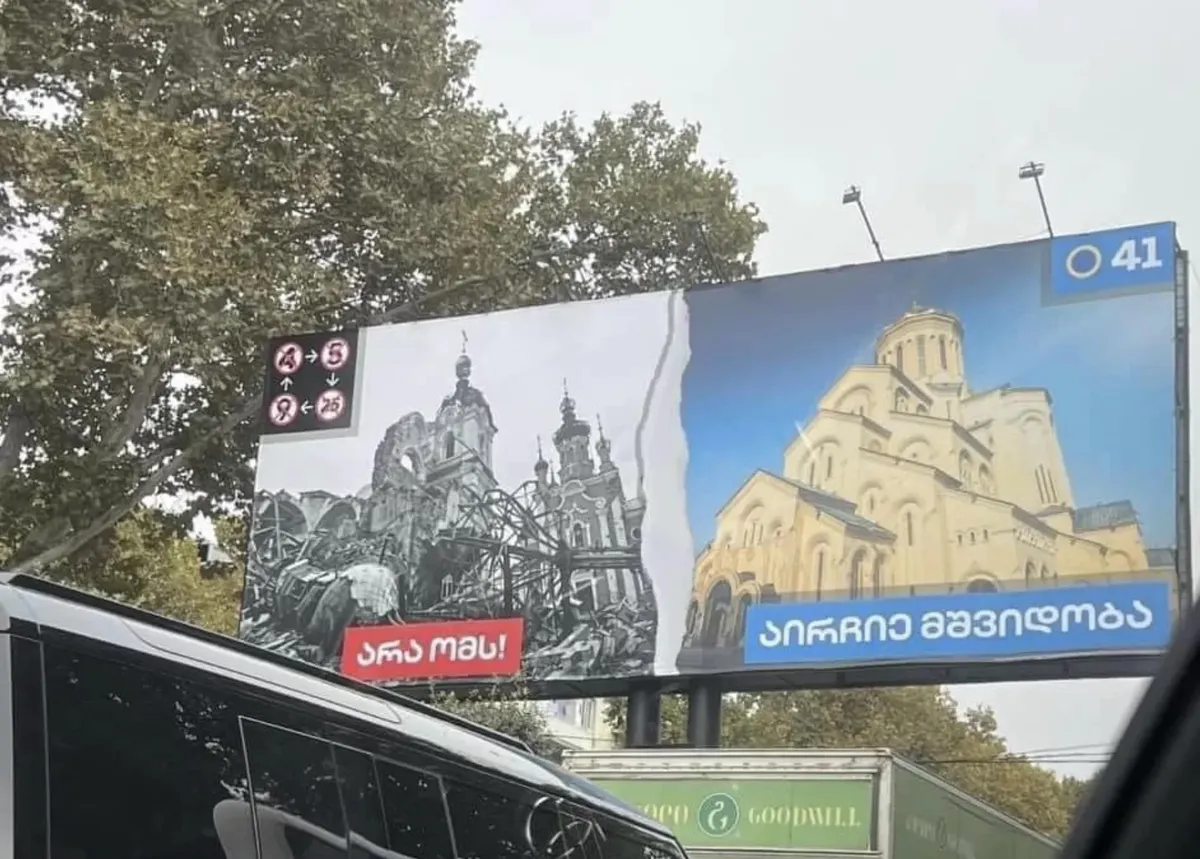
During the election campaign in Tbilisi and other Georgian cities, banners appeared with images destroyed by the Russian army Mariupol next to photographs of prosperous Georgian cities. On each banner, the inscription "No war!" Flaunts. The customer of this election campaign was the Georgian Dream party, which positions itself as a force that can prevent the Ukrainian script in Georgia. Many television channels refused to broadcast a similar video, considering it immoral. However, the authorities did not retreat and, despite the scandal, left banners.
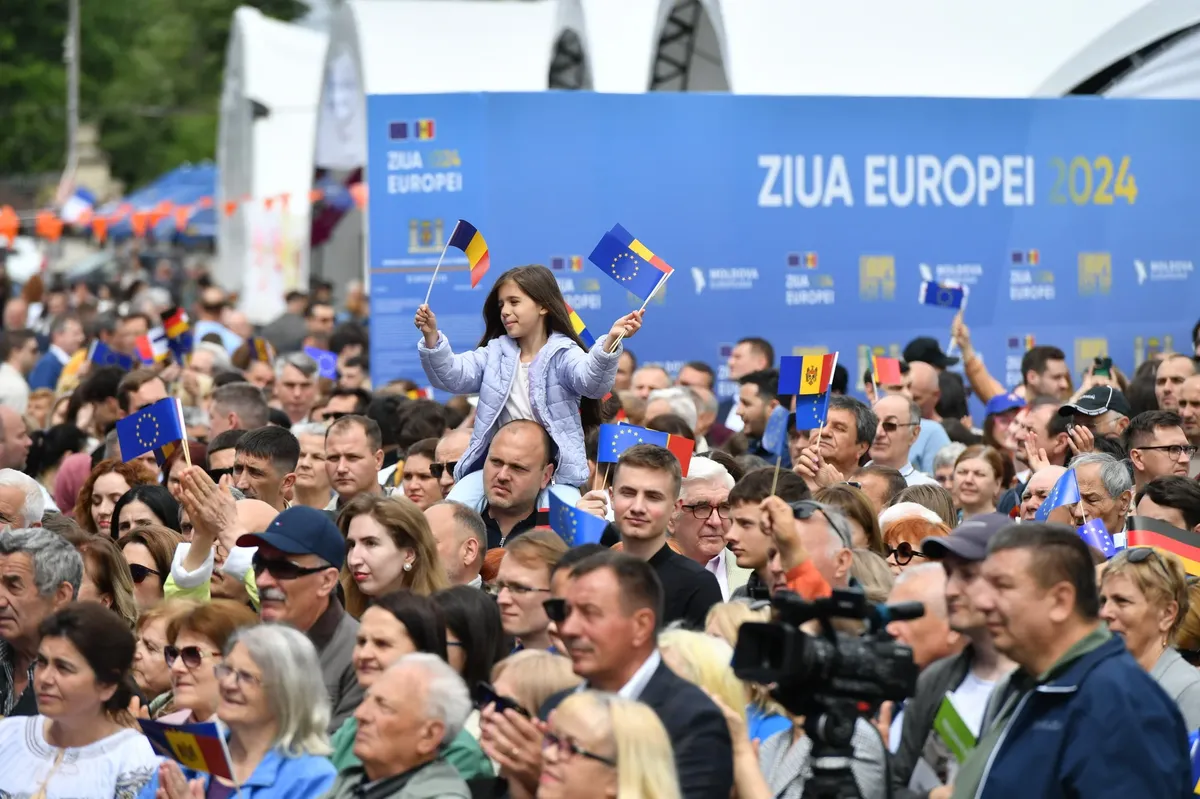
Another key theme of election campaigns in Moldova and Georgia was the prospect of their membership in the EU. After the outbreak of large -scale war in Ukraine, and in many respects under its influence, both countries received the status of EU candidates. Moldova recently even began official negotiations on the introduction and expects to become a full member of the Union by 2030. In Georgia, the process of European integration was suspended by decision of Brussels. This tightening is associated with the law “On foreign influence” adopted in the country, which largely resembles the Russian law “On Ino -Agents”. He obliges the media and NGOs, receiving foreign grants, to marke himself as agents of external influence, which limits freedom of speech. In addition, the EU expresses dissatisfaction with the fact that Georgian power returns to authoritarian management methods.
The ruling party "Georgian Dream" rejects these accusations and claims that it is still aimed at European integration. At the same time, the authorities put forward oncoming requirements for the EU: she would like the West not to intervene in the internal affairs of Georgia and “not provoke a new war with Russia” in the region. Moreover, the “dreamers” unexpectedly accused the EU and the United States of supposedly under their pressure in 2008 the war between Georgia and Russia began. Now, with its mission, the ruling party sees the return of Abkhazia and South Ossetia to the control of Georgia, even if for this you have to postpone the entry into the EU. Moreover, hundreds of polls show that the restoration of territorial integrity is much more important for Georgian society than membership in the EU.
"Soft power" bribery and blackmail
Russia, which is afraid in Moldova and Georgia, is certainly interested in maintaining its influence in these countries. However, at present, all her attention is concentrated in the war in Ukraine. This does not mean that the Kremlin does nothing to hold or bring to power in these countries the regimes loyal to him. Especially now, in the midst of election campaigns both in Georgia and Moldova, Moscow is traditionally ready to support those politicians who do not act with an anti -Russian agenda.
Some of them, for example, the fugitive Moldavian oligarch and his proteges, the Kremlin also finances. However, this cannot be called a meaningful strategy of Moscow. For most, Moldovan, even those who sympathize with Moscow, Shor is a fraudster and a swindler. The support of such candidates is more likely to play against them. Nevertheless, the Kremlin has not yet shown special legibility. It is more important for him to have at least some influence agents in Moldova, on which it will be possible to rely on after the occupation of the whole of Ukraine, which Russia seems to still expect.
“The Kremlin is no longer bothering either soft power or a focused work with the Moldavian society. He is not worried about how the inhabitants of Moldova relate to Russian aggression in Ukraine. But in Moscow they are sure that the bribery is the main tool for holding Moldavians in their zone of influence ",
- In an interview with Newsmaker, a researcher at the Berlin Center for Carnegie on the Study of Russia and Eurasia Maxim Samorukov explains.
Russia applies a similar approach to Georgia. However, unlike Moldova, the Kremlin is quite satisfied with the current Georgian authorities, which did not join anti -Russian sanctions and even in the conditions of war in Ukraine advocates the normalization of relations with Russia. Soon after the suspension of negotiations on European integration, Russia canceled the visa regime for Georgia citizens, introduced back in 2000. It cannot be said that the residents of the country went en masse to Russia: Georgian society has long been oriented towards the EU, where people go to study, work or travel. Nevertheless, Moscow made it clear with this symbolic gesture that it was clearly to her liking a deterioration in Georgian relations with the West. At the same time, the Russian elites do not hide that they are well acquainted with the founder and informal leader of the ruling party “Georgian Dream” by Bidzina Ivanishvili, who is considered one of the richest people in Georgia. Before joining the big policy, he lived in Russia and earned his condition, conducting a business there.
Despite the loyalty of the Georgian authorities to Russia, there are no signs that the Kremlin is ready to help return Abkhazia and South Ossetia under the control of Tbilisi. The only reaction of Moscow to the rhetoric of the “dreamers” about the reunification of Georgia was the statement of the head of the Russian Foreign Ministry Sergei Lavrov that Moscow is not against the establishment of relations between the three peoples. At the same time, the minister emphasized that Abkhazia and South Ossetia are Georgian neighbors, which indicates the lack of readiness of Moscow to withdraw the recognition of their independence.
Another reason why Russia does not want to enter into negotiations with Georgia on such complex issues as reintegration of territories is a projuroral attitude of almost a hundred percent of the Georgian society. And this is another difference from Moldova, where, although most supports European integration, the percentage of those who still advocate the “Russian world” in Moldova is quite large. In the case of Georgia, it is foolish to give any promises of the return of Tbilisi the torn territories, if there is a risk that the anti-Russian opposition of Georgia will return to power.
“Russia directly participated in the rejection of Abkhazia and South Ossetia, and for most Georgians it is a great tragedy. Moldova also has a conflict around the Transnistria, in which Moscow was involved, but the situation there is not so tragic.
Residents on both sides of the Dniester move freely and trade with each other. You can’t say this about Abkhazians, Ossetians and Georgians. Therefore, the attitude of the Georgian society towards Russia is extremely wary and negative. Even pro -European Moldovan citizens have no such negativity to Moscow, ”a political scientist, a specialist in Georgia, Alexander Atasuntsev, explains Newsmaker.
Friends of Russia: Who are they?
Apparently, fearing the return to the power of the anti -Russian opposition, the Kremlin began to support small parties advocating to improve relations with Moscow. If they go to parliament, this will be a good support for the Georgian Dream, which in the upcoming elections can lose the majority. Having united with these parties, "dreamers" will be able to form a coalition government.
It is noteworthy that if in Moldova Russia traditionally supports left -wing parties that advocate social justice, then in Georgia the Kremlin relied on far -right forces. They defend conservative Christian values and actively criticize LGBT. Although in their rhetoric there are no direct pro -Russian slogans, they believe that the Kremlin is better not to angry and solve everything peacefully.
Among the most noticeable ultra-right parties related to Russia, one can distinguish “al-info”, “conservative movement”, “alliance of the patriots of Georgia”, “Christian democratic movement” and the “monarchical party”. Almost all of them claim that they are funded by donates and donations of their supporters. At the same time, the amounts that some of them receive are very significant. For example, al-info receives up to 30 thousand dollars monthly-this is quite a lot for a niche party. Members of these parties often invite Russian speakers, among whom a Russian philosopher and one of the ideologists of the war in Ukraine Alexander Dugin regularly appear .
Most niche ulceration groups in Georgia supports the Russian version of the reasons for the start of wars in Ukraine, claiming that the West had set Ukraine on Russia, and President Zelensky did not spare his people for NATO. They believe that a similar situation can occur with Georgia if the West does not stop interfering in its affairs.
In anticipation of the parliamentary elections, the ultra -right parties decided to unite and go to the elections by a single block. Like the new political block “Victory”, Ilan Shor in Moldova, which included small pro -Russian parties, Georgian right -wing ones focus on the anti -Western agenda. They call themselves Georgian patriots and claim that they will defend the country's interests exclusively in parliament. In their opinion, now these interests should focus on restoring cooperation with Russia.
The total level of support for these parties in society hardly exceeds 5%. The discovery of their offices is often accompanied by protests and accusations of relations with the Kremlin. However, they continue their campaign. However, none of the experts surveyed by Newsmaker believes that these parties will be able to go to parliament.
“Whatever they call themselves - ultra -conservatives, patriots, anti -liberals - the Kremlin is too clearly traced behind them. But no matter how much the Kremlin is pushing into these parties, the Georgian society is extremely pro -Western and does not accept any compromises with Russia ”,
- explains the Georgian journalist and political scientist Gela Vasadze.
Vasadze associates a failure in the activities of these parties with the fact that they position themselves as ultra -conservatives who are guarding true Georgian values. In fact, Georgian society is not as conservative and churching, as the media presented, Vasadze is convinced.
“Most of the Georgians are secular and pro-Western people who possess English well and almost do not speak Russian. About 10% regularly attend the church, and only about 5% of the population are considered to be truly religious, ”
- explains Vasadze.
Alexander Atasuntsev is skeptical of the support of niche parties in Georgia by Russia. He does not see the point in this, since the Party of Ivanishvili is already the most loyal to the Kremlin in power. “Despite the fall of the ratings of the“ Georgian Dream ”, their policy corresponds to the desires of most Georgians: to prevent a new war with Russia, to develop the economy and, if possible, return Abkhazia and South Ossetia. Of course, most citizens advocate membership in the EU and NATO, but they believe that this does not contradict the desire not to aggravate relations with Moscow, ”Atasuntsev argues.
Political forces advocating the normalization of relations with Russia, including “Dreamers”, are also influential because the West is accepted, believes the political scientist and head of the School of International Relations of the Georgian Institute of Public Affairs Tornnik Sharashenidze. “Negotiations on the European integration of Georgia are suspended, but this does not mean that the West will cease to deal with Georgian authorities after that. If the “dreamers” will win again in this election, and the West recognizes them legitimate, then the “Georgian dream” will achieve its goal, ”he explains.
A kind of paradox comes out: Georgian society is almost unanimously set to European integration, but the Georgian authorities are increasingly accused of turning to the Kremlin. В молдавском же обществе, казалось бы, идеи «русского мира» укоренены больше, чем в Грузии, что позволяет Кремлю эффективнее манипулировать общественным мнением. Но власть и большинство элит — последовательно проводят проевропейский курс.
Впрочем, предстоящие президентские выборы в Молдове и референдум о евроинтеграции покажут, в каком направлении склоняется молдавское общество. Как и то, насколько сильным остаётся влияние России.
Автор: Галия Ибрагимова