
Translated material
The most important voices
How are the US presidential elections arranged? Candidates are forced to travel to several states endlessly, and the interests of most of the country are not taken into account
Donald Trump plays at the election rally in GreenSboro, North Carolina, USA, October 22, 2024. Photo: Erik S. Lesser / EPA-EFE
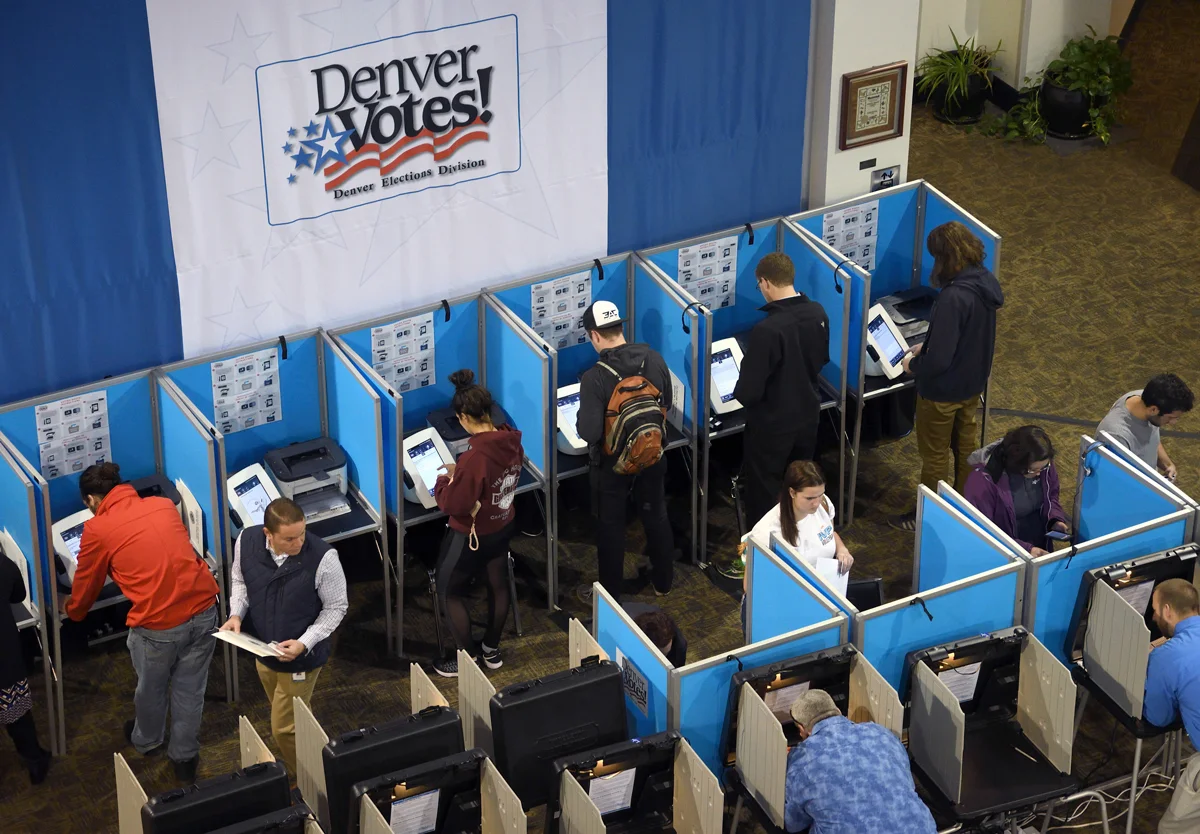
On November 5, millions of Americans will go to voting sites. But not in order to choose the future president, as many believe. Rather - to express the will and vote for those who make a real choice in accordance with the constitution. From the founding of the United States in the 18th century, the country's leader chooses a special body - the Electoral College, while its decisions do not always coincide with the results of popular voting. We understand how the key institute of the American electoral system appeared - one of the most difficult in the world - how it is arranged and why many are unhappy with them.
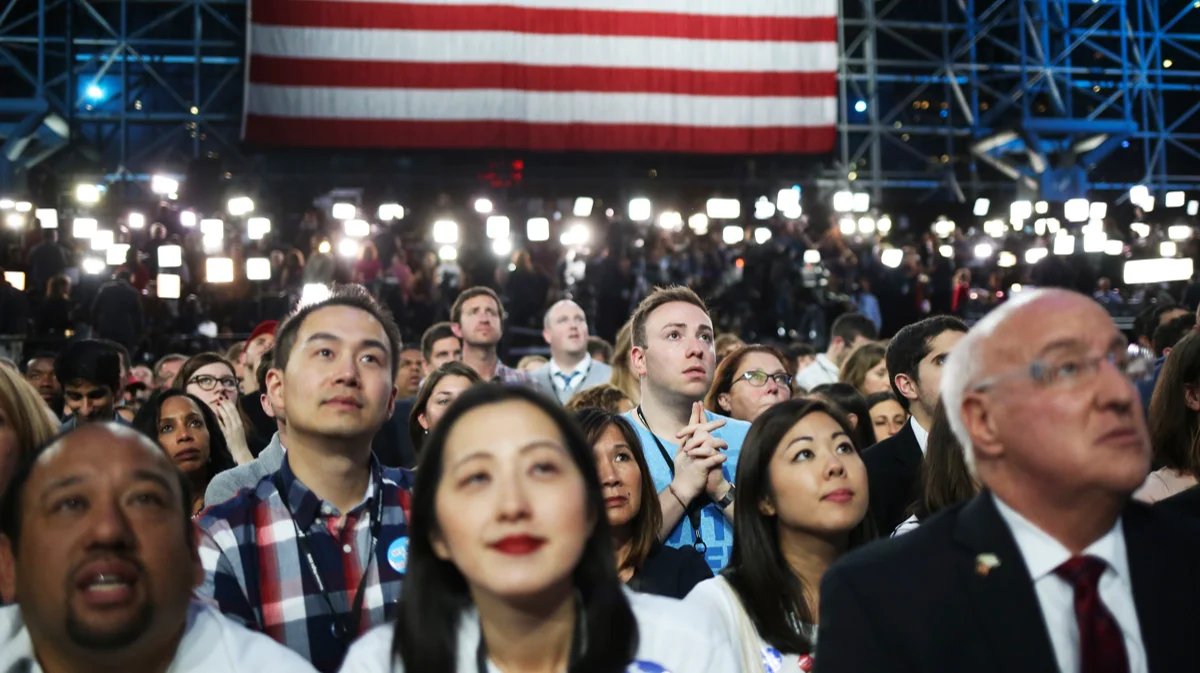
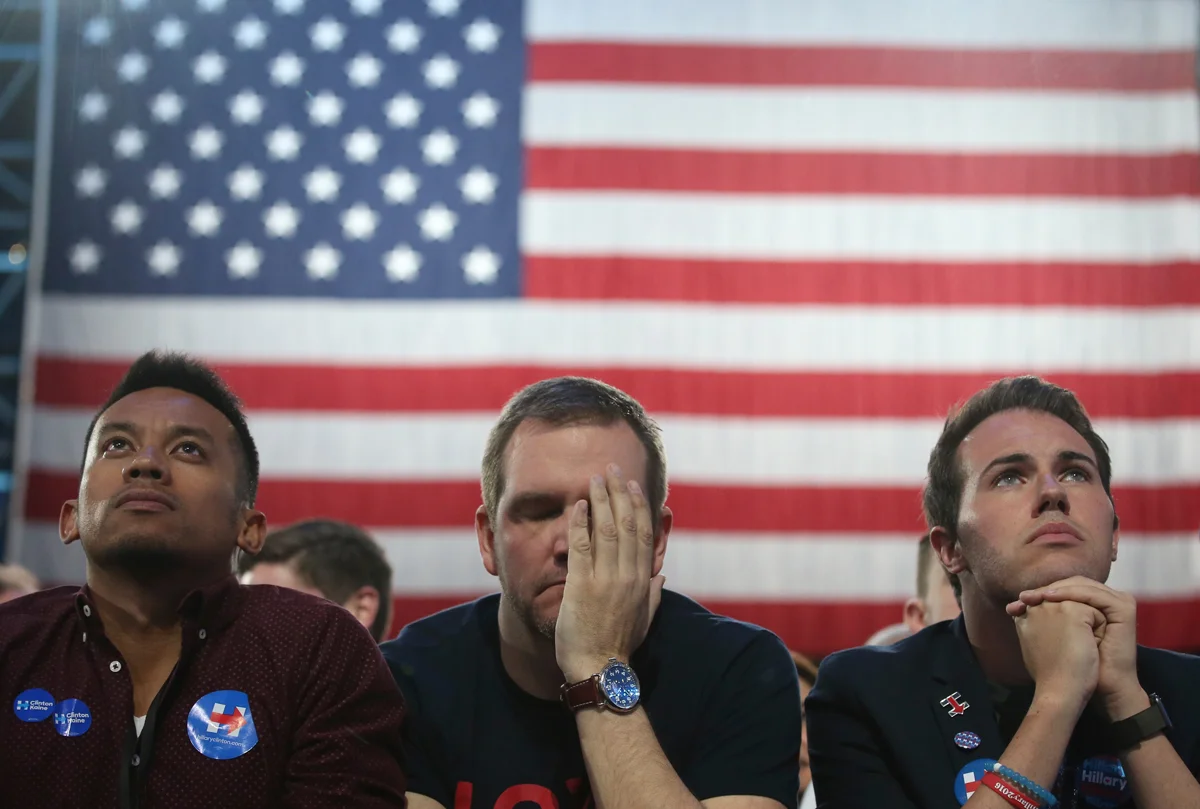
On the night of November 9, 2016, US presidential candidate Hillary Clinton was going to go on stage of a huge Jacob Jayvits conference center in New York. Standing under a high glass ceiling in front of thousands of supporters, she was supposed to announce her victory-the third victory of the Democrats in a row and the first victory in the country's history of candidate. Such was the plan and forecasts of most analysts. However, the unexpected - supporters of another candidate, Donald Trump, showed incredible activity, and Clinton lost.
“Standing under the elegant blue lights on the shores of the Hudson, one could feel what it was like to be a passenger of the Titanic,” the reporter Nathan Heller described the atmosphere in the Jacob Jayvits conference center.
Hass hastily changing the location of the post -crop speech to the New Yorker hotel more compact hall, Clinton humbly congratulated the winner and retired to the liquid applause of the election headquarters.
Clinton described her feelings during the inauguration of Trump in the book “What happened”, published a little less than a year after the election:
“Deep inhalation. I feel the air filling my lungs. This is the right act. The country should see that our democracy is still working, no matter how pain it may be. I exhale. The scream will be later. "
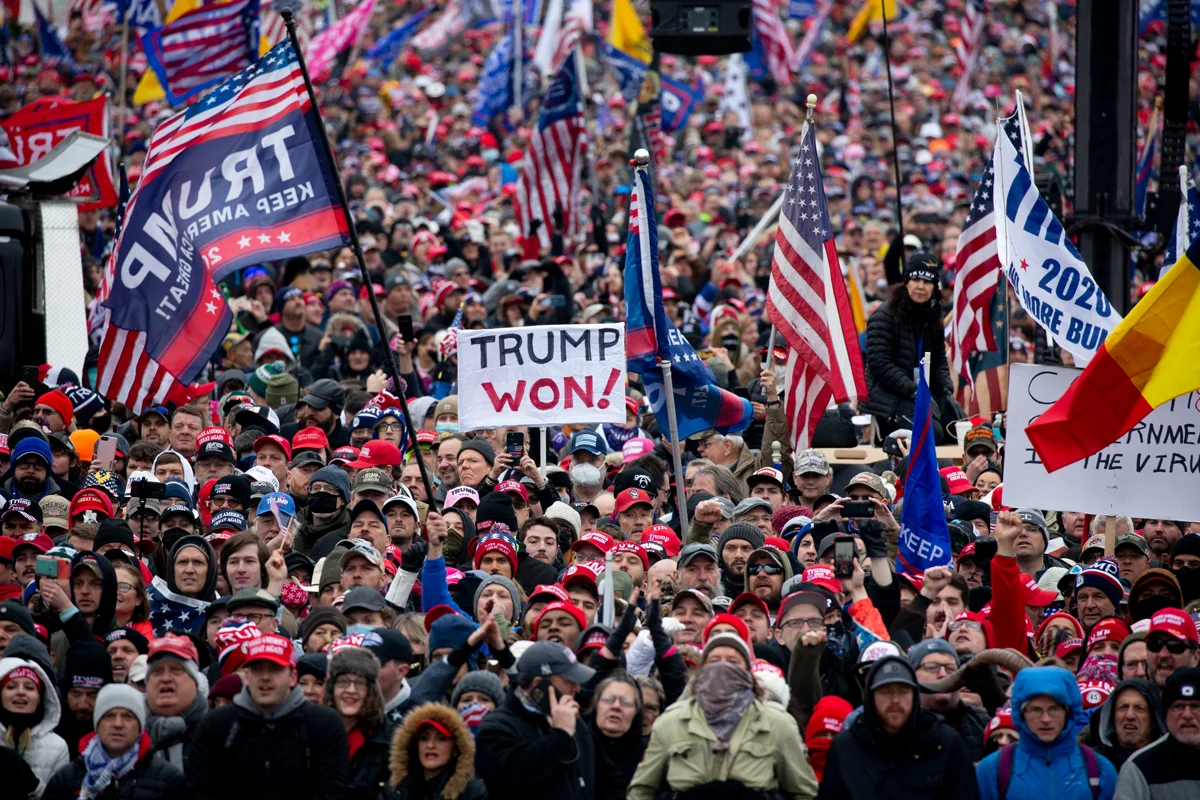
There really was something to scream from: when by December 2016 voters were finally calculated, it became clear: more people voted for Clinton than for Trump, and even more than Obama four years earlier. Her gap from the opponent amounted to 2.8 million votes. But on the side of Trump there were most electors - few famous regional officials and party functionaries.
The 2016 election is not unique, the opinion of the people and electors does not always coincide. In 2000, Albert Mountains half a million votes ahead of George Bush, but did not occupy the treasured chair in the oval office. Three times, a similar situation was repeated in the 19th century, when, contrary to popular vote, the presidents became John Adams, Raterford Hayes and Benjamin Harrison. Nevertheless, the collegium continues to exist, remaining one of the most stable and at the same time the most contradictory institutions of the American political system.
The winner receives everything
The device and general principles of the work of the Board of Electors are described in the second article of the US Constitution:
“Each state is appointed in the manner prescribed by its
legislature, electors, who should be as many as senators and representatives, whom the staff has the right
send to Congress; But not a single senator,
representative or person holding honorary or bringing
The income position established by the United States cannot be appointed electors. ”
In the first in American history, the presidential election, held in the winter of 1788-1789 and brought the victory of George Washington, was attended by 69 electors. By 1964, when the 23rd amendment to the Constitution entered into force, their number reached the current 538: 100-by the number of senators, 435-according to the number of members of the House of Representatives and 3 from the Federal District of Columbia. The number of electors in the Senate Quota is the same for all states - 2, unlike the quota of the House of Representatives, where the number is formed on the basis of the latter before the election of the census. For example, in the current elections, the largest total number of electors - 54 - received California.
There is no separate building for voting the board. According to the federal law , on the first Tuesday after the second Wednesday of December (about six weeks after popular voting), electors gather in the capitals of their states and vote for presidential candidates and vice presidents. In early January, these votes are counted at a joint meeting of the two chambers of the Congress, and the Senate Chairman officially announces the election results. The supporters of Donald Trump tried to disrupt this procedure on January 6, 2021.
Considering that parties vote at their regional congresses (less often within the framework of the party committee), and they, as a rule, have people with their merits to the party, the likelihood that they will vote against the will of the party and its voters, and extremely small.
Moreover, in thirty -eight states there are individual laws that oblige electors to vote in a certain way, including under the threat of a fine or cancellation of the vote and re -voting. Nevertheless, the history of American democracy knows more than one and a half hundred examples of the so -called "incorrect electors." In the 2016 elections, five members of the Board from the Democratic Party voted against Hillary Clinton. However, she lost for another reason, in which the key problem of this political institution lies.
The fact is that in 48 out of 50 US states there is a law, according to which a candidate who won even with a minimum margin receives all 100% of the votes of electors. The exception is only Maine and Nebraska, where voices are distributed on a proportional basis. As a result, millions of votes filled for one candidate, in fact, go to his opponent. This is exactly what happened in 2016: confidently won the popular voting in a number of densely populated states, such as California, New York and Illinois, but with a minimum marching in the rest, Clinton won almost 66 million votes and only 227 votes of electorals. Trump, in turn, got 304 votes of electors at 62.9 million votes.
The system in which the “winner receives everything” has developed in the United States for decades. According to a number of researchers, it was the result of a series of scandals and compromises, which still adversely affect the American political process.
Concession to slave owners
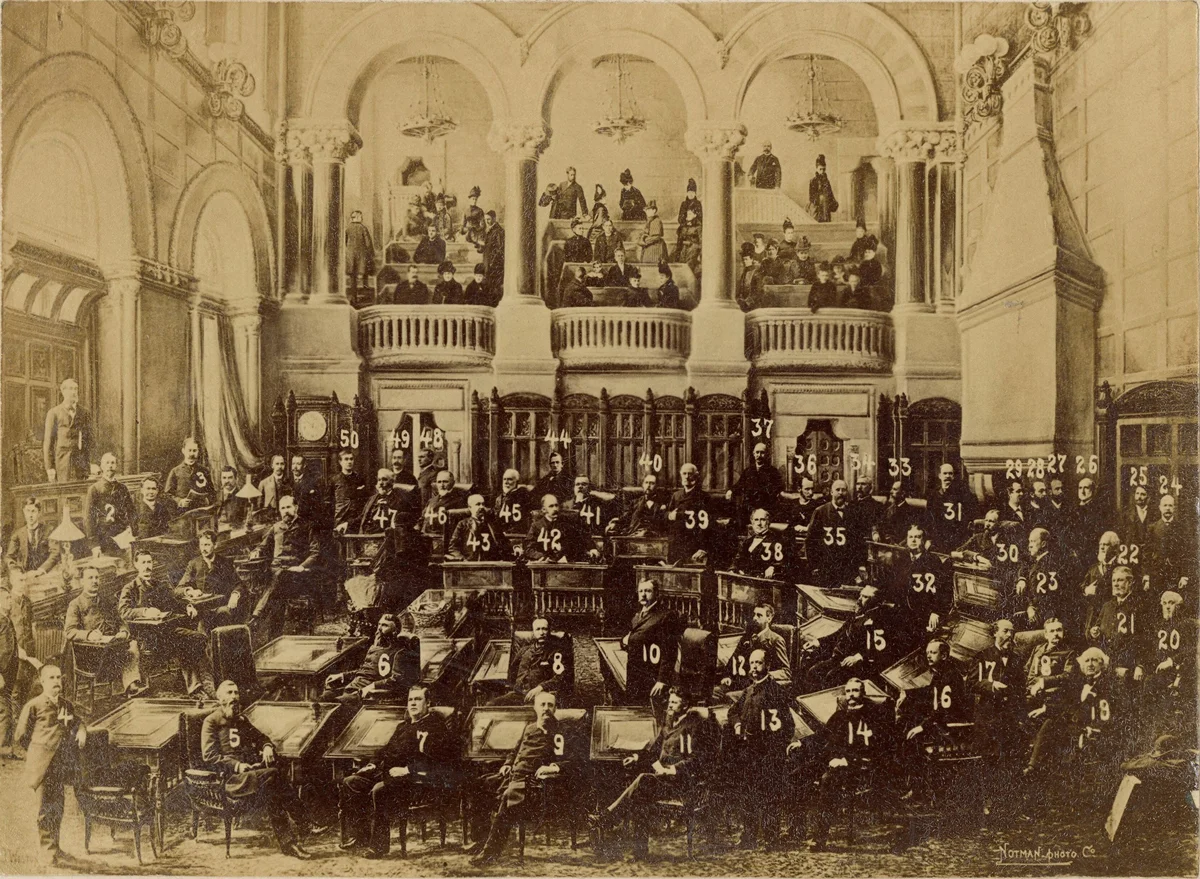
Collegium of electors is the same age as the American Constitution. When in May 1787 the founding fathers gathered in the Philadelphia Capitol to formulate the legislative foundations of young democracy, they had a very vague idea of how its elected system should be arranged. Having defeated one of the most powerful monarchs of Europe, George III, they definitely did not want to see the next king or dictator over themselves, but for a long time they could not decide on which procedure the head of the executive branch should be elected.
As a result of multi -day discussions, three points of view were determined. The president of the country should choose:
US Congress;
state parliaments;
The people during the general vote.
Opponents of the first option indicated that lawmakers would elect a deliberately weak figure and the principle of separation of powers will be violated. The second option had to be rejected for a similar reason - regional elites could take advantage of the chance and chop the activities of the federal government. The congressmen also did not dare to completely give the right to choose the people. Firstly, it was extremely difficult to technically organize full-fledged informing about candidates, especially in rural areas. Secondly, the founding fathers soberly looked at the overall level of education of their citizens, believing that they could well choose some kind of rogue or populist with dictatorial manners. Thirdly, representatives of the southern states were found serious objections, where black slaves made up a significant part of the population, which, by definition, were deprived of the rights of votes. Finally, fourthly-in no country in the world at that time, residents did not choose the head of the executive branch directly.
The discussions lasted all summer of 1787, the delegates risked to burst out without agreement. Only at the beginning of September, the “Great Committee on Post-Deeped Issues”, specially selected to solve this problem, announced to achieve a compromise: the people voted for the electors, and those, some time later, guided not only by popular will, but also by common sense, vote for the president and vice president. As thought, such a procedure was supposed to insure the state from the "excesses" of direct democracy and at least partially align the conditions of the game for the sparsely populated states. In addition to the Institute of Electors, the constitution was introduced in which each slave was equated to the three fifth free people - a kind of concession to the southern states, fearing not to get sufficient influence.
The paragraph of the electors was included in the final project of the Constitution last. At the same time, the compilers of the country's main document left the most important issues at the discretion of the States: how exactly they should be appointed electors and how, when voting the electors themselves, the votes of citizens cast for them should be distributed.
During the first presidential elections of 1788-1789, only three states out of thirteen chose members of the college through popular voting - in the rest they made legislative meetings or voted at the district level for electors. By the middle of the XIX century, universal vote almost supplanted the rest of the forms. In parallel, the evolution of the system of voting votes took place.
As a result of the formation of a bicepartican system and an aggravating struggle between parties, more and more states between a proportional principle and the principle of “winner receives everything” were inclined to the latter:
On the one hand, this simplified the election process, on the other hand, made party support for candidates more significant, not allowing the representatives of small parties to go through this filter. The 1824 elections were the first to move from the proportional principle and applied the principle of “the winner receives everything”. The campaign ended with a scandal: John Cuinsey Adams, the son of the second president of the country John Adams, lost Andrew Jackson in a national vote, but eventually became president as a result of voting in the House of Representatives. The incident then is often called a "corruption transaction."
States - battlefields
Not a single institution of the American political system has been subjected to such fierce criticism as the board of electors. Since the adoption of the Constitution to the US Congress, more than seven hundred amendments aimed at reforming the college have been introduced - more than on any other issue. However, not one of them took the form of the law due to the incredible complexity of the procedure: in order to obtain a statement, the amendment must be proposed by a majority of two-thirds of the vote in both wards of Congress and ratified by three quarters of the states.
The American Association of Lawyers is opposed to the board, claiming that this institution “ignores legal realities”. A survey conducted in August of this year by the research center Pyu showed: 63% of Americans would prefer the president and vice president to choose a direct vote of citizens.
According to Jesse Vegman, a member of the editorial board of the New York Times and the author of the book “Let me choose the President”, the American electoral system was created in a hurry and almost immediately stopped working as it was conceived. In confirmation, Vegman cites a letter from 1823, written by the Father of the Constitution , the fourth US President James Madison, lawyer George Hey. In the text, Madison sharply opens against the emerging vicious practice of states voting on the principle of “the winner receives everything” and insists that every district has the opportunity to elect his electoral.
“Two hundred years after Madison’s letter, the principle of“ the winner receives everything ”still damages our politics and artificially shares us,” says Vegman. - Every four years, the voices of tens of millions of Americans magically disappear to the real presidential election, when 538 electors gather in the capitals of the States across the country to cast their votes for the president.
The “blue” states cast the votes of all voters to the Democrat, regardless of how many Republicans voted for their candidate, the “Reds” are the other way around. ”
The expert notes that as a result, the entire election struggle has been concentrating for many years in several fluctuating states, or, as they are also called, “states - fields of battle” (Battleground States), in which the outcome of the campaign can solve the advantage of several thousand or even hundreds of votes. Only they are important for the election race, and they get the lion's share of the attention of candidates. The list of oscillating states is mobile and depends on the demographic and socio-political picture that is being emerged in the places. Say, in the past elections of 2020, this status gained Georgia, and Ohio and Florida, on the contrary, fell out of the list - in recent years, Republicans dominate. In 2024, the “Fields of the battles” seven: Arizona, Georgia, Michigan, Nevada, North Carolina, Pennsylvania and Wisconsin. In these states, less than 20% of the country's population live.
According to the Associated Press in mid -October, Democrats and Republicans, Voria in the country during their election campaigns, have performed more than 200 times. Three quarters of them fell on the “oscillating states”. Leaders holds Pennsylvania - its candidates visited more than 40 times, in second place Michigan (31), in third - Wisconsin (27). Often, candidates adapt their speeches to the specifics of specific states and even districts important to them. For example, the district of Rasin in the southeast of Wisconsin with a difference of a month was visited by Joe Biden and Donald Trump. The first in May announced the creation of the Microsoft data center there and promised thousands of new jobs, the second in June promised investment in the development of the coast of Lake Michigan and promised to fight corruption.
At the same time, a significant part of the country with its problems and aspirations remains unattended. For example, in Vermont and Aidaho, candidates were never once - the first is traditionally considered a democratic staff, while the second, on the contrary, always preferred the Republicans. A similar situation has developed in Alaska and Hawaii, in the states of Washington, Vaiming and New Mexico, in Northern and South Dakota, Nebrake, Kansas, Oklahom, Louisiana, Mississippi and Missouri. Even Illinois, the sixth of the number of US staff, rarely falls on the radars of election campaigns.
“People feel completely forgotten here,” says Sam Cunningham, former mayor of the Illinoi city of Wokigan, fifty kilometers from Racine, who was spoiled by the attention of Racine. After several large companies left the city level of unemployment and poverty here significantly exceeds the average in the country.
“The point is not so much in candidates as in the anti -democratic board of electors,” explains the chairman of the Democratic Party of the district, Wokigan Matt Muchouksha. “It is a pity that the votes of some voters are more important than others.”
Board of schism
The main supporters of the college of electors are Republicans, notes the-American political scientist Jan Veselov, author of the Telegram channel One Big Union .
“The system in its current form allows them to win the elections without gaining the majority of votes that we saw in 2000 and 2016,” the expert says. - Although they argue their position differently: supposedly the collegium allows you to protect the interests of the sparsely populated rural states, to make their votes more audible at the federal level. Formally, it is, but in fact, densely populated industrialized states with large urban agglomerations are still crucial. The democrats, on the contrary, are not interesting and not needed, they consider this system unfair. ”
A curious situation is formed in Nebroka - one of the last two states where a proportional system for the distribution of votes of electors operates. Губернатор-республиканец Джеймс Пиллен, ряд его однопартийцев-сенаторов и сам Дональд Трамп пытаются пролоббировать принятие там принципа «победитель получает все». В случае минимальной победы Трампа все пять голосов выборщиков от Небраски достанутся ему, и при нынешнем небольшом отрыве Харрис — согласно опросам , сейчас она опережает конкурента на 7 голосов выборщиков — это может сыграть решающую роль. Однако, на пути к реализации этого плана встал сенатор Майк Макдоннел. Этот республиканец-неофит, лишь в этом году покинувший стан демократов, упорно выступает против воли нового партийного руководства. Свою позицию он объясняет кратко: «Менять правила игры за минуты до ее завершения не в стиле Небраски».
По словам Яна Веселова, прямо сейчас в Штатах набирает обороты движение за реформу избирательной системы. В качестве одной из альтернатив рассматривается так называемый «Национальный договор между штатами о всенародном голосовании» (The National Popular Vote Interstate Compact (NPVIC)), подразумевающий, что все штаты передают голоса своих выборщиков кандидату, победившему в ходе всенародного голосования. Пока к соглашению присоединились лишь 17 штатов, на которые приходится 209 голосов выборщиков. Против соглашения ожидаемо выступают республиканские штаты, в частности Техас и Флорида, так что пока его принятие под вопросом.
Есть шанс, что текущая избирательная кампания завершится по сценарию 2016 года — Камала Харрис вполне может завоевать большинство голосов граждан, проиграв при этом Коллегию выборщиков и выборы Дональду Трампу.
«Избирательная система США в ее нынешнем виде усугубляет раскол в американском обществе, — говорит Ян Веселов, — демократам нет никакого дела до того, что происходит в Алабаме или Миссисипи, где десятилетиями правят бал республиканцы, республиканцы почти не уделяют внимания Нью-Йорку и Калифорнии. Беспартийные избиратели смотрят на все это с недоумением и не находят никого, кто бы отразил их взгляды. На мой взгляд, если Штаты вовсе избавятся от Коллегии выборщиков, они ничего не потеряют. Просто статут более демократичной страной. К тому же у политиков будет больше стимула ездить по всей стране, а не ограничиваться несколькими «полями сражений»».