
Translated material
The effect of Alexei Navalny
What is the power of the book "Patriot"
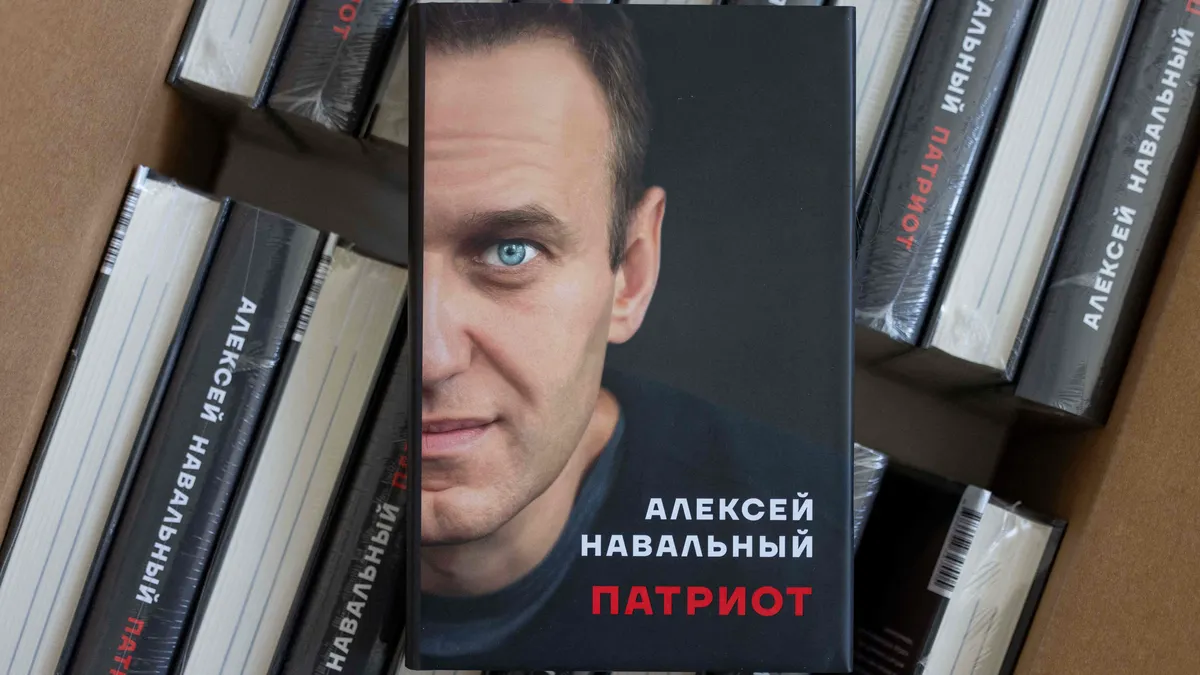
Photo: Wojtek Radwanski / AFP / Scanpix / Leta
In 2013, a famous fighter with an apartheid and former President of South Africa Nelson Mandela died. The Internet responded then strangely: many people assured that they clearly remembered the news of the death of the Mandela in prison either in the late eighties or in the early nineties. Later, the “Mandela effect” began to denote the situation of false memories of something supposedly widely known: children's books , clothing brands , Rodin’s sculpture and even replicas from famous films like “Star Wars”. The “Mandela’s effect” explain in different ways: scientists tend to see another cognitive distortion in it, and Internet users speculate about the existence of parallel realities.
Alexei Navalny so much influenced the Russian political life that even after death he continues to be her main figure.
It will hardly be an exaggeration to say that the actions of the Russian opposition after February 16, 2024 will be evaluated in terms of how it disposed of the legacy of Navalny. The simultaneous output of the book “Patriot” in 26 languages in 36 countries and its instant status of a bestseller, six months after the death of the author, make it like Navalny did not die at all and continues to inspire the free world. It is just right to introduce the term “Navalny effect”.
“Patriot” in this sense simultaneously forces to cry and inspires hope. The book supports those who hope to see the notorious “beautiful Russia of the future”, but we have to regret that we will no longer hear the branded humor of Navalny.
One of the episodes of recovery in the Berlin clinic "Shary" in the description of Navalny looked like this:
“Once, when I was already well oriented in reality and even gradually began to remember English, I asked the nurse of water. She said that she would give it to me as soon as I write this word, - and held out the pen. I remembered how “water” would be in English, but how it is written-I had no idea. I tried it and this way - nothing came of it. I began to get angry, again irritably demanded water. “Try to write again,” the nurse firmly ordered me. I wore a handle on paper, finally fell into rabies and in my hearts I suddenly wrote the word “Fuck” that arose in my subconscious. And with some gloating, but still more proudly handed a piece of paper to the nurse. She looked at me sympathetically: I wrote “fkuc”. ”
Memoirs are memoirs, and chapters about the childhood and youth of Navalny precede the story about the poisoning of 2020 and its consequences. They are written excitingly and brightly (we lost not only a big politician, but also a big writer) and linse the events from the author’s life with political life in the country, revealing how his political views were transformed. Those who followed the latest politics initiatives will not surprise that a significant part of the text is devoted to criticizing the reforms of the nineties.
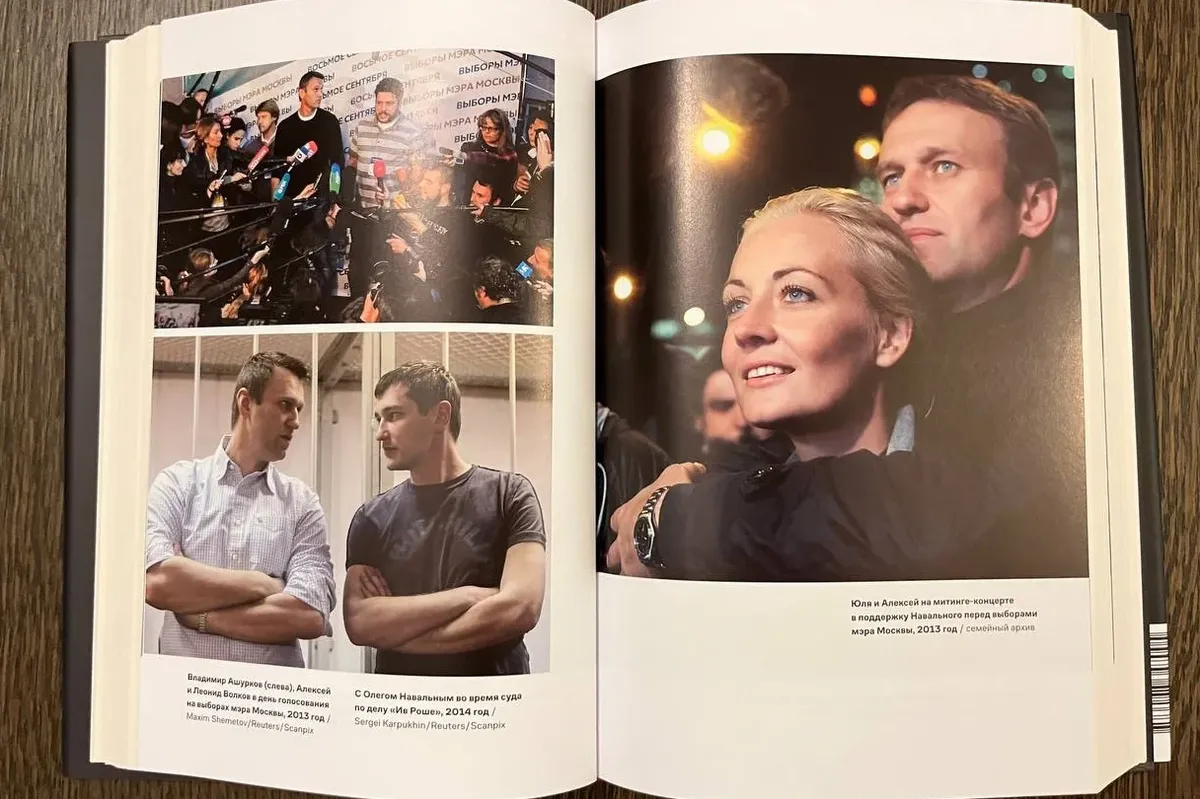
Disappointment in Yeltsin was almost the main decisive feeling for the young Navalny - and, according to him, the result of two observations was: how much corruption became, including in RUDN, where the author studied for a lawyer, and in everyday life. It was impossible to customize the car or register it without bureaucratic delays, which could only be avoided with the help of bribes. At the same time, Navalny watched as the oligarch is more and more, while ordinary Russians continued to barely make ends meet. Even the growth of the Putin National Conservative bureaucracy, ready to comply with the orders of the authorities, while they are allowed to a conditional feeder (or “pipe”, if you like), Navalny connects with the nineties: there was a washing of talents that are not ready to integrate into a similar order. After all, while physicists and engineers studied at poor universities and earned crumbs, they came up with innovations with which they later left west. And future “effective managers” of the Putin era settled in legal and economic faculties and, instead of real knowledge, studied blat and corruption schemes.
Here, the policy of the politician coincides with the conclusions of the FBK film “Traitors”, which - as is now obvious - is partly based on the scenario sketches of Navalny himself.
“We should not repeat this mistake [U -turn from democracy to authoritarianism under Yeltsin]. Putin is not eternal, and we do not know what the scenario of his departure will be. And from our own history we know how great the temptation to close our eyes to the sins of the one we consider “our boyfriend”. Therefore, I would really like this feeling of “karmic retribution” [Putin’s reign as the result of the policy of the nineties] shared as many people as possible with me. ”
There are also a lot about the formation of Navalny as a popular blogger, and then a street policy in Patriot, but these events from his life are already known to the Russian reader, but they may be of interest to the reader of the Western-it was not for nothing that the promotional campaign of the book unfolded primarily in Europe and the USA.
The book also answers questions that still excite the Western audience. Was Navalny a nationalist? No, but he considered cooperation with the moderate right part of the strategy in the struggle against Putin.
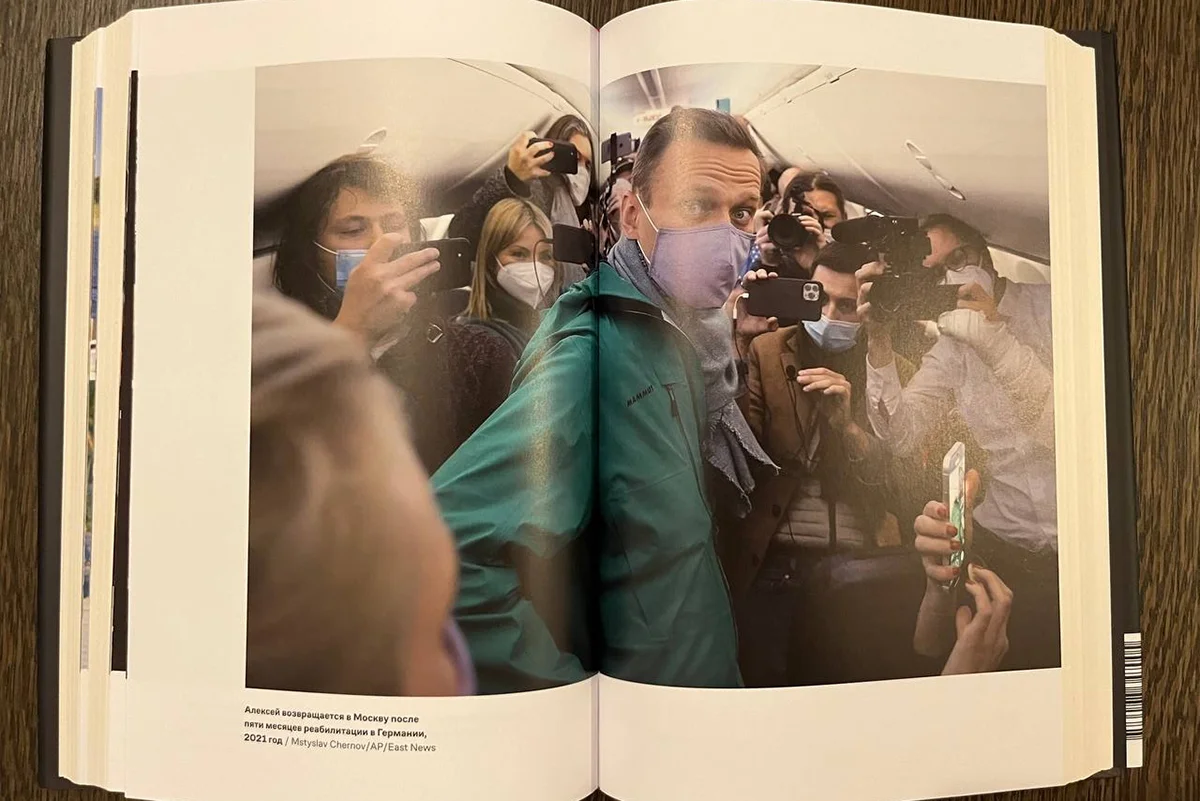
Why did Navalny return to Russia after treatment in “Shary”? Because I wanted to celebrate the New Year in his homeland (an unexpected answer, but just like that), and also because he considered the possibility of a second attempt to kill unlikely. What did Navalny dream of? Make Russia not only free, but also happy.
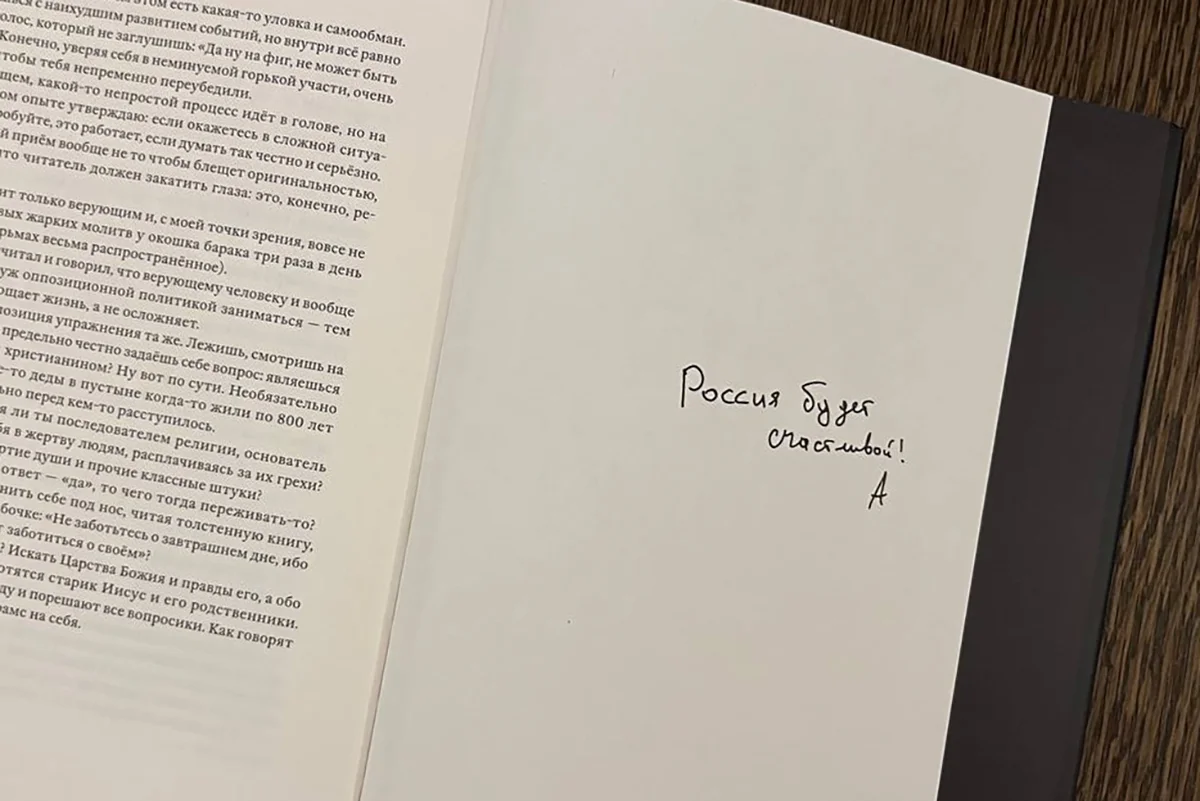
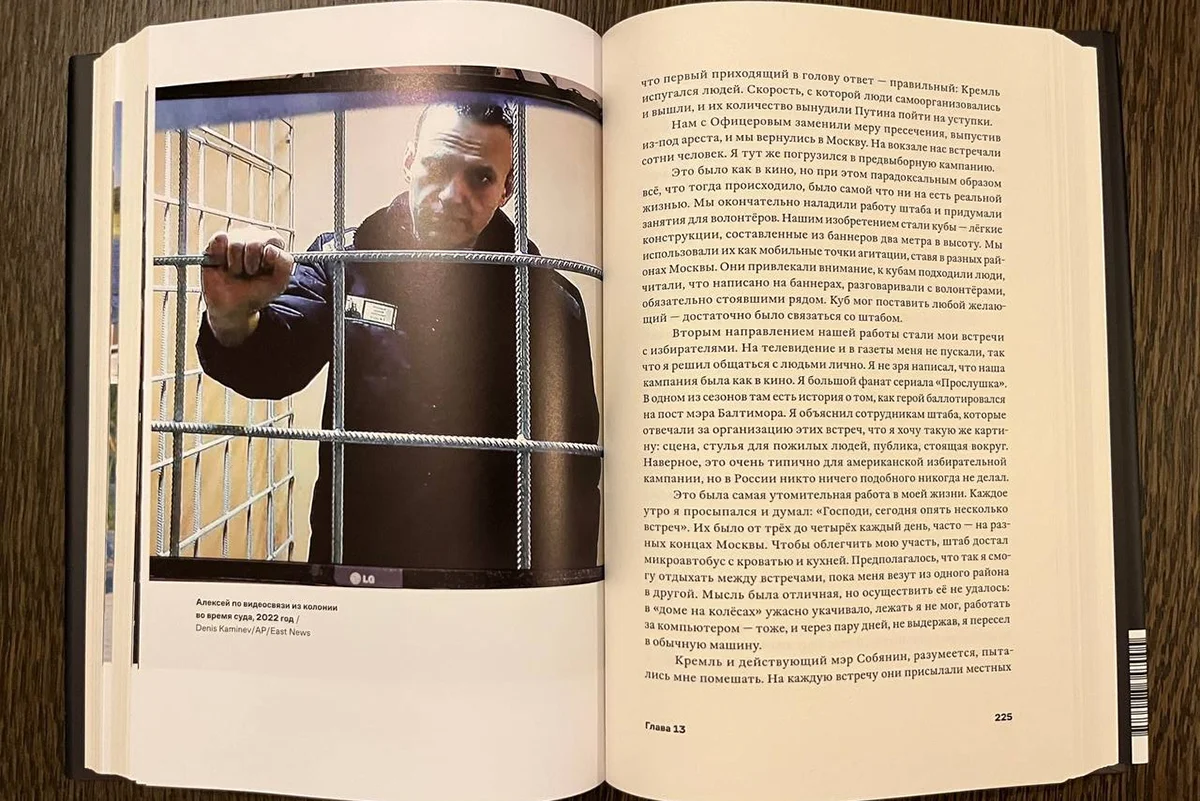
The last part of the book, namely prison diaries for the Russian reader. Navalny was worried that they would seem temporary, but this did not happen. The final part of the Patriot is a real monument to the fight against the system, full of accurate observations about the state of the Russian prison and sad self -irony.
“We look today“ Tor. Ragnarok ”. There is an uprising on the planet with a tyrannical rule. The mannered ruler asks:
- What's happening?
Advisor:
- The slaves rebelled.
- Can you softer? Without this terrible word on "p".
- Sorry, sovereign. Employed prisoners.
This is about us. Employed prisoners. "
And here is one more thing:
“Here, in prison, of course, expanse for a psychologist. You can protect one hundred dissertations according to the amazing ability of a person to adapt and extract pleasure from any garbage. ”
The style of Navalny is witty-and this is despite the fact that prison diaries leave, in general, an oppressive impression. Navalny is not provided with medical care, they are systematically mocking it, deprived of communication with cellmates and protection, surveillance of 24/7, and after the next sentence they torment the penalty insulator. These are gloomy pages, which at the same time read as the life of a Christian martyr suffering for the sake of faith. The comparison is banal and slightly stretched, but no less truthful - there is also about the arrival of Navalny to faith in God (who would have thought that in the memoirs of Alexei there would be an episode with a visit to the church, but it is), and about the unbending faith in free Russia, which he did not refuse to the last.
Patriot is a strange book. At the same time, memoirs, a political manifesto and a prison diary.
It is sewn from those book passages that Navalny has been written in the hospital in recent years or transferred to the will. Due to the circumstances, it cannot but read as a monument, but at the same time the image of Navalny does not bronze in it, even on the contrary: here he is, a strong person who resists pressure and writes a book, and it does not matter that it came out structurally very strange. The main thing is that it is.
The question here does not arise for the book, but by the time it comes out. Around the book, a scandal immediately erupted: if for foreign readers the purchase was available on Amazon and other online platforms, in Russian the book can only be bought on a separate FBK website, with the provision of their data, that some buyers considered the threat, taking into account the non-humorous probability of getting a criminal at home. In response, Julia Navalny noted that on Amazon, the buyer also needs to leave his data, and she considered a separate site the optimal area for the sale of the first circulation of the book. In response, some users X recalled the situations of draining data from the sites of the FBK and Navalny.
This scandal says a lot about the situation in which the opposition was at the end of 2024. The prospects look, frankly, dull. The war in Ukraine lasts two and a half years, and even the contours of its ending are not yet visible. Support for Russian opposition initiatives is reduced, and the opposition itself is shaking scandals: Leonida Nevzlin was accused of attempted Leonid Volkov and Alexander Petrachkov, Maxim Katz accused the FBK of corruption. The Russians who remained in the country learn Ezopov language and hidden tactics of resistance and are not ready to fight Putin openly. If the darkest hour before dawn, as a well -known proverb says, then we are just this dark hour and live.
The book of Navalny in this sense can become a guide for hope: if he fought for a happy, free Russia and did not stop fighting even in a monstrous colony behind the polar circle - it means that we can continue to fight those ways that are available to us. Maybe this is an illusion or psychological self -deception - I prefer to call it a “Navalny effect”.