
Translated material
How people repressed in war
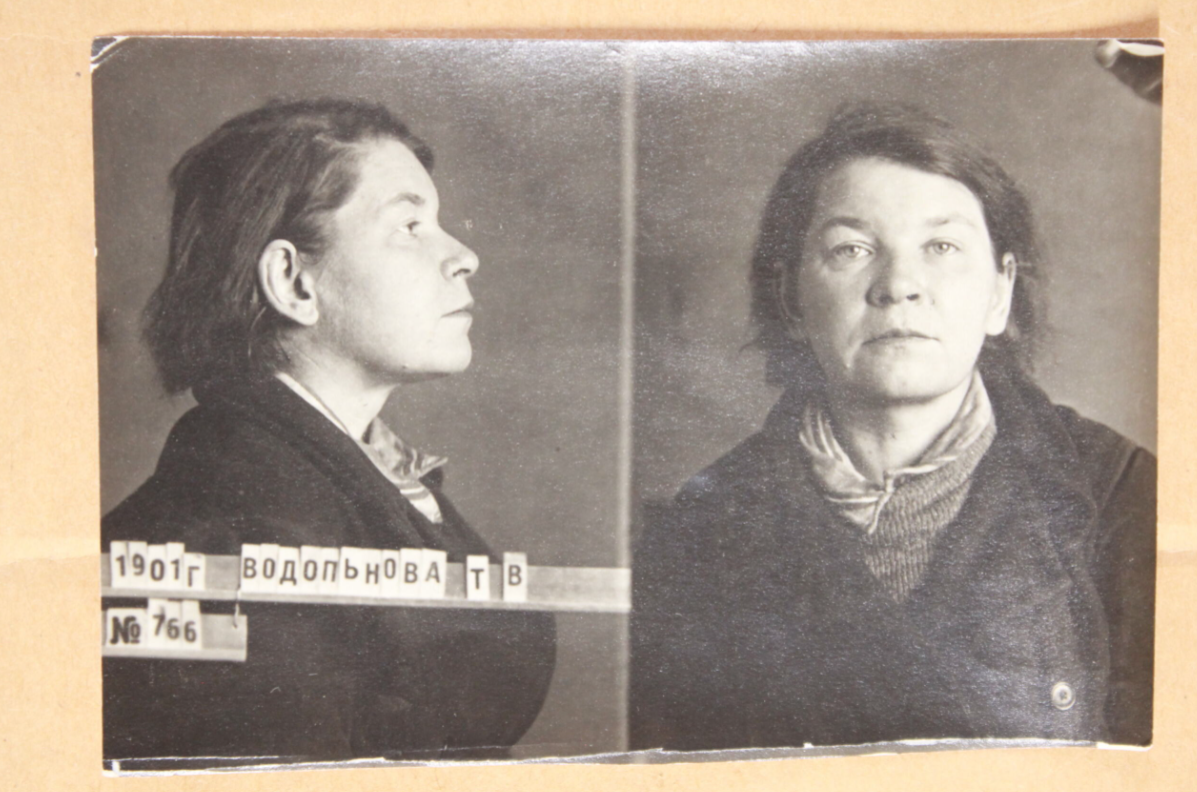
The stories of people who were repressed during the Great Patriotic War
Briefly
October 30 - Memorial Day of the victims of political repression. According to historians, almost 12 million people were injured from Soviet political terror, of which 4 million 700 thousand people were arrested on charges of anti -Soviet activities, 1 million people were shot. Even the Great Patriotic War did not stop repression-compared to the 1939-40s, it even strengthened them, explains the historian of the Memorial*. Often, even those who defended the country during the Great Patriotic War were considered “enemies”. The “line” studied archival materials and tells the stories of three ordinary Muscovites who voluntarily went to the militia and fell into the millstones of military repression.Tatyana Vodopyanova. Five years of Karlag for life in occupation
Accusation: Article 58-1 B of the Criminal Code of the RSFSR, "counter-revolutionary activity, treason committed by military personnel."
When the war began, the 41-year-old Muscovite Tatyana worked in the Department of Heavenly Mechanics The section of astronomy, which studies the laws of the movement of celestial bodies. At the Astronomical Institute. P.K. Shtenberg. I studied the orbit of comets, printed about 10 scientific papers.
In the first month of the war, Vodopyanova voluntarily entered the school of nurses at Moscow State University and in September 1941 was appointed a surgical sister in the 8th Krasnopresnensky Division.
The medical and sanitary battalion fell under the shelling of the German army in the Smolensk region, part of the cars, people and convoys were lost. The battle began. The wounded were taken to the forest - Tatyana pulled out men from the fire zone and laid near the trees, covering with blankets from the ranks of the murdered Red Army soldiers. She could no longer help: the dressing material was over.
“At this time, a group of the military approached me, among them were a general and a commissar in a leather coat. They invited me to go with them, and leave the wounded in place. The general said: “Tomorrow you will come for them by car,” Tatyana recalls.
Tatyana, taking the dressing material, returned to the wounded. Then she began to make his way back to her. For a long time “crawled along the snow and bumps of peat works” and reached the village of Petropavlovsky 30 km from Naro-Fominsk. An hour later the Germans entered there.
Tatyana told the German officer that she was an astronomer, and the director of the Berlin Computing Institute of Professor Strek, the director of the Berlin computational institute. The Germans called the women “Frau astronomer” and allowed to settle in the house of a local resident of Stepanida, where 15 German soldiers lived.
Tatyana knew the German language, but did not advertise it. For the first time, she spoke on him to distract the attention of the Germans and give the opportunity to escape to the sick Russian soldier - they wanted to shoot him. Subsequently, thanks to knowledge of the language, a woman helped local residents solve problems with the occupation authorities.
In January 1942, the Red Army entered the village, and Vodopyanov was arrested for aiding the Nazis and sent to Butyrskaya prison. She was accused of “throwing the wounded fighters to the arbitrariness of the wounded, she remained in the occupied territory, worked with the Germans as a translator, and during interrogation in the German headquarters reported her connection with German scientists.
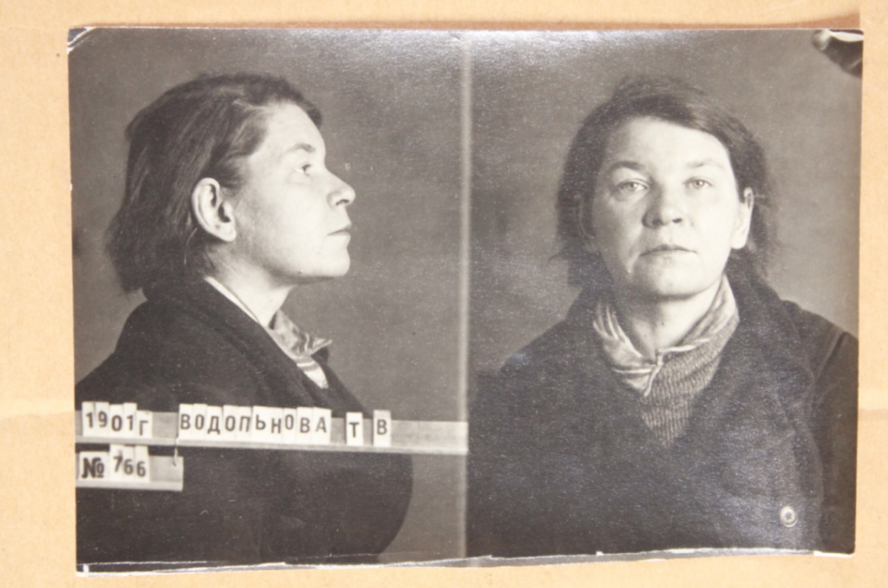
Witness Fedor Shanskov, a 36-year-old peasant with 4 classes of education, testified that Tatyana allegedly received a bag of bread from the German commandant. The remaining residents of the village refuted this, but the words of Chanskov fell into an indictment.
“The main distinguishing feature of wartime repressions is that a large number of people were in the occupied territories. After the territories managed to conquer, they found themselves under the blow in connection with Article 58 - in the part that concerned treason to the homeland and various forms of collaborations, ”the historian of the Memorial explains.
Tatyana pleaded guilty. In July 1942, the woman was sentenced to five years of camps and sent to Karlag one of the largest forces of the USSR in 1930-1959, was located in the Karaganda region in Kazakhstan. . There, as a “difficult criminal” was put on earthwork. Vodopyanova quickly fell ill with a pellagra disease caused by a lack of vitamins, the main symptoms - redness, peeling of the skin, hair loss, ulceration in the tongue, diarrhea, paralysis, insomnia, dementia. And received disability.
Two years later, Tatyana petitioned for a revision of her case, but did not receive an answer. Then she turned to the People's Commissar of the Interior of the USSR Lavrenty Beria - to no avail.
In 1945, Tatyana was recognized as innocent: the audit in the case showed that the prosecution was based only on her confessions that she refused. But Vodopyanov was not released from the camp: she allegedly conducted "pro -fascist agitation among the prisoners, in which she praised the Germans and their army."
Five years later, in 1947, Tatyana was released. Due to the uninhabited criminal record, she was forbidden to live in large cities-but only there were astronomical observatories. “All my future life from 1947 to 1953 was a struggle for a return to science. My criminal record did not allow me to be enrolled in the states of the astronomical institution, and I earned myself the means of the existence of the work to which I was allowed: I was a housekeeper, gardener, accountant, nurse, and black worker, ”wrote Tatyana.
She was refused a criminal record several times. Even a letter to Stalin on six sheets did not help, in which Tatyana told her story - including explaining that she did not work as a translator, but spoke in German, only to help the soldier whom they wanted to shoot.
When in 1953 the government decree on the amnesty, Vodopyanova worked as the meter of the forest in Tatarstan. “Hope to return to science gave me strength,” she recalls. 52-year-old Tatyana went to Kyiv, where, under the leadership of Professor Sergei of the All-Suda, a catalog of absolute values of comets A year later, she was taken to the state for the post of senior laboratory assistant.
In 1956, Tatyana wrote a statement of rehabilitation, where she asked to remove the “brand of a German invaders” from her: “I'm 55 years old now. I get an old -age pension, but, despite the undermined health, I continue to work. <...> The few years that remained me, I would like to live with the consciousness of recognizing my innocence from the government and Soviet society. ”
The term in the Soviet camp, the historian of the Memorial notes, was a huge stigma. “The people who suffered at the front received a second punishment, getting to the camp in the Soviet Union. Even if they managed to survive this camp, it was a stigma for life. ”
On October 5, 1956, Tatyana Vodopyanova was rehabilitated. The military prosecutor found that in her actions “a criminal offense was not seen, because she came to the Germans for reasons independent of her, and while in the occupation, she did not commit any crimes.”
Lev Mishchenko. Ten years of camps for German captivity
Accusation: Article 58-1 B of the Criminal Code of the RSFSR, "counter-revolutionary activity, treason committed by military personnel."
Lev Mishchenko was born in Moscow in 1917. When the boy was four years old, his parents were arrested and soon shot as hostages as a widespread practice in the civil war. People, mainly from former privileged classes, were taken hostage. In the case of anti -Soviet speeches, they were shot. Red Army.
In July 1941, having graduated from the Faculty of Physics of Moscow State University, Leo went to the militia. In the Smolensk region, he was appointed an officer of communications and sent to transfer to commanders of neighboring positions an order to "stay up to further orders."
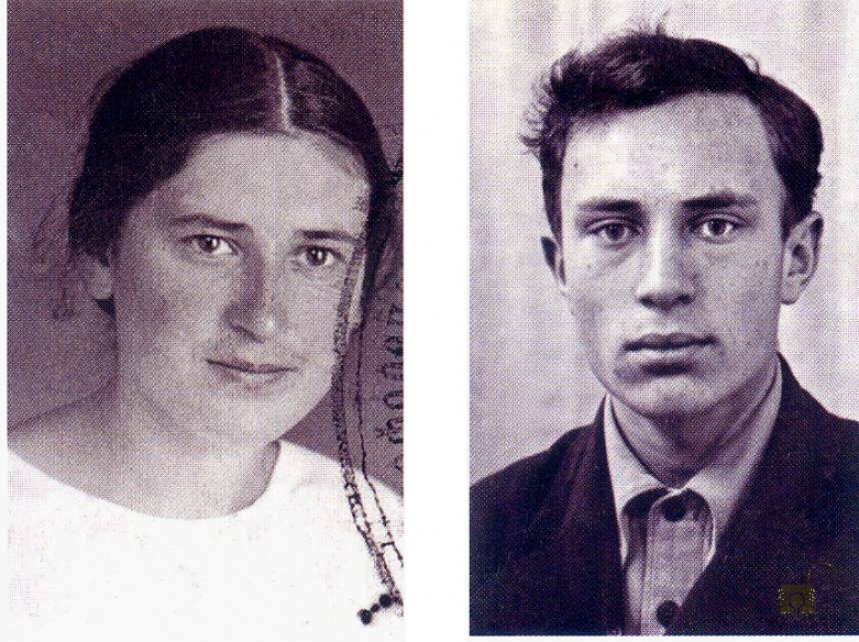
For more than a day, Mishchenko made his way through the forest, bypassing the villages occupied by the Germans. At dawn he woke up from the blow - a German soldier stood above him. “It turned out that I, going into the forest, walked not in a straight line, but circled and went back almost to the edge of the edge. So the captivity began. ”
In the camp near Katynya Mishchenko and other prisoners, they offered to "undergo training, cross the front and return with the necessary Germans." Mishchenko refused, and in February 1942 he and other officers were sent to the “Educational Camp” in Berlin.
“We were explained that <...> here they will conduct classes with us: to clarify the essence of the war and the goals of the Germans to arrange a new order in Europe, so that we can explain this to others later in our working teams.”
In May, Mishchenko was brought to Oshaz - a town of 60 km from Leipzig, where he began to work at the factory by a locksmith. There , one of the largest collaborationist armed groups created by the leadership of Nazi Germany from among the Soviet prisoners of war in 1942-1944, they tried to recruit him into the Russian liberation army. Under the command of General Vlasov. After that, Mishchenko, along with three other prisoners, escaped from the camp, but after three weeks the fugitives were caught.
In the summer of 1944, he was transferred to a branch of Buchenwald in Leipzig. After brief training in the basics of metalworking professions, prisoners were sent to work on a salt shaft with a depth of 400 meters. “Change of eleven hours, an hour to descent and rise. Masters and manufacturers of machine tools-civilian Germans-workers-treated us well. One of them brought me to read Lessing and Goethe, ”Mishchenko recalls.
On the night of April 12, 1945, the whole camp, about a thousand people, was built on a parade ground. “It was felt that the front was close: in the afternoon we heard the approaching artillery shooting.” Mishchenko, who was exhausted and weighed “a little more than 40 kilograms,” decided to flee. Near the city of Eisleben, he met American soldiers.
He was offered to leave for the USA: "You have communism in Russia, and under communism there is no democracy." But Mishchenko wanted to return home. In early summer, repatriation began, Soviet military representatives came to Germany. Mishchenko recalls that they “held alienated” and they did not communicate with any of the repatriates.
Soon Mishchenko was accused of espionage and arrested: allegedly he brought intelligence to the Germans through the front line. “I was not afraid of the execution, sometimes I was attacked by despair from the fact that people close to me, having learned, would believe in my guilt.”
The situation of people who visited German captivity were forced to work in Germany or simply lived in the occupied territories, was especially difficult. “All of them later passed through Soviet filtration. People who were freed from the Nazi camp went through special institutions of the NKVD of the USSR through the verification and filtration camps to verify and select people who were in German captivity in the occupied territory, as well as those who fought as part of the Allied armies. But even after that, they often demanded to regularly go to the district NKVD and testify, ”the historian of the Memorial notes.
When it turned out that Mishchenko’s espionage was innocent, he was built a new accusation - treason to his homeland and fascist propaganda. Mishchenko really took the propagandists' courses and was appointed assistant to the propagandist, but did not conduct propaganda work among prisoners of war. The investigator refused to attract witnesses who would confirm his innocence: "We do not need to listen to them, they are the same bastards as you."
In October 1945, the investigator said that he would soon be referred to court. He "held a captivating friendly" and promised that Mishchenko would be released, he would go to Moscow and "would engage in his physics."
“After a couple of days, the investigator <...> read me an indictment. And here I showed unforgivable simple -mindedness: trusting him, I signed the text I read to me - out of politeness! “Without reading it.”
In court, Mishchenko heard the formulation of the accusation - they directly contradicted his testimony. The meeting lasted 15 minutes. The man was sentenced to execution, but replaced the punishment with 10 years of the camp.
Mishchenko was serving the term in Pechora - he worked as an electrician at the timber plant. “Life in the camp, very difficult in 1946, improved over the years. It became more spacious in the barracks <...> the film award began to come. ... I and my friends were incredibly lucky that we <...> were not in a terrible number of victims of the North Pecheric construction site: on realistic estimates, under each impatient of Kotlac-Vorkuta, the dead lies. "
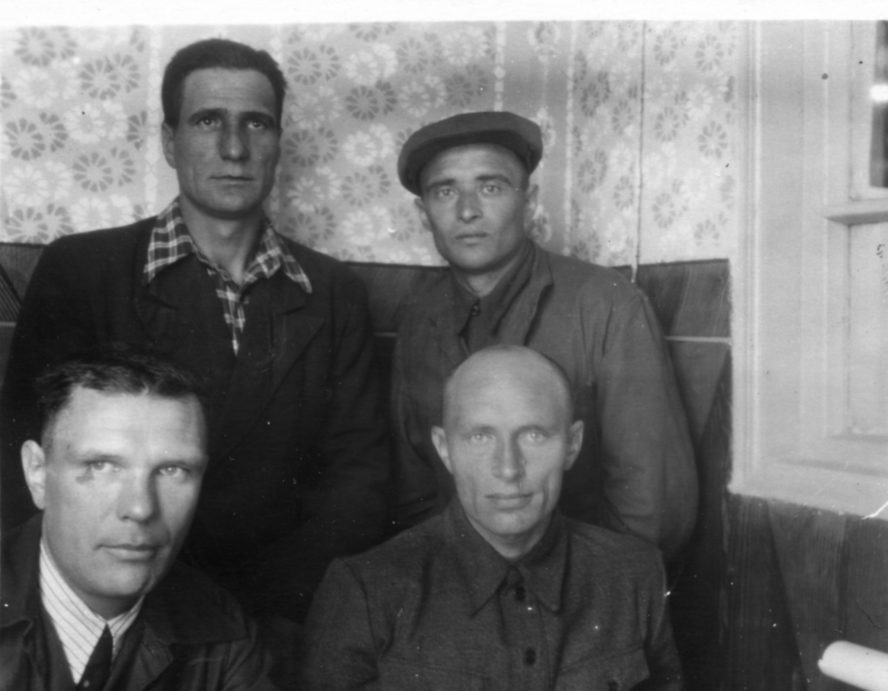
Mishchenko spent nine years in the camp and for one month and was released on the tests in the forced labor camps, there was a practice of “tests”. She assumed that “workdays” are accrued for successful work and re -exceed the plan, which reduce the overall term of imprisonment. July 17, 1954. The expectation of freedom, he writes, "left a persistent trace in the psyche." Even after 40 years, he dreamed that he could not leave Pechora: there is no one to draw up documents, he could not find his things, then trains do not go.
Mishchenko was banned from living in his native Moscow, but he secretly settled with his wife Svetlana Ivanova, with whom he corresponded all the years of imprisonment. A year later, the man was rehabilitated. Until the end of his life, he worked as an engineer at the Physpribor plant and at the Research Institute of Nuclear Physics at Moscow State University.
Lev Mishchenko lived 91 years and died in Moscow in 2008. His memories of the experienced are preserved in the book " While I Remember ."
Zoya Beketova. Forced treatment for criticism of power
Accusation: Article 58 paragraph 10 Part 1 of the Criminal Code of the RSFSR, “propaganda or agitation containing a call for overthrow, undermining or weakening of the Soviet regime”
The native of Voronezh Zoya Beketov was orphaned early and brought up in an orphanage. After graduating from school, she worked in Moscow with a weaver at the Red Rose factory and a librarian. In 1929, Zoya married, gave birth to three children.
At the beginning of the war, Beketova participated in the defense of Moscow, for which she received the medal “for the defense of Moscow”, including civilians who defended the city for at least a month from October 19, 1941 to January 25, 1942. . In 1942, when Beketova was 35 years old, she first ended up in a psychiatric hospital. Despite the war, “cleaning” continued in the country. Against the backdrop of fear of arrest, a woman began to attacks anxiety and anxiety. Beketova was diagnosed with schizophrenia.
“The sentences depended greatly on the territory. If in the occupied territories there were cases of treason and collaboration, then far from the front people continued to arrest for anti-Soviet agitation and disloyal conversations about the front-these affairs continued in the tradition of the late 1930s, ”says the historian of the Memorial.
In August 1946, Zoya wrote a statement about voluntary departure from the party, where "set out anti -Soviet sentiments." She also sent a letter to the Mytishchi City Council, putting her medal to him “For the Defense of Moscow”. Zoya wrote that the authorities forgot about the people, and as a reward for the victory in the war, Stalin presented people with increasing bread prices.
In April 1947, Beketov was again hospitalized, in the hospital she tried to commit suicide. A year later, having left the hospital, Zoya settled at the Los station near Moscow and got a cleaner in the House of Culture. There she was arrested in December 1948. During the search, Beketova found materials from an “anti -Soviet slanderous nature”.
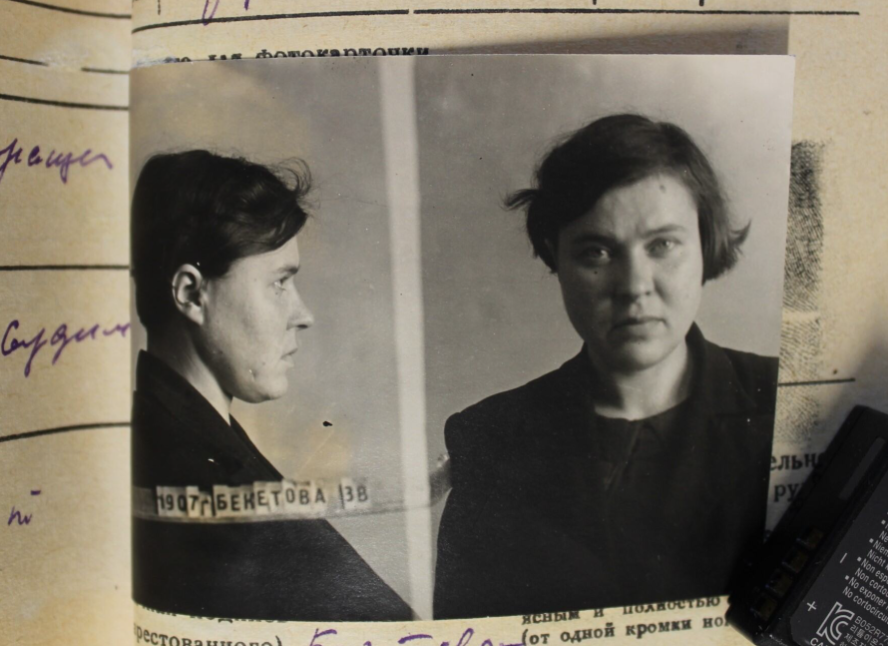
For several years, Zoya sent letters to party and state institutions. According to investigators, in the letters there was a "vile slander against the leaders of the party and the Soviet state."
During the interrogation, Beketova pleaded guilty: “I distorted Soviet reality in a rough and slanderous form, stating that the party and its leaders did not care about the people and forgot about it. I expressed my dissatisfaction with the economic conditions of the life of workers in the USSR. ” But still, Zoya reminded the investigation that she was in the psychiatric hospital for a long time and was recognized as a disabled person of the second group.
Medical commission of the Central Institute of Judicial Psychiatry named after V.P. Serbsky came to the conclusion that Beketov "as a mentally ill should be considered insane, she needs a psychiatric hospital for compulsory treatment with isolation." In February 1949, the 42-year-old Zoya was sent to the Kazan psychiatric prison hospital.
Almost six years later, in December 1954, the commission decided that Beketov “as a calm and inactive chronicle, which has no delusional anti -Soviet statements, does not need forced treatment”. The woman was allowed to transfer to a neuropsychiatric hospital for treatment on a common basis.
In 1955, Zoya Beketov was released from forced treatment. As her fate later developed, it is unknown.
* Many Memorial employees live in Russia, but continue to do their work, despite the risk and threat of repression from the Russian authorities. We value their work and respect their desire to maintain anonymity.