
Translated material
Kamala Harris vs. Donald Trump: One America vs. Another?
On the eve of voting day, The New Times spoke with Georgetown University professor, former CNN Moscow bureau chief Jill Dougherty and famous financier-investor Alexei Fridland about what scenarios await the United States after the victory of one or another presidential candidate.
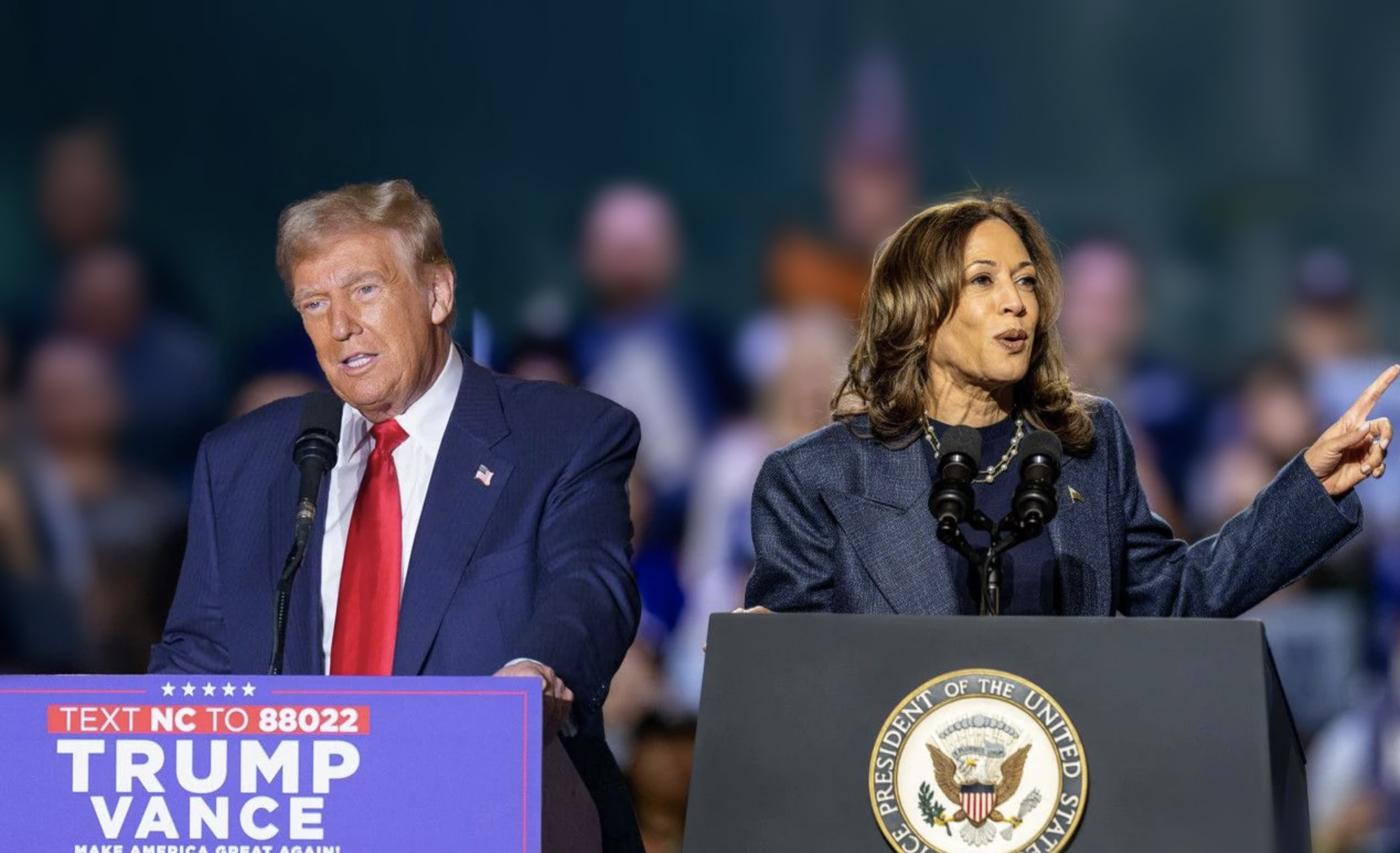
Evgenia Albats*: Just before November 5, the New York Times released the latest sociological survey, which shows that the country is simply divided in half. The difference in key states was one to one and a half to two percent, somewhere even less, that is, within the limits of statistical error. Why do some people support Kamala Harris, the Vice President of the United States, while others, about half the country, vote for Donald Trump, who was already the President of the United States from 2016 to 2020?
Jill Dougherty: I think a lot of people are voting down rather than up. Democrats, for example, are voting against Trump. They saw what kind of president he was when he was elected in 2016, they saw what he did then and they assume what he will do if he wins. And they are, frankly, terrified because they are afraid that he will change the foundations of American democracy. The Republicans now are basically the party of Trump. It's MAGA , as we say. Make America Great Again.
Evgenia Albats: Make America Great Again is an acronym.
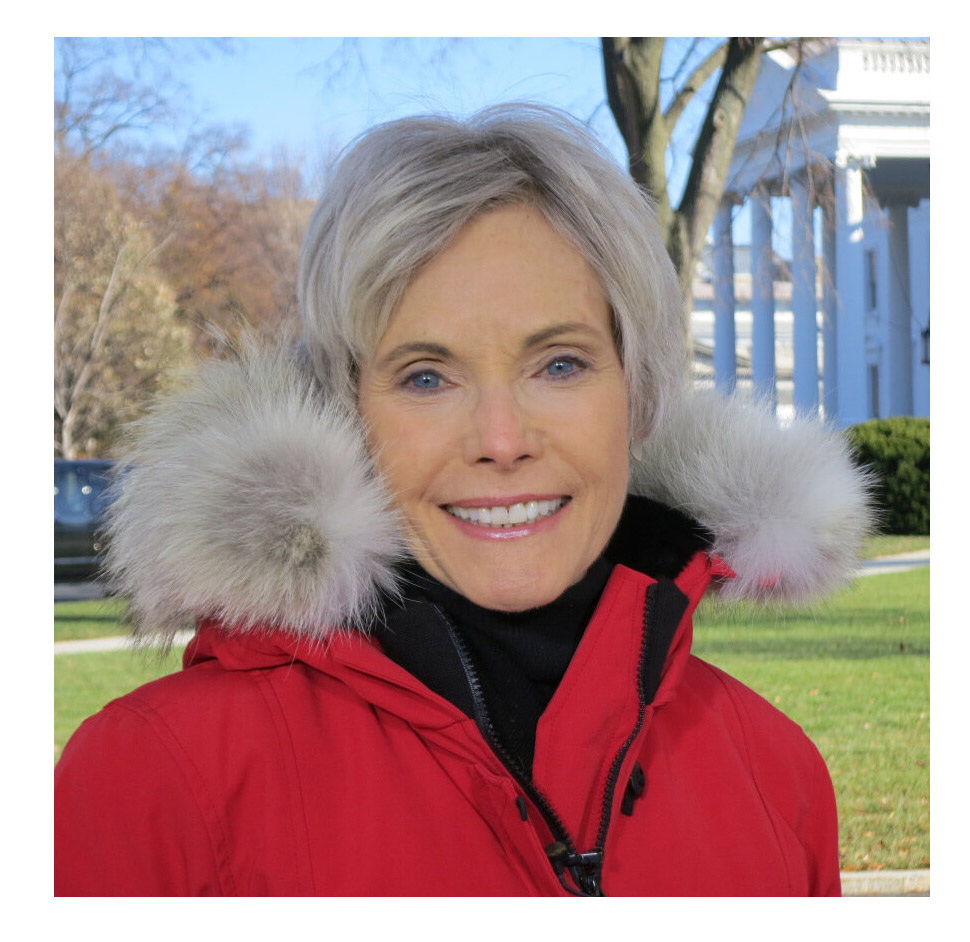
Jill Dougherty: Yes. And these people, I think, love him because he insults the elites of the United States, he talks straight like a man, they believe that he will change the economy of the United States for the better, and they support him emotionally. In my opinion, this is the main difference. There is also a small tiny group of "old Republicans" who are voting for Trump mainly for economic reasons because they think Trump will do away with taxes and even eliminate the income tax. They may not personally like Trump because he is so... peculiar, but they look at it pragmatically.
Eternal conflict
Evgenia Albats: Alexey, what do you say?
Society has always been divided. This is what makes America stronger. Whether Trump wins or Harris wins, America will be stronger either way.

Alexey Fridlyand: I voted for Harris, but I have understanding and a certain respect for those who vote for former President Trump. I understand the reasons why they do this. You said that society is divided 50/50, and as if there was something unusual in this. There is nothing unusual about this. There were other situations. Let's say it was obvious that Reagan would win with a 60 percent probability. But in general, in American history, the conflict between different views is the basis of society. There was a civil war, in the twentieth century there was a struggle for human rights, a struggle against the Vietnam War, etc. Society has always been divided. This is what makes America stronger.
I would like one side to win. But whether Trump wins or Harris wins, America will become stronger either way. Because in the end, what is important is not the division of the country into two camps with opposing views and even aggressiveness on the flanks, what is important is that the losing side will still accept the results of these elections within two to three months. If she does not accept, it will be a fight against the basic idea of democracy. Locke said, as you remember, that we are not enemies, we are opponents in a liberal democracy. I think that January 20 will pass (the day of the inauguration of the newly elected president. - NT), and America will plunge into its daily problems, disputes, etc. Many disputes will go to the courtroom, as it should be in a democracy. And, in general, everything will become a page of history. I wouldn't exaggerate the emotional component.
Evgenia Albats: Alexey, sociology shows that there is also a gender division. A larger percentage of women were willing to vote and voted for Democratic candidate Kamala Harris. At the same time, approximately the same or even slightly larger number of men, and not only white men, which is traditional for the Republican Party over the last 40 years, but also black men, were ready to vote and voted for Trump. Opinion polls show that most voters believe Trump will do a better job of handling the economic problems. In particular, inflation here is already very low, they managed to suppress it, but nevertheless prices in stores do not fall. And second, more voters believe Trump would be better able to handle foreign policy issues in the face of two wars, one in Europe, where Russia attacked Ukraine, and one in the Middle East, where Israel is fighting in Gaza and Lebanon. Why, despite the fact that Kamala Harris has four years of experience as vice president, do most respondents believe that Trump will do a better job of solving foreign policy problems?
Alexey Fridlyand: They say that we live in a post-industrial era, when the truth does not matter. But I would rephrase it this way: facts don’t matter. We all vote based on emotions, often against our financial interests. Everyone has one main theme that dominates their thinking when they vote. For some, this topic of abortion, for most women, apparently, it is the most important one. For me, the main topic is support for Ukraine and support for the European Union and NATO. For some it is the economy.
Evgenia Albats: I understood that the main thing for you is foreign policy, support for Ukraine and the fact that Trump is threatening to dissolve NATO. Are you against this?
Alexey Fridlyand: No one will let him disband, but yes, that’s the first thing. Second, this is an economic issue, because I disagree with many, but not all, elements of Trump's economic policies. I think it is inflationary, more than anything else. And the third topic for me is immigration. I believe that it is completely fictitious, it is artificial and played out by the Republicans, and the Democrats were unable to repel this blow. I don't want open borders, but I believe that immigration contributes to the economic development of the country, and I could prove it.
Evgenia Albats: Jill, you said that Trump supporters are more likely to vote for emotional reasons. But the theory says that in the United States people choose the so-called median candidate. That is, a candidate who is not a radical. This has been the case for virtually the last 100 years of United States history. Because people are afraid of both progressives, such as those in the Democratic Party, and extreme conservatives, nationalists, such as those in the Republican Party. But Trump said a lot of things that offend both women and the diaspora, nevertheless, the majority of voters vote for a radical, and Trump, according to his rhetoric, is a radical.
Jill Dougherty: He's literally a radical. But this is my personal opinion. I think his fans look up to him as an actor. He appeared on television many years ago, he knows television, he knows communication, he knows how to play with listeners. And that's a very, very important element, I think. There are opinion polls saying, “Do you think Trump will do what he says?” - and many answer: “Oh no, he didn’t do anything, he’s just talking, he’s chatting, chatting.” And they laugh, it's like a game, it's theater. In fact, they are not sure that whatever Trump says, he will do. And this is a very important point, because we have never had such a person. Maybe Reagan, who was an actor and played around with it a little when he was president. But Trump is purely an actor. I don't think he has a specific idea or policy or anything like that. I think he does a lot to attract people to like him. This is a completely different approach.
Evgenia Albats: What you are describing, Jill, is Zhirinovsky. The late Vladimir Volfovich Zhirinovsky, who promised to wash boots in the Indian Ocean, who declared that if he became president, he would give every woman a husband, etc. But Zhirinovsky had a very defined electorate. These were people without higher education, from small towns, a lot of young men, people who liked the fact that Zhirinovsky said about everyone, including the president, that he would shoot everyone, imprison them, etc. Everyone understood that this was pure chatter But Zhirinovsky did not become president, and Trump was already president of the United States, this is a big difference. You say that he is liked, he is loved. Then explain how women in the suburbs can love a candidate who said about Republican Liz Cheney, the daughter of Vice President Dick Cheney, who voted to convict Trump for the events of January 6, that she should be put up against a wall, machine guns pointed at her, and now then she can talk there about security issues, etc.
Jill Dougherty: In Russia, many years ago, when Clinton was president and it became known that he had seduced Monica Lewinsky in the White House, one Russian woman I asked about this told me that she really liked him, he was a real man. Maybe these women in America also think that yes, he is a bully, but he acts young.
The establishment is losing
Alexey Fridlyand: As for the median voter. If America had had Twitter in the 19th century, even in the 20th, we would have been surprised at the quality of some, and even many, presidents. Their aggressiveness, their ideas. There was no Twitter. The democratization of society has achieved unprecedented success. The intellectual elite now has less influence on society. Probably, we also wanted this from the beginning. We - I mean American society. The establishment is, in a sense, losing the battle for its cultural values. Well, maybe these values are worth reviewing from time to time. I urge both sides of this debate to, firstly, remember history, and secondly, understand that democratic progress means that one side will certainly lose, but in four years it may win again. This is the essence of the democratic process. Calling each other fascists or socialists does not suit either side. This is a lowering of the bar on the argument, and this lowering is happening on both sides. And most ordinary people don’t even understand what we’re talking about and what these insults are for.
Evgenia Albats: Let me remind you, Alexey, that Trump was called a fascist by John Kelly, who was the head of his administration, a general who is a very respected military man here, and repeated by Milley, who was Trump’s chief of general staff.
Alexey Fridlyand: So what? This does them no credit.
Evgenia Albats: Don’t you think that they might know something? They worked very closely with Trump in the first four years of his presidency. Kelly talks about Trump expressing his love for Adolf Hitler, for example.
In the history of mankind, many leaders were far from ideal. Starting with the biblical King David. But Trump has support. And we must think about where it comes from and fight the phenomena that help support this
Alexey Fridlyand: I don’t like Trump. For many reasons. Aesthetic, factual and everything else. But I believe that the use of such rhetoric does not add votes to those who are opponents of Trump, but rather subtracts, but corners those who consider him their representative. You see, as soon as a person resorts to comparison with Hitler in a dispute, he means proven absolute evil. Life is much more complicated than that. You and I know that in the history of mankind many leaders were far from ideal. Starting with the biblical King David. Perhaps they would be unpleasant interlocutors and all that.
But Trump has support. And we must think about where it comes from and fight the phenomena that help this support. Explain to people that this man was bankrupt seven times, declared it. Where are the mass of businesses that he created that did nothing? Why have most of his businesses always relied on Chinese products? Why did he create the inflation that Biden had to deal with? 7 trillion of the 35 trillion in national debt we have today was added by the Trump administration. Why is he almost the only president in US history to lower taxes on the rich during a period when the economy was doing absolutely great? Taxes should be lowered when the economy is not in the best condition and needs to be stimulated. And so on. We need to fight by talking about the facts and the essence of the problems, and not call names and insult people, believing that their choice is somehow worse than ours.
Jill Dougherty: I don’t agree, Alexey, because Trump himself doesn’t know, doesn’t understand what he’s saying. He does everything in his favor, in my opinion. But there are people who support him, who look very seriously at the structure of the United States, at the institutions of democracy, and they want to change or even destroy some of them. And this is a serious threat to the United States.
Alexey Fridlyand: I agree with you, Jill. And on January 6, everything was turning inside me from what I saw. But the system survived. If you believe in democratic values, in the values of our society, then you must believe that the system will hold up. If she can’t stand it, to hell with it. There will be a different system, it will improve, and something else will grow in its place. Humanity has changed, the Internet, new technologies, artificial intelligence and everything else appeared. Something that generally changes a person’s relationship with society. And perhaps what we are seeing - the movement of political parties - is a reflection of this time. We have to study it, we have to defend what we think is important. But this does not mean that we should start a civil war. To those who want to start a civil war, we must oppose the movement towards peace, harmony, towards those values that began with Locke and have passed to our times.
Jill Dougherty: I think if you look at it historically, we will survive. But there were moments in American history and in the history of other countries, for example, in Tsarist Russia before the revolution, in Germany in the 30s, etc., when everything seemed to be normal, and suddenly a person appeared who distorted or completely turned it around country in the other direction. Maybe this country returned later to a normal path of development, but when everything happened or was happening, it was a very, very difficult period. I think we need to see how disinformation works, how conspiracy theories spread. Honestly, I think it's dangerous.
Alexey Fridlyand: Of course. Very. But the elite’s contempt for the other side is one of the reasons why I don’t want to call what’s happening the word “fascism,” because I don’t see fascism yet. There are probably always such 2-3-5% in society. But we are alienating those people who have serious concerns about how the economy is developing, how society is developing, how the cultural revolution is happening, which may be moving too quickly for them, and many other problems. We push them away, calling them fascists. Maybe we will lose because of this.
A woman in a "man's" country
Evgenia Albats: On one of the cable channels they interviewed people on the street. One nice woman said that she would, in principle, be willing to vote for Kamala Harris, because Kamala Harris opposes abortion, and because it is very important for a woman to be a leader, and so on. In Europe this is no longer an issue, but in the United States it is still a new topic. However, she said Kamala Harris is not yet ready to be president. According to the penultimate issue of the Economist magazine, the United States economy is now growing, developing very well, unemployment is 4%, inflation is now, in my opinion, generally 2%. Still, people say Harris doesn't have a clear economic agenda. To what extent is Washington concerned about the possibility that Kamala Harris may not really be ready to be, as they say, the leader of the free world?
Jill Dougherty: Washington is different from the rest of the country, but she's already vice president. She and the president have been solving problems for almost four years. I think she can do it. But still, many are not yet ready to vote for a woman for the presidency.
We are a country of cowboys, as many Americans believe. They love women, but they think - how can she stand against Xi Jinping if she is a woman? This is impossible
Evgenia Albats: So in the United States in the 21st century, people still believe that a woman cannot govern the state?
Jill Dougherty: A lot of people think so. We have never had a woman president, very few women senators. We are a country of cowboys, as many Americans believe. They love women, but they think - how can she stand against Xi Jinping if she is a woman? This is impossible. And this is an element of American culture. I don't want to insult Americans, but I think this is a very important moment where social issues, abortion rights, gay rights, women's rights, religion and so on are very live issues. People think or look at all this a little distorted because there is a lot of change. This is a difficult time for everyone, economically and psychologically. And simple answers are better than complex ones.
Evgenia Albats: Yes, and Trump offers, of course, very simple answers. What shocked me most was that he used the rhetoric of the Soviet government about internal enemies. That is, he directly translates the Stalinist term “enemies of the people” - enemies of the state, internal enemies . I understand that he is an actor, that he grew up and became a politician thanks to television, where he made a very successful program. Nevertheless ... Previously, there was a taboo to call their opponents enemies. Trump removes this taboo, he calls the Democrats internal enemies. Previously, the taboo was to call Puerto Rico the “garbage island”, and all immigrants in general. Now it has become possible. And it is clear that if this can afford to say a candidate for the President of the United States and the President of the United States in 2016–2020, then the people who listen to him also probably begin to say so and believe that it is possible to divide the country into “their own” and "strangers." Those who vote is not the way we want are already enemies. It also seems to me, Alexei, that you are a little underestimating the role of these terrible words. Words matter.
Economic interest
Evgenia Albats: One of Trump's election slogans is the struggle against immigration. How will this respond to the economy of America?
Alexey Friedland: Trump is going to be blocked from immigrants with a huge wall. By the way, most of the wall was built on the border with Mexico by President Obama. We forget about it. Because "facts do not matter." President Trump is going to evict immigrants from the country. I can say what will happen to his economic plan. If we imagine for a second that he will build an amazing wall and the southern border will be closed, the fall of the gross national product in the United States according to various reports, including the republican one, will be about 6%. How will he get out of this pit?
And now another part of his economic program. You understand that the Mexicans, and not only Mexicans, Colombians and others, very often go to the United States, leaving their families. Not because there is paradise and democracy. They go, risking their lives, paying their movements to the mafia in order to earn. If there is nowhere to make money here, then the immigration problem is solved. Unfortunately, these people receive $ 15 per hour, and sometimes less, where the legal wage limit is $ 17-18. All that needs to be done to solve, from the point of view of Trump, an immigration problem, you need to conduct an audit of business, including in Arizona, in Texas, in restaurants and other places, and see that Trump voters, owners of these restaurants, pay this cheap labor. Nobody does this, because no one wants it.
Of course, if these people do not come to the country and will not work on our fields, they will not work at many other facilities, then our gross national product will decrease, this will lead to the acceleration of inflation. And now the Democrats, unfortunately, are not talking about this. And time, in general, is lost.
Evgenia Albats: What does the Kamaly Harris team offer? People by polls call the economy a problem, because the rental of an apartment is higher, the house heating is more expensive, and the costs of products are higher. It became harder for them to live, no matter what it was said there.
Alexey Friedland: Kamaly Harris has an amazing economic team that has encountered one of the largest inflation crises over the past 40 years. And they coped with this problem, inflation is now under control. Inflation, by the way, created primarily by Trump's economic advisers during his reign. And the point is not only in the "helicopter" money of the covid period. Among the 7 trillions of scarce money, one and a half trillion dollars are the money that was simply deducted, given to the richest population of the population due to a decrease in taxes. They did not go into the capital expenses of new enterprises, new jobs were not created, nothing has been created.
Split or war?
Evgenia Albats: What will happen in America when the final election results will become known? If Kamal Harris wins, and Trump will lose, he recognizes the election results?
Jill Dogerty: He did not recognize before and now he will not recognize. And this is a big problem. But Alexei said that the institutions of American democracy work, and I hope that even if he says that the democrats “stole the elections”, then the truth, and the legal truth, will be clear.
Evgenia Albats: Do you allow the possibility of a civil war in the United States? Given the split in society?
Jill Dogerty: there will be a split, because this is already a problem. But God forbid, there will be no civil war. I do not think most Americans want this.
Alexey Friedland: Nothing terrible will happen. There will be no civil war. We are a little flinter in the streets. Body. Maybe we’ll get along a couple of times. This is fine. So it was 230 years old, or how much is there - 250? - American history. America will become stronger - in any scenario.
* Evgenia Albats by the Ministry of Justice of the Russian Federation was declared a “foreign agent”.