
Translated material
“The worst thing in prison is fear”
A conversation with Sasha Skochilenko after her release and exchange - about generosity, life as a performance and the support of people, which does not allow a prisoner to be devoured in prison
Artist Sasha Skochilenko is one of 16 prisoners released on August 1, 2024 from prisons and colonies as part of a large-scale exchange for Russians, among whom were spies, a killer, and intelligence officers serving in Western prisons. We spoke with Sasha Skochilenko via Zoom; she lives in one of the European countries and is slowly coming to her senses.

— Sasha, it is known that you were sentenced to seven years for changing the price tags in the Pyaterochka store to anti-war messages. Tell us how you came up with this idea?
“Before I answer your question, I would like to thank everyone who was involved in my release. Involved in the fact that I was traded. Obviously, I am not a politician and not a German citizen ( among those who were exchanged there were citizens of the USA and Germany. - Ed. ) And I got on the exchange list precisely thanks to the enormous support of the most ordinary people, and not only ordinary, very different people, not involved in any way with government agencies. It just saved me. If they didn’t know about me, nothing would have happened. The efforts of every person who talked about me or simply reposted about my business worked a miracle.
Regarding your question, I have participated in almost every anti-war activity that you can think of. In fact, I wrote these price tags to stores in batches. I can talk about this now, because I am no longer in Russia. But the promotion with price tags is not my author’s project, because, you know, one day I came up with a similar idea that you can leave messages in different stores, because we are locked in communication with people of our circle, with people who share our interest and our moral guidelines.
And we never meet those who think and feel something opposite, except in stores. That’s why, in fact, these grandmothers in stores are, in fact, the same target audience.
So I thought about making price tags too, but in the end I made anti-war postcards. They were sent to military registration and enlistment offices by activists from the refusenik movement. And these turned out to be very cute and even a little poetic pictures.
And then I went to a certain channel, I won’t say which one, I understand that in Russia they listen to you. And I found a mock-up of price tags there. That is, this idea was in the air. And someone made this very layout. Then I realized that this person embodied my idea a hundred times better than I could have done. And, of course, I downloaded this layout, and just wherever I passed by, I replaced the store price tags with others.
But this was not my activity. As for my author’s action, this is the performance “Imprisonment”. And the next performance, which slightly continues the first, is “Release from Prison.” And in my opinion, it turned out incredible, because in the end I, like a magician, simply disappear, and no one knows where I am. And then suddenly I appear in a completely different place.
“If the defendant infuriates the judge, she can hit back with a seven-year sentence.”
— But you didn’t think when you did the first performance that there would be a second? Surely you couldn't dream about this?
— There was no idea for this performance: “Liberation from prison.” In fact, I am very grateful to my pen pal for this name and concept. This is Andrey Dunaev. After the verdict, he sent me a letter: “Perhaps you should do a new performance, “Liberation from Prison.”
Everything was predetermined by my verdict. But I made my story like this: I did not become some kind of passive object to be abused. I became a creative author who, as it were, rewrites and retells this story.
— Sasha, we wanted to ask you about judge Oksana Demyasheva. All of us who followed the trial saw her photograph, some saw it in court. It was difficult to imagine that this young woman, so seemingly pleasant in appearance, that she was gesturing towards you like that. During the trial, she set the meeting schedule in such a way that you were left without eating, and you had your own special diet, your own diet due to your health condition. She didn't allow you to take frequent breaks so you could just go to the toilet. She refused to reschedule the meeting until the next day, even though it was already late and you needed to replace the batteries in the heart monitor. And she had all the certificates about your health status. What do you think: was it her personal hostility towards you, her personal initiative - or was it such an order from above?
“I will immediately warn you that I cannot judge for sure, because, well, firstly, I have a bias in this matter.
Secondly, I will never be able to understand what is happening inside her, because only she knows about it. But, as it seemed to me, this is not about the fact that I am a political prisoner, this is about the habits of our judicial system as a whole. Just by being in prison, I learned a lot about it. There is also an expression: “to piss off the judge.” That is, the professional deformation of judges is such that if a person infuriates them, they can simply hit him back. But they hit him back with a sledgehammer because they give him seven years, for example. While I was on the inside, I talked to all the people who came into contact with her and went through the trials.
An ordinary, standard lawyer, although very expensive,
like all lawyers, he tells his client: “You shouldn’t piss off the judge.” They even sometimes say how best to dress, for example, to make a woman look smart, so that she doesn’t look too revealing.
That's it. These little tricks need to be used in order not to get, roughly speaking, a long sentence, and be sure to admit guilt . Of the women I met in the pre-trial detention center, not one received an acquittal or even heard of it. Therefore, the best outcome of the trial, at least among those women I knew in pre-trial detention center-5, is a suspended sentence.
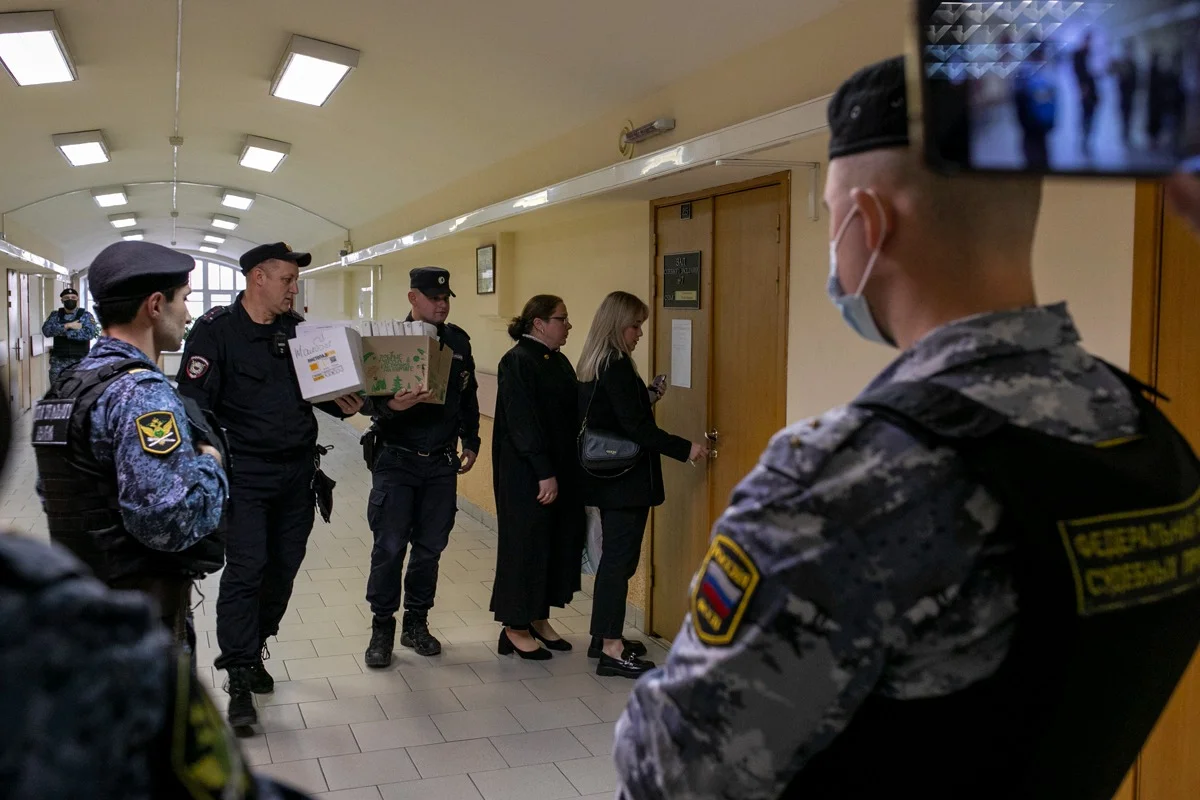
“It was received by those women who behaved like bunnies.”
- That's it. That is, this applies not only to the person under investigation or the defendant himself, this also applies to the behavior of the lawyer. A lawyer, roughly speaking, should not carry out an active defense, he should be quite quiet and, as it were, focus on the person’s characteristics, maybe even give him all sorts of fake characteristics that are somehow connected with United Russia, for example. And, in fact, the only real, mitigating circumstance is the presence of minor children. All sorts of other stories: health, something else - none of this is actually taken into account by the judge.
It seems to me that the professional transformation among judges and prosecutors in today’s Russia is significant: for them, breaking a human life is the same as breaking a stick from a fire in order to continue to bask where they bask.
And returning to the question of the judge’s behavior, I will say: this was her reaction to me, this was her reaction to the active defense of my lawyers. And she, roughly speaking, decided to spoil them, the answer: your client will get seven years. And she was angry that many listeners came to the court, everyone listened, listened, laughed, said something.
There was also a strategy so that we would complete the stage of presenting evidence for the defense as soon as possible, because the judge knew that we were preparing several more examinations. And I think that her task was not to let us have time to prepare these examinations. Therefore, she did not postpone the meeting. I don’t think that this was not her personal hatred of me and not an order from above, but there was an order from above by what time to complete this process. And that was all she was interested in.
— Was this trial a kind of platform for you and your lawyers? You understood that you would not behave like a “bunny”, you would infuriate the judge with your position. And this trial was a continuation of your action?
-Yes, that’s right. I chose my suit. I decided it should be something simple. It should be something that both men and women can wear. It should be something that will look chaste in the eyes of conservative people. And in fact, it looked so chaste that (TV) Al Jazeera was able to publish my photo in their edition. And at the same time, this should emphasize that my worldview is pacifism, and I was born to love, not to hate, as Antigone said. Of course, I thought about my speeches for a very long time. Of course, I spent a very long time composing and learning to read my last word. And I knew that this had to be the most powerful text that I had written so far, so that it would be a very tense ending. And when I left the escort room, I said to myself: “You are going to court, now this is your way out!”
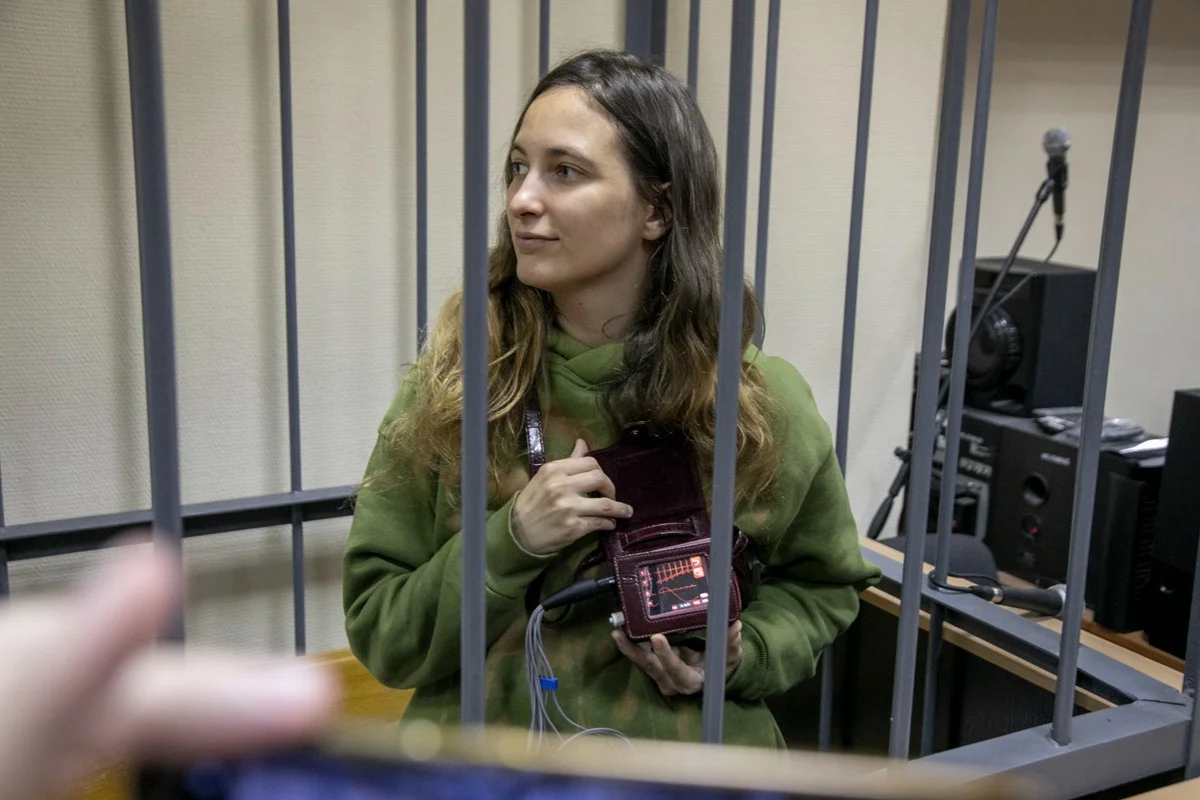
“She put her finger in my crotch.”
— You spent two and a half years in the St. Petersburg pre-trial detention center on Arsenalnaya. Tell us about this prison.
— Pre-trial detention center-5 on Arsenalnaya Street is the only pre-trial detention center for women and minors in the whole of St. Petersburg and the entire Leningrad region. These are very old brick buildings, all in rather poor condition, although it really looks like a monument. There is a very industrial landscape there, such as the chimneys of ancient stoves.
Behind the fence from the pre-trial detention center there is a prison-type psychiatric hospital for men. For example, Vladimir Bukovsky wrote about her in his memoirs. Pre-trial detention center 5 is overcrowded because in recent years more women have been locked up. There should be four square meters per person in the cell, but there is only about one and a half square meters there. The cells are different, they have different conditions. I was very lucky: at first I was in a cell for 18 people, then I was sitting in a cell for six people. And everywhere there were very difficult stories. But most of the time I spent in a cell for two. There are only five such cells in this pre-trial detention center.
There are places for pregnant women or women with children, there is even a children's playground built there, and in another building of this pre-trial detention center minors live, but in order to take a minor into custody, you need very compelling reasons. If you tell stories about why they are imprisoned, the hair on your head will move. I won't even voice them. Among other things, there are a number of men in pre-trial detention center-5. I don’t know how they get there, they say it’s an order from above, and men live completely differently from women. The bosses in that pre-trial detention center change like gloves. In two and a half years I saw three bosses.
— Sasha, in one of your interviews you said that it’s hard in the women’s pre-trial detention center, it’s hell there. What do you mean?
- Let me tell you about something else first, because I noticed that no one asks questions about this. Maybe to protect me somehow. Maybe it just doesn't seem as interesting compared to what's going on in the cells. You probably know that meetings with a lawyer usually take place in investigative rooms. And at these meetings, prisoners are taken out of their cells by an employee, an inspector, some call him a “separator.” Before you are taken to a lawyer, you need to stand facing the wall, and this “divorce” will feel you. Well, then he looks at all the documents that you have, so that there are no letters or anything else there, because the transmission of correspondence through lawyers is prohibited. Only a woman has the right to carry out this procedure of incomplete examination of women.
And basically the inspectors did it all very formally. But you understand that it is quite traumatic that some complete strangers touch you several times a day.
And there was one inspector who regularly took me out and did something strange. When she examined me, she did something like this: she directly grabbed my chest very powerfully. Running along my pants, she tried to do it with her finger in the crotch. In general, for the first time I thought: wow, it probably seemed to me, this shouldn’t happen. And when she did it the second time, I already realized that yes, it’s cruel, it’s scary, it’s embarrassing, it’s dumb to talk about it. This is some kind of sexualized violence. I then went into the lawyers’ office, we discussed it and decided not to publish this information, but to write a complaint about it.
- And your complaint worked?
— While still inside the pre-trial detention center itself, complaints are working. Well, of course, there are times when they don't work. Maybe they tried for me because they supported me so much in the wild. In order to file a complaint, we needed to establish her last name. She was just picking me up from the investigation room. I asked her: “What is your last name?” And she says to me in such a harsh voice: “What is it, what’s wrong?” I answer: “Everything is fine, except that you are pushing your finger into my crotch through my jeans.” Other female prisoners heard this, they stood near the offices and expected to be taken out of there, and they all turned around. I thought maybe this only happens to me, I asked other women about it. I asked: “There’s this inspector, with a ponytail, who wears ankle boots all the time.” And they: “Oh, is this the one who likes to squeeze?”
And I thought this was abnormal. In general, I wrote a complaint, and three bosses from different departments came to me to sort out the complaint. They found out that I was going for a psychiatric examination. I heard that they laughed a lot in the corridor about the fact that I belonged in a psychiatric hospital. But after I passed a psychiatric examination with great success and they gave me a certificate stating that I was absolutely sane, they became a little depressed. But the fact is that they really came to me to sort things out and asked: how did she touch you? Well, I sighed, plucked up my courage and simply told the whole story. And it seems to me that they took me seriously, and then they came to me from the Public Monitoring Committee. And indeed, this woman never groped me like that again. I hope she doesn't touch others like that again. But it seemed very important to me to tell about this, because I could not fully tell this story while I was in pre-trial detention. It is unknown what consequences this could threaten me with.
“Filing complaints to the pre-trial detention center is my legal right”
— Are women in pre-trial detention centers usually afraid to write complaints?
—According to internal regulations, employees are prohibited from retaliating against prisoners for complaints. But in fact this does not happen anywhere. The fact is that in many cells, well, almost all, there is a so-called “senior” one. For men, this is called “looking.” This is a woman who is the same prisoner, but who, perhaps, has been there longer than others, she has a complex case, and she cooperates with the operative officers. Every week she goes to the operatives and reports what is happening in the cell.
For this she receives small privileges. It seems to me that they are not big enough to sell their conscience.
Basically, operational employees act through their agents - these “seniors”. They can, for example, punish a woman who complained, but because of her the whole cell will be punished. They tell her: we won’t give you a phone this month. They come and say: the phones are broken, and they don’t bring them.
Naturally, all conversations with family are simply the most important thing in a pre-trial detention center, this connection with family, connection with loved ones. And you can imagine what kind of aggression the situation with the deprivation of communication can cause in people: their understanding is that this is someone who messed up, and because of him now they won’t give us a phone. The eldest usually says: “Don’t write a complaint, I’ll sort it out myself.” But I continued to maintain that filing complaints was my legal right.
And most often the situation was resolved like this: there was some problem, I first tried to solve it humanly, but it was not resolved for months. And then I sent this complaint to four authorities at once: the PMC, the Commissioner for Human Rights, the Commissioner for Human Rights at the Federal Penitentiary Service, the prosecutor’s office. I submitted these complaints for verification and the next morning the heads of different departments came running to me and solved the problem, and said: “Please sign that you are withdrawing the complaint.”
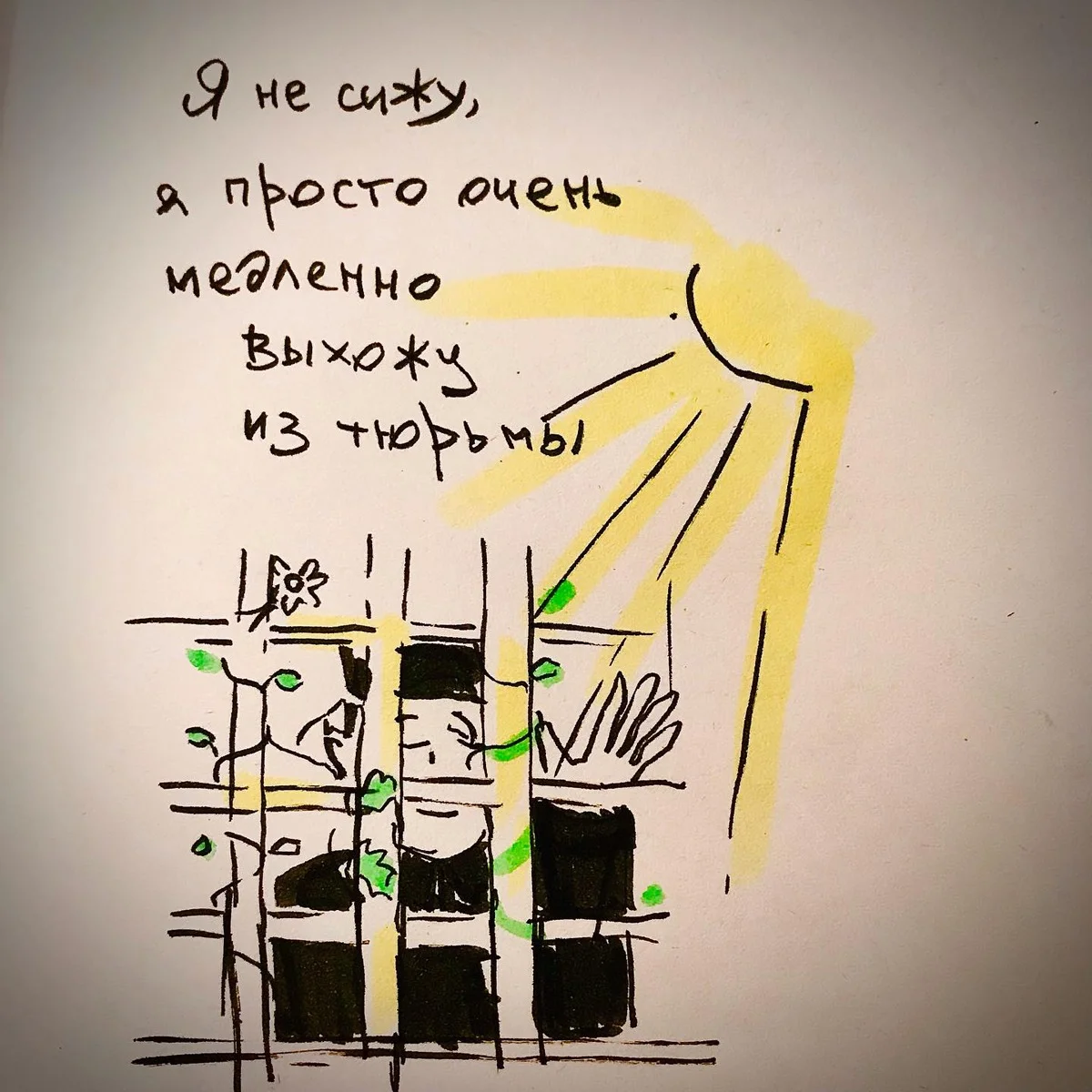
—Did you still have a special status?
—Yes, and it’s all thanks to people, thanks to publicity. This is a special path. Some people think that publicity will only do harm, and up to a certain point we also thought so.
“A man drove into Lefortovo and disappeared”
— Sasha, it is known that some time before the exchange they came to you in the pre-trial detention center and asked you to sign a petition for pardon, which you signed. Shortly before being transferred to Moscow, you were brought to another St. Petersburg pre-trial detention center - 6 (Gorelovo), and there you met with political prisoner Andrei Pivovarov, brought there from a Karelian colony. Do you understand why you are going to Moscow?
— When we were traveling in a paddy wagon with Andrei Pivovarov to Lefortovo, we didn’t seem to know where we were going, but at some point we began to guess. Moreover, Andrei Pivovarov is such a perspicacious person, he said: “Maybe they will just give us a passport and put us on a plane?”
— In one of your interviews, you said that at some point, when you were leaving Lefortovo, you thought that you were being taken to be shot. Why?
- Yes, that was already the case when we were taken to the airport. Well, that is, you can imagine - next to you are a bunch of people in military uniforms who hide their faces, you do not see their faces, only eyes, they tell you that you can go in a bag of handcuffs. It is not clear that you are being taken. You have no documents. None of your loved ones generally know where you are, in what pre -trial detention center. As one of the bosses in the Lefortovo pre -trial detention center told me: “Lefortovo” is a country of miracles: a man drove and disappeared. ”
And when we went on this bus ( to the airport, but did not know where they were going. - Ed. ), That is, someone joked like that: we were being taken for execution, and this is quite possible.
- Sasha, now all this is behind, and you are at large, so that you would advise those women who may be in a female pre -trial detention center. How to survive there?
"Generosity is what is valued in prison"
- In the first place - not to think that this is hell. This is very difficult at first, because you adapt. But if all the time you sit there, you will think that this is hell, or you will think that these years are thrown into the trash, then they will be like that.
That is, no matter how strange it is and no matter how absurd it sounds, you might think what kind of advantages arose. It sounds very strange, I understand, this is very tough, what I tell about it.
But as if people themselves really construct themselves some hell.
And the human psyche adapts to these conditions and, of course, is very protected. Now I will have to work with this protection, because this is an injury at a crisis moment, this is what protects us very much. So don't be afraid!
Well, more precisely, be afraid, but go through this fear.
In prison, the worst thing is fear. That is, how you imagine this prison, what will happen to you, what you still do not know is that the most terrible pictures are drawn in your head, that in these dungeons in the corners of spiders and rats.
No, the prison in Russia now looks completely wrong. That is, it is different. In some places, she even looks comfortable, where women are sitting, they, of course, try, this goes through all reasonable limits to the pre -trial detention center - the desire to maintain cleanliness. But one way or another there is quite clean, it is very much like some very dumb, I don’t know, a female hostel or some kind of provincial hostel, only the door is closed. And this is a very big difference.
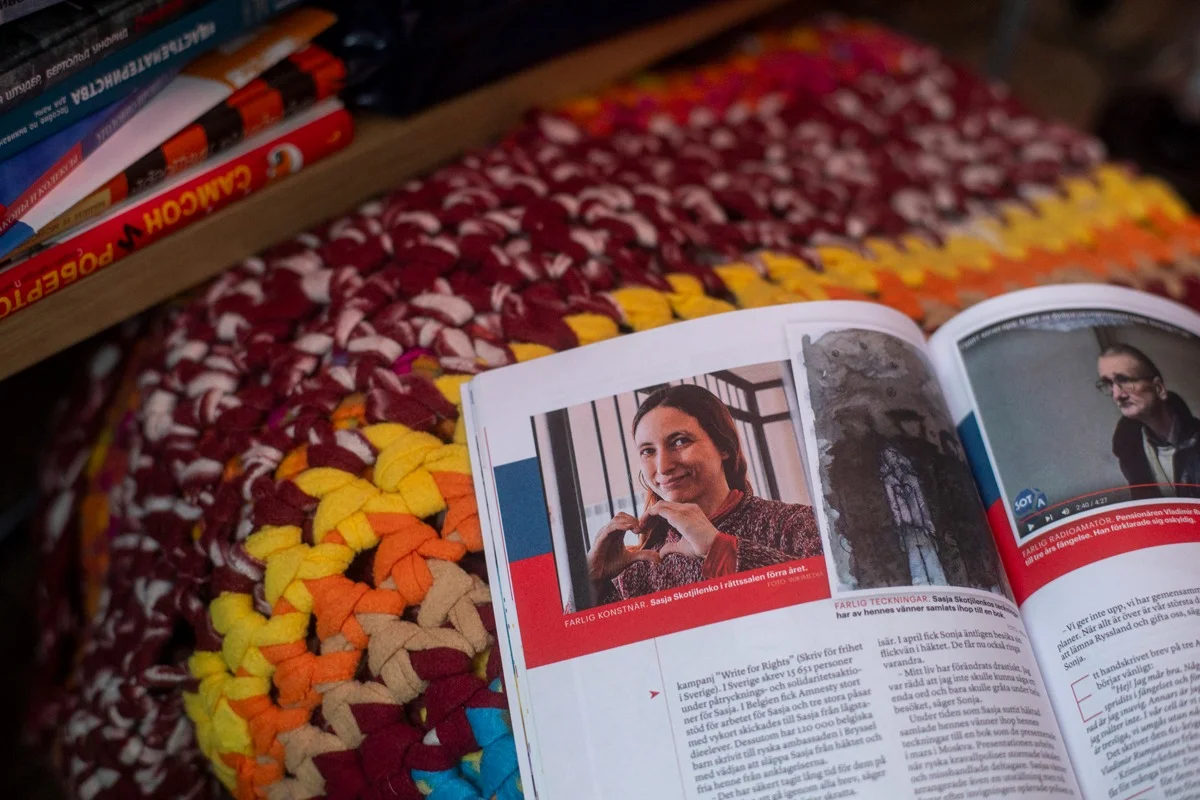
Write complaints, write statements. Write anything you want, write petitions. Do not be afraid, even if at the very beginning they will be pressed for this, at some point they will understand that it is useless, and, conversely, will take care of your conditions.
Be polite with everyone, but at the same time do not sink. Be polite, but always protect your boundaries. It is worth starting with politeness, to say, for example: "Today you have forgotten us on the street for three hours in the cold." And a person can immediately answer. If he answers you rudely, you need to put it in place in a polite form. It was my way. There are several ways to sit in prison: someone prefers to sit “quieter of water, lower than grass”, and this, too, at some point can give privileges. Here the second path is quite complicated - when you complain; Do not be afraid to write any complaint, write it in any language. They say there is such a saying: “Do not believe, do not be afraid, don’t ask,” I don’t believe in it. Do not be afraid, if you need something, do not hesitate to ask, just do not kanyuch!
Be generous. Generity is what is appreciated in prison. Ask your relatives to send more cigarettes, because in prison it is a currency. You can easily sell your duty. Because the worst thing in a women's prison is really duty. There are women who rub the floors with brushes or take out dust from cracks and floorboards. Be generous, but if they weren’t without trouble, they don’t value such people in prison. And the most important advice: be patient.
And do not think about the day of liberation. To be honest, this is the advice that one former political prisoner gave me myself. He wrote to me like that:
“Do not think about the day of liberation, just find yourself any business that you will do every day. Just live, find yourself what to live for. Become an expert in Sudoku, learn German, read hundreds of books ... "
This material was released in the first issue "New Gazeta. Magazine". You can buy it in the online store of our partners .